Patient Finds Relief After Adrenal Gland Tumor Removed by Baylor Endocrine Surgeon

Hanna Pierce didn’t expect to learn she had a tumor on her adrenal gland during a CT scan. Just two weeks after delivering her second child and recovering from COVID-19, she went to urgent care with concerns about a possible blood clot. Instead, imaging revealed a tumor in her adrenal gland. “I didn’t have symptoms,” she said. “They were checking for something else and just happened to find it.”

That unexpected discovery in 2021 launched Pierce into a years-long journey that ultimately led to robotic surgery at Baylor Medicine with Dr. Feibi Zheng, an endocrine surgeon who specializes in treating adrenal tumors.

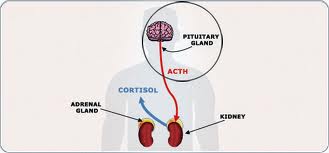
“Many people haven’t heard much about the adrenal glands,” said Zheng, assistant professor in the Division of Surgical Oncology. “They sit on top of the kidneys and produce hormones like cortisol that regulate everything from metabolism to the body’s stress response. If a tumor is overproducing cortisol, it can silently wreak havoc on the body over time.”

Doctors told Pierce that her tumor was consistently producing slightly elevated cortisol, a red flag. “My doctor told me if we left it alone, it could develop into diabetes or full-blown Cushing’s syndrome. At first, we just monitored it,” she said.

In the months and years that followed, Pierce did experience symptoms but attributed them to the demands of motherhood. “After my second child, I couldn’t lose weight no matter what I did. I had anxiety, constant fatigue in the afternoons, and I wasn’t sleeping well,” she recalled. “But I just chalked it up to being a mom of two.”

By 2024, her endocrinologist said it was time to act and referred her to Zheng, who confirmed the tumor was still producing excess cortisol. “Dr. Zheng told me I was going to feel so much better and explained what she was going to do,” Pierce said. “When I went to see her for the consultation, she was very informative. She didn’t pressure me to have surgery but explained everything to me.”

The Baylor Medicine endocrine surgery team, including Zheng and supported by physician assistant Holly Clayton, provided a seamless and collaborative care experience. “Our team-based model allows for better coordination and patient support,” said Clayton, who helped manage Pierce’s preoperative workup and performed her postop visit via telemedicine. “It was clear she wanted answers and a plan, and we were glad to be able to guide her through this process together.”

Zheng performed the adrenalectomy robotically, using a posterior approach — an advanced technique that involves going through the back instead of the front of the abdomen. “It’s a less common approach, but for the right patients, it can reduce pain and speed up recovery,” Zheng said.

Pierce said she felt calm going into the procedure. “Usually, I have white coat syndrome and feel anxious, but this time I didn’t. Everyone gave me step-by-step instructions, and Dr. Zheng explained everything clearly. I really felt like I was in good hands.”

Within a week or two of her June surgery, Pierce noticed changes. “I dropped four pounds almost immediately,” she said. “My face wasn’t as puffy. I felt less anxious and more like myself. Even though I was still recovering, I had more energy, and my body felt like it had reset.”

“Surgery to correct cortisol-producing tumors can make a major difference in quality of life, even if patients don’t meet the full criteria for a Cushing’s diagnosis,” Zheng said. “Mrs. Pierce’s case is a perfect example. She didn’t feel well, but she didn’t know why. Her endocrinologist saw [that] her metabolic parameters were getting worse. Now that the tumor is gone, her symptoms are improving, and her health trajectory is back on track.”

Just a month after surgery, Pierce says she has more energy and is continuing to lose weight. She’s relieved that a straightforward procedure made such a noticeable difference in how she feels.

From https://blogs.bcm.edu/2025/07/23/patient-finds-relief-after-adrenal-gland-tumor-removed/

Day 3: Cushing’s Awareness Challenge

me-tired

Sleep.  Naps.  Fatigue, Exhaustion.  I still have them all.  I wrote on my bio in 1987 after my pituitary surgery “I am still and always tired and need a nap most days. I do not, however, still need to take whole days off just to sleep.

That seems to be changing back, at least on the weekends.  A recent weekend, both days, I took 7-hour naps each day and I still woke up tired. That’s awfully close to taking a whole day off to sleep again.

In 2006, I flew to Chicago, IL for a Cushing’s weekend in Rockford.  Someone else drove us to Lake Geneva, Wisconsin for the day.  Too much travel, too Cushie, whatever, I was too tired to stay awake.  I actually had put my head down on the dining room table and fallen asleep but our hostess suggested the sofa instead.  Amazing that I traveled that whole distance – and missed the main event 😦

This sleeping thing really impacts my life.  Between piano lessons, I take a nap.  I sleep as late as possible in the mornings and afternoons are pretty much taken up by naps.  I nod off at night during TV. One time I came home between church services and missed the third service because I fell asleep.

I only TiVo old tv shows that I can watch and fall asleep to since I already know the ending.

Since  mid-February, I have been doing physical therapy twice a week for 2 hours at a time for a knee injury (read more about that in Bees Knees).  I come home from that exhausted – and in more pain than I went.  I know it’s working and my knee is getting better, but it’s such a time and energy sapper.  Neither of which I can really spare.

Maybe now that I’m nearly 10  years out from my kidney cancer (May 9, 2006) I could theoretically go back on Growth Hormone again.  My surgeon says he “thinks” it’s ok.  I’m sort of afraid to ask my endo about it, though.  I want to feel better and get the benefits of the GH again but I don’t want any type of cancer again and I certainly can’t afford to lose another kidney.

I’ll probably just muddle through without it.  I always laugh when I see that commercial online for something called Serovital.  I saw it in Costco the other day and it mentions pituitary right on the package.  I wish I could take the people buying this, sit them down and tell them not to mess with their pituitary glands.  But I won’t.  I’ll take a nap instead because I’m feeling so old and weary today, and yesterday.

And tomorrow…

Tiruchi surgeons treat Pakistan national for pituitary tumour

0276f-pituitary-gland


The patient had discovered his condition by chance in Quetta last year.

A team of city-based surgeons has performed a sophisticated surgery on a young Pakistani national to remove a pituitary tumour.

Bakhtiyar Khan, a 30-year-old Pakistani national from the Talli village in Sibi, Balochistan, underwent the surgery here a few days ago.

The surgery was performed by Dr. T.N. Janakiraman, skull base surgeon and managing director, Royal Pearl Hospital and Research Institute, Dr. Uday Chanukya, Dr. Prayatna Kumar, skull base surgeons, and Dr. Balamurugan, anaesthesiologist.

The tumour, in the cavernous sinus — a large collection of thin-walled veins creating a cavity bordered by the temporal bone of the skull and the sphenoid bone in the head, was removed through endoscopic surgery.

“Normally surgeons go through the skull and brain to excise the tumour with the help of surgical microscopic glasses. But this doesn’t ensure the removal of the entire tumour, which is why radiation is recommended after the operation,” Dr. Janakiraman told The Hindu .

“In Bakhtiyar’s case, the tumour had gone into the cavernous sinus. We used his nasal cavity as the entry point, and brought the tumour out through the nose as well. This is a scar-less keyhole surgery that ensures complete excision and doesn’t require us to make a new opening in the skull,” he added.

Dr. Janakiraman, who was trained in the procedure by internationally renowned neurosurgeon Dr. Amin Kassam in the U.S. 10 years ago, has been doing the procedure for the past nine years in Tiruchi.

For the patient’s elder brother, Sardar Khan, the experience has been both exhausting yet exhilarating. A file clerk at the local health centre in Sibi, the Khan brothers had taken their father, who is paralysed, to a doctor in Quetta last year, when the physician there suggested that it was Mr. Bakhtiyar who needed medical attention urgently. “None of us knew that he was unwell,” recounted Mr. Sardar. “We were advised by neurosurgeon Dr. Asghar Khan to seek help in India immediately. I couldn’t believe that I, who had never left my village to see even Lahore or Karachi, had to go to India.”

In a process that took three to six months, Mr. Sardar convinced Mr. Bakhtiyar and his other siblings (they are eight brothers and two sisters) to get ready to meet Dr. Janakiraman, besides applying for passports and organising visas.

The brothers took the Samjhauta Express from Wagah to Delhi on January 31. The Tamil Nadu Sampark Kranti Express brought them to Tiruchi after a 46-hour journey. As a humanitarian gesture, the hospital has waived all fees (in the range of Rs. 1 to 3 lakhs), except the cost of medicines.

“I’m feeling much better now, and my eyesight has improved,” said Mr. Bakhtiyar Khan. After a few days of observation and a final MRI scan, he will be free to travel back home with his brother.

Said a gratified Mr. Sardar: “I haven’t seen much of India, or even of Tiruchi, but to me, Dr. Janakiraman and his team are India. I’d like to thank all my new friends in India for taking such good care of me and my brother.”

From http://www.thehindu.com/news/national/tamil-nadu/tiruchi-surgeons-treat-pakistan-national-for-pituitary-tumour/article8231567.ece

Narrowing in on Pituitary Tumors

0276f-pituitary-gland


As many as 20 percent of people may have a benign cyst or tumor in their pituitary gland. The vast majority of pituitary tumors are noncancerous, but can cause headaches and profound fatigue, and can also disrupt hormone function.

Currently, surgeons rely on radiologic images and MRIs to gather information about the size and shape of the tumor, but the resolution of such imaging technologies is limited, and additional surgeries to remove more of the tumor may be needed if a patient’s symptoms persist. In a new study published in the Proceedings of the National Academy of Sciences on July 27, investigators from Brigham and Women’s Hospital (BWH) present a new technique that could help surgeons more precisely define the locations of tumors in near real-time.

The new strategy uses a visualization technique (matrix-assisted laser desorption/ionization mass spectrometry imaging – MALDI MSI) that can analyze specific hormones, including growth hormone and prolactin, in tissue. In the newly published study, the researchers find that it’s possible to use MALDI MSI to determine the composition of such hormones in a pituitary sample in less than 30 minutes. This could give surgeons critical information to help distinguish tumor from normal gland.

“Our work is driven by a clinical need: we’ve developed a test specifically tailored for the needs of our neurosurgeon colleagues,” said corresponding author Nathalie Agar, PhD, director of the Surgical Molecular Imaging Laboratory in the Department of Neurosurgery at BWH. “A surgeon may sacrifice half of the pituitary gland in an effort to get the tumor out. Without a tool to distinguish healthy tissue from tumor, it’s hard to know in real-time if the surgery was a success. With this technology, in under 30 minutes a surgeon will be able to know if a sample contains normal pituitary tissue or a pituitary tumor.”

“Patients show up with the clinical symptoms of a pituitary tumor, but the tumor itself may not be visible on an MRI,” said co-author Edward Laws, MD, director of the Pituitary and Neuroendocrine Center at BWH. “This technique, which maps out where excess concentrations of hormone levels are located, has the potential to allow us to confirm that we’ve removed the abnormal tissue.”

“Evaluating whether a piece of pituitary tissue is abnormal can be challenging on frozen section,” said co-author Sandro Santagata, MD, PhD, of BWH’s Department of Pathology. “This approach has wonderful potential for enhancing our diagnostic capabilities. It is clearly an important step toward providing intra-operative molecular characterization of pituitary tissues.”

To test the technique, the research team analyzed hormone levels in 45 pituitary tumors and six normal pituitary gland samples, finding a distinct protein signature unique to the normal or tumor sample.

Mass spectrometry, a technique for measuring chemicals present in a sample, is currently used in the operating room to help inform clinical decisions, but up until now, the focus has been on small molecules – metabolites, fatty acids and lipids – using a different type of approach. By analyzing proteins, MALDI MSI offers a way to visualize hormone levels.

Current methods used to detect hormone levels take too long to fit the time constraints of surgical intervention. Surgeons must either remove a larger amount of potentially healthy pituitary gland or perform follow up surgery if the tumor has not been fully removed.

“We’re hoping that techniques like this one will help move the field toward more precise surgery: surgery that not only removes all of the tumor but also preserves the healthy tissue as much as possible,” said Agar.

In the next phase of their work, Agar and her colleagues plan to test out the technique in BWH’s AMIGO suite and analyze the impact of the technique on clinical decision making.

Other researchers who contributed to this study include David Calligaris, Daniel R. Feldman, Isaiah Norton, Olutayo Olubiyi, Armen N. Changelian, Revaz Machaidze, Matthew L. Vestal and Ian F. Dunn.

This work was funded in part by US National Institute of Health (NIH) Director’s New Innovator Award (1DP2OD007383-01 to N.Y.R.A.), U.S. Army Medical Research/CIMIT (2010A052245), the National Center for Image Guided Therapy grant P41RR019703, NIH K08NS064168, the Pediatric Low Grade Astrocytoma Program at Dana-Farber Cancer Institute, the Brain Science Foundation and the Daniel E. Ponton fund for the Neurosciences at BWH.

Brigham and Women’s Hospital 2015 | 75 Francis Street, Boston MA 02115 | 617-732-5500

From http://www.healthcanal.com/cancers/65676-narrowing-in-on-pituitary-tumors.html

Surgeon Volume Affects Costs in Pituitary Tumor Care

For patients with transsphenoidal pituitary tumors, hospital charges, costs, and length of stay are increased with lower-volume surgeons, according to a study presented at the annual meeting of the American Association of Neurological Surgeons, held from May 2–6 in Washington, D.C.

Charles Lee, from the University of Rochester in New York, and colleagues conducted a surgeon volume-cost analysis on pituitary tumor surgery from 2008–2011. All patients underwent elective surgery and were discharged to home or self-care. The researchers compared hospital charges, costs, cost-to-charge ratios, and length of stay for surgeons who performed fewer than 20 cases per year versus those who performed 20 or more cases per year. Data were included for 1,803 transsphenoidal pituitary tumor surgeries.

The researchers found that for lower-volume surgeons, the median hospital charge was almost $20,000 higher and the median hospital cost was more than $5,000 higher. Lower-volume surgeons had a cost-to-charge ratio indicating higher inflation. Longer median length of stay was also seen for lower-volume surgeons, with patients treated by lower-volume surgeons needing one additional day in the hospital.

“The data suggests that patients with pituitary tumors (a highly portable disease) should be considered for referral to high-volume surgeons to promote high-value, effective care,” according to the AANS news release.

Press Release
More Information

From http://www.empr.com/aans-surgeon-volume-affects-costs-in-pituitary-tumor-care/article/413262/