Global Longitudinal Strain Reduction With Apical Sparing in Cushing Syndrome-Related Heart Failure With Preserved Ejection Fraction (HFpEF): A Case Report

Abstract

We describe a case of a 56-year-old woman with a history of recurrent pituitary adenoma, not well followed, and known comorbidities of coronary artery disease, hypertension, and type 2 diabetes mellitus. She arrived with severely high blood pressure and signs pointing to hypercortisolism. Further evaluation revealed left ventricular hypertrophy, reduced global longitudinal strain, and preserved left ventricular ejection fraction, consistent with heart failure with preserved ejection fraction (HFpEF). Workup for amyloidosis was negative. This case highlights that chronic hypercortisolism may cause pathophysiological changes in the heart, leading to HFpEF, and may induce myocardial fibrosis and impaired myocardial mechanics, producing an echocardiographic pattern that can mimic infiltrative cardiomyopathy. Recognition of this overlap is crucial to avoid misdiagnosis and to ensure timely endocrine and cardiovascular management.

Introduction

Hypercortisolism is defined as a clinical condition resulting from excessive tissue exposure to cortisol or other glucocorticoids. Sustained exposure ultimately leads to Cushing syndrome (CS), a well-established constellation of clinical manifestations arising from chronic endogenous or exogenous cortisol excess [1]. CS is associated with profound metabolic derangements that significantly increase cardiovascular risk, not only during the active phase of the disease but also persisting long after biochemical remission [2,3]. Cardiovascular complications, including premature atherosclerosis, coronary artery disease (CAD), heart failure, and cerebrovascular events, are major contributors to the excess mortality observed in CS compared with the general population [1,3]. Among these complications, arterial hypertension remains the most frequent cardiovascular disorder in patients with Cushing disease (CD) [4].

Although left ventricular (LV) systolic function is generally preserved in patients with CS, several studies have demonstrated that chronic cortisol excess induces structural and functional cardiac alterations, predisposing to major adverse cardiac events and the development of heart failure [5] In the broader context of chronic congestive heart failure, disease progression is tightly coupled with activation of neuroendocrine stress pathways, most notably the hypothalamic-pituitary-adrenal axis, which governs cortisol secretion [6]. Cortisol, a pivotal stress hormone, increases in response to physiological strain, and its sustained elevation contributes to adverse myocardial remodeling.

Heart failure with preserved ejection fraction (HFpEF), a chronic and progressive syndrome, exemplifies the deleterious effects of persistent myocardial stress. While overt heart failure is an uncommon complication of CS, when it does occur, it most often presents with preserved LV ejection fraction (LVEF) or with subclinical LV dysfunction [7]. Prior evidence has also linked CS to LV hypertrophy, diastolic dysfunction, and subtle systolic impairment, with many of these changes demonstrating reversibility upon normalization of cortisol levels [8].

This case is unique as it highlights the interplay between CS and cardiac amyloidosis, emphasizing their overlapping yet distinct echocardiographic features. Global longitudinal strain (GLS), a measure of myocardial deformation, is particularly useful for differentiating these conditions and reveals subtle differences in strain patterns between the two.

Case Presentation

A 56-year-old woman with a significant past medical history of recurrent pituitary macroadenoma, treated with two prior surgical resections, the most recent five years earlier without subsequent follow-up, CAD, long-standing hypertension, and type 2 diabetes mellitus, presented to the emergency department with hypertensive urgency.

On arrival, she presented with a hypertensive crisis, with blood pressure measured at 200/110 mmHg, associated with severe cephalalgia, without syncope, visual changes, or focal neurological deficits. An MRI Brain demonstrated no evidence of acute intracranial hemorrhage or mass effect (Video 1). Initial laboratory testing showed normal complete blood count, renal function, and serum electrolytes. On physical examination, she exhibited characteristic Cushingoid stigmata, including rounded moon facies, central adiposity, and bilateral lower-extremity pitting edema.

She was commenced on intensive antihypertensive therapy, including spironolactone, clonidine, telmisartan, carvedilol, amlodipine, and intravenous furosemide (20 mg, subsequently escalated to 40 mg). Given her clinical appearance and history of pituitary disease, an endocrine evaluation was undertaken. An overnight dexamethasone suppression test revealed an unsuppressed morning cortisol of 360 nmol/L, consistent with hypercortisolism.

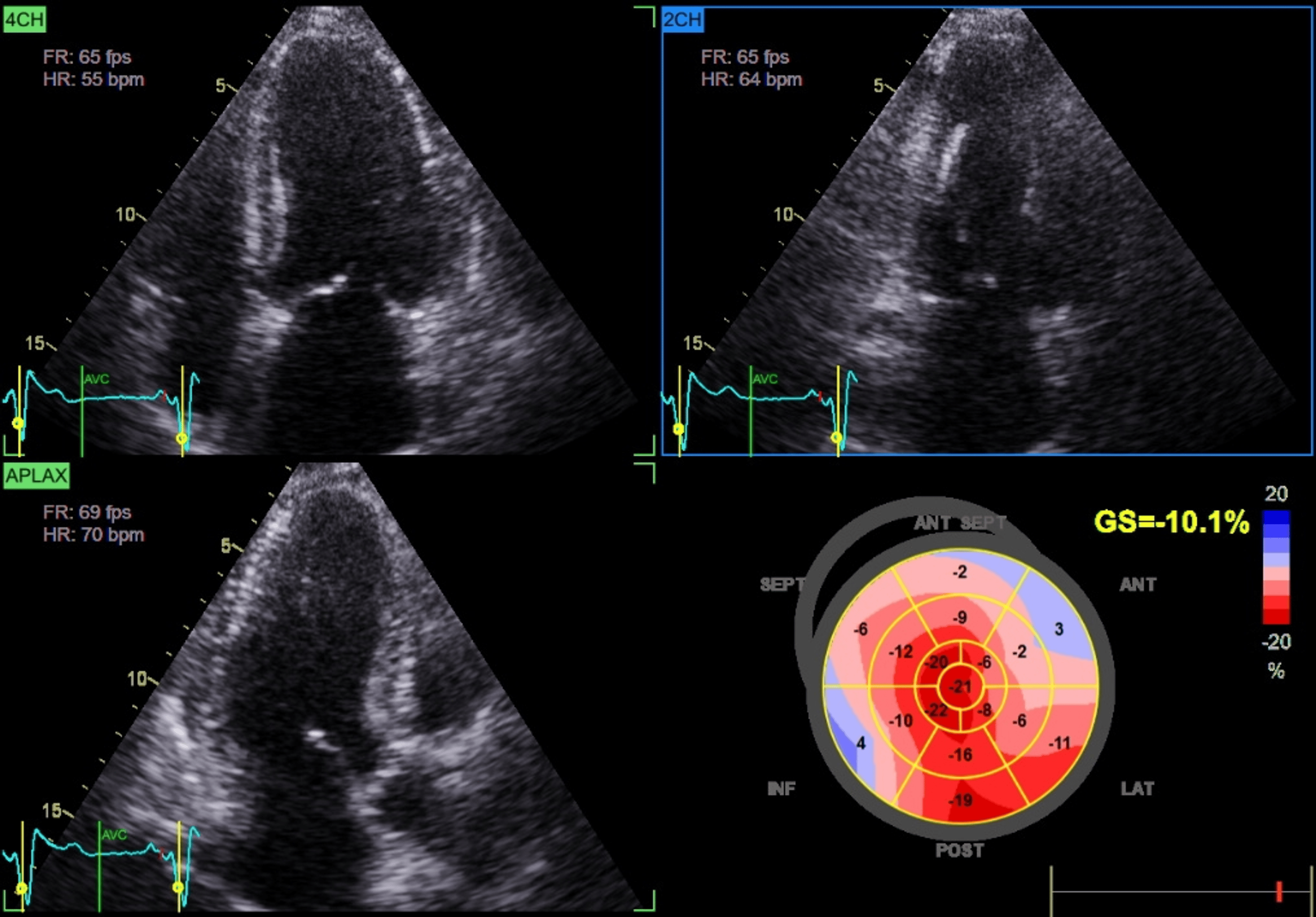
Cardiac assessment supported a diagnosis of HFpEF. Transthoracic echocardiography demonstrated preserved left ventricular ejection fraction (60%), impaired GLS (-10%), and mild concentric left ventricular hypertrophy (Figure 1; Video 2).

Transthoracic-echocardiography-demonstrating-reduced-global-longitudinal-strain-(-10%)-consistent-with-preserved-EF-(60%)
Figure 1: Transthoracic echocardiography demonstrating reduced global longitudinal strain (-10%) consistent with preserved EF (60%)

EF: Ejection Fraction

Workup for alternative causes of HFpEF, including renal impairment and infiltrative cardiomyopathy, was unremarkable; both serum and urine protein electrophoresis with immunofixation excluded amyloidosis.

Magnetic resonance imaging of the pituitary revealed recurrence of the macroadenoma. The patient was referred to neurosurgery for consideration of repeat resection, and glucocorticoid-sparing medical therapy was initiated. During hospitalization, her blood pressure was gradually stabilized, diuretic therapy improved signs of congestion, and her functional status returned to near baseline with restored mobility (Video 3).

Discussion

Epidemiology and clinical significance

CD is a severe endocrine disorder characterized by chronic exposure to excess glucocorticoids. Patients with CD have a two- to fivefold higher mortality compared with the general population, predominantly due to cardiovascular complications [4]. Chronic hypercortisolism is associated with systemic hypertension, left ventricular hypertrophy (LVH), diastolic dysfunction, and accelerated atherosclerosis, increasing the risk of myocardial ischemia and heart failure. While these cardiovascular manifestations are common, the development of isolated dilated cardiomyopathy (DCM) in the absence of other major comorbidities is rare but clinically noteworthy [9].

Pathophysiology of cardiac involvement

Chronic glucocorticoid excess contributes to cardiovascular remodeling via multiple mechanisms. Persistent hypertension and metabolic disturbances promote LVH and diastolic dysfunction. Additionally, glucocorticoid excess induces endothelial dysfunction, insulin resistance, and myocardial fibrosis, impairing ventricular compliance and predisposing to HFpEF [1,6]. Advanced echocardiographic techniques, such as GLS, can detect subclinical systolic dysfunction before overt reductions in LVEF [6]. In our patient, preserved LVEF (60%) coupled with markedly reduced GLS (-10%) and concentric LVH was consistent with HFpEF secondary to chronic cortisol excess, further supported by clinical signs of volume overload such as edema and severe hypertension [7].

Apical sparing and mimicking amyloidosis

An important observation in this case was relative apical sparing despite markedly reduced GLS, a strain pattern classically associated with cardiac amyloidosis [10]. Although infiltrative disease was excluded (negative serum and urine protein electrophoresis with immunofixation), this overlap illustrates how hypercortisolism-induced remodeling can phenocopy amyloidosis on imaging. Recent work has shown that hypercortisolism, beyond metabolic derangements, impairs myocardial mechanics and contractile efficiency [11]. Thus, patients with atypical strain findings should undergo careful endocrine evaluation to avoid misdiagnosis. Ultimately, the recognition that hypercortisolism may produce amyloid-like echocardiographic signatures has both diagnostic and management implications. It broadens the differential diagnosis of HFpEF and stresses the need for a multidisciplinary approach involving endocrinology and cardiology to prevent misdiagnosis and ensure tailored therapy.

Dilated cardiomyopathy in CS

Although uncommon, DCM with severe LV systolic dysfunction has been described in CS. Frustaci et al. reported eight cases of hypercortisolism due to adrenal adenoma among 473 patients with DCM (1.7%), all presenting with LVEF <30% and symptomatic heart failure. Endomyocardial biopsy revealed cardiomyocyte hypertrophy, interstitial fibrosis, and myofibrillolysis, distinct from idiopathic DCM and valvular disease controls. Follow-up biopsies in three patients one year post-adrenalectomy demonstrated substantial regression of these changes, highlighting the reversibility of glucocorticoid-induced myocardial injury [12].

Although not assessed in our patient, prior studies have implicated atrogin-1 in CS-related myocardial remodeling. At the molecular level, upregulation of atrogin-1, an E3 ubiquitin ligase expressed in skeletal, smooth, and cardiac muscle, was observed in CS-associated DCM compared with idiopathic DCM and controls [13]. Atrogin-1, implicated in skeletal muscle atrophy and sarcopenia, facilitates proteasomal degradation of intracellular proteins. Its overexpression in cardiomyocytes contributes to glucocorticoid-mediated myocardial remodeling. Importantly, atrogin-1 expression declined significantly following surgical correction of cortisol excess, paralleling improvements in cardiac structure and function. This reversibility mirrors recovery seen in glucocorticoid-induced skeletal myopathy and underscores the unique potential for cardiac recovery in CS-related DCM [9].

Clinical implications and differential diagnosis

This case underscores the multisystem burden of endogenous hypercortisolism, with particular cardiovascular susceptibility [1,6]. Chronic cortisol excess should be considered in the differential diagnosis of HFpEF, particularly when conventional risk factors coexist with systemic features such as central obesity, moon facies, and proximal myopathy [8]. Secondary causes of HFpEF, including cardiac amyloidosis, were excluded, supporting hypercortisolism as the primary etiology. Recognizing CS as a reversible contributor to myocardial dysfunction has important clinical implications, as timely endocrine intervention can improve cardiac function, lower blood pressure, and potentially prevent progression to irreversible myocardial remodeling.

Left ventricular hypertrophy and structural remodeling

Electrocardiographic and echocardiographic studies have characterized the cardiac phenotype in patients with CS. In a cohort of 12 consecutive patients, most had concomitant hypertension (11/12) and diabetes mellitus (7/12). Preoperative ECGs commonly demonstrated high-voltage QRS complexes (10 patients) and T-wave inversions (7 patients), indicative of LV strain. Echocardiography revealed LVH in nine patients, all exhibiting asymmetric septal hypertrophy. Interventricular septal thickness ranged from 16 to 32 mm, with septal-to-posterior wall ratios from 1.33 to 2.67. Compared with essential hypertension or primary aldosteronism, CS patients exhibited more pronounced LVH and a higher prevalence of asymmetric septal hypertrophy, suggesting a unique glucocorticoid-mediated remodeling pattern [13].

Postoperative follow-up in nine patients demonstrated normalization of ECG abnormalities, decreased septal thickness, and resolution of asymmetric septal hypertrophy in all but one patient, highlighting the partial reversibility of LVH following correction of hypercortisolism. The pronounced septal thickening relative to the posterior wall implies that excessive cortisol exposure, beyond hemodynamic effects of hypertension, contributes significantly to myocardial remodeling [13].

Impact of disease duration on concentric remodeling

Fallo et al. evaluated 18 patients with CS compared with 18 matched controls, adjusting for sex, age, body size, blood pressure, and duration of hypertension. Eleven participants in each group were hypertensive. Echocardiography revealed elevated relative wall thickness (RWT >0.45) in 11 patients with CS (five normotensive, six hypertensive) versus two hypertensive controls. Left ventricular mass index was abnormal in three CS patients and in four hypertensive controls, while systolic function was preserved in all participants [14].

No correlation was observed between RWT and either blood pressure or urinary cortisol levels in patients with CS. Instead, RWT correlated significantly with disease duration, indicating that prolonged exposure to glucocorticoid excess, rather than hormone levels or hemodynamic load, is the primary determinant of concentric LV remodeling. Postoperative echocardiography showed normalization of RWT in five of six patients previously affected, reinforcing the concept of reversible myocardial structural changes following correction of hypercortisolism [14].

Conclusions

CS represents a rare but clinically important etiology of heart failure with preserved ejection fraction and, less commonly, dilated cardiomyopathy. Chronic hypercortisolism promotes systemic hypertension, LVH, diastolic dysfunction, myocardial fibrosis, and remodeling that may mimic infiltrative cardiomyopathies such as amyloidosis on echocardiography. GLS with apical sparing, although typically associated with amyloidosis, may also occur in cortisol-induced cardiomyopathy. Advanced imaging, including GLS, can detect subclinical myocardial impairment before overt systolic dysfunction develops. Notably, cardiac structural and functional abnormalities may partially or completely reverse following normalization of cortisol levels, highlighting the importance of early recognition and timely endocrine intervention. Clinicians should maintain a high index of suspicion for hypercortisolism in patients presenting with unexplained LVH, HFpEF, or atypical DCM, particularly when systemic features of CS are present. Future studies are needed to better characterize strain patterns in endocrine cardiomyopathies and to refine imaging-based algorithms for early detection.

References

  1. Uwaifo GI, Hura DE: Hypercortisolism. StatPearls [Internet]. StatPearls Publishing, Treasure Island (FL); 2024.
  2. De Leo M, Pivonello R, Auriemma RS, et al.: Cardiovascular disease in Cushing’s syndrome: heart versus vasculature. Neuroendocrinology. 2010, 92 Suppl 1:50-4. 10.1159/000318566
  3. Graversen D, Vestergaard P, Stochholm K, Gravholt CH, Jørgensen JO: Mortality in Cushing’s syndrome: a systematic review and meta-analysis. Eur J Intern Med. 2012, 23:278-82. 10.1016/j.ejim.2011.10.013
  4. Uzie Bło-Życzkowska B, Krzesinński P, Witek P, Zielinński G, Jurek A, Gielerak G, Skrobowski A: Cushing’s disease: subclinical left ventricular systolic and diastolic dysfunction revealed by speckle tracking echocardiography and tissue Doppler imaging. Front Endocrinol (Lausanne). 2017, 8:222. 10.3389/fendo.2017.00222
  5. Brosolo G, Catena C, Da Porto A, Bulfone L, Vacca A, Verheyen ND, Sechi LA: Differences in regulation of cortisol secretion contribute to left ventricular abnormalities in patients with essential hypertension. Hypertension. 2022, 79:1435-44. 10.1161/HYPERTENSIONAHA.122.19472
  6. Gladden JD, Linke WA, Redfield MM: Heart failure with preserved ejection fraction. Pflugers Arch. 2014, 466:1037-53. 10.1007/s00424-014-1480-8
  7. Owan TE, Redfield MM: Epidemiology of diastolic heart failure. Prog Cardiovasc Dis. 2005, 47:320-32. 10.1016/j.pcad.2005.02.010
  8. Pereira AM, Delgado V, Romijn JA, Smit JW, Bax JJ, Feelders RA: Cardiac dysfunction is reversed upon successful treatment of Cushing’s syndrome. Eur J Endocrinol. 2010, 162:331-40. 10.1530/EJE-09-0621
  9. Gill A, Dean N, Al-Agha R: Cushing’s, dilated cardiomyopathy and stroke: case report and literature review. Can J Gen Intern Med. 2016, 11:46-9.
  10. Klein AL, Oh J, Miller FA, Seward JB, Tajik AJ: Two-dimensional and Doppler echocardiographic assessment of infiltrative cardiomyopathy. J Am Soc Echocardiogr. 1988, 1:48-59. 10.1016/s0894-7317(88)80063-4
  11. Sahiti F, Detomas M, Cejka V, et al.: The impact of hypercortisolism beyond metabolic syndrome on left ventricular performance: a myocardial work analysis. Cardiovasc Diabetol. 2025, 24:132. 10.1186/s12933-025-02680-1
  12. Frustaci A, Letizia C, Verardo R, Grande C, Calvieri C, Russo MA, Chimenti C: Atrogin-1 pathway activation in Cushing syndrome cardiomyopathy. J Am Coll Cardiol. 2016, 67:116-7. 10.1016/j.jacc.2015.10.040
  13. Sugihara N, Shimizu M, Kita Y, et al.: Cardiac characteristics and postoperative courses in Cushing’s syndrome. Am J Cardiol. 1992, 1:1475-80.
  14. Fallo F, Budano S, Sonino N, Muiesan ML, Agabiti-Rosei E, Boscaro M: Left ventricular structural characteristics in Cushing’s syndrome. J Hum Hypertens. 1994, 8:509-13.

From https://www.cureus.com/articles/413845-global-longitudinal-strain-reduction-with-apical-sparing-in-cushing-syndrome-related-heart-failure-with-preserved-ejection-fraction-hfpef-a-case-report?score_article=true#!/

Connecting Canine and Human Health to Fight Cushing’s Disease

Cushing’s Disease is common in dogs but rare and hard to diagnose in people. That’s why University of Georgia researchers are leveraging canine treatments to find new solutions to battle the condition in humans. This collaboration between veterinary medicine and human health care is just one example of how UGA uses a Precision One Health approach to find and tailor new medical treatments for people and animals.

~~~

Imagine your body as a well-run newsroom. Each day, the editor-in-chief—in this case, the pituitary gland—provides assignments, keeping everything running smoothly. One day, however, the editor’s role is usurped by a rogue reporter who declares breaking news nonstop, flooding the newsroom with bulletins and sending everyone into overdrive.

This is a bit like Cushing’s Disease. The rogue reporter is a tiny, usually benign tumor, the stress bulletins cortisol. The newsroom—your body—responds with metabolic fluctuations, burnt out muscles, emotional distress, and more. Over the long haul, Cushing’s Disease can cause lasting deterioration of the body: osteoporosis, muscle weakness, high blood pressure and heart disease, diabetes, memory and mood issues, fatigue, and more.

It’s a common disease and easier to detect in canines. In people, however, it is rare and difficult to diagnose. University of Georgia researchers are leveraging canine treatments to find new solutions to battle the condition in humans.

This collaboration between veterinary medicine and human health is just one example of how UGA uses a Precision One Health approach to find and tailor new medical treatments for people and animals.

From https://research.uga.edu/news/connecting-canine-human-health-to-fight-cushings-disease/

Dr. Friedman: Update on Compounded GLP-1s

The landscape for compounded weight loss medicines is changing rapidly. Some availability depends on the state you live in. You may have heard that a U.S. federal judge has denied an injunction that would have allowed compounding pharmacies to keep making copies of Eli Lilly’s weight-loss and diabetes drugs Zepbound and Mounjaro (generic name Tirzepatide) in the United States. This was based on Lilly saying the shortage of Zepbound and Mounjaro has ended which most experts say is not true.

The Outsourcing Facility Association that filed the lawsuit said that the number of patients taking compounded GLP-1s as in the millions, so banning compounding pharmacies from providing these medicines will cause a shortage. This injunction does not current affect the Novo Nordisk’s drugs Ozempic or Wegovy (generic name Semaglutide), although it may in April 2025. Hundreds of Dr. Friedman’s patients have benefited from these compounded GLP-1s which are available in syringes allowing individual dosing that is not possible with the commercial medicines. Compounded GLP-1s do not require insurance pre-authorization and are much more affordable.

Compounding Pharmacies that Dr. Friedman works with
Dr. Friedman works with several compounding pharmacies to provide affordable and safe GLP-1 drugs that have improved patients’ health and weight. Dr. Friedman has communicated with representatives from the three compounding pharmacies he works with University Compounding Pharmacy (UCP), Strive Pharmacy and Empower Pharmacy and each pharmacy with each companies’ availability below. Dr. Friedman’s philosophy is that compounded pharmacies are supplying “Tirzepatide” and “Semaglutide” and not “Ozempic”, “Wegovy”, “Zepbound” and “Mounjaro” and that they are supplying customized dosing that are not available with the fixed doses supplied by the pharmaceutical companies.

According to the Wall Street Journal, Hims & Hers referred to a March 2 social-media post by Chief Executive Andrew Dudum saying the firm would stop selling commercially available doses in mid-May but would keep providing compounded versions if they have been getting a personalized dosing regimen. Thus, the personalized dosing regimen of GLP-1s (syringes that allow patients to adjust dosing) may allow them to continue to supply these compounds.

Legal Status as of April 1, 2025
Eli Lilly is suing two pharmacies for compounding Zepbound and Mounjaro, claiming the companies are skirting the Food and Drug Administration’s ban on the practice and luring people away from Lilly’s medicines. In lawsuits filed April 1, 2025 in Delaware and New Jersey, Lilly alleges the two companies — Strive Pharmacy and Empower Pharmacy — are falsely marketing their products as personalized versions of the drugs that have been clinically tested and are made using stringent safety standards. Lilly argues these claims are turning people toward compounded drugs and away from its FDA-approved treatments.

Tirzepatide versus Semaglutide 
Overall, Dr. Friedman prefers Tirzepatide over Semaglutide as it gives more weight loss and less side effects but is currently available in CA only in the sublingual form. Dr. Friedman’s top recommendations are in red.

Siblingual Tirzepatide at UCP– is an excellent choice. Patients pay UCP. Tirzepatide injections have been discontinued but they have sublingual (under the tongue) Tirzepatide (10 mg/mL). One can start with 2.5 mg (0.25 mL) twice a week for 2 weeks, then go up to 5 mg (0.5 mL) twice a week for 4 weeks and then go up to 10 mg under the tongue twice a week, which is the final recommended dose. The price for 10 mL (lasts about 2 months) is $199. The 20 mL is $299. It needs to be refrigerated and can be used for 90 days after opening the bottle. It comes with a syringe that can withdraw the liquid from the vial and put under the tongue, where it should be held for 1 minute and then swallowed. It is best to take with a “dry” mouth and not to drink/eat for 30 minutes after administration. Because the sublingual product is new, its weight-loss properties compared to injectable Tirzepatide are not known.

Compounded Semaglutide/ B12 FIVE is available from UCP until April 22, 2025, and is available in 44 states including Califormia. A 5 mg vial that last about 2 months is $299.

Strive Pharmacy Strive Pharmacy, which compounds Semaglutide (brand name Ozempic, Wegovy), and Tirzepatide (brand name Mounjaro, Zepbound) is a 503B compounding pharmacy that offers GLP-1RAs to patients at a low price in 31 states including California. For Strive pharmacy, patients pay Dr. Friedman directly. There are several options available at Strive Pharmacy, with the common 3 options seen in this table:

Strive How to order Mg per vial Use for which dose Theoretical doses per vial* Cost per vial* State
Semaglutide# 2.5 mg/ml – 2 ml vial 5 mg 0.25 mg weekly for 4 weeks, then .5 mg weekly for 4 weeks, then 1 mg weekly for 2 weeks 10 $299 CA
Semaglutide/Glycine/B12 5mg/5mg/1mg/mL 2 ml vial 10 mg 0.25 mg weekly for 4 weeks, then 0.5 mg weekly for 4 weeks, then 1 mg weekly for 7 weeks 15 $299 Out of CA
Tirzepatide/Glycine/B12 10mg/5mg/500mcg/mL 2 ml vial 20 mg 1 mg (0.1 ml) weekly for 2 weeks, then 2 mg (0.2 ml) weekly for 4 weeks, then 4 mg (0.4 ml) weekly 9 $299 Out of CA

Empower compounding pharmacy ships to all states but CA, WI and IA. Patients pay Empower directly.
Semaglutide / Cyanocobalamin Injection
1/0.5 mg/mL 1 mL $94.68
1/0.5 mg/mL 2.5 mL $118.96
5/0.5 mg/mL 1 mL $132.18
5/0.5 mg/mL 2.5 mL $219.49
Tirzepatide / Niacinamide Injection
8/2 mg/mL 2.5 mL $188.20
17/2 mg/mL 2 mL $308.53
17/2 mg/mL 4 mL $559.21

Zepbound Glass Vials For those patients who insist on non-compounded preparations, Zepbound Glass Vials from Lilly Direct are an option. The cost for the 4 of the 10 mg vials is $499 for the first vial and $499 if renewed within 45 days or $699 if renewed after 45 days. Patients need to register on LillyDirect.lilly.com and purchase syringes for a small fee. Each vial is 0.5 ml, so the concentration is 2 mg/0.1 ml. Although the company discourages using the vial for multi-dosing (it doesn’t contain a preservative), one option would be to inject 1 mg (0.05 mL) weekly for 2 weeks, 2 mg (0.1 mL) weekly for 2 weeks, then 4 mg (0.2 ml) weekly. The box of 4 vials would last about 10 weeks.

Because of the different options for compounded GLP-1s, Dr. Friedman is advising his patients to make a 10-minute followup appointment to discuss options.

For more information, please read about compounded GLP-1s, and listen to listen Dr. Friedman’s original GoodHormoneHealth Webinar on November 17, 2024 on compounded Tirzepatide vs Semaglutide for patients with endocrine problems

https://www.facebook.com/goodhormonehealth, https://www.goodhormonehealth.com/webinars or on your podcast channel.

Dr. Friedman discussed the updated situation for compounded GLP-1s at his most recent GoodHormoneHealth Webinar on Sunday March 23rd at 6:00 PM after his talk on “How can Blue Zones and Maimonides’ principles be applied to lead a healthy life for patients with endocrine problems?”

It is available on YouTube:

Protect access to compounded medications — make your voice heard. Sign the Petition!  

For more information go to Dr. Friedman’s website https://www.goodhormonehealth.com or contact his office at mail@goodhormonehealth.com.

Day 10, Cushing’s Awareness Challenge

This is one of the suggestions from the Cushing’s Awareness Challenge post:

What have you learned about the medical community since you have become sick?

This one is so easy. I’ve said it a thousand times – you know your own body better than any doctor will. Most doctors have never seen a Cushing’s patient, few ever will in the future.

If you believe you have Cushing’s (or any other rare disease), learn what you can about it, connect with other patients, make a timeline of symptoms and photographs. Read, take notes, save all your doctors notes, keep your lab findings, get second/third/ten or more opinions.  Make a calendar showing which days you had what symptoms.  Google calendars are great for this.

This is your life, your one and only shot (no pun intended!) at it. Make it the best and healthiest that you can.

When my friend and fellow e-patient Dave deBronkart learned he had a rare and terminal kidney cancer, he turned to a group of fellow patients online and found a medical treatment that even his own doctors didn’t know. It saved his life.

In this video he calls on all patients to talk with one another, know their own health data, and make health care better one e-Patient at a time.

7a4e4-maryoonerose

Day 7, Cushing’s Awareness Challenge

sunday-glitter

It’s Sunday again, so this is another semi-religious post so feel free to skip it 🙂

I’m sure that many would think that Abide With Me is a pretty strange choice for my all-time favorite hymn.

My dad was a Congregational (now United Church of Christ) minister so I was pretty regular in church attendance in my younger years.

Some Sunday evenings, he would preach on a circuit and I’d go with him to some of these tiny churches.  The people there, mostly older folks, liked the old hymns best – Fanny Crosby and so on.

So, some of my “favorite hymns” are those that I sang when I was out with my Dad.  Fond memories from long ago.

In 1986 I was finally diagnosed with Cushing’s after struggling with doctors and trying to get them to test for about 5 years.  I was going to go into the NIH (National Institutes of Health) in Bethesda, MD for final testing and then-experimental pituitary surgery.

I was terrified and sure that I wouldn’t survive the surgery.

Somehow, I found a 3-cassette tape set of Readers Digest Hymns and Songs of Inspiration and ordered that. The set came just before I went to NIH and I had it with me.

At NIH I set up a daily “routine” of sorts and listening to these tapes was a very important part of my day and helped me get through the ordeal of more testing, surgery, post-op and more.

When I had my kidney cancer surgery, those tapes were long broken and irreplaceable, but I had replaced all the songs – this time on my iPod.

Abide With Me was on this original tape set and it remains a favorite to this day.  Whenever we have an opportunity in church to pick a favorite, my hand always shoots up and I request page 700.  When someone in one of my handbell groups moves away, we always sign a hymnbook and give it to them.  I sign page 700.

I think that many people would probably think that this hymn is depressing.  Maybe it is but to me it signifies times in my life when I thought I might die and I was so comforted by the sentiments here.

This hymn is often associated with funeral services and has given hope and comfort to so many over the years – me included.

If you abide in Me, and My words abide in you, you will ask what you desire, and it shall be done for you.

~John 15:7

Abide With Me

Words: Henry F. Lyte, 1847.

Music: Eventide, William H. Monk, 1861. Mrs. Monk described the setting:

This tune was written at a time of great sorrow—when together we watched, as we did daily, the glories of the setting sun. As the last golden ray faded, he took some paper and penciled that tune which has gone all over the earth.

Lyte was inspired to write this hymn as he was dying of tuberculosis; he finished it the Sunday he gave his farewell sermon in the parish he served so many years. The next day, he left for Italy to regain his health. He didn’t make it, though—he died in Nice, France, three weeks after writing these words. Here is an excerpt from his farewell sermon:

O brethren, I stand here among you today, as alive from the dead, if I may hope to impress it upon you, and induce you to prepare for that solemn hour which must come to all, by a timely acquaintance with the death of Christ.

For over a century, the bells of his church at All Saints in Lower Brixham, Devonshire, have rung out “Abide with Me” daily. The hymn was sung at the wedding of King George VI, at the wedding of his daughter, the future Queen Elizabeth II, and at the funeral of Nobel peace prize winner Mother Teresa of Calcutta in1997.

Abide with me; fast falls the eventide;

The darkness deepens; Lord with me abide.

When other helpers fail and comforts flee,

Help of the helpless, O abide with me.

Swift to its close ebbs out life’s little day;

Earth’s joys grow dim; its glories pass away;

Change and decay in all around I see;

O Thou who changest not, abide with me.

Not a brief glance I beg, a passing word;

But as Thou dwell’st with Thy disciples, Lord,

Familiar, condescending, patient, free.

Come not to sojourn, but abide with me.

Come not in terrors, as the King of kings,

But kind and good, with healing in Thy wings,

Tears for all woes, a heart for every plea—

Come, Friend of sinners, and thus bide with me.

Thou on my head in early youth didst smile;

And, though rebellious and perverse meanwhile,

Thou hast not left me, oft as I left Thee,

On to the close, O Lord, abide with me.

I need Thy presence every passing hour.

What but Thy grace can foil the tempter’s power?

Who, like Thyself, my guide and stay can be?

Through cloud and sunshine, Lord, abide with me.

I fear no foe, with Thee at hand to bless;

Ills have no weight, and tears no bitterness.

Where is death’s sting? Where, grave, thy victory?

I triumph still, if Thou abide with me.

Hold Thou Thy cross before my closing eyes;

Shine through the gloom and point me to the skies.

Heaven’s morning breaks, and earth’s vain shadows flee;

In life, in death, O Lord, abide with me.