Day 26, Cushing’s Awareness Challenge

So often during the diagnosis phase of Cushing’s I felt lost like this picture – I was walking alone to an unknown place with an unknown future.

My diagnosis was pre-Internet which meant that any information had to be gotten from libraries, bookstores, magazines…or doctors.  In 1983 to 1986 I knew something was terribly wrong but there was no backup from doctors, family or friends.  My first hope was from a magazine (see Day Six)

After I got that first glimmer of hope, it was off to the library to try to understand medical texts.  I would pick out words I did understand – and it was more words each trip.  I made Xerox copies of my findings to read at home and try to digest. (I still have all those old pages!)

All my research led me to Cushing’s.

Unfortunately, the research didn’t lead me to doctors who could help for several years.  That contributed greatly to the loneliness.  If a doctor says you’re not sick, friends and family are going to believe the doctor, not you.  After all, he’s the one trained to know what’s wrong or find out.

I was so grateful when I finally got into a clinical trial at NIH and was so nice not to be alone with this mystery illness.  I was also surprised to learn, awful as I felt, there were Cushies much worse off than I was.

I am so glad that the Internet is here now helping us all know that we’re not alone anymore.

We’re all in this together with help, support, research, just being there.  I love this quote from Catherine at http://wheniwasyou.wordpress.com/2012/03/31/wheniwasyou/

Mary, I am delighted to see you here. Cushings – because of the persistent central obesity caused by (we know now) the lack of growth hormone plus the hypothyroidism I was diagnosed with (but for which treatment was ineffective due to my lack of cortisol) – was one of the things I considered as an explanation for my symptoms. Your site was enormously educational and helpful to me in figuring out what might be happening to me. Those other patient testimonies I referred to? Many of them were the bios you posted. Thank you so much for commenting. I am so grateful for the support and encouragement. I really hope that my experiences will help other undiagnosed hypopituitary patients find their way to a diagnosis. I often used to dream that one day I’d get to say to others what was so often said to me: don’t give up, there will be an answer. I kept believing in myself because people I hadn’t even met believed in me. Now I am finally here and I do hope my story will help others to have faith in their own instincts.

Thanks again. Please do keep in touch.

Catherine

Day 19, Cushing’s Awareness Challenge

In case you haven’t guessed it, my cause seems to be Cushing’s Awareness.  I never really decided to devote a good portion of my life to Cushing’s, it just fell into my lap, so to speak – or my laptop.

I had been going along, raising my son, keeping the home-fires burning,  trying to forget all about Cushing’s.  My surgery had been a success, I was in remission, some of the symptoms were still with me but they were more of an annoyance than anything.

I started being a little active online, especially on AOL.  At this time, I started going through real-menopause, not the fake one I had gone through with Cushing’s.  Surprisingly, AOL had a group for Cushing’s people but it wasn’t very active.

What was active, though, was a group called Power Surge (as in I’m not having a hot flash, I’m having a Power Surge).  I became more and more active in that group, helping out where I could, posting a few links here and there.

Around this time I decided to go back to college to get a degree in computer programming but I also wanted a basic website for my piano studio.  I filled out a form on Power Surge to request a quote for building one.  I was very surprised when Power Surge founder/webmaster Alice (AKA Dearest) called me.  I was so nervous.  I’m not a good phone person under the best of circumstances and here she was, calling me!

I had to go to my computer class but I said I’d call when I got back.  Alice showed me how to do some basic web stuff and I was off.  As these things go, the O’Connor Music Studio page grew and grew…  And so did the friendship between Alice and me.  Alice turned out to be the sister I never had, most likely better than any sister I could have had.

In July of 2000, Alice and I were wondering why there weren’t many support groups online (OR off!) for Cushing’s. This thought percolated through my mind for a few hours and I realized that maybe this was my calling. Maybe I should be the one to start a network of support for other “Cushies” to help them empower themselves.

I wanted to educate others about the awful disease that took doctors years of my life to diagnose and treat – even after I gave them the information to diagnose me. I didn’t want anyone else to suffer for years like I did. I wanted doctors to pay more attention to Cushing’s disease.

The first website (http://www.cushings-help.com) went “live” July 21, 2000. It was just a single page of information. The message boards began September 30, 2000 with a simple message board which then led to a larger one, and a larger. Today, in 2012, we have over 8 thousand members. Some “rare disease”!

This was on the intro page of Cushing’s Help until 2013…

I would like to give abundant thanks Alice Lotto Stamm, founder of Power Surge, premier site for midlife women, for giving me the idea to start this site, encouraging me to learn HTML and web design, giving us the use of our first spiffy chatroom, as well as giving me the confidence that I could do this. Alice has helped so many women with Power Surge. I hope that I can emulate her to a smaller degree with this site.

Thanks so much for all your help and support, Alice!

In August 2013 my friend died.  In typical fashion, I started another website

I look around the house and see things that remind me of Alice.  Gifts, print outs, silly stuff, memories, the entire AOL message boards on floppy disks…

Alice, I love you and will miss you always…

MaryOOneRose

Day 10, Cushing’s Awareness Challenge

This is one of the suggestions from the Cushing’s Awareness Challenge post:

What have you learned about the medical community since you have become sick?

This one is so easy. I’ve said it a thousand times – you know your own body better than any doctor will. Most doctors have never seen a Cushing’s patient, few ever will in the future.

If you believe you have Cushing’s (or any other rare disease), learn what you can about it, connect with other patients, make a timeline of symptoms and photographs. Read, take notes, save all your doctors notes, keep your lab findings, get second/third/ten or more opinions.  Make a calendar showing which days you had what symptoms.  Google calendars are great for this.

This is your life, your one and only shot (no pun intended!) at it. Make it the best and healthiest that you can.

When my friend and fellow e-patient Dave deBronkart learned he had a rare and terminal kidney cancer, he turned to a group of fellow patients online and found a medical treatment that even his own doctors didn’t know. It saved his life.

In this video he calls on all patients to talk with one another, know their own health data, and make health care better one e-Patient at a time.

7a4e4-maryoonerose

Talus Avascular Necrosis as a Rare Complication of Cushing’s Disease

Abstract

Avascular necrosis (AVN), also called osteonecrosis, stems from blood supply interruption to the bone and is often idiopathic. It has risk factors like trauma, alcohol, and corticosteroids. AVN in the talus (AVNT) is less common than in the femoral head. Most cases of talar osteonecrosis are associated with trauma, while a smaller proportion is linked to systemic conditions such as sickle cell disease or prolonged prednisone use. Glucocorticoids are a key nontraumatic cause. We report a middle-aged woman with Cushing’s syndrome symptoms, such as hypertension and moon face, since her youth. A few years ago, she experienced pain and swelling in her ankle, which was diagnosed as atraumatic AVNT and treated with hindfoot fusion. Years later, she was diagnosed with Cushing’s disease caused by an adrenocorticotropic hormone (ACTH)-producing pituitary adenoma in laboratory tests and imaging, which was resected in 2020. She experienced significant weight loss, and her Cushing’s syndrome symptoms were relieved after tumor resection. Mechanisms behind AVN in hypercortisolism involve fat cell hypertrophy, fat embolization, osteocyte apoptosis, and glucocorticoid-induced hypertension. Traditional X-rays may miss early AVN changes; MRI is preferred for early detection. Although there are some cases of femoral AVN caused by endogenous hypercortisolism in the literature, as far as we know, this is the first case of AVNT due to Cushing’s disease. AVNT treatment includes conservative approaches, hindfoot fusion, and core decompression. Cushing’s disease is a rare cause of AVNT, and a multidisciplinary approach aids in the rapid diagnosis of elusive symptoms.

Introduction

Avascular necrosis (AVN), also known as osteonecrosis, is a condition arising from the temporary interruption or permanent cessation of blood supply to a bone, leading to tissue necrosis or its demise. While AVN is frequently idiopathic, certain established risk factors are known including trauma, alcohol abuse, and the use of exogenous corticosteroids [1]. While not as prevalent as in the femoral head, AVN of the talus (AVNT) in the ankle presents a painful and disabling issue for patients and poses a challenging dilemma for orthopedic surgeons [2]. About 75% of cases of talar osteonecrosis stem from traumatic injuries, while approximately 25% of nontraumatic instances are typically associated with systemic conditions such as sickle cell disease or prolonged use of prednisone, which impede blood flow. [3]

The use of glucocorticoids is one of the most important non-traumatic causes of AVN. Nevertheless, there are some case reports where AVN in the femoral head is reported as a manifestation of endogenous hypercortisolism, particularly associated with Cushing’s syndrome [4-12].

In this article, we describe the case of a middle-aged woman who was diagnosed with idiopathic severe progressive AVNT for two years. She had retrogradely diagnosed masked symptoms of Cushing’s disease since her youth, but the diagnosis was confirmed after undergoing ankle arthrodesis.

Case Presentation

A 43-year-old woman visited our office in June 2018 with a complaint of severe pain and swelling in her left ankle, which had persisted for the past two years. She had hypertension since her youth and blurry vision since 2013 but had no other significant medical or family history. She was also diagnosed with major depressive disorder (MDD) in 2015 when she lost her husband. She had no history of smoking, alcohol consumption, or addiction. She had not experienced any significant trauma during this period and sought consultations from various specialties, including neurology, psychology, internal medicine, nephrology, rheumatology, and orthopedics. She had received a platelet-rich plasma (PRP) injection in the ankle, but it did not improve her symptoms. Despite undergoing various diagnostic workups, no precise diagnosis had been established.

Back in 2013, she remembers suddenly experiencing blurry vision in her right eye. This condition underwent a misdiagnosis, which almost led to a loss of vision. She had been struggling with her eye problems until her last visit, during which she received intravitreal bevacizumab injections. Additionally, she previously had iron deficiency anemia, which was treated with ferrous sulfate before 2018.

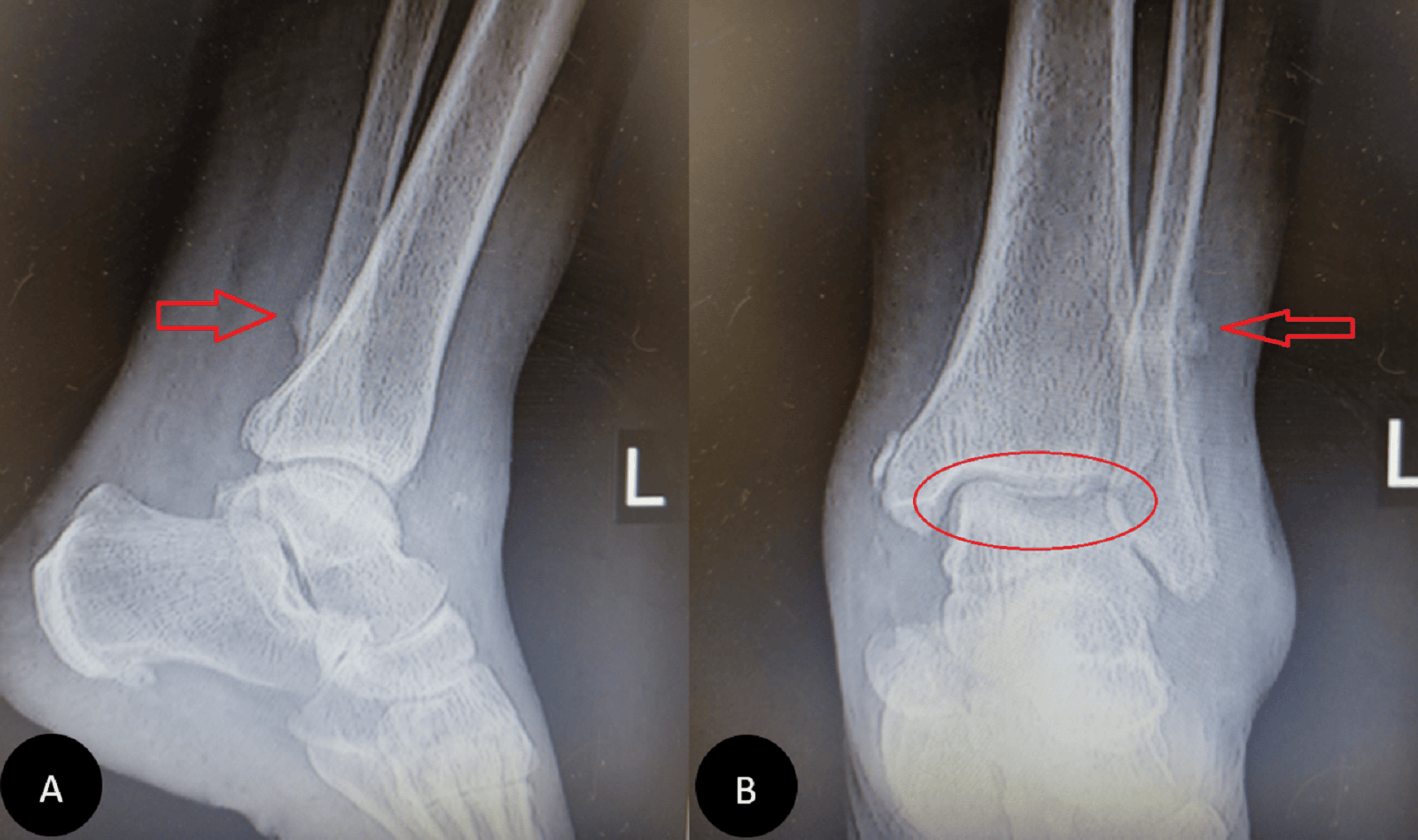
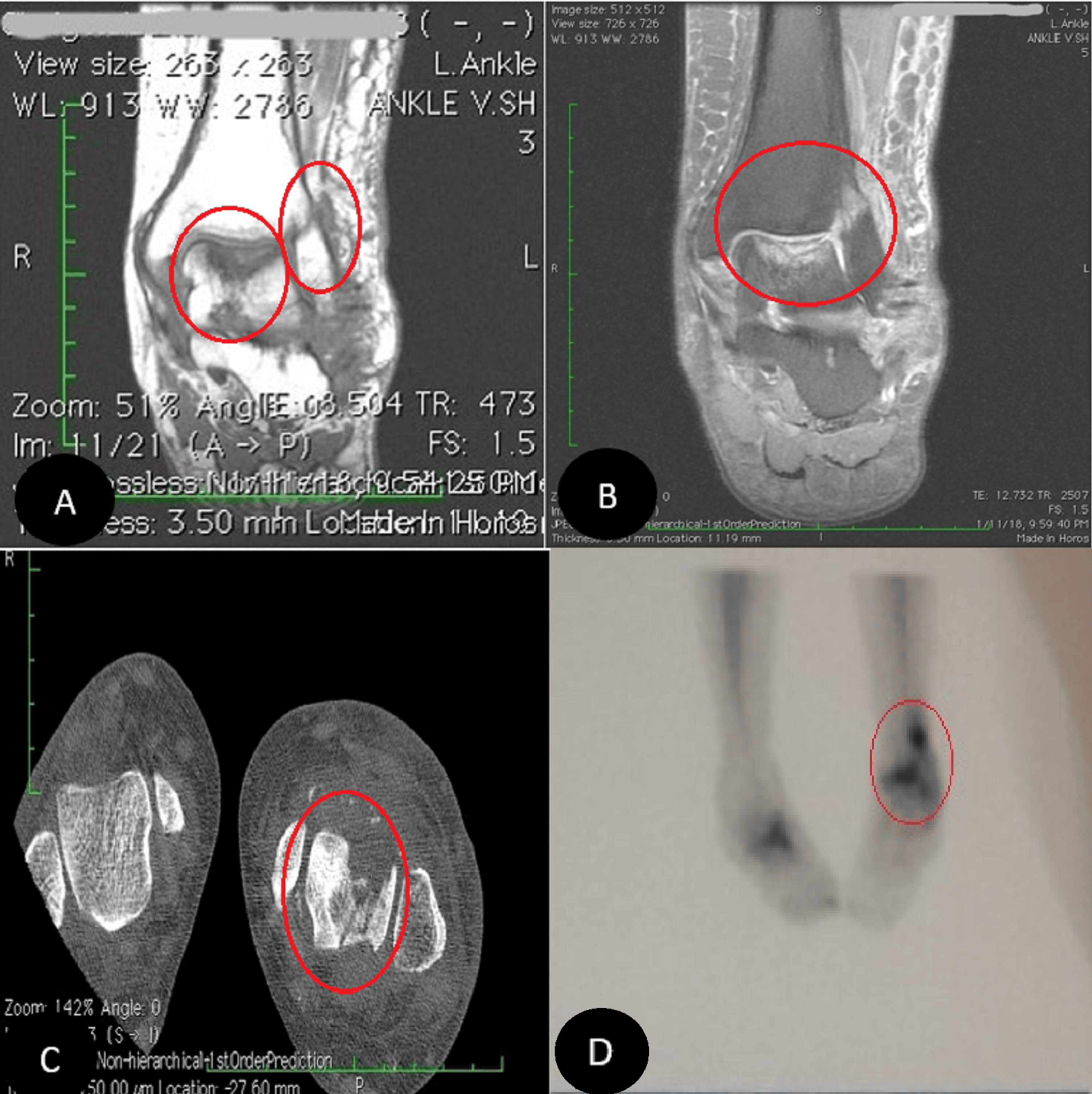
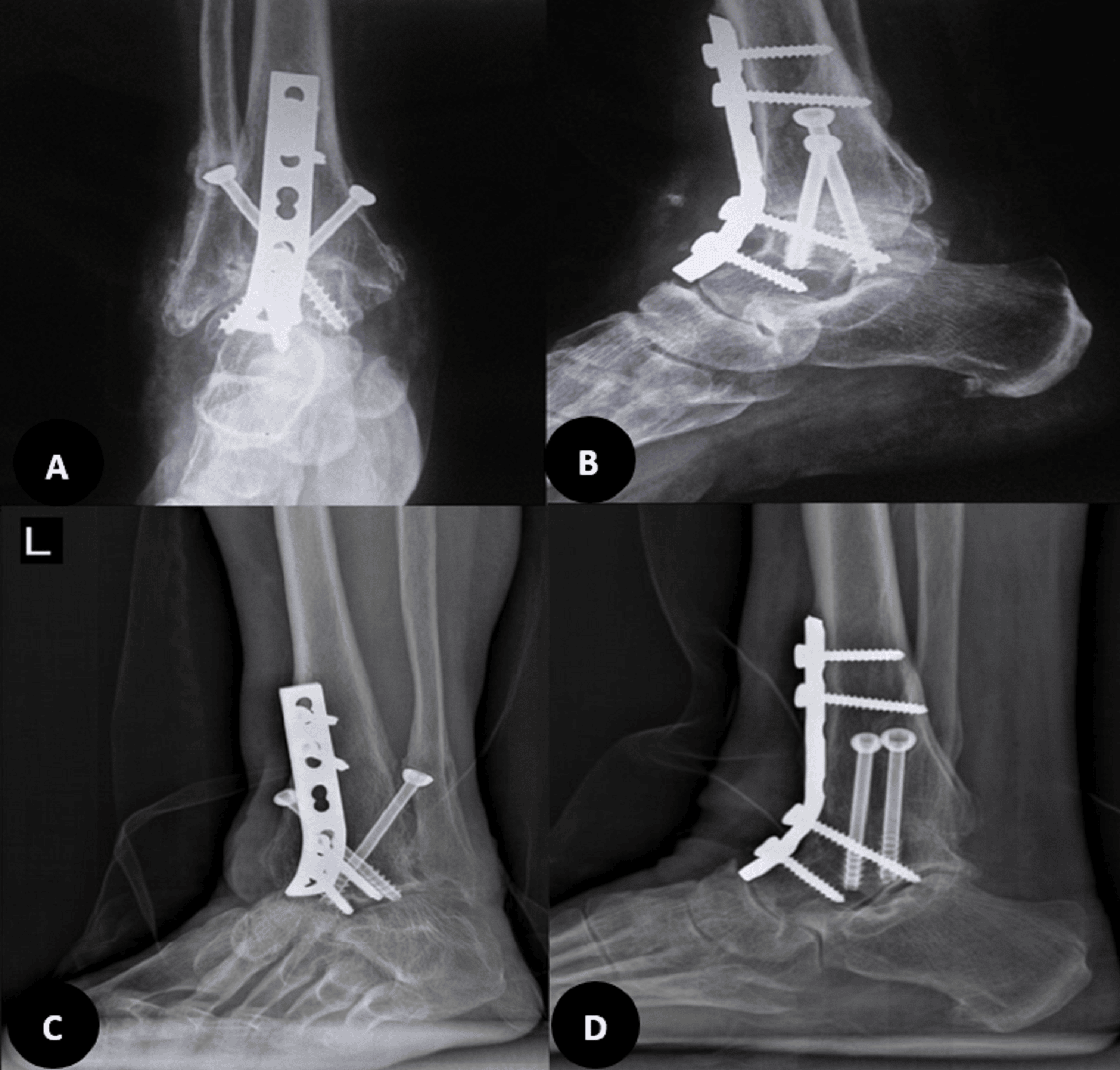
In our first visit, during the physical examination, the pain was localized in the ankle mortise with some posterolateral pain along the course of the peroneal tendons posterior to the fibula. Based on the physical examination and available ankle radiographs, we diagnosed AVNT. The patient subsequently underwent ankle arthroscopy through the standard anterior portals, the joint was cleaned, the synovium was shaved, and a small incision was conducted for peroneal assessment; this procedure revealed a subchondral collapse and extensive necrosis in the talus. Following the procedure, she experienced a partial improvement in her symptoms. However, six months later, she returned with a recurrence of symptoms (Figure 1). Upon further inquiry, she mentioned that her symptoms had recurred a month ago when she was dancing at a family party. Radiographs showed a stress fracture in her fibula and extensive AVNT. This diagnosis was confirmed through a CT scan, MRI, and bone scan (Figure 2).

Ankle-X-ray-six-months-after-arthroscopy
Figure 1: Ankle X-ray six months after arthroscopy

Pain had reduced for four months, then pain increased with activity and disabled her after a night of dancing. Subchondral fracture and fibular stress fracture are evident (A and B, respectively).

MRI,-CT-scan,-and-technetium-99m-(Tc-99m)-bone-scan
Figure 2: MRI, CT scan, and technetium-99m (Tc-99m) bone scan

Coronal MRI confirmed avascular necrosis of the talar dome with subchondral fracture (A and B, respectively). CT scan (C) and Tc-99 bone scan (D) images also revealed the pathologies.

In the second visit after arthroscopy, upon confirmation of a fibular stress fracture and significant subchondral collapse, and following a discussion of the next available options with the patient, the second procedure was performed as an ankle arthrodesis with an anterior approach. A 6 cm longitudinal incision was made anteriorly, and through the plane between the tibialis anterior and extensor hallucis longus, the ankle joint was accessed. Joint preparation was done with an osteotome, ensuring a bleeding surface on both sides. Then, manual compression with provisional pin fixation in the corrective position was performed. The fusion was planned at less than 5 degrees of valgus, 10 degrees of external rotation, and approximately 10 degrees of plantar flexion, suitable for the high-heeled shoes that she was using in her daily living activities. After confirming fluoroscopy in two planes, final 6.5 mm cannulated cancellous screws were used, and fixation was augmented with an anterior molded 4.5 mm narrow dynamic compression plate (DCP), according to our previously published anterior ankle fusion technique [13]. The foot was placed in a splint for 10 days, after which stitches were removed, and a cast was applied for four weeks. Then, walking with gradual, as-tolerated weight-bearing was initiated (Figure 3). Three months after surgery, she was pain-free, and by the sixth month, she could walk without any boot or brace, only using high-heeled shoes.

Post-operative-radiographies
Figure 3: Post-operative radiographies

Six months after the ankle surgery, a huge osteonecrosis and fibular stress fracture were managed with an acceptable, painless ankle fusion (not solid) despite the remaining necrosis (A and B, respectively). In 2024, four years after the tumor resection, complete healing of talus necrosis and solid fusion were achieved (C and D, respectively).

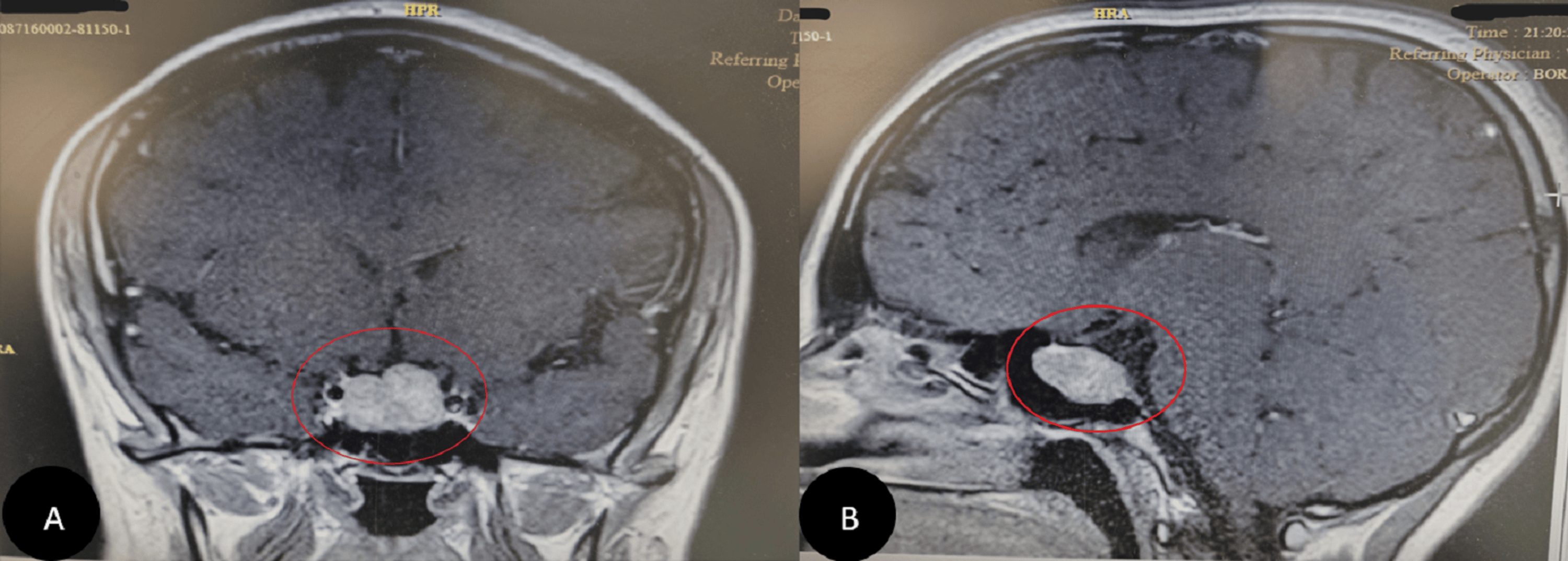
In 2020, two years after her ankle surgery, she was referred to an endocrinologist due to excessive weight gain and hirsutism. The biochemical assessment revealed the following: cortisol (8 AM) (chemiluminescence immunoassay (CLIA)) was 96 µg/dl (normal range: 4.82 – 19.5 µg/dl), and it was 22.1 µg/dl after overnight dexamethasone (normal range: < 1.8 µg/dl). Adrenocorticotropic hormone (ACTH) (CLIA) was 44.4 pg/ml (normal range: 7.2-63.3 pg/ml), and cortisol measured 5.7 µg/dl after the 48-hour low-dose dexamethasone suppression test (normal < 5 µg/dl). The results, along with symptoms (Table 1), are documented in the laboratory tests (Table 2). She was diagnosed with Cushing’s syndrome, which was subsequently confirmed as Cushing’s disease due to an ACTH-producing pituitary adenoma observed in the MRI and Brain CT (Figure 4).

Sign/symptom Severity
Weight Gain Severe
Hirsutism Severe
Hypertension Severe
Easy bruising Severe
Depression Severe
Moon face Moderate (masked with makeup)
Lethargy Moderate
Headache Moderate
Peripheral edema       _
Buffalo hump       _
Myopathy       _
Acne       _
Purple striae       _
Table 1: Cushing’s disease symptoms and signs

The hyphens in the table indicate that the patient does not have those symptoms or signs.

Laboratory test Result Reference range
Cortisol (8 AM) (CLIA) 96 µg/dl 4.82-19.5 µg/dl
Cortisol (8 AM) (after overnight dexamethasone) (CLIA) 22.1 µg/dl <1.8 µg/dl
ACTH (CLIA) 44.4 pg/ml 7.2-63.3 pg/ml
Cortisol after 48 hours of LDDST (CLIA) 5.7 µg/dl < 5 µg/dl
Table 2: Laboratory tests

CLIA: chemiluminescence immunoassay; ACTH: adrenocorticotropic hormone; LDDST: low-dose dexamethasone suppression test

Brain-MRI
Figure 4: Brain MRI

Finally, a pituitary adenoma was diagnosed using a Brain MRI as the cause of Cushing’s disease symptoms (A and B).

Finally, she underwent a tumor resection and had a dramatic response after treatment (30 kg weight loss). She revealed that she had Cushing’s syndrome symptoms since she was young. These symptoms included a puffy face, which she covered with makeup, high blood pressure, and hirsutism. In January 2024, four years after her brain surgery, during our last visit, her symptoms had significantly improved. She reported no problems with her ankle, and talus necrosis was completely healed, with a solid fusion achieved in radiographs (Figure 3).

Discussion

As far as we are aware, this case presentation represents the first instance of AVNT attributed to Cushing’s disease in the existing literature. Nevertheless, some individuals with endogenous Cushing’s syndrome have been reported to experience AVN of the femoral head [4-12].

Cushing’s syndrome is an uncommon endocrine condition marked by manifestations of hypercortisolism. The predominant cause is often an adenoma in the anterior pituitary gland that produces ACTH, referred to as Cushing’s disease [14]. The presentation of Cushing’s syndrome can vary significantly in both adults and children, influenced by the extent and duration of hypercortisolemia. However, the typical signs and symptoms of Cushing’s syndrome are widely known [15]. Although some individuals may perceive these alterations as normal and physiological, the disease can go unnoticed for an extended period, as in our case, in which it remained undiagnosed for more than 20 years.

However, it is known that steroid use is a significant contributing factor to the occurrence of bone osteonecrosis, accounting for up to 40% of non-traumatic instances of AVN [16]. The mechanisms leading to AVN due to either endogenous hypercortisolism or excess exogenous glucocorticoids are not completely understood. There are just some hypotheses that suggest that the hypertrophy of fat cells, embolization of fat, and osteocytes’ apoptosis result in impaired blood flow in the bone, ultimately causing ischemic tissue necrosis [17]. An alternative proposed theory suggests that elevated levels of glucocorticoids may cause insulin resistance and subsequently contribute to AVN [18].

Traditional X-rays often fail to detect the initial changes of AVN (as observed in our case). MRI stands as the preferred method for identifying AVN in its early phases, providing an opportunity for timely therapeutic interventions [19,20].

In an analysis of 321 cases of AVNT, the predominant treatment modalities included conservative therapies (n = 104), hindfoot fusion (n = 62), and core decompression (n = 85) [21]. These approaches reflect the primary methods employed in contemporary clinical practice for addressing AVNT.

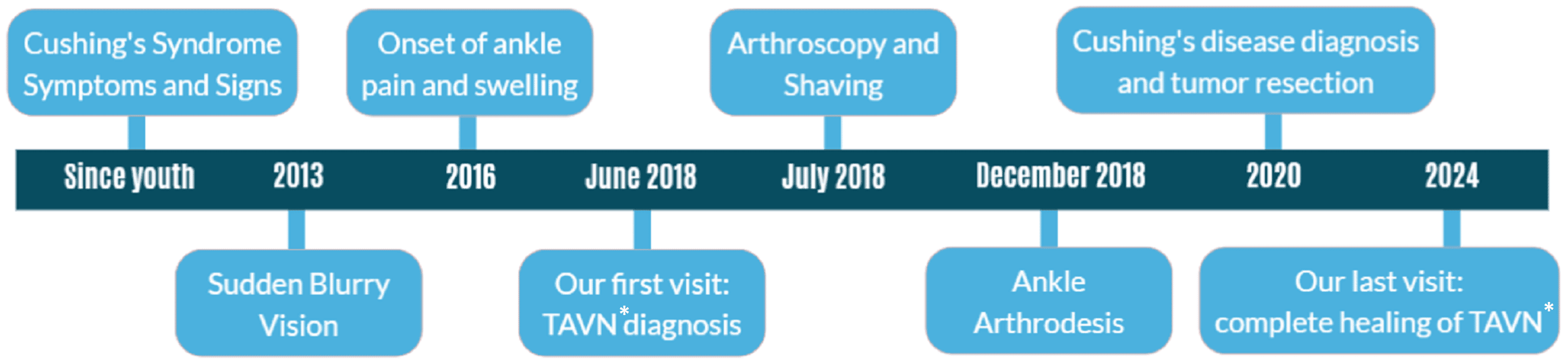
After all, we confirmed the AVNT diagnosis using MRI and bone scan and managed it with hindfoot fusion. Subsequently, the underlying issue, endogenous hypercortisolism due to an ACTH-producing pituitary adenoma, was identified and treated through resection of the tumor (Figure 5).

Case-report-timeline
Figure 5: Case report timeline

* Avascular necrosis in the talus

Conclusions

Cushing’s syndrome is a rare endocrine disorder characterized by excessive cortisol levels, commonly caused by an ACTH-producing adenoma in the pituitary gland, known as Cushing’s disease. Cushing’s disease may be one of the rare causes of AVNT. To the best of our knowledge, this is the first instance of AVNT due to Cushing’s disease described in the literature. Since atraumatic AVNT is rare in itself, a multidisciplinary approach can lead us to a more rapid and proper diagnosis, as each symptom may be masked or considered rare within its subspecialty field.

References

  1. Chang CC, Greenspan A, Gershwin ME: Osteonecrosis: current perspectives on pathogenesis and treatment. Semin Arthritis Rheum. 1993, 23:47-69. 10.1016/s0049-0172(05)80026-5
  2. Zhang H, Fletcher AN, Scott DJ, Nunley J: Avascular osteonecrosis of the talus: current treatment strategies. Foot Ankle Int. 2022, 43:291-302. 10.1177/10711007211051013
  3. Parekh SG, Kadakia RJ: Avascular necrosis of the talus. J Am Acad Orthop Surg. 2021, 29:e267-78. 10.5435/JAAOS-D-20-00418
  4. Belmahi N, Boujraf S, Larwanou MM, El Ouahabi H: Avascular necrosis of the femoral head: an exceptional complication of Cushing’s disease. Ann Afr Med. 2018, 17:225-7. 10.4103/aam.aam_75_17
  5. Salazar D, Esteves C, Ferreira MJ, Pedro J, Pimenta T, Portugal R, Carvalho 😧 Avascular femoral necrosis as part of Cushing syndrome presentation: a case report. J Med Case Rep. 2021, 15:287. 10.1186/s13256-021-02882-7
  6. Alaya Z, Braham M, Bouajina E: Aseptic femur head necrosis revealing Cushing’s disease: a rare presentation. J Clin Surg Res. 2020, 1:10.31579/2768-2757/002
  7. Phillips KA, Nance EP Jr, Rodriguez RM, Kaye JJ: Avascular necrosis of bone: a manifestation of Cushing’s disease. South Med J. 1986, 79:825-9. 10.1097/00007611-198607000-00011
  8. Koch CA, Tsigos C, Patronas NJ, Papanicolaou DA: Cushing’s disease presenting with avascular necrosis of the hip: an orthopedic emergency. J Clin Endocrinol Metab. 1999, 84:3010-2. 10.1210/jcem.84.9.5992
  9. Modroño N, Torán CE, Pavón I, Benza ME, Guijarro G, Navea 😄 Cushinǵs syndrome and avascular hip necrosis: presentation of two patients [Article in Spanish]. Rev Clin Esp (Barc). 2014, 214:e93-6. 10.1016/j.rce.2014.05.003
  10. Camporro F, Bulacio E, Gutiérrez Magaldi I: Bilateral osteonecrosis of the hip secondary to endogenous Cushing’s syndrome due to a recently-diagnosed carcinoid tumour of the lung [Article in Spanish]. Med Clin (Barc). 2016, 147:228. 10.1016/j.medcli.2016.03.042
  11. Ha JS, Cho HM, Lee HJ, Kim SD: Bilateral avascular necrosis of the femoral head in a patient with asymptomatic adrenal incidentaloma. Hip Pelvis. 2019, 31:120-3. 10.5371/hp.2019.31.2.120
  12. Anand A, Jha CK, Singh PK, Sinha U, Ganesh A, Bhadani PP: Avascular necrosis of femur as a complication of Cushing’s syndrome due to adrenocortical carcinoma. Am Surg. 2023, 89:2701-4. 10.1177/00031348221129510
  13. Gharehdaghi M, Rahimi H, Mousavian A: Anterior ankle arthrodesis with molded plate: technique and outcomes. Arch Bone Jt Surg. 2014, 2:203-9.
  14. Lindholm J, Juul S, Jørgensen JO, et al.: Incidence and late prognosis of cushing’s syndrome: a population-based study. J Clin Endocrinol Metab. 2001, 86:117-23. 10.1210/jcem.86.1.7093
  15. Nieman LK, Biller BM, Findling JW, Newell-Price J, Savage MO, Stewart PM, Montori VM: The diagnosis of Cushing’s syndrome: an Endocrine Society Clinical Practice Guideline. J Clin Endocrinol Metab. 2008, 93:1526-40. 10.1210/jc.2008-0125
  16. Konarski W, Poboży T, Konarska K, Śliwczyński A, Kotela I, Hordowicz M, Krakowiak J: Osteonecrosis related to steroid and alcohol use-an update on pathogenesis. Healthcare (Basel). 2023, 11:1846. 10.3390/healthcare11131846
  17. Chan KL, Mok CC: Glucocorticoid-induced avascular bone necrosis: diagnosis and management. Open Orthop J. 2012, 6:449-57. 10.2174/1874325001206010449
  18. Hartmann K, Koenen M, Schauer S, Wittig-Blaich S, Ahmad M, Baschant U, Tuckermann JP: Molecular actions of glucocorticoids in cartilage and bone during health, disease, and steroid therapy. Physiol Rev. 2016, 96:409-47. 10.1152/physrev.00011.2015
  19. Kaste SC, Karimova EJ, Neel MD: Osteonecrosis in children after therapy for malignancy. AJR Am J Roentgenol. 2011, 196:1011-8. 10.2214/AJR.10.6073
  20. Pierce TP, Jauregui JJ, Cherian JJ, Elmallah RK, Mont MA: Imaging evaluation of patients with osteonecrosis of the femoral head. Curr Rev Musculoskelet Med. 2015, 8:221-7. 10.1007/s12178-015-9279-6
  21. Gross CE, Haughom B, Chahal J, Holmes GB Jr: Treatments for avascular necrosis of the talus: a systematic review. Foot Ankle Spec. 2014, 7:387-97. 10.1177/1938640014521831

From https://www.cureus.com/articles/221491-talus-avascular-necrosis-as-a-rare-complication-of-cushings-disease-a-case-report?score_article=true#!/

Day 4, Cushing’s Awareness Challenge

This is one of the suggestions from the Cushing’s Awareness Challenge post:

“Give yourself, your condition, or your health focus a mascot. Is it a real person? Fictional? Mythical being? Describe them. Bonus points if you provide a visual!”


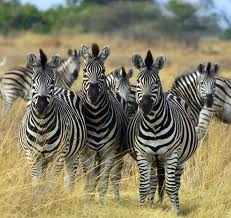
Our “Official mascot” is the zebra.

Our mascot

Our mascot

In med school, student doctors are told “When you hear hoofbeats, think horses, not zebras“.

According to Wikipedia: “Zebra is a medical slang term for a surprising diagnosis. Although rare diseases are, in general, surprising when they are encountered, other diseases can be surprising in a particular person and time, and so “zebra” is the broader concept.

The term derives from the aphorism ‘When you hear hoofbeats behind you, don’t expect to see a zebra’, which was coined in a slightly modified form in the late 1940s by Dr. Theodore Woodward, a former professor at the University of Maryland School of Medicine in Baltimore.  Since horses are the most commonly encountered hoofed animal and zebras are very rare, logically you could confidently guess that the animal making the hoofbeats is probably a horse.

zebra-mug

A zebra cup my DH bought me 🙂

By 1960, the aphorism was widely known in medical circles.”

Why? Because those of us who DO have a rare disorder know from personal experience what it feels like to be dismissed by a doctor or in many cases, multiple doctors. Many physicians have completely lost the ability to even imagine that zebras may exist!  Cushing’s is too rare – you couldn’t possible have that.  Well… rare means some people get it.  Why couldn’t it be me?

Although one of my signature images has a zebra, many have rainbows or butterflies in them so I guess that I consider those my own personal mascots.

I posted this in 2010 in 40 Days of Thankfulness: Days Twenty-Two through Thirty

I have a special affinity for rainbows. To me, a rainbow is a sign that things are going to be ok.

Years ago, our little family was in Florida. I felt guilty about going because my dad was terminally ill with his second bout of colon cancer. I was worried about him and said a little prayer for him.

I was lying on the beach while DH and our son were in the ocean and I looked up and saw a rainbow. It was a perfectly clear, sunny afternoon. I even called the people out of the water, in case it was something I wanted to see that didn’t really exist. They saw it, too.

Where in the world did that rainbow come from, if it wasn’t a sign that everything would be ok?

Butterflies are something else again.  I like them because I would like to think that my life has evolved like a butterfly’s, from something ugly and unattractive to something a big easier on the eye.

My Cushie self was the caterpillar, post-op is more butterfly-ish, if not in looks, in good deeds.

From July, 2008

For as long as I can remember, I’ve loved butterflies for their beauty and what they stood for. I’ve always wanted to shed my cocoon and become someone else, someone beautiful, graceful.

One of my first memories as a kid was knocking on the back door of my house and when my mom answered, I’d pretend to somehow be an orphan, looking for some kind person to take me in. And I would try to be that different child, with new habits, in the hopes that my parents would somehow think better of me, love me more as this poor homeless kid than they did as their own.

The butterfly was trying to emerge but it never got too far. Somehow, I would slip into my original self and be a bother to my parents.

Hope springs eternal, though!