Cushing’s syndrome caused by ACTH-producing thymic typical carcinoid with local invasion and regional lymph node metastasis: a case report

  • Wakako Fujiwara Email author View ORCID ID profile,
  • Tomohiro Haruki,
  • Yoshiteru Kidokoro,
  • Takashi Ohno,
  • Yohei Yurugi,
  • Ken Miwa,
  • Yuji Taniguchi and
  • Hiroshige Nakamura
Surgical Case Reports20184:55

https://doi.org/10.1186/s40792-018-0459-7

Received: 28 March 2018

Accepted: 31 May 2018

Published: 11 June 2018

Abstract

Background

Ectopic ACTH-producing thymic carcinoid tumors are rare, but often behave aggressively with local invasion and distant metastasis. We herein report a case of ACTH-producing thymic typical carcinoid tumor with lymph node metastasis treated by surgery and postoperative radiation therapy.

Case presentation

A 61-year-old woman was admitted to be evaluated for hypoglycemia and hypokalemia. Laboratory data revealed elevation of serum cortisol and ACTH levels. Overnight administration of 8 mg dexamethasone did not suppress plasma ACTH. Chest CT demonstrated a tumor of 30 mm in diameter and enlargement of the lymph node at the anterior mediastinum. Ectopic ACTH syndrome was suspected and total thymectomy and lymph node dissection were performed. The histopathological examination indicated typical carcinoid tumor and mediastinal lymph node metastasis, and immunohistochemical staining was positive for ACTH. The plasma ACTH level decreased immediately after surgery. She received postoperative radiation therapy of 60 Gy.

Conclusion

Ectopic ACTH-producing thymic typical carcinoid tumors are rare, and it is important to consider this disease and perform appropriate treatment.

Keywords

Thymic carcinoid ACTH Cushing’s syndrome Total thymectomy

Background

Among adrenocorticotrophic hormone (ACTH)-dependent Cushing’s syndrome, 10–20% is due to nonpituitary tumors termed ectopic ACTH syndrome (EAS). The most common cause of EAS is small cell lung cancer, followed by thymic carcinoids. Thymic carcinoids are very rare neuroendocrine tumors that often complicate endocrine disorders. Although previously assumed to be variants of bronchopulmonary carcinoid tumors, they are generally more aggressive and difficult to treat. It is widely accepted that surgical resection is the only curative treatment for localized lesions, and the efficacy of chemotherapy and radiotherapy has not been well established.

We herein report a case of EAS caused due to a thymic typical carcinoid tumor successfully treated by surgery followed by radiation.

Case presentation

A 61-year-old woman visited her primary care doctor because of general malaise, face edema, skin pigmentation, insomnia, and polyuria. Blood examination revealed marked hypokalemia and impaired glucose tolerance. Bilateral adrenal enlargement was observed on abdominal ultrasonography, and she was referred to our hospital for further examination. Endocrine examination showed both elevated plasma cortisol (107.7 pg/mL) and ACTH levels (1100 pg/mL), and increased urinary excretion of free cortisol (6650 mcg/day) and 17-ketogenic steroids (78.7 mg/day). Plasma cortisol and ACTH levels were elevated without any diurnal rhythm. Plasma cortisol was not suppressed by the overnight 8-mg dexamethasone suppression test. There was no response of plasma ACTH or cortisol to exogenous corticotropin-releasing hormone (CRH). Other hormones of the pituitary, thyroid, and adrenal medulla were all in normal ranges. Thus, ectopic ACTH syndrome was strongly suggested.
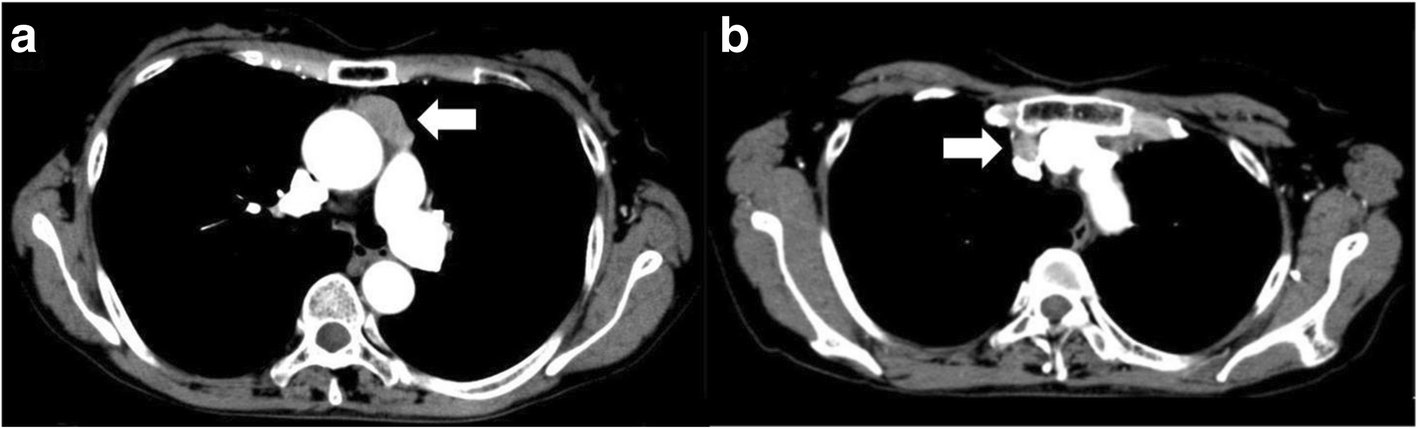
Chest computed tomography (CT) demonstrated a tumor of approximately 30 mm in diameter and enlargement of the lymph node in the anterior mediastinum (Fig. 1). High accumulation of 18-fluorodeoxyglucose in the anterior mediastinum tumor (maximum standardized uptake value [SUV] 2.48) but not in the lymph node was observed on positron emission tomography (PET)/CT. Somatostatin receptor scintigraphy also revealed mild uptake in the tumor. Collectively, these data were consistent with a diagnosis of EAS caused by an anterior mediastinum tumor, possibly thymic carcinoid tumor. There was no abnormal finding indicating multiple endocrine neoplasia (MEN).

Figure 1
Fig. 1

Chest CT image. A tumor (30 × 30 × 14 mm) without invasion localized in the anterior mediastinum (a). Enlargement of lymph node (b)
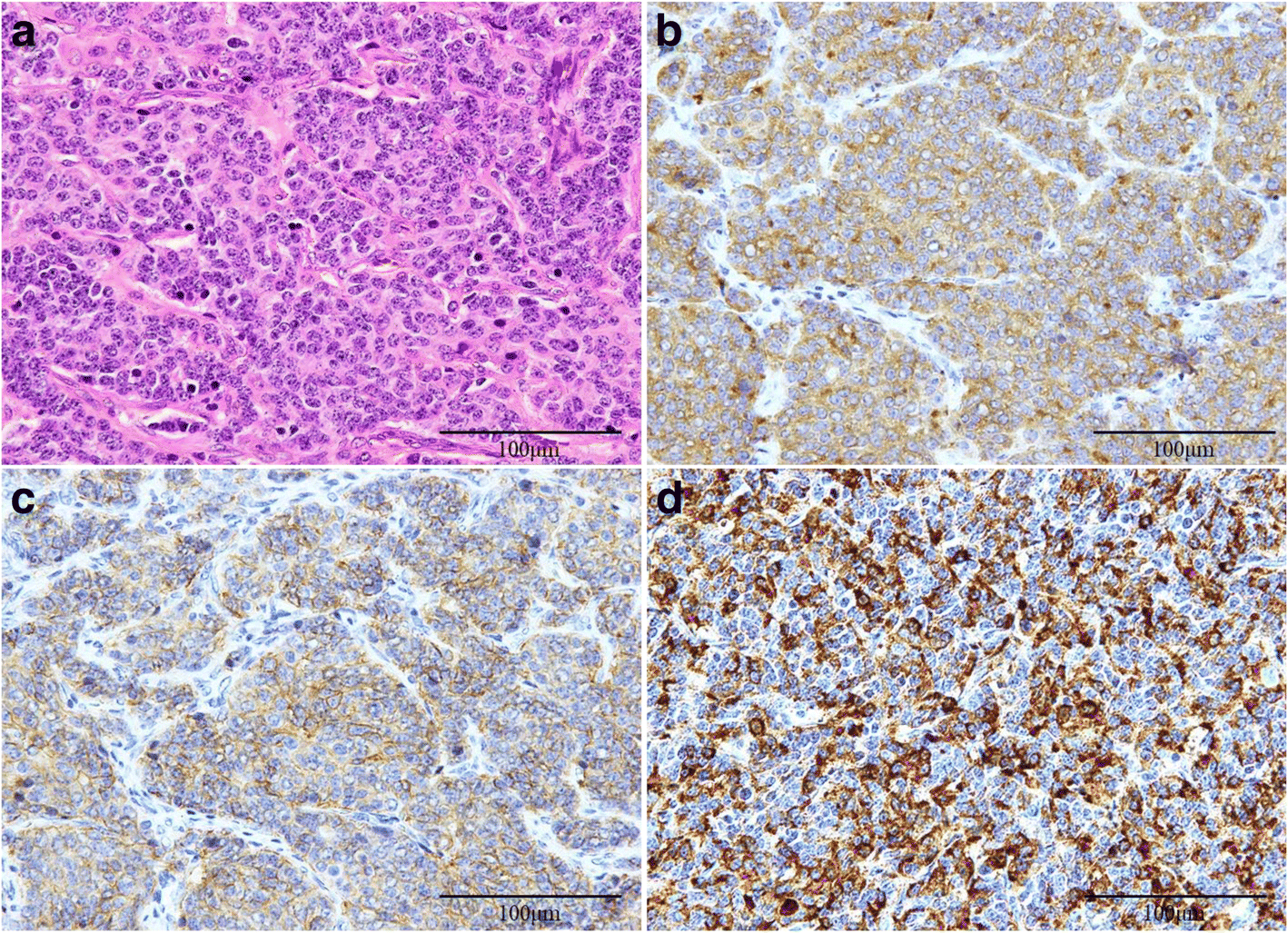
Before the operation, we administered 500 mg/day of metyrapone, and both ACTH and cortisol levels decreased to 68.5 pg/mL and 3.02 mcg/mL respectively. After 2 months of medical treatment, her symptoms were relieved and bilateral adrenal enlargement decreased. Under open thoracotomy by median sternotomy, she underwent total thymectomy, pericardial partial resection, dissection of the anterior regional and the right paratracheal lymph nodes, and sampling of the subcarinal lymph node. Histopathologically, the tumor consisted of round to spindle-shaped cells with high nucleus/cytoplasm ratios containing finely granular chromatin. Necrosis was absent, and mitotic figures were infrequent, with less than two per ten high-power fields (HPF). Tumor cells were positive for chromogranin A, synaptophysin, CD-56, and ACTH on immunohistochemistry (Fig. 2). The tumor had invaded the pericardium, and mediastinal lymph nodes were positive for metastasis. The final diagnosis was stage IVA (pT2N1M0) ACTH-producing thymic typical carcinoid tumor. The plasma ACTH level decreased to 14.8 pg/mL, less than normal, immediately after surgery (Fig. 3). Hydrocortisone was administered during the perioperative period and was gradually tapered, and finished 4 months after surgery. She received postoperative radiation therapy of 60 Gy. At 8 months after surgery, she showed no sign of Cushing’s syndrome or recurrence of the tumor without any medications.

Figure 2
Fig. 2

HE staining (a) indicated typical carcinoid tumor. Tumor cells were positive for synaptophysin (b), CD-56 (c), and ACTH (d) on immunostaining
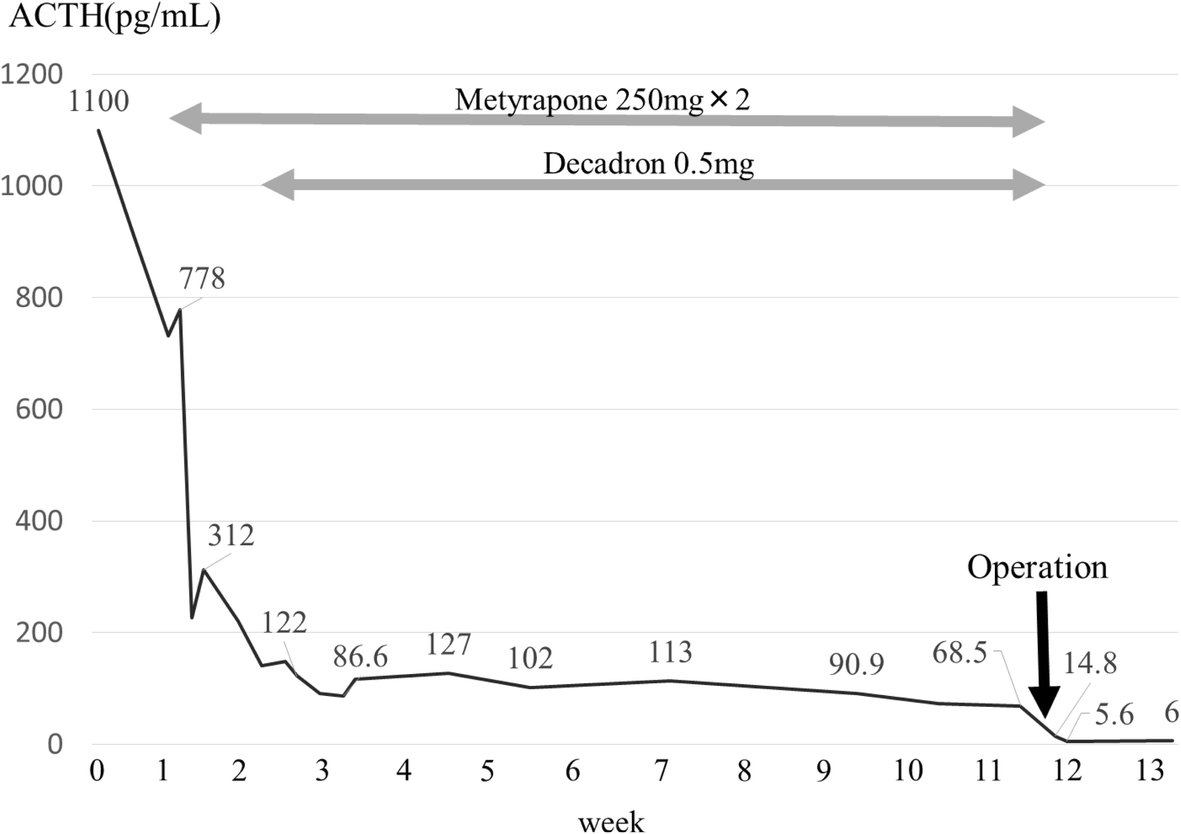
Figure 3
Fig. 3

Changes in plasma ACTH levels during the clinical course

Discussion

Ectopic ACTH-producing thymic carcinoid tumor is an extremely rare clinical condition, comprising 29% of all thymic carcinoids and 5–42% of all ectopic ACTH-producing syndrome [12]. It has been reported that radical surgical resection of the ACTH source is the only effective treatment [3]. Prior to surgery, medication therapy should be done to prevent perioperative complications and perform surgery when hormone values and symptoms are controlled. Furthermore, there is a risk of postoperative adrenal insufficiency; strict perioperative management is desirable.

Unlike pulmonary and other carcinoid tumors, thymic carcinoids often behave aggressively as an advanced disease with local invasion, lymph node metastasis, and distant metastasis because of the high proportion of atypical carcinoid tumors. Regarding ACTH-producing thymic tumors, Neary et al. reported three cases of well-differentiated ACTH-producing thymic neuroendocrine carcinomas, and the patients had no lymph node metastasis, recurrence, or death. On the other hand, nine cases of moderately differentiated ACTH-producing thymic neuroendocrine carcinomas almost had lymph node metastasis, and all patients had recurred [4]. However, our case was a typical carcinoid tumor with lymph node metastasis and local invasion.

As a surgical procedure, a median sternotomy approach is generally recommended because this enables excision of the entire thymus, perithymic fat, other affected mediastinal structure, and aggressive lymph node dissection. However, there is no standard for lymph node dissection in thymic epithelial tumors even though lymph node metastasis is an important prognostic factor. Hwang et al. recommended right paratracheal node dissection in addition to anterior regional lymph node dissection for TNM clinical stage II or higher diseases because they are crucial stations on the lymphatic pathway of thymic malignancies [5]. In the present case, we performed total thymectomy, followed by lymph node dissection of the anterior regional and right paratracheal nodes, and sampling of subcarinal lymph node via median sternotomy. The anterior mediastinal lymph nodes were positive for metastasis. Consequently, we considered the extent of lymph node dissection to be adequate, and radical resection was completed because the postoperative plasma ACTH level was successfully decreased. Although a good prognosis is expected by combined surgery and radiation, relatively high malignancy characteristics are observed compared with typical carcinoids, and strict follow-up is needed.

Conclusion

We report a rare case of ectopic ACTH-producing thymic typical carcinoid with local invasion and regional lymph node metastasis. Surgical resection was effective to control Cushing’s syndrome in this case, and nodal staging may help to guide adjuvant treatment, but systemic nodal dissection/sampling is yet to be standardized.

Abbreviations

ACTH: 

Adrenocorticotrophic hormone

CRH: 

Corticotropin-releasing hormone

CT: 

Computed tomography

SUV: 

Standardized uptake value

PET: 

Positron emission tomography

MEN: 

Multiple endocrine neoplasia

HPF: 

High-power fields

CD-56: 

Cluster of differentiation-56

Declarations

Acknowledgements

The authors thank Dr. Nosaka and Dr. Umekita for diagnostic assessment of this case.

Availability of data and materials

The dataset supporting the conclusions of this article is included within the article.

Authors’ contributions

WF and YT were the attending doctors for the patient. WF, YK, KM, YT, and HN performed the operation. WF, TH, and HN drafted this manuscript. All authors have read and approved the final manuscript.

Ethics approval and consent to participate

No applicable.

Consent for publication

This patient consented to the reporting of this case in a scientific publication.

Competing interests

The authors declare that they have no competing interests.

Publisher’s Note

Springer Nature remains neutral with regard to jurisdictional claims in published maps and institutional affiliations.

Open AccessThis article is distributed under the terms of the Creative Commons Attribution 4.0 International License (http://creativecommons.org/licenses/by/4.0/), which permits unrestricted use, distribution, and reproduction in any medium, provided you give appropriate credit to the original author(s) and the source, provide a link to the Creative Commons license, and indicate if changes were made.

References

  1. Yoshikawa T, Noguchi Y, Matsukawa H, et al. Thymus carcinoid producing parathyroid hormone (PTH)-related protein: report of a case. Surg Today. 1994;24:544–7.View ArticlePubMedGoogle Scholar
  2. Alexandraki KI, Grossman AB. The ectopic ACTH syndrome. Rev Endocr Metab Disord. 2010;11:117–26.View ArticlePubMedGoogle Scholar
  3. Zhou X, Hnag J, Che J, et al. Surgical treatment of ectopic adrenocorticotropic hormone syndrome with intra-thoracic tumor. J Thorac Dis. 2016;8:888–93.View ArticlePubMedPubMed CentralGoogle Scholar
  4. Neary NM, Lopez-Chavez A, Abel BS, et al. Neuroendocrine ACTH-producing tumor of the thymus—experience with 12 patients over 25 years. J Clin Endocrinol Metab. 2012;97:2223–30.View ArticlePubMedPubMed CentralGoogle Scholar
  5. Hwang Y, Park IK, Park S, et al. Lymph node dissection in thymic malignancies: implication of the ITMIG lymph node map, TNM stage classification, and recommendations. J Thorac Oncol. 2016;11:108–14.View ArticlePubMedGoogle Scholar

Copyright

© The Author(s). 2018

Radiation to the Whole Pituitary Compartment Effective at Controlling Cushing’s

Radiation therapy targeting the entire sella — the compartment where the pituitary gland resides at the base of the brain — is effective at controlling Cushing’s disease and should be considered for patients with suspected invasive adenoma tumors, a new study shows.

The study, “Technique of Whole-Sellar Stereotactic Radiosurgery for Cushing’s Disease: Results from a Multicenter, International Cohort Study,” was published in the journal World Neurosurgery.

In patients with Cushing’s disease, excess cortisol levels are caused by a kind of pituitary tumor (adenoma)  that secretes too much adrenocorticotropic hormone (ACTH).

Removing the adenoma using the transsphenoidal approach — a minimally invasive procedure performed through the nose to remove pituitary tumors — remains the first-line treatment for patients with newly diagnosed Cushing’s syndrome. For patients who fail surgery and medical management, stereotactic radiosurgery (SRS) may be used.

SRS is not a surgery in the traditional sense, as it does not require an incision. Instead, SRS uses many focused radiation beams to treat tumors and other problems in the brain, neck and other parts of the body.

While surgery may achieve very good remission rates in patients with an identifiable adenoma, as many as 50 percent of Cushing’s disease patients have no identifiable adenoma on magnetic resonance imaging (MRI) scans. In such cases, surgeons can opt for SRS targeting the entire sella, a procedure called whole-sellar SRS. However, the outcomes of whole-sellar SRS are not fully known.

Researchers conducted an international, retrospective study to analyze the outcomes of Cushing’s disease patients who received whole-sellar SRS.

The study enrolled 68 patients, including 52 who received the procedure for persistent disease, nine whose disease returned after surgery, and seven as their initial treatment.

Patients underwent a type of SRS known as gamma knife radiosurgery (GKRS), which uses small beams of gamma rays to target and treat brain tumors. They were then followed for a mean of 5.3 years.

Whole-sellar SRS was effective at controlling the disease, researchers found. In the five years after receiving the treatment, 75.9 percent of patients achieved a remission. Of those, 86% remained recurrence-free for five or more years.

The mean volume of area targeted using whole-sellar SRS was 2.6 cm3. Researchers discovered that treatment volumes greater than 1.6 cm3 were associated with a shorter time to remission, indicating that targeting a larger portion is more beneficial.

Also, statistical analysis revealed that a reduced dose of radiation was linked to recurrence, suggesting that a higher dose is more advantageous.

Regarding adverse events, 22.7% of patients who underwent whole-sellar SRS developed loss of one or more pituitary hormones.

Researchers also compared outcomes of patients who underwent whole-sellar SRS to those who received adenoma-targeted SRS, of which the latter involves irradiating only the tumor.

Interestingly, there were no differences in remission rate, time to remission, recurrence-free survival, or new endocrine disease development between both groups.

“Whole-sellar GKRS is effective at controlling [Cushing’s disease] when an adenoma is not clearly defined on imaging or when an invasive adenoma is suspected at the time of initial surgery,” the researchers concluded.

From https://cushingsdiseasenews.com/2018/05/25/precise-radiation-pituitary-sella-effective-control-cushings-study/

Endoscopic Surgery Should Be Standard for Cushing’s Patients with Large Tumors

Cushing’s disease patients with macroadenomas — pituitary tumors larger than 10 mm — should undergo transsphenoidal pituitary surgery using the endoscopic technique, according to a new systematic review.

The study, “Endoscopic vs. microscopic transsphenoidal surgery for Cushing’s disease: a systematic review and meta-analysis,” was published in the journal Pituitary.

Cushing’s disease develops due to an adrenocorticotropic hormone (ACTH)-secreting pituitary adenoma. The first-choice treatment for Cushing’s disease is transsphenoidal pituitary surgery, which is performed through the nose to remove pituitary tumors.

There are two main methods to conduct this kind of surgery: microscopic, which is done using a magnifying tool, and endoscopic surgery, which uses a thin, lighted tube with a tiny camera. The microscopic technique was the established method for transsphenoidal surgery, until physicians started doing endoscopic pituitary surgery in 1992.

Most surgical centers choose to perform either the microscopic or endoscopic technique but do not offer both. As a result, only a few small studies have compared the outcomes of microscopic and endoscopic surgical techniques in Cushing’s disease performed at the same center. These studies showed no clear differences in remission rates or surgical morbidity.

To date, no systematic review comparing the microscopic and the endoscopic surgical techniques in Cushing’s disease has been conducted and, therefore, convincing evidence to support either technique is lacking.

To address this, researchers set out to conduct a systematic review and meta-analysis that compares the endoscopic and microscopic transsphenoidal surgery techniques for Cushing’s disease with regards to surgical outcomes and complication rates.

Researchers searched through nine electronic databases to identify potentially relevant articles. In total, 97 cohort studies with 6,695 patients were included in the study. Among the total patient population, 5,711 received microscopical surgery and 984 were endoscopically operated.

Overall remission was achieved in 80 percent of patients, with no clear differences between the techniques. The recurrence rate was around 10 percent, and short-term mortality was less than 0.5 percent.

Cerebrospinal fluid leak (due to a hole or a tear) occurred more often in patients who underwent endoscopic surgery. On the other hand, transient diabetes insipidus — short-term diabetes — occurred more often in patients who received endoscopic surgery.

When classifying patients by tumor size, however, researchers found that patients with macroadenomas — tumors larger than 10 mm — had higher rates of remission and lower recurrence rates after endoscopic surgery. Patients with microadenomas (tumors smaller than 10 mm) had comparable outcomes with either technique.

“Endoscopic surgery for patients with Cushing’s disease reaches comparable results for microadenomas, and probably better results for macroadenomas than microscopic surgery,” the investigators wrote.

Taking these results into account, the researchers suggest that endoscopic surgery may be considered the current standard of care, though microscopic surgery can be used based on the neurosurgeon’s preference.

They also emphasize that centers that solely perform the microscopic technique should consider at least referring Cushing’s disease patients with macroadenomas to a center that performs the endoscopic technique.

From https://cushingsdiseasenews.com/2018/05/24/endoscopic-surgery-more-effective-macroadenomas-cushings-study/

Etomidate Found Effective in Severe Cushing’s Syndrome

Etomidate — a steroid synthesis blocker — is an effective treatment for patients with severe Cushing’s syndrome who do not respond to ketoconazole, according to a new case report from Mexico.

The report, “Etomidate in the control of severe Cushing’s syndrome by neuroendocrine carcinoma,” appeared in the journal Clinical Case Reports.

The investigators reported the case of a 51-year-old woman with ectopic Cushing’s syndrome caused by a pancreatic tumor. Ectopic Cushing’s refers to cases of excess secretion of adrenocorticotropin hormone (ACTH) outside the pituitary or adrenal glands.

The patient underwent distal pancreatectomy — the surgical removal of the bottom half of the pancreas — in 2015 due to an ACTH-secreting tumor. Although she had a good initial response, liver metastasis was evident by 2016.

Compared to measurements in 2016, morning blood cortisol, 24-hour urinary-free cortisol, and ACTH levels significantly increased in 2017. The patient also showed low levels of the luteinizing and follicle-stimulating hormones, which the scientists attributed to her severe hypercortisolism (excess cortisol levels).

The woman was being treated with ketoconazole to lower her cortisol values and later received chemoembolization — a method to reduce blood supply and deliver chemotherapy directly to a tumor — for her liver metastasis.

Although ketoconazole is generally the treatment of choice for the control of hormone production in the adrenal glands, its effectiveness is often limited and is associated with side effects, clinicians noted.

In April 2017, the patient arrived at the emergency room with sepsis — a potentially life-threatening complication of an infection — that originated in the gut.

Because ketoconazole had failed to lower cortisol levels, the patient started receiving infused etomidate, an inhibitor of the enzyme 11‐beta‐hydroxylase that prevents cortisol synthesis.

This treatment was stopped one day before the bilateral removal of the adrenal glands as a definitive treatment for the elevated production of cortisol.

While the patient experienced decreased levels of potassium, calcium, and magnesium with an initial dose of 0.04 mg per kg body weight an hour of etomidate, a gradual decrease of etomidate — depending on her cortisol levels — corrected these alterations.

After surgery, the patient showed a significant improvement in her general health, including control of her sepsis. She is currently taking hydrocortisone and fludrocortisone, with treatment for liver metastasis pending.

“Etomidate is a very effective drug in severe Cushing’s syndrome that is refractory to ketoconazole,” the researchers wrote.

“Control of the serum cortisol levels in ectopic Cushing’s syndrome can be obtained with infusion rates much lower than those used in anesthesia, without respiratory side effects,” they added.

The authors recommend an initial dose of etomidate of 0.04 mg/kg per hour, daily monitoring of 24-hour urinary cortisol and cortisol levels, and a gradual decrease of the etomidate dose according to daily measurements of metabolites.

From https://cushingsdiseasenews.com/2018/05/17/severe-cushings-syndrome-case-study-finds-etomidate-effective-therapy/

Study Describes 6 Common Surgical Failures in Cushing’s Disease Treatment

To help improve the effectiveness of surgical treatment of Cushing’s disease, researchers conducted a study to determine common failures. They classified these failures into six different categories.

Results were reported in the study, “Root cause analysis of diagnostic and surgical failures in the treatment of suspected Cushing’s disease,” published in the Journal of Clinical Neuroscience.

The surgical removal of lesions that secrete excess adrenocorticotropic hormone (ACTH) is the first line of treatment for patients with Cushing’s disease. But while this approach is effective in reducing cortisol levels, up to 31 percent of patients fail to achieve remission.

When initial surgery is ineffective, additional surgical procedures may help to improve patient outcomes. Medications also are used for those who do not see results from surgery.

Recognizing the factors that contribute to the failure of surgical treatment is crucial to avoiding a deterioration of patient health and to improving long-term outcomes.

Researchers at Harvard Medical School examined the clinical records of 51 patients suspected of having Cushing’s disease. These patients were followed and surgically treated at the Brigham and Women’s Hospital in Boston, from April 2008 to July 2017.

In more than 82 percent of the cases, tissue removed during surgery confirmed that the patients had excess ACTH caused by benign tumors in the adrenal gland. Among the remaining patients, two had additional ACTH-secreting tumors, four had no obvious tumor or abnormal tissue, one had a pituitary mass without ACTH secretion, and one had no evidence of tissue changes despite the detection of a tumor during exploratory surgery.

They were followed for an average of 18.3 months, during which 42 patients achieved remission as confirmed by blood tests. Of these, 34 patients did not require additional treatment; four patients needed additional surgeries to achieve control over cortisol levels; and four patients required additional radiosurgery.

Based on long-term patient outcomes, researchers were able to identify six categories of common diagnostic and surgical failures. They include:

  • persistently high cortisol levels despite the successful removal of lesions
  • the failure of tumor resection
  • recurrence of disease
  • a failure to identify the source of ACTH secretion
  • the absence of identifiable lesions during exploratory surgery
  • concurrent tumors.

While the first three are common among patients with a visible lesion on imaging scans, the latter three are characteristic of patients in whom physicians fail to detect a lesion.

Investigators believe that anticipating and recognizing these common failures may help to improve the effectiveness of surgery, symptom management, and overall treatment outcomes.

“The success of surgical intervention can be enhanced greatly by improving patient selection and surgical management by anticipating and subsequently deterring the six common failures described above,” the team concluded. They added that better imaging methods also might improve outcomes for Cushing’s disease patients.

From https://cushingsdiseasenews.com/2018/05/15/cushings-disease-surgery-6-common-failures-found-retrospective-study/