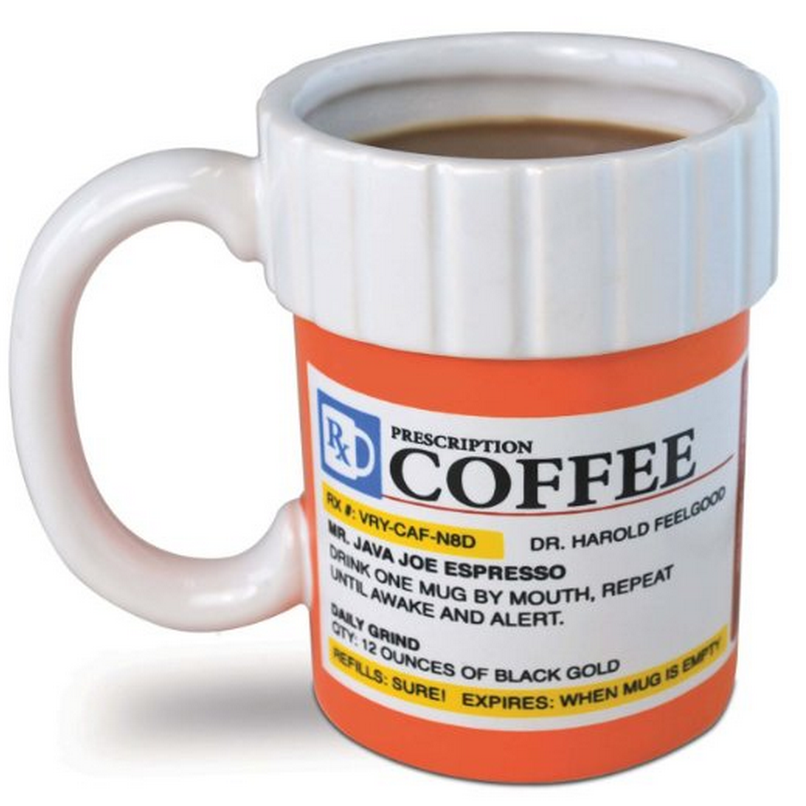
Does Coffee Trigger Cortisol Release?

coffee-prescription


Cortisol is the infamous hormone you release when you’re stressed. In high doses it inhibits brain function, slows metabolism, breaks down muscle, and increases blood pressure. Have you ever felt panicked before a public speech and forgotten everything you were going to say? That’s what a big bump in cortisol feels like. And if you’re looking for stress relief, lowering cortisol helps.

Cortisol isn’t all bad, though. In fact, it’s necessary for you to function. Cortisol peaks in the morning, helping to wake you up, and it can be a useful as an indicator of strain, letting you know when to slow down or stop something that’s stressing you out. Cortisol also decreases inflammation – that’s part of the reason your body releases it in response to, for example, a workout that tears your muscle tissue.

Low cortisol is an issue, too. Insufficient cortisol can leave you feeling tired, emotional, and anxious. As long as you avoid chronically elevated or depleted cortisol you can make the little hormone work to your advantage.

A common argument against drinking coffee is that it triggers cortisol release, but (forgive us for getting nitpicky) that may not be true. Caffeine definitely triggers cortisol release. In fact, the increase in cortisol is part of the reason caffeine makes you feel more alert.

Remember a few paragraphs ago, when we were talking about how you build a tolerance to some of caffeine’s effects but not others? Cortisol release is one of the effects to which you build tolerance. If you only take caffeine now and then, it causes a big boost in cortisol. But if you get caffeine daily (by drinking coffee every morning, for example) your body tempers the cortisol response. You still release cortisol, but not enough to worry about unless your cortisol is already out of whack.

Does coffee itself (separate from caffeine) cause cortisol release? Mycotoxins do, at least in mice, and they cause inflammation (a common trigger of cortisol release) in humans. It’s difficult to say whether mold-free coffee increases cortisol.

Regardless, studies suggest that cortisol release from caffeine is mild if you drink it daily. For most of us, that little bump shouldn’t be a problem.

From https://www.yahoo.com/health/caffeine-and-cortisol-does-coffee-1276507994071094.html

Cushing’s: Update on signs, symptoms and biochemical screening

10.1530/EJE-15-0464

  1. Lynnette Nieman

+Author Affiliations


  1. L Nieman, RBMB, NIH, Bethesda, 20817-1109, United States
  1. Correspondence: Lynnette Nieman, Email: niemanl@mail.nih.gov

Abstract

Endogenous pathologic hypercortisolism, or Cushing’s syndrome, is associated with poor quality of life, morbidity and increased mortality. Early diagnosis may mitigate against this natural history of the disorder.

The clinical presentation of Cushing’s syndrome varies, in part related to the extent and duration of cortisol excess. When hypercortisolism is severe, its signs and symptoms are unmistakable. However, most of the signs and symptoms of Cushing’s syndrome are common in the general population (e.g. hypertension and weight gain) and not all are present in every patient.

In addition to classical features of glucocorticoid excess, such as proximal muscle weakness and wide purple striae, patients may present with the associated co-morbidities that are caused by hypercortisolism. These include cardiovascular disease, thromboembolic disease, psychiatric and cognitive deficits, and infections. As a result, internists and generalists must consider Cushing’s syndrome as a cause, and endocrinologists should search for and treat these co-morbidities.

Recommended tests to screen for Cushing’s syndrome include 1 mg dexamethasone suppression, urine free cortisol and late night salivary cortisol. These may be slightly elevated in patients with physiologic hypercortisolism, which should be excluded, along with exogenous glucocorticoid use. Each screening test has caveats and the choice of tests should be individualized based on each patient’s characteristics and lifestyle.

The objective of this review was to update the readership on the clinical and biochemical features of Cushing’s syndrome that are useful when evaluating patients for this diagnosis.

Read the entire manuscript at http://www.eje-online.org/content/early/2015/07/08/EJE-15-0464.full.pdf+html

Pituitary ACTH Hypersecretion (Cushing’s Disease)

Browse Complete Report with TOC:

http://www.reportbazzar.com/product/pituitary-acth-hypersecretion-cushings-disease-pipeline-review-h1-2015/

Summary

This report provides comprehensive information on the therapeutic development for Pituitary ACTH Hypersecretion (Cushing’s Disease), complete with comparative analysis at various stages, therapeutics assessment by drug target, mechanism of action (MoA), route of administration (RoA) and molecule type, along with latest updates, and featured news and press releases. It also reviews key players involved in the therapeutic development for Pituitary ACTH Hypersecretion (Cushing’s Disease) and special features on late-stage and discontinued projects.

Report features investigational drugs from across globe covering over 20 therapy areas and nearly 3,000 indications. The report is built using data and information sourced from proprietary databases, Company/University websites, SEC filings, investor presentations and featured press releases from company/university sites and industry-specific third party sources, put together by team. Drug profiles/records featured in the report undergoes periodic updation following a stringent set of processes that ensures that all the profiles are updated with the latest set of information. Additionally, processes including live news & deals tracking, browser based alert-box and clinical trials registries tracking ensure that the most recent developments are captured on a real time basis.

The report enhances decision making capabilities and help to create effective counter strategies to gain competitive advantage. It strengthens R&D pipelines by identifying new targets and MOAs to produce first-in-class and best-in-class products.

Request Sample Report:  Pituitary ACTH Hypersecretion (Cushing’s Disease) – Pipeline Review, H1 2015

Scope

– The report provides a snapshot of the global therapeutic landscape of Pituitary ACTH Hypersecretion (Cushing’s Disease)

– The report reviews key pipeline products under drug profile section which includes, product description, MoA and R&D brief, licensing and collaboration details & other developmental activities

– The report reviews key players involved in the therapeutics development for Pituitary ACTH Hypersecretion (Cushing’s Disease) and enlists all their major and minor projects

– The report summarizes all the dormant and discontinued pipeline projects

– A review of the Pituitary ACTH Hypersecretion (Cushing’s Disease) products under development by companies and universities/research institutes based on information derived from company and industry-specific sources

– Pipeline products coverage based on various stages of development ranging from pre-registration till discovery and undisclosed stages

– A detailed assessment of monotherapy and combination therapy pipeline projects

– Coverage of the Pituitary ACTH Hypersecretion (Cushing’s Disease) pipeline on the basis of target, MoA, route of administration and molecule type

– Latest news and deals relating related to pipeline products

Reasons to buy

– Provides strategically significant competitor information, analysis, and insights to formulate effective R&D development strategies

– Identify emerging players with potentially strong product portfolio and create effective counter-strategies to gain competitive advantage

– Develop strategic initiatives by understanding the focus areas of leading companies

– Identify and understand important and diverse types of therapeutics under development for Pituitary ACTH Hypersecretion (Cushing’s Disease)

– Plan mergers and acquisitions effectively by identifying key players of the most promising pipeline

– Devise corrective measures for pipeline projects by understanding Pituitary ACTH Hypersecretion (Cushing’s Disease) pipeline depth and focus of Indication therapeutics

– Develop and design in-licensing and out-licensing strategies by identifying prospective partners with the most attractive projects to enhance and expand business potential and scope

– Modify the therapeutic portfolio by identifying discontinued projects and understanding the factors that drove them from pipeline”


From http://www.medgadget.com/2015/10/pituitary-acth-hypersecretion-cushings-disease-pipeline-review-h1-2015-by-reportbazzar.html

Hollywood actor, 42, is trapped in a 14-year-old body and loves it

Mario Bosco’s memoir entitled ‘From Hopeless to Hollywood: The Mario Bosco Story,’ which came out in July, details how his condition that makes him small helped him to land a Hollywood career.

He spent his childhood being bullied by his peers for his small frame and as he was shuffled from hospital to hospital he sometimes wanted to die.

But now, Mario Bosco, 42, of Brooklyn, New York is a Hollywood actor and author whose rare illness that makes him look like a 14-year-old boy is the very thing that fuels his impressive career.

Bosco’s memoir entitled ‘From Hopeless to Hollywood: The Mario Bosco Story,’ which came out in July, details how panhypopituitarism, a condition caused by damage to his pituitary gland at birth, gave him the chance to play children on TV and in movies.

‘Life is tough but tomorrow is a surprise. Your dream is your friend and you have to believe in it to make it happen,’ Bosco told Dailymail.com of overcoming adversity to fulfill his lifelong dream of becoming an actor and writer.

Read the whole article here: Hollywood actor, 42, is trapped in a 14-year-old body and loves it

Cushing’s Syndrome

The Seven Dwarves of Cushing's


Posted Oct. 1st, 2015 by

Q: Would you please explain Cushing’s disease. How is it diagnosed? What are the symptoms?

A: Cushing syndrome results from excess levels of the hormone cortisol. It is produced in various glands, usually the adrenal that is situated above the kidneys on both sides, and the pituitary gland, which is in the centre of the brain.

Cortisol also regulates the way fats, carbohydrates and proteins are turned into usable forms of energy. These glands produce other hormones that affect things such as blood pressure and the body’s response to stress.

Cortisol may be added from outside the body by taking medications such as prednisone, often used for the control of chronic inflammatory or autoimmune diseases like lupus or rheumatoid arthritis.

Prednisone is also used for the treatment of acute illnesses such as severe allergies. Poison ivy is often treated this way.

Women in the last three months of pregnancy also have increased blood levels of cortisol and may temporarily display some of symptoms of Cushing’s syndrome.

Any problem with the pituitary gland, the nearby hypothalamus in the brain or adrenals can lead to Cushing’s syndrome. The most common is a benign tumour of the pituitary gland known as a pituitary adenoma.

This type of tumour may produce an excessive amount of a stimulating hormone known as ACTH, which in turn activates the hormones in the adrenal glands. On rare occasions, some types of lung or thyroid cancer can also behave in a similar way.

The most obvious sign of Cushing’s disease is marked weight gain, mostly in the abdomen, face and neck, while the arms and legs remain relatively thin.

As the skin in these areas becomes thinner, there may be purple coloured stripes or stretch marks. Women may also lose their periods and grow facial or body hair.

Blood pressure is usually high and sufferers feel weak and tired.

Cushing’s disease is diagnosed by measuring the amount of cortisol in a person’s urine during a 24 hour period.

If there is a tumour it will require surgical removal. If Cushing’s syndrome is a result of prescribed medication, the dosage can be reduced gradually or another type of medication can be tried. Prednisone must never be suddenly discontinued or the person’s blood pressure could drop dramatically, which could be serious and potentially fatal.

Clare Rowson is a retired medical doctor in Belleville, Ont. Contact: health@producer.com

From http://www.producer.com/2015/10/cushings-syndrome/