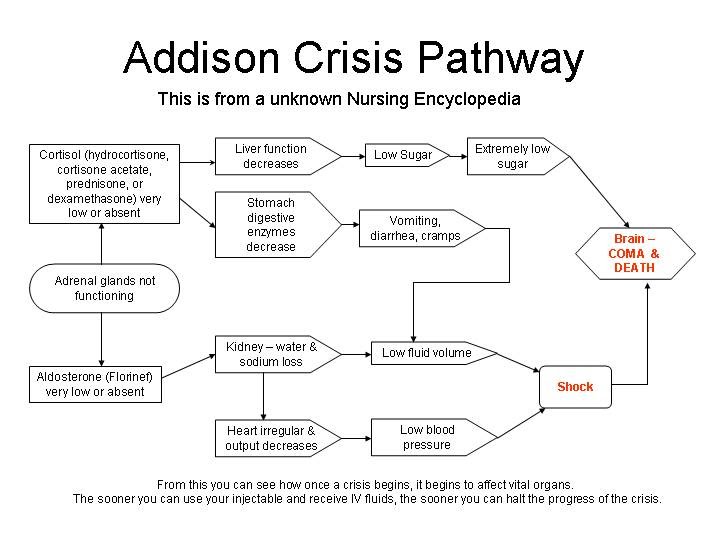
Adrenal Insufficiency Patients Require More Education on Adrenal Crisis

adrenalcrisispathway

Greater efforts to educate patients with adrenal insufficiency and their families about prevention of adrenal crisis may be necessary, according to data presented at the American Association of Clinical Endocrinologists (AACE) 24th Annual Scientific & Clinical Congress.

Additionally, the researchers, who looked at patients treated for adrenal insufficiency, found that many are not being adequately trained or equipped to deal with an adrenal crisis.

“These patients can crash and we are not doing enough to help prevent problems,” study investigator Nitika Malhotra, MD, endocrinologist in Lansing, Michigan, said. “We did this study because we think this is a big problem.”

Malhotra, who presented the study findings at the meeting, explained that patients with adrenal insufficiency are at risk for developing adrenal crisis, and it is now estimated that 8% of patients with adrenal insufficiency are hospitalized for adrenal crisis each year.

The problem, according to Malhotra, is that far too many patients are failing to receive crises prevention education. Moreover, they are not receiving emergency glucocorticoid kits.

“All of the families need to be taught and that is not happening,” Malhotra said in an interview with Endocrinology Advisor. “It will reduce the morbidity and mortality and the hospitalization, and it may improve the quality of life of patients too.”

For their study, Malhotra and her colleagues collected data from patients with adrenal insufficiency who were seen at a single institution between March 2009 and March 2014.

The investigators conducted a retrospective chart review and examined age, gender, causes of adrenal insufficiency, glucocorticoid dose, and monitoring for hyponatremia and hyperkalemia. They also looked at postural blood pressure, crises prevention education for glucocorticoid dose adjustments during stress, and whether patients had a Medic Alert ID or a parenteral glucocorticoid kit.

The researchers identified 85 patients (29 males and 56 females) with adrenal insufficiency. Of these patients, 33 patients had primary adrenal insufficiency (38.8%) and 52 had secondary adrenal insufficiency (61.2%). The mean age of the patients was 55.8 years.

Among the 85 patients, 23 (27%) had postural blood pressures checked — five of whom were positive (21.7%). Seventy-seven patients (90.6%) were monitored for electrolytes, and 41 patients (48.2%) were on steroid doses above 20 mg per day.

However, the researchers found that only 57 patients (67.1%) had received steroid dose adjustment instructions. In addition, only 29 patients (34.1%) had a Medic Alert ID, and only 17 patients (20%) were setup with emergency parenteral glucocorticoid kits.

Even though this study has many inherent limitations, Malhotra said, it appears that the preventive strategies for adrenal crisis in patients with adrenal insufficiency are not being consistently followed.

Patient education is paramount for achieving a successful prevention strategy for adrenal crisis, and endocrinologists have a responsibility to make sure that all patients with adrenal insufficiency have a Medic Alert ID and access to emergency glucocorticoid kits, according to Malhotra.

Furthermore, she said families should receive adequate education about parenteral steroid administration and steroid dose adjustments in stressful situations.

At her institution, Malhotra said, endocrinologists are introducing an automated electronic alert in their electronic medical records to determine if this electronic prompt will improve adherence.

Reference

  1. Malhotra N et al. Abstract #102. Presented at: American Association of Clinical Endocrinologists (AACE) 24th Annual Scientific & Clinical Congress; May 13-17, 2015; Nashville, Tenn.


From http://www.endocrinologyadvisor.com/aace-2015/adrenal-crisis-in-adrenal-insufficiency/article/415123/

Addison’s disease may cause psychosis, say researchers

adrenal-glands


Research suggests that chronic adrenal insufficiency, more commonly known as Addison’s disease, may be responsible for psychiatric symptoms in those who suffer with it. Unfortunately, these symptoms are poorly understood and inadequately studied. In one case, a 41-year-old construction worker was admitted to a psychiatric clinic complaining of depression. He had trouble sleeping and concentrating and had lost 6 pounds due to a loss of appetite. He was placed on 20mg of fluoxetine but returned 2 weeks later complaining that the therapy did not work, and even reported hallucinating his ex-wife, who had recently died in a car accident. He returned again later 4 months later and was found to have a weak pulse, major hypotension, and hyponatremia and hyperkalemia. It was at this point that he was diagnosed with Addison’s disease.

The disease was first described by Thomas Addison in the mddle of the 19th century. It involves inadequate secretion from the adrenal glands, leading to lower secretion of glucocorticoids. Its usual symptom pigmentation involves fatigue, weight loss, nausea, vomiting, weakness and abdominal pain. Among its psychiatric symptoms are psychosis and delirium.

Unilateral andrenalectomy may be valid first-line treatment for Cushing’s syndrome

Debillon E, et al. J Clin Endocrinol Metab. 2015;doi:10.1210/jc.2015-2662.

In patients with evident Cushing’s syndrome related to primary bilateral macronodular adrenal hyperplasia, unilateral adrenalectomy of the large gland appears to be a suitable alternative to bilateral adrenalectomy as a first-line treatment, according to recent findings.

Unilateral adrenalectomy yielded normalized urinary free cortisol and improved Cushing’s syndrome, according to the researchers.

Olivier Chabre , MD, PhD, of the Service d’Endocrinologie-Diabétologie-Nutrition in France, and colleagues evaluated all patients (n = 15) with overt Cushing’s syndrome related to primary bilateral macronodular adrenal hyperplasia who underwent unilateral laparoscopic adrenalectomy of the larger gland between 2001 and 2015. Patients were seen for clinical and biological follow-up assessments at 1, 3 and 6 months postoperatively, 5 years after surgery and at the time of the last available urinary free cortisol measurement.

The study’s primary outcome measures were pre- and postoperative levels of urinary free cortisol, plasma cortisol, adrenocorticotropic hormone (ACTH), BMI, blood pressure, plasma glucose and lipids and measurements of these values on follow-up assessments. Patients were followed for a median of 60 months.

The researchers found that in early postoperative measurements, all 15 patients who underwent unilateral adrenalectomy achieved normal or low urinary free cortisol. Between 7 days and 1 month, there was a decrease in median urinary free cortisol from 2.19 times the upper limit of normal (ULN) at baseline to 0.27 ULN (P = .001). At 1 month, only one patient had elevated urinary free cortisol, and this patient went into remission by month 3 and continued to be in remission after 12 years of follow-up.

Forty percent of the patients developed adrenal insufficiency after unilateral adrenalectomy and latent adrenal insufficiency could not be excluded in two of the other patients. No predictors of postoperative adrenal insufficiency were identified.

Six of the patients had diabetes before unilateral adrenalectomy surgery; four of those were treated with antidiabetes drugs. At 12 months, only two of these patients had a continued need for antidiabetes drugs and had reductions in HbA1c despite decreases in their treatment. Recurrence occurred in two patients, demonstrating urinary free cortisol above the ULN at 7 years postoperatively and 8 years postoperatively. Both cases required treatment with mitotane, and in one of the patients, adrenalectomy of the second gland was required 9 years after the initial adrenalectomy.

According to the researchers, postoperative management and vigilant follow-up is needed in order to monitor patients for the risk for adrenal insufficiency.

“Further prospective studies are needed to better evaluate the long-term benefits of [unilateral adrenalectomy], which has one major benefit over [bilateral adrenalectomy]: if needed, [unilateral adrenalectomy] can be transformed in [bilateral adrenalectomy], while the opposite is obviously not true,” the researchers wrote. “One could propose that in further prospective studies [bilateral adrenalectomy] could be performed only if [unilateral adrenalectomy] fails to normalize [urinary free cortisol] at 1 month postoperatively.” – by Jennifer Byrne

Disclosure: The researchers report no relevant financial disclosures.

From Healio

In Production: Quick and Cheap Bedside Test for Cortisol Uses Smartphone

An innovative method of measuring the stress hormone cortisol is being developed by researchers in Utah. Requiring just a simple kit and a smartphone to read results, this new approach should allow quick, affordable, and accurate testing of cortisol levels, enabling rapid diagnosis of adrenal diseases, the investigators say.

“A lab charges about $25 to $50 for a quantitative salivary cortisol test and has a turnaround time of days to a week,” said lead researcher Joel Ehrenkranz, MD, director of diabetes and endocrinology at Intermountain Medical Center, Murray, Utah. “This test, taken in a medical office or at home, will cost less than $5 and take less than 10 minutes,” he noted.

Dr. Ehrenkranz reported the details of the new test kit, developed at his institution, at ICE/ENDO 2014 week. He said he and his fellow researchers are now collating clinical data for a Food and Drug Administration (FDA) submission and hope to gain approval of the test as a class 2 medical device in the United States in 2015.

Chair of the session, Jeremy Tomlinson, MD, of University of Birmingham, United Kingdom, said the new approach employs “great technology and is an interesting innovation, but there are a few concerns. For example, how well will it perform against the state-of-the-art technique for measuring salivary cortisol, which is mass spectrometry — is it as sensitive?”

Also there is a possibility the immunoassay in the new test will cross react with another steroid hormone, prednisolone, that people might be taking for a whole range of inflammatory conditions, so “you would want to make sure it’s measuring what you want it to,” he noted.

And finally, there is the question of exactly how this would be used.

Cortisol levels are needed when conditions are suspected where too much or too little cortisol is produced, but the diagnosis for most of these doesn’t really need to be immediate, Dr. Tomlinson explained to Medscape Medical News. However, he conceded there might be a role for the assay in patients presenting to the emergency room or in developing nations.

No More Presumptive Treatment of Adrenal Insufficiency

At the meeting, Dr. Ehrenkranz said that adrenal diseases are commonly overlooked because current methods of measuring salivary cortisol require instrumentation and technical personnel and so are costly and unable to deliver timely results.

He noted also that a stint in the developing world convinced him that a simpler test was needed, so he and his colleagues set about developing an assay that would be inexpensive and easy to perform — they came up with disposable cortisol immunoassay strips containing a glass fiber element with colloidal gold-labeled murine anticortisol antibodies and a saliva collection pad.

The person being tested inserts a strawlike saliva collector under the tongue, which wicks the saliva to the immunoassay test strip housed in a cassette, which is then inserted into a reader in the device.

“The device…includes a case, a light pipe, and a lens and costs about a dollar to make. There is no battery power, and it’s unbreakable, passive, and reusable,” Dr Ehrenkranz said.

Because of the physical properties of the gold nanoparticles, a smartphone flash can illuminate and camera-image the color generated by the colloidal gold-labeled anticortisol antibodies, he explained.

The color subsequently generated is “read” by an app on the smartphone to give a cortisol reading, based on an algorithm derived from observed vs reference salivary cortisol values. The R value of this curve was 0.996 for salivary cortisol in the range of 0.012-3.0 µg/dL, Dr Ehrenkranz noted.

The new technology can therefore measure cortisol in a range sufficient to diagnose adrenal insufficiency and hypercortisolism and monitor physiologic variations in cortisol concentration, he said.

And the software is “operating-system agnostic,” he added, meaning the device can be used on all platforms, including iOS, Android, Windows, and BlackBerry, and it has a universal form factor that works with all smartphones.

“Measuring salivary cortisol at the point of care in 5 minutes using an inexpensive immunochromatographic assay, reader, and smartphone may obviate the need to presumptively treat patients for adrenal insufficiency and makes cortisol assays available to regions of the world that currently lack access to this diagnostic test,” he concluded.

Test of Use in Emergency Room, in Developing Countries

Dr. Tomlinson explained that diagnosis of Cushing’s syndrome — caused either by tumors of the pituitary gland producing too much ACTH or tumors of the adrenal gland producing too much cortisol — or alternatively, diagnosis of conditions where it’s thought too little cortisol is being secreted, such as Addison’s disease — an autoimmune process whereby the adrenal gland is destroyed — are not conditions “you necessarily have to diagnose in a few minutes by the bedside,” and therefore it is better to use the “gold standard” of diagnosis, mass spectrometry, in these cases.

But the new test “might be of use in determining whether people have enough of their own natural corticosteroid, in terms of deciding whether you need to give supplemental cortisol to people in an emergency situation,” he explained.

This could include patients presenting with suspected or underlying pituitary or adrenal disease or in people who have been on large doses of steroids who have then stopped taking them, so there will be a resulting suppression of their natural steroid production, he noted.

“That’s not an uncommon situation that we see in the emergency room. At the moment, if there’s suspicion, we might take a test but it takes a day or 2 to come back from the laboratory, and in the meantime we will give patients [presumptive] steroids. But you could do this test by the bedside,” he acknowledged.

And in developing countries, use of this test “is feasible, where cost comes into the equation and you might not have access to mass spectrometry; this could be an alternative and would help you to exclude or make these diagnoses,” he concluded.

This study was privately funded. Dr. Ehrenkranz and colleagues report no relevant financial relationships.

Joint Meeting of the International Society of Endocrinology and the Endocrine Society: ICE/ENDO 2014; June 24, 2014. Abstract OR48-2

From http://www.medscape.com/viewarticle/827580

Roundup may cause potentially fatal ‘adrenal insufficiency’

IMPORTANT!  A new study finds that the Roundup herbicide disrupts the hormonal system of rats at low levels at which it’s meant to produce no adverse effects. By the same mechanism It may be causing the potentially fatal condition of ‘adrenal insufficiency’ in humans.

Monsanto’s glyphosate-based herbicide Roundup is an endocrine (hormone) disruptor in adult male rats, a new study shows.

The lowest dose tested of 10 mg/kg bw/d (bodyweight per day) was found to reduce levels of corticosterone, a steroid hormone produced in the adrenal glands. This was only one manifestation of a widespread disruption of adrenal function.

No other toxic effects were seen at that dose, so if endocrine disruption were not being specifically looked for, there would be no other signs that the dose was toxic. However a 2012 study detected a 35% testosterone down-regulation in rats at a concentration of 1 part per million.

In both studies endocrine disruption was detected at the lowest level tested for, so we don’t know if, when it comes to endocrine disruption, there are ‘safe’ lower doses of Roundup. In technical parlance, this means that no NOAEL (no observed adverse effect level), was found.

Significantly, the authors believe that the hormonal disruption could lead to the potentially fatal condition know as ‘adrenal insufficiency’ in humans, which causes fatigue, anorexia, sweating, anxiety, shaking, nausea, heart palpitations and weight loss.

“A progressive increase in its prevalence has been observed in humans, while a very few studies relating to xenobiotic exposure and adrenal insufficiency development have been reported”, they write. The increasing levels of Roundup in the environment and food could be “one of the possible mechanisms of adrenal insufficiency.”

How does this level relate to safety limits set by regulators?

One problem with trying to work out how the endocrine disruptive level of 10 mg/kg bw/d relates to how ‘safe’ levels are set by regulators.

The experiment looked at Roundup, the complete herbicide formulation as sold and used, but regulators only look at the long-term safety of glyphosate alone, the supposed active ingredient of Roundup.

Safe levels for chronic exposure to the Roundup herbicide product have never been tested or assessed for regulatory processes. This is a serious omission because Roundup has been shown in many tests to be more disruptive to hormones than glyphosate alone, thanks to the numerous other ingredients it contains to enhance its weed-killing properties.

Given this yawning data gap, let’s for a moment assume that the regulatory limits set for glyphosate alone can be used as a guide for the safe level of Roundup.

The endocrine disruptive level of Roundup found in the experiment, of 10 mg/kg bw/d, is is well above the acceptable daily intake (ADI) set for glyphosate in Europe (0.3 mg/kg bw/d) and the US (1.75 mg/kg bw/d). But this isn’t a reason to feel reassured, since with endocrine effects, low doses can be more disruptive than higher doses.

Another worrying factor is that 10 mg/kg bw/d is well below the NOAEL (no observed adverse effect level) for chronic toxicity of glyphosate: 500 mg/kg bw/d for chronic toxicity, according to the US EPA.

In other words, the level of 500 mg/kg bw/d – a massive 50 times higher than the level of Roundup found to be endocrine disruptive in the experiment – is deemed by US regulators not to cause chronic toxicity.

This experiment shows they are wrong by a long shot. They failed to see toxicity below that level because they failed to take endocrine disruptive effects from low doses into account and industry does not test for them.

Hormone disruption take place at or below ‘no adverse effects’ levels

Interestingly, the NOAEL for glyphosate in industry’s three-generation reproductive studies in rats was much lower than that for chronic toxicity – 30 mg/kg bw/day for adults and 10 mg/kg bw/day for offspring.

However the latter figures – at which no adverse effects should be apparent from glyphosate – are at the same as or higher level than the level of Roundup found to be endocrine disruptive in the new study.

These results therefore show that the reproductive processes of the rats are sensitive to low doses that are apparently not overtly toxic. This in turn suggests that the reproductive toxicity findings are due to endocrine disruptive effects.

Regulatory tests still do not include tests for endocrine disruption from low doses, in spite of the fact that scientists have known about the syndrome since the 1990s.

In the final section of the new study, the researchers discuss its implications. They note that the effects seen in the Roundup-treated rats to the Adrenocorticotropic hormone receptor (ACTH) were similar to adrenal insufficiency in humans:

“The findings that Roundup treatment down regulates endogenous ACTH, is similar to the condition known as adrenal insufficiency in humans. This condition manifests as fatigue, anorexia, sweating, anxiety, shaking, nausea, heart palpitations and weight loss. Chronic adrenal insufficiency could be fatal, if untreated.

“A progressive increase in its prevalence has been observed in humans, while a very few studies relating to xenobiotic exposure and adrenal insufficiency development have been reported. The present study describes one of the possible mechanisms of adrenal insufficiency due to Roundup and suggests more systematic studies, to investigate the area further. “

Claire Robinson of GMWatch commented: “Since no safe dose has been established for Roundup with regard to endocrine disrupting effects, it should be banned.”


The study:Analysis of endocrine disruption effect of Roundup in adrenal gland of male rats‘ is by Aparamita Pandey and Medhamurthy Rudraiah, and published in Toxicology Reports 2 (2015) pp.1075-1085 on open access.

This article was originally published by GMWatch. This version has been subject to some edits and additions by The Ecologist.

From http://www.theecologist.org/News/news_round_up/2985058/roundup_may_cause_potentially_fatal_adrenal_insufficiency.html