Catastrophic ACTH-secreting Pheochromocytoma

Abstract

Summary

Cushing’s syndrome due to ectopic adrenocorticotropic hormone (ACTH) secretion (EAS) by a pheochromocytoma is a challenging condition. A woman with hypertension and an anamnestic report of a ‘non-secreting’ left adrenal mass developed uncontrolled blood pressure (BP), hyperglycaemia and severe hypokalaemia. ACTH-dependent severe hypercortisolism was ascertained in the absence of Cushingoid features, and a psycho-organic syndrome developed. Brain imaging revealed a splenial lesion of the corpus callosum and a pituitary microadenoma. The adrenal mass displayed high uptake on both 18F-FDG PET/CT and 68Ga-DOTATOC PET/CT; urinary metanephrine levels were greatly increased. The combination of antihypertensive drugs, high-dose potassium infusion, insulin and steroidogenesis inhibitor normalized BP, metabolic parameters and cortisol levels; laparoscopic left adrenalectomy under intravenous hydrocortisone infusion was performed. On combined histology and immunohistochemistry, an ACTH-secreting pheochromocytoma was diagnosed. The patient’s clinical condition improved and remission of both hypercortisolism and catecholamine hypersecretion ensued. Brain magnetic resonance imaging showed a reduction of the splenial lesion. Off-therapy BP and metabolic parameters remained normal. The patient was discharged on cortisone replacement therapy for post-surgical hypocortisolism. EAS due to pheochromocytoma displays multifaceted clinical features and requires prompt diagnosis and multidisciplinary management in order to overcome the related severe clinical derangements.

Learning points

  • A small but significant number of cases of adrenocorticotropic hormone (ACTH)-dependent Cushing’s syndrome are caused by ectopic ACTH secretion by neuroendocrine tumours, which is usually associated with severe hypercortisolism causing severe clinical and metabolic derangements.
  • Ectopic ACTH secretion by a pheochromocytoma is exceedingly rare but can be life-threatening, owing to the simultaneous excess of both cortisol and catecholamines.
  • The combination of biochemical and hormonal testing and imaging procedures is mandatory for the diagnosis of ectopic ACTH secretion, and in the presence of an adrenal mass, the possibility of an ACTH-secreting pheochromocytoma should be taken into account.
  • Immediate-acting steroidogenesis inhibitors are required for the treatment of hypercortisolism, and catecholamine excess should also be appropriately managed before surgical removal of the tumour.
  • A multidisciplinary approach is required for the treatment of this challenging entity.

Background

Cushing’s syndrome (CS) is a rare endocrine disease characterized by high levels of glucocorticoids; it increases morbidity and mortality due to cardiovascular and infectious diseases (123).

To diagnose CS, adrenocorticotropic hormone (ACTH)-dependent disease must be distinguished from ACTH-independent disease, and pituitary ACTH production from ectopic production. About 20% of ACTH-dependent cases arise from ectopic ACTH secretion (EAS) (234). EAS is most often due to aberrant ACTH production by small-cell lung carcinoma or neuroendocrine tumours originating in the lungs or gastrointestinal tract; this, in turn, strongly increases cortisol production by the adrenal glands (345).

Since the first-line treatment of EAS is the surgical removal of the ectopic ACTH-secreting tumour, its prompt and accurate localization is crucial.

Rapid cortisol reduction by means of immediate-acting steroidogenesis inhibitors (4) is mandatory in order to treat the related endocrine, metabolic and electrolytic derangements. EAS by a pheochromocytoma is exceedingly rare and can be life-threatening.

We describe the case of a woman with hypertension and a known ‘non-secreting’ left adrenal mass, who manifested uncontrolled blood pressure (BP), hyperglycaemia, hypokalaemia and psycho-organic syndrome associated with damage of the splenium of the corpus callosum. These findings were eventually seen to be related to an ACTH-secreting left pheochromocytoma, which was ascertained by hormonal evaluation and morphological and functional imaging assessment and confirmed by histopathology/immunostaining. Hormonal hypersecretion resolved after adrenalectomy and metabolic derangements normalized.

Case presentation

A 72-year-old woman with hypertension was taken to the emergency department because of increased BP (200/100 mm Hg). High BP (190/100 mmHg) was confirmed, whereas oxygen saturation (98%), heart rate (84 bpm) and lung and abdomen examination were normal. Electrocardiogram and chest x-ray were unremarkable. Captopril 50 mg orally, followed by intramuscular clonidine, normalized BP.

The patient looked thin and reported significant weight loss (10 kg) over the previous 6 months; she was on antihypertensive therapy with bisoprolol 5 mg/day and irbesartan 150 mg/day, and ezetimibe 10 mg/day for dyslipidaemia. The patient’s records included a previous diagnosis in another hospital of normofunctioning multinodular goitre and a 2.5 cm-left solid inhomogeneous adrenal mass with well-defined margins, which was found on CT performed 6 years earlier during the work-up for hypertension. On the basis of hormonal data and absent uptake on 123I metaiodobenzylguanidine scintigraphy, the adrenal lesion had been deemed to be non-functioning and follow-up had been advised. Unfortunately, only initial cortisol (15.7 μg/dL) and 24-h urine-free cortisol (UFC) levels (32.5 μg/24 h) were retrievable; both proved normal.

Investigations

Blood chemistry showed neutrophilic leucocytosis, hyperglycaemia with increased glycated haemoglobin, severe hypokalaemia and metabolic alkalosis (Table 1). Potassium infusion (50 mEq in 500 mL saline/24 h) was rapidly started, together with a subcutaneous rapid-acting insulin analogue and prophylactic enoxaparin. The patient experienced mental confusion, hallucinations and restlessness; non-enhanced computed tomography (CT) of the brain revealed a hypodense area of the splenium of the corpus callosum, possibly due to metabolic damage (Fig. 1A).

Figure 1View Full Size
Figure 1

Non-enhanced CT showing a hypodense area of the splenium of the corpus callosum (arrows), without mass effect (A, axial view). Contrast-enhanced MR image showing a hypointense pituitary lesion (arrow) which enhances more slowly than normal pituitary parenchyma, deemed suspicious for microadenoma (B, coronal view). FLAIR MR image showing hyperintense signal of the splenium of the corpus callosum (asterisk), which partially extended to the crux of the left fornix (arrow) (C, axial view). As the lesion showed no restricted diffusion on DWI (D, axial view), an ischaemic lesion was excluded. A progressive reduction in the extension of the hyperintense signal in the splenium of the corpus callosum (arrowheads) and in the crux of the left fornix (arrows) was observed on FLAIR MR images (2 months (E); 3 months (F); axial view). CT, computed tomography; DWI, diffusion-weighted imaging; FLAIR, fluid-attenuated inversion recovery; MR, magnetic resonance.

Citation: Endocrinology, Diabetes & Metabolism Case Reports 2023, 2; 10.1530/EDM-22-0308

Table 1Hormonal and biochemical evaluation of patient throughout hospitalization and follow-up.

Normal range On hospital admission After surgery
10 days 2 months 3 months 6 months 9 months 12 months 16 months
ACTH (pg/mL) 9–52 551 7 37 50 29.5 26 40.9 52
Morning cortisol† (µg/dL) 7–19.2 63.4 14 5.1 3.5 3.8 4.2 7.2 12.8
After 1 mg overnight dexamethasone
 ACTH 583
 Cortisol 60
DHEAS (µg/dL) 9.4–246 201
24-h urinalysis (µg/24 h)
 Adrenaline 0–14.9 95.5
 Noradrenaline 0–66 1133
 Metanephrine 74–297 1927
 Normetanephrine 105–354 1133
Chromogranin A 0–108 290
Renin (supine) (µU/mL) 2.4–29 3.9 14.6
Aldosterone (supine) (ng/dL) 3–15 3.4 12.5
LH (mIU/mL)* > 10 0.3 65.8
FSH (mIU/mL)* > 25 1.9 116
PRL (ng/mL) 3–24 13.7
FT4 (ng/dL) 0.9–1.7 1.1 1.2
FT3 (pg/mL) 1.8–4.6 1.1 2.7
TSH (µU/mL) 0.27–4.2 0.23 1.3
PTH (pg/mL) 15–65 166
Calcium (mg/dL) 8.2–10.2 8.2
Calcitonin (pg/mL) 0–10 1
Glycaemia (mg/dL) 60–110 212 69 73 83
Potassium (mEq/L) 3.5–5 2.4 3.3 3.9 4.2 3.7 5 4.4 3.9
Leucocytes (K/µL) 4.0–9.3 15.13
HbA1c (mmol/mol) 20–42 55 30
HCO3 (mEq/L) 22–26 41.8

*For menopausal age; †07:00–10:00 h.


The patient was transferred to the internal medicine ward. Although potassium infusion was increased to 120 mEq/day, serum levels did not normalize; a mineralocorticoid receptor antagonist (potassium canreonate) was therefore introduced, but the effect was partial. In order to control BP, the irbersartan dose was increased (300 mg/day) and amlodipine (10 mg/day) was added.

The combination of severe hypertension, newly occurring diabetes and resistant hypokalaemia prompted us to hypothesize a common endocrine aetiology.

A thorough hormonal array showed very high ACTH and cortisol levels, whereas supine renin and aldosterone levels were in the low-normal range (Table 1). Since our patient proved repeatedly non-compliant with 24-h urine collection, UFC could not be measured.

After an overnight 1 mg dexamethasone suppression test, cortisol levels remained unchanged, whereas ACTH levels slightly increased (Table 1). Notably, the patient showed no Cushingoid features. Gonadotropin levels were inappropriately low for the patient’s age; FT4 levels were normal, whereas FT3 and thyroid-stimulating hormone (TSH) levels were reduced and calcitonin levels were normal (Table 1). HbA1c levels were increased (Table 1).

Finally, secondary hyperparathyroidism, associated with low-normal calcium levels and reduced vitamin D levels, was found (Table 1).

Brain contrast-enhanced magnetic resonance (MR) imaging revealed a 5-mm median posterior pituitary microadenoma (Fig. 1B) and a hyperintense lesion of the splenium of the corpus callosum (Fig. 1C). Diffusion-weighted MR images of the lesion showed no restricted diffusion (Fig. 1D), thus excluding an ischaemic origin. Petrosal venous sampling for ACTH determination at baseline and after CRH stimulation was excluded, as it was deemed a high-risk procedure, given the patient’s poor condition.

Since the ACTH and cortisol levels were greatly increased and were associated with severe hypokalaemia, EAS was hypothesized; total-body contrast-enhanced CT revealed the left adrenal mass (3 cm), which showed regular margins and heterogeneous enhancement (Fig. 2A and B) and measured 25 Hounsfield units. There was no evidence of adrenal hyperplasia in the contralateral adrenal gland. The adrenal mass showed intense tracer uptake on both 18F-FDG PET/CT (Fig. 2C and D), suggestive of adrenal malignancy or functioning tumour, and 68Ga-DOTATOC PET/CT (Fig. 3), which is characteristic of a neuroendocrine lesion. No other sites of suspicious tracer uptake were detected.

Figure 2View Full Size
Figure 2

Contrast-enhanced abdominal computed tomography showing a 3-cm left adrenal mass (arrow) with well-defined margins and inhomogeneus enhancement, deemed compatible with an adenoma (A, coronal view; B, axial view). The adrenal mass showed high uptake (SUV max: 7.3) on 18F-FDG PET/CT (C, coronal view; D, axial view).

Citation: Endocrinology, Diabetes & Metabolism Case Reports 2023, 2; 10.1530/EDM-22-0308

Figure 3View Full Size
Figure 3

The left adrenal mass displaying very high uptake (SUV max: 40) on 68Ga-DOTATOC PET/CT (arrow, axial view).

Citation: Endocrinology, Diabetes & Metabolism Case Reports 2023, 2; 10.1530/EDM-22-0308


Bisoprolol was withdrawn, and 24-h urinary catecholamine, metanephrine and normetanephrine levels proved significantly increased, as were chromogranin A levels (Table 1). In sum, an ACTH-secreting pheochromocytoma was suspected and the pituitary microadenoma was deemed a likely incidental finding.

The patient’s mental state worsened, fluctuating from sopor to restlessness, which required parenteral neuroleptics and restraint. An electroencephalogram revealed a specific slowdown of cerebral electrical activity. Following rachicentesis, the cerebrospinal fluid showed pleocytosis (lympho-monocytosis), whereas a culture test and polymerase chain reaction for common neurotropic agents were negative. The neurologist hypothesized a psycho-organic syndrome secondary to severe metabolic derangement. Intravenous ampicillin, acyclovir and B vitamins were empirically started. The patient was transferred to the subintensive unit, where a nasogastric tube and central venous catheter were inserted, and enteral nutrition was started.

Treatment

Ketoconazole was started at a dosage of 200 mg twice daily; both cortisol and ACTH levels significantly decreased over a few days (Fig. 4), with a progressive decrease in glucose levels and normalization of potassium levels and BP on therapy. Subsequently, ketoconazole was titrated to 600 mg/day owing to a new increase in cortisol levels, which eventually normalized (Fig. 4). Of note, ACTH levels partially decreased on ketoconazole treatment (Fig. 4).

Figure 4View Full Size
Figure 4

ACTH and cortisol levels throughout the patient’s hospitalization and follow-up.

Citation: Endocrinology, Diabetes & Metabolism Case Reports 2023, 2; 10.1530/EDM-22-0308


Doxazosin 2 mg/day was added and the patient’s systolic BP blood settled at around 100 mm Hg; after a few days, bisoprolol was restarted. Contrast-enhanced MR showed a partial reduction of the hyperintense splenial lesion (Fig. 1E). Despite the severe clinical condition and the high risks of adrenal surgery, the patient’s relatives strongly requested the procedure and laparoscopic left adrenalectomy was planned. Alpha-blocker and fluid infusion were continued, ketoconazole was withdrawn the day before surgery, and a 100 mg IV bolus of hydrocortisone was administered just before the operation, followed by 200 mg/day, at first in continuous infusion, then as a 100 mg bolus every 8 h. After the removal of the left adrenal mass, noradrenaline infusion was required, owing to the occurrence of severe hypotension.

Outcome and follow-up

Pathology revealed a 2.5 cm reddish-brown encapsulated tumour, which was compatible with pheochromocytoma (Fig. 5A and B); ACTH immunostaining was positive in about 30% of tumour cells (Fig. 5C). This confirmed the diagnostic hypothesis of an ACTH-secreting pheochromocytoma. The tumour was stained for Chromogranin A (Fig. 5D). There were no signs of adrenal cortex hyperplasia in the resected gland. Thorough germinal genetic testing, comprising the commonest pheochromocytoma/paraganglioma genes: CDKN1B, KIF1B, MEN1, RET, SDHA, SDHB, SDHC, SDHD, SDHAF2 and TMEM127, was negative.

Figure 5View Full Size
Figure 5

Histological images of adrenal pheochromocytoma: the tumour is composed of well-defined nests of cells (‘zellballen’) (A; haematoxylin-eosin stain (HE), ×20) with pleomorphic nuclei with prominent nucleoli, basophilic or granular amphophilic cytoplasm (B; HE, ×40). The mitotic index was low: 1 mitosis per 30 high-power fields, and Ki-67 was 1%. On immunohistochemistry, cytoplasmatic ACTH staining was found in about 30% of tumour cells (C; ×20), whereas most tumour cells were stained for chromogranin A (D; ×20).

Citation: Endocrinology, Diabetes & Metabolism Case Reports 2023, 2; 10.1530/EDM-22-0308


One week after surgery ACTH levels had dropped to a low-normal value: 7 pg/mL, and cortisol levels (before morning hydrocortisone bolus administration) were normal: 14 µg/dL (Fig. 4). The patient’s clinical status slowly improved and the nasogastric tube was removed; intravenous hydrocortisone was carefully tapered until withdrawal and high-dose oral cortisone acetate (62.5 mg/day) was started. This dose was initially required since BP remained low (systolic: 90 mm Hg); thereafter, cortisone was reduced to 37.5 mg/day. Plasma cortisol levels before morning cortisone administration were reduced (Fig. 4). A new MR of the brain showed a further partial reduction of the splenial lesion (Fig. 1F). The patient was discharged with normal off-therapy BP and metabolic parameters.

During follow-up, she fully recovered, and BP and metabolic parameters remained normal. Gonadotropin levels became adequate for the patient’s age, and TSH and renin/aldosterone levels normalized (Table 1). Hypoadrenalism, however, persisted for more than 1 year; as the last hormonal evaluation, 16 months after surgery, showed normal baseline cortisol levels, the cortisone dose was tapered (12.5 mg/day) and further hormonal examination was scheduled (Table 1). ACTH and cortisol levels throughout the patient’s hospitalization and follow-up are shown in Fig. 4.

Discussion

The diagnosis of EAS is challenging and requires two steps: confirmation of increased ACTH and cortisol levels and anatomic distinction from pituitary sources of ACTH overproduction. Besides metabolic derangements (hyperglycaemia, hypertension), EAS-related severe hypercortisolism may cause profound hypokalaemia (345).

In our patient, the combination of worsening hypertension, newly occurring diabetes and resistant hypokalaemia raised the suspicion of a common endocrine cause.

ACTH-dependent severe hypercortisolism was ascertained, and subsequent brain MR revealed a pituitary microadenoma.

The diagnosis of CS requires the combination of two abnormal test results: 24-h UFC, midnight salivary cortisol and/or abnormal 1 mg dexamethasone suppression testing (26). ACTH evaluation (low/normal-high) is fundamental to tailoring the imaging technique.

The very high cortisol levels found in our patient were unchanged after overnight dexamethasone testing, whereas UFC could not be assessed owing to the lack of compliance with urine collection. The accuracy of the UFC assays, however, may be impaired by cortisol precursors and metabolites. Salivary cortisol assessment was not performed since the specific assay is not available in our hospital.

The combination of ACTH-dependent severe hypercortisolism and hypokalaemia prompted us to suspect EAS. The differential diagnosis between pituitary and ectopic ACTH-dependent CS involves high-dose (8 mg) dexamethasone suppression testing, which has relatively low diagnostic accuracy (6). Owing to the patient’s very high cortisol levels and severe hypokalaemia, this testing was not performed, on account of the risks of administering corticosteroids in a patient already exposed to excessive levels (6). Furthermore, owing to the increase in ACTH levels observed after overnight dexamethasone testing, we postulated the possible occurrence of glucocorticoid-driven positive feedback on ACTH secretion, which has been described in EAS, including cases of pheochromocytoma (7).

Finally, in the case of EAS suspected of being caused by pheochromocytoma, we do not recommend performing high-dose dexamethasone suppression testing, owing to the risk of triggering a catecholaminergic crisis (8).

The dynamic tests commonly used to distinguish patients with EAS from those with Cushing’s disease are the CRH stimulation test and the desmopressin stimulation test, either alone or in combination with CRH testing (6). Owing to the rapid worsening of our patient’s condition, dynamic testing was not done; however, the clinical picture and hormonal/biochemical data were suggestive of EAS.

EAS is mainly (45–50%) due to neuroendocrine tumours, mostly of the lung (small-cell lung cancer and bronchial tumours), thymus or gastrointestinal tract; however, up to 20% of ACTH-secreting tumours remain occult (345).

ACTH-secreting pheochromocytomas are responsible for about 5% of cases of EAS (34910). Indeed, this rate ranges widely, from 2.5% (11) to 15% (12), according to the different case series. Patients with EAS due to pheochromocytoma present with severe CS, overt diabetes mellitus, hypertension and hypokalaemia (3); symptoms of catecholamine excess may be unapparent (3), making the diagnosis more challenging.

A recent review of 99 patients with ACTH- and/or CRH-secreting pheochromocytomas found that the vast majority displayed a Cushingoid phenotype (10); by contrast, another review of 24 patients reported that typical Cushingoid features were observed in only 30% of patients, whereas weight loss was a prevalent clinical finding (13). We hypothesized that the significant weight loss reported by our patient was largely due to the hypermetabolic state induced by catecholamines, which directly reduce visceral and subcutaneous fat, as recently reported (14).

Our patient showed no classic stigmata of CS, owing to the rapid onset of severe hypercortisolism (1013), whereas she had worsening hypertension and newly occurring diabetes mellitus, which were related to both cortisol and catecholamine hypersecretion; hypokalaemia was deemed to be secondary to severe hypercortisolism. Indeed, greatly increased cortisol levels act on the mineralocorticoid receptors of the distal tubule after saturating 11β-hydroxysteroid dehydrogenase type 2, leading to hypokalaemia (4). Consequently, hypokalaemia is much more common (74–95% of patients) in EAS than in classic Cushing’s disease (10%) (3410). This apparent mineralocorticoid excess suppresses renin and aldosterone secretion, as was ascertained in our patient.

In this setting, the most effective way to manage hypokalaemia is to treat the hypercortisolism itself by administering immediate-acting steroidogenesis inhibitors, combined with potassium infusion and a mineralocorticoid receptor-antagonist (e.g. spironolactone) at an appropriate dosage (100–300 mg/day) (4).

In ACTH-secreting pheochromocytoma, cortisol hypersecretion potentiates catecholamine-induced hypertension by stimulating the phenol-etholamine-N-methyl–transferase enzyme, which transforms noradrenaline to adrenaline (4). Indeed, in our patient, the significant ketoconazole-induced reduction in cortisol secretion led to satisfactory BP control on antihypertensive drugs. After the biochemical diagnosis of pheochromocytoma, a selective alpha-blocker was added, and after a few days, a beta-blocker was restarted in order to control reflex tachycardia (15).

Our patient had greatly increased ACTH levels (>500 pg/mL) associated with very high cortisol levels (>60 µg/dL), which, together with the finding of hypokalaemia, prompted us to hypothesize EAS. With regard to these findings, ACTH levels are usually higher (>200 pg/mL) in patients with EAS than in those with CS due to a pituitary adenoma; however, considerable overlapping occurs (31116). Most patients with ACTH-secreting pheochromocytomas in those series had ACTH levels >300 pg/mL, and a few had normal ACTH levels (9), thus complicating the diagnosis. In addition, patients with EAS usually have higher cortisol levels than those with ACTH-secreting adenomas (311).

In our patient, the left adrenal mass was deemed the culprit of EAS, and owing to very high urinary metanephrine levels, a pheochromocytoma was suspected.

It can be assumed that the adrenal tumour, which was anamnestically reported as ‘non-secreting’, but on which only part of the initial hormonal data were available, was actually a pheochromocytoma at the time of the first diagnosis but displayed a silent clinical and hormonal behaviour. The mass subsequently showed significant uptake on both 18F-FDG PET/CT and 68Ga-DOTATOC PET/CT (45). It is claimed that 68Ga-DOTATOC PET/CT provides a high grade (90%) of sensitivity and specificity in the diagnosis of tumours that cause EAS (45); nevertheless, a recent systematic review reported much lower sensitivity (64%), which increased to 76% in histologically confirmed cases (17).

In patients with EAS, immediate-acting steroidogenesis inhibitors are required in order to achieve prompt control of severe hypercortisolism (4). Ketoconazole is one of the drugs of choice since it inhibits adrenal steroidogenesis at several steps. In our patient, ketoconazole rapidly reduced cortisol levels to normal values, without causing hepatic toxicity (4). Moreover, ketoconazole proved effective at a moderate dosage (600 mg/day), which falls within the mean literature range (1819). However, dosages up to 1200–1600 mg/day are sometimes required in severe cases (usually EAS) (1819). Speculatively, our results might reflect an enhanced inhibitory action of ketoconazole at the adrenal level, which was able to override the strong ectopic ACTH stimulation.

In addition, the finding that, following cortisol reduction, ACTH levels paradoxically decreased suggests an additive and direct effect of the drug. This effect has been observed in a few patients with EAS (20) and is supported by in vitro studies showing a direct anti-proliferative and pro-apoptotic effect of ketoconazole on ectopic ACTH secretion by tumours (21). Finally, the reduction in ACTH levels during treatment with steroidogenesis inhibitors prompts us to postulate the presence of glucocorticoid-driven positive feedback on ACTH secretion, as already described in neuroendocrine tumours (72021). The coexistence of EAS and ACTH-producing pituitary adenoma is very rare but must be taken into account. In our case, we deemed the pituitary mass found on MR to be a non-secreting microadenoma. This hypothesis was strengthened by the finding that, following exeresis of the ACTH-secreting pheochromocytoma, ACTH normalized, hypercortisolism vanished and pituitary function recovered. These findings suggest that: (i) altered pituitary function at the baseline was secondary to the inhibitory effect of hypercortisolism; (ii) the excessive production of cortisol was driven by ACTH overproduction outside the pituitary gland, specifically within the adrenal gland tumour.

In our patient, a few days after surgery, morning cortisol levels before hydrocortisone bolus administration were ‘normal’. Owing to both the half-life of hydrocortisone (8–12 h) and the supraphysiological dosage used, it is likely that a residual part of the drug, which cross-reacts in the cortisol assay, was still circulating at the time of blood collection, thus resulting in ‘normal’ cortisol values. Following the switch to oral cortisone, cortisol levels before therapy were low, thus confirming post-surgical hypocortisolism. Hypocortisolism remained throughout the first year after surgery, and glucocorticoid therapy was continued. Sixteen months after surgery, baseline cortisol levels returned to the normal range; cortisone therapy was therefore tapered and a further hormonal check was scheduled. Assessment of the cortisol response to ACTH stimulation testing would be helpful in order to check the resumption of the residual adrenal function.

A peculiar aspect of our case was the occurrence of a psycho-organic syndrome together with the finding of a splenial lesion on brain imaging, which was deemed secondary to metabolic injury. Indeed, the increased cortisol levels present in patients with Cushing’s disease are detrimental to the white matter of the brain, including the corpus collosum, causing subsequent clinical derangements (22).

Besides the direct effects of hypercortisolism, the splenial damage was also probably due to long-standing hypertension, worsened by newly occurring catecholamine hypersecretion and diabetes. Together with the normalization of cortisol and glycaemic levels, and of BP, a partial reduction in the splenial damage was observed on two subsequent MR examinations, and the patient’s neurological condition slowly improved until she fully recovered.

In our patient, thorough germinal genetic testing for the commonest pheochromocytoma/paraganglioma (PPGL) genes proved negative. Since approximately 40% of these tumours have germline mutations, genetic testing is recommended regardless of the patient’s age and family history. In the absence of syndromic, familial or metastatic presentation, the selection of genes for testing may be guided by the tumour location and biochemical phenotype.

Alterations of the PPGL genes can be divided into two groups: 10 genes (RET, VHL, NF1, SDHD, SDHAF2, SDHC, SDHB, SDHA, TMEM127 and MAX) that have well-defined genotype–phenotype correlations, thus allowing to tailor imaging procedures and medical management, and a group of other emerging genes, which lack established genotype–phenotype associations; for patients in whom mutations of genes belonging to this second group are detected, and hence hereditary predisposition is established, only general medical surveillance and family screening can be planned (2324).

In conclusion, our case highlights the importance of investigating patients with hypertension and metabolic derangements such as diabetes and hypokalaemia, since these findings may be a sign of newly occurring EAS, which, in rare cases, may be due to an ACTH-secreting pheochromocytoma. Since the additive effect of cortisol and catecholamine can cause dramatic clinical consequences, the possibility of an ACTH-secreting pheochromocytoma should be taken into account in the presence of an adrenal mass. EAS must be considered an endocrine emergency requiring urgent multi-specialist treatment. Surgery, whenever possible, is usually curative, and anatomic brain damage, as ascertained in our patient, may be at least partially reversible.

Declaration of interest

The authors declare that there is no conflict of interest that could be perceived as prejudicing the impartiality of the research reported.

Funding

This study did not receive any specific grant from any funding agency in the public, commercial or not-for-profit sector. The study was approved by the Local Ethics Committee (no: 732/2022).

Patient consent

The patient provided written informed consent.

Author contribution statement

All authors contributed equally to the conception, writing and editing of the manuscript. L Foppiani took care of the patient during hospitalization and in the outpatient department, performed the metabolic and endocrine work-up, conceived the study, analysed the data and wrote the manuscript. MG Poeta evaluated the patient during hospitalization with regard to neurological problems and planned the related work-up (brain imaging procedures and rachicentesis). M Rutigliani analysed the histological specimens and performed immunohistochemical studies. S Parodi performed CT and MR scans and analysed the related images. U Catrambone performed the left adrenalectomy. L Cavalleri performed general anaesthesia and assisted the patient during the surgical and post-surgical periods. G Antonucci revised the manuscript. P Del Monte helped in the endocrine work-up, in the evaluation of hormonal data and in the revision of the manuscript. A Piccardo performed 18F-FDG PET/CT and analysed the related images.

Acknowledgement

The work of Prof Silvia Morbelli in performing and analysing 68Ga-DOTATOC PET/CT is gratefully acknowledged.

References

From https://edm.bioscientifica.com/view/journals/edm/2023/2/EDM22-0308.xml


Intermittent Blurry Vision: An Unexpected Presentation of Cushing’s Syndrome Due to Primary Bilateral Macronodular Adrenal Hyperplasia (PBMAH)

Published: May 15, 2022 (see history)

DOI: 10.7759/cureus.25017

Cite this article as: Fernandez C, Bhatia S, Rucker A, et al. (May 15, 2022) Intermittent Blurry Vision: An Unexpected Presentation of Cushing’s Syndrome Due to Primary Bilateral Macronodular Adrenal Hyperplasia (PBMAH). Cureus 14(5): e25017. doi:10.7759/cureus.25017


Abstract

Cushing’s syndrome (CS) is an uncommon endocrine disorder resulting from prolonged exposure to elevated glucocorticoids, with 10-15 million annual cases per the American Association of Neurological Surgeons. Exogenous and endogenous causes can further be divided into adrenocorticotropic hormone (ACTH) dependent (i.e Cushing’s Disease) or ACTH independent. ACTH-independent CS can be caused by primary bilateral macronodular adrenal hyperplasia (PBMAH) representing less than 1% cases of CS. We report a case of a woman presenting with chronic resistant hypertension, episodic blurry vision, weight gain and wasting of extremities. She was diagnosed with Cushing’s syndrome due to PBMAH.

Our patient’s presentation was unusual as she presented at 40 years old, 10 years earlier than expected for PBMAH; and primarily with complaints of episodic blurry vision. Her symptoms also progressed rapidly as signs and symptoms largely presented over the course of 12 months, however responded well to surgical resection.

Introduction

Cushing’s syndrome (CS) is an uncommon endocrine disorder caused by prolonged exposure to elevated glucocorticoids [1]. There are exogenous or endogenous causes. The National Institute of Health’s (NIH) Genetic and Rare Diseases Information Center (GARD) estimated the prevalence of endogenous CS to be 1 in 26,000 [2]. According to a large study, the annual incidence of CS in individuals less than 65 years old was nearly 49 cases per million [3]. Cushing’s disease (CD), which is defined as Cushing’s syndrome caused by an adrenocorticotropic hormone (ACTH)-secreting pituitary tumor, accounts for approximately 80% of patients with CS; whereas ACTH-independent CS accounts for the remaining 20% [4]. Among the causes of pituitary ACTH-independent CS is bilateral macronodular adrenal hyperplasia which is rare, comprising less than 1% of patients with CS [5]. Herein is a case of rapid onset Cushing’s syndrome due to PBMAH initially presenting as episodes of bilateral blurry vision.

Case Presentation

The patient is a 40-year-old female with a past medical history of resistant hypertension (on four agents), and recently diagnosed type 2 diabetes mellitus (started on insulin regimen). Patient was recently seen by her primary care provider, with complaints of intermittent episodes of blurry vision going on for months.

As part of evaluation in December 2020, the patient underwent a renal ultrasound as part of evaluation by the primary physician for uncontrolled hypertension. The doppler incidentally showed an indeterminate hypoechoic mass on the right kidney and presumably located within the right adrenal gland, measuring 3.4 x 5.4 cm, without sonographic evidence of renal artery stenosis. The left kidney appeared normal. She was recommended to have further evaluation with contrast enhanced MR or CT with adrenal protocol.

In January 2021, the patient was sent from her PCP’s office to the ED as the patient was having blurred vision. She had a plain CT scan of the brain that was unremarkable. The patient’s systolic blood pressure was in the 160s-170s mm Hg upon arrival to ED compliance with home medications of 5mg of amlodipine daily, 25mg of metoprolol succinate daily, 100mg of losartan daily, and 25mg of hydrochlorothiazide daily. Physical exam reported obesity without evidence of abdominal striae. Blood work in the ED showed elevated blood glucose level over 600 (mg/dL) despite being on a regimen of lantus 60 units, metformin 1000mg twice a day, and semaglutide SQ weekly. Hemoglobin A1c was greater than 15.5%, and vitamin D was low (15.6 ng/mL). The morning ACTH was low (<5pg/mL) (nAM levels: 7.2 – 63.3 pg/mL), AM cortisol was high at 26.1 ug/ml (normal: 5.0 – 23.0 ug/mL), plasma aldosterone was normal at 4.2 ng/dL with a normal plasma renin at 1.96 (0.25 – 5.82 ng/mL/h). 24-hour urine free cortisol (UFC) was high at 1299.5 (4.0-50.0 mcg/24h). CT of the abdomen/pelvis with and without contrast showed low-attenuation masses (less than 5 Hounsfield units) present in both adrenal glands measuring 6.9 x 5.3 cm on the right and 4.5 x 3.9 cm on the left, and did not demonstrate significant arterial enhancement (Figure 1). MR imaging of the abdomen without and with contrast was also obtained and showed the same masses of the bilateral adrenal glands, with largest on the left measured 3.6 cm and largest on the right measured 3.7 cm, as well as mild fatty infiltration of the liver. General surgery and hematology/oncology were consulted and recommendations were made for outpatient follow-up with PCP and endocrinology.

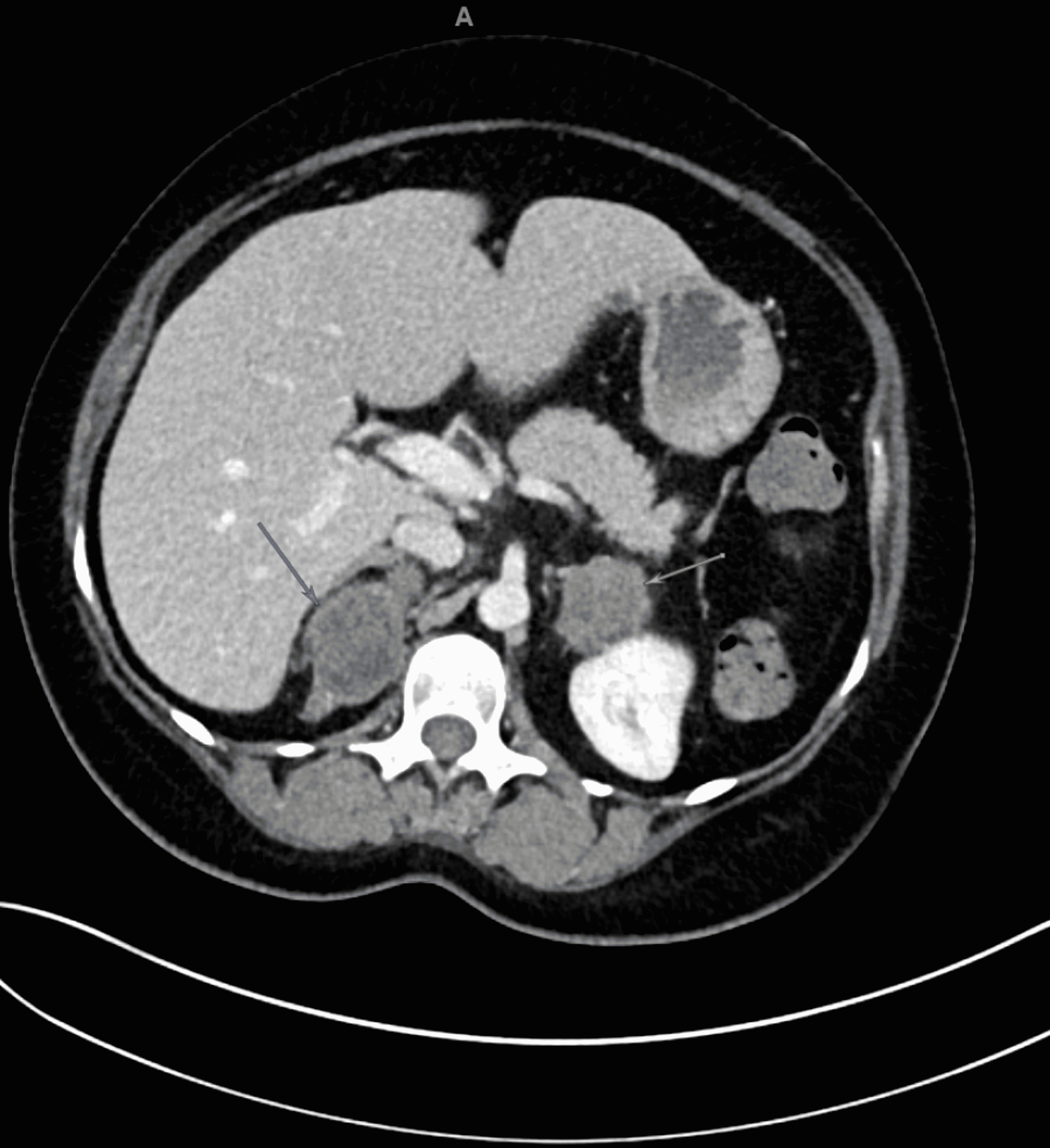
CT-of-the-abdomen/pelvis-with-contrast-showing-low-attenuation-masses-present-in-both-adrenal-glands-measuring-6.9-x-5.3-cm-on-the-right-(dark-gray-arrow)-and-4.5-x-3.9-cm-on-the-left-(light-gray-arrow)
Figure 1: CT of the abdomen/pelvis with contrast showing low-attenuation masses present in both adrenal glands measuring 6.9 x 5.3 cm on the right (dark gray arrow) and 4.5 x 3.9 cm on the left (light gray arrow)

In early February 2021, the patient again presented to the ED complaining of recurrent episodes of bilateral blurry vision. Examination was unremarkable, including an ophthalmological exam with slit lamp exam. Blurred vision was suspected to be due to osmotic swelling in the setting of severe hyperglycemia as the patient had persistently uncontrolled blood sugars. Recommendations were for tighter control of blood glucose, and follow-up with primary care and ophthalmology.

Patient followed up with the endocrinologist in mid-February to which the patient reported first noticing a difference in her energy and changes to her weight around one year prior. She communicated a weight gain of 30 to 40 lbs over the past year. Patient had a reported history of gestational hypertension diagnosed five years ago when she gave birth to her daughter, which was steadily worsening over the past year. She reported intermittent myalgias and easy bruising. Patient had no family history or any apparent features to suggest multiple endocrine neoplasia (MEN) syndrome. Blood work revealed ACTH less than 1.5 pg/mL, AM cortisol was high at 24.5 mcg/dL, and normal aldosterone at 3.6 ng/dL, with normal renin and metanephrine levels. Physical examination revealed truncal obesity as well as a round face, cushingoid in appearance, and relatively thin extremities and abdominal striae.

She was then referred to a surgical specialist, and it was decided that she would undergo laparoscopic bilateral adrenalectomy due to severe Cushing’s syndrome. The surgical pathology report revealed macro-nodular cortical hyperplasia of both left and right adrenal gland masses with random endocrine atypia. The largest nodule on the left measured 4.5 cm and the largest nodule on the right measured 6.6 cm. Post-operatively she was started on hydrocortisone 20 mg every morning and 10 mg every evening, and fludrocortisone 0.1 mg twice a day as part of her steroid replacement regimen. Eventually she changed to hydrocortisone 10 mg three times a day and fludrocortisone 0.1 mg once a day. For her diabetes, her insulin glargine decreased from 60 units to 20 units. Amlodipine and hydrochlorothiazide were discontinued from her antihypertensive medications; she continued losartan and metoprolol. Follow up blood work showed stable electrolytes with potassium 4.2 mmol/L (3.5-5.2 mmol/L), sodium 137 mmol/L (134-144mmol/L), chloride 100 mmol/L (96-106 mmol/L), and carbon dioxide 23 mmol/L (20-29mmol/L).

Discussion

ACTH-independent Cushing’s syndrome due to bilateral cortisol-secreting nodules is rare, accounting for 2% of CS cases. The majority of causes include primary bilateral macronodular adrenal hyperplasia (PBMAH), primary pigmented nodular adrenocortical disease (PPNAD), and bilateral adrenocortical adenomas (BAA). In PBMAH, typically patients are diagnosed within the fifth or sixth decade of life [4]. The usual age of onset for PPNAD is within the first to third decade of life, with median age in the pediatric population at age 15 years [6]. BAA is such a rare entity that there exists little epidemiological data with less than 40 reported cases until 2019 [7]. A small subset of patients present with overt clinical symptoms of CS, as hypercortisolism often follows an insidious course that can delay diagnosis from years to decades, with one series reporting a diagnostic delay of approximately eight years [8]. Serum and urine hormone screening in the right clinical setting can provide clues to these endocrine disorders, however diagnosis of ACTH-independent CS often occurs incidentally wherein a radiographic study was done for reasons other than to identify adrenal disease [9]. CT or MRI alone are not able to differentiate these disease entities, requiring pathological examination for final determination [7]. Adrenal venous sampling (AVS) and I-6B-iodomethyl-19-norcholesterol (I-NP-59) can aid in identifying hormone-secreting status of each adrenal lesion, however usefulness is debated among experts [10-12].

In all cases the end goal is to normalize adrenocortical hormones, and PBMAH primarily involves surgical resection with exogenous hormone replacement. Bilateral adrenalectomy is generally the treatment of choice with overt Cushing syndrome regardless of cortisol level. These patients require lifelong steroid administration [9,13]. Another approach is unilateral adrenalectomy of the larger or more metabolically active gland, which can be identified after AVS or I-NP-59 testing. This has been proposed in order to preserve some autonomous hormonal production and prevent adrenal crisis, however remission rates of Cushing syndrome as high as 84% have been reported with eventual need for bilateral adrenalectomy [7,8,14]. Steroid enzyme inhibition to control cortisol secretion has been used as an adjunct before surgery. In some patients with identified aberrant adrenal hormone receptors, targeted pharmacological inhibition remains an alternative medical approach [8]. Despite these alternatives to surgery, surgical resection remains the optimal approach [1].

Conclusions

ACTH-independent Cushing’s syndrome due to PBMAH usually presents as an indolent course, with typical diagnosis in the fifth to sixth decade. As the use of imaging for other non-endocrine related investigations becomes more utilized, PBMAH being less of a rare entity. Clinical presentation usually dictates the timing of and type of surgical intervention. Although there are some reports of unilateral resection resulting in a cure, many of these cases eventually proceed to staged bilateral resection. Our patient’s presentation as her primary complaint was recurrent episodes of blurry vision that were suspected to be due to osmotic swelling because of her uncontrolled hyperglycemia. Her case was also unusual as she presented at 40 years old, an average of 10 years earlier than is typically diagnosed for PBMAH. Her symptoms also progressed rapidly over the course of 12 months with development of resistant hypertension and insulin-dependent diabetes requiring high basal insulin. Following surgical resection, her antihypertensive regimen was de-escalated and had significant reduction in insulin requirements, and was maintained on adrenocorticoid therapy.


References

  1. Nieman LK: Recent updates on the diagnosis and management of Cushing’s syndrome. Endocrinol Metab (Seoul). 2018, 33:139-46. 10.3803/EnM.2018.33.2.139
  2. Rare Disease Database: Cushing Syndrome. (2021). Accessed: 12/17/2021: https://rarediseases.org/rare-diseases/cushing-syndrome/.
  3. Broder MS, Neary MP, Chang E, Cherepanov D, Ludlam WH: Incidence of Cushing’s syndrome and Cushing’s disease in commercially-insured patients <65 years old in the United States. Pituitary. 2015, 18:283-9. 10.1007/s11102-014-0569-6
  4. Lacroix A, Feelders RA, Stratakis CA, Nieman LK: Cushing’s syndrome. Lancet. 2015, 386:913-27. 10.1016/S0140-6736(14)61375-1
  5. Tokumoto M, Onoda N, Tauchi Y, et al.: A case of adrenocoricotrophic hormone -independent bilateral adrenocortical macronodular hyperplasia concomitant with primary aldosteronism. BMC Surg. 2017, 17:97. 10.1186/s12893-017-0293-z
  6. Stratakis CA: Cushing syndrome caused by adrenocortical tumors and hyperplasias (corticotropin- independent Cushing syndrome). Endocr Dev. 2008, 13:117-32. 10.1159/000134829
  7. Gu YL, Gu WJ, Dou JT, et al.: Bilateral adrenocortical adenomas causing adrenocorticotropic hormone-independent Cushing’s syndrome: a case report and review of the literature. World J Clin Cases. 2019, 7:961-71. 10.12998/wjcc.v7.i8.961
  8. Lacroix A: ACTH-independent macronodular adrenal hyperplasia. Best Pract Res Clin Endocrinol Metab. 2009, 23:245-59. 10.1016/j.beem.2008.10.011
  9. Sweeney AT, Srivoleti P, Blake MA: Management of the patient with incidental bilateral adrenal nodules. J Clin Transl Endocrinol Case Rep. 2021, 20:100082. 10.1016/j.jecr.2021.100082
  10. Lumachi F, Zucchetta P, Marzola MC, Bui F, Casarrubea G, Angelini F, Favia G: Usefulness of CT scan, MRI and radiocholesterol scintigraphy for adrenal imaging in Cushing’s syndrome. Nucl Med Commun. 2002, 23:469-73. 10.1097/00006231-200205000-00007
  11. Builes-Montaño CE, Villa-Franco CA, Román-Gonzalez A, Velez-Hoyos A, Echeverri-Isaza S: Adrenal venous sampling in a patient with adrenal Cushing syndrome. Colomb Med (Cali). 2015, 46:84-7.
  12. Guo YW, Hwu CM, Won JG, Chu CH, Lin LY: A case of adrenal Cushing’s syndrome with bilateral adrenal masses. Endocrinol Diabetes Metab Case Rep. 2016, 2016:150118. 10.1530/EDM-15-0118
  13. Wei J, Li S, Liu Q, et al.: ACTH-independent Cushing’s syndrome with bilateral cortisol-secreting adrenal adenomas: a case report and review of literatures. BMC Endocr Disord. 2018, 18:22. 10.1186/s12902-018-0250-6
  14. Osswald A, Quinkler M, Di Dalmazi G, et al.: Long-term outcome of primary bilateral macronodular adrenocortical hyperplasia after unilateral adrenalectomy. J Clin Endocrinol Metab. 2019, 104:2985-93. 10.1210/jc.2018-02204

From https://www.cureus.com/articles/90069-intermittent-blurry-vision-an-unexpected-presentation-of-cushings-syndrome-due-to-primary-bilateral-macronodular-adrenal-hyperplasia-pbmah

Challenging Case of Ectopic ACTH Secretion from Prostate Adenocarcinoma

Abstract

Cushing’s syndrome (CS) secondary to ectopic adrenocorticotrophic hormone (ACTH)-producing prostate cancer is rare with less than 50 cases reported. The diagnosis can be challenging due to atypical and variable clinical presentations of this uncommon source of ectopic ACTH secretion. We report a case of Cushing’s syndrome secondary to prostate adenocarcinoma who presented with symptoms of severe hypercortisolism with recurrent hypokalaemia, limb oedema, limb weakness, and sepsis. He presented with severe hypokalaemia and metabolic alkalosis (potassium 2.5 mmol/L and bicarbonate 36 mmol/L), with elevated 8 am cortisol 1229 nmol/L. ACTH-dependent Cushing’s syndrome was diagnosed with inappropriately normal ACTH 57.4 ng/L, significantly elevated 24-hour urine free cortisol and unsuppressed cortisol after 1 mg low-dose, 2-day low-dose, and 8 mg high-dose dexamethasone suppression tests. 68Ga-DOTANOC PET/CT showed an increase in DOTANOC avidity in the prostate gland, and his prostate biopsy specimen was stained positive for ACTH and markers for neuroendocrine differentiation. He was started on ketoconazole, which was switched to IV octreotide in view of liver dysfunction from hepatic metastases. He eventually succumbed to the disease after 3 months of his diagnosis. It is imperative to recognize prostate carcinoma as a source of ectopic ACTH secretion as it is associated with poor clinical outcomes, and the diagnosis can be missed due to atypical clinical presentations.

1. Introduction

Ectopic secretion of adrenocorticotropic hormone (ACTH) is responsible for approximately 10–20% of all causes of Cushing syndrome [1]. The classic sources of ectopic ACTH secretion include bronchial carcinoid tumours, small cell lung carcinoma, thymoma, medullary thyroid carcinoma (MTC), gastroenteropancreatic neuroendocrine tumours (NET), and phaeochromocytomas [2]. Ectopic adrenocorticotropic syndrome (EAS) is diagnostically challenging due to its variable clinical manifestations; however, prompt recognition and treatment is critical. Ectopic ACTH production from prostate carcinoma is rare, and there are less than 50 cases published to date. Here, we report a case of ectopic Cushing’s syndrome secondary to prostate adenocarcinoma who did not present with the typical physical features of Cushing’s syndrome, but instead with features of severe hypercortisolism such as hypokalaemia, oedema, and sepsis.

2. Case Presentation

A 61-year-old male presented to our institution with recurrent hypokalaemia, lower limb weakness, and oedema. He had a history of recently diagnosed metastatic prostate adenocarcinoma, for which he was started on leuprolide and finasteride. Other medical history includes poorly controlled diabetes mellitus and hypertension of 1-year duration. He presented with hypokalaemia of 2.7 mmol/L associated with bilateral lower limb oedema and weakness, initially attributed to the intake of complementary medicine, which resolved with potassium supplementation and cessation of the complementary medicine. One month later, he was readmitted for refractory hypokalaemia of 2.5 mmol/L and progression of the lower limb weakness and oedema. On examination, his blood pressure (BP) was 121/78 mmHg, and body mass index (BMI) was 24 kg/m2. He had no Cushingoid features of rounded and plethoric facies, supraclavicular or dorsocervical fat pad, ecchymoses, and no purple striae on the abdominal examination. He had mild bilateral lower limb proximal weakness and oedema.

His initial laboratory findings of severe hypokalaemia with metabolic alkalosis (potassium 2.5 mmol/L and bicarbonate 36 mmol/L), raised 24-hour urine potassium (86 mmol/L), suppressed plasma renin activity and aldosterone, central hypothyroidism, and elevated morning serum cortisol (1229 nmol/L) (Table 1) raised the suspicion for endogenous hypercortisolism. Furthermore, hormonal evaluations confirmed ACTH-dependent Cushing’s syndrome with inappropriately normal ACTH (56 ng/L) and failure of cortisol suppression after 1 mg low-dose, 2-day low-dose, and 8 mg high-dose dexamethasone suppression tests (Table 2). His 24-hour urine free cortisol (UFC) was significantly elevated at 20475 (59–413) nmol/day.

Table 1 
Investigations done during his 2nd admission.
Table 2 
Diagnostic workup for hypercortisolism.

To identify the source of excessive cortisol secretion, magnetic resonance imaging (MRI) of the pituitary fossa and computed tomography (CT) of the thorax, abdomen, and pelvis were performed. Pituitary MRI was unremarkable, and CT scan showed the known prostate lesion with extensive liver, lymph nodes, and bone metastases (Figure 1). To confirm that the prostate cancer was the source of ectopic ACTH production, gallium-68 labelled somatostatin receptor positron emission tomography (PET)/CT (68Ga-DOTANOC) was done, which showed an increased DOTANOC avidity in the inferior aspect of the prostate gland (Figure 2). Immunohistochemical staining of his prostate biopsy specimen was requested, and it stained positive for ACTH and markers of neuroendocrine differentiation (synaptophysin and CD 56) (Figures 3 and 4), establishing the diagnosis of EAS secondary to prostate cancer.

Figure 1 
CT thorax abdomen and pelvis showing prostate cancer (blue arrow) with liver metastases (red arrow).
Figure 2 
Ga68-DOTANOC PET/CT demonstrating increased DOTANOC avidity seen in the inferior aspect of the right side of the prostate gland (red arrow).
Figure 3 
Hematoxylin and eosin staining showing acinar adenocarcinoma of the prostate featuring enlarged, pleomorphic cells infiltrating as solid nests and cords with poorly differentiated glands (Gleason score 5 + 4 = 9).
Figure 4 
Positive ACTH immunohistochemical staining of prostate tumour (within the circle).

The patient was started on potassium chloride 3.6 g 3 times daily and spironolactone 25 mg once daily with normalisation of serum potassium. His BP was controlled with the addition of lisinopril and terazosin to spironolactone and ketoconazole, and his blood glucose was well controlled with metformin and sitagliptin. To manage the hypercortisolism, he was treated with ketoconazole 400 mg twice daily with an initial improvement of serum cortisol from 2048 nmol/L to 849 nmol/L (Figure 5). Systemic platinum and etoposide-based chemotherapy was recommended for the treatment of his prostate cancer after a multidisciplinary discussion, but it was delayed due to severe bacterial and viral infection. With the development of liver dysfunction, ketoconazole was switched to intravenous octreotide 100 mcg three times daily as metyrapone was not readily available in our country. However, the efficacy was suboptimal with marginal reduction of serum cortisol from 3580 nmol/L to 3329 nmol/L (Figure 5). The patient continued to deteriorate and was deemed to be medically unfit for chemotherapy or bilateral adrenalectomy. He was referred to palliative care services, and he eventually demised due to cancer progression within 3 months of his diagnosis.

Figure 5 
The trend in cortisol levels on pharmacological therapy.

3. Discussion

Ectopic ACTH secretion is an uncommon cause of Cushing’s syndrome accounting for approximately 9–18% of the patients with Cushing’s syndrome [3]. Clinical presentation is highly variable depending on the aggressiveness of the underlying malignancy, but patients typically present with symptoms of severe hypercortisolism such as hypokalaemiaa, oedema, and proximal weakness which were the presenting complaints of our patient [4]. The classical symptoms of Cushing’s syndrome are frequently absent due to the rapid clinic onset resulting in diagnostic delay [5].

Prompt diagnosis and localisation of the source of ectopic ACTH secretion are crucial due to the urgent need for treatment initiation. The usual sources include small cell lung carcinoma, bronchial carcinoid, medullary thyroid carcinoma, thymic carcinoid, and pheochromocytoma. CT of the thorax, abdomen, and pelvis should be the first-line imaging modality, and its sensitivity varies with the type of tumour ranging from 77% to 85% [6]. Functional imaging such as 18-fluorodeoxyglucose-PET and gallium-68 labelled somatostatin receptor PET/CT can be useful in localising the source of occult EAS, determining the neuroendocrine nature of the tumour or staging the underlying malignancy [36]. As prostate cancer is an unusual cause of EAS, we proceeded with 68Ga-DOTANOC PET/CT in our patient to localise the source of ectopic ACTH production.

The goals of management in EAS include treating the hormonal excess and the underlying neoplasm as well as managing the complications secondary to hypercortisolism [3]. Prompt management of the cortisol excess is paramount as complications such as hyperglycaemia, hypertension, hypokalaemia, pulmonary embolism, sepsis, and psychosis can develop especially when UFC is more than 5 times the upper limit of normal [3]. Ideally, surgical resection is the first-line management, but this may not be feasible in metastatic, advanced, or occult diseases.

Pharmacological agents are frequently required with steroidogenesis inhibitors such as ketoconazole and metyrapone, which reduce cortisol production effectively and rapidly [36], the main drawback of ketoconazole being its hepatic toxicity. The efficacy of ketoconazole is reported to be 44%, metyrapone 50–75%, and ketoconazole-metyrapone combination therapy 73% [37]. Mitotane, typically used in adrenocortical carcinoma, is effective in controlling cortisol excess but has a slow onset of action [38]. Etomidate infusion can be used for short-term rapid control of severe symptomatic hypercortisolism and can serve as a bridge to definitive therapy [9]. Mifepristone, a glucocorticoid receptor antagonist, is indicated mainly in difficult to control hyperglycaemia secondary to hypercortisolism [8]. Somatostatin analogue has been proposed as a possible pharmacological therapy due to the expression of somatostatin receptors by ACTH secreting tumours [810]. Bilateral adrenalectomy should be considered in patients with severe symptomatic hypercortisolism and life-threatening complications who cannot be optimally managed with medical therapies, especially in patients with occult EAS or metastatic disease [38]. Bilateral adrenalectomy results in immediate improvement in cortisol levels and symptoms secondary to hypercortisolism [11]. However, surgical complications, morbidity, and mortality are high in patients with uncontrolled hypercortisolism [8], and our patient was deemed by his oncologist and surgeon to have too high a risk for bilateral adrenalectomy. For the treatment of prostate carcinoma, platinum and etoposide-based chemotherapies have been used, but their efficacy is limited with a median survival of 7.5 months [412]. The side effects of chemotherapy can be severe with an enhanced risk of infection due to both cortisol and chemotherapy-mediated immunosuppression. Prompt control of hypercortisolism prior to chemotherapy and surgical procedure is strongly suggested to attenuate life-threatening complications such as infection, thrombosis, and bleeding with chemotherapy or surgery as well as to improve prognosis [313].

There are rare reports of ectopic ACTH secretion from prostate carcinoma. These tumours were predominantly of small cell or mixed cell type, and pure adenocarcinoma with neuroendocrine differentiation are less common [45]. There is a strong correlation between the prognosis and the types of malignancy in patients with EAS, and patients with prostate carcinoma have a poor prognosis [4]. These patients had metastatic disease at presentation, and the median survival was weeks to months despite medical treatment, chemotherapy, and even bilateral adrenalectomy [4], as seen with our patient who passed away within 3 months of his diagnosis.

In conclusion, adenocarcinoma of the prostate is a rare cause of EAS. The diagnosis and management are complex and challenging requiring specialised expertise with multidisciplinary involvement. The presentation can be atypical, and it is imperative to suspect and recognise prostate carcinoma as a source of ectopic ACTH secretion. Prompt initiation of treatment is important, as it is a rapidly progressive and aggressive disease associated with intense hypercortisolism resulting in high rates of mortality and morbidity.

Data Availability

The data used to support the findings of this study are included within the article.

Conflicts of Interest

The authors declare that there are no conflicts of interest.

Acknowledgments

The authors would like to thank the Pathology Department of Changi General Hospital for their contribution to this case.

References

  1. I. Ilias, D. J. Torpy, K. Pacak, N. Mullen, R. A. Wesley, and L. K. Nieman, “Cushing’s syndrome due to ectopic corticotropin secretion: twenty years’ experience at the national institutes of health,” Journal of Clinical Endocrinology & Metabolism, vol. 90, no. 8, pp. 4955–4962, 2005.View at: Publisher Site | Google Scholar
  2. J. Newell-Price, P. Trainer, M. Besser, and A. Grossman, “The diagnosis and differential diagnosis of cushing’s syndrome and pseudo-cushing’s states,” Endocrine Reviews, vol. 19, no. 5, pp. 647–672, 1998.View at: Publisher Site | Google Scholar
  3. J. Young, M. Haissaguerre, O. Viera-Pinto, O. Chabre, E. Baudin, and A. Tabarin, “Management of endocrine disease: cushing’s syndrome due to ectopic ACTH secretion: an expert operational opinion,” European Journal of Endocrinology, vol. 182, no. 4, pp. R29–R58, 2020.View at: Publisher Site | Google Scholar
  4. M. S. Elston, V. B. Crawford, M. Swarbrick, M. S. Dray, M. Head, and J. V. Conaglen, “Severe Cushing’s syndrome due to small cell prostate carcinoma: a case and review of literature,” Endocrine Connections, vol. 6, no. 5, pp. R80–R86, 2017.View at: Publisher Site | Google Scholar
  5. O. M. Alshaikh, A. A. Al-Mahfouz, H. Al-Hindi, A. B. Mahfouz, and A. S. Alzahrani, “Unusual cause of ectopic secretion of adrenocorticotropic hormone: cushing syndrome attributable to small cell prostate cancer,” Endocrine Practice, vol. 16, no. 2, pp. 249–254, 2010.View at: Publisher Site | Google Scholar
  6. A. Sundin, R. Arnold, E. Baudin et al., “ENETS consensus guidelines for the standards of care in neuroendocrine tumors: radiological, nuclear medicine and hybrid imaging,” Neuroendocrinology, vol. 105, no. 3, pp. 212–244, 2017.View at: Publisher Site | Google Scholar
  7. J.-B. Corcuff, J. Young, P. Masquefa-Giraud, P. Chanson, E. Baudin, and A. Tabarin, “Rapid control of severe neoplastic hypercortisolism with metyrapone and ketoconazole,” European Journal of Endocrinology, vol. 172, no. 4, pp. 473–481, 2015.View at: Publisher Site | Google Scholar
  8. L. K. Nieman, B. M. K. Biller, J. W. Findling et al., “Treatment of cushing’s syndrome: an endocrine society clinical practice guideline,” Journal of Clinical Endocrinology & Metabolism, vol. 100, no. 8, pp. 2807–2831, 2015.View at: Publisher Site | Google Scholar
  9. T. B. Carroll, W. J. Peppard, D. J. Herrmann et al., “Continuous etomidate infusion for the management of severe cushing syndrome: validation of a standard protocol,” Journal of the Endocrine Society, vol. 3, no. 1, pp. 1–12, 2019.View at: Publisher Site | Google Scholar
  10. K. Von Werder, O. A. Muller, and G. K. Stalla, “Somatostatin analogs in ectopic corticotropin production,” Metabolism, vol. 45, pp. 129–131, 1996.View at: Publisher Site | Google Scholar
  11. N. Klomjit, D. J. Rowan, A. G. Kattah, I. Bancos, and S. J. Taler, “New-onset resistant hypertension in a newly diagnosed prostate cancer patient,” American Journal of Hypertension, vol. 32, no. 12, pp. 1214–1217, 2019.View at: Publisher Site | Google Scholar
  12. R. Nadal, M. Schweizer, O. N. Kryvenko, J. I. Epstein, and M. A. Eisenberger, “Small cell carcinoma of the prostate,” Nature Reviews Urology, vol. 11, no. 4, pp. 213–219, 2014.View at: Publisher Site | Google Scholar
  13. F. A. Collichio, P. D. Woolf, and M. Brower, “Management of patients with small cell carcinoma and the syndrome of ectopic corticotropin secretion,” Cancer, vol. 73, no. 5, pp. 1361–1367, 1994.View at: Google Scholar

Copyright © 2022 Wanling Zeng and Joan Khoo. This is an open access article distributed under the Creative Commons Attribution License, which permits unrestricted use, distribution, and reproduction in any medium, provided the original work is properly cited.

From https://www.hindawi.com/journals/crie/2022/3739957/

Osilodrostat Normalizes Urinary Free Cortisol in Most Adults with Cushing’s Disease

More than three-quarters of adults with Cushing’s disease assigned osilodrostat had a normalized mean urinary free cortisol level at 12 weeks and maintained a normal level at 36 weeks, according to data from the LINC 4 phase 3 trial.

In findings published in The Journal of Clinical Endocrinology & Metabolism, 77% of adults with Cushing’s disease randomly assigned to osilodrostat (Isturisa, Recordati) had mean urinary free cortisol (UFC) levels reduced to below the upper limit of normal at 12 weeks compared with 8% of adults assigned to placebo.

Osilodrostat normalizes UFC in most people with Cushing's disease at 12 weeks
Most adults with Cushing’s disease taking 2 mg twice daily osilodrostat had normalized mean UFC levels at 12 weeks compared with placebo. Data were derived from Gadelha M, et al. J Clin Endocrinol Metab. 2022;doi:10.1210/clinem/dgac178.

Osilodrostat is a highly effective treatment for Cushing’s disease, normalizing urinary free cortisol excretion in 77% of patients after 12 weeks’ treatment,” Mônica Gadelha, MD, professor of endocrinology at The Federal University of Rio de Janeiro, and colleagues wrote. “Cortisol reductions were maintained throughout 48 weeks of treatment and were accompanied by improvements in clinical signs of hypercortisolism and quality of life.”

Gadelha and colleagues enrolled 73 adults aged 18 to 75 years with Cushing’s disease from 40 centers in 14 countries into the LINC 4 phase 3 trial. Participants were randomly assigned to 2 mg osilodrostat twice daily (n = 48) or placebo (n = 25) for 12 weeks. Urinary samples were collected at weeks 2, 5 and 8 to measure mean UFC, and dosage was adjusted based on efficacy and tolerability. After 12 weeks, participants from both groups received osilodrostat in a 36-week open-label treatment period. All participants restarted the open-label portion of the trial at 2 mg osilodrostat unless they were on a lower dose at week 12. Dose adjustments in the open-label phase were made using the same guidelines in the randomized, double-blind, placebo-controlled trial. The primary endpoint was the efficacy of osilodrostat at achieving a mean UFC below the upper limit of normal of 138 nmol per 24 hours at 12 weeks vs. placebo; the key secondary endpoint was the percentage of participants achieving a normal mean UFC at 36 weeks.

At 12 weeks, the percentage of adults with a normalized mean UFC level was higher in the osilodrostat group compared with placebo (77.1% vs. 8%; P < .0001).

At 36 weeks, 80.8% of all participants had a normal mean UFC level. The overall response rate was 79.5% at 48 weeks.

Median time to first controlled mean UFC response was 35 days for those randomly assigned to osilodrostat as well as those randomly assigned to placebo who crossed over to osilodrostat for the open-label phase. At 48 weeks, 84% of participants were receiving 10 mg or less of osilodrostat per day, including 56% receiving 4 mg or less daily.

At 12 weeks, the osilodrostat group had several cardiovascular and metabolic-related improvements, including systolic and diastolic blood pressure, HbA1c, HDL cholesterol, body weight and waist circumference. No changes were observed in the placebo group.

“The improvements in cardiovascular and metabolic parameters were sustained throughout osilodrostat treatment and have the potential to alleviate the burden of comorbidities in many patients with Cushing’s disease,” the researchers wrote.

At 12 weeks, 52.5% of those receiving osilodrostat had a reduction in supraclavicular fat pad and 50% had a reduction in dorsal fat pad. At least 25% of participants also had improvements in facial redness, striae, proximal muscle atrophy and central obesity. Improvements were sustained through week 48.

During the placebo-controlled trial, grade 3 and 4 adverse events occurred for about 20% of participants in both groups. For the entire study, 38.4% of adults reported grade 3 and 4 adverse events, with the most common being hypertension. Eight participants discontinued the study due to adverse events.

From https://www.healio.com/news/endocrinology/20220408/osilodrostat-normalizes-urinary-free-cortisol-in-most-adults-with-cushings-disease

From This Month’s Reader’s Digest

From the February, 2022 issue of Reader’s Digest:

readers-digest.jpg

Read the original article at readers-digest-misdiagnosed