Today in Lab History

Jokichi Takamine was a Japanese-American biochemist and industrialist, born Nov. 3, 1854, who isolated the hormone produced in the adrenal gland that causes the body to respond to emergencies. This chemical was adrenalin — now called epinephrine — from the suprarenal gland. It was the first pure hormone to be isolated from natural sources.

He applied for and received a U.S. patent on the substance, and went on to make a fortune with his marketing of Adrenalin. In fact, the product that he marketed was not pure epinephrine, but a mixture of the hormone and its sibling compound, norepinephrine, or noradrenaline. It is now made synthetically. He also found takadastase, and played a key role in the introduction of phosphate fertilizer along with various other manufacturing and chemical industries to Japan.

~~~~~

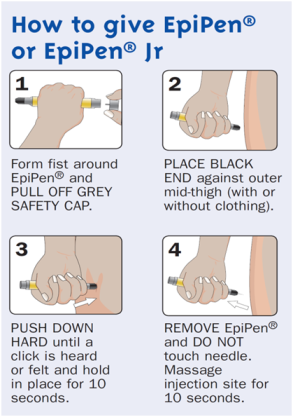
How_to_give_EpiPen

Epinephrine, an EpiPen or Auvi-Q/Allerject injection, should be given in the mid-anterior lateral thigh (not the outer thigh). We call this the EpiCenter of the thigh, and this video segment from the EpiCenter Medical (http://www.epicentermedical.com) online anaphylaxis first aid course has a thigh location graphic to help you pinpoint the most effective location for the injection.

Mutation of ARMC5 gene characterized as the cause of meningeal tumour growth

Scientists at the Luxembourg Centre for Systems Biomedicine (LCSB) of the University of Luxembourg have published their findings that mutations in a gene known as “ARMC5” promote the growth of benign tumours in the adrenal glands and on the meninges: ARMC5 appears to belong to the group of so-called tumour suppressor genes. It is the first time in years that scientists have characterized such a gene.

The ARMC5 gene was discovered by independent workgroups studying – so-called adrenal adenomas – in connection with Cushing’s syndrome. In this disease, the body produces too much of the . Now, for the first time, a mutation of ARMC5 has been characterized as the cause behind the growth of meningeal tumours. The results on this tumour syndrome, obtained by the group of Dr. Patrick May and PD. Dr. Jochen Schneider together with colleagues from Charité Berlin (Dr. Ulf Elbelt) and the Universities of Würzburg (Prof. Dr. Bruno Allolio) and Cologne (Dr. Michael Kloth), have been published recently in the Journal of Clinical Endocrinology Metabolism.

Cortisol is an important hormone. It influences many metabolic pathways in the body and has a suppressing effect on the immune system. Accordingly, it is commonly employed as an anti-inflammatory medication. Prolonged, elevated levels of cortisol in the body can lead to obesity, muscular dystrophy, depression and other symptoms. To maintain the correct concentration in the blood, the body has a refined regulation system: Certain areas of the brain produce the hormone corticotropin as a stimulator of cortisol release; the actual formation of cortisol takes place in the . As the concentration of cortisol in the blood rises, the brain reduces the production of corticotropin.

In search of the causes of Cushing’s syndrome, scientists recently encountered certain genetic causes of benign tumours of the adrenal cortex. Growth of these adrenal cortex adenomas is based on a combination of hereditary and spontaneous mutations: It affects people in whom one of two “alternative copies” – one of the so-called alleles – of the ARMC5 gene is mutated from birth. If the second allele of ARMC5 later also undergoes a spontaneous mutation in the adrenal cortex, then the gene no longer functions. “What is interesting is that the failure of ARMC5 has no direct influence on cortisol production. However, because the tumour cells multiply faster than other body cells, and the number of cells in the tumour increases, the blood cortisol level rises in the course of the disease”, says Dr Schneider. Then, the level in the body rises and ultimately results in the onset of Cushing’s syndrome.

When other scientific workgroups discovered that further benign tumours – in this case meningeal tumours – occur more often in ARMC5-Cushing families, the group of Patrick May and Jochen Schneider sequenced the ARMC5 gene and studied it using bioinformatic techniques. “We demonstrated for the first time, in a patient with an adrenal cortex tumour and simultaneously a meningeal tumour, that somatic, that is non-hereditary, ARMC5 mutations are present in both tumours. This observation suggests that ARMC5 is a true tumour-suppressor gene.”

It must now be explored, Schneider continues, to what extent patients with adrenal cortex tumours ought to be screened for simultaneous presence of meningioma, and in which other types of tumour ARMC5 mutations are responsible for tumour growth: “Building upon that, we can learn whether the gene and the metabolic pathways it influences offer new approaches for treating the tumour syndrome.”

More information: “Molecular and Clinical Evidence for an ARMC5 Tumor Syndrome: Concurrent Inactivating Germline and Somatic Mutations are Associated with both Primary Macronodular Adrenal Hyperplasia and Meningioma.” Journal of Clinical Endocrinology Metabolism, October 2014. DOI: 10.1210/jc.2014-2648

Journal reference: Journal of Clinical Endocrinology & Metabolism search and more info website

Provided by University of Luxembourg search and more info

From http://medicalxpress.com/news/2014-10-mutation-armc5-gene-characterized-meningeal.html

Dr Friedman: Meeting on Thyroid and Hormonal Problems

friedman

Dr. Theodore Friedman will host a free meeting on thyroid and hormonal problems on Sunday February 16 from 7-8 PM PST at Anshe Emes synagogue-1490 S. Robertson Blvd., Los Angeles, CA 90035.

The meeting will be videoconferenced to those who cannot make it in person.

To sign up for the videoconference, email mail@goodhormonehealth.com by February 14.

Enzyme linked to obesity

Researchers find that increased levels of an enzyme in fat cells lead to dangerous levels of abdominal obesity.

Previous studies have shown that the stress hormone cortisol can lead to an accumulation of fat round the abdomen. For instance, people with Cushing’s disease – where there’s excess cortisol in the blood – have too much abdominal fat. It’s bad for health to have fat in this area – it’s linked to diabetes and heart disease. That’s why it’s healthier to be a ‘pear shape’ rather than an ‘apple shape’. The distribution of fat in your body really does matter.

Researchers in Scotland and the US have now focussed upon an enzyme that produces cortisol to see what effect it has on abdominal fat. Working on mice genetically-modified to produce the enzyme – and therefore cortisol – in fat cells, they find that even a small increase in levels produces dramatic effects. The mice, compared with normal animals, gained fat in the abdominal area even on a low fat diet. They developed diabetes, high blood pressure, and also tended to eat more. It opens up the possibility of further studies on human obesity, and also perhaps could lead to therapies that block this enzyme and so reduce fat accumulation.

From http://www.tele-management.ca/2013/09/enzyme-linked-to-obesity/

One Of A Kind: Despite use of only one lung, right guard Dillon Reagan helps solidify Jacks’ offensive line

The Big Uglies. The Big Nasties. The Hogs.

All terms used to describe a football team’s offensive line.

More often than not, it takes a special breed of player to be willing to do battle in the trenches.

Humboldt State right guard Dillon Reagan can without a doubt be bestowed with the title of special.

From overcoming Cushing’s Syndrome — a rare disease which left him with the use of only one lung — to the depression that was associated with the disorder, the Issaquah, Wash. native has definitely taken the road less traveled.

”The hardest part,” Reagan began, “was the first four months. (Doctors) didn’t know what was necessarily wrong with me. I was misdiagnosed as bipolar.”

Reagan displayed the initial symptoms of Cushing’s in 2009 after earning second-team All-State honors as a freshman at College of the Redwoods. A disorder caused by a tumor on one of the endocrine glands, Cushing’s causes a massive secretion of hormones which can affect behavior and physical appearance.

It did that and more to Reagan.

”I had full-ride scholarships taken away,” he said.

A full-body scan revealed a softball-sized tumor wrapped around his heart and left lung. Open heart surgery remedied the situation but his left lung useless.

In the midst of all this, Reagan also developed diabetes.

It would have been quite easy for the 6-foot-3 kid from Washington to call it quits. No one would have blamed him.

But an offensive lineman never quits.

”I never changed my approach,” Reagan said. “It’s a position of dominance and perseverance. Being an offensive lineman helped me get through all that. It helped me not feel sorry for myself.

”It was a long road back to full speed, but, your body reacts to how you push it.”

And push he did.

Reagan hit the weight room and transformed his body — which ballooned to 380 pounds due to Cushing’s — back to the muscular 300-pound frame he showcased his freshman year. He returned to Redwoods for his sophomore campaign and again displayed the skills that made him a Division I commodity.

”I ended up getting All-California,” Reagan said. “And with the use of only one lung.”

Looking to further his football career at the university level, there was really only one option.

”I wanted to go to a good program,” Reagan said. “That clear answer was Humboldt State.”

Reagan noted the close ties Redwoods and Humboldt shared as a deciding factor. His coach at CR was Duke Manyweather, a former HSU player himself. Reagan also sought the guidance of Humboldt State strength and conditioning coach Drew Petersen during his road to physical recovery.

Reagan asked to join Humboldt State as a non-scholarship athlete during the 2012 Spring semester and head coach Rob Smith and his coaching staff were more than happy to have him.

The following season, Reagan showed why.

As a junior, Reagan started 11 games for the Jacks providing a stabilizing force for a unit which paved the way for running backs to gain 2,152 total yards. He also earned second-team all conference honors.

It is amazing how high Reagan has risen after seeing how far he had fallen. An inspiration and uplifting athlete, it is easy to label him special.

Just don’t tell Reagan that.

”It takes me a little longer to warm up and get to game speed. But I don’t want to be treated differently than my teammates,” he said.

Entering his senior season, Reagan is being counted upon to be a stalwart right guard as he is only one of two returning starters (center and good friend David Kulp the other) from last season’s road graders.

Reagan is more than ready.

”As an offensive lineman, you show up every day, no matter what happens outside of practice, no matter what’s going on at home, no matter how beat up you are. You do it again and do it every day,” he said. “We set the tempo for the rest of the practice, rest of the game. If we don’t know up, it’s hard for everyone else to show up.”

Three positions are up for grabs on the Jacks’ front line. Reagan likes what he is seeing from the player stepping up to the plate.

”Start with tackle,” Reagan began, “(Jonathon) Rowe has made tremendous contributions at camp. He’s really growing up for his in a short time. Jonathan Bajet, he’s moving over from the defensive line, and he’s been really neck-and-neck for a starting guard position. David (Kulp), he’s a great guy to play next too, a great guy to have in your corner. It just works. We don’t have to say anything, we know what we’re doing. And (Jarrett) Adams has stepped up a bit. In the last few weeks he’s learned how to play right tackle.”

Humboldt is still knee-deep in competition in preparation for the Sept. 7 season-opening home contest against Simon Fraser. Reagan notes practicing daily against a defensive line which features returners Alex Markarian, Silas Sarvinski and Tommy Stuart, to name a few, helps both the O and D.

”They are adapting to our fast offense,” Reagan said. “You’re only as good as you practice. No one shows up game day and plays good. We challenge each other every day. It gets intense. But it’s all out of competition. Competition is a thing that drives a football team.”

If everything falls into place, all the Jacks’ hard work will result in one thing: Great Northwest Athletic Conference supremacy.

There’s simply no better lasting impression for Reagan.

”A GNAC Championship,” he said. “That puts you down in the books forever, that GNAC Championship.”

Title or not, it’s a pretty safe bet Reagan has already left a lasting impression.


Ray Aspuria can be reached evenings at 707-441-0527 or raspuria@times-standard.com. Follow him at twitter.com/AirUpsa707


From The Times-Standard