Iatrogenic Cushing’s Syndrome and the Hidden Ingredient of Artri King

Abstract

Cushing’s syndrome is a rare disorder caused by prolonged exposure to glucocorticoids, either from endogenous overproduction or exogenous sources, with exogenous steroid use being the most common etiology. Clinical manifestations may include moon facies, abdominal striae, easy bruising, muscle weakness, and complications such as osteoporosis and fragility fractures. Many remedies and supplements marketed for inflammatory conditions are sold online or over the counter, and some may contain hidden or undisclosed steroids that can lead to hypercortisolism. We present a case of a 52-year-old man with osteoporosis who sustained fragility fractures and became wheelchair-bound due to progressive lower extremity weakness. Evaluation demonstrated suppression of the hypothalamic-pituitary-adrenal axis, with undetectable salivary and urinary cortisol levels. Further investigation revealed long-term use of Artri King, a supplement for musculoskeletal pain that contains undisclosed glucocorticoids. This case highlights the risk of unregulated supplements causing iatrogenic Cushing’s syndrome and its associated complications.

Introduction

Cushing’s syndrome represents a constellation of signs and symptoms resulting from prolonged exposure to glucocorticoids [1]. Common manifestations may include moon facies, facial plethora, abdominal striae, easy bruising, and proximal muscle weakness [1]. Etiologies may be adrenocorticotropic hormone (ACTH)-dependent, originating from pituitary or ectopic sources, or ACTH-independent, such as adrenal pathology. In everyday clinical practice, however, exogenous glucocorticoid exposure remains the most common cause [2,3].

Exogenous steroids are available in multiple formulations, including oral, parenteral, inhaled, and topical preparations, and may be prescribed by healthcare providers or found in commercial products sold online or over the counter [4]. Prolonged exposure can result in hypercortisolism and its associated complications [5]. Therefore, careful assessment for exogenous steroid use is essential when evaluating patients with suspected Cushing’s syndrome. We report a case of iatrogenic Cushing’s syndrome secondary to the use of Artri King, a “herbal” supplement containing undisclosed glucocorticoids.

Case Presentation

A 52-year-old male with a history of prediabetes presented with osteoporosis and fragility fractures. Osteoporosis was diagnosed during imaging performed for the evaluation of back pain, which revealed thoracic spine compression fractures as well as a healed rib fracture. As a result, he became wheelchair-bound due to progressive lower extremity weakness. The patient denied prior trauma and had no family history of osteoporosis or pathologic fractures. He denied the use of steroids, proton pump inhibitors, anticoagulants, or antiseizure medications. He did not smoke and reported no alcohol use. There was no history of hypogonadism, bone disease, or fractures during childhood. Biochemical evaluation revealed a normal complete blood count, with pertinent laboratory results summarized in Table 1.

Laboratory test Value Units Reference range
Total testosterone 415 ng/dL 264–916
Intact parathyroid hormone 9.4 pg/mL 8.7–77.1
Corrected serum calcium 9.6 mg/dL 8.6–10.3
24-hour urine calcium 144 mg/24 hours 100–300*
Plasma adrenocorticotropic hormone Undetectable pg/mL 7–63*
Late-night salivary cortisol Undetectable µg/dL ≤0.09*
24-hour urine free cortisol Undetectable µg/24 hours 10–50*
Table 1: Biochemical laboratory results.

*: Reference intervals may vary by assay method and laboratory.

Given the presence of fragility fractures and physical examination findings consistent with Cushing’s syndrome, including moon facies, dorsocervical and supraclavicular fat fullness, and purplish striae (Figure 1), further evaluation was pursued. Laboratory testing demonstrated an undetectable serum ACTH level, and both late-night salivary cortisol and 24-hour urinary free cortisol levels were undetectable, raising concern for exogenous glucocorticoid exposure (Table 1). Dual-energy X-ray absorptiometry demonstrated a spinal bone mineral density of 0.686 g/cm² with a T-score of −3.7.
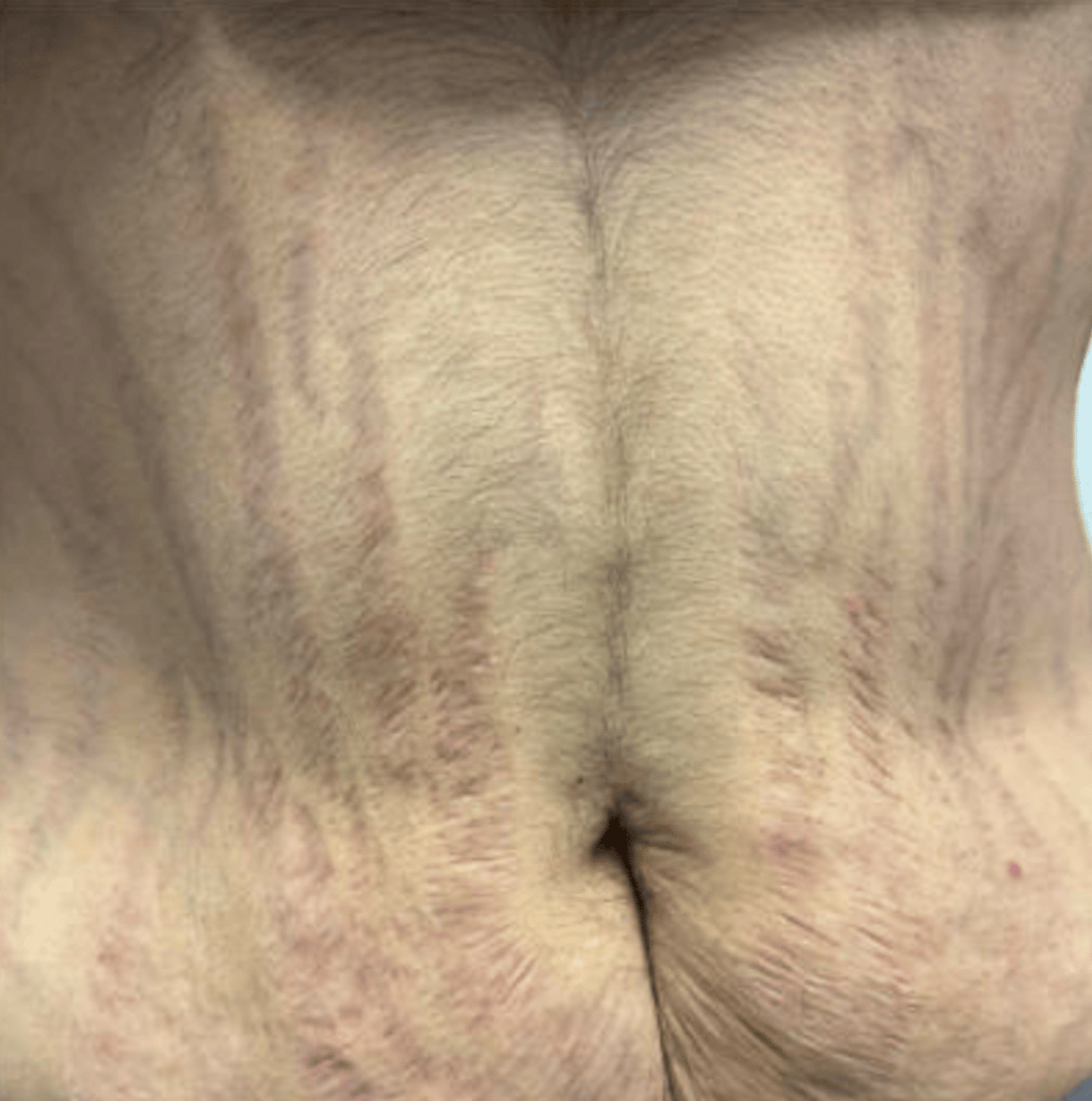
Purplish-(violaceous)-abdominal-striae-over-the-abdomen.
Figure 1: Purplish (violaceous) abdominal striae over the abdomen.

On further questioning, the patient reported taking Artri King for two years, obtained from Mexico, for joint pain and arthritis. A review of U.S. Food and Drug Administration (FDA) reports confirmed that Artri King contains hidden ingredients, including dexamethasone, not listed on its label. The supplement was discontinued, and the patient was started on a gradual steroid taper to minimize glucocorticoid withdrawal symptoms and allow for the recovery of hypothalamic-pituitary-adrenal (HPA) axis function.

Discussion

Cushing’s syndrome is a rare disorder characterized by a constellation of signs and symptoms affecting multiple organ systems as a result of prolonged exposure to excess cortisol. Hypercortisolism may result from endogenous overproduction of cortisol or from exposure to exogenous glucocorticoids [1]. Regardless of etiology, clinical manifestations commonly include moon facies, abdominal striae, truncal obesity, and easy bruising [1]. Patients with Cushing’s syndrome may also develop complications such as hyperglycemia, uncontrolled hypertension, proximal muscle weakness, and reduced BMD, which can lead to fragility fractures [2]. These complications significantly impair quality of life and may be fatal if the condition is not diagnosed and treated promptly [3].

Endogenous hypercortisolism is less common, with an estimated incidence of 2-3 cases per million per year [4]. However, recent studies suggest a higher prevalence among individuals with diabetes mellitus, osteoporosis, particularly those with fragility fractures, and hypertension [5]. Cushing’s syndrome can be classified as ACTH-dependent, in which ACTH originates from the pituitary gland or an ectopic source, or ACTH-independent, typically due to adrenal adenoma, adrenal hyperplasia, or adrenal carcinoma [5]. Although exogenous glucocorticoid exposure is the most common cause of Cushing’s syndrome, the true incidence of iatrogenic Cushing’s syndrome remains unknown [6]. Rarely, Cushing’s syndrome may result from concurrent exogenous steroid use and endogenous cortisol overproduction, which presents diagnostic challenges [6].

Glucocorticoid-containing medications are widely used in the management of inflammatory diseases, malignancies, and post-transplant care [7,8]. All forms of exogenous glucocorticoids, including oral, inhaled, injectable, and topical preparations, can cause features of hypercortisolism when used at high doses or for prolonged periods [9-12]. Extended exposure, particularly at higher doses, may also result in secondary adrenal insufficiency, even with topical formulations [13]. In addition to conventional glucocorticoids, other medications may induce iatrogenic hypercortisolism; for example, high-dose megestrol exhibits glucocorticoid-like activity and can produce Cushing’s syndrome-like features [14]. Furthermore, drugs that inhibit cytochrome P450 metabolism, such as itraconazole, can impair steroid clearance and increase systemic glucocorticoid exposure [15].

Of increasing concern is the availability of steroid-containing supplements sold over the counter or online without prescription [16]. These products are commonly marketed for conditions such as arthritis and other inflammatory disorders [16]. Prolonged use may cause Cushing’s syndrome with complications such as skin atrophy, obesity, myopathy, and fractures. The U.S. FDA has issued multiple warnings regarding dietary supplements and conventional foods found to contain undisclosed pharmaceutical ingredients [17]. A 2016 study evaluating 12 over-the-counter “adrenal support” supplements in the United States found that most contained at least one steroid hormone [18]. Another analysis of FDA warnings on unapproved pharmaceutical ingredients reported that 37.5% of products marketed for inflammatory conditions, including joint and muscle pain, contained dexamethasone [19]. Among these products, Artri King, marketed for joint pain and arthritis, has been associated with multiple FDA reports of adverse events due to undisclosed dexamethasone and methylprednisolone. These supplements remain widely available online, in select retail stores, and internationally [20].

Conclusions

This case highlights the importance of considering unregulated supplements as a potential source of exogenous glucocorticoids in patients presenting with osteoporosis and unexplained fragility fractures. Although the patient initially denied steroid use, detailed history revealed prolonged exposure to Artri King, resulting in iatrogenic Cushing’s syndrome with HPA axis suppression. Before discontinuation of steroid-containing supplements, evaluation for adrenal insufficiency is essential. Gradual tapering of glucocorticoids remains the standard approach to prevent withdrawal symptoms and support recovery of adrenal function.

References

  1. Nieman LK: Recent updates on the diagnosis and management of Cushing’s syndrome. Endocrinol Metab (Seoul). 2018, 33:139-46. 10.3803/EnM.2018.33.2.139
  2. Dunn C, Amaya J, Green P: A case of iatrogenic Cushing’s syndrome following use of an over-the-counter arthritis supplement. Case Rep Endocrinol. 2023, 2023:4769258. 10.1155/2023/4769258
  3. Castinetti F, Morange I, Conte-Devolx B, Brue T: Cushing’s disease. Orphanet J Rare Dis. 2012, 7:41. 10.1186/1750-1172-7-41
  4. Nieman LK, Biller BM, Findling JW, Newell-Price J, Savage MO, Stewart PM, Montori VM: The diagnosis of Cushing’s syndrome: an Endocrine Society Clinical Practice Guideline. J Clin Endocrinol Metab. 2008, 93:1526-40. 10.1210/jc.2008-0125
  5. Manubolu S, Nwosu O: Exogenous Cushing’s syndrome secondary to intermittent high dose oral prednisone for presumed asthma exacerbations in the setting of multiple emergency department visits. J Clin Transl Endocrinol Case Rep. 2017, 6:4-8. 10.1016/j.jecr.2017.07.001
  6. Tong CV, Rajoo S: Co-occurrence of exogenous and endogenous Cushing’s syndromes-dilemma in diagnosis. Case Rep Endocrinol. 2019, 2019:2986312. 10.1155/2019/2986312
  7. Broersen LH, Pereira AM, Jørgensen JO, Dekkers OM: Adrenal insufficiency in corticosteroids use: systematic review and meta-analysis. J Clin Endocrinol Metab. 2015, 100:2171-80. 10.1210/jc.2015-1218
  8. Yasir M, Goyal A, Sonthalia S: Corticosteroid Adverse Effects. StatPearls Publishing, Treasure Island, FL; 2025.
  9. Dow A, Yu R, Carmichael J: Too little or too much corticosteroid? Coexisting adrenal insufficiency and Cushing’s syndrome from chronic, intermittent use of intranasal betamethasone. Endocrinol Diabetes Metab Case Rep. 2013, 2013:130036. 10.1530/EDM-13-0036
  10. Hopkins RL, Leinung MC: Exogenous Cushing’s syndrome and glucocorticoid withdrawal. Endocrinol Metab Clin North Am. 2005, 34:371-84, ix. 10.1016/j.ecl.2005.01.013
  11. Hughes JM, Hichens M, Booze GW, Thorner MO: Cushing’s syndrome from the therapeutic use of intramuscular dexamethasone acetate. Arch Intern Med. 1986, 146:1848-9.
  12. Weber SL: Cushing’S syndrome attributable to topical use of lotrisone. Endocr Pract. 1997, 3:140-4. 10.4158/EP.3.3.140
  13. Pektas SD, Dogan G, Cinar N: Iatrogenic Cushing’s syndrome with subsequent adrenal insufficiency in a patient with psoriasis vulgaris using topical steroids. Case Rep Endocrinol. 2017, 2017:8320254. 10.1155/2017/8320254
  14. Steer KA, Kurtz AB, Honour JW: Megestrol-induced Cushing’s syndrome. Clin Endocrinol (Oxf). 1995, 42:91-3. 10.1111/j.1365-2265.1995.tb02603.x
  15. Bolland MJ, Bagg W, Thomas MG, Lucas JA, Ticehurst R, Black PN: Cushing’s syndrome due to interaction between inhaled corticosteroids and itraconazole. Ann Pharmacother. 2004, 38:46-9. 10.1345/aph.1D222
  16. Saad-Omer SM, Kinaan M, Matos M, Yau H: Exogenous Cushing syndrome and hip fracture due to over-the-counter supplement (Artri King). Cureus. 2023, 15:e41278. 10.7759/cureus.41278
  17. Patel R, Sherf S, Lai NB, Yu R: Exogenous Cushing syndrome caused by a “herbal” supplement. AACE Clin Case Rep. 2022, 8:239-42. 10.1016/j.aace.2022.08.001
  18. Akturk HK, Chindris AM, Hines JM, Singh RJ, Bernet VJ: Over-the-counter “adrenal support” supplements contain thyroid and steroid-based adrenal hormones. Mayo Clin Proc. 2018, 93:284-90. 10.1016/j.mayocp.2017.10.019
  19. Tucker J, Fischer T, Upjohn L, Mazzera D, Kumar M: Unapproved pharmaceutical ingredients included in dietary supplements associated with US Food and Drug Administration warnings. JAMA Netw Open. 2018, 1:e183337. 10.1001/jamanetworkopen.2018.3337
  20. U.S. Food and Drug Administration. Public Notification: Artri King contains hidden drug ingredients. (2022). Accessed: December 18, 2025: https://www.fda.gov/drugs/medication-health-fraud/public-notification-artri-king-contains-hidden-drug-ingredients.

https://www.cureus.com/articles/451949-iatrogenic-cushings-syndrome-and-the-hidden-ingredient-of-artri-king#!/

Adrenal Fatigue: Faux Diagnosis?

This article is based on reporting that features expert sources.

U.S. News & World Report

Adrenal Fatigue: Is It Real?

You may have heard of so-called ‘adrenal fatigue,’ supposedly caused by ongoing emotional stress. Or you might have come across adrenal support supplements sold online to treat it. But if someone suggests you have the controversial, unproven condition, seek a second opinion, experts say. And if someone tries to sell you dietary supplements or other treatments for adrenal fatigue, be safe and save your money.

Tired man sitting at desk in modern office

(GETTY IMAGES)

Physicians tend to talk about ‘reaching’ or ‘making’ a medical diagnosis. However, when it comes to adrenal fatigue, endocrinologists – doctors who specialize in diseases involving hormone-secreting glands like the adrenals – sometimes use language such as ‘perpetrating a diagnosis,’ ‘misdiagnosis,’ ‘made-up diagnosis,’ ‘a fallacy’ and ‘nonsense.’

About 20 years ago, the term “adrenal fatigue” was coined by Dr. James Wilson, a chiropractor. Since then, certain practitioners and marketers have promoted the notion that chronic stress somehow slows or shuts down the adrenal glands, causing excessive fatigue.

“The phenomenon emerged from the world of integrative medicine and naturopathic medicine,” says Dr. James Findling, a professor of medicine and director of the Community Endocrinology Center and Clinics at the Medical College of Wisconsin. “It has no scientific basis, and there’s no merit to it as a clinical diagnosis.”

An online search of medical billing code sets in the latest version of the International Classification of Diseases, or the ICD-10, does not yield a diagnostic code for ‘adrenal fatigue’ among the 331 diagnoses related either to fatigue or adrenal conditions or procedures.

In a March 2020 position statement, the American Association of Clinical Endocrinologists and American College of Endocrinology addressed the use of adrenal supplements “to treat common nonspecific symptoms due to ‘adrenal fatigue,’ an entity that has not been recognized as a legitimate diagnosis.”

The position statement warned of known and unknown health risks of off-label use and misuse of hormones and supplements in patients without an established endocrine diagnosis, as well as unnecessary costs to patients and the overall health care system.

Study after study has refuted the legitimacy of adrenal fatigue as a medical diagnosis. An August 2016 systematic review combined and analyzed data from 58 studies on adrenal fatigue including more than 10,000 participants. The conclusion in a nutshell: “Adrenal fatigue does not exist,” according to review authors in the journal BMC Endocrine Disorders.

Adrenal Action

You have two adrenal glands in your body. These small triangular glands, one on top of each kidney, produce essential hormones such as aldosterone, cortisol and male sex hormones such as DHEA and testosterone.

Cortisol helps regulate metabolism: How your body uses fat, protein and carbohydrates from food, and cortisol increases blood sugar as needed. It also plays a role in controlling blood pressure, preventing inflammation and regulating your sleep/wake cycle.

As your body responds to stress, cortisol increases. This response starts with signals between two sections in the brain: The hypothalamus and the pituitary gland, which act together to release a hormone that stimulates the adrenal glands to make cortisol. This interactive unit is called the hypothalamic pituitary adrenal axis.

While some health conditions really do affect the body’s cortisol-making ability, adrenal fatigue isn’t among them.

“There’s no evidence to support that adrenal fatigue is an actual medical condition,” says Dr. Mary Vouyiouklis Kellis, a staff endocrinologist at Cleveland Clinic. “There’s no stress connection in the sense that someone’s adrenal glands will all of a sudden just stop producing cortisol because they’re so inundated with emotional stress.”

If anything, adrenal glands are workhorses that rise to the occasion when chronic stress occurs. “The last thing in the body that’s going to fatigue are your adrenal glands,” says Dr. William F. Young Jr., an endocrinology clinical professor and professor of medicine in the Mayo Clinic College of Medicine at Mayo Clinic in Rochester, Minnesota. “Adrenal glands are built for stress – that’s what they do. Adrenal glands don’t fatigue. This is made up – it’s a fallacy.”

The idea of adrenal glands crumbling under stress is “ridiculous,” Findling agrees. “In reality, if you take a person and subject them to chronic stress, the adrenal glands don’t shut down at all,” Findling says. “They keep making cortisol – it’s a stress hormone. In fact, the adrenal glands are just like the Energizer Bunny – they just keep going. They don’t stop.”

Home cortisol tests that allow consumers to check their own levels can be misleading, Findling says. “Some providers who make this (adrenal fatigue) diagnosis, provide patients with testing equipment for doing saliva cortisol levels throughout the day,” he says. “And then, regardless of what the results are, they perpetrate this diagnosis of adrenal fatigue.”

Saliva cortisol is a legitimate test that’s frequently used in diagnosing Cushing’s syndrome, or overactive adrenal glands, Findling notes. However, he says, a practitioner pursuing an adrenal fatigue diagnosis could game the system. “What they do is: They shape a very narrow normal range, so narrow, in fact, that no normal human subject could have all their saliva cortisol (levels) within that range throughout the course of the day,” he says. “Then they convince the poor patients that they have adrenal fatigue phenomena and put them on some kind of adrenal support.”

Loaded Supplements

How do you know what you’re actually getting if you buy a dietary supplement marketed for adrenal fatigue or ‘adrenal support’ use? To find out, researchers purchased 12 such supplements over the counter in the U.S.

Laboratory tests revealed that all supplements contained a small amount of thyroid hormone and most contained at least one steroid hormone, according to the study published in the March 2018 issue of Mayo Clinic Proceedings. “These results may highlight potential risks for hidden ingredients in unregulated supplements,” the authors concluded.

Supplements containing thyroid hormones or steroids can interact with a patient’s prescribed medications or have other side effects.

“Some people just assume they have adrenal fatigue because they looked it up online when they felt tired and they ultimately buy these over-the-counter supplements that can be very dangerous at times,” Vouyiouklis Kellis says. “Some of them contain animal (ingredients), like bovine adrenal extract. That can suppress the pituitary axis. So, as a result, your body stops making its own cortisol or starts making less of it, and as a result, you can actually worsen the condition rather than make it better.”

Any form of steroid from outside the body, whether a prescription drug like prednisone or extract from cows’ adrenal glands, “can shut off the pituitary,” Vouyiouklis Kellis explains. “Because it’s signaling to the pituitary like: Hey, you don’t need to stimulate the adrenals to make cortisol, because this patient is taking it already. So, as a result, the body ultimately doesn’t produce as much. And, so, if you rapidly withdraw that steroid or just all of a sudden decide not to take it anymore, then you can have this acute response of low cortisol.”

Some adrenal support products, such as herbal-only supplements, may be harmless. However, they’re unlikely to relieve chronic fatigue.

Fatigue: No Easy Answers

If you’re suffering from ongoing fatigue, it’s frustrating. And you’re not alone. “I have fatigue,” Young Jr. says. “Go to the lobby any given day and say, ‘Raise your hand if you have fatigue.’ Most of the people are going to raise their hands. It’s a common human symptom and people would like an easy answer for it. Usually there’s not an easy answer. I think ‘adrenal fatigue’ is attractive because it’s like: Aha, here’s the answer.”

There aren’t that many causes of endocrine-related fatigue, Young Jr. notes. “Hypothyroidism – when the thyroid gland is not working – is one.” Addison’s disease, or adrenal insufficiency, can also lead to fatigue among a variety of other symptoms. Established adrenal conditions – like adrenal insufficiency – need to be treated.

“In adrenal insufficiency, there is an intrinsic problem in the adrenal gland’s inability to produce cortisol,” Vouyiouklis Kellis explains. “That can either be a primary problem in the adrenal gland or an issue with the pituitary gland not being able to stimulate the adrenal to make cortisol.”

Issues can arise even with necessary medications. “For example, very commonly, people are put on steroids for various reasons: allergies, ear, nose and throat problems,” Vouyiouklis Kellis says. “And with the withdrawal of the steroids, they can ultimately have adrenal insufficiency, or decrease in cortisol.”

Opioid medications for pain also result in adrenal sufficiency, Vouyiouklis Kellis says, adding that this particular side effect is rarely discussed. People with a history of autoimmune disease can also be at higher risk for adrenal insufficiency.

Common symptoms of adrenal insufficiency include:

  • Fatigue.
  • Weight loss.
  • Decreased appetite.
  • Salt cravings.
  • Low blood pressure.
  • Abdominal pain.
  • Nausea, vomiting or diarrhea.
  • Muscle weakness.
  • Hyperpigmentation (darkening of the skin).
  • Irritability.

Medical tests for adrenal insufficiency start with blood cortisol levels, and tests for the ACTH hormone that stimulates the pituitary gland.

“If the person does not have adrenal insufficiency and they’re still fatigued, it’s important to get to the bottom of it,” Vouyiouklis Kellis says. Untreated sleep apnea often turns out to be the actual cause, she notes.

“It’s very important to tease out what’s going on,” Vouyiouklis Kellis emphasizes. “It can be multifactorial – multiple things contributing to the patient’s feeling of fatigue.” The blood condition anemia – a lack of healthy red blood cells – is another potential cause.

“If you are fatigued, do not treat yourself,” Vouyiouklis Kellis says. “Please seek a physician or a primary care provider for evaluation, because you don’t want to go misdiagnosed or undiagnosed. It’s very important to rule out actual causes that would be contributing to symptoms rather than ordering supplements online or seeking an alternative route like self-treating rather than being evaluated first.”

SOURCES

The U.S. News Health team delivers accurate information about health, nutrition and fitness, as well as in-depth medical condition guides. All of our stories rely on multiple, independent sources and experts in the field, such as medical doctors and licensed nutritionists. To learn more about how we keep our content accurate and trustworthy, read our editorial guidelines.

James Findling, MDFindling is a professor of medicine and director of the Community Endocrinology Center and Clinics at the Medical College of Wisconsin.

Mary Vouyiouklis Kellis, MDVouyiouklis Kellis is a staff endocrinologist at Cleveland Clinic.

William F. Young Jr., MDYoung Jr. is an endocrinology clinical professor and professor of medicine in the Mayo Clinic College of Medicine at Mayo Clinic in Rochester, Minnesota

From https://health.usnews.com/health-care/patient-advice/articles/adrenal-fatigue-is-it-real?

Recovery of HPA Axis Can Occur Late After Transsphenoidal Adenomectomy

Recovery of the hypothalamus-pituitary-adrenal (HPA) axis can occur as late as 12 months after transsphenoidal adenomectomy (TSA), according to study results published in The Journal of Clinical Endocrinology & Metabolism. These findings emphasize the need to periodically assess these patients to avoid unnecessary hydrocortisone replacement.

The primary treatment for most pituitary lesions is TSA. After pituitary surgery, the recovery of pituitary hormone deficits may be delayed; limited data are available regarding the postsurgical recovery of hormonal axes or predictors of recovery. The goal of this study was to assess HPA axis dysfunction and predictive markers of recovery following TSA, as well as time to recovery, to identify subgroups of patients who may be more likely to recover.

This single-center observational retrospective study enrolled 109 patients in the United Kingdom (71 men; mean age, 56 years; range, 17 to 82 years) who underwent TSA between February 2015 and September 2018 and had ≥1 reevaluation of the HPA axis with the short Synacthen (cosyntropin) test. The primary outcome was recovery of HPA axis function 6 weeks, 3 months, 6 months, and 9 to 12 months after TSA.

In 23 patients (21.1%), there was no evidence of pituitary hormone deficit before TSA. In 44 patients (40.4%), there was 1 hormone deficiency and in 25 patients (22.9%), preoperative evaluation showed >1 hormone deficiency.

Of the 23 patients with abnormal HPA function before surgery, 8 patients (34.8%) had recovered 6 weeks after the surgery. Patients who recovered were younger (mean age, 50±14 vs 70±9 years; P =.008) compared with patients who did not respond. Of the 15 remaining patients, 2 (13.3%) recovered at 3 months and 3 (20%) recovered at 9 to 12 months.

With regard to HPA function in the entire cohort 6 weeks after surgery, 32 patients (29.4%) did not pass the short Synacthen test. Of this group, 5 patients (15.6%) recovered at 3 months, 4 (12.5%) at 6 months, and 2 (6.2%) recovered 9 to 12 months after the surgery.

Predictors of future adrenal recovery at 6 weeks included having preoperative 30-minute cortisol >430 nmol/L (P <.001) and a day 8 postoperative cortisol >160 nmol/L (P =.001). With these cutoffs, 80% of patients with preoperative 30-minute cortisol >430 nmol/L (odds ratio [OR], 7.556; 95% CI, 2.847-20.055) and 80% of patients with day 8 postoperative cortisol >160 nmol/L (OR, 9.00; 95% CI, 2.455-32.989) passed the short Synacthen test at 6 weeks postsurgery. In addition, a 6-week baseline short Synacthen test cortisol level above or below 180 nmol/L (P <.001) predicted adrenal recovery at that time point.

None of the patients with all 3 variables below the aforementioned cutoffs recovered HPA axis within 1 year. On the other hand, 91.8% of patients with all 3 variables above those cutoffs had normal adrenal function at 6 weeks (OR, 12.200; 95% CI, 5.268-28.255).

In addition to the retrospective design, the study had other limitations, including the potential for selection bias, a heterogeneous patient cohort, and no data beyond 12 months after the surgery.

“[T]hese data offer the opportunity for patients who may have been given life-long replacement, to safely come off therapy and therefore avoid unnecessary glucocorticoid exposure,” wrote the researchers.

Reference

Pofi R, Gunatilake S, Macgregor V, et al. Recovery of the hypothalamo-pituitary-adrenal axis following transsphenoidal adenomectomy for non-ACTH secreting macroadenomas [published online June 21, 2019]. J Clin Endocrinol Metab. doi:10.1210/jc.2019-00406

From https://www.endocrinologyadvisor.com/home/topics/adrenal/recovery-of-hpa-axis-can-occur-late-after-transsphenoidal-adenomectomy/

Most Subclinical Cushing’s Patients Don’t Require Glucocorticoids After Adrenalectomy

Patients with subclinical hypercortisolism, i.e., without symptoms of cortisol overproduction, and adrenal incidentalomas recover their hypothalamic-pituitary-adrenal (HPA) axis function after surgery faster than those with Cushing’s syndrome (CS), according to a study.

Moreover, the researchers found that an HPA function analysis conducted immediately after the surgical removal of adrenal incidentalomas — adrenal tumors discovered by chance in imaging tests — could identify patients in need of glucocorticoid replacement before discharge.

Using this approach, they found that most subclinical patients did not require treatment with hydrocortisone, a glucocorticoid taken to compensate for low levels of cortisol in the body, after surgery.

The study, “Alterations in hypothalamic-pituitary-adrenal function immediately after resection of adrenal adenomas in patients with Cushing’s syndrome and others with incidentalomas and subclinical hypercortisolism,” was published in Endocrine.

The HPA axis is the body’s central stress response system. The hypothalamus releases corticotropin-releasing hormone (CRH) that acts on the pituitary gland to release adrenocorticotropic hormone (ACTH), leading the adrenal gland to produce cortisol.

As the body’s defense mechanism to avoid excessive cortisol secretion, high cortisol levels alert the hypothalamus to stop producing CRH and the pituitary gland to stop making ACTH.

Therefore, in diseases associated with chronically elevated cortisol levels, such as Cushing’s syndrome and adrenal incidentalomas, there’s suppression of the HPA axis.

After an adrenalectomy, which is the surgical removal of one or both adrenal glands, patients often have low cortisol levels (hypocortisolism) and require glucocorticoid replacement therapy.

“Most studies addressing the peri-operative management of patients with adrenal hypercortisolism have reported that irrespective of how mild the hypercortisolism was, such patients were given glucocorticoids before, during and after adrenalectomy,” the researchers wrote.

Evidence also shows that, after surgery, glucocorticoid therapy is administered for months before attempting to test for recovery of HPA function.

For the past 30 years, researchers at the University Hospitals Cleveland Medical Center have withheld glucocorticoid therapy in the postoperative management of patients with ACTH-secreting pituitary adenomas until there’s proof of hypocortisolism.

“The approach offered us the opportunity to examine peri-operative hormonal alterations and demonstrate their importance in predicting need for replacement therapy, as well as future recurrences,” they said.

In this prospective observational study, the investigators extended their approach to patients with subclinical hypercortisolism.

“The primary goal of the study was to examine rapid alteration in HPA function in patients with presumably suppressed axis and appreciate the modulating impact of surgical stress in that setting,” they wrote. Collected data was used to decide whether to start glucocorticoid therapy.

The analysis included 14 patients with Cushing’s syndrome and 19 individuals with subclinical hypercortisolism and an adrenal incidentaloma. All participants had undergone surgical removal of a cortisol-secreting adrenal tumor.

“None of the patients received exogenous glucocorticoids during the year preceding their evaluation nor were they taking medications or had other illnesses that could influence HPA function or serum cortisol measurements,” the researchers noted.

Glucocorticoid therapy was not administered before or during surgery.

To evaluate HPA function, the clinical team took blood samples before and at one, two, four, six, and eight hours after the adrenalectomy to determine levels of plasma ACTH, serum cortisol, and dehydroepiandrosterone sulfate (DHEA-S) — a hormone produced by the adrenal glands.

Pre-surgery assessment of both groups showed that patients with an incidentaloma plus subclinical hypercortisolism had larger adrenal masses, higher ACTH, and DHEA-S levels, but less serum cortisol after adrenal function suppression testing with dexamethasone.

Dexamethasone is a man-made version of cortisol that, in a normal setting, makes the body produce less cortisol. But in patients with a suppressed HPA axis, cortisol levels remain high.

After the adrenalectomy, the ACTH concentrations in both groups of patients increased. This was found to be negatively correlated with pre-operative dexamethasone-suppressed cortisol levels.

Investigators reported that “serum DHEA-S levels in patients with Cushing’s syndrome declined further after adrenalectomy and were undetectable by the 8th postoperative hour,” while incidentaloma patients’ DHEA-S concentrations remained unchanged for the eight-hour postoperative period.

Eight hours after surgery, all Cushing’s syndrome patients had serum cortisol levels of less than 2 ug/dL, indicating suppressed HPA function. As a result, all of these patients required glucocorticoid therapy for several months to make up for HPA axis suppression.

“The decline in serum cortisol levels was slower and less steep [in the incidentaloma group] when compared to that observed in patients with Cushing’s syndrome. At the 6th–8th postoperative hours only 5/19 patients [26%] with subclinical hypercortisolism had serum cortisol levels at ≤3ug/dL and these 5 were started on hydrocortisone therapy,” the researchers wrote.

Replacement therapy in the subclinical hypercortisolism group was continued for up to four weeks.

Results suggest that patients with an incidentaloma plus subclinical hypercortisolism did not have an entirely suppressed HPA axis, as they were able to recover its function much faster than the CS group after surgical stress.

From https://cushingsdiseasenews.com/2018/10/11/most-subclinical-cushings-patients-dont-need-glucocorticoids-post-surgery-study/?utm_source=Cushing%27s+Disease+News&utm_campaign=a881a1593b-RSS_WEEKLY_EMAIL_CAMPAIGN&utm_medium=email&utm_term=0_ad0d802c5b-a881a1593b-72451321

Patients Undergoing Adrenalectomy Should Receive Steroid Substitutive Therapy

All patients who undergo removal of one adrenal gland due to Cushing’s syndrome (CS) or adrenal incidentaloma (AI, adrenal tumors discovered incidentally) should receive a steroid substitutive therapy, a new study shows.

The study, “Predictability of hypoadrenalism occurrence and duration after adrenalectomy for ACTH‐independent hypercortisolism,” was published in the Journal of Endocrinological Investigation.

CS is a rare disease, but subclinical hypercortisolism, an asymptomatic condition characterized by mild cortisol excess, has a much higher prevalence. In fact, subclinical hypercortisolism, is present in up to 20 percent of patients with AI.

The hypothalamic-pituitary-adrenal axis (HPA axis) is composed of the hypothalamus, which releases corticotropin-releasing hormone (CRH) that acts on the pituitary to release adrenocorticotropic hormone (ACTH), that in turn acts on the adrenal gland to release cortisol.

To avoid excess cortisol production, high cortisol levels tell the hypothalamus and the pituitary to stop producing CRH and ACTH, respectively. Therefore, as CS and AI are characterized by high levels of cortisol, there is suppression of the HPA axis.

As the adrenal gland is responsible for the production of cortisol, patients might need steroid substitutive therapy after surgical removal of AI. Indeed, because of HPA axis suppression, some patients have low cortisol levels after such surgeries – clinically known as post-surgical hypocortisolism (PSH), which can be damaging to the patient.

While some researchers suggest that steroid replacement therapy should be given only to some patients, others recommend it should be given to all who undergo adrenalectomy (surgical removal of the adrenal gland).

Some studies have shown that the severity of hypercortisolism, as well as the degree of HPA axis suppression and treatment with ketoconazole pre-surgery in CS patients, are associated with a longer duration of PSH.

Until now, however, there have been only a few studies to guide in predicting the occurrence and duration of PSH. Therefore, researchers conducted a study to determine whether HPA axis activity, determined by levels of ACTH and cortisol, could predict the occurrence and duration of PSH in patients who undergo an adrenalectomy.

Researchers studied 80 patients who underwent adrenalectomy for either CS or AI. Prior to the surgery, researchers measured levels of ACTH, urinary free cortisol (UFC), and serum cortisol after 1 mg dexamethasone suppression test (1 mg-DST).

After the surgery, all patients were placed on steroid replacement therapy and PSH was determined after two months. For those with PSH, levels of cortisol were determined every six months for at least four years.

Results showed that PSH occurred in 82.4 percent of CS patients and 46 percent of AI patients. PSH lasted for longer than 18 months in 50 percent of CS and 30 percent of AI patients. Furthermore, it lasted longer than 36 months for 35.7 percent of CS patients.

In all patients, PSH was predicted by pre-surgery cortisol levels after the 1 mg-DST, but with less than 70 percent accuracy.

In AI patients, a shorter-than-12-month duration of PSH was not predicted by any HPA parameter, but was significantly predicted by an absence of pre-surgery diagnosis of subclinical hypercortisolism.

So, this study did not find any parameters that could significantly predict with high sensitivity and specificity the development or duration of PSH in all patients undergoing adrenalectomy.

Consequently, the authors concluded that “the PSH occurrence and its duration are hardly predictable before surgery. All patients undergoing unilateral adrenalectomy should receive a steroid substitutive therapy.”

From https://cushingsdiseasenews.com/2017/12/08/therapy-cushings-patients-adrenalectomy/