Polycystic ovarian syndrome and Cushing’s syndrome: A persistent diagnostic quandary

European Journal of Obstetrics & Gynecology and Reproductive Biology, 02/10/2014  Clinical Article

Brzana J, et al. – This study aims to retrospectively review institutional records of female patients of reproductive age with Cushing’s disease (CD) and determine if and how many had been previously diagnosed as having solely PCOS. To determine whether clinical patterns might be useful in identifying appropriate candidates for hypercortisolism screening in women suspected of PCOS. Prolonged exposure to hypercortisolism has been linked with increased mortality and morbidity. Tests for hypercortisolism in all the PCOS cases authors report led to an appropriate CD diagnosis. Future research should focus on when and which (if not all) women with suspected PCOS should be tested for hypercortisolism.

Methods

  • The study included 50 patients with pathologically proven CD at Oregon Health & Science University, Northwest Pituitary Center between 2006 and 2011.
  • Physical, clinical, and biochemical features for hypercortisolism were compared.

Results

  • Of 50 patients with pathologically proven CD, 26 were women of reproductive age.
  • Of these, half had previously been diagnosed with and treated initially solely for PCOS.
  • Hirsutism and menstrual abnormalities were more common in the group with an initial PCOS diagnosis than in the group with an initial CD diagnosis.

From http://www.mdlinx.com/endocrinology/newsl-article.cfm/5055779/ZZ4747461521296427210947/?news_id=2364&newsdt=021014&subspec_id=1509&utm_source=Focus-On&utm_medium=newsletter&utm_content=Top-New-Article&utm_campaign=article-section

FDA Puts Strict Limits on Oral Ketoconazole Use

By John Gever, Deputy Managing Editor, MedPage Today

SILVER SPRING, Md. — Oral ketoconazole (Nizoral) should never be used as first-line therapy for any type of fungal infection because of the risk of liver toxicity and interactions with other drugs, the FDA said Friday.

The agency ordered a series of label changes and a new medication guide for patients that emphasize the risks, which also include adrenal insufficiency. It noted that the restrictions apply only to the oral formulation, not topical versions.

Late Thursday, the chief advisory body for the FDA’s European counterpart went further. The EU’s Committee on Medicinal Products for Human Use (CHMP) recommended that member nations pull oral ketoconazole from their markets entirely.

Both the FDA and the CHMP cited studies indicating high risks of severe, acute liver injury in patients taking the drug. Studies using the FDA’s adverse event reporting system and a similar database in the U.K. indicated that liver toxicity was more common with oral ketoconazole than with other anti-fungals in the azole class.

The FDA also said that oral ketoconazole “is one of the most potent inhibitors” of the CYP3A4 enzyme. This effect can lead to sometimes life-threatening interactions with other drugs metabolized by CYP3A4, and also to adrenal insufficiency, since the enzyme also catalyzes release of adrenal steroid hormones.

“This accounts for clinically important endocrinologic abnormalities observed in some patients (particularly when the drug is administered at high dosages), including gynecomastia in men and menstrual irregularities in women,” the FDA said.

The only indication for oral ketoconazole still supported by the FDA is for use in life-threatening mycoses in patients who cannot tolerate other anti-fungal medications or when such medications are unavailable.

In such instances, the FDA said, physicians should assess liver function before starting the drug. It is contraindicated in patients with pre-existing liver disease, and patients should be instructed not to drink alcohol or use other potentially hepatotoxic drugs.

Adrenal function should also be monitored in patients using the drug.

The CHMP also indicated the topical formulations of ketoconazole should stay on the market, but it found no basis for keeping the oral form available for any purpose.

“Taking into account the increased rate of liver injury and the availability of alternative anti-fungal treatments, the CHMP concluded that the benefits did not outweigh the risks,” the panel indicated in a statement.

It recommended that physicians stop prescribing oral ketoconazole and that they should review alternatives in patients currently receiving the drug. The committee also said that patients now taking oral ketoconazole “make a non-urgent appointment” with their physicians to discuss their treatment.

From MedPage Today

Cushing’s Disease – Rare Disease Quick Facts

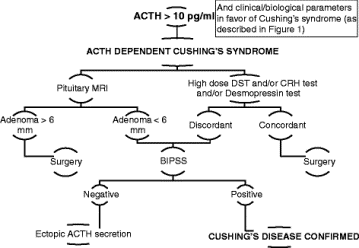
cushings-diagnosis


Cushing’s disease is a rare condition due to excess cortisol levels that result from a pituitary tumor secreting adrenocorticotropic hormone (ACTH), which stimulates cortisol secretion.  Cushing’s disease should not be confused with Cushing’s syndrome which is increased cortisol levels but that increase can be due to any number of factors. However, Cushing’s disease is the most common form of Cushing’s syndrome.

Symptoms

The symptoms related to Cushing’s disease and Cushing’s syndrome are the same, since both are related to an excess of cortisol. Also, symptoms vary extensively among patients and that, with the inherent fluctuation in hormone levels make it difficult to diagnosis both conditions.

Changes in physical characteristics of the body

  • Fullness and rounding of the face
  • Added fat on back of neck (so-called “buffalo hump”)
  • Easy bruising
  • Purplish stretch marks on the abdomen (abdominal striae)
  • Excessive weight gain, especially in abdominal region
  • Red cheeks
  • Excess hair growth on the face, neck, chest, abdomen and thighs

Changes in physiology/psychology

  • Generalized weakness and fatigue
  • Menstrual disorder
  • Decreased fertility and/or sex drive
  • High blood pressure that is often difficult to treat
  • Diabetes mellitus
  • Mood and behavior disorders

Diagnosis

The early stages of Cushing’s disease may be difficult to recognize. However, if it is suspected, diagnosis is generally a 2 stage process. First to determine if cortisol levels are high, and if so, why they are high.

Tests to confirm high cortisol levels:

  • 24-hour urine cortisol
  • Dexamethasone suppression test (low dose)

Tests to determine cause:

  • Blood ACTH level
  • Brain MRI
  • Corticotropin-releasing hormone test
  • Dexamethasone suppression test (high dose)
  • Petrosal sinus sampling

Treatment

Surgery

  • Most patients with Cushing’s disease undergo surgery to remove the pituitary adenoma offers.
  • If the tumor is isolated to the pituitary, cure rates of 80-85% are common.
  • If the tumor has spread to nearby organs, cure rates of 50-55% are common.

Medicine (approved orphan drugs)

Signifor (pasireotide)

  • Approved for patients with Cushing’s disease for whom pituitary is not an option or surgery has been ineffective.
  • Signifor is a somatostatin receptor agonist that leads to inhibition of ACTY secretion (and subsequently decreased cortisol levels).

Korlym (mifepristone)

  • Approved for patients with Cushing’s syndrome who have type 2 diabetes or glucose intolerance and have failed surgery (or not candidates for surgery).
  • Korlym is a glucocorticoid receptor antagonist which in turn blocks the effects of the high levels of cortisol in the body. Korlym is used to treat high glucose levels due to elevated cortisol.

Medicines used but not indicated for Cushing’s disease include

Mitoden

ketoconazole

Metyrapone

Etomidate

Radiation

  • Radiation therapy may be used in some patients and can be very effective in controlling the growth of these tumors.

Prognosis

In most cases, treatment can cure Cushing’s disease. If not treated properly, the chronic hypercortisolism can lead to excess morbidity and mortality due to increased cardiovascular and other risk factors.

For more information

National Library of Medicine, National Institute of Health

Cushing’s Disease Information (provided by Novartis Pharmaceuticals)


Images courtesy of the open access journal Orhanet Journal for Rare Diseases.  Castinetti et al. Orphanet J Rare Dis. 2012 7:41   doi:10.1186/1750-1172-7-41

– See more at: http://www.raredr.com/front-page-medicine/articles/cushings-disease-rare-disease-quick-facts-0