Repeat Checks of Cortisol Levels in Saliva May Improve Use of Metopirone as Cushing’s Treatment

Measuring cortisol levels in saliva multiple times a day is a convenient and useful way to determine the best course of treatment for patients with Cushing’s syndrome, a preliminary study shows.

The research, “Multiple Salivary Cortisol Measurements Are a Useful Tool to Optimize Metyrapone Treatment in Patients with Cushing’s Syndromes Treatment: Case Presentations,” appeared in the journal Frontiers of Endocrinology.

Prompt and effective treatment for hypercortisolism — the excessive amount of cortisol in the blood — is essential to lowering the risk of Cushing’s-associated conditions, including infections, cardiovascular disease, and stroke.

Steroid hormone inhibitors, such as HRA Pharma’s Metopirone (metyrapone), have been used significantly in Cushing’s syndrome patients.

These therapies not only suppress cortisol levels, but also avoid adrenal insufficiency (where not enough cortisol is produced) and restore the circadian rhythm, which is disrupted in Cushing’s patients. However, effective medical treatment requires monitoring cortisol activity throughout the day.

Salivary measurements of cortisol are a well-known method for diagnosing and predicting the risk of recurrence of Cushing’s syndrome. The method is convenient for patients and can be done in outpatient clinics. However, the medical field lacks data on whether measuring cortisol in saliva works for regulating treatment.

Researchers analyzed the effectiveness of salivary cortisol measurements for determining the best dosage and treatment timing of Cushing’s patients with Metopirone.

The study included six patients, three with cortisol-secreting masses in the adrenal glands and and three with ACTH (or adrenocorticotropin)-secreting adenomas in the pituitary glands, taking Metopirone. Investigators collected samples before and during treatment to assess morning serum cortisol and urinary free cortisol (UFC). Patients also had salivary cortisol assessments five times throughout the day.

Saliva samples were collected at 6 a.m. (wake-up time), 8 a.m. (before breakfast), noon (before lunch), 6 p.m. (before dinner), and 10 p.m. (before sleep).

Other studies have used UFC assessments to monitor treatment. However, the inability of this parameter to reflect changes in diurnal cortisol requires alternative approaches.

Results showed that although UFC was normalized in five out of six patients, multiple salivary cortisol measurements showed an impaired diurnal cortisol rhythm in these patients.

Whereas patients with cortisol-secreting adrenocortical adenoma showed elevated cortisol levels throughout the day, those with ACTH-secreting pituitary adenoma revealed increased levels mainly in the morning. This finding indicates that “the significance of elevated morning cortisol levels is different depending on the disease etiology,” the researchers wrote.

In a prospective case study to better assess the effectiveness of performing multiple salivary cortisol assessments, the research team analyzed one of the participants who had excessive cortisol production that was not controlled with four daily doses of Metoripone (a daily total of 2,250 mg).

Results revealed that cortisol levels increased before each dosage. After the patient’s treatment regimen was changed to a 2,500 mg dose divided into five daily administrations, researchers observed a significant improvement in the diurnal cortisol pattern, as well as in UFC levels.

Subsequent analysis revealed that performing multiple salivary cortisol measurements helps with a more precise assessment of excess cortisol than analyzing UFC levels, or performing a unique midnight salivary cortisol collection, the researchers said.

Although more studies are required, the results “suggest that multiple salivary cortisol measurements can be a useful tool to visualize the diurnal cortisol rhythm and to determine the dose and timing of metyrapone [Metopirone] during the treatment in patients with [Cushing’s syndrome],” the researchers wrote.

Future studies should include a larger sample size, evaluate changes over a longer term, use a standardized protocol for treatment dosing and timing, and evaluate changes in a patient’s quality of life, the investigators said.

From https://cushingsdiseasenews.com/2018/02/15/multiple-saliva-cortisol-checks-cushings-metyrapone-study/

Common Cushing’s Treatment, Somatostatin Analogs, May Sometimes Worsen Disease Course

Doctors often prescribe somatostatin analogs to manage the hormonal imbalance that characterizes Cushing’s syndrome. However, in rare situations these medicines have paradoxically made patients worse than better.

This recently happened with a 48-year-old Spanish woman whose Cushing’s syndrome was caused by an adrenal gland tumor that was producing excess adrenocorticotropic hormone (ACTH). Her case was recently reported in the study “Ectopic Cushing’s syndrome: Paradoxical effect of somatostatin analogs,” and published in the journal Endocrinología, Diabetes y Nutrición.

Cushing’s syndrome occurs when the body produces too much cortisol. This can happen for many reasons, including an oversupply of ACTH, the hormone responsible for cortisol production, due to a tumor in the pituitary gland.

But sometimes, tumors growing elsewhere can also produce ACTH. This feature, known as ectopic ACTH secretion (EAS), may also cause ACTH-dependent Cushing’s syndrome.

Two-thirds of EAS tumors are located in the thorax, and 8 to 15 percent are in the abdominal cavity. Only 5 percent of EAS tumors are located in the adrenal gland, and up to 15 percent of EAS tumors are never detected.

Doctors usually use cortisol synthesis inhibitors such as ketoconazole or Metopirone (metyrapone) to control EAS, due to their efficacy and safety profiles. But somatostatin analogs (SSAs) such as Somatuline (lanreotide) have also been used to treat these tumors. However, these drugs produce mixed results.

The woman in the case study, reported by researchers at the University Hospital Vall d’Hebron in Barcelona, Spain, had an EAS tumor on the adrenal gland. She experienced s life-threatening cortisol and ACTH increase after receiving high-dose Somatuline.

The patient had been recently diagnosed with hypertension, and complained of intense fatigue, muscular weakness, easy bruising and an absence of menstruation. Laboratory analysis revealed that she had triple the normal levels of free cortisol in the urine, elevated levels of plasma cortisol, and high ACTH levels. In addition, her cortisol levels remained unchanged after receiving dexamethasone. The patient was therefore diagnosed with ACTH-dependent Cushing syndrome.

To determine the origin of her high cortisol levels, the team conducted magnetic resonance imaging (MRI). They found no tumors on the most common places, including the pituitary gland, neck, thorax or abdomen. However, additional evaluation detected a small alteration on the left adrenal gland, suggesting that was the source of ectopic ACTH production.

The team initiated treatment with 120 mg of Somatuline, but a week later, her condition had worsened and become life-threatening. Doctors started Ketoconazole treatment immediately, three times daily. The affected adrenal gland was surgically removed, and tissue analysis confirmed the diagnosis. The patient’s clinical condition improved significantly over the follow-up period.

“We highlight the need to be aware of this rare presentation of EAS, and we remark the difficulties of EAS diagnosis and treatment,”  researchers wrote.

The team could not rule out the possibility that the patient’s clinical development was due to the natural course of the disease. However, they believe “she had a paradoxical response on the basis of her dramatical worsening just after the SSAs administration, associated to an important rise in ACTH and UFC levels.”

For that reason, researchers think a new version of SSAs, such as Signifor (pasireotide) — which has improved receptor affinity — could provide better therapeutic response.

From https://cushingsdiseasenews.com/2017/11/09/paradoxical-effects-of-somatostatin-analogs-on-adrenal-ectopic-acth-tumor/

Cushing’s Syndrome: A Tale of Frequent Misdiagnosis


What is it?

Cushing’s syndrome is a condition you probably have never heard of, but for those who have it, the symptoms can be quite scary.  Worse still, getting it diagnosed can take a while.  Cushing’s syndrome occurs when the tissues of the body are exposed to high levels of cortisol for an extended amount of time. Cortisol is the hormone the body produces to help you in times of stress. It is good to have cortisol at normal levels, but when those levels get too high it causes health problems.  Although cortisol is related to stress, there is no evidence that Cushing’s syndrome is directly or indirectly caused by stress.

Cushing’s syndrome is considered rare, but that may be because it is under-reported. As a result, we don’t have good estimates for how many people have it, which is why the estimates for the actual number of cases vary so much–from 5 to 28 million people.[1] The most common age group that Cushing’s affects are those 20 to 50 years old.  It is thought that obesity, type 2 diabetes, and high blood pressure may increase your risk of developing this syndrome.[2]

What causes Cushing’s Syndrome?

Cushing’s syndrome is caused by high cortisol levels. Cushing’s disease is a specific form of Cushing’s syndrome. People with Cushing’s disease have high levels of cortisol because they have a non-cancerous (benign) tumor in the pituitary gland.  The tumor releases adrenocorticotropin hormone (ACTH), which causes the adrenal glands to produce excessive cortisol.

Cushing’s syndrome that is not Cushing’s disease can be also caused by high cortisol levels that result from tumors in other parts of the body.  One of the causes is “ectopic ACTH syndrome.” This means that the hormone-releasing tumor is growing in an abnormal place, such as the lungs or elsewhere.  The tumors can be benign, but most frequently they are cancerous. Other causes of Cushing’s syndrome are benign tumors on the adrenal gland (adrenal adenomas) and less commonly, cancerous adrenal tumors (adrenocortical carcinomas). Both secrete cortisol, causing cortisol levels to get too high.

In some cases, a person can develop Cushing’s syndrome from taking steroid medications, such as prednisone. These drugs, known as corticosteroids, mimic the cortisol produced by the body. People who have Cushing’s syndrome from steroid medications do not develop a tumor.[3]

What are the signs and symptoms of Cushing’s Syndrome?

The appearance of people with Cushing’s syndrome starts to change as cortisol levels build up. Regardless of what kind of tumor they have or where the tumor is located, people tend to put on weight in the upper body and abdomen, with their arms and legs remaining thin; their face grows rounder (“moon face”); they develop fat around the neck; and purple or pink stretch marks appear on the abdomen, thighs, buttocks or arms. Individuals with the syndrome usually experience one or more of the following symptoms: fatigue, muscle weakness, high glucose levels, anxiety, depression, and high blood pressure. Women are more likely than men to develop Cushing’s syndrome, and when they do they may have excess hair growth, irregular or absent periods, and decreased fertility.[4]

Why is Cushing’s Syndrome so frequently misdiagnosed?

These symptoms seem distinctive, yet it is often difficult for those with Cushing’s syndrome to get an accurate diagnosis.  Why?  While Cushing’s is relatively rare, the signs and symptoms are common to many other diseases. For instance, females with excess hair growth, irregular or absent periods, decreased fertility, and high glucose levels could have polycystic ovarian syndrome, a disease that affects many more women than Cushing’s.   Also, people with metabolism problems (metabolic syndrome), who are at higher than average risk for diabetes and heart disease, also tend to have abdominal fat, high glucose levels and high blood pressure.[5]

Problems in testing for Cushing’s

When Cushing’s syndrome is suspected, a test is given to measure cortisol in the urine. This test measures the amount of free or unbound cortisol filtered by the kidneys and then released over a 24 hour period through the urine. Since the amount of urinary free cortisol (UFC) can vary a lot from one test to another—even in people who don’t have Cushing’s—experts recommend that the test be repeated 3 times. A diagnosis of Cushing’s is given when a person’s UFC level is 4 times the upper limit of normal.  One study found this test to be highly accurate, with a sensitivity of 95% (meaning that 95% of people who have the disease will be correctly diagnosed by this test) and a specificity of 98% (meaning that 98% of  people who do not have the disease will have a test score confirming that).[6] However, a more recent study estimated the sensitivity as only between 45%-71%, but with 100% specificity.[7]  This means that the test is very accurate at telling people who don’t have Cushing’s that they don’t have it, but not so good at identifying the people who really do have Cushing’s.  The authors that have analyzed these studies advise that patients use the UFC test together with other tests to confirm the diagnosis, but not as the initial screening test.[8]  

Other common tests that may be used to diagnose Cushing’s syndrome are: 1) the midnight plasma cortisol and late-night salivary cortisol measurements, and 2) the low-dose dexamethasone suppression test (LDDST).  The first test measures the amount of cortisol levels in the blood and saliva at night.  For most people, their cortisol levels drop at night, but people with Cushing’s syndrome have cortisol levels that remain high all night. In the LDDST, dexamethasone is given to stop the production of ACTH.  Since ACTH produces cortisol, people who don’t have Cushing’s syndrome will get lower cortisol levels in the blood and urine. If after giving dexamethasone, the person’s cortisol levels remain high, then they are diagnosed with Cushing’s.[9]

Even when these tests, alone or in combination, are used to diagnose Cushing’s, they don’t explain the cause. They also don’t distinguish between Cushing’s syndrome, and something called pseudo-Cushing state.

Pseudo-Cushing state

Some people have an abnormal amount of cortisol that is caused by something unrelated to Cushing’s syndrome such as polycystic ovarian syndrome, depression, pregnancy, and obesity. This is called pseudo-Cushing state.  Their high levels of cortisol and resulting Cushing-like symptoms can be reversed by treating whatever disease is causing the abnormal cortisol levels. In their study, Dr. Giacomo Tirabassi and colleagues recommend using the desmopressin (DDAVP) test to differentiate between pseudo-Cushing state and Cushing’s.  The DDAVP test is especially helpful in people who, after being given dexamethasone to stop cortisol production, continue to have moderate levels of urinary free cortisol (UFC) and midnight serum cortisol.[10]

An additional test that is often used to determine if one has pseudo-Cushing state or Cushing’s syndrome is the dexamethasone-corticotropin-releasing hormone (CRH) test. Patients are injected with a hormone that causes cortisol to be produced while also being given another hormone to stop cortisol from being produced. This combination of hormones should make the patient have low cortisol levels, and this is what happens in people with pseudo-Cushing state.  People with Cushing’s syndrome, however, will still have high levels of cortisol after being given this combination of hormones.[11]

How can Cushing’s be treated?

Perhaps because Cushing’s is rare or under-diagnosed, few treatments are available. There are several medications that are typically the first line of treatment.  None of the medications can cure  Cushing’s, so they are usually taken until other treatments are given to cure Cushing’s, and only after that if the other treatment fails.

The most common treatment for Cushing’s disease is transsphenoidal surgery, which requires the surgeon to reach the pituitary gland through the nostril or upper lip and remove the tumor.  Radiation may also be used instead of surgery to shrink the tumor.  In patients whose Cushing’s is caused by ectopic ACTH syndrome, all cancerous cells need to be wiped out through surgery, chemotherapy, radiation or a variety of other methods, depending on the location of the tumor. Surgery is also recommended for adrenal tumors.  If Cushing’s syndrome is being caused by corticosteroid (steroid medications) usage, the treatment is to stop or lower your dosage.[12]

Medications to control Cushing’s (before treatment or if treatment fails)

According to a 2014 study in the Journal of Clinical Endocrinology and Metabolism, almost no new treatment options have been introduced in the last decade. Researchers and doctors have focused most of their efforts on improving existing treatments aimed at curing Cushing’s. Unfortunately, medications used to control Cushing’s prior to treatment and when treatment fails are not very effective.

Many of the medications approved by the FDA for Cushing’s syndrome and Cushing’s disease, such as pasireotide, metyrapone, and mitotane, have not been extensively studied.  The research presented to the FDA by the makers of these three drugs did not even make clear what an optimal dose was.[13] In another 2014 study, published in Clinical Epidemiology, researchers examined these three same drugs, along with ten others, and found that only pasireotide had moderate evidence to support its approval.  The other drugs, many of which are not FDA approved for Cushing’s patients, had little or no available evidence to show that they work.[14] They can be sold, however, because the FDA has approved them for other diseases.  Unfortunately, that means that neither the FDA nor anyone else has proven the drugs are safe or effective for Cushing patients.

Pasireotide, the one medication with moderate evidence supporting its approval, caused hyperglycemia (high blood sugar) in 75% of patients who participated in the main study for the medication’s approval for Cushing’s.  As a result of developing hyperglycemia, almost half (46%) of the participants had to go on blood-sugar lowering medications. The drug was approved by the FDA for Cushing’s anyway because of the lack of other effective treatments.

Other treatments used for Cushing’s have other risks.  Ketoconazole, believed to be the most commonly prescribed medications for Cushing’s syndrome, has a black box warning due to its effect on the liver that can lead to a liver transplant or death.  Other side effects include: headache, nausea, irregular periods, impotence, and decreased libido. Metyrapone can cause acne, hirsutism, and hypertension. Mitotane can cause neurological and gastrointestinal symptoms such as dizziness, nausea, and diarrhea and can cause an abortion in pregnant women.[15]

So, what should you do if you suspect you have Cushing’s Syndrome?

Cushing’s syndrome is a serious disease that needs to be treated, but there are treatment options available for you if you are diagnosed with the disease. If the symptoms in this article sound familiar, it’s time for you to go see your doctor. Make an appointment with your general practitioner, and explain your symptoms to him or her.  You will most likely be referred to an endocrinologist, who will be able to better understand your symptoms and recommend an appropriate course of action.


All articles are reviewed and approved by Dr. Diana Zuckerman and other senior staff.

  1. Nieman, Lynette K. Epidemiology and clinical manifestations of Cushing’s syndrome, 2014. UpToDate: Wolters Kluwer Health
  2. Cushing’s syndrome/ disease, 2013. American Association of Neurological Surgeons. http://www.aans.org/Patient%20Information/Conditions%20and%20Treatments/Cushings%20Disease.aspx
  3. Cushing’s syndrome, 2012. National Endocrine and Metabolic Diseases: National Institutes of Health. http://endocrine.niddk.nih.gov/pubs/cushings/cushings.aspx#treatment
  4. Cushing’s syndrome, 2012. National Endocrine and Metabolic Diseases: National Institutes of Health. http://endocrine.niddk.nih.gov/pubs/cushings/cushings.aspx#treatment
  5. Cushing’s syndrome, 2012. National Endocrine and Metabolic Diseases: National Institutes of Health. http://endocrine.niddk.nih.gov/pubs/cushings/cushings.aspx#treatment
  6. Newell-Price, John, Peter Trainer, Michael Besser and Ashley Grossman. The diagnosis and differential diagnosis of Cushing’s syndrome and pseudo-Cushing’s states, 1998. Endocrine Reviews: Endocrine Society
  7. Carroll, TB and JW Findling. The diagnosis of Cushing’s syndrome, 2010. Reviews in Endocrinology and Metabolic Disorders: Springer
  8. Ifedayo, AO and AF Olufemi. Urinary free cortisol in the diagnosis of Cushing’s syndrome: How useful?, 2013. Nigerian Journal of Clinical Practice: Medknow.
  9. Cushing’s syndrome, 2012. National Endocrine and Metabolic Diseases: National Institutes of Health. http://endocrine.niddk.nih.gov/pubs/cushings/cushings.aspx#treatment
  10. Tirabassi, Giacomo, Emanuela Faloia, Roberta Papa, Giorgio Furlani, Marco Boscaro, and Giorgio Arnaldi. Use of the Desmopressin test in the differential diagnosis of pseudo-Cushing state from Cushing’s disease, 2013. The Journal of Clinical Endocrinology & Metabolism: Endocrine Society.
  11. Cushing’s syndrome, 2012. National Endocrine and Metabolic Diseases: National Institutes of Health. http://endocrine.niddk.nih.gov/pubs/cushings/cushings.aspx#treatment
  12. Cushing’s syndrome, 2012. National Endocrine and Metabolic Diseases: National Institutes of Health. http://endocrine.niddk.nih.gov/pubs/cushings/cushings.aspx#treatment
  13. Tirabassi, Giacomo, Emanuela Faloia, Roberta Papa, Giorgio Furlani, Marco Boscaro, and Giorgio Arnaldi. Use of the Desmopressin test in the differential diagnosis of pseudo-Cushing state from Cushing’s disease, 2013. The Journal of Clinical Endocrinology & Metabolism: Endocrine Society.
  14. Galdelha, Monica R. and Leonardo Vieira Neto. Efficacy of medical treatment in Cushing’s disease: a systematic review, 2014. Clinical Endocrinology: John Wiley & Sons.
  15. Adler, Gail. Cushing syndrome treatment & management, 2014. MedScape: WebMD.

Adapted from https://www.center4research.org/cushings-syndrome-frequent-misdiagnosis/

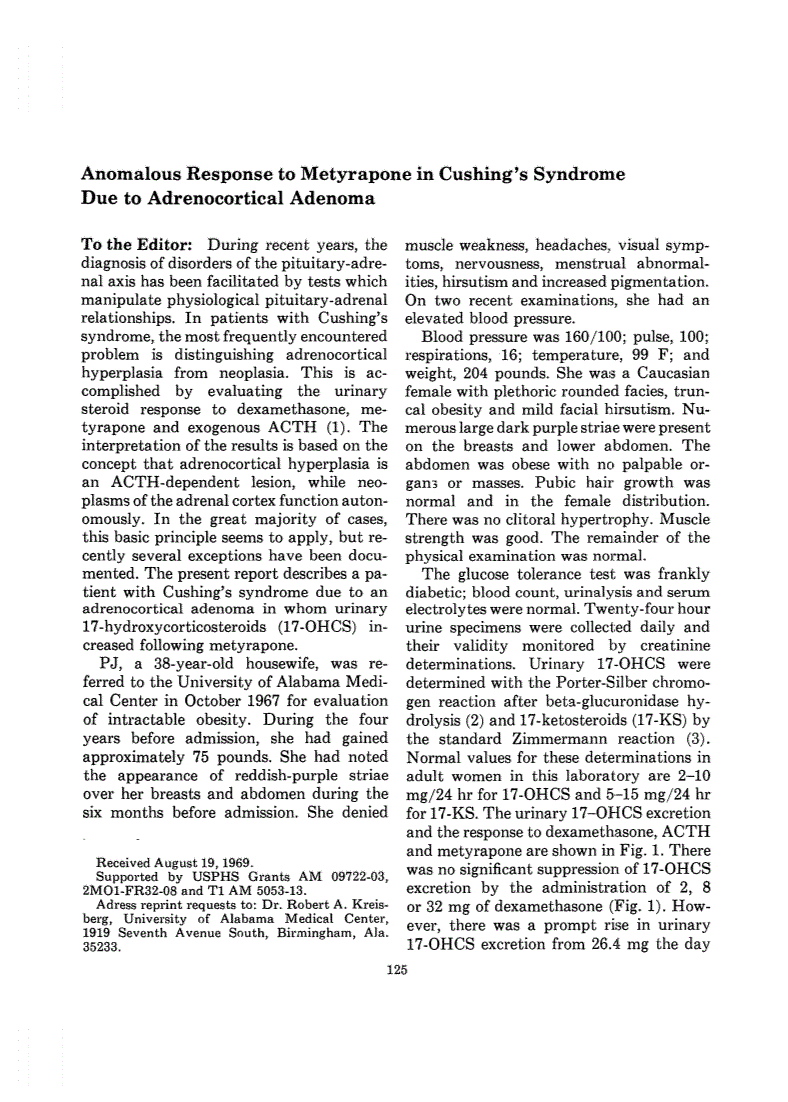
Anomalous Response to Metyrapone in Cushing’s Syndrome Due to Adrenocortical Adenoma

L. F. PENNINGTON

J Clin Endocrinol Metab (1970) 30 (1): 125-127.

From https://academic.oup.com/jcem/article-abstract/30/1/125/2716035/Anomalous-Response-to-Metyrapone-in-Cushings

Cushing’s Syndrome Treatments

Medications, Surgery, and Other Treatments for Cushing’s Syndrome

Written by | Reviewed by Daniel J. Toft MD, PhD

Treatment for Cushing’s syndrome depends on what symptoms you’re experiencing as well as the cause of Cushing’s syndrome.

Cushing’s syndrome is caused by an over-exposure to the hormone cortisol. This excessive hormone exposure can come from a tumor that’s over-producing either cortisol or adrenocorticotropic hormone (ACTH—which stimulates the body to make cortisol). It can also come from taking too many corticosteroid medications over a long period of time; corticosteroids mimic the effect of cortisol in the body.

The goal of treatment is to address the over-exposure. This article walks you through the most common treatments for Cushing’s syndrome.

Gradually decreasing corticosteroid medications: If your doctor has identified that the cause of your Cushing’s syndrome is corticosteroid medications, you may be able to manage your Cushing’s syndrome symptoms by reducing the overall amount of corticosteroids you take.

It’s common for some people with certain health conditions—such as arthritis and asthma—to take corticosteroids to help them manage their symptoms. In these cases, your doctor can prescribe non-corticosteroid medications, which will allow you to reduce—or eliminate—your use of corticosteroids.

It’s important to note that you shouldn’t stop taking corticosteroid medications on your own—suddenly stopping these medications could lead to a drop in cortisol levels—and you need a healthy amount of cortisol. When cortisol levels get too low, it can cause a variety of symptoms, such as muscle weakness, fatigue, weight loss, and low blood pressure, which may be life-threatening.

Instead, your doctor will gradually reduce your dose of corticosteroids to allow your body to resume normal production of cortisol.

If for some reason you cannot stop taking corticosteroids, your doctor will monitor your condition very carefully, frequently checking to make sure your blood glucose levels as well as your bone mass levels are normal. Elevated blood glucose levels and low bone density are signs of Cushing’s syndrome.

Surgery to remove a tumor: If it’s a tumor causing Cushing’s syndrome, your doctor may recommend surgery to remove the tumor. The 2 types of tumors that can cause Cushing’s are pituitary tumors (also called pituitary adenomas) and adrenal tumors. However, other tumors in the body (eg, in the lungs or pancreas) can cause Cushing’s syndrome, too.

Pituitary adenomas are benign (non-cancerous), and most adrenal tumors are as well. However, in rare cases, adrenal tumors can be malignant (cancerous). These tumors are called adrenocortical carcinomas, and it’s important to treat them right away.

Surgery for removing a pituitary tumor is a delicate process. It’s typically performed through the nostril, and your surgeon will use tiny specialized tools. The success, or cure, rate of this procedure is more than 80% when performed by a surgeon with extensive experience. If surgery fails or only produces a temporary cure, surgery can be repeated, often with good results.

If you have surgery to remove an adrenal tumor or tumor in your lungs or pancreas, your surgeon will typically remove it through a standard open surgery (through an incision in your stomach or back) or minimally invasive surgery in which small incisions are made and tiny tools are used.

In some cases of adrenal tumors, surgical removal of the adrenal glands may be necessary.

Radiation therapy for tumors: Sometimes your surgeon can’t remove the entire tumor. If that happens, he or she may recommend radiation therapy—a type of treatment that uses high-energy radiation to shrink tumors and/or destroy cancer cells.

Radiation therapy may also be prescribed if you’re not a candidate for surgery due to various reasons, such as location or size of the tumor. Radiation therapy for Cushing’s syndrome is typically given in small doses over a period of 6 weeks or by a technique called stereotactic radiosurgery or gamma-knife radiation.

Stereotactic radiosurgery is a more precise form of radiation. It targets the tumor without damaging healthy tissue.

With gamma-knife radiation, a large dose of radiation is sent to the tumor, and radiation exposure to the healthy surrounding tissues is minimized. Usually one treatment is needed with this type of radiation.

Medications for Cushing’s syndrome: If surgery and/or radiation aren’t effective, medications can be used to regulate cortisol production in the body. However, for people who have severe Cushing’s syndrome symptoms, sometimes medications are used before surgery and radiation treatment. This can help control excessive cortisol production and reduce risks during surgery.

Examples of medications your doctor may prescribe for Cushing’s syndrome are: aminoglutethimide (eg, Cytadren), ketoconazole (eg, Nizoral), metyrapone (eg, Metopirone), and mitotane (eg, Lysodren). Your doctor will let you know what medication—or combination of medications—is right for you.

You may also need to take medication after surgery to remove a pituitary tumor or adrenal tumor. Your doctor will most likely prescribe a cortisol replacement medication. This medication helps provide the proper amount of cortisol in your body. An example of this type of medication is hydrocortisone (a synthetic form of cortisol).

Experiencing the full effects of the medication can take up to a year or longer. But in most cases and under your doctor’s careful supervision, you can slowly reduce your use of cortisol replacement medications because your body will be able to produce normal cortisol levels again on its own. However, in some cases, people who have surgery to remove a tumor that causes Cushing’s syndrome won’t regain normal adrenal function, and they’ll typically need lifelong replacement therapy.2

Treating Cushing’s Syndrome Conclusion
You may need one treatment or a combination of these treatments to effectively treat your Cushing’s syndrome. Your doctor will let you know what treatments for Cushing’s syndrome you’ll need.

From https://www.endocrineweb.com/conditions/cushings-syndrome/cushings-syndrome-treatments