Medical Therapies in Cushing’s Syndrome

Chapter

The Hypothalamic-Pituitary-Adrenal Axis in Health and Disease

pp 165-179

Date: 03 December 2016

Medical Therapies in Cushing’s Syndrome

Abstract

Medical therapy has an important, albeit secondary, role in patients with Cushing’s syndrome. While medications are not currently used as definitive therapy of this condition, they can be very effective in controlling hypercortisolism in patients who fail surgery, those who are not surgical candidates, or those whose tumor location is unknown. Medical therapies can be particularly helpful to control hypercortisolism in patients with Cushing’s disease who underwent radiation therapy and are awaiting its salutary effects.

Currently available treatment options include several steroidogenesis inhibitors (ketoconazole, metyrapone, mitotane, etomidate), which block one or several steps in cortisol synthesis in the adrenal glands, centrally acting agents (cabergoline, pasireotide), which decrease ACTH secretion, and glucocorticoid receptor antagonists, which are represented by a single agent (mifepristone). With the exception of pasireotide and mifepristone, available agents are used “off-label” to manage hypercortisolism. Several other medications are at various stages of development and may offer additional options for the management of this serious condition.

As more potential molecular targets become known and our understanding of the pathogenesis of Cushing’s syndrome improves, it is anticipated that novel, rationally designed medical therapies may emerge. Clinical trials are needed to further investigate the relative risks and benefits of currently available and novel medical therapies and examine the potential role of combination therapy in the management of Cushing’s syndrome.

Keywords

Cabergoline, Etomidate, Ketoconazole, Levoketoconazole, Metyrapone, Mifepristone, Mitotane, Osilodrostat, Pasireotide, Pituitary adenoma

Metopirone effective treatment for hypercortisolemia in Cushing’s syndrome

Hypercortisolemia in Cushing’s syndrome can be controlled with Metopirone therapy, according to recent study findings published in The Journal of Clinical Endocrinology & Metabolism.

John Newell-Price, PhD, FRCP, of the University of Sheffield in the United Kingdom, and colleagues evaluated 195 patients with Cushing’s syndrome to determine the effect of Metopirone (metyrapone, HRA Pharma) on the control of excess cortisol. Cushing’s syndrome was most commonly Cushing’s disease (n = 115), followed by ectopic adrenocorticotropic hormone (ACTH; n = 37), benign adrenal disease (n = 30), adrenocortical carcinoma (n = 10), ACTH-independent macronodular adrenal hyperplasia (n = 2) and primary pigmented nodular adrenal hyperplasia (n = 1).

The biochemical parameters of activity of Cushing’s syndrome were measured by mean serum cortisol day-curve (target, 150-300 nmol/L), early morning serum cortisol and 24-hour urinary free cortisol.

Most participants received monotherapy (n = 164) and had significant improvements in excess cortisol during treatment. Significant improvements were revealed from first to last review for cortisol day-curve, early morning cortisol and 24-hour urinary free cortisol.

At last review, 55% of participants who had cortisol day-curve, 43% who had urinary free cortisol, 46% who had early morning cortisol less than 331 nmol/L and 76% who had early morning cortisol less than the upper limit of normal/600 nmol/L achieved control.

The median final dose of metyrapone was 1,375 mg among those with Cushing’s disease, 1,500 mg among those with ectopic ACTH, 750 mg among those with benign adrenal disease and 1,250 among those with adrenocortical carcinoma.

Twenty-five percent of participants experienced adverse events, with the most common being mild gastrointestinal upset and dizziness. Most of the adverse events occurred within 2 weeks of initiation or dose increase and were reversible.

“Overall more than 80% of patients showed an improvement in levels of circulating cortisol with over 50% achieving biochemical eucortisolemia when on monotherapy when assessed by the stringent criterion of control on a [cortisol day-curve],” the researchers wrote. “It is likely that additional therapies were added because of the severity of disease and clinician preference, but the retrospective and multicenter nature of our study precludes a formal assessment of this. Furthermore, our data support that metyrapone monotherapy is an effective treatment for hypercortisolemia either before or after surgical intervention to the primary cause of [Cushing’s syndrome].” – by Amber Cox

Disclosure: Newell-Price reports various financial ties with HRA Pharma and Novartis. Please see the full study for a list of all other authors’ relevant financial disclosures.

From http://www.healio.com/endocrinology/adrenal/news/online/%7B067ff9a2-dbce-428f-be94-849e1f466150%7D/metopirone-effective-treatment-for-hypercortisolemia-in-cushings-syndrome

HOME | Sitemap | Adrenal Crisis! | Abbreviations | Glossary | Forums | Donate | Bios | Add Your Bio | Add Your Doctor | CushieWiki

Clinical effectiveness of metyrapone monotherapy in 195 patients with Cushing’s syndrome

From Day 1 of the 16th International Congress of Endocrinology and the Endocrine Society’s 96th Annual Meeting and Expo »

Chicago, IL – June 21, 2014

E Daniel, SJB Aylwin, SG Ball, K Boelaert, D Cuthbertson, C Daousi, JR Davis, W Drake, AB Grossman, M Gurnell, N Karavitaki, T Kearney, K Meeran, A Rees, PJ Trainer, JDC Newell-Price

Summary: Metyrapone is widely used in the UK for the control of cortisol excess in Cushing’s syndrome, but its use is not standardised. The few published reports on metyrapone use pertain to limited patient numbers. In this report, the largest report on metyrapone use, metyrapone was effective in achieving eucortisolemia in over 70% of patients without any other cortisol-lowering intervention, with a satisfactory safety profile. A variety of monitoring regimens were used, but greater standardisation of practice and more active dose titration is needed.

Methods:

  • A retrospective survey was conducted across 13 tertiary centres in England and Wales.
  • Using a standardised proforma, extensive data including monitoring and safety information were collected for patients with Cushing’s syndrome on metyrapone therapy between 1997 and 2013.
  • Eucortisolemia was defined according to the monitoring test used as a mean cortisol ‘day curve’ value ≤300 nmol/l, a urinary free cortisol bellow the upper limit of normal (ULN) or a 9am serum cortisol

Results:

  • A total of 195 patients received metyrapone (160 as monotherapy). Average age was 49.6 +/-15.7 years: 87.2% had metyrapone in conjunction with other interventions (surgery, radiotherapy or chemotherapy) while 12.8% had cortisol-lowering treatment alone.
  • Dose-titration was used in 81% of patients, whereas 19% had a block-and-replace regimen.
  • A total of 138 patients received metyrapone monotherapy for a mean duration of 162 days before any other intervention took place.
  • The etiology of Cushing’s syndrome in this subgroup was: pituitary-dependent disease [CD, 59% (macroadenoma 32% of CD)], ectopic ACTH syndrome (EAS, 17%), adrenocortical carcinoma (ACC, 4%), adrenal adenoma (AA, 17%) and other benign adrenal disease (3%).
  • Hypokalemia was actively managed with potassium levels increasing during metyrapone therapy (3.90 mmol/L vs 3.68 mmol/L, P=0.0026).
  • In this subgroup, 74% achieved eucortisolemia on varying doses: CD 1370 mg, EAS 2080 mg, AA 1170 mg, ACC 750 mg daily in divided doses.
  • The preferred monitoring method was by cortisol ‘day-curves’, followed by 9am cortisol and urinary free cortisol.
  • Overall, 25.3% of patients developed side effects, most commonly gastrointestinal upset and hypoadrenalism.
  • 88% of adverse events were managed as outpatients; 36% of patients treated for more than one month had ≤2 monitoring assessments and insufficient dose titration.

From MDLinx

No High-Quality Studies for Cushing’s Drugs

By Salynn Boyles, Contributing Writer, MedPage Today

Reviewed by Zalman S. Agus, MD; Emeritus Professor, Perelman School of Medicine at the University of Pennsylvania and Dorothy Caputo, MA, BSN, RN, Nurse Planner

There is a paucity of clinical trial data supporting the efficacy of most drugs used to treat Cushing’s disease, researchers reported.

Just one drug — pasireotide — has been evaluated in a randomized, double-blind trial, but even it was judged by the researchers to have only a ‘moderate’ level of evidence supporting its effectiveness and safety.

The review of the literature evaluating drug treatments for Cushing’s disease, a rare pituitary disorder, is the first to employ a rigorous systematic approach with strict, predefined inclusion criteria and formal analysis of the quality of evidence using an established standard, researcher Monica Gadelha, MD, PhD, of Brazil’s Federal University of Rio de Janeiro, and colleagues wrote in the journal Clinical Endocrinology.

“This systematic review indicates that the majority of medical therapies currently used in the treatment of Cushing’s disease are supported by a low level of evidence,” the researchers wrote. “Further well-designed prospective studies of medications in Cushing’s disease would help to inform clinical practice further.”

Cushing’s disease is the most common form of endogenous Cushing’s syndrome, a hormonal disorder resulting from persistent exposure to abnormally high levels of the hormone cortisol. In the case of Cushing’s disease, the cortisol is secreted by a pituitary adenoma.

Prolonged exposure to high levels of cortisol raises the risk for diabetes mellitus, cardiovascular disease, osteoporosis and nephrolithiasis. Patients with persistent Cushing’s disease have a 3- to 5-fold higher mortality than the general population.

Surgery to remove the pituitary adenoma is the first-line treatment for Cushing’s disease in the U.S., and when the procedure is performed by an experienced surgeon, remission rates in patients with smaller tumors range from 65% to 90%. The long-term remission rate is lower, however, because many patients develop recurrent disease.

Several medical therapies are widely used to treat patients who are not candidates for surgery or who experience relapse following surgery.

Novartis Oncology’s somatostatin analog drug pasireotide (Signifor) became the only drug approved for this indication in December of last year. And the progesterone-blocking drug mifepristone, best known as the abortion pill once called RU-486, was approved in February of 2012 for the treatment of Cushing’s disease-associated hyperglycemia.

Other drugs — including metyrapone, mitotane, cabergoline, and ketoconazole — are also used off-label in the treatment of Cushing’s, and several have shown better response rates than pasireotide in small studies.

In their systematic review, Gadelha and colleagues identified 15 studies that included at least 10 adults with Cushing’s disease and reported treatment responses as the proportion of patients reaching a specified definition of response. Studies examining combinations of medications were excluded from the analysis, as were studies with indefinite diagnoses of Cushing’s disease.

For medications other than mifepristone, studies had to report the proportion of patients with normalized urinary free cortisol (UFC), midnight salivary cortisol or midnight serum cortisol.

The studies were scored according to the Grading of Recommendations, Assessment, Development and Evaluation (GRADE) system for rating quality of evidence.

Ten of the 15 included studies reported outcomes specifically for patients with Cushing’s disease and the remaining five included patients with other forms of Cushing’s syndrome.

The researchers reported that:

  • Pasireotide was the only treatment assessed in a randomized trial, and it was judged to have a ‘moderate’ level of evidence supporting its use. Response rates from three prospective studies of the drug ranged from 17% to 29%.
  • The remaining medications were supported by a ‘low’ or ‘very low’ level of evidence.
  • The highest response rates were reported in a small retrospective studies of metyrapone (75%, one study) and mitotane (72%, one study).
  • Response rates were 25% to 50% for cabergoline (four studies) and 45% for ketoconazole (one study).
  • Among studies that included patients with other forms of Cushing’s syndrome, response rates were 53% to 88% for ketoconazole (three studies), 70% for mitotane (one study), 57% for metyrapone (one study), and 38% to 60% for mifepristone (one study).


But the researchers urged caution in comparing the drugs, citing the variability in the study designs and patient selection endpoints, among other limitations in the research literature.

“The wide variation in the time-frames over which response to treatment was measured makes comparison a challenge,” they wrote. “Comparison of response rates reported in the included studies is also complicated by the variation in methodology used to assess response.”

They noted that well-designed clinical trials are needed to determine which drugs or drug combinations are most effective in the treatment of Cushing’s disease patients.

“Combinations of medical therapies with different modes of action might aid in optimizing the balance of efficacy and safety,” they wrote. “Investigational medications, such as bexarotene, LC1699 and retinoic acid, may help to expand the range of future therapeutic options.”

Maria Fleseriu, MD, who was not involved in the review, agreed that more drug treatments are needed. But she added that Cushing’s patients today have many more drug options than they did just a few years ago.

Fleseriu directs the Pituitary Center at Oregon Health & Science University, where she is an associate professor of medicine and endocrinology.

In a recently published analysis, Fleseriu wrote that pituitary-targeted medical therapies should soon play a more prominent role in treating Cushing’s disease, and may become first-line treatments when surgery fails or is contraindicated.

“We now have one drug approved for Cushing’s and another approved for diabetes symptoms associated with the disease,” she told MedPage Today. “We are moving forward, but we are not where we would like to be. Combination therapy is probably where we are heading, but further studies are needed.”

Financial support for this research was provided by Novartis Pharmaceuticals.

Researcher Monica Gadelha reports receiving speaker fees and participating on advisory boards for Novartis. Gadelha and co-author Leonardo Vieira Neto were investigators in Novartis’ clinical trials of pasireotide.


From http://www.medpagetoday.com/Endocrinology/GeneralEndocrinology/42043

Cushing’s Disease – Rare Disease Quick Facts

cushings-diagnosis


Cushing’s disease is a rare condition due to excess cortisol levels that result from a pituitary tumor secreting adrenocorticotropic hormone (ACTH), which stimulates cortisol secretion.  Cushing’s disease should not be confused with Cushing’s syndrome which is increased cortisol levels but that increase can be due to any number of factors. However, Cushing’s disease is the most common form of Cushing’s syndrome.

Symptoms

The symptoms related to Cushing’s disease and Cushing’s syndrome are the same, since both are related to an excess of cortisol. Also, symptoms vary extensively among patients and that, with the inherent fluctuation in hormone levels make it difficult to diagnosis both conditions.

Changes in physical characteristics of the body

  • Fullness and rounding of the face
  • Added fat on back of neck (so-called “buffalo hump”)
  • Easy bruising
  • Purplish stretch marks on the abdomen (abdominal striae)
  • Excessive weight gain, especially in abdominal region
  • Red cheeks
  • Excess hair growth on the face, neck, chest, abdomen and thighs

Changes in physiology/psychology

  • Generalized weakness and fatigue
  • Menstrual disorder
  • Decreased fertility and/or sex drive
  • High blood pressure that is often difficult to treat
  • Diabetes mellitus
  • Mood and behavior disorders

Diagnosis

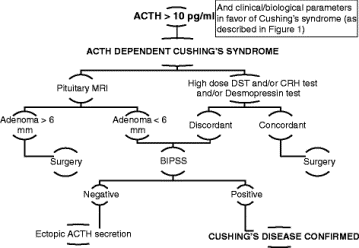
The early stages of Cushing’s disease may be difficult to recognize. However, if it is suspected, diagnosis is generally a 2 stage process. First to determine if cortisol levels are high, and if so, why they are high.

Tests to confirm high cortisol levels:

  • 24-hour urine cortisol
  • Dexamethasone suppression test (low dose)

Tests to determine cause:

  • Blood ACTH level
  • Brain MRI
  • Corticotropin-releasing hormone test
  • Dexamethasone suppression test (high dose)
  • Petrosal sinus sampling

Treatment

Surgery

  • Most patients with Cushing’s disease undergo surgery to remove the pituitary adenoma offers.
  • If the tumor is isolated to the pituitary, cure rates of 80-85% are common.
  • If the tumor has spread to nearby organs, cure rates of 50-55% are common.

Medicine (approved orphan drugs)

Signifor (pasireotide)

  • Approved for patients with Cushing’s disease for whom pituitary is not an option or surgery has been ineffective.
  • Signifor is a somatostatin receptor agonist that leads to inhibition of ACTY secretion (and subsequently decreased cortisol levels).

Korlym (mifepristone)

  • Approved for patients with Cushing’s syndrome who have type 2 diabetes or glucose intolerance and have failed surgery (or not candidates for surgery).
  • Korlym is a glucocorticoid receptor antagonist which in turn blocks the effects of the high levels of cortisol in the body. Korlym is used to treat high glucose levels due to elevated cortisol.

Medicines used but not indicated for Cushing’s disease include

Mitoden

ketoconazole

Metyrapone

Etomidate

Radiation

  • Radiation therapy may be used in some patients and can be very effective in controlling the growth of these tumors.

Prognosis

In most cases, treatment can cure Cushing’s disease. If not treated properly, the chronic hypercortisolism can lead to excess morbidity and mortality due to increased cardiovascular and other risk factors.

For more information

National Library of Medicine, National Institute of Health

Cushing’s Disease Information (provided by Novartis Pharmaceuticals)


Images courtesy of the open access journal Orhanet Journal for Rare Diseases.  Castinetti et al. Orphanet J Rare Dis. 2012 7:41   doi:10.1186/1750-1172-7-41

– See more at: http://www.raredr.com/front-page-medicine/articles/cushings-disease-rare-disease-quick-facts-0