Identification of Endogenous Hypercortisolism and the Effect of Mifepristone Treatment in Patients With Difficult-to-Manage Diabetes: A Case Series

Endogenous hypercortisolism (Cushing syndrome) is a multisystemic disease characterized by a wide range of clinical signs and symptoms. Its heterogeneous presentation can cause significant diagnostic delays, and prolonged exposure to excess cortisol activity can contribute to cardiometabolic abnormalities such as diabetes. When diabetes remains unresponsive or only partially responsive to standard-of-care treatment, clinicians should consider hypercortisolism as a potential underlying driver.Despite the risks associated with hypercortisolism, guidance on identifying and managing it in patients with diabetes remains limited. This article presents a case series of 10 patients from a single practice who were screened for hypercortisolism because of difficult-to-manage diabetes and additional comorbidities. All patients were treated for hypercortisolism with mifepristone, resulting in significant clinical improvements including weight loss, improved glycemic control, and reduced medication needs.

This real-world case series highlights the importance of recognizing hypercortisolism as a differential diagnosis and a potential contributing factor to difficult-to-manage diabetes despite standard-of-care therapies. Addressing hypercortisolism with mifepristone can result in substantial clinical benefits.

This article contains supplementary material online at https://doi.org/10.2337/figshare.30351361.

PDF of article here.

Insights on Diagnosing and Managing Cushing’s Syndrome

Cushing’s syndrome, or endogenous hypercortisolemia, is a rare condition that both general practice clinicians and endocrinologists should be prepared to diagnose and treat. Including both the pituitary and adrenal forms of the disease, the Endocrine Society estimates that the disorder affects 10 to 15 people per million every year in the United States. It is more common in women and occurs most often in people between the ages of 20 and 50.

Even though Cushing’s remains a rare disease, cortisol recently made waves at the American Diabetes Association 84th Scientific Session. A highlight of the meeting was the initial presentation of data from the CATALYST trial, which assessed the prevalence of hypercortisolism in patients with difficult-to-control type 2 diabetes (A1c 7.5+).

CATALYST is a prospective, Phase 4 study with two parts. In the prevalence phase, 24% of 1,055 enrolled patients had hypercortisolism, defined as an overnight dexamethasone suppression test (ODST) value greater than 1.8 µg/dL and dexamethasone levels greater than 140 µg/dL. Results of CATALYST’s randomized treatment phase are expected in late 2024.

Elena Christofides, MD, FACE, founder of Endocrinology Associates, Inc., in Columbus, OH, believes the CATALYST results will be a wake-up call for both physicians and patients seeking to advocate for their own health. “This means that nearly 1 in 4 patients with type 2 diabetes have some other underlying hormonal/endocrine dysfunction as the reason for their diabetes, or significant contribution to their diabetes, and they should all be screened,” she said. “All providers need to get comfortable with diagnosing and treating hypercortisolemia, and you need to do it quickly because patients are going to pay attention as well.”

In Dr. Christofides’ experience, patients who suspect they have a hormonal issue may start with their primary care provider or they may self-refer to an endocrinologist. “A lot of Cushing’s patients are getting diagnosed and treated in primary care, which is completely appropriate. But I’ve also met endocrinologists who are uncomfortable diagnosing and managing Cushing’s because it is so rare,” she said. “The important thing is that the physician is comfortable with Cushing’s or is willing to put in the work get comfortable with it.”

According to Dr. Christofides, the widespread popular belief that “adrenal fatigue” is causing millions of Americans to feel sick, tired, and debilitated may be creating barriers to care for people who may actually have Cushing’s. “As physicians, we know that adrenal fatigue doesn’t exist, but we should still be receptive to seeing patients who raise that as a concern,” said Dr. Christofides. “We need to acknowledsalige their lived experience as being very real and it can be any number of diseases causing very real symptoms. If we don’t see these patients, real cases of hypercortisolemia could be left undiagnosed and untreated.”

Dr. Christofides, who also serves as a MedCentral Editor-at-Large, said she reminds colleagues that overnight dexamethasone suppression test (ODST) should always be the first test when you suspect Cushing’s. “While technically a screening test, the ODST can almost be considered diagnostic, depending on how abnormal the result is,” she noted. “But I always recommend that you do the ODST, the ACTH, a.m. cortisol, and the DHEAS levels at the same time because it allows you to differentiate more quickly between pituitary and adrenal problems.”

Dr. Christofides does see a place for 24-hour urine collection and salivary cortisol testing at times when diagnosing and monitoring patients with Cushing’s. “The 24-hour urine is only positive in ACTH-driven Cushing’s, so an abnormal result can help you identify the source, but too many physicians erroneously believe you can’t have Cushing’s if the 24-hour urine is normal,” she explained. “Surgeons tend to want this test before they operate and it’s a good benchmark for resolution of pituitary disease.” She reserves salivary cortisol testing for cases when the patient’s ODST is negative, but she suspects Cushing’s may be either nascent or cyclical.

Surgical resection has long been considered first-line treatment in both the pituitary and adrenal forms of Cushing’s. For example, data shared from Massachusetts General Hospital showed that nearly 90% of patients with microadenomas did not relapse within a 30-year period. A recent study found an overall recurrence rate of about 25% within a 10-year period. When reoperation is necessary, remission is achieved in up to 80% of patients.

As new medications for Cushing’s syndrome have become available, Dr. Christofides said she favors medical intervention prior to surgery. “The best part about medical therapy is you can easily stop it if you’re wrong,” she noted. “I would argue that every patient with confirmed Cushing’s deserves nonsurgical medical management prior to a consideration of surgery to improve their comorbidities and surgical risk management, and give time to have a proper informed consent discussion.”

In general, medications to treat Cushing’s disease rely on either cortisol production blockade or receptor blockade, said Dr. Christofides. Medications that directly limit cortisol production include ketoconazoleosilodrostat (Isturisa), mitotane (Lysodren), levoketoconazole (Recorlev), and metyrapone (Metopirone). Mifepristone (Korlym, Mifeprex) is approved for people with Cushing’s who also have type 2 diabetes to block the effects of cortisol. Mifepristone does not lower the amount of cortisol the body makes but limits its effects. Pasireotide (Signifor) lowers the amount of ACTH from the tumor. Cabergoline is sometimes used off-label in the US for the same purpose.

Following surgery, people with Cushing’s need replacement steroids until their adrenal function resumes, when replacement steroids must be tapered. But Dr. Christofides said she believes that all physicians who prescribe steroids should have a clear understanding of when and how to taper patients off steroids.

“Steroid dosing for therapeutic purposes is cumulative in terms of body exposure and the risk of needing to taper. A single 2-week dose of steroids in a year does not require a taper,” she said. “It’s patients who are getting repeated doses of more than 10 mg of prednisone equivalent per day for 2 or more weeks multiple times per year who are at risk of adrenal failure without tapering.”

Physicians often underestimate how long a safe, comfortable taper can take, per Dr. Christofides. “It takes 6 to 9 months for the adrenals to wake up so if you’re using high-dose steroids more frequently, that will cause the patient to need more steroids more frequently,” she explained. “If you’re treating an illness that responds to steroids and you stop them without tapering, the patient’s disease will flare, and then a month from then to 6 weeks from then you’ll be giving them steroids again, engendering a dependence on steroids by doing so.”

When developing a steroid taper plan for postoperative individuals with Cushing’s (and others), Dr. Christofides suggests basing it on the fact that 5 mg of prednisone or its equivalent is the physiologic dose. “Reduce the dose by 5 mg per month until you get to the last 5 mg, and then you’re going to reduce it by 1 mg monthly until done,” she said. “If a patient has difficulty during that last phase, consider a switch to hydrocortisone because a 1 mg reduction of hydrocortisone at a time may be easier to tolerate.”

Prednisone, hydrocortisone, and the other steroids have different half-lives, so you’ll need to plan accordingly, adds Dr. Christofides. “If you do a slower taper using hydrocortisone, the patient might feel worse than with prednisone unless you prescribe it BID.” She suggests thinking of the daily prednisone equivalent of hydrocortisone as 30 mg to allow for divided dosing, rather than the straight 20 mg/day conversion often used.

What happens after a patient’s Cushing’s has been successfully treated? Cushing’s is a chronic disease, even in remission, Dr. Christofides emphasized. “Once you have achieved remission, my general follow-up is to schedule visits every 6 months to a year with scans and labs, always with the instruction if the patient feels symptomatic, they should come in sooner,” she said.

More on Cushing’s diagnosis and therapies.

https://www.medcentral.com/endocrinology/cushings-syndrome-a-clinical-update

Multiple Clinical Indications of Mifepristone: A Systematic Review

​Abstract

Mifepristone and misoprostol are globally used medications that have become disparaged through the stigmatization of reproductive healthcare. Patients are hindered from receiving prompt treatment in clinical scenarios where misoprostol and mifepristone are the drugs of choice. It is no exaggeration to emphasize that in cases where reproductive healthcare is concerned. The aim of this paper is to discuss the different indications of mifepristone and to delineate where the discrepancy in accessibility arises. For this systematic review, we included publications citing clinical trials involving the use and efficacy of mifepristone published in English within the date range of 2000 to 2023. Five databases were searched to identify relevant sources. These databases are Google Scholar, MEDLINE with full text through EBSCO, and three National Center for Biotechnology Information (NCBI) databases (NCBI Bookshelf, PubMed, and PubMed Central). Twenty-three records were ultimately included in this review. Mifepristone has been shown to have therapeutic effects in the treatment of psychiatric disorders, such as major depressive disorder and psychotic depression. There was a significant decrease in depression and psychiatric rating symptoms for patients taking mifepristone versus placebo with no adverse events. Mifepristone has also been shown to improve treatment course in patients with Cushing’s disease (CD) who failed or are unable to undergo surgical treatment. In addition, mifepristone has been shown to be a successful treatment option for adenomyosis and leiomyomas. Patients had a statistically significant decrease in uterine volumes following mifepristone treatment, which aided in the alleviation of other symptoms, such as blood loss and pelvic discomfort. Mifepristone is a synthetic steroid that has immense potential to provide symptomatic relief in patients suffering from a wide array of complicated diseases. Historically, mifepristone has been proven to have an incredible safety profile. While further research is certainly needed, the politicization of its medical use for only one of its many indications has unfortunately led to the willful ignorance of its potential despite its evidence-based safety profile and efficacy.

Introduction & Background

Mifepristone is a synthetic steroid derived from norethindrone and therefore has antagonistic activity against progesterone and glucocorticoid receptors. Misoprostol is a synthetic prostaglandin E1 analog that works through the direct stimulation of prostaglandin E1 receptors. Recently, these medications have become disparaged due to their associations with the controversial medical procedure known as abortion. Abortions, however, have been so common that one out of four women will have had an abortion by the time they reach the age of 45 [1]. It is estimated that 3.7 million women have used mifepristone and misoprostol for medication abortions since they were first approved by the Food and Drug Administration (FDA) in 2000 [1]. Mifepristone followed by misoprostol is up to 14 times safer than carrying the patient’s pregnancy to term [1]. Aside from abortion, mifepristone is used for both gynecologic and obstetric conditions. Obstetric conditions include induction of labor, postpartum hemorrhage, intrauterine fetal demise, ectopic pregnancies, and miscarriages [2]. Gynecological conditions that can be treated with mifepristone include abnormal uterine bleeding, post-coital contraception, and treatment of gynecological cancers [3]. Due to the stigmatized nature of abortion, however, patients are hindered from receiving prompt treatment in clinical scenarios where mifepristone is the drug of choice. It is no exaggeration to emphasize that in cases where reproductive healthcare is concerned, every second counts [3]. Legislation that varies across states further impacts patients who risk their lives and health as they attempt to navigate their care plan across borders. Travel costs, time-off, childcare, transportation, and living accommodations are just a few more of the factors patients must take into consideration when they are forced to seek life-saving care outside of their homes [3].

Mifepristone is a medication that has multiple therapeutic applications, such as treating leiomyomas, psychotic depression, and post-traumatic stress disorder (PTSD). However, its use is restricted in many countries because of its abortifacient effect. This is a logical fallacy that deprives patients of a beneficial and safe treatment option. This systematic review aims to explore the evidence-based uses of mifepristone and how it can improve patients’ health outcomes. The clinical indications that will be discussed are adenomyosis, leiomyomas, psychotic depression, PTSD, and Cushing’s disease (CD).

Review

Methods

Eligibility Criteria

For this systematic review, we included publications of clinical trials and systematic reviews citing clinical trials relating to the clinical use of mifepristone and published in English within the date range of 2000 to 2023.

Info Sources

Five databases were searched to identify relevant sources. These databases include Google Scholar, MEDLINE with full text through EBSCO, and three National Center for Biotechnology Information (NCBI) databases (NCBI Bookshelf, PubMed, and PubMed Central).

Search Strategy

For each database, we inputted “clinical use of mifepristone” as our search term. The populated results were then narrowed down to those published in the English language and within the date range of 2000 to 2023 using automated search tools.

Selection Process

The titles and abstracts of the remaining records were then screened, and those deemed relevant to clinical uses of mifepristone and its efficacy were included for comprehensive review. This initial record search in three of the four databases (Google Scholar, MEDLINE, and PubMed) was completed by three separate reviewers. The initial record search in the remaining two databases (NCBI Bookshelf and PubMed Central) was completed by another individual reviewer.

Data Collection Process

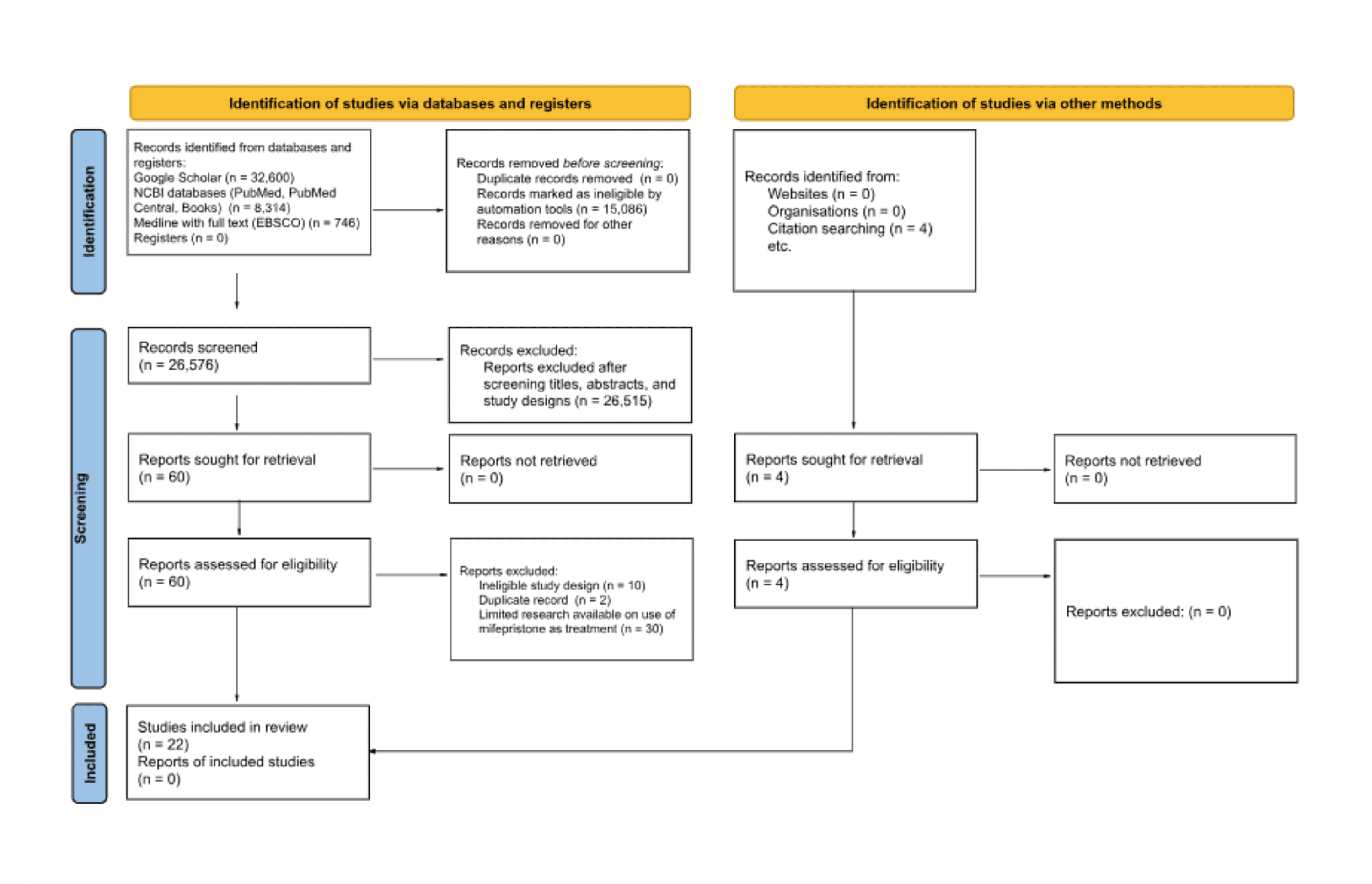
After the initial record search, 60 records were deemed relevant to the study topic and compiled for a more comprehensive review. Two records were found to be duplicates and removed. Each of the four reviewers read the remaining 58 records and voted on the eligibility of the publication for inclusion in our review. Older publications that were expanded upon in more recent study trials were excluded to reduce redundancy. In addition, for records with similar study protocols, only the more recently published record was included. Ten records were excluded from the review due to ineligible study design. For those records that were not unanimously accepted (at least one reviewer voted for exclusion), the record was excluded. To ensure that the data utilized in this review were backed by sufficient evidence, the reviewers organized the remaining records into groups based on the disease mifepristone was being studied to treat. After further discussion, it was decided to exclude the records in the groups that lacked at least three separate clinical trials on the use of mifepristone in the treatment of the disease. Thirty articles were excluded. Seven of the 18 remaining records were systematic reviews, and citation searching of the records found four additional records that met the eligibility criteria. The remaining 23 records were included for further review.

Data Items

Of the remaining 23 records deemed acceptable for inclusion, only studies with statistically significant findings regarding the clinical use of mifepristone were included for detailed analysis. One record was excluded due to early termination of the trial. Our records include two open-label studies, four retrospective studies, seven reviews (systematic, meta-analysis), one wet lab (human specimen was used), five long-term safety extension articles, and seven randomized control experimental trials.

Study Risk-of-Bias Assessment

We assessed the risk of bias (RoB) in the studies included in the review using the revised Cochrane RoB tool for randomized trials (RoB 2). The five domains assessed were (1) RoB arising from the randomization process, (2) RoB due to deviations from the intended interventions (effect of assignment to intervention and effect of adhering to intervention), (3) missing outcome data, (4) RoB in the measurement of the outcome, and (5) RoB in the selection of the reported result. Each randomized control trial included in this review was assessed for RoB by two authors working independently using the RoB 2. For those studies in which the assessing authors came to different conclusions, the remaining two authors completed independent RoB 2 assessments of the study in question, and the majority of findings was accepted. Utilizing the methodology for assigning the overall RoB for each study as outlined by the RoB 2 tool, each study was designated as having “low risk of bias” or “high risk of bias.” After an initial assessment, both authors deemed the nine randomized control studies had a low RoB.

Effect Measures

Analysis of the studies included a focus on statistically significant findings that varied between control and intervention groups as defined by a p-value less than 0.5. As each study had its own parameters and primary and secondary endpoints, we focused our analysis on the safety and clinical efficacy of mifepristone as measured and reported by the authors of the studies included.

Synthesis Methods

As previously mentioned, as the studies included in this review vary widely in their study population and intervention design, our analysis focused on qualitative synthesis of study outcomes. These outcomes were categorized as the clinical efficacy and safety of mifepristone for CD, psychiatric disorders, and select gynecological diseases (adenomyosis and leiomyomas).

Certainty Assessment

To assess the certainty of the body of evidence regarding the studies included in our review, two reviewers applied the five Grading of Recommendations, Assessment, Development, and Evaluations (GRADE) considerations (study limitations, inconsistency of results, indirectness of evidence, imprecision, and publication bias) to each study. Accordingly, the included studies were categorized as having high, moderate, low, or very low certainty of evidence based on the GRADE criteria. After the assessment, both reviewers deemed that all records had high certainty of evidence.

PRISMA-2020-flow-diagram-for-new-systematic-reviews-that-included-searches-of-databases,-registers,-and-other-sources
Figure 1: PRISMA 2020 flow diagram for new systematic reviews that included searches of databases, registers, and other sources

*Consider, if feasible to do so, reporting the number of records identified from each database or register searched (rather than the total number across all databases/registers). **If automation tools were used, indicate how many records were excluded by a human and how many were excluded by automation tools.

PRISMA: Preferred Reporting Items for Systematic Reviews and Meta-Analyses

Results

Psychiatric Implications

Based on the analyses, numerous trials demonstrated the profound therapeutic effect that mifepristone can have on psychiatric disorders. In a double-blind study following 19 patients with bipolar disorder, researchers studied neurocognitive function and mood in patients treated with mifepristone vs. the placebo [4]. Significant improvements in verbal fluency and spatial working memory were seen in the group treated with mifepristone. The Hamilton Depression Rating Scale (HDRS) and Montgomery-Asberg Depression Rating Scale (MADRS) scores also improved from baseline (i.e., lower scores) measurements in these patients. It is worth noting that these improvements were seen in as little as two weeks, which is quicker than what is normally seen with typical therapeutic agents for bipolar disorder (lithium/valproic acid) [4].

The most extensive research demonstrated the benefits of using mifepristone with major or psychotic depression [5]. It is important to note that approximately 20% of patients living with major depression experience psychotic symptoms [6]. A randomized, double-blind study looked at 30 participants with psychotic major depression (PMD) and treated them with mifepristone 600 mg or a placebo for eight days. Using the HDRS and Brief Psychiatric Rating Scale (BPRS) to quantify baseline levels of symptoms, results from eight days later showed that mifepristone was significantly more effective in reducing psychotic symptoms compared to the placebo group [6]. By day 8, nearly half of the participants attained a 50% reduction in the BPRS compared to the placebo group (p<0.046) in addition to lower HDRS scores (although this was not found to be significant). Moreover, when researchers looked further into the use of mifepristone in psychotic depression disorders, they discovered a correlation between higher plasma levels of mifepristone and a reduction in psychotic symptoms [7]. More specifically, the strongest reduction in psychosis symptoms was found to be associated with doses of 1200 mg/day of mifepristone, which resulted in a statistically significant reduction in psychotic symptoms (p<0.0004) [7]. The drug was also well tolerated and demonstrated a large safety margin in contrast to the numerous common adverse effects that patients experience when placed on standard treatment options (i.e., antipsychotics). In another double-blind, placebo-controlled study that took place over four days, five participants diagnosed with psychotic major depression were administered 600 mg of mifepristone [5]. The HDRS and BPRS scores were used, and the results showed that all five participants’ depression ratings decreased – a nearly statistically significant finding (p<.07) [5]. Likewise, four out of the five BPRS scores declined, approximating to a 32.5% decline, which is comparable to the 40% decline seen with traditional antipsychotic treatments that span six to eight weeks. Once again, no adverse effects were reported.

The use of mifepristone has been explored in many cognitive disorders, including Alzheimer’s disease. One study found that patients with mild to moderate Alzheimer’s disease displayed improvement on the Alzheimer’s disease assessment cognitive subtest – by 2.67 as opposed to the 1.67 decline in patients treated with a placebo [5]. Although not statistically significant, this finding encourages further studies to continue exploring the psychiatric and neurologic use of mifepristone.

Cushing’s Disease

Multiple trials have been conducted regarding the use and efficacy of mifepristone in the treatment of CD. Although surgical intervention to remove the source of excess cortisol production is the current mainstay of treatment, clinical trials have focused on the treatment with mifepristone for medical therapy, especially in patients who have failed surgical intervention or for those who are not good candidates for surgery.

Accordingly, a retrospective study of 20 patients with hypercortisolism (12 with adrenocortical carcinoma, three with ectopic adrenocorticotropic hormone (ACTH) secretion, four with CD, and one with bilateral adrenal hyperplasia) found clinically significant improvement in excess cortisol-induced symptoms in 15 out of 20 patients [4]. Patient responses to mifepristone treatment were monitored by clinical signs of hypercortisolism (signs of hypercortisolism, blood pressure measurements, and signs of adrenal insufficiency) and serum potassium and glucose. The study found that 15 out of 20 patients showed significant clinical improvement in excess cortisol-induced symptoms. Psychiatric symptoms and blood glucose levels also improved in the patients [4]. Of note, 11 out of 20 trial participants exhibited moderate to severe hypokalemia as a side effect, although only one patient had to leave the study early due to severe adverse effects [4].

In another well-known study, 50 patients were assessed at baseline and during intervention (total of six times) for 24 weeks, referred to as the SEISMIC study [8]. Changes in oral glucose tolerance tests over time were used to assess the mifepristone effect in type 2 diabetes millets (T2DM)/impaired glucose tolerance patients. Changes in diastolic blood pressure (BP) over time were used to measure the effect of mifepristone in hypertensive cardiogenic shock (CS) patients [8]. Results found a statistically significant improvement in symptoms in both groups: diabetic patients had improvement in response to oral glucose test, decreased A1C, and decreased fasting glucose, and hypertensive patients had decreased diastolic BP or reduction in antihypertensive medications [8]. In addition, the waist circumference and hemoglobin A1C (HbA1C) also improved, and study findings concluded that mifepristone use has an acceptable risk-benefit ratio for six months of treatment [8].

Several extension studies were later performed utilizing the data found during the SEISMIC study [9]. One such study assessing weight loss in patients who participated in the SEISMIC study also found statistically significant improvement in patients with CD. After one-week mifepristone period (patients who chose to participate in this follow-up study had to be assessed to ensure it was safe for them to enroll in this study), 30 patients were enrolled and started on once daily mifepristone at the dose they were taking when the SEISMIC study concluded [9]. The patient’s weight was assessed at baseline and week 24 of the SEISMIC study, and for this study, the follow-up weight was taken at months 6, 12, 18, and 24 and a final visit. Data were assessed for 29 of the participants and statistically significant decreases in weight were found for all participants from baseline to end of the SEISMIC study, and the maintenance of weight loss was statistically significant in all participants at their final visit to this study as well [9].

Another SEISMIC extension study focused on monitoring the effects of mifepristone treatment in CD on ACTH levels and pituitary MRI findings [10]. Serum ACTH, urinary, and salivary cortisol levels were monitored during the SEISMIC study (baseline, day 14, and weeks 6, 10, 16, and 24) and once after a six-week mifepristone-free “washout” period. ACTH levels were then monitored one month later and then routinely every three months during the intervention period, which varied per participant [10]. Serum cortisol measures were assessed during the SEISMIC study at the intervals mentioned previously and then every six months during the extension study. Pituitary MRI studies were taken prior to mifepristone administration during the SEISMIC study and at weeks 10 and 24 [10]. Repeat imaging was then taken every six months during the extension study. On average, ACTH levels increased greater than twofold (2.76 ± 1.65-fold over baseline; p<0.0001 vs. baseline) in patients during the SEISMIC and extension study periods and decreased to near baseline levels after six weeks of mifepristone discontinuation [10]. Serum cortisol levels in both the initial intervention and extension period increased as well, although a higher mean cortisol level was seen during the extension study intervention (SEISMIC: 1.97 ± 1.02-fold increase; p<0.0001 vs. baseline; extension study: 2.85 ± 1.05-fold increase; p<0.0001 vs. baseline) [10]. In comparing the baseline and post-intervention MRI images, 30 out of 36 patients showed no progression in pituitary tumor size with mifepristone intervention, two patients showed regression of tumor size, and three patients showed evidence of tumor progression. One patient was found to have a tumor post-intervention despite a negative initial MRI at baseline [10].

A retrospective analysis of data collected during the SEISMIC study utilized oral glucose tolerance test data to assess the mifepristone treatment effect on the total body insulin sensitivity, beta cell function, weight, waist circumference, and additional parameters [11]. The analysis found improved total body insulin sensitivity in all participants, with the greatest improvement occurring from baseline to week 6. The weight and waist circumference both decreased by week 24 [11].

An additional important six-month study was done on 46 patients with refractory CS and either DM2, impaired glucose tolerance, or diagnosis of HTN in which mifepristone treatment was administered daily [12]. Patients were examined by three separate reviewers using global clinical response assessments (-1 = worsening, 0 = no change, 1 = improving) measured by eight clinical categories: glucose control, lipids, blood pressure, body composition, clinical appearance, strength, psychiatric/cognitive symptoms, and quality of life at weeks 6, 10, 16, and 24. A positive correlation with increasing GCR scores was found by week 24, with 88% of participants showing statistically significant improvement (p<0.001) [12].

Adenomyosis/Leiomyoma

Adenomyosis and leiomyomas are common gynecological conditions that affect large portions of the female population. Multiple trials have proven mifepristone’s success in treating endometriosis and various forms of cancer. Current data shows that mifepristone is well tolerated and has mild side effects in certain long-term clinical settings.

In one trial following mifepristone and its effects on adenomyosis, 20 patients were treated with 5 mg oral mifepristone/day for three months [13]. After the three-month trial, patients demonstrated a statistically significant (p<0.001) reduction in uterine volume as was measured through transvaginal ultrasound. These patients were also found to have significantly decreased CA-125 markers (a marker of adenomyosis and an increase in uterine size) and significantly increased hemoglobin concentration The patient’s endometrial tissue was then obtained from each patient during their hysterectomy [13]. The endometrial tissue samples were treated with varying concentrations of mifepristone for 48 hours. They found that mifepristone significantly decreased the viability of endometrial epithelial and stromal cells in adenomyosis and can induce their apoptosis as well [13]. This concentration-dependent inhibitory effect was most significantly seen with concentrations of mifepristone above 50 μmol/L at 48 hours. The same study showed that mifepristone demonstrated another dose-dependent relationship in the inhibition of the migration of ectopic endometrial and stromal cells. This finding is significant as the migratory nature of the patient’s endometrial and stromal cells is the pathogenesis behind adenomyosis [13].

Another study looked at the effect of mifepristone in combination with high-intensity focused ultrasound (HIFU) and levonorgestrel-releasing intrauterine system (LNG-IUS) in the treatment of adenomyosis [13]. Out of 123 patients, 34 patients were treated with HIFU alone, 29 patients were treated with HIFU combined with mifepristone, 10 patients with HIFU combined with LNG-IUS, and 50 patients with HIFU combined with mifepristone and LNG-IUS [13]. In the group treated with HIFU combined with mifepristone and LNG-IUS, the uterine volume was significantly reduced after treatment at 3, 6, 12, and 24 months compared to the previous treatment (p<0.05). Dysmenorrhea was measured using a visual analog score (VAS). In the combination group of mifepristone, HIFU, and LNG-IUS, VAS scores decreased from 80.82 ± 12.49 to 29.58 ± 9.29 at 24 months [13]. This was significantly lower than the three other treatment groups (p<0.05). The combination group of mifepristone, HIFU, and LNG-IUS also demonstrated statistically significant decreases in the menstrual volume and CA-125 serum markers [13]. Hemoglobin levels were not statistically different among the four treatment groups, but it is postulated that this could have been due to the fact that the patients who were anemic had been treated with different medications to improve their Hb aside from the trial medications [13].

Uterine leiomyomas are another gynecological condition that has been found to improve with the use of mifepristone as well. Insulin-like growth factor 1 (IGF-1) has been found to be overexpressed in leiomyomas [14]. This study showed that mifepristone inhibited the gene expression of IGF-1, and the reduction in symptoms correlated with a decrease in IGF-1 expression although the mechanism is not fully understood [14]. A meta-analysis studied the effects of mifepristone on uterine and leiomyoma volumes of 780 women from 11 randomized controlled trials. Mifepristone at doses from 2.5, 5, and 10 mg was found to effectively reduce uterine and leiomyoma volumes and alleviate leiomyoma symptoms at six months [6]. Pelvic pain, pelvic pressure, and dysmenorrhea were found to be alleviated after three months of treatment. Mifepristone also decreased the mean loss of blood during menstruation and a statistically significant increase in hemoglobin. No significant difference was found among varying dosages of 2.5, 5, and 10 mg other than increased frequency of hot flashes in patients of the 10 mg group. Another review investigated six clinical trials involving 166 women and the effects of 5-50 mg mifepristone for three to six months on leiomyomas [3]. The review demonstrated that daily treatment with all doses of mifepristone resulted in reductions in pelvic pain, pelvic pressure, dysmenorrhea, and uterine and leiomyoma volume size by 26-74%. Even doses of 2.5 mg of mifepristone resulted in significant improvement in the quality of life scores although there was little reduction in leiomyoma size at this dose [3]. This review also reported the rapid correction of uterine bleeding, amenorrhea, and increases in hemoglobin levels following treatment with 50 mg of mifepristone on alternating days. Even vaginal mifepristone has demonstrated efficacious results in the improvement of leiomyomas. In one such trial, the effects of daily 10 mg vaginal mifepristone were studied in 33 women from the ages of 30-53 [15]. Vaginal mifepristone significantly reduced leiomyoma volume and reduced the effects of symptoms on the patient’s quality of life as measured by the Uterine-Fibroid Symptoms Quality of Life questionnaire (UFS-QoL). It is important to note that the only significant side effect found in this review of trials was hot flashes at doses of mifepristone at 10 mg or more. Mifepristone was otherwise generally well tolerated with minimal if any adverse effects [15].

Discussion

Adenomyosis is a gynecologic condition that is characterized by the growth of endometrial cells into the myometrium, resulting in a globally enlarged uterus and an associated increase in CA-125 [16]. This marker is classically known to be an ovarian tumor marker; however, in this class, it reflects the increase in uterine glandular size. Although it is often labeled as a “benign” disease, it affects around 20% of reproductive-aged women. This condition can lead to dysmenorrhea, infertility, and menorrhagia in addition to detrimental effects on a patient’s mental health [16]. Despite 20% of affected patients being under the age of 40, the gold standard of treatment is a hysterectomy. Hysterectomies may often not be wanted by patients as it is an invasive surgery that comes with several potential complications of its own. It is important to note that due to the large percentage of patients with adenomyosis who are of reproductive age, hysterectomies may not be an appropriate standard method of treatment. To rob patients of their fertility without attempting medication therapy with mifepristone first is an act of injustice. Surgery alone comes with many complications and the possibility of recurrence. The ability of physicians to manage their patient’s pain and symptoms should be guided medically before surgical sterilization is considered. Many of these patients are forced to seek alternative non-invasive treatments instead of medication therapies to preserve their fertility.

HIFU and LNG-IUS are noninvasive therapies for adenomyosis that can be used in patients who refuse hysterectomies or for those who are not good candidates [16]. The pitfalls of these procedures include the fact that 20% of patients on HIFU alone end up relapsing, and LNG-IUS cannot be used in patients with a uterine size that is >12 weeks gestation or a uterine cavity depth that is >9 cm. Because adenomyosis is an estrogen-dependent disease, gonadotropin-releasing hormone agonists (GnRH-a) are also often used in combination with HIFU and LNG-US. Through the inhibition of the secretion of estrogen, GnRH-as facilitate reduced pelvic pain, reduced bleeding, and reduced uterine cavity size [16]. Reduction in cavity size is significant as this alone can lead to improved pain and reduced bleeding and allows patients to qualify for LNG-US where their previous uterine cavity size would have prevented their candidacy. Its current limitations include price (>$200/month), induction of premenopausal syndrome, and high rates of relapse following drug cessation [16]. Mifepristone offers a cheaper alternative (<$4/month) with significantly improved outcomes in reduced uterine cavity size, decreased dysmenorrhea pain scale score, and lower menstruation volume scores [16]. Mifepristone is also able to provide such results without the bone loss that is commonly associated with GnRH-analogs [3]. This is because mifepristone allows for serum estradiol to remain within the patient’s physiologic follicular phase range [3]. In addition, mifepristone is able to significantly reduce serum levels of CA-125 and improve hemoglobin levels in patients with menorrhagia. These reductions in CA-125 demonstrate marked reductions in the size of glands of the uterus of these patients. Through the reduction of cavity size, mifepristone can not only offer therapeutic relief but also allow patients to qualify for noninvasive LNG-US procedures, which can offer further therapeutic benefits. Patients should have the option to explore all potential medical therapies before opting for surgical correction.

Leiomyomas, or uterine fibroids, are another commonly encountered gynecologic condition and represent the most common benign tumors found in the female population. These benign smooth muscle tumors are estrogen-sensitive and can rarely develop into malignant leiomyosarcomas. Nearly 20-50% of patients with these fibroids experience symptoms, such as abnormal uterine bleeding (AUB), infertility, pelvic pain, and miscarriages [17]. Currently, the only treatment for this common condition is surgery. Two medications that are commonly used for preoperative reductions in leiomyoma size are mifepristone and enantone. Enantone is a gonadotropin-releasing hormone analog that has shown significant improvement in leiomyoma shrinkage, correction of anemia, and correction of AUB [17]. Through its MOA, however, enantone can lead to harmful adverse effects, such as menopausal symptoms and bone mineral loss. Using hormone supplementation to negate these side effects leads to reduced effectiveness of enantone in fibroid size reduction. Several studies have shown that progesterone plays a large role in the proliferation of leiomyoma growth [17]. Mifepristone, therefore, offers an effective alternate solution by producing the same results without enantone’s adverse effects. When comparing enantone to mifepristone, the two medications both resulted in statistically significant reductions in fibroid size, reduction in dysmenorrhea, reduction in non-menstrual abdominal pain, and increased Hgb/Hct/and RBC count despite differences in dosage [17]. However, mifepristone was able to maintain the patients’ premenopausal levels of estrogen, whereas patients on enantone were found to have estrogen levels of menopausal patients. Furthermore, patients who were treated with enantone also reported more adverse events compared to those in the mifepristone group [17]. Vaginal use of mifepristone has also been shown to significantly reduce leiomyoma size and improve symptoms of anemia while lowering systemic bioavailability of mifepristone [15]. Through its concentrated distribution to uterine tissue, vaginal mifepristone can lead to increased improvement in its clinical outcomes. Vaginal mifepristone showed statistically significant improvements in leiomyoma volume change, USF-QoL, and decreased bleeding intensity at the end of the three-month trial and three months after treatment [15]. For these reasons, mifepristone can be used effectively for conservative therapy in patients suffering from leiomyomas and should be considered a viable option for patients not wishing to undergo surgery.

CD refers to hypercortisolism that is caused by pituitary adenomas, adrenal neoplasias, or paraneoplastic ACTH secretion. Hypercortisolism in these patients leads to the development of skin changes, HTN, obesity, insulin resistance, dyslipidemia, anovulation, skeletal disorders, and neuropsychiatric disorders [18]. Patients suffering from these conditions endure a severely decreased quality of life and increased morbidity and mortality. The syndromic nature of this disease prompts delayed diagnosis and further increases the mortality and morbidity of this population [18]. CS therefore necessitates effective and rapid treatment options to diminish harm and clinical burden. The current first-line treatment for CD is pituitary surgery despite its nearly ⅓ relapse rate within 10 years postoperatively [18]. In these patients and patients with recurrent CD, further treatment options are necessitated. These options include adrenal surgery, pituitary radiotherapy, or medication therapy. Radiotherapy further delays symptomatic relief as it usually takes years before excess cortisol levels are managed. It also carries the risk of the patient developing hypopituitarism due to subsequent pituitary damage [18]. While surgery of the adrenal glands can quickly achieve control of excess cortisol, it also carries a risk of permanent adrenal insufficiency. Medication therapy can be used preoperatively, postoperatively, and as adjunctive therapy to radiotherapy. These drug classes include somatostatin analogs, dopamine agonists, and adrenal steroidogenesis inhibitors [18]. The most commonly used medication is the adrenal steroidogenesis inhibitor ketoconazole. While it has been proven to be effective and rapid in its success, doses may need to be frequently increased due to the cortisol blockade that occurs in CD patients [8]. In fact, due to the hormonal imbalances in CD patients, many medications often have to be dose adjusted to achieve therapeutic effect. It is also important to note that many of the medications that are used are not easily tolerated when doses are increased or adjusted frequently. The use of mifepristone has demonstrated statistically significant results in weight reduction, insulin resistance, depression, HTN, and quality of life in CD patients [10]. Furthermore, mifepristone can also be used effectively in patients experiencing cortisol-induced psychosis during acute exacerbations of hypercortisolism. While not included in the classes of more commonly used drugs for CD, mifepristone has been approved by the FDA for the treatment of CD when associated with disorders of glucose metabolism. This is undoubtedly due to the stigmatization of mifepristone and the subsequent reluctance of clinicians to incorporate it into their treatment plans.

Neuropsychiatric disorders have been investigated for their associations with dysregulations of the hypothalamic-pituitary-adrenal axis (HPA) and increases in cortisol levels. Studies have shown that patients suffering from depression, schizophrenia, and psychotic depression have elevated levels of cortisol and increased activity of their HPA [19]. The role of cortisol in psychiatric disorders is evidenced by the adverse psychiatric effects that patients can develop in response to exogenous glucocorticoid use through subsequent increases in cortisol. These include delirium, depression, mania, or psychosis. When functioning normally, HPA activity and cortisol secretion are maintained through sensitive negative feedback systems involving glucocorticoid receptors (GCRs) and mineralocorticoid receptors (MCR) [19]. At low doses, cortisol preferentially binds to MCR. As cortisol levels rise, it begins to bind to GCR and thereby initiates the negative feedback loop. Antipsychotics that are typically used work by reducing cortisol levels. Mifepristone, when dosed at >200 mg/day, selectively binds only to GCR and has no effect on MCR [19]. Through its sole inhibition of GCR, it ensures that normal cortisol homeostasis is maintained while ensuring that excess high levels of cortisol are blocked. This was evidenced by the statistically significant correlation between rising plasma concentrations of mifepristone and improvement of psychotic symptoms [20].

The hippocampus is a region of the temporal lobe that is most notably recognized for its role in learning and memory. Further studies have shown correlations between hippocampal atrophy and patients with severe depression, PTSD, and schizophrenia. It is postulated that this hippocampal atrophy leads to persistently high levels of cortisol, worsening these patient’s psychiatric symptoms. Administration of mifepristone to patients with combat-related PTSD demonstrated significant benefits in quality of life and psychiatric improvement. Psychotic major depression is another psychiatric condition that affects around 20% of patients with major depression [7]. When mifepristone was used to treat psychotic depression, patients were able to achieve rapid antipsychotic effects that lasted for weeks after the medication therapy ended. It should be noted that patients suffering from PMD generally have increased cortisol levels even with standard antidepressant therapy alone [7]. Some patients are even unresponsive to electroconvulsive therapy. The ability of patients suffering from psychotic depression to achieve rapid relief is imperative as these patients are more susceptible to suicidal ideation, especially during an episode of psychosis [7]. Bipolar disorder is another mood disorder that has been found to be associated with high levels of cortisol, dysfunction of the HPA axis, and GR dysfunction. Several neuroendocrine studies demonstrated that around 43% of bipolar patients with depression were also dexamethasone-suppression-test (DST) nonsuppressors [7]. Further studies found that bipolar patients suffering through relapse and recovery had abnormal dexamethasone/corticotropin-releasing hormone (dex/CRH) test results [21]. These abnormal (dex/CRH) findings were also seen in healthy patients who had certain genetic predispositions for mood disorders [21]. Regarding these HPA dysfunctions, GR has been implicated in being an important modulator of neurocognitive function and mood. This can be evidenced through research findings that report increased GR number and GR binding in brain tissue following the administration of antidepressants in depressed patients [21].

Mifepristone’s unique advantage is that its selective role as a GR antagonist was also found to increase both MR and GR binding in the frontal cortex. In fact, data from Young et al. [21] reveals significant improvement in frontal cortex functioning following clinical mifepristone trials. These results were seen through improvements in spatial working memory function and reductions in the HDRS17 and MADRS. They also demonstrated significant improvement in verbal fluency from baseline. These improvements in neurocognitive functioning were measured when the subjects’ mood was similar to their baseline or did not vary when compared to the placebo group [21]. This key finding suggests that improvements in neurocognitive functioning were not solely related to improvements in mood or depression. Mifepristone achieves these improvements in neurocognitive function through its selective activity towards GR within the frontal cortex. Furthermore, patients are also able to achieve symptomatic improvement two weeks after the initiation of treatment [21]. The rapid nature of mifepristone adds further clinical benefit as classic bipolar treatments take longer to achieve therapy and the fact that treatment plans for patients with bipolar disorder are tricky to individualize. Other commonly known psychiatric disorders are treated with antipsychotics. While these medications often come with a large array of adverse effects, weight gain, metabolic derangements, and glucose intolerance have been a few of the more frequently reported negative effects. While the exact cause of the weight gain is unknown, mifepristone was shown to significantly reduce weight gain in patients when taken alongside risperidone or olanzapine [21]. As discussed previously, mifepristone also has the ability to significantly improve insulin resistance, thereby further improving the AE patients may experience on antipsychotics. Therefore, through mifepristone’s selective activity as a GCR antagonist, it has immense potential as a psychiatric therapeutic agent.

Conclusions

Mifepristone is a synthetic steroid that has immense potential to provide symptomatic relief in patients suffering from a wide array of complicated diseases. Prednisone, dexamethasone, and anabolic steroids are also synthetic steroids that are commonly used. Despite being a part of the same class as mifepristone, none of these medications fall under as much legal, political, and social duress as mifepristone. This is in spite of the fact that mifepristone has been proven to have an incredible safety profile since its introduction to the public in the 1980s. In fact, its mortality rate is significantly lower than that of Tylenol, NSAIDs, penicillin, and phosphodiesterase inhibitors. While further research is certainly needed, its involvement in politics has unfortunately led to the willful ignorance of its medical potential despite its evidence-based safety profile and efficacy.

References

  1. Beaman J, Prifti C, Schwarz EB, Sobota M: Medication to manage abortion and miscarriage. J Gen Intern Med. 2020, 35:2398-405. 10.1007/s11606-020-05836-9
  2. Hagey JM, Givens M, Bryant AG: Clinical update on uses for Mifepristone in obstetrics and gynecology. Obstet Gynecol Surv. 2022, 77:611-23. 10.1097/OGX.0000000000001063
  3. Spitz IM: Mifepristone: where do we come from and where are we going? Clinical development over a quarter of a century. Contraception. 2010, 82:442-52. 10.1016/j.contraception.2009.12.012
  4. Castinetti F, Fassnacht M, Johanssen S, et al.: Merits and pitfalls of mifepristone in Cushing’s syndrome. Eur J Endocrinol. 2009, 160:1003-10. 10.1530/EJE-09-0098
  5. Belanoff JK, Flores BH, Kalezhan M, et al.: Rapid reversal of psychotic depression using mifepristone. J Clin Psychopharmacol. 2001, 21:516-21.
  6. Eisinger SH, Meldrum S, Fiscella K, et al.: Low-dose mifepristone for uterine leiomyomata. Obstet Gynecol. 2003, 101:243-50. 10.1016/S0029-7844(02)02511-5
  7. Flores BH, Kenna H, Keller J, Solvason HB, Schatzberg AF: Clinical and biological effects of mifepristone treatment for psychotic depression. Neuropsychopharmacology. 2006, 31:628-36. 10.1038/sj.npp.1300884
  8. Fleseriu M, Biller BM, Findling JW, Molitch ME, Schteingart DE, Gross 😄 Mifepristone, a glucocorticoid receptor antagonist, produces clinical and metabolic benefits in patients with Cushing’s syndrome. J Clin Endocrinol Metab. 2012, 97:2039-49. 10.1210/jc.2011-3350
  9. Fein HG, Vaughan TB 3rd, Kushner H, Cram D, Nguyen 😧 Sustained weight loss in patients treated with mifepristone for Cushing’s syndrome: a follow-up analysis of the SEISMIC study and long-term extension. BMC Endocr Disord. 2015, 15:63. 10.1186/s12902-015-0059-5
  10. Fleseriu M, Findling JW, Koch CA, Schlaffer SM, Buchfelder M, Gross 😄 Changes in plasma ACTH levels and corticotroph tumor size in patients with Cushing’s disease during long-term treatment with the glucocorticoid receptor antagonist mifepristone. J Clin Endocrinol Metab. 2014, 99:3718-27. 10.1210/jc.2014-1843
  11. Wallia A, Colleran K, Purnell JQ, Gross C, Molitch ME: Improvement in insulin sensitivity during mifepristone treatment of Cushing syndrome: early and late effects. Diabetes Care. 2013, 36:e147-8. 10.2337/dc13-0246
  12. Katznelson L, Loriaux DL, Feldman D, Braunstein GD, Schteingart DE, Gross 😄 Global clinical response in Cushing’s syndrome patients treated with mifepristone. Clin Endocrinol (Oxf). 2014, 80:562-9. 10.1111/cen.12332
  13. Che X, Wang J, He J, et al.: A new trick for an old dog: the application of mifepristone in the treatment of adenomyosis. J Cell Mol Med. 2020, 24:1724-37. 10.1111/jcmm.14866
  14. Shen Q, Zou S, Sheng B, et al.: Mifepristone inhibits IGF-1 signaling pathway in the treatment of uterine leiomyomas. Drug Des Devel Ther. 2019, 14:3161-70.
  15. Yerushalmi GM, Gilboa Y, Jakobson-Setton A, Tadir Y, Goldchmit C, Katz D, Seidman DS: Vaginal mifepristone for the treatment of symptomatic uterine leiomyomata: an open-label study. Fertil Steril. 2014, 101:496-500. 10.1016/j.fertnstert.2013.10.015
  16. Zhu H, Ma Q, Dong G, Yang L, Li Y, Song S, Mu Y: Clinical evaluation of high-intensity focused ultrasound ablation combined with mifepristone and levonorgestrel-releasing intrauterine system to treat symptomatic adenomyosis. Int J Hyperthermia. 2023, 40:10.1080/02656736.2022.2161641
  17. Liu C, Lu Q, Qu H, et al.: Different dosages of mifepristone versus enantone to treat uterine fibroids: a multicenter randomized controlled trial. Medicine (Baltimore). 2017, 96:e6124. 10.1097/MD.0000000000006124
  18. Pivonello R, De Leo M, Cozzolino A, Colao A: The treatment of Cushing’s disease. Endocr Rev. 2015, 36:385-486. 10.1210/er.2013-1048
  19. Hartmann J, Bajaj T, Klengel C, et al.: Mineralocorticoid receptors dampen glucocorticoid receptor sensitivity to stress via regulation of FKBP5. Cell Rep. 2021, 35:109185. 10.1016/j.celrep.2021.109185
  20. Block TS, Kushner H, Kalin N, Nelson C, Belanoff J, Schatzberg A: Combined analysis of mifepristone for psychotic depression: plasma levels associated with clinical response. Biol Psychiatry. 2018, 84:46-54. 10.1016/j.biopsych.2018.01.008
  21. Young AH, Gallagher P, Watson S, Del-Estal D, Owen BM, Ferrier IN: Improvements in neurocognitive function and mood following adjunctive treatment with mifepristone (RU-486) in bipolar disorder. Neuropsychopharmacology. 2004, 29:1538-45. 10.1038/sj.npp.1300471

From https://www.cureus.com/articles/191397-multiple-clinical-indications-of-mifepristone-a-systematic-review#!/

Development of Human Pituitary Neuroendocrine Tumor Organoids to Facilitate Effective Targeted Treatments of Cushing’s Disease

Abstract

(1) Background: Cushing’s disease (CD) is a serious endocrine disorder caused by an adrenocorticotropic hormone (ACTH)-secreting pituitary neuroendocrine tumor (PitNET) that stimulates the adrenal glands to overproduce cortisol. Chronic exposure to excess cortisol has detrimental effects on health, including increased stroke rates, diabetes, obesity, cognitive impairment, anxiety, depression, and death. The first-line treatment for CD is pituitary surgery. Current surgical remission rates reported in only 56% of patients depending on several criteria. The lack of specificity, poor tolerability, and low efficacy of the subsequent second-line medical therapies make CD a medical therapeutic challenge. One major limitation that hinders the development of specific medical therapies is the lack of relevant human model systems that recapitulate the cellular composition of PitNET microenvironment.
(2) Methods: human pituitary tumor tissue was harvested during transsphenoidal surgery from CD patients to generate organoids (hPITOs).
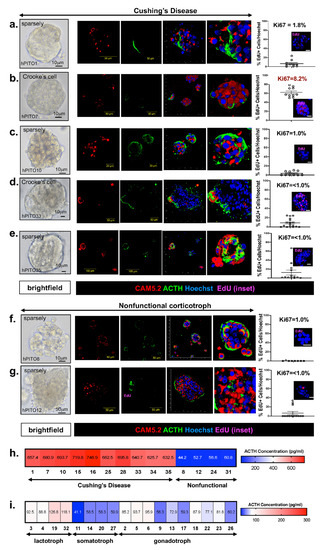
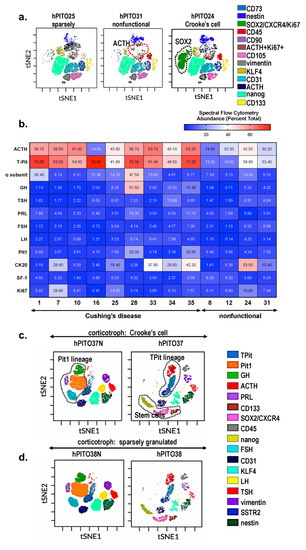
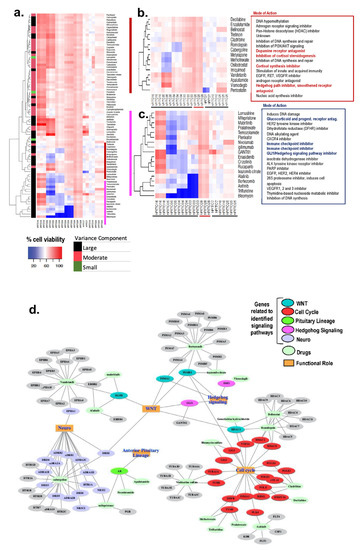
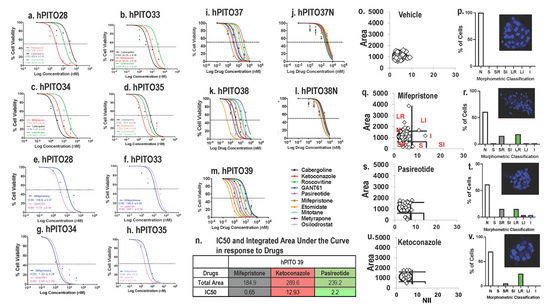
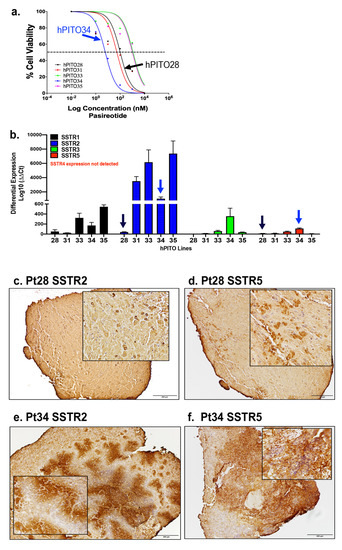
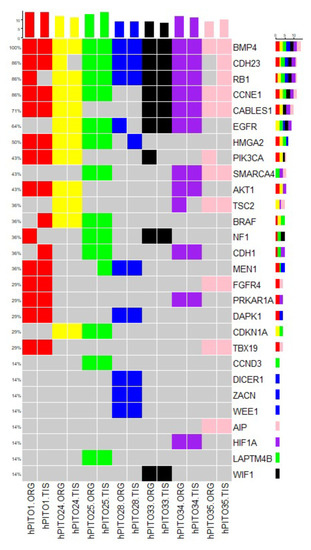
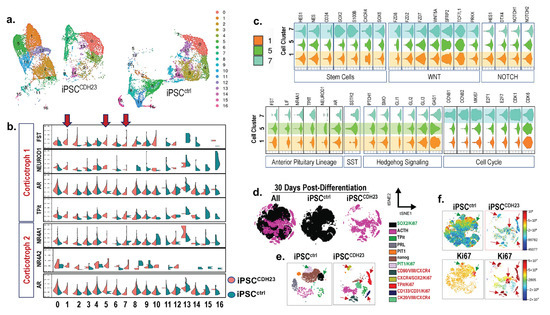
(3) Results: hPITOs generated from corticotroph, lactotroph, gonadotroph, and somatotroph tumors exhibited morphological diversity among the organoid lines between individual patients and amongst subtypes. The similarity in cell lineages between the organoid line and the patient’s tumor was validated by comparing the neuropathology report to the expression pattern of PitNET specific markers, using spectral flow cytometry and exome sequencing. A high-throughput drug screen demonstrated patient-specific drug responses of hPITOs amongst each tumor subtype. Generation of induced pluripotent stem cells (iPSCs) from a CD patient carrying germline mutation CDH23 exhibited dysregulated cell lineage commitment.
(4) Conclusions: The human pituitary neuroendocrine tumor organoids represent a novel approach in how we model complex pathologies in CD patients, which will enable effective personalized medicine for these patients.

1. Introduction

Cushing’s disease (CD) is a serious endocrine disorder caused by an adrenocorticotropic hormone (ACTH)-secreting pituitary neuroendocrine tumor (PitNET) that stimulates the adrenal glands to overproduce cortisol [1,2,3,4]. The WHO renamed pituitary adenomas as PitNETs [5]. While PitNETs have been defined as benign, implying that these tumors cause a disease that is not life threatening or harmful to health, in fact chronic exposure to excess cortisol has wide-ranging and detrimental effects on health. Hypercortisolism causes increased stroke rates, diabetes, obesity, depression, anxiety, and a three-fold increase in the risk of death from cardiovascular disease and cancer [4,6,7,8].
The first-line treatment for CD is pituitary surgery, which is followed by disease recurrence in 50% of patients during the 10-year follow-up period after surgery in the hands of an experienced surgeon [9,10,11]. Studies have demonstrated that surgical failures and recurrences of CD are common, and despite multiple treatments, biochemical control is not achieved in approximately 30% of patients. This suggests that in routine clinical practice, initial and long-term disease remission is not achieved in a substantial number of CD patients [7,12]. Hence, medical therapy is often considered in the following situations: when surgery is contraindicated or fails to achieve remission, or when recurrence occurs after apparent surgical remission. While stereotactic radiosurgery treats incompletely resected or recurrent PitNETs, the main drawbacks include the longer time to remission (12–60 months) and the risk of hypopituitarism [3,13,14]. There is an inverse relationship between disease duration and reversibility of complications associated with the disease, thus emphasizing the importance of identifying an effective medical strategy to rapidly normalize cortisol production by targeting the pituitary adenoma [4,7,12]. Unfortunately, the lack of current standard of care treatments with low efficacy and tolerability makes CD a medical therapeutic challenge.
The overall goal of medical therapy for CD is to target the signaling mechanisms to lower cortisol levels in the body [15,16]. The drugs offered for treatment of CD vary in the mechanism of action, safety, tolerability, route of administration, and drug–drug interactions [15,16]. In the era of precision medicine [17], where it is imperative to identify effective therapies early, there is an urgent need to accelerate the identification of therapies targeted to the ACTH-secreting pituitary tumor which are tailored for each individual patient. The absence of preclinical models that replicate the complexity of the PitNET microenvironment has prevented us from acquiring the knowledge to advance clinical care by implementing therapies specifically targeting the tumor, which would have a higher efficacy and tolerability for CD patients. In this instance, organoids can replicate much of the complexity of an tumor. An “organoid” is defined as a three-dimensional cell structure, grown from primary cells of dissociated pituitary tumors in Matrigel matrix, which proliferate, and differentiate in three dimensions, eventually replicating key biological properties of the tissue [18]. While pituitary cell lines predominantly represent hormonal lineages, these cultures do not reproduce the primary pituitary tissue because of the tumor transformation and non-physiological 2D culture conditions [19,20,21]. Pituitary tissue-derived organoids have been generated from mouse models [22,23]. While several human and rat pituitary spheroid/aggregate/tumoroid models have been reported, these cultures consist of poorly differentiated cells with high replicative potential which can affect drug response and produce data that poorly translate to the clinic [24,25]. In this study, we developed an organoid model derived from human PitNETs that replicated much of the cellular complexity and function of the patient’s tumor. Organoids derived from corticotroph PitNETs retained the genetic alterations of the patient’s primary tissue.

2. Materials and Methods

2.1. Generation and Culture of Human Pituitary Neuroendocrine Tumor (PitNET) Organoids

Patients with planned transsphenoidal surgery for pituitary tumors were identified in the outpatient neurosurgery clinics. Tissues were collected under the St. Joseph’s Hospital and Barrow Neurological Institute Biobank collection protocol PHXA-05TS038 and collection of outcomes data protocol PHXA-0004-72-29, with the approval of the Institutional Review Board (IRB) and patient consent. Samples were de-identified and shipped to the Zavros laboratory (University of Arizona) for processing.
Pituitary tumor tissue was collected in Serum-Free Defined Medium (SFDM) supplemented with ROCK inhibitor (Y27632, 10 µM), L-glutamine (2 mM), A83-01 (activin receptor-like kinase (Alk) 4/5/7 inhibitor, 0.5 mM), penicillin/streptavidin (1%), kanamycin (1%), amphotericin/gentamycin (0.2%), CHIR-98014 (4 mM), and thiazovivin (TZV, 2.5 mM). Tissues that contained red blood cells were incubated with Red Blood Cell (RBC) Lysis Buffer according to the manufacturer’s protocol (Thermo Fisher Scientific, San Fransisco, CA, USA). Tissues were dissected into small pieces, transferred to digestion buffer (DMEM/F12 supplemented with 0.4% collagenase 2, 0.1% hyaluronic acid, 0.03% trypsin-EDTA) and incubated for 5–10 min at 37 °C with gentle shaking. Tissue was further incubated with Accutase™ (Thermo Fisher Scientific) for 5 min at 37 °C. Enzymatically dissociated cells were pelleted and washed in DPBS supplemented with antibiotics at a 400 relative centrifugal force (RCF) for 5 min. Dissociated adenoma cells were resuspended in Matrigel™, and Matrigel™ domes containing the cells were then plated in culture dishes and overlaid with pituitary growth media (Supplemental Table S1). The culture was maintained at 37 °C at a relative humidity of 95% and 5% CO2. Organoid growth medium was replenished every 3–4 days and passaged after 15 days in culture.

2.2. Generation of Induced Pluripotent Stem Cells (iPSCs)

Induced pluripotent stem cell lines (iPSC lines) were generated from control individuals (no reported disease) or CD patients according to published protocols by the University of Arizona iPSC Core [26]. All human iPSC lines were tested and found to be negative for mycoplasma contamination using the Mycoalert Mycoplasma testing kits (LT07-318, Lonza), and no karyotype abnormalities were found (KaryoStat+, Thermo).

2.3. Pituitary Organoids Generated from iPSCs

Six well culture plates were coated with 2 mL/well 0.67% Matrigel (diluted in E8 media, UA iPSC core, 151169-01) and incubated at 37 °C at a relative humidity of 95% and 5% CO2 overnight. The iPSC lines were reprogrammed from the blood of either a healthy donor (JCAZ001) or a CD patient (iPSC7 and iPSC1063) at the University of Arizona iPSC Core. Passage 12 iPSCs were plated onto the coated plates and incubated at 37 °C at a relative humidity of 95% and 5% CO2. At 70% confluency, cells were passaged to freshly coated 24 well plates at a ratio of 1:8 and grown to 85–90% confluency before beginning the directed differentiation schedule. From days 0 to 3, cells were cultured in E6 media supplemented with 1% penicillin/streptomycin, 10 μM SB431542, and 5 ng/mL BMP4. BMP4 was withdrawn from the culture at day 3. Starting on day 4, the cells were cultured in E6 media, supplemented with 10 μM SB431542, 30 ng/mL human recombinant SHH, 100 ng/mL FGF8b, 10 ng/mL FGF18, and 50 ng/mL FGF10. Fifteen days after culture, the cells were harvested in cold E6 media by pipetting and resuspended in Matrigel™ (20,000 cells/50 mL Matrigel™). Matrigel™ domes containing the cells were plated in culture dishes and overlaid with differentiation media containing E6 media which was supplemented with 10 μM Y-27632, 30 ng/mL human recombinant SHH, 100 ng/mL FGF8b, 10 ng/mL FGF18, and 50 ng/mL FGF10 (Supplemental Table S2). Organoids were cultured for a further 15 days at 37 °C at a relative humidity of 95% and 5% CO2.

2.4. Spectral Flow Cytometry (Cytek™ Aurora)

The multicolor flow cytometry panel was designed using the Cytek® Full Spectrum Viewer online tool to calculate the similarity index (Supplemental Figure S1). The organoids were harvested in cold SFDM media and centrifuged at 400× g for 5 min. Supernatant was discarded and organoids were dissociated to single cells using Accutase® (Thermo Fisher Scientific 00-4555-56). The enzymatic reaction was stopped using prewarmed DPBS, and cells were then centrifuged at 400× g for 5 min and incubated with fluorochrome-conjugated/unconjugated primary surface or cytoplasmic antibodies (Supplemental Figure S1) at 4 °C for 30 min. Cells were then washed with Cell Staining Buffer (BioLegend # 420-201) and incubated with secondary antibodies (Supplemental Figure S1) at 4 °C for 30 min. Cells were fixed using Cytofix/Cytoperm™ Fixation/Permeabilization Solution (BD Biosciences # 554714) at 4 °C for 20 min, followed by washing with Fixation/Permeabilization wash buffer. Cells were labeled with fluorochrome-conjugated/unconjugated intracellular primary antibodies (Supplemental Figure S1) at 4 °C for 30 min, then washed and incubated with secondary antibodies at 4 °C for 30 min. Cells were resuspended in cell staining buffer and fluorescence and measured using the Cytek Aurora 5 Laser Spectral Flow Cytometer. An unstained cell sample was fixed and used as a reference control. UltraComp eBeads™, Compensation Beads (Thermo Fisher Scientific # 01-2222-42) were stained with the individual antibodies and used as single stain controls for compensation and gating. Data were acquired using the Cytek™ Aurora and analyzed using Cytobank software (Beckman Coulter, Indianapolis, IN, USA).

2.5. Whole Mount Immunofluorescence

Organoids were immunostained using published protocols by our laboratory [27,28,29]. Proliferation was measured by using 5-ethynyl-2′-deoxyuridine (EdU) incorporation according to the Manufacturer’s protocol (Click-IT EdU Alexa Fluor 555 Imaging Kit, Thermo Fisher Scientific C10338). Co-staining was performed by blocking fixed organoids with 2% donkey serum (Jackson Immuno Research, # 017-000-121) diluted in 0.01% PBST for 1hr at room temperature. Organoids were then incubated overnight at 4 °C with primary antibodies, followed by secondary antibodies and Hoechst (Thermo Fisher Scientific H1399, 1:1000 in 0.01% PBST) for 1 h at room temperature. Human specific primary antibodies used included: rabbit anti-ACTH (Thermo Fisher Scientific 701293, 1:250), rabbit anti-Synaptophysin (Thermo Fisher Scientific PA5-27286, 1:100), species PIT1 (Thermo Fisher Scientific PA5-98650, 1:50), rabbit anti-LH (Thermo Fisher Scientific PA5-102674, 1:100), mouse anti-FSH (Thermo Fisher Scientific MIF2709, 1:100), mouse anti-PRL (Thermo Fisher Scientific CF500720, 1:100), Alexa Flour conjugated GH (NB500-364AF647, 1:100), and mouse anti-CAM5.2 (SIGMA 452M-95, 1:250). The secondary antibodies used included Alexa Fluor 488 Donkey Anti Rabbit IgG (H+L) (Thermo Fisher Scientific A21206, 1:100) or Alexa Fluor 647 Donkey Anti Mouse IgG (H+L) (Thermo Fisher Scientific A31571, 1:100). Organoids were visualized and images were acquired by confocal microscopy using the Nikon CrestV2 Spinning Disk (Nikon, Melville, NY, USA). Fluorescence intensity and percentage of EdU positive cells of total cells, were calculated using Nikon Elements Software (Version 5.21.05, Nikon, Melville, NY, USA).

2.6. Nuclear Morphometric Analysis (NMA)

Nuclear Morphometric Analysis (NMA) using treated organoids was performed based on a published protocol that measures cell viability based on the changes in nuclear morphology of the cells, using nuclear stain Hoechst or DAPI [30]. Images of organoid nuclei were analyzed using the ImageJ Nuclear Irregularity Index (NII) plugin for key parameters, which included cell area, radius ratio, area box, aspect, and roundness. Using the published spreadsheet template [30], the NII of each cell was calculated with the following formula: NII = Aspect − Area Box + Radius Ratio + Roundness. The area vs. NII of vehicle-treated cells were plotted as a scatter plot using the template, and was considered as the normal cell nuclei. The same plots were generated for each condition, and the NII and area of treated cells were compared to the normal nuclei, and classified as one of the following NMA populations: Normal (N; similar area and NII), Mitotic (S; similar area, slightly higher NII), Irregular (I; similar area, high NII), Small Regular (SR; apoptotic, low area and NII), Senescent (LR; high area, low NII), Small Irregular (SI; low area, high NII), or Large Irregular (LI; high area, high NII). Cells classified as SR exhibited early stages of apoptosis, and cells classified as either I, SI, or LI exhibited significant nuclear damage. The percentage of cells in each NII classification category were calculated and plotted as a histogram using GraphPad Prism.

2.7. ELISA

Concentration of secreted ACTH in conditioned media that was collected from organoid cultures was measured using the Human ACTH ELISA Kit (Novus Biologicals, NBP2-66401), according to the manufacturer’s protocol. The enzyme–substrate reaction was measured spectrophotometrically (BioTek Gen5 Micro Plate Reader Version 3.11, Santa Clara, CA, USA) at a wavelength of 450 nm, and the ACTH concentration (pg/mL) was interpolated by a standard curve with a 4-parameter logistic regression analysis, using GraphPad Prism (Version 9.2.0, San Diego, CA, USA).

2.8. Drug Assay

Patient adenoma-derived pituitary organoids were grown in 96-well plates and treated with 147 small molecules taken from the NCI AOD9 compound library for 72 h. (https://dtp.cancer.gov/organization/dscb/obtaining/available_plates.html (accessed on 22 August 2021)). Drugs were diluted from 10 mM DMSO stock plates into 100 M DMSO working stocks with a final concentration of 1μM. All vehicle controls were treated with 0.1% DMSO. Organoid proliferation was measured using a CellTiter 96® AQueous One Solution Cell Proliferation Assay kit (MTS, Promega, G3582, Madison, WI, USA) according to the manufacturer’s instruction. Organoid death was calculated based on the absorbance readings at 490 nm, collected from the MTS assay relative to the vehicle controls. Drug screens were performed with biological replicates in the same screen. Drugs were selected based on their ability to target key signaling pathways as well as clinical relevance to the treatment. Drug sensitivity is represented by cell viability, and is significant at <0.5 suppressive effect of the drugs. The percent of cell viability relative to the vehicle control was calculated. Correlation coefficients across each organoid were calculated using the Pearson method to assess confidence in replication. The variance component was detected for each drug across all organoids. A random effect model was run with a single random factor for each drug, and estimated variance was calculated by rejecting the null hypothesis that variation was not present among samples. The drug responses were grouped by variance factor, into large (vc > 100), median (100 > vc > 50), and small (vc < 50). A heatmap was used to display the differential responses in cell viability for the drugs.
Drugs that clustered together and showed response within corticotrophs were investigated further based on their mode of action. Pathways (Kegg and Reactome) and gene ontology mapping were conducted for the genes that were being targeted by the drugs, in order to evaluate the key responses in cellular processes. A network was constructed in Cytoscape v 3.8.2 (San Diego, CA, USA) for the purpose of association between the drugs and genes.

2.9. Drug Dose Responses

Organoids were grown in Matrigel™ domes within 96-well round-bottom culture plates. Recombinant human SHH was removed from the pituitary organoid growth media, 24 h prior to drug treatment. Organoids were treated with either vehicle (DMSO), cabergoline (Selleckchem S5842), ketoconazole (Selleckchem S1353), roscovitine (Selleckchem S1153), GANT61 (Stemcell Technologies 73692), pasireotide (TargetMol TP2207), mifeprostone (Selleckchem S2606), etomidate (Selleckchem S1329), mitotane (Selleckchem S1732), metyropane (Selleckchem S5416), or osilodrostat (Selleckchem S7456) at concentrations of 0, 1, 10, 100, 1000, and 10,000 nM, for 72 h. The percentage of cell viability was measured using an MTS assay (Promega G3580). Absorbance was measured at 490 nm and normalized to the vehicle. Concentrations were plotted in a logarithmic scale, and a nonlinear dose response curve regression was calculated using GraphPad Prism. An IC50 value for each drug treatment was determined based on the dose response curve, using GraphPad Prism analysis software.

2.10. Calculation of Area under the Curve (AUC)

AUC (area under the curve) was determined by plotting the normalized % cell viability versus transformed concentration of the drugs, using a trapezoidal approximation for the area [31]. The formula was based on splitting the curve into trapezoids with bases equal to the % viability (V) and height equal to the interval length (difference in concentrations (C), and then summing the areas of each trapezoid:

n0(Vn+Vn1)2(CnCn1)

2.11. Quantitative RT PCR (qRT-PCR)

RNA was collected from patient-derived organoid cultures using the RNeasy Mini Kit (Qiagen). cDNA was generated from the extracted RNA, and then pre-amplified using TaqMan PreAmp Master Mix (Thermo Fisher Scientific 391128). The primers used were human-specific GAPDH (Thermo Fisher Scientific, Applied Biosystems Hs02786624_g1), NR5A1 (SF1) (Thermo Fisher Scientific, Hs00610436_m1), PIT1 (Thermo Fisher Scientific, Hs00230821_m1), TPit (Thermo Fisher Scientific, Hs00193027), and POMC (Thermo Fisher Scientific, Hs01596743_m1). Each PCR reaction was performed using a final volume of 20 µL, composed of 20X TaqMan Expression Assay primers, 2X TaqMan Universal Master Mix (Applied Biosystems, TaqMan® Gene Expression Systems), and a cDNA template. Amplification of each PCR reaction was conducted in a StepOne™ Real-Time PCR System (Applied Biosystems, Foster City, CA, USA), using the following PCR conditions: 2 min at 50 °C, 10 min at 95 °C, denaturing for 15 s at 95 °C, and annealing/extending for 1 min at 60 °C, for a total of 40 cycles. Relative fold change was calculated using the 2 − ∆∆Ct method [32], where CT = threshold cycle. Results were analyzed as the average fold change in gene expression compared to the control, and GAPDH served as an internal control.

2.12. Whole Exome Sequencing

WES was performed by the University of Arizona Center for Applied Genetics and Genomic Medicine. Isolated DNA from patient adenoma tissue will be quantified using the Qubit quantitation system with standard curve, as per the supplier protocol (Thermo Fisher Scientific). All samples were further tested for quality using the Fragment Analyzer (Advanced Analytical), following the manufacturer-recommended protocols. Whole exome sequencing (WES) was performed by array capture and approximately 60 Mb of exome target sequence, using the SureSelectXT Human All Exon V6 enrichment (Agilent) or equivalent (which one was used). All exome library builds were quantified via qPCR and subsequently sequenced to a minimum 20X coverage, using paired-end chemistry on the Illumina NovaSeq platform. Whole exome sequencing (WES) was performed by hybridization capture of approx. 35 Mb of the exome target sequence, using the Swift Exome Hyb Panel (Swift Biosciences 83216). All exome library builds were quantified via qPCR and subsequently sequenced to a minimum 20X coverage, using paired-end chemistry on the Illumina NextSeq500 or NovaSeq platform (Illumina). DNA reads were trimmed, filtered by quality scores and aligned to the human genome (hg38) with Burrows–Wheeler Aligner with default parameters. Picard (http://broadinstitute.github.io/picard (accessed on 22 December 2021)) was used to mark duplicates. Germline single nucleotide variants (SNV) were called using the Genome Analysis Tool Kit (GATK), using the given guidelines. Mutations were annotated using ANNOVAR for coding sequences. Variants that passed the quality filter were further investigated for similarity. Concordance between tissue and organoids was calculated using Jaccard similarity index (Jij = Mij/(Mi + Mj − Mij) where Mi is the number of variants in tissues, Mj is the number of variants in organoids, and Mij is the number of identical variants in both tissue and organoid.

2.13. Single Cell RNA Sequencing (scRNA-Seq)

Cultures were collected on day 15 of the pituitary directed differentiation schedule, and cells were dissociated into a single-cell suspension using Cell Dissociation Buffer (Thermo Fisher Scientific 13151014). Cells (15,000 cells/sample) were resuspended in the sample buffer (BD Biosciences 65000062), filtered using cell strainer (40 microns), and loaded into a BD Rhapsody cartridge (BD Biosciences 400000847) for single-cell transcriptome isolation. Based on the BD Rhapsody system whole-transcriptome analysis for single-cell whole-transcriptome analysis, microbead-captured single-cell transcriptomes were used to prepare a cDNA library. Briefly, double-stranded cDNA was first generated from the microbead-captured single-cell transcriptome in several steps, including reverse transcription, second-strand synthesis, end preparation, adapter ligation, and whole-transcriptome amplification (WTA). Then, the final cDNA library was generated from double-stranded full-length cDNA by random priming amplification using a BD Rhapsody cDNA Kit (BD Biosciences, 633773), as well as the BD Rhapsody Targeted mRNA and WTA Amplification Kit (BD Biosciences, 633801). The library was sequenced in PE150 mode (paired-end with 150-bp reads) on NovaSeq6000 System (Illumina). A total of 80,000 reads were demultiplexed, trimmed, mapped to the GRCh38 annotation, and quantified using the whole transcriptome analysis pipeline (BD Rhapsody™ WTA Analysis Pipeline v1.10 rev6, San Jose, CA, USA) on the Seven Bridges Genomics platform (https://igor.sbgenomics.com (accessed on 4 April 2022)), prior to clustering analysis in Seurat. For QC and filtration, read counting and unique molecular identifier (UMI) counting were the principal gene expression quantification schemes used in this single-cell RNA-sequencing (scRNA-seq) analysis. The low-quality cells, empty droplets, cell doublets, or multiplets were excluded based on unique feature count (less than 200 or larger than 2500), as they may often exhibit either an aberrantly high gene count or very few genes. Additionally, the mitochondrial QC metrics were calculated, and the cells with >5% mitochondrial counts were filtered out, as the percentage of counts originating from a set of low-quality or dying cells often exhibit extensive mitochondrial contamination. After the removal of unwanted cells from the single cell dataset, the global-scaling normalization method LogNormalize was employed. This method normalizes the feature expression measurements for each cell by the total expression, multiplies this by a scale factor (10,000), and log-transforms the result. The molecules per gene per cell, based on RSEC error correction (RSEC_MolsPerCell file) matrix files from iPSCctrl and iPSCCDH23 samples, were imported into Seurat v4, merged, and processed (as stated above) for UMAP reduction, cluster identification, and differential marker assessment using the FindAllMarkers function within Seurat.

2.14. Statistical Analyses

Sample size was based on assessment of power analysis using SigmaStat software. Data collected from each study from at least 4 in vitro technical replicates were analyzed by obtaining the mean ± standard error of the mean (SEM), unless otherwise stated. The significance of the results was then tested using commercially available software (GraphPad Prism, GraphPad software, San Diego, CA, USA).

3. Results

3.1. Generation and Validation of Human PitNET Tissue Derived Organoids

Human PitNET tissue was harvested during endoscopic transsphenoidal pituitary surgery from 35 patients in order to generate organoids. These cultures are referred to as human PitNET tissue derived organoids (hPITOs). Supplementary Table S3 summarizes the neuropathology reports and clinical diagnosis from these cases. In summary, 12 corticotroph (functional, CD), and 3 silent corticotroph tumors (nonfunctional tumors), 9 gonadotroph tumors, 8 lactotroph tumors, and 3 somatotroph tumors (acromegaly) were used to generate hPITOs (Supplementary Table S3).
Bright-field microscopy images of hPITOs that were generated from corticotroph adenomas from patients diagnosed with CD (Figure 1a–e). Silent/nonfunctioning tumors (Figure 1f,g) revealed morphological diversity among the organoid lines between individual patients and amongst subtypes. Confocal microscopy was used to capture a z-stack through the hPITO38, immunofluorescently stained for CAM5.2 (red), ACTH (green), and Hoechst (nuclear staining, blue) and emphasizes the 3D cellular structure of the hPITOs (Supplemental Video S1). Lactotroph, gonadotroph, and somatotroph adenomas were used to generate hPITOs, and showed the same morphological divergence amongst subtypes and between each patient line (Supplemental Figure S2). Proliferation was measured within the cultures using 5-ethynyl-2′-deoxyuridine (EdU) uptake and showed that the percentage of EdU+ve cells/total Hoechst+ve nuclei directly correlated with the pathology MIB-1 (Ki67) score (red, R2 = 0.9256) (Figure 1a–g, Supplemental Figure S2). ACTH concentration, which was measured by ELISA using organoid conditioned culture media collected from each hPITO line, showed the highest expression in the corticotroph adenoma organoids generated from CD patients (Figure 1h).
Cells 11 03344 g001 550
Figure 1. Morphology and function of corticotroph hPITOs. (ag) Brightfield images, immunofluorescence staining using antibodies specific for CAM5.2 (red), ACTH (green), and EdU (magenta, inset) of organoid cultures generated from patients with Cushing’s disease (hPITOs 1, 7, 10, 33, 35) or nonfunctional corticotroph adenomas (hPITO8, 12). Quantification of %EdU positive cells/total cell number is shown and compared to the Ki67 score given in the pathology report (Supplemental Table S3). An ELISA was performed using conditioned media collected from (h) corticotroph hPITO cultures and (i) lactotroph, somatotroph, and gonadotroph hPITO cultures for the measurement of ACTH secretion (pg/mL).

3.2. Characterization of Cell Lineages in Pituitary Adenoma-Derived Organoids by Spectral Cytek™ Aurora Analysis

In order to validate the similarity in cell lineages identified between the organoid line and the patient’s tumor, we compared the immunohistochemistry from the neuropathology report (Supplemental Table S3) to the expression pattern of pituitary adenoma-specific markers, which were measured using Cytek™ Aurora spectral flow cytometry (Figure 2). The location of cells that are found in each cluster based on the highly expressed antigens are shown in the representative tSNE (viSNE) maps (Figure 2a). Compared to nonfunctional adenoma-derived hPITOs, organoids derived from corticotroph adenomas of CD patients highly expressed proliferating (Ki67+) T-Pit+ ACTH cells (Figure 2a). Interestingly, there was an increase in SOX2+ cells within the total cell population, associated with Crooke’s cell adenoma hPITOs (Figure 2a). Within the total cell population, cell clusters expressing CD45 and vimentin were also measured (Figure 2a). Data for the analysis of corticotroph hPITOs, derived from CD patients and individuals with nonfunctional adenomas, were summarized in a heatmap for each subtype organoid line based on quantified cell abundance (percent of total cells) using spectral flow cytometry (Figure 2b).
Cells 11 03344 g002 550
Figure 2. Cell heterogeneity of corticotroph hPITOs. (a) viSNE maps define spatially distinct cell populations using pituitary specific cell lineage, stem cell, and transcription factor markers. Cell populations were quantified in organoids generated from CD patients with corticotroph adenomas (sparsely granulated and Crooke’s cell adenoma) or patients with nonfunctional corticotroph adenomas. (b) Quantification of the abundance of cells expressing pituitary specific markers as a percent total. viSNE maps define spatially distinct cell populations in organoid cultures generated from CD patient with (c) corticotroph adenoma (hPITO37, Crooke’s cell adenoma) and adjacent normal tissue (hPITO37N), or (d) sparsely granulated corticotroph adenomas (hPITO38) and adjacent normal tissue (hPITO38N).
Organoid cultures derived from pituitary adenomas (hPITO37 and hPITO38) were compared to organoids derived from adjacent normal pituitary tissue (hPITO37N and hPITO38N) (Figure 2c,d). While Pit1 lineages including cells expressing GH and PRL, as well as SF1 lineages expressing FSH and LH, were detected in the hPITO37N and hPITO38N organoid cultures, these cell populations were significantly reduced within the patient’s matched adenoma tissue (Figure 2c,d). Overall, hPITOs derived from CD patients expressed increased stem and progenitor cell markers, including CXCR4, SOX2, and CD133 (Figure 2). Collectively, our findings of the characterization of the hPITO cultures support our prediction that this in vitro model recapitulates much of the patient’s adenoma pathophysiology.

3.3. Inherent Patient Differences to Drug Response Is Reflected in the Organoid Culture

Tumor recurrence can occur in as many as 30–50% of CD patients after successful surgical treatment [10,33,34]. Unfortunately, bilateral adrenalectomy is the chosen surgical treatment for patients with persistent CD [35]. Bilateral adrenalectomy leads to the increased risk for development of Nelson’s syndrome (progressive hyperpigmentation due to ACTH secretion and expansion of the residual pituitary tumor). Although the risk of developing Nelson’s syndrome following adrenalectomy can be reduced by 50% with stereotactic radiotherapy [35], there is a need to develop medical therapies that directly target the pituitary adenoma. Thus, we established a high-throughput drug screening assay using patient-derived PitNET organoids. After 72 h of treatment, cell viability was measured using an MTS assay, and data were represented as a heatmap whereby blue indicated higher cell death, and red suggested higher cell viability. The replicates behaved consistently with the drug response, with correlation scores of >0.8 for these samples (Figure 3a). We estimated the variance component for each drug across all organoids. Variation among samples was found to be significant (p ≤ 0.05) for each of the 83 drugs. The drug responses were grouped by variance factor into large, median, and small. The larger the variance, the more variable the drug response was across the organoids. We noted a set of drugs that showed a significant differential response across the functional corticotroph organoids. Unsupervised clustering of drug responses across organoids shows a pattern that relates to our statistically calculated results (Figure 3a,c), and the replicates for each independent organoid cluster together. The drugs with higher variance components across all the functional corticotrophs cluster together as a group (Figure 3a). These drugs show cell viability of 10% to 60% across different organoids. Analyzing the pattern more closely, we observe that, within a pathologically defined group, there was a differential organoid response to drugs as well as inherent patient differences to drugs within this group. Figure 3 demonstrates a variation in drug responsiveness amongst the organoid lines generated from individual patients. Importantly, there was further divergence in drug responsiveness amongst the individual organoid lines within each pathologically defined corticotroph subtype. These data clearly demonstrate that the inherent patient difference to drug response which is often observed among CD patients is reflected in the organoid culture.
Cells 11 03344 g003 550
Figure 3. Drug screen using hPITOs generated from CD patients. (a) High-throughput drug screening of hPITOs reveals sensitivities to a range of therapeutic agents. Cell viability with high values (indicating resistance) are depicted in red, and low values (indicating sensitivity) are in blue in the clustered heatmap. (b,c) Clusters showing response to therapeutic agents with the most variance across the organoids. (d) Network of drugs from the clusters b and c and their gene targets, showing their participation in signaling pathways and cellular processes.
Drugs that clustered together and showed correlated responses were investigated further for their mode of action based on target genes (Figure 3d). The genes were analyzed for their associations in cellular pathways and gene ontology functional processes. Identified drug–gene pairs were interconnected by cellular pathways that are known to regulate cell cycle, WNT signaling, hedgehog signaling, and neuroactive ligand-receptor interaction signaling pathways (Figure 3d). These identified genes are also known to be influenced by multiple cellular functions, such as cytokine–cytokine receptor interactions and Notch signaling. Proteosome 20S subunit genes PSMAs/PSMBs and the HDAC gene family are involved in many cellular functions. The ephrin receptors (EPHs), adrenoceptor alpha receptors (ADRs), dopamine receptors (DRDs), and the 5-hydroxytryptamine serotonin receptors (HTRs) gene families influence neuronal functions and are targeted by multiple drugs in our focused cluster. These data reveal potential therapeutic pathways for CD patients.
Divergent half maximal inhibitory concentration (IC50) values, as documented by an MTS cell viability assay, were observed in response to drug treatment among hPITOs lines 28, 33, 34, 35, and 37. Note that a shift of the curve to the right indicates a higher IC50 (i.e., more resistant to that drug). Cell viability assays were normalized to vehicle-treated controls in order to ensure that toxicity was specific to the drug effects (Figure 4). Dose response curves for organoid 33 and organoid 34 showed better responses at lower doses for cabergoline compared to Metyrapone and osilodrostat, but different for organoid 35, where Metyrapone and osilodrostat gave better responses than Cabergoline (Figure 4a–h). For the drugs mifepristone and GANT61, 33 and 34 had the same level of response to both the drugs. However, when the two organoid responses were compared, 34 had a better response than 33 (Figure 4a–h). Similar divergent drug responses were observed in hPITO lines 37 and 38 (Figure 4i,k). However, organoids generated from adjacent normal pituitary tissue from patients 37 and 38 were nonresponsive to the same standard of care of investigational drugs for CD (Figure 4j,l). These data were consistent with observation made in the drug screen (Figure 3a–c), and demonstrate that there was an inherent difference to drug response within the organoid cultures of the same corticotroph subtype.
Cells 11 03344 g004 550
Figure 4. Drug dose responses by hPITOs generated from CD patients. Dose responses to mifepristone, GANT61, cabergoline, and osilodrostat. (a,e) hPITO28, (b,f) hPITO33, (c,g) hPITO34, and (d,h) hPITO35. Dose responses to cabergoline, ketoconazole, roscovitine, GANT61, pasireotide, mifepristone, etomidate, mitotane, metyrapone, and osilodrostat in (i) hPITO37, (j) organoids generated from adjacent normal pituitary tissue (hPITO37N), (k) hPITO38, (l) hPITO38N, and (m) hPITO39. (n) IC50 and integrated area under the curve in response to mifepristone, ketoconazole, and pasireotide using hPITO39 cultures. Nuclear morphometric analysis of hPITO39 cultures in response to (o,p) vehicle, (q,r) mifepristone, (s,t) pasireotide, and (u,v) ketoconazole. Morphometric classification of NII was based on the normal (N), small (S), small regular (SR), short irregular (SI), large regular (LR), large irregular (LI), and irregular (I) nuclear morphology. Representative Hoechst staining of organoids in response to drug treatments for the calculation of the nuclear irregularity index (NII) are shown in the insets in (p,r,t,v).
In addition to cell viability, Nuclear Morphometric Analysis (NMA) using treated organoids was performed based on a published protocol that measures cell viability according to the changes in nuclear morphology of the cells, using nuclear stain Hoechst or DAPI [30]. Nuclear Irregularity Index (NII) was measured based on the quantification of the morphometric changes in the nuclei in response to the standard-of-care drugs mifepristone, pasireotide, and ketoconazole in hPITO39 (Figure 4o–v). The area vs. NII of vehicle-treated cells were plotted as a scatter plot using the template, and considered as the normal cell nuclei (Figure 4o). The same plots were generated for mifepristone (Figure 4q), pasireotide (Figure 4s), and ketoconazole (Figure 4u). The NII and area of treated cells were compared to those of the normal nuclei, and classified as one of the following NMA populations: Normal (N; similar area and NII), Mitotic (S; similar area, slightly higher NII), Irregular (I; similar area, high NII), Small Regular (SR; apoptotic, low area and NII), Senescent (LR; high area, low NII), Small Irregular (SI; low area, high NII), or Large Irregular (LI; high area, high NII) (Figure 4p,r,t,v). Cells classified as SR exhibited early stages of apoptosis, and cells classified as either I, SI, or LI exhibited significant nuclear damage. Data showed that mifepristone induced significant apoptosis in hPITO39 cultures (Figure 4r), compared to responses to pasireotide (Figure 4t) and ketoconazole (Figure 4v). These responses were consistent with the IC50 and the total area under the curve in response to drugs (Figure 4m,n). Measurement of NII is an approach which may be used to confirm potential drug targets identified from the drug screen.

3.4. Organoid Responsiveness to Pasireotide Correlates with SSTR2 and SSTR5 Expression

Organoid lines hPITO28, 31, 33, 34, and 35 exhibited divergent IC50 values in response to SSTR agonist pasireotide (Figure 5a). hPITO34 was the most responsive to pasireotide, with a low IC50 value of 6.1 nM (Figure 5a). Organoid lines hPITO33 and hPITO35 were the least responsive, with IC50 values of 1.2 µM and 1 µM, respectively, in response to pasireotide (Figure 5a). The expression of SSTR subtypes 1–5 among the different organoid lines were measured by qRT-PCR and IHC (Figure 5b). One of the least responsive organoid lines, hPITO28, exhibited lower differential expression in SSTR2 and SSTR5 compared to the highly responsive hPITO34 line (Figure 5a,b). Gene expression levels of SSTR2 and SSTR5 within hPITO28 and 34 correlated with protein levels within the patient’s tumor tissue (Figure 5c–f). Given the greater binding affinity for SSTR5 compared to SSTR2 by pasireotide, these data were consistent with greater responsiveness to the drug by hPITO34 in comparison to hPITO28 (Figure 5a,c–f). The expression of SSTR subtypes 2 and 5 within the organoid cultures correlated with the expression patterns of the patient’s tumor tissues (Figure 5a,c–f).
Cells 11 03344 g005 550
Figure 5. SSTR1-5 expression in hPITOs and patient’s PitNET tissue. (a) Dose response of hPITO28, 31, 33, 34, and 35 lines to pasireotide. (b) Differential expression of SSTR subtypes 1–5 (SSTR1, SSTR2, SSTR3, SSTR4, SSTR5) in hPITO28, hPITO31, hPITO33, hPITO34, and hPITO35. Immunohistochemistry of (c,e) SSTR2 and (d,f) SSTR5 expression in patient PitNET tissue (Pt28 and Pt34), from which hPITO28 and 34 were generated.

3.5. Organoids Derived from Pituitary Corticotroph Adenomas Retain the Genetic Alterations of the Patient’s Primary Tumor

In order to identify the genetic features of the organoids derived from pituitary adenomas of CD patients, we performed whole-exome sequencing (WES) of hPITOs and the corresponding primary adenoma tissues. We performed WES analysis of each hPITO line, and compared the results with those for the corresponding primary adenoma tissues. We showed the concordance rate of exonic variants between the primary tumor tissues obtained from CD patients and the corresponding organoid line. We identified, on average, approximately 5000 mutations across each of the 14 paired samples of organoids and tissues. For the variants detected, all seven pairs showed a Jaccard index ranging from 0.5 to 0.8. Out of seven pairs, five (hPITO24, 25, 28 and 35) pairs had a Jaccard score of 0.8, while hPITO33 and 34 pairs had 0.7, and hPITO1 had 0.5. In order to investigate the similarity across the SNV (single nucleotide variation) sites, we calculated the Jaccard index of exon sites for synonymous and non-synonymous events, and found scores for all pairs ranging from 0.8 to 0.9. Furthermore, for only non-synonymous events, Jaccard scores also ranged from 0.8 to 0.9, except for hPITO1, which showed overall lower concordance, and had a score of 0.4 to 0.5. Figure 6 shows non-synonymous mutations found in organoid and tissue pairs for some of the key genes that are known to be involved in pituitary adenoma disease. Concordance indices between organoids and the matched patient’s adenoma tissues is reported in Figure 6. Therefore, WES data demonstrated that organoids derived from pituitary corticotroph adenomas retained the genetic alterations of the patient’s primary tumor tissue.
Cells 11 03344 g006 550
Figure 6. Genomic landscape of hPITOs recapitulates genetic alterations commonly found PitNETs. Overview of single nucleotide variation events detected in hPITOs in genes commonly altered in PitNETs. The mutation frequency across the organoid population is depicted on the right. Color coding of the figure shows that organoid lines are derived from the same patient tumor tissue. ORG: organoid line, TIS: matched patient’s PitNET tissue.

3.6. IPSC Pituitary Organoids Generated from a CD Patients Expressing Familial Mutations Reveal Corticotroph Adenoma Pathology In Vitro

Extensive research has revealed the role of somatic and germline mutations in the development of CD adenomas [36,37]. Pituitary organoids were developed from iPSCs generated from the PBMCs of CD patients and carrying germline mutations that were identified by WES (Supplemental Figure S4). Chromosomal aberrations were not found when comparing against the reference dataset in the iPSCs generated from the CD patients (Supplemental Figure S3a,b). PBMCs isolated from patients diagnosed with CD were analyzed by WES in order to determine the expression of germline mutations. WES revealed the expression of a more recently identified gene predisposing patients to CD, namely cadherin-related 23 [38] (Supplemental Figure S5).
Pituitary organoids were then developed from iPSCs which were generated from the PBMCs of patients with CD (iPSCCDH23 and iPSCMEN1) and a healthy individual (iPSCctrl). Expression of PIT1 (pituitary-specific positive transcription factor 1), ACTH (adrenocorticotropic hormone), GH (growth hormone), FSH (follicle-stimulating hormone), LH (luteinizing hormone), PRL (prolactin), and synaptophysin (synaptophysin) with co-stain Hoechst (nuclei, blue) was measured by immunofluorescence, using chamber slides collected at 15 of the differentiation schedules (Supplemental Figure S6). While pituitary tissue that was differentiated from iPSCctrl expressed all major hormone-producing cell lineages (Supplemental Figure S6a), there was a significant increase in the expression of ACTH and synaptophysin, with a concomitant loss of PIT1, GH, FSH, LH, and PRL in iPSCsMEN1 (Supplemental Figure S6b,c). Interestingly, iPSCCDH23 cultures exhibited a significant increase in the expression of ACTH, GH, LH, and synaptophysin, with a concomitant loss of PIT1, FSH, and PRL (Supplemental Figure S6b,c). Immunofluorescence of iPSCs collected on the fourth day of the differentiation schedule revealed no expression of PIT1, ACTH, GH, FSH, LH, or PRL in (data not shown). Compared to control lines, iPSC lines expressing mutated CDH23 secreted significantly greater concentrations of ACTH earlier in the differentiation schedule (Supplemental Figure S7a). The upregulated expression of pituitary corticotroph adenoma-specific markers in iPSCCDH23 and iPSCMEN1 demonstrates that the iPSC-derived organoids represented the pathology of corticotroph adenomas in vitro.

3.7. ScRNA-seq Reveals the Existence of Unique Proliferative Cell Populations in iPSCCDH23 Cultures When Compared to iPSCsctrl

Using Seurat to identify cell clusters, as well as Uniform Manifold Approximation and Projection 9UMAP, clustering analysis identified 16 distinct cell populations/clusters consisting of known marker genes. Clusters 1, 5, and 7 of the iPSCsCDH23 were distinct from the iPSCctrl cultures (Figure 7a,b). Pituitary stem cells were characterized in iPSCctrl and iPSCCDH23 cultures (Figure 7b). Clusters 1 and 5 expressed markers consistent with the corticotroph subtype cell lineage (Figure 5c). Markers of dysregulated cell cycles and increased proliferation were identified in cell cluster 7 (Figure 7c). Expression of the E2 factor (E2F) family of transcription factors, which are downstream effectors of the retinoblastoma (RB) protein pathway and play a crucial role in cell division control, were identified in distinct cell cluster 7, which was identified within the iPSCCDH23 cultures (Figure 7c). Stem cell markers were also upregulated in cell cluster 7, and identified within the iPSCCDH23 cultures (Figure 7c). Using Cytobank software to analyze organoids collected 30 days post-differentiation, cells were gated on live CK20 positive singlets, and 9000 events per sample were analyzed by the viSNE algorithm. ViSNE plots are shown in two dimensions with axes identified by tSNE- 1 and tSNE-2, and each dot representing a single cell positioned in the multidimensional space (Figure 7d). Individual flow cytometry standard files were concatenated into single flow cytometry standard files, from which 12 spatially distinct populations were identified (Figure 7e). Overlaying cell populations identified by traditional gating strategies onto viSNE plots identified unique cell populations within the iPSCCDH23 cultures (Figure 7e). There were distinct cell populations between the iPSCctrl and iPSCCDH23 organoids, in addition to expression of hormone and cell lineage markers such as ACTH, TPit, PRL, and PIT1 (Figure 7e). The cell populations that exhibited high expression of Ki67 within the iPSCctrl organoid cultures included SOX2+ and PIT1+ populations (Figure 7f). The highly proliferating cell populations within the iPSCCDH23 organoid cultures included those that expressed CD90+/VIM+/CXCR4+ (mesenchymal stem cells), CXCR4+/SOX2+ (stem cells), TPit+ (corticotroph cell lineage), CD133+/CD31+ (endothelial progenitor cells), and CK20+/VIM+/CXCR4+ (hybrid epithelial-mesenchymal stem cells) (Figure 7f). Overall, the iPSCCDH23 organoids were significantly more proliferative compared to the iPSCctrl cultures (Figure 7f). Immunofluorescence staining of iPSCCDH23 organoids revealed increased mRNA expression of TPit and POMC, which correlated with increased ACTH protein compared to iPSCsctrl (Supplemental Figure S6). As shown in Supplemental Figure S6b,c, iPSCCDH23 cultures also exhibited a significant increase in the expression of GH and LH (Supplemental Figure S6b,c).
Cells 11 03344 g007 550
Figure 7. Single cell analysis of iPSCctrl and iPSCCDH23 cultures 15 and 30 days post-directed differentiation. (a) UMAP plots showing identified cell clusters 0–16 in iPSCctrl and iPSCCDH23 cultures 15 days post-directed differentiation. (b) Violin plots of representative identified markers of the corticotroph cell lineage, where 2 subpopulations were observed among iPSCctrl and iPSCCDH23 cultures. Arrows highlight clusters 1, 5, and 7. (c) Violin plots showing expression of genes representative of stem cells, Wnt, NOTCH, Hh and SST signaling, anterior pituitary (corticotroph) cell lineage, and cell cycle in clusters 1, 5, and 7 of iPSCCDH23 cultures. Plot width: cell number, plot height: gene expression. (d) viSNE maps showing concatenated flow cytometry standard files for both samples and iPSCctrl and iPSCCDH23 organoids 30 days post-directed differentiation. (e) Overlay of manually gated cell populations onto viSNE plots. (f) Fluorescent intensity of Ki67 of viSNE maps for both samples and iPSCctrl and iPSCCDH23 organoids. iPSCctrl = 22518 events; iPSCCDH23 = 17542 events.
Collectively, Figure 7 demonstrates that the development of pituitary organoids generated from iPSCs of CD patients may reveal the existence of cell populations which, potentially, contribute to the support of adenoma growth and progression, as well as an expansion of stem and progenitor cells that may be the targets for tumor recurrence.

4. Discussion

Our studies demonstrate the development of organoids generated from human PitNETs (hPITOs) can potentially be used to screen for the sensitivity and efficacy of responses to targeted therapies for CD patients that either fail to achieve remission or exhibit recurrence of disease after surgery. In addition, we have documented that induced pluripotent stem cells (iPSCs) generated from a CD patient expressing germline mutation CDH23 (iPSCCDH23) reveals the disease pathogenesis under directed differentiation. Many early in vitro experiments have used pituitary cell lines, spheroids, aggregates, and/or tumoroids that do not replicate the primary PitNET microenvironment [19,20,21], and lack a multicellular identity [39,40]. The development of PitNET tissue-generated organoids is limited to the use of transgenic mouse models as the source [22,23,41]. The recent organoid cultures reported by Nys et al. [42] have been generated from single stem cells isolated from PitNET tissue, and are claimed to be true organoids due to their clonality. However, multicellular complexity was not validated by the protein expression or hormone secretion from pituitary cell lineages in these cultures [42]. According to the National Cancer Institute (NCI, NIH), an ‘organoid’ is defined as “a tiny, 3-dimensional mass of tissue that is made by growing stem cells (cells from which other types of cells develop) in the laboratory” [43]. The hPITOs reported here begin from single and/or 3–4 cell clusters dissociated from the PitNET tissue that harbors the stem cells. Supplemental Video S2 demonstrates a process of ‘budding,’ as well as lumen formation as organoids grow and differentiate. We document differentiation and function by comprehensive spectral flow cytometry, ELISA, and response to standard of care drugs. The growth of PitNET organoids reported in the current study is consistent with that of gastrointestinal tissue derived cultures that begin from cell clusters, crypts, or glands [27,44,45].
Our studies report a PitNET tissue organoid culture with a multicellular identity consisting of differentiated cell lineages, stem/progenitor cells, and immune and stromal cell compartments, which replicates much of the patient’s own adenoma pathology, functionality, and complexity. We have also demonstrated that iPSCs, derived from the blood of a CD patient, can be directly differentiated into pituitary organoids that resemble similar characteristics to the tumor tissue. Many investigators have proposed the use of organoids in personalized medicine, but have focused these efforts on targeted treatment of cancers [27,46,47,48]. The findings reported in these studies are the first to implement this approach for the potential treatment of PitNETs. Collectively, we have developed a relevant human in vitro approach to potentially advance our knowledge as well as our approach to studies in the field of pituitary tumor research. Both the hPITOs and the iPSCCDH23 may be implemented in studies that strive to (1) define the molecular and cellular events that are crucial for the development of PitNETs leading to CD, and (2) accelerate the identification of effective targeted therapies for patients with CD.
While published studies have advanced our understanding of the molecular mechanisms of the pathogenesis of corticotroph adenomas and elucidated candidate therapeutic targets for CD, these reports fall short of directly informing clinical decisions for patient treatment. Using organoids to screen potential drugs and compounds can potentially improve therapeutic accuracy. Figure 3 demonstrated a variation in drug responsiveness amongst the organoid lines generated from individual patients. Importantly, there was further divergence in drug responsiveness amongst the individual organoid lines within each pathologically defined corticotroph subtype. For example, hPITOs generated from patients with sparsely granulated corticotroph adenomas (hPIT0s 10, 25, 34, 35) and Crooke’s cell adenomas (hPITOs 7, 33) showed variable responses regardless of similar pathologically defined subtypes. In addition, the response of the tumor cells within the organoids to the standard of care drugs that directly target the pituitary in the body, including mifepristone and cabergoline, was only 50% in hPITO34 and hPITO35, and almost 0% in the other lines, including hPITO7, 10, and 25. These data clearly demonstrate that the inherent patient difference to drug response that is often observed among CD patients is reflected in the organoid culture. This culture system may be an approach that will provide functional data revealing actionable treatment options for each patient. Patient-derived organoids from several tumors have served as a platform for testing the efficacy of anticancer drugs and predicting responses to targeted therapies in individual patients [27,46,48,49,50]. An example of the use of organoids in identifying drug responsiveness within an endocrine gland is that of papillary thyroid cancer [51]. Organoids developed from PTC patients were used as a preclinical model for studying responsiveness to anticancer drugs in a personalized approach [51]. However, our study is the first report of the use of hPITOs for drug screening. Connecting genetic and drug sensitivity data will further categorize corticotroph subtypes associated with CD. WES analysis of each hPITO line was compared to the results for the corresponding primary adenoma tissues. We showed the concordance rate of exonic variants between the primary tumor tissues obtained from CD patients and the corresponding organoid line. On average, approximately 80% of the variants observed in the CD patients’ adenoma tissues were retained in the corresponding hPITOs.
Pituitary organoids were also developed from iPSCs generated from PBMCs of a CD patient expressing a germline genetic alteration in cadherin-related 23 CDH23 (iPSCCDH23), a CD patient expressing an MEN1 mutation (iPSCMEN1), and a healthy individual (iPSCctrl). Foundational studies performed by investigators at the genome level have revealed significant knowledge regarding the pathophysiology of CD [36,37,52,53]. In some instances, CD is a manifestation of genetic mutation syndromes that include multiple endocrine neoplasia type 1 (MEN1), familial isolated pituitary adenoma (FIPA), and Carney complex [54,55]. CDH23 syndrome is clinically associated with the development of Usher syndrome, deafness, and vestibular dysfunction [56]. Several mutations in CDH23 are associated with inherited hearing loss and blindness [57]. However, none of the variants found in this study were linked to any symptoms of deafness or blindness. A possible explanation is that deafness-related CDH23 mutations are caused by either homozygous or compound heterozygous mutations [57]. In a study that linked mutations in CDH23 with familial and sporadic pituitary adenomas, it was suggested that these genetic alterations could play important roles in the pathogenesis of CD [38]. Genomic screening in a total of 12 families with familial PitNETs, 125 individuals with sporadic pituitary tumors, and 260 control individuals showed that 33% of the families with familial pituitary tumors and 12% of individuals with sporadic pituitary tumors expressed functional or pathogenic CDH23 variants [38]. Consistent with the expected pathology and function of a PitNET from a patient with CD, iPSCCDH23 organoids exhibited hypersecretion of ACTH, and expression of transcription factors and cell markers were reported in the pathology report for corticotroph PitNETs. Collectively, these findings warrant further investigation to determine whether carriers of CDH23 mutations are at a high risk of developing CD and/or hearing loss. Specifically, clinical investigation is required to determine whether pituitary MRI scans should be adopted in the screening of CDH23-related diseases, including Usher syndrome and age-related hearing loss.
Pituitary organoids generated from iPSCs of a CD patient revealed the existence of cell populations that potentially contribute to the support of PitNET growth and disease progression, as well as an expansion of stem and progenitor cells that may be the targets for tumor recurrence. Organoids derived from both pituitary adenomas and iPSCs exhibited increased expression of stem cell and progenitor markers at both the protein and transcriptomic levels. Unique clusters that were proliferative in the iPSCCDH23 organoids expressed a hybrid pituitary cell population which was in an epithelial/mesenchymal state (CK20+/VIM+/CXCR4+/Ki67+). In support of our findings, a similar report of a hybrid epithelial/mesenchymal pituitary cell has been made as part of the normal developmental stages of the human fetal pituitary [58]. Previous studies have suggested that pituitary stem cells undergo an EMT-like process during cell migration and differentiation [59,60,61]. Consistent with our findings are extensive studies using single cells isolated from human pituitary adenomas to show increased expression of stem cell markers SOX2 and CXCR4 [22,23,41,62,63]. Within the clusters identified in the iPSCCDH23 culture were cell populations expressing stem cell markers, including SOX2, NESTIN, CXCR4, KLF4, and CD34. The same iPSCCDH23 cell clusters, 4, 8, 9, and 11, co-expressed upregulated genes of NOTCH, Hedgehog, WNT, and TGFβ signaling, which are pivotal not only in pituitary tumorigenesis and pituitary embryonic development, but also in ‘tumor stemness’ [22,23,41,62,63,64]. We also noted that clusters of cell populations 5 and 14 unique within the iPSCCDH23 cultures expressed upregulated genes which were indicative of high proliferation. We observed upregulated expression of the E2F family of transcription factors (E2Fs) E2F1 and E2F7. These findings are of significance, given that there is evidence to show that upregulation of E2Fs is fundamental for tumorigenesis, metastasis, drug resistance, and recurrence [65]. Within the pituitary adenoma microenvironment, whether these stem cells directly differentiate into pituitary tumors or support the growth of the adenoma is largely unknown. In addition, whether pituitary stem cell populations become activated in response to injury is also understudied. Although the role of stem cells has been identified using a mouse model through implantation of the cells within the right forebrain [66], the identification of pituitary tumor-initiating stem cells using in vivo orthotopic transplantation models is impossible in mice. Pituitary tumors harboring the stem cells may require engraftment within the environment from which the cells are derived in order to enable growth and differentiation of the tumor. However, it is technically impossible to implant cells orthotopically in the murine pituitary. The pituitary tumor organoid cultures presented in these studies may offer an approach by which isolation, identification, and characterization of this stem cell population is possible. Therefore, we would gain knowledge on the mechanisms of pituitary tumor pathogenesis and reveal potential novel targets for therapeutic interventions by using the iPSC generated pituitary organoid culture.
PitNETs associated with the development of CD cause serious morbidity due to chronic cortisol exposure that dysregulates almost every organ system in the body. Overall, existing medical therapies remain suboptimal, with negative impact on health and quality of life, including considerable risk of therapy resistance and tumor recurrence. To date, little is known about the pathogenesis of PitNETs. Here, we present a human organoid-based approach that will allow us to acquire knowledge of the mechanisms underlying pituitary tumorigenesis. Such an approach is essential to identify targeted treatments and improve clinical management of patients with CD.

5. Conclusions

Cushing’s disease (CD) is a serious endocrine disorder caused by an adrenocorticotropic hormone (ACTH)-secreting pituitary neuroendocrine tumor (PitNET), which stimulates the adrenal glands to overproduce cortisol. The absence of preclinical models that replicate the PitNET microenvironment has prevented us from acquiring the knowledge to identify therapies that can be targeted to the tumor with a higher efficacy and tolerability for patients. Our studies demonstrate the development of organoids generated from human PitNETs or induced pluripotent stem cells as an essential approach to identifying targeted therapy methods for CD patients.

Supplementary Materials

The following supporting information can be downloaded at: https://www.mdpi.com/article/10.3390/cells11213344/s1, Figure S1: Antibodies used and Cytek® Full Spectrum Viewer showing calculated similarity indices; Figure S2: Morphology and proliferation of lactotroph, somatotroph, and gonadotroph hPITOs; Table S1: Pituitary Growth Media; Table S2: Components used for pituitary organoids generated from iPSCs; Table S3: clinical characteristics of pituitary adenoma samples used for the generation of organoids; Table S4: Average correlation of replicates reported in Figure 3; Table S5: pituitary cell lineage or stem cell markers used in the scRNA-seq analysis; Video S1: hPITO38 EdU ACTH 3.

Author Contributions

Conceptualization, Y.Z.; methodology, J.C., Y.Z., J.M.C., B.N.S., S.M. and K.W.P.; software, J.C., Y.Z., J.M.C., S.M., Y.C., P.M. and R.P.; validation, Y.Z., J.C., J.M.C., A.S.L., K.C.J.Y. and R.P.; formal analysis, J.C., Y.Z., J.M.C., R.P., Y.C., S.M. and P.M.; investigation, Y.Z.; resources, Y.Z., J.C., J.E., C.A.T., B.H. and A.S.L.; data curation, J.C., Y.Z., J.M.C., R.P. and S.M.; writing—original draft preparation, Y.Z., J.C, S.M., J.M.C., Y.C., B.H. and R.P.; writing—review and editing, Y.Z., J.C., J.M.C., A.S.L., K.C.J.Y., S.M., J.E., C.A.T., K.W.P., B.H., Y.C., P.M., B.N.S. and R.P.; visualization, Y.Z., J.C., J.M.C., A.S.L., K.C.J.Y. and R.P.; supervision, Y.Z.; project administration, Y.Z.; funding acquisition, Y.Z. All authors have read and agreed to the published version of the manuscript.

Funding

This research was supported by the Department of Cellular and Molecular Medicine (University of Arizona College of Medicine) startup funds (Zavros). This research study was also partly supported by the National Cancer Institute of the National Institutes of Health under award number P30 CA023074 (Sweasy).

Institutional Review Board Statement

The study was conducted in accordance with the Declaration of Helsinki and approved by the Institutional Review Board of St. Joseph’s Hospital and Barrow Neurological Institute Biobank collection protocol PHXA-05TS038, and collection of outcomes data protocol PHXA-0004-72-29, and patient consent (protocol date of approval).

Informed Consent Statement

Written informed consent was obtained from all subjects involved in the study.

Data Availability Statement

The datasets generated during the analysis of the present study are available in the ReDATA repository, https://doi.org/10.25422/azu.data.19755244.v1. The datasets generated in the current study are also available from the corresponding author on reasonable request. All data generated or analyzed during this study are included in this published article (and its Supplementary Information Files).

Acknowledgments

We acknowledge the technical support of Maga Sanchez in the Tissue Acquisition and Cellular/Molecular Analysis Shared Resource (TACMASR University of Arizona Cancer Center) for assistance with embedding and sectioning of organoids. We would also like to acknowledge Patty Jansma (Marley Imaging Core, University Arizona) and, Douglas W Cromey (TACMASR imaging, University of Arizona Cancer Center) for assistance in microscopy. The authors thank the patients who consented to donate pituitary tumor tissues and blood for the development of the organoids. Without their willingness to participate in the study, this work would not be possible.

Conflicts of Interest

The authors declare no conflict of interest.

References

  1. Cushing, H. Posterior Pituitary Activity from an Anatomical Standpoint. Am. J. Pathol. 1933, 9, 539–548.19. [Google Scholar] [PubMed]
  2. Cushing, H. The basophil adenomas of the pituitary body and their clinical manifestations (pituitary basophilism) 1932. Obes. Res. 1994, 2, 486–508. [Google Scholar] [CrossRef] [PubMed]
  3. Ironside, N.; Chen, C.J.; Lee, C.C.; Trifiletti, D.M.; Vance, M.L.; Sheehan, J.P. Outcomes of Pituitary Radiation for Cushing’s Disease. Endocrinol. Metab. Clin. N. Am. 2018, 47, 349–365. [Google Scholar] [CrossRef]
  4. Loriaux, D.L. Diagnosis and Differential Diagnosis of Cushing’s Syndrome. N. Engl. J. Med. 2017, 377, e3. [Google Scholar] [CrossRef]
  5. Asa, S.L.; Mete, O.; Perry, A.; Osamura, R.Y. Overview of the 2022 WHO Classification of Pituitary Tumors. Endocr. Pathol. 2022, 33, 6–26. [Google Scholar] [CrossRef]
  6. Nishioka, H.; Yamada, S. Cushing’s Disease. J. Clin. Med. 2019, 8, 1951. [Google Scholar] [CrossRef] [PubMed]
  7. Feelders, R.A.; Hofland, L.J. Medical treatment of Cushing’s disease. J. Clin. Endocrinol. Metab. 2013, 98, 425–438. [Google Scholar] [CrossRef]
  8. Limumpornpetch, P.; Morgan, A.W.; Tiganescu, A.; Baxter, P.D.; Nyawira Nyaga, V.; Pujades-Rodriguez, M.; Stewart, P.M. The Effect of Endogenous Cushing Syndrome on All-cause and Cause-specific Mortality. J. Clin. Endocrinol. Metab. 2022, 107, 2377–2388. [Google Scholar] [CrossRef]
  9. Ciric, I.; Zhao, J.C.; Du, H.; Findling, J.W.; Molitch, M.E.; Weiss, R.E.; Refetoff, S.; Kerr, W.D.; Meyer, J. Transsphenoidal surgery for Cushing disease: Experience with 136 patients. Neurosurgery 2012, 70, 70–80; discussion 71–80. [Google Scholar] [CrossRef]
  10. Alexandraki, K.I.; Kaltsas, G.A.; Isidori, A.M.; Storr, H.L.; Afshar, F.; Sabin, I.; Akker, S.A.; Chew, S.L.; Drake, W.M.; Monson, J.P.; et al. Long-term remission and recurrence rates in Cushing’s disease: Predictive factors in a single-centre study. Eur. J. Endocrinol. 2013, 168, 639–648. [Google Scholar] [CrossRef]
  11. Sonino, N.; Zielezny, M.; Fava, G.A.; Fallo, F.; Boscaro, M. Risk factors and long-term outcome in pituitary-dependent Cushing’s disease. J. Clin. Endocrinol. Metab. 1996, 81, 2647–2652. [Google Scholar] [CrossRef] [PubMed]
  12. Van der Pas, R.; Feelders, R.A.; Gatto, F.; De Bruin, C.; Pereira, A.M.; Van Koetsveld, P.M.; Sprij-Mooij, D.M.; Waaijers, A.M.; Dogan, F.; Schulz, S.; et al. Preoperative normalization of cortisol levels in Cushing’s disease after medical treatment: Consequences for somatostatin and dopamine receptor subtype expression and in vitro response to somatostatin analogs and dopamine agonists. J. Clin. Endocrinol. Metab. 2013, 98, E1880–E1890. [Google Scholar] [CrossRef]
  13. Kondziolka, D. Cushing’s disease and stereotactic radiosurgery. J. Neurosurg. 2013, 119, 1484–1485; discussion 1485. [Google Scholar] [CrossRef] [PubMed]
  14. Mehta, G.U.; Sheehan, J.P.; Vance, M.L. Effect of stereotactic radiosurgery before bilateral adrenalectomy for Cushing’s disease on the incidence of Nelson’s syndrome. J. Neurosurg. 2013, 119, 1493–1497. [Google Scholar] [CrossRef] [PubMed]
  15. Tritos, N.A. Adrenally Directed Medical Therapies for Cushing Syndrome. J. Clin. Endocrinol. Metab. 2021, 106, 16–25. [Google Scholar] [CrossRef] [PubMed]
  16. Gheorghiu, M.L.; Negreanu, F.; Fleseriu, M. Updates in the Medical Treatment of Pituitary Adenomas. Horm. Metab. Res. 2020, 52, 8–24. [Google Scholar] [CrossRef]
  17. Kaiser, U.B. Cushing’s disease: Towards precision medicine. Cell. Res. 2015, 25, 649–650. [Google Scholar] [CrossRef]
  18. Bissell, M.S.a.M.J. Organoids: A historical perspective of thinking in three dimensions. J. Cell Biol. 2017, 216, 31–40. [Google Scholar] [CrossRef]
  19. Danila, D.C.; Zhang, X.; Zhou, Y.; Dickersin, G.R.; Fletcher, J.A.; Hedley-Whyte, E.T.; Selig, M.K.; Johnson, S.R.; Klibanski, A. A human pituitary tumor-derived folliculostellate cell line. J. Clin. Endocrinol. Metab. 2000, 85, 1180–1187. [Google Scholar] [CrossRef]
  20. Bjoro, T.; Torjesen, P.A.; Ostberg, B.C.; Sand, O.; Iversen, J.G.; Gautvik, K.M.; Haug, E. Bombesin stimulates prolactin secretion from cultured rat pituitary tumour cells (GH4C1) via activation of phospholipase C. Regul. Pept. 1987, 19, 169–182. [Google Scholar] [CrossRef]
  21. Bjoro, T.; Sand, O.; Ostberg, B.C.; Gordeladze, J.O.; Torjesen, P.; Gautvik, K.M.; Haug, E. The mechanisms by which vasoactive intestinal peptide (VIP) and thyrotropin releasing hormone (TRH) stimulate prolactin release from pituitary cells. Biosci. Rep. 1990, 10, 189–199. [Google Scholar] [CrossRef] [PubMed]
  22. Cox, B.; Laporte, E.; Vennekens, A.; Kobayashi, H.; Nys, C.; Van Zundert, I.; Uji, I.H.; Vercauteren Drubbel, A.; Beck, B.; Roose, H.; et al. Organoids from pituitary as a novel research model toward pituitary stem cell exploration. J. Endocrinol. 2019, 240, 287–308. [Google Scholar] [CrossRef] [PubMed]
  23. Vennekens, A.; Laporte, E.; Hermans, F.; Cox, B.; Modave, E.; Janiszewski, A.; Nys, C.; Kobayashi, H.; Malengier-Devlies, B.; Chappell, J.; et al. Interleukin-6 is an activator of pituitary stem cells upon local damage, a competence quenched in the aging gland. Proc. Natl. Acad. Sci. USA 2021, 118, e2100052118. [Google Scholar] [CrossRef] [PubMed]
  24. Zhang, D.; Hugo, W.; Redublo, P.; Miao, H.; Bergsneider, M.; Wang, M.B.; Kim, W.; Yong, W.H.; Heaney, A.P. A human ACTH-secreting corticotroph tumoroid model: Novel Human ACTH-Secreting Tumor Cell in vitro Model. EBioMedicine 2021, 66, 103294. [Google Scholar] [CrossRef] [PubMed]
  25. Tsukada, T.; Kouki, T.; Fujiwara, K.; Ramadhani, D.; Horiguchi, K.; Kikuchi, M.; Yashiro, T. Reassembly of anterior pituitary organization by hanging drop three-dimensional cell culture. Acta. Histochem. Cytochem. 2013, 46, 121–127. [Google Scholar] [CrossRef] [PubMed]
  26. Narsinh, K.H.; Jia, F.; Robbins, R.C.; Kay, M.A.; Longaker, M.T.; Wu, J.C. Generation of adult human induced pluripotent stem cells using nonviral minicircle DNA vectors. Nat. Protoc. 2011, 6, 78–88. [Google Scholar] [CrossRef]
  27. Steele, N.G.; Chakrabarti, J.; Wang, J.; Biesiada, J.; Holokai, L.; Chang, J.; Nowacki, L.M.; Hawkins, J.; Mahe, M.; Sundaram, N.; et al. An Organoid-Based Preclinical Model of Human Gastric Cancer. Cell. Mol. Gastroenterol. Hepatol. 2019, 7, 161–184. [Google Scholar] [CrossRef]
  28. Bertaux-Skeirik, N.; Feng, R.; Schumacher, M.A.; Li, J.; Mahe, M.M.; Engevik, A.C.; Javier, J.E.; Peek, R.M.J.; Ottemann, K.; Orian-Rousseau, V.; et al. CD44 plays a functional role in Helicobacter pylori-induced epithelial cell proliferation. PLoS Pathog. 2015, 11, e1004663. [Google Scholar] [CrossRef]
  29. Feng, R.; Aihara, E.; Kenny, S.; Yang, L.; Li, J.; Varro, A.; Montrose, M.H.; Shroyer, N.F.; Wang, T.C.; Shivdasani, R.A.; et al. Indian Hedgehog mediates gastrin-induced proliferation in stomach of adult mice. Gastroenterology 2014, 147, 655–666.e9. [Google Scholar] [CrossRef]
  30. Filippi-Chiela, E.C.; Oliveira, M.M.; Jurkovski, B.; Callegari-Jacques, S.M.; da Silva, V.D.; Lenz, G. Nuclear morphometric analysis (NMA): Screening of senescence, apoptosis and nuclear irregularities. PLoS ONE 2012, 7, e42522. [Google Scholar] [CrossRef]
  31. Gagnon, R.C.; Peterson, J.J. Estimation of confidence intervals for area under the curve from destructively obtained pharmacokinetic data. J. Pharm. Biopharm. 1998, 26, 87–102. [Google Scholar] [CrossRef] [PubMed]
  32. Livak, K.; Schmittgen, T. Analysis of relative gene expression data using real-time quantitative PCR and the 2(-Delta Delta C(T)) Method. Methods 2001, 25, 402–408. [Google Scholar] [CrossRef] [PubMed]
  33. Hinojosa-Amaya, J.M.; Varlamov, E.V.; McCartney, S.; Fleseriu, M. Hypercortisolemia Recurrence in Cushing’s Disease; a Diagnostic Challenge. Front. Endocrinol. 2019, 10, 740. [Google Scholar] [CrossRef] [PubMed]
  34. Patil, C.G.; Prevedello, D.M.; Lad, S.P.; Vance, M.L.; Thorner, M.O.; Katznelson, L.; Laws, E.R., Jr. Late recurrences of Cushing’s disease after initial successful transsphenoidal surgery. J. Clin. Endocrinol. Metab. 2008, 93, 358–362. [Google Scholar] [CrossRef]
  35. Katznelson, L. Bilateral adrenalectomy for Cushing’s disease. Pituitary 2015, 18, 269–273. [Google Scholar] [CrossRef]
  36. Reincke, M.; Sbiera, S.; Hayakawa, A.; Theodoropoulou, M.; Osswald, A.; Beuschlein, F.; Meitinger, T.; Mizuno-Yamasaki, E.; Kawaguchi, K.; Saeki, Y.; et al. Mutations in the deubiquitinase gene USP8 cause Cushing’s disease. Nat. Genet. 2015, 47, 31–38. [Google Scholar] [CrossRef]
  37. Chen, J.; Jian, X.; Deng, S.; Ma, Z.; Shou, X.; Shen, Y.; Zhang, Q.; Song, Z.; Li, Z.; Peng, H.; et al. Identification of recurrent USP48 and BRAF mutations in Cushing’s disease. Nat. Commun. 2018, 9, 3171. [Google Scholar] [CrossRef]
  38. Zhang, Q.; Peng, C.; Song, J.; Zhang, Y.; Chen, J.; Song, Z.; Shou, X.; Ma, Z.; Peng, H.; Jian, X.; et al. Germline Mutations in CDH23, Encoding Cadherin-Related 23, Are Associated with Both Familial and Sporadic Pituitary Adenomas. Am. J. Hum. Genet. 2017, 100, 817–823. [Google Scholar] [CrossRef]
  39. Ikeda, H.; Mitsuhashi, T.; Kubota, K.; Kuzuya, N.; Uchimura, H. Epidermal growth factor stimulates growth hormone secretion from superfused rat adenohypophyseal fragments. Endocrinology 1984, 115, 556–558. [Google Scholar] [CrossRef]
  40. Baek, N.; Seo, O.W.; Kim, M.; Hulme, J.; An, S.S. Monitoring the effects of doxorubicin on 3D-spheroid tumor cells in real-time. Onco. Targets 2016, 9, 7207–7218. [Google Scholar] [CrossRef]
  41. Laporte, E.; Nys, C.; Vankelecom, H. Development of Organoids from Mouse Pituitary as In Vitro Model to Explore Pituitary Stem Cell Biology. J. Vis. Exp. 2022. [Google Scholar] [CrossRef] [PubMed]
  42. Nys, C.; Lee, Y.L.; Roose, H.; Mertens, F.; De Pauw, E.; Kobayashi, H.; Sciot, R.; Bex, M.; Versyck, G.; De Vleeschouwer, S.; et al. Exploring stem cell biology in pituitary tumors and derived organoids. Endocr. Relat. Cancer 2022, 29, 427–450. [Google Scholar] [CrossRef]
  43. Available online: https://www.cancer.gov/publications/dictionaries/cancer-terms/def/organoid (accessed on 20 September 2022).
  44. Mahe, M.M.; Aihara, E.; Schumacher, M.A.; Zavros, Y.; Montrose, M.H.; Helmrath, M.A.; Sato, T.; Shroyer, N.F. Establishment of Gastrointestinal Epithelial Organoids. Curr. Protoc. Mouse Biol. 2013, 3, 217–240. [Google Scholar] [CrossRef] [PubMed]
  45. Schumacher, M.A.; Aihara, E.; Feng, R.; Engevik, A.; Shroyer, N.F.; Ottemann, K.M.; Worrell, R.T.; Montrose, M.H.; Shivdasani, R.A.; Zavros, Y. The use of murine-derived fundic organoids in studies of gastric physiology. J. Physiol. 2015, 593, 1809–1827. [Google Scholar] [CrossRef] [PubMed]
  46. Holokai, L.; Chakrabarti, J.; Lundy, J.; Croagh, D.; Adhikary, P.; Richards, S.S.; Woodson, C.; Steele, N.; Kuester, R.; Scott, A.; et al. Murine- and Human-Derived Autologous Organoid/Immune Cell Co-Cultures as Pre-Clinical Models of Pancreatic Ductal Adenocarcinoma. Cancers 2020, 12, 3816. [Google Scholar] [CrossRef] [PubMed]
  47. Boj, S.F.; Hwang, C.I.; Baker, L.A.; Chio, I.I.C.; Engle, D.D.; Corbo, V.; Jager, M.; Ponz-Sarvise, M.; Tiriac, H.; Spector, M.S.; et al. Organoid models of human and mouse ductal pancreatic cancer. Cell 2015, 160, 324–338. [Google Scholar] [CrossRef]
  48. Tiriac, H.; Belleau, P.; Engle, D.D.; Plenker, D.; Deschenes, A.; Somerville, T.D.D.; Froeling, F.E.M.; Burkhart, R.A.; Denroche, R.E.; Jang, G.H.; et al. Organoid Profiling Identifies Common Responders to Chemotherapy in Pancreatic Cancer. Cancer Discov. 2018, 8, 1112–1129. [Google Scholar] [CrossRef]
  49. Driehuis, E.; van Hoeck, A.; Moore, K.; Kolders, S.; Francies, H.E.; Gulersonmez, M.C.; Stigter, E.C.A.; Burgering, B.; Geurts, V.; Gracanin, A.; et al. Pancreatic cancer organoids recapitulate disease and allow personalized drug screening. Proc. Natl. Acad. Sci. USA 2019 116, 26580–26590. [CrossRef]
  50. Jung, Y.H.; Choi, D.H.; Park, K.; Lee, S.B.; Kim, J.; Kim, H.; Jeong, H.W.; Yang, J.H.; Kim, J.A.; Chung, S.; et al. Drug screening by uniform patient derived colorectal cancer hydro-organoids. Biomaterials 2021, 276, 121004. [Google Scholar] [CrossRef]
  51. Chen, D.; Tan, Y.; Li, Z.; Li, W.; Yu, L.; Chen, W.; Liu, Y.; Liu, L.; Guo, L.; Huang, W.; et al. Organoid Cultures Derived From Patients With Papillary Thyroid Cancer. J. Clin. Endocrinol. Metab. 2021, 106, 1410–1426. [Google Scholar] [CrossRef]
  52. Reincke, M.; Theodoropoulou, M. Genomics in Cushing’s Disease: The Dawn of a New Era. J. Clin. Endocrinol. Metab. 2021, 106, e2455–e2456. [Google Scholar] [CrossRef] [PubMed]
  53. Ma, Z.Y.; Song, Z.J.; Chen, J.H.; Wang, Y.F.; Li, S.Q.; Zhou, L.F.; Mao, Y.; Li, Y.M.; Hu, R.G.; Zhang, Z.Y.; et al. Recurrent gain-of-function USP8 mutations in Cushing’s disease. Cell. Res. 2015, 25, 306–317. [Google Scholar] [CrossRef] [PubMed]
  54. Melmed, S. Pathogenesis of pituitary tumors. Nat. Rev. Endocrinol. 2011, 7, 257–266. [Google Scholar] [CrossRef] [PubMed]
  55. Stratakis, C.A.; Tichomirowa, M.A.; Boikos, S.; Azevedo, M.F.; Lodish, M.; Martari, M.; Verma, S.; Daly, A.F.; Raygada, M.; Keil, M.F.; et al. The role of germline AIP, MEN1, PRKAR1A, CDKN1B and CDKN2C mutations in causing pituitary adenomas in a large cohort of children, adolescents, and patients with genetic syndromes. Clin. Genet. 2010, 78, 457–463. [Google Scholar] [CrossRef]
  56. Mouchtouris, N.; Smit, R.D.; Piper, K.; Prashant, G.; Evans, J.J.; Karsy, M. A review of multiomics platforms in pituitary adenoma pathogenesis. Front. Biosci. 2022, 27, 77. [Google Scholar] [CrossRef] [PubMed]
  57. Bolz, H.; von Brederlow, B.; Ramirez, A.; Bryda, E.C.; Kutsche, K.; Nothwang, H.G.; Seeliger, M.; del, C.S.C.M.; Vila, M.C.; Molina, O.P.; et al. Mutation of CDH23, encoding a new member of the cadherin gene family, causes Usher syndrome type 1D. Nat. Genet. 2001, 27, 108–112. [Google Scholar] [CrossRef] [PubMed]
  58. Zhang, S.; Cui, Y.; Ma, X.; Yong, J.; Yan, L.; Yang, M.; Ren, J.; Tang, F.; Wen, L.; Qiao, J. Single-cell transcriptomics identifies divergent developmental lineage trajectories during human pituitary development. Nat. Commun. 2020, 11, 5275. [Google Scholar] [CrossRef]
  59. Cheung, L.Y.; Davis, S.W.; Brinkmeier, M.L.; Camper, S.A.; Perez-Millan, M.I. Regulation of pituitary stem cells by epithelial to mesenchymal transition events and signaling pathways. Mol. Cell. Endocrinol. 2017, 445, 14–26. [Google Scholar] [CrossRef]
  60. Shintani, A.; Higuchi, M. Isolation of PRRX1-positive adult pituitary stem/progenitor cells from the marginal cell layer of the mouse anterior lobe. Stem Cell. Res. 2021, 52, 102223. [Google Scholar] [CrossRef]
  61. Yoshida, S.; Nishimura, N.; Ueharu, H.; Kanno, N.; Higuchi, M.; Horiguchi, K.; Kato, T.; Kato, Y. Isolation of adult pituitary stem/progenitor cell clusters located in the parenchyma of the rat anterior lobe. Stem Cell. Res. 2016, 17, 318–329. [Google Scholar] [CrossRef]
  62. Laporte, E.; Vennekens, A.; Vankelecom, H. Pituitary Remodeling Throughout Life: Are Resident Stem Cells Involved? Front. Endocrinol. 2020, 11, 604519. [Google Scholar] [CrossRef] [PubMed]
  63. Vankelecom, H.; Roose, H. The Stem Cell Connection of Pituitary Tumors. Front. Endocrinol. 2017, 8, 339. [Google Scholar] [CrossRef] [PubMed]
  64. Mertens, F.; Gremeaux, L.; Chen, J.; Fu, Q.; Willems, C.; Roose, H.; Govaere, O.; Roskams, T.; Cristina, C.; Becu-Villalobos, D.; et al. Pituitary tumors contain a side population with tumor stem cell-associated characteristics. Endocr. Relat. Cancer 2015, 22, 481–504. [Google Scholar] [CrossRef] [PubMed]
  65. Chen, H.Z.; Tsai, S.Y.; Leone, G. Emerging roles of E2Fs in cancer: An exit from cell cycle control. Nat. Rev. Cancer 2009, 9, 785–797. [Google Scholar] [CrossRef] [PubMed]
  66. Xu, Q.; Yuan, X.; Tunici, P.; Liu, G.; Fan, X.; Xu, M.; Hu, J.; Hwang, J.Y.; Farkas, D.L.; Black, K.L.; et al. Isolation of tumour stem-like cells from benign tumours. Br. J. Cancer 2009, 101, 303–311. [Google Scholar] [CrossRef] [PubMed]
Publisher’s Note: MDPI stays neutral with regard to jurisdictional claims in published maps and institutional affiliations.

Medications Used to Treat Cushing’s

Dr. Friedman uses several medications to treat Cushing’s syndrome that are summarized in this table. Dr. Friedman especially recommends ketoconazole. An in-depth article on ketoconazole can be found on goodhormonehealth.com.


 Drug How it works Dosing Side effects
Ketoconazole  (Generic, not FDA approved in US) blocks several steps in cortisol biosynthesis Start 200 mg at 8 and 10 PM, can up titrate to 1200 mg/day • Transient increase in LFTs
• Decreased testosterone levels
• Adrenal insufficiency
Levoketoconazole (Recorlev) L-isomer of Ketoconazole Start at 150 mg at 8 and 10 PM, can uptitrate up to 1200 mg nausea, vomiting, increased blood pressure, low potassium, fatigue, headache, abdominal pain, and unusual bleeding
Isturisa (osilodrostat) blocks 11-hydroxylase 2 mg at bedtime, then go up to 2 mg at 8 and 10 pm, can go up to 30 mg  Dr. Friedman often gives with spironolactone or ketoconazole. • high testosterone (extra facial hair, acne, hair loss, irregular periods)  • low potassium
• hypertension
Cabergoline (generic, not FDA approved) D2-receptor agonist 0.5 to 7 mg • nausea,  • headache  • dizziness
Korlym (Mifepristone) glucocorticoid receptor antagonist 300-1200 mg per day • cortisol insufficiency (fatigue, nausea, vomiting, arthralgias, and headache)
• increased mineralocorticoid effects (hypertension, hypokalemia, and edema
• antiprogesterone effects (endometrial thickening)
Pasireotide (Signafor) somatostatin receptor ligand 600 μg or 900 μg twice a day Diabetes, hyperglycemia, gallbladder issues

For more information or to schedule an appointment with Dr. Friedman, go to goodhormonehealth.com