Through The Art Of Makeup, People With Rare Pituitary Disorders Now Have Unique Resources To Help Address Common Physical And Emotional Changes

Did you know that applying contour powder on certain areas of your face, like the outer rim of the jaw, along the hairline or along the hollows of the cheek, can help make enlarged features less noticeable? Seems like a basic makeup tip, right? Well, to a person with a pituitary disorder that dramatically changes one’s facial features, this type of information may make a major difference – not only physically, but also psychologically.

This is why Novartis has teamed up with Kevyn Aucoin Beauty (KAB) to bring The Highlights Project to those living with acromegaly and Cushing’s disease. The program offers a variety of virtual tools such as makeup suggestions from professional artists and video demonstrations. These resources address common concerns expressed by patients while also educating about these rare, but serious pituitary disorders.

Kevyn Aucoin, founder of KAB and famed Hollywood makeup legend, was diagnosed with acromegaly in 2001 at the age of 40 and passed away less than 12 months later. Aucoin believed in the transformative nature of makeup and saw it as a reflection of both inner and outer beauty. In this spirit, The Highlights Project features a series of makeup tutorials, tips and inspirations designed to help enhance the self-image of pituitary patients. The program also includes the perspective of a psychotherapist who specializes in helping patients with acromegaly and Cushing’s disease.

Like so many other people with acromegaly and Cushing’s disease, Kevyn went undiagnosed for years and faced both emotional and physical challenges as a result of his condition. “Through Kevyn Aucoin Beauty’s partnership with Novartis on The Highlights Project, we hope that we can inspire others living with these pituitary disorders to see their own beauty and view makeup as Kevyn did, not as a mask, but as a tool for discovery,” said Desiree Tordecilla, Executive Vice President, Kevyn Aucoin Beauty.

Acromegaly and Cushing’s disease are pituitary disorders caused by the presence of a noncancerous tumor on the pituitary gland. The symptoms often include highly visual physical changes in the body. For people with acromegaly, enlarged facial features, jaw and brow protrusions, thickening of the skin and skin tags are common. People with Cushing’s disease frequently experience uncontrollable weight gain, facial fullness and redness, a buffalo hump, acne and oily skin. Beyond the external physical changes, these conditions often also cause serious health complications such as cardiovascular issues, fatigue, muscle weakness and cognitive changes. Those living with uncontrolled acromegaly and Cushing’s disease are also at an increased risk of death. Due to the rare nature of these diseases, receiving an accurate diagnosis can be difficult and may take several years – therefore, education and awareness is critical.

The Highlights Project aims to provide support and help those with acromegaly and Cushing’s disease manage the physical manifestations and psychosocial challenges often associated with these conditions.

“As someone who was self-conscious about how unfeminine my facial features appeared, I was amazed by the impact the simple makeup tricks I picked up from The Highlights Project had on my self-esteem,” said Shannon Goodson, who was diagnosed with acromegaly in 2008. “Staying positive, educating yourself about the condition and monitoring hormone levels to ensure the disease is under control are the first steps to empowering yourself and understanding that you are so much more than your diagnosis.”

The mission of The Highlights Project is to help put a face to the challenges those with acromegaly and Cushing’s disease may encounter and serve as a vessel for learning. Novartis is committed to helping to transform the care of rare pituitary conditions and bringing meaningful solutions to patients. To help support acromegaly and Cushing’s disease patients, and learn more about The Highlights Project, visit TheHighlightsProject.com. For more information about these diseases, visit AcromegalyInfo.com and CushingsDisease.com.
Read more from Journal Sentinel: http://www.jsonline.com/sponsoredarticles/health-wellness/through-the-art-of-makeup-people-with-rare-pituitary-disorders-now-have-unique-resources-to-help-address-common-physical-and-emotional-changes8087390808-251841151.html#ixzz2wtDUV9iF


Pituitary ACTH Hypersecretion (Cushing’s Disease) – Pipeline Review, H2 2013

DUBLIN — Research and Markets  (http://www.researchandmarkets.com/research/h78zrm/pituitary_acth) has announced the addition of the “Pituitary ACTH Hypersecretion (Cushing’s Disease) – Pipeline Review, H2 2013” report to their offering.

‘Pituitary ACTH Hypersecretion (Cushing’s Disease) – Pipeline Review, H2 2013’ provides an overview of the indication’s therapeutic pipeline. This report provides information on the therapeutic development for Pituitary ACTH Hypersecretion (Cushing’s Disease), complete with latest updates, and special features on late-stage and discontinued projects. It also reviews key players involved in the therapeutic development for Pituitary ACTH Hypersecretion (Cushing’s Disease).

Scope

– A snapshot of the global therapeutic scenario for Pituitary ACTH Hypersecretion (Cushing’s Disease).

– A review of the Pituitary ACTH Hypersecretion (Cushing’s Disease) products under development by companies and universities/research institutes based on information derived from company and industry-specific sources.

– Coverage of products based on various stages of development ranging from discovery till registration stages.

– A feature on pipeline projects on the basis of monotherapy and combined therapeutics.

– Coverage of the Pituitary ACTH Hypersecretion (Cushing’s Disease) pipeline on the basis of route of administration and molecule type.

– Key discontinued pipeline projects.

– Latest news and deals relating to the products.

Reasons to buy

– Identify and understand important and diverse types of therapeutics under development for Pituitary ACTH Hypersecretion (Cushing’s Disease).

– Identify emerging players with potentially strong product portfolio and design effective counter-strategies to gain competitive advantage.

– Plan mergers and acquisitions effectively by identifying players of the most promising pipeline.

– Devise corrective measures for pipeline projects by understanding Pituitary ACTH Hypersecretion (Cushing’s Disease) pipeline depth and focus of Indication therapeutics.

– Develop and design in-licensing and out-licensing strategies by identifying prospective partners with the most attractive projects to enhance and expand business potential and scope.

– Modify the therapeutic portfolio by identifying discontinued projects and understanding the factors that drove them from pipeline.

Companies Mentioned

Isis Pharmaceuticals, Inc.

Ipsen S.A.

Novartis AG

Corcept Therapeutics Incorporated

HRA Pharma, SA

Cortendo Invest AB

Orphagen Pharmaceuticals, Inc.

For more information visit http://www.researchandmarkets.com/research/h78zrm/pituitary_acth

About Research and Markets

Research and Markets is the world’s leading source for international market research reports and market data. We provide you with the latest data on international and regional markets, key industries, the top companies, new products and the latest trends.

No High-Quality Studies for Cushing’s Drugs

By Salynn Boyles, Contributing Writer, MedPage Today

Reviewed by Zalman S. Agus, MD; Emeritus Professor, Perelman School of Medicine at the University of Pennsylvania and Dorothy Caputo, MA, BSN, RN, Nurse Planner

There is a paucity of clinical trial data supporting the efficacy of most drugs used to treat Cushing’s disease, researchers reported.

Just one drug — pasireotide — has been evaluated in a randomized, double-blind trial, but even it was judged by the researchers to have only a ‘moderate’ level of evidence supporting its effectiveness and safety.

The review of the literature evaluating drug treatments for Cushing’s disease, a rare pituitary disorder, is the first to employ a rigorous systematic approach with strict, predefined inclusion criteria and formal analysis of the quality of evidence using an established standard, researcher Monica Gadelha, MD, PhD, of Brazil’s Federal University of Rio de Janeiro, and colleagues wrote in the journal Clinical Endocrinology.

“This systematic review indicates that the majority of medical therapies currently used in the treatment of Cushing’s disease are supported by a low level of evidence,” the researchers wrote. “Further well-designed prospective studies of medications in Cushing’s disease would help to inform clinical practice further.”

Cushing’s disease is the most common form of endogenous Cushing’s syndrome, a hormonal disorder resulting from persistent exposure to abnormally high levels of the hormone cortisol. In the case of Cushing’s disease, the cortisol is secreted by a pituitary adenoma.

Prolonged exposure to high levels of cortisol raises the risk for diabetes mellitus, cardiovascular disease, osteoporosis and nephrolithiasis. Patients with persistent Cushing’s disease have a 3- to 5-fold higher mortality than the general population.

Surgery to remove the pituitary adenoma is the first-line treatment for Cushing’s disease in the U.S., and when the procedure is performed by an experienced surgeon, remission rates in patients with smaller tumors range from 65% to 90%. The long-term remission rate is lower, however, because many patients develop recurrent disease.

Several medical therapies are widely used to treat patients who are not candidates for surgery or who experience relapse following surgery.

Novartis Oncology’s somatostatin analog drug pasireotide (Signifor) became the only drug approved for this indication in December of last year. And the progesterone-blocking drug mifepristone, best known as the abortion pill once called RU-486, was approved in February of 2012 for the treatment of Cushing’s disease-associated hyperglycemia.

Other drugs — including metyrapone, mitotane, cabergoline, and ketoconazole — are also used off-label in the treatment of Cushing’s, and several have shown better response rates than pasireotide in small studies.

In their systematic review, Gadelha and colleagues identified 15 studies that included at least 10 adults with Cushing’s disease and reported treatment responses as the proportion of patients reaching a specified definition of response. Studies examining combinations of medications were excluded from the analysis, as were studies with indefinite diagnoses of Cushing’s disease.

For medications other than mifepristone, studies had to report the proportion of patients with normalized urinary free cortisol (UFC), midnight salivary cortisol or midnight serum cortisol.

The studies were scored according to the Grading of Recommendations, Assessment, Development and Evaluation (GRADE) system for rating quality of evidence.

Ten of the 15 included studies reported outcomes specifically for patients with Cushing’s disease and the remaining five included patients with other forms of Cushing’s syndrome.

The researchers reported that:

  • Pasireotide was the only treatment assessed in a randomized trial, and it was judged to have a ‘moderate’ level of evidence supporting its use. Response rates from three prospective studies of the drug ranged from 17% to 29%.
  • The remaining medications were supported by a ‘low’ or ‘very low’ level of evidence.
  • The highest response rates were reported in a small retrospective studies of metyrapone (75%, one study) and mitotane (72%, one study).
  • Response rates were 25% to 50% for cabergoline (four studies) and 45% for ketoconazole (one study).
  • Among studies that included patients with other forms of Cushing’s syndrome, response rates were 53% to 88% for ketoconazole (three studies), 70% for mitotane (one study), 57% for metyrapone (one study), and 38% to 60% for mifepristone (one study).


But the researchers urged caution in comparing the drugs, citing the variability in the study designs and patient selection endpoints, among other limitations in the research literature.

“The wide variation in the time-frames over which response to treatment was measured makes comparison a challenge,” they wrote. “Comparison of response rates reported in the included studies is also complicated by the variation in methodology used to assess response.”

They noted that well-designed clinical trials are needed to determine which drugs or drug combinations are most effective in the treatment of Cushing’s disease patients.

“Combinations of medical therapies with different modes of action might aid in optimizing the balance of efficacy and safety,” they wrote. “Investigational medications, such as bexarotene, LC1699 and retinoic acid, may help to expand the range of future therapeutic options.”

Maria Fleseriu, MD, who was not involved in the review, agreed that more drug treatments are needed. But she added that Cushing’s patients today have many more drug options than they did just a few years ago.

Fleseriu directs the Pituitary Center at Oregon Health & Science University, where she is an associate professor of medicine and endocrinology.

In a recently published analysis, Fleseriu wrote that pituitary-targeted medical therapies should soon play a more prominent role in treating Cushing’s disease, and may become first-line treatments when surgery fails or is contraindicated.

“We now have one drug approved for Cushing’s and another approved for diabetes symptoms associated with the disease,” she told MedPage Today. “We are moving forward, but we are not where we would like to be. Combination therapy is probably where we are heading, but further studies are needed.”

Financial support for this research was provided by Novartis Pharmaceuticals.

Researcher Monica Gadelha reports receiving speaker fees and participating on advisory boards for Novartis. Gadelha and co-author Leonardo Vieira Neto were investigators in Novartis’ clinical trials of pasireotide.


From http://www.medpagetoday.com/Endocrinology/GeneralEndocrinology/42043

Cushing Disease: A Multidisciplinary Treatment Update

Share this info with your endo in case he/she missed it!

This activity is intended for endocrinologists, primary care physicians, nurses, nurse practitioners, and pharmacists.

The goal of this activity is to review the diagnosis and treatment of Cushing disease from a multidisciplinary perspective.

Upon completion of this activity, participants will be able to:

  1. Outline the rationale for a multidisciplinary approach to the diagnosis and treatment of patients with Cushing disease
  2. Review the safety and efficacy of current management strategies for patients with Cushing disease
  3. Describe the diagnostic workup for Cushing disease and the reasons why timely diagnosis and treatment are important

Faculty and Disclosures

As an organization accredited by the ACCME, Medscape, LLC, requires everyone who is in a position to control the content of an education activity to disclose all relevant financial relationships with any commercial interest. The ACCME defines “relevant financial relationships” as financial relationships in any amount, occurring within the past 12 months, including financial relationships of a spouse or life partner, that could create a conflict of interest.

Medscape, LLC, encourages Authors to identify investigational products or off-label uses of products regulated by the US Food and Drug Administration, at first mention and where appropriate in the content.

Laurence Katznelson, MD

Professor of Medicine and Neurosurgery, Stanford University; Medical Director, Pituitary Center, Stanford Hospital and Clinics, Stanford, California

Disclosure: Laurence Katznelson, MD, has disclosed the following relevant financial relationships:
Received grants for clinical research from: Corcept Therapeutics Inc.; Novartis Pharmaceuticals Corporation

Dr Katznelson does not intend to discuss off-label uses of drugs, mechanical devices, biologics, or diagnostics approved by the FDA for use in the United States.

Dr Katznelson does not intend to discuss investigational drugs, mechanical devices, biologics, or diagnostics not approved by the FDA for use in the United States.

Brooke Swearingen, MD

Associate Professor of Neurosurgery, Harvard Medical School; Associate Visiting Neurosurgeon, Massachusetts General Hospital, Boston, Massachusetts

Disclosure: Brooke Swearingen, MD, has disclosed the following relevant financial relationships: Served as an advisor or consultant for: Novartis Pharmaceuticals Corporation
Owns stock, stock options or bonds from: Novartis Pharmaceuticals Corporation; Pfizer Inc; Amgen Inc; Roche

Dr Swearingen does not intend to discuss off-label uses of drugs, mechanical devices, biologics, or diagnostics approved by the FDA for use in the United States.

Dr Swearingen does not intend to discuss investigational drugs, mechanical devices, biologics, or diagnostics not approved by the FDA for use in the United States.

Nicholas Tritos, MD

Assistant Professor of Medicine, Harvard Medical School; Staff, Neuroendocrine Unit, Massachusetts General Hospital, Boston, Massachusetts

Disclosure: Nicholas Tritos, MD, has disclosed the following relevant financial relationships:
Served as an advisor or consultant for: Corcept Therapeutics Inc; Pfizer Inc
Received grants for clinical research from: Pfizer Inc; Ipsen

Dr Tritos does intend to discuss off-label uses of drugs, mechanical devices, biologics, or diagnostics approved by the FDA for use in the United States.

Dr Tritos does not intend to discuss investigational drugs, mechanical devices, biologics, or diagnostics not approved by the FDA for use in the United States.

Susan Cornell, PharmD, CDE

Associate Professor, Pharmacy Practice, Midwestern University-Chicago, Downers Grove, Illinois; Clinical Pharmacist/Certified Diabetes Educator, DuPage Community Clinic, Wheaton, Illinois

Disclosure: Susan Cornell, PharmD, CDE, has disclosed the following relevant relationships:
Served as a speaker or member of a speakers bureau for: Johnson & Johnson Diabetes Institute

Dr Cornell does intend to discuss off-label uses of drugs, mechanical devices, biologics, or diagnostics approved by the FDA for use in the United States.

Dr Cornell does not intend to discuss investigational drugs, mechanical devices, biologics, or diagnostics not approved by the FDA for use in the United States.

Rita Pach, RN, MSN

Nurse, Johns Hopkins Pituitary Center, Baltimore, Maryland
Participation by Mrs Pach in the development of this product does not constitute or imply endorsement by the Johns Hopkins University or the Johns Hopkins Hospital and Health System.
Disclosure: Rita Pach, RN, has disclosed no relevant financial relationships.

Mrs Pach does not intend to discuss off-label uses of drugs, mechanical devices, biologics, or diagnostics approved by the FDA for use in the United States.

Mrs Pach does not intend to discuss investigational drugs, mechanical devices, biologics, or diagnostics not approved by the FDA for use in the United States.

Kristin M. Richardson

Group Scientific Director, Medscape, LLC

Disclosure: Kristin M. Richardson has disclosed no relevant financial relationships.

David Modrak, PhD

Freelance editor, Montville, New Jersey

Disclosure: David Modrak, PhD, has disclosed no relevant financial relationships.

Nafeez Zawahir, MD

CME Clinical Director, Medscape, LLC

Disclosure: Nafeez Zawahir, MD, has disclosed no relevant financial relationships.

Laurie E. Scudder, DNP, NP

Nurse Planner, Continuing Professional Education Department, Medscape, LLC; Clinical Assistant Professor, School of Nursing and Allied Health, George Washington University, Washington, DC

Disclosure: Laurie E. Scudder, DNP, NP, has disclosed no relevant financial relationships.

Instructions for Participation and Credit

There are no fees for participating in or receiving credit for this online educational activity. For information on applicability and acceptance of continuing education credit for this activity, please consult your professional licensing board.

This activity is designed to be completed within the time designated on the title page; physicians should claim only those credits that reflect the time actually spent in the activity. To successfully earn credit, participants must complete the activity online during the valid credit period that is noted on the title page. To receive AMA PRA Category 1 Credit™, you must receive a minimum score of 70% on the post-test.

Follow these steps to earn CME/CE credit*:

  1. Read the target audience, learning objectives, and author disclosures.
  2. Study the educational content online or printed out.
  3. Online, choose the best answer to each test question. To receive a certificate, you must receive a passing score as designated at the top of the test. We encourage you to complete the Activity Evaluation to provide feedback for future programming.

You may now view or print the certificate from your CME/CE Tracker. You may print the certificate but you cannot alter it. Credits will be tallied in your CME/CE Tracker and archived for 6 years; at any point within this time period you can print out the tally as well as the certificates from the CME/CE Tracker.

*The credit that you receive is based on your user profile.

Continue to activity: http://www.medscape.org/viewarticle/806559

Research on Cushing’s Disease Presented at ENDO 2013

endo-chart

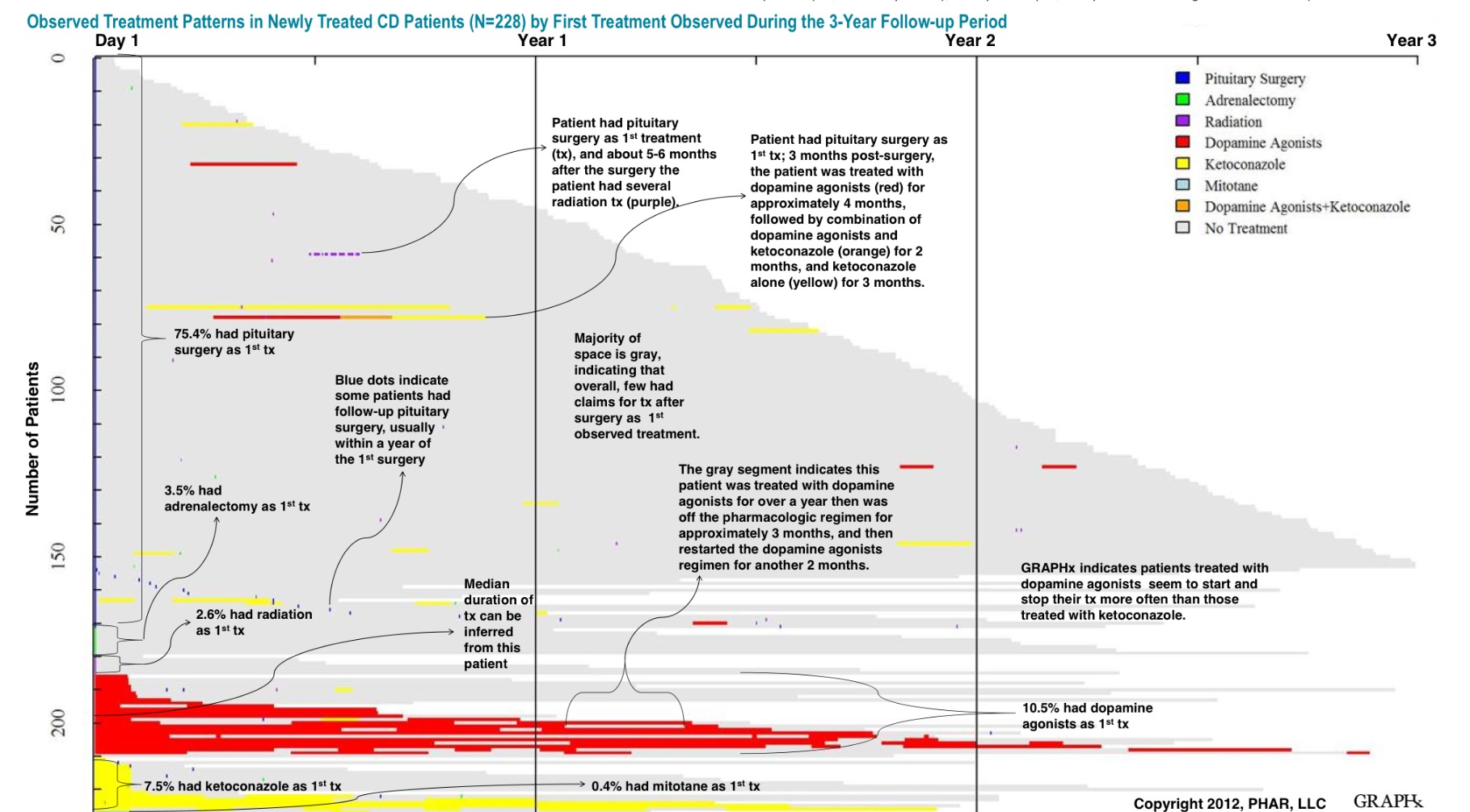
Researchers at PHAR, in conjunction with experts from Novartis Pharmaceuticals Corporation, presented the results of several studies on Cushing’s disease at the Endocrine Society’s 95th Annual Meeting on June 19th, 2013.

Cushing’s disease, a pituitary disorder, is poorly studied because of its rarity. The PHAR research team reported on the incidence, treatment patterns, and annual economic burden associated with the disease–topics on which very little was previously known.

The three posters presented at ENDO can be viewed by clicking the links below:

Incidence of Cushing’s Disease in the United States

Real-World Treatment Patterns in Cushing’s Disease Patients in Two Large US Nationwide Databases: Application of a Novel, Graphical Methodology

Annual Economic Burden Associated with Cushing’s Disease in the United States