Synergistic Cortisol Suppression by Ketoconazole–Osilodrostat Combination Therapy

Abstract

Summary

Here, we describe a case of a patient presenting with adrenocorticotrophic hormone-independent Cushing’s syndrome in a context of primary bilateral macronodular adrenocortical hyperplasia. While initial levels of cortisol were not very high, we could not manage to control hypercortisolism with ketoconazole monotherapy, and could not increase the dose due to side effects. The same result was observed with another steroidogenesis inhibitor, osilodrostat. The patient was finally successfully treated with a well-tolerated synergitic combination of ketoconazole and osilodrostat. We believe this case provides timely and original insights to physicians, who should be aware that this strategy could be considered for any patients with uncontrolled hypercortisolism and delayed or unsuccessful surgery, especially in the context of the COVID-19 pandemic.

Learning points

  • Ketoconazole–osilodrostat combination therapy appears to be a safe, efficient and well-tolerated strategy to supress cortisol levels in Cushing syndrome.
  • Ketoconazole and osilodrostat appear to act in a synergistic manner.
  • This strategy could be considered for any patient with uncontrolled hypercortisolism and delayed or unsuccessful surgery, especially in the context of the COVID-19 pandemic.
  • Considering the current cost of newly-released drugs, such a strategy could lower the financial costs for patients and/or society.

Background

Untreated or inadequately treated Cushing’s syndrome (CS) is a morbid condition leading to numerous complications. The latter ultimately results in an increased mortality that is mainly due to cardiovascular events and infections. The goal of the treatment with steroidogenesis inhibitors is normalization of cortisol production allowing the improvement of comorbidities (1). Most studies dealing with currently available steroidogenesis inhibitors used as monotherapy reported an overall antisecretory efficacy of roughly 50% in CS. Steroidogenesis inhibitors can be combined to better control hypercortisolism. To the best of our knowledge, we report here for the first time a patient treated with a ketoconazole–osilodrostat combination therapy.

Case presentation

Here, we report the case of Mr D.M., 53-years old, diagnosed with adrenocorticotrophic hormone (ACTH)-independent CS 6 months earlier. At diagnosis, he presented with resistant hypertension, hypokalemia, diabetes mellitus, easy bruising, purple abdominal striae and major oedema of the lower limbs.

Investigations

A biological assessment was performed, and the serum cortisol levels are depicted in Table 1. ACTH levels were suppressed (mean levels 1 pg/mL). Mean late-night salivary cortisol showed a four-fold increase (Table 2), and mean 24 h-urinary cortisol showed a two-fold increase. Serum cortisol was 1000 nmol/L at 08:00 h after 1 mg dexamethasone dose at 23:00 h. The rest of the adrenal hormonal workup was within normal ranges (aldosterone: 275 pmol/L and renin: 15 mIU/L). An adrenal CT was performed (Fig. 1) and exhibited a 70-mm left adrenal mass (spontaneous density: 5 HU and relative washout: 65%) and a 45-mm right adrenal mass (spontaneous density: −2 HU and relative washout: 75%). The case was discussed in a multidisciplinary team meeting, which advised to perform 18F-FDG PET-CT and 123I-Iodocholesterol scintigraphy before considering surgery. A genetic screening was performed, testing for ARMC5 and PRKAR1A pathogenic variants.

Figure 1View Full Size
Figure 1
Adrenal CT depicting the bilateral macronodular adrenocortical hyperplasia.

Citation: Endocrinology, Diabetes & Metabolism Case Reports 2021, 1; 10.1530/EDM-21-0071

Table 1Serum cortisol levels at diagnosis (A), using ketoconazole monotherapy (B), using osilodrostat monotherapy (C) and using osilodrostat–ketoconazole combination therapy (D).

Serum cortisol (nmol/L) 08:00 h 24:00 h 16:00 h 20:00 h 12:00 h 16:00 h
A. At diagnosis 660 615 716 566 541 561
B. Ketoconazole monotherapy 741 545 502 224 242 508
C. Osilodrostat monotherapy 658 637 588 672 486 692
D. Osilodrostat–ketoconazole combination 436 172 154 103 135 274
Table 2Salivary cortisol levels at diagnosis (A), using ketoconazole monotherapy (B), using osilodrostat monotherapy (C) and using osilodrostat-ketoconazole combination therapy (D).

Salivary cortisol (nmol/L) 23:00 h 12:00 h 13:00 h Mean
A. At diagnosis 47 62 38 49
B. Ketoconazole monotherapy 20 15 21 18
C. Osilodrostat monotherapy 85 90 56 77
D. Osilodrostat–ketoconazole combination 10 14 9 11

Treatment

As this condition occurred during the COVID-19 pandemic, it was decided to first initiate steroidogenesis inhibitors to lower the patient’s cortisol levels. Initially, ketoconazole was initiated and uptitrated up to 1000 mg per day based on close serum cortisol monitoring, with a three-fold increase of liver enzymes and poor control of cortisol levels (Table 1). In the absence of biological efficacy, ketoconazole was replaced by osilodrostat, which was gradually increased up to 30 mg per day (10 mg at 08:00 h and 20 mg at 20:00 h) without reaching normal cortisol levels (Table 1) and with slightly increased blood pressure levels. Considering the lack of efficacy of anticortisolic drugs used as monotherapy, we combined osilodrostat (30 mg per day) to ketoconazole (600 mg per day), that is, at the last maximal tolerated dose as monotherapy of each drug.

Outcome

This combination of steroidogenesis inhibitors achieved a good control in cortisol levels, mimicking a physiological circadian rhythm (Table 1D). The patient did not exhibit any side effect and the control of cortisol levels resulted in a rapid improvement of hypertension, kalemia, diabetes control and disappearance of lower limbs oedema. The patient underwent a 18F-FDG PET-CT that did not exhibit any increased uptake in both adrenal masses and a 123I-Iodocholesterol scintigraphy exhibiting a highly increased uptake in both adrenal masses, predominating in the left adrenal mass (70 mm). Unilateral adrenalectomy of the larger mass was then performed, and as the immediate post-operative serum cortisol level was 50 nmol/L, hydrocortisone was administered at a dose of 30 mg per day, with a stepwise decrease to 10 mg per day over 3 months. Pathological examination exhibited macronodular adrenal hyperplasia with a 70-mm adreno cortical adenoma (WEISS score: 1 and Ki67: 1%). The genetic screening exhibited a c.1908del p.(Phe637Leufs*6) variant of ARMC5 (pathogenic), located in exon 5. The patient has no offspring and is no longer in contact with the rest of his family.

Discussion

The goal of the treatment with steroidogenesis inhibitors is normalization of cortisol production allowing the improvement of comorbidities (1). Most studies dealing with currently available steroidogenesis inhibitors used as monotherapy reported an overall antisecretory efficacy of roughly 50% in CS. This rate of efficacy was probably underestimated in retrospective studies due to the lack of adequate uptitration of the dose; For example, the median dose reported in the French retrospective study on ketoconazole was only 800 mg/day, while 50% of the patients were uncontrolled at the last follow-up (2).

Steroidogenesis inhibitors can be combined to better control hypercortisolism. Up to now, such combinations, mainly ketoconazole and metyrapone, were mainly reported in patients with severe CS (median urinary-free Cortisol (UFC) 30- to 40-fold upper-limit norm (ULN)) and life-threatening comorbidities (34). Normal UFC was reported in up to 86% of these patients treated with high doses of ketoconazole and metyrapone. Expected side effects (such as increased liver enzymes for ketoconazole or worsened hypertension and hypokalemia for metyrapone) were reported in the majority of the patients. The fear of these side effects probably explains the lack of uptitration in previous reports. Combination of steroidogenesis inhibitors has previously been described by Daniel et al. in the largest study reported on the use of metyrapone in CS; 29 patients were treated with metyrapone and ketoconazole or mitotane, including 22 in whom the second drug was added to metyrapone monotherapy because of partial efficacy or adverse effects. The final median metyrapone dose in patients controlled with combination therapy was 1500 mg per day (5).

Combination of adrenal steroidogenesis inhibitors should not be reserved to patients with severe hypercortisolism. In the case shown here, the association was highly effective in terms of secretion, using lower doses than those applied as a single treatment, but without the side effects previously observed with higher doses of each treatment used as a monotherapy. To our knowledge, the association of ketoconazole and osilodrostat had never been reported. Ketoconazole blocks several enzymes of the adrenal steroidogenesis such as CYP11A1, CYP17, CYP11B2 (aldosterone synthase) and CYP11B1 (11-hydroxylase), leading to decreased cortisol and occasionally testosterone concentrations. Though liver enzymes increase is not dose-dependent, it usually happens at doses exceeding 400–600 mg per day (2). Osilodrostat blocks CYP11B1 and CYP11B2; a combination should thus allow for a complete blockade of these enzymes that are necessary for cortisol secretion. Short-term side effects such as hypokalemia and hypertension are similar to those observed with metyrapone, due to increased levels of the precursor deoxycorticosterone, correlated with the dose of osilodrostat (6). As for our patient, the occurrence of side effects should not lead to immediately switch to another drug, but rather to decrease the dose and add another cortisol-lowering drug. Moreover, considering the current cost of newly-released drugs such a strategy could lower financial costs for patients and/or society.

Another point to take into account is the current COVID-19 pandemic, for which, as recently detailed in experts’ opinion (7), the main aim is to reach eucortisolism, whatever the way. Indeed patients presenting with CS usually also present with comorbidities such as obesity, hypertension, diabetes mellitus and immunodeficiency (8). Surgery, which represents the gold standard strategy in the management of CS (19), might be delayed to reduce the hospital-associated risk of COVID-19, with post-surgical immunodepression and thromboembolic risks (7). Because immunosuppression and thromboembolic diathesis are common CS features (910), during the COVID-19 pandemic, the use of steroidogenesis inhibitors appears of great interest. In these patients, combing steroidogenesis inhibitors at intermediate doses might allow for a rapid control of hypercortisolism without risks of major side effects if a single uptitrated treatment is not sufficient. Obviously, the management of associated comorbidities would also be crucial in this situation (11).

To conclude, we report for the first time a case of CS, in the context of primary bilateral macronodular adrenocortical hyperplasia successfully treated with a well-tolerated combination of ketoconazole and osilodrostat. While initial levels of cortisol were not very high, we could not manage to control hypercortisolism with ketoconazole monotherapy, and could not increase the dose due to side effects. The same result was observed with another steroidogenesis inhibitor, osilodrostat. This strategy could be considered for any patient with uncontrolled hypercortisolism and delayed or unsuccessful surgery, especially in the context of the COVID-19 pandemic.

Declaration of interest

F C and T B received research grants from Recordati Rare Disease and HRA Pharma Rare Diseases. Frederic Castinetti is on the editorial board of Endocrinology, Diabetes and Metabolism case reports. Frederic Castinetti was not involved in the review or editorial process for this paper, on which he is listed as an author.

Funding

This work did not receive any specific grant from any funding agency in the public, commercial or not-for-profit sector.

Patient consent

Informed written consent has been obtained from the patient for publication of the case report.

Author contribution statement

V A was the patient’s physician involved in the clinical care and collected the data. T B and F C supervised the management of the patient. F C proposed the original idea of this case report. V A drafted the manuscript. F C critically reviewed the manuscript. T B revised the manuscript into its final version.

References

More Gradual Dose Titration Could Reduce Hypocortisolism Risk with Osilodrostat in Cushing’s Disease

Data from LINC3 and LINC4 provide insight into the impact of dosing titration schedules on risk of hypocortisolism-related adverse events associated with osilodrostat use in patients with Cushing’s disease.

Data from a pair of phase 3 studies presented at the American Academy of Clinical Endocrinology’s 30th Annual Meeting (AACE 2021) is providing insight into the effect of dose titration schedules with use of osilodrostat (Isturisa) in patients with Cushing’s disease.

Presented by Maria Fleseriu, MD, of Oregon Health and Science University, the analysis of the LINC3 and LINC4 demonstrated the more gradual titration occurring in LINC4 resulted in a lower proportion of hypocortisolism-related adverse events, suggesting up-titration every 3 weeks rather than every 2 weeks could help lower event risk without compromising mean urinary free cortisol (mUFC) control.

“For patients with Cushing’s disease, osilodrostat should be initiated at the recommended starting dose with incremental dose increases, based on individual response/tolerability aimed at normalizing cortisol levels,” concluded investigators.

With approval from the US Food and Drug Administration in March 2020 for patients not eligible for pituitary surgery or have undergone the surgery but still have the disease, osilodrostat became the first FDA-approved therapy address cortisol overproduction by blocking 11β-hydroxylase. Based on results of LINC3, data from the trial, and the subsequent LINC4 trial, provide the greatest available insight into use of the agent in this patient population.

The study presented at AACE 2021 sought to assess whether slow dose up titration might affect rates of hypocortisolism-related adverse events by comparing titration schedules from both phase 3 trials. Median osilodrostat exposure was 75 (IQR, 48-117) weeks and 70 (IQR, 49-87) weeks in LINC3 and LINC4, respectively. The median time to first mUFC equal to or less than ULN was 41 (IQR, 30-42) days in LINC3 and 35 (IQR, 34-52) days in LINC4.

Adverse events potentially related to hypocortisolism were more common among patients in LINC3 (51%, n=70) than LINC4 (27%, n=20). Upon analysis of adverse events, investigators found the most commonly reported type of adverse event was adrenal insufficiency, which included events of glucocorticoid deficiency, adrenocortical insufficiency, steroid withdrawal syndrome, and decreased urinary free cortisol.

Results incited the majority of hypocortisolism-related adverse events occurred during the dos titration periods of each trial. In LINC3, 54 of the 70 (77%) hypocortisolism-related adverse events occurred by week 26. In comparison, 58% of hypocortisolism-related adverse events occurring in LINC4 occurred prior to week 12. Investigators noted most of events that occurred were mild or moderate and managed with dose interruption or reduction of osilodrostat or concomitant medications.

This study, “Effect of Dosing and Titration of Osilodrostat on Efficacy and Safety in Patients with Cushing’s Disease (CD): Results from Two Phase III Trials (LINC3 and LINC4),” was presented at AACE 2021.

From https://www.endocrinologynetwork.com/view/fda-panels-votes-to-support-teplizumab-potential-for-delaying-type-1-diabetes

Slow and Steady With Osilodrostat Best in Cushing’s Disease

Gradual dose escalation had fewer adverse events, same therapeutic benefit, as quicker increases

by Kristen Monaco, Staff Writer, MedPage Today May 27, 2021 A more gradual increase in oral osilodrostat (Isturisa) dosing was better tolerated among patients with Cushing’s disease, compared with those who had more accelerated increases, a researcher reported.

Looking at outcomes from two phase III trials assessing osilodrostat, only 27% of patients had hypocortisolism-related adverse events if dosing was gradually increased every 3 weeks, said Maria Fleseriu, MD, of Oregon Health & Science University in Portland, in a presentation at the virtual meeting of the American Association of Clinical Endocrinology (AACE).

On the other hand, 51% of patients experienced a hypocortisolism-related adverse event if osilodrostat dose was increased to once every 2 weeks.

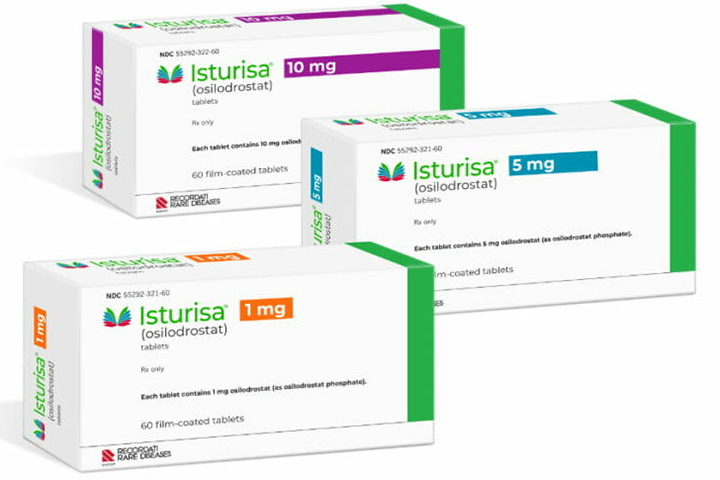
Acting as a potent oral 11-beta-hydroxylase inhibitor, osilodrostat was first approved by the FDA in March 2020 for adults with Cushing’s disease who either cannot undergo pituitary gland surgery or have undergone the surgery but still have the disease. The drug is currently available in 1 mg, 5 mg, and 10 mg film-coated tablets.

The approval came based off of the positive findings from the complementary LINC3 and LINC4 trials.

The LINC3 trial included 137 adults with Cushing’s disease with a mean 24-hour urinary free cortisol concentration (mUFC) over 1.5 times the upper limit of normal (50 μg/24 hours), along with morning plasma adrenocorticotropic hormone above the lower limit of normal (9 pg/mL).

During the open-label, dose-escalation period, all the participants were given 2 mg of osilodrostat twice per day, 12 hours apart. Over this 12-week titration phase, dose escalations were allowed once every 2 weeks if there were no tolerability issues to achieve a maximum dose of 30 mg twice a day.

After this 12-week dose-escalation schedule, additional bumps up in dose were permitted every 4 weeks. The median daily osilodrostat dose was 7.1 mg.

The LINC4 trial included 73 patients with Cushing’s disease with an mUFC over 1.3 times the upper limit of normal. The 48 patients randomized to receive treatment were likewise started on 2 mg bid of osilodrostat. However, this trial had a more gradual dose-escalation schedule, as doses were increased only every 3 weeks to achieve a 20 mg bid dose.

After the 12-week dose-escalation phase, patients on a dose over 2 mg bid were restarted on 2 mg bid at week 12, where dose escalations were permitted once every 3 weeks thereafter to achieve a maximum 30 mg bid dose during this additional 36-week extension phase.

Patients in this trial achieved a median daily osilodrostat dose of 5.0 mg.

In both studies, patients’ median age was about 40 years, the majority of patients were female, and about 88% had undergone a previous pituitary surgery.

When comparing the adverse event profiles of both trials, Fleseriu and colleagues found that more than half of patients on the 2-week dose-escalation schedule experienced any grade of hypercortisolism-related adverse events. About 10.2% of these events were considered grade 3.

About 28% of these patients had adrenal insufficiency — the most common hypercortisolism-related adverse event reported. This was a catch-all term that include events like glucocorticoid deficiency, adrenocortical insufficiency, steroid withdrawal syndrome, and decreased cortisol, Fleseriu explained.

Conversely, only 27.4% of patients on a 3-week dose escalation schedule experienced a hypercortisolism-related adverse event, and only 2.7% of these were grade 3.

No grade 4 events occurred in either trial, and most events were considered mild or moderate in severity.

“These adverse events were not associated with any specific osilodrostat dose of mean UFC level,” Fleseriu said, adding that most of these events occurred during the initial dose-escalation periods.

About 60% and 58% of all hypocortisolism-related adverse events occurred during the dose titration period in the 2-week and 3-week dose-escalation schedules, respectively. These events were managed via dose reduction, a temporary interruption in medication, and/or a concomitant medication.

Very few patients in either trial permanently discontinued treatment due to these adverse events, Fleseriu noted.

“Despite differences in the frequency of dose escalation, the time to first mUFC normalization was similar in the LINC3 and LINC4 studies,” she said, adding that “gradual increases in osilodrostat dose from a starting dose of 2 mg bid can mitigate hypocortisolism-related adverse events without affecting mUFC control.”

“For patients with Cushing’s disease, osilodrostat should be initiated at the recommended starting dose with incremental dose increases, based on individual response and tolerability aimed at normalizing cortisol levels,” Fleseriu concluded.

  • Kristen Monaco is a staff writer, focusing on endocrinology, psychiatry, and dermatology news. Based out of the New York City office, she’s worked at the company for nearly five years.

Disclosures

The LINC3 and LINC4 trials were funded by Novartis.

Fleseriu reported relationships with Novartis, Recordati, and Strongbridge Biopharma.

Primary Source

American Association of Clinical Endocrinology

Source Reference: Fleseriu M, et al “Effect of dosing and titration of osilodrostat on efficacy and safety in patients with Cushing’s disease (CD): Results from two phase III trials (LINC3 and LINC4)” AACE 2021.

From https://www.medpagetoday.com/meetingcoverage/aace/92824?xid=nl_mpt_DHE_2021-05-28&eun=g1406328d0r&utm_source=Sailthru&utm_medium=email&utm_campaign=Daily Headlines Top Cat HeC 2021-05-28&utm_term=NL_Daily_DHE_dual-gmail-definition

Treatment improved multiple cardiovascular risk and other factors in Cushing’s disease patients


Hypercortisolism Quickly Reversed With Oral Tx

Oral osilodrostat (Isturisa) normalized cortisol levels in Cushing’s disease patients who were ineligible for or not cured with pituitary surgery, according to the phase III LINC 3 trial.

After 24 weeks of open-label treatment with twice-daily osilodrostat, 53% of patients (72 of 137; 95% CI 43.9-61.1) were able to maintain a complete response — marked by mean 24-hour urinary free cortisol concentration of the upper limit of normal or below — without any uptitration in dosage after the initial 12-week buildup phase, reported Rosario Pivonello, MD, of the Università Federico II di Napoli in Italy, and colleagues.

As they explained in their study online in The Lancet Diabetes & Endocrinology, following the 24-week open-label period these complete responders to treatment were then randomized 1:1 to either remain on osilodrostat or be switched to placebo.

During this 10-week randomization phase, 86% of patients maintained their complete cortisol response if they remained on osilodrostat versus only 29% of those who were switched to placebo (odds ratio 13.7, 95% CI 3.7-53.4, P<0.0001) — meeting the trial’s primary endpoint.

As for adverse events, more than half of patients experienced hypocortisolism, and the most common adverse events included nausea (42%), headache (34%), fatigue (28%), and adrenal insufficiency (28%).

“Alongside careful dose adjustments and monitoring of known risks associated with osilodrostat, our findings indicate a positive benefit-risk consideration of treatment for most patients with Cushing’s disease,” the researchers concluded.

This oral inhibitor of 11β-­hydroxylase — the enzyme involved in the last step of cortisol synthesis — was FDA approved in March 2020 based on these findings, and is currently available in 1 mg, 5 mg, and 10 mg film-coated tablets.

The prospective trial, consisting of four periods, included individuals between the ages of 18 and 75 with confirmed persistent or recurrent Cushing’s disease — marked by a mean 24-h urinary free cortisol concentration over 1.5 times the upper limit of normal (50 μg/24 hours), along with morning plasma adrenocorticotropic hormone above the lower limit of normal (9 pg/mL). All individuals had either undergone prior pituitary surgery or irradiation, were not deemed to be candidates for surgery, or had refused to have surgery.

During the first open-label study period, all participants took 2 mg of oral osilodrostat twice daily, spaced 12 hours apart. This dose was then titrated up if the average of three 24-h urinary free cortisol concentration samples exceeded the upper limit of normal. During the second study period, which spanned weeks 12 through 24, all participants remained on their osilodrostat therapeutic dose. By week 24, about 62% of the participants were taking a therapeutic dose of 5 mg or less twice daily; only about 6% of patients needed a dose higher than 10 mg twice daily.

In the third study period, which spanned weeks 26 through 34, “complete responders” who achieved normal cortisol levels were then randomized to continue treatment or be switched to placebo, while those who did not fully respond to treatment continued on osilodrostat. For the fourth study period, from weeks 24 through 48, all participants were switched back to active treatment with osilodrostat.

Overall, 96% of participants were able to achieve a complete response at some point while on osilodrostat treatment, with two-thirds of these responders maintaining this normalized cortisol level for at least 6 months. The median time to first complete response was 41 days.

Metabolic profiles also improved along with this reduction in cortisol levels. These included improvements in body weight, body mass index, fasting plasma glucose, both systolic and diastolic blood pressures, and total cholesterol levels.

“Given the known clinical burden of cardiovascular risk associated with Cushing’s disease, the improvement in clinical features shown here indicates important benefits of osilodrostat,” the researchers said. “By improving multiple cardiovascular risk factors, our findings are likely to be clinically relevant.”

Along with metabolic improvements, patients also had “clinically meaningful improvements” in quality of life, as well as reductions in depressive symptoms measured by the Beck Depression Inventory score, the investigators reported.

One limitation to the trial, they noted, was an inability to control for concomitant medications, since nearly all participants were taking other medications, particularly antihypertensive and antidiabetic therapies.

“Further examination of the effects of osilodrostat on the clinical signs of Cushing’s disease, and the reasons for changes in concomitant medications and the association between such medications and clinical outcomes would be valuable,” Pivonello’s group said.


RECORDATI: ISTURISA® (Osilodrostat) Phase III LINC-4 Trial Meets Its Primary Endpoint In Cushing’s Disease

Source: RECORDATI

multilang-release

RECORDATI: ISTURISA® (OSILODROSTAT) PHASE III LINC-4 TRIAL MEETS ITS PRIMARY ENDPOINT IN CUSHING’S DISEASE

Isturisa® (osilodrostat) demonstrates significant and sustained benefit over placebo at normalizing mean urinary free cortisol (mUFC) levels in patients with Cushing’s disease

Milan, 17 June 2020 – Recordati today announces positive results from the large Phase III LINC-4 study of Isturisa® (osilodrostat) for the treatment of patients with Cushing’s disease for whom pituitary surgery is not an option or has not been curative. Data from the LINC-4 study demonstrate that a significantly higher proportion of patients receiving Isturisa® achieve normal mUFC, the primary treatment goal for Cushing’s disease, after 12 weeks of treatment versus placebo (77% vs 8%; P<0.0001). Improvements in mUFC levels are sustained over 36 weeks of treatment (81% of patients). Isturisa® is well tolerated and has a manageable safety profile, with the most common adverse events in LINC-4 being arthralgia, decreased appetite, fatigue, and nausea. The findings from LINC-4, the first Phase III study of a medical therapy in Cushing’s disease to contain an upfront placebo-controlled phase, builds on existing clinical evidence and affirms the effectiveness of Isturisa® in this hard-to-treat patient population.1-3

“Cushing’s disease is a chronic and debilitating condition that can be extremely challenging to manage and, if left inadequately treated, can have a significant impact on patients’ quality of life and increase the risk of mortality”, said Richard Feelders, MD, Professor of Endocrinology at the Erasmus University Medical Centre, Rotterdam. “Data from this important Phase III study show that Isturisa® (osilodrostat) is an effective and well-tolerated therapy for Cushing’s disease, which significantly reduces and normalizes mUFC levels in most patients. These data are encouraging given the high unmet medical need for patients with this rare disorder”.

“The compelling topline LINC-4 data confirm the effectiveness of Isturisa® for the treatment of this rare, potentially life-threatening disease”, stated Andrea Recordati, CEO. “We are deeply grateful to the patients, investigators, clinicians and study staff whose ongoing participation in the clinical development of Isturisa® has helped bring this therapy to patients in need.”

Data from the LINC 4 study reinforce the clinical benefits of Isturisa® as an effective and generally well‑tolerated oral treatment option for patients with Cushing’s disease. Isturisa® has recently received marketing authorization in the European Union (January 2020) and United States (March 2020) for the treatment of Cushing’s syndrome and Cushing’s disease, respectively.

About Cushing’s syndrome

Cushing’s syndrome is caused by an inappropriate and chronic exposure to excessive levels of cortisol. The source of this excess of cortisol can be endogenous or exogenous (ie medication). When the excess cortisol production is triggered by a pituitary adenoma (ie a tumor of the pituitary gland located in the brain) secreting excess adrenocorticotropic hormone (ACTH), the condition of the patient is defined as Cushing’s disease and comprises about 70% of Cushing’s syndrome cases.4 It is a rare, serious and difficult-to-treat disease that affects approximately one to two patients per million per year.5 Prolonged exposure to elevated cortisol levels is associated with considerable morbidity, mortality and impaired quality of life as a result of complications and comorbidities.6 Normalization of cortisol levels is therefore a primary objective in the treatment of Cushing’s syndrome.7

About LINC-4

LINC-4 is a large randomized, double-blinded, multicentre, 48-week trial with an initial 12-week placebo-controlled period to evaluate the safety and efficacy of osilodrostat in patients with Cushing’s disease. The primary endpoint in the LINC-4 trial is the proportion of patients randomized to Isturisa® and placebo, separately, with a mUFC ≤ULN at the end of the 12-week placebo-controlled period. The key secondary endpoint is the proportion of patients in both arms combined with a mUFC ≤ULN after 36 weeks. LINC-4 involved 73 patients with persistent or recurrent Cushing’s disease or those with de novo disease who were not candidates for surgery.

About Isturisa®

Isturisa® is a potent oral, reversible inhibitor of 11β-hydroxylase (CYP11B1), the enzyme that catalyses the final step of cortisol biosynthesis in the adrenal gland and is authorized in the EU and US for the treatment of adult patients with Cushing’s syndrome and Cushing’s disease, respectively.8,9 Isturisa® will be available as 1 mg, 5 mg and 10 mg film‐coated tablets. Please see prescribing information for detailed recommendations for the use of this product.8,9

  1. Bertagna X et al. J Clin Endocrinol Metab 2014;99:1375–83
  2. Fleseriu M et al. Pituitary 2016;19:138–48
  3. Biller BMK et al. Abstract OR16-2. Oral presentation at the Endocrine Society Annual Congress 2019
  4. Nieman LK et al. Am J Med 2005;118:1340–6
  5. Signifor® and Signifor® LAR Summary of Product Characteristics, June 2018
  6. Pivonello R et al. Lancet Diabetes Endocrinol 2016;4:611–29
  7. Nieman LK et al. J Clin Endocrinol Metab 2015;100:2807–31
  8. Isturisa® Summary of Product Characteristics. May 2020
  9. Isturisa® Prescribing Information. March 2020

About the Recordati group

Recordati, established in 1926, is an international pharmaceutical group, listed on the Italian Stock Exchange (Reuters RECI.MI, Bloomberg REC IM, ISIN IT 0003828271), with a total staff of more than 4,300, dedicated to the research, development, manufacturing and marketing of pharmaceuticals. Headquartered in Milan, Italy, Recordati has operations throughout the whole of Europe, including Russia, Turkey, North Africa, the United States of America, Canada, Mexico, some South American countries, Japan and Australia. An efficient field force of medical representatives promotes a wide range of innovative pharmaceuticals, both proprietary and under license, in a number of therapeutic areas including a specialized business dedicated to treatments for rare diseases. Recordati is a partner of choice for new product licenses for its territories. Recordati is committed to the research and development of new specialties with a focus on treatments for rare diseases. Consolidated revenue for 2019 was € 1,481.8 million, operating income was € 465.3 million and net income was € 368.9 million.

For further information:

Recordati website:  http://www.recordati.com

Investor Relations                                                                 Media Relations
Marianne Tatschke                                                                Studio Noris Morano
(39)0248787393                                                                    (39)0276004736, (39)0276004745
e-mail: investorelations@recordati.it                                  e-mail: norismorano@studionorismorano.com

Statements contained in this release, other than historical facts, are “forward-looking statements” (as such term is defined in the Private Securities Litigation Reform Act of 1995). These statements are based on currently available information, on current best estimates, and on assumptions believed to be reasonable. This information, these estimates and assumptions may prove to be incomplete or erroneous, and involve numerous risks and uncertainties, beyond the Company’s control. Hence, actual results may differ materially from those expressed or implied by such forward-looking statements. All mentions and descriptions of Recordati products are intended solely as information on the general nature of the company’s activities and are not intended to indicate the advisability of administering any product in any particular instance.

Attachment

From https://www.globenewswire.com/news-release/2020/06/17/2049265/0/en/RECORDATI-ISTURISA-OSILODROSTAT-PHASE-III-LINC-4-TRIAL-MEETS-ITS-PRIMARY-ENDPOINT-IN-CUSHING-S-DISEASE.html