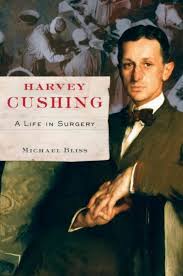
What would Harvey Cushing say about Cushing’s disease today?

harvey-book

(BPT) – More than 80 years ago renowned neurosurgeon, Dr. Harvey Cushing, discovered a tumor on the pituitary gland as the cause of a serious, hormone disorder that leads to dramatic physical changes in the body in addition to life-threatening health concerns. The discovery was so profound it came to be known as Cushing’s disease. While much has been learned about Cushing’s disease since the 1930s, awareness of this rare pituitary condition is still low and people often struggle for years before finding the right diagnosis.

Read on to meet the man behind the discovery and get his perspective on the present state of Cushing’s disease.

* What would Harvey Cushing say about the time it takes for people with Cushing’s disease to receive an accurate diagnosis?

Cushing’s disease still takes too long to diagnose!

Despite advances in modern technology, the time to diagnosis for a person with Cushing’s disease is on average six years. This is partly due to the fact that symptoms, which may include facial rounding, thin skin and easy bruising, excess body and facial hair and central obesity, can be easily mistaken for other conditions. Further awareness of the disease is needed as early diagnosis has the potential to lead to a more favorable outcome for people with the condition.

* What would Harvey Cushing say about the advances made in how the disease is diagnosed?

Significant progress has been made as several options are now available for physicians to use in diagnosing Cushing’s disease.

In addition to routine blood work and urine testing, health care professionals are now also able to test for biochemical markers – molecules that are found in certain parts of the body including blood and urine and can help to identify the presence of a disease or condition.

* What would Harvey Cushing say about disease management for those with Cushing’s disease today?

Patients now have choices but more research is still needed.

There are a variety of disease management options for those living with Cushing’s disease today. The first line and most common management approach for Cushing’s disease is the surgical removal of the tumor. However, there are other management options, such as medication and radiation that may be considered for patients when surgery is not appropriate or effective.

* What would Harvey Cushing say about the importance of ongoing monitoring in patients with Cushing’s disease?

Routine check-ups and ongoing monitoring are key to successfully managing Cushing’s disease.

The same tests used in diagnosing Cushing’s disease, along with imaging tests and clinical suspicion, are used to assess patients’ hormone levels and monitor for signs and symptoms of a relapse. Unfortunately, more than a third of patients experience a relapse in the condition so even patients who have been surgically treated require careful long-term follow up.

* What would Harvey Cushing say about Cushing’s disease patient care?

Cushing’s disease is complex and the best approach for patients is a multidisciplinary team of health care professionals working together guiding patient care.

Whereas years ago patients may have only worked with a neurosurgeon, today patients are typically treated by a variety of health care professionals including endocrinologists, neurologists, radiologists, mental health professionals and nurses. We are much more aware of the psychosocial impact of Cushing’s disease and patients now have access to mental health professionals, literature, patient advocacy groups and support groups to help them manage the emotional aspects of the disease.

Learn More

Novartis is committed to helping transform the care of rare pituitary conditions and bringing meaningful solutions to people living with Cushing’s disease. Recognizing the need for increased awareness, Novartis developed the “What Would Harvey Cushing Say?” educational initiative that provides hypothetical responses from Dr. Cushing about various aspects of Cushing’s disease management based on the Endocrine Society’s Clinical Guidelines.

For more information about Cushing’s disease, visit www.CushingsDisease.com or watch educational Cushing’s disease videos on the Novartis YouTube channel at www.youtube.com/Novartis.


From http://www.jsonline.com/sponsoredarticles/health-wellness/what-would-harvey-cushing-say-about-cushings-disease-today8087390508-253383751.html

Characterization of persistent and recurrent Cushing’s disease

Pituitary, 09/25/2013  Review Article

Sundaram NK et al. – A case of possible recurrent Cushing’s disease (CD) is presented and data on current definitions of CD remission, persistence, and recurrence are reviewed.

The number and degree of abnormal test results needed to define recurrence, and the determination of which biochemical test has more significance when there are discrepancies between markers is inconsistent among studies. Further inquiry is warranted to examine if patients in apparent CD remission who have subtle hypothalamic pituitary adrenal (HPA) axis abnormalities represent distinctive remission subtypes versus mild or early recurrence.

Additional investigation could also explore the degree to which these HPA axis abnormalities, such as alterations in cortisol circadian rhythm or partial resistance to dexamethasone, are associated with persistence of CD morbidities, including neuropsychiatric impairments, alterations in body composition, and cardiovascular risk.

From MDLinx

Cushing’s syndrome – A structured short- and long-term management plan for patients in remission

European Journal of Endocrinology, 08/30/2013  Review Article

harvey-bookRagnarsson O et al. – One–hundred years have passed since Harvey Williams Cushing presented the first patient with the syndrome that bears his name.

The focus of the long–term specialized care should be to identify cognitive impairments and psychiatric disorders, evaluate cardiovascular risk, follow pituitary function and to detect possible recurrence of Cushing’s syndrome.


Source

O Ragnarsson, Department of Endocrinology, Sahlgrenska University Hospital, Gothenburg, Sweden.

Abstract

One-hundred years have passed since Harvey Williams Cushing presented the first patient with the syndrome that bears his name. In patients with Cushing’s syndrome body composition, lipid-, carbohydrate- and protein-metabolism is dramatically affected and psychopathology and cognitive dysfunction is frequently observed.

Untreated patients with Cushing’s syndrome have a grave prognosis with an estimated five-year survival of only 50%. Remission can be achieved by surgery, radiotherapy and sometimes with medical therapy.

Recent data indicate that the adverse metabolic consequences of Cushing’s syndrome are present for years after successful treatment. In addition, recent studies have demonstrated that health related quality of life and cognitive function is impaired in patients with Cushing’s syndrome in long-term remission.

The focus of specialized care should therefore not only be on the diagnostic work-up and the early post-operative management, but also the long-term follow-up.

In this paper we review the long-term consequences in patients with Cushing’s syndrome in remission with focus on the neuropsychological effects and discuss the importance of these findings for long-term management. We also discuss three different phases in the postoperative management of surgically treated patients with Cushing’s syndrome, each phase distinguished by specific challenges; the immediate post-operative phase, the glucocorticoid dose tapering phase and the long-term management. The focus of the long-term specialized care should be to identify cognitive impairments and psychiatric disorders, evaluate cardiovascular risk, follow pituitary function and to detect possible recurrence of Cushing’s syndrome.

PMID:
23985132
[PubMed – as supplied by publisher]

From http://www.ncbi.nlm.nih.gov/pubmed/23985132

Cushing’s on the Dr. Oz Show!

More than 150 staff members will receive the BRAVO! Team Values in Action Award for their collaborative efforts when The Dr. Oz Show came to videotape an inspirational patient story at Ohio State’s Wexner Medical Center.

Lori Burkhoff (Cushings-Help board member cmondwn), a 34-year-old mother from Long Island, NY, who came to Ohio State seeking a cure for Cushing’s disease, will be featured on The Dr. Oz Show along with Neurosurgeon Daniel Prevedello, MD, and Otolaryngology (ENT) Surgeon Ricardo Carrau, MD.

With only four days notice, staff members at Ohio State’s Wexner Medical Center and James Cancer Hospital and Solove Research Institute collaborated to make this visit a success for all — the patient and The Dr. Oz Show video crew.

Along with Collaboration, the Ohio State team also demonstrated the values of Leadership and of Acting with Integrity and Personal Accountability, as they worked to ensure the patient’s safety while accommodating the video crew.

Staff directly involved with this project spanned a broad spectrum of departments, including Admissions, Ambulatory Surgical Unit, Anesthesiology, Housekeeping, Pre-Op, Operating  Room, PACU/Post-Op/ Recovery, In-patient recovery on 7 East James, Marketing and Strategic Communications, Nutrition Services, Patient Experience, Security, and Media Relations.

Each year, our Media Relations team routinely handles hundreds of media escorts and requests for interviews with our expert staff members. But there was nothing routine about this media request. For starters, TV celebrity Dr. Oz would be on site for the entire shoot, starting at 5:30 a.m. Sept. 17, chronicling Burkhoff’s efforts to be cured of a debilitating disease she has battled since she was a teenager. Media Relations staffers escorted the crew throughout the visit.

Cushing’s disease is caused by the pituitary gland releasing too much adrenocorticotropic hormone (ACTH).  People with Cushing’s disease accumulate an excessive amount of ACTH, and this stimulates the production and release of cortisol, which is a stress hormone. If left untreated, Cushing’s disease can cause severe illness and even death.

In Burkhoff’s case, despite three previous surgeries to remove benign tumors on or near her pituitary gland, the disease had returned with a vengeance, causing her to gain weight and putting her at risk for diabetes, stroke, high blood pressure and heart disease, among other complications.

In an effort to raise awareness about the often-misdiagnosed Cushing’s disease, Burkhoff had contacted The Dr. Oz Show.

In the meantime, she learned about the innovative surgical procedure performed at Ohio State. Burkhoff met with Prevedello, the Ohio State neurosurgeon who works in tandem with ENT surgeon Ricardo Carrau, to perform endoscopic endonasal surgery. This is a minimally invasive neurosurgical technique that gives surgeons access to the base of the skull, intracranial cavity and top of the spine by operating via the nose and paranasal sinuses.

Prevedello is one of only a few neurosurgeons worldwide trained in this approach that leaves no facial incisions or scarring, causes less trauma to the brain and nerves, has fewer side effects and results in quicker recovery times.

Burkhoff and the surgeons agreed to be videotaped “documentary style” — meaning that Dr. Oz wanted to capture everything that happened to Burkhoff leading up to and including her surgery. Cameras were rolling at 6 a.m. when Dr. Oz warmly greeted Burkhoff as she walked through the main lobby doors of Rhodes Hall.

Dr. Oz and his video crew remained with Burkhoff as she was admitted to the hospital and during a pre-op discussion with her surgeons in the Ambulatory Surgical Unit. They were with her during the 2.5-hour surgery in University Hospital OR 16, and they followed her into the Post Anesthesia Care Unit recovery area after surgery. By noon, Dr. Oz had departed and the video crew had called it a “wrap.”

During the surgery, Prevedello removed two benign tumors near the pituitary gland. However, Burkhoff did not respond as well as doctors had hoped.

Within a few days, Prevedello and Carrau decided to schedule an unprecedented fifth surgery on Sept. 22.

Even though Dr. Oz couldn’t make it back for the fifth and final surgery, his video crew arrived at 6 a.m. on a football home-game Saturday. The crew interviewed Burkhoff and the surgeons before the four-hour surgery, and the surgeons again after the operation. This surgery proved successful, and Burkhoff continues to improve.

Prevedello and Carrau, members of Ohio State’s Cranial Base Center, will join Burkhoff on the set of The Dr. Oz Show in New York City to share her inspirational story with an international audience during an episode slated to air on Thursday, December 20, 2012.


More information at http://oncampus.osu.edu/pdf/Insight10-18-12.pdf

A classification tree approach for pituitary adenomas

Summary

It is difficult to evaluate the recurrence and progression potential of pituitary adenomas at presentation. The World Health Organization classification of endocrine tumors suggests that invasion of the surrounding structures, size at presentation, an elevated mitotic index, a Ki-67 labeling index higher than 3%, and extensive p53 expression are indicators of aggressive behavior.

Nevertheless, Ki-67 and p53 labeling index evaluation is subject to interobserver variability, and their cutoff values are controversial. In the present study, the prognostic value of Ki-67 and p53 protein labeling indices and their correlation with clinical and radiologic parameters were evaluated using digital image analysis in a series of 166 pituitary adenomas in patients having undergone a follow-up of at least 6 years to evaluate the impact on the recurrence and progression potential of pituitary adenomas.

The data were analyzed using the receiver operating characteristic curve and classification and regression tree analysis. The results showed that, in the unstratified data set, the commonly used threshold of the Ki-67 index of 3% has a high specificity (89.5%) but a low sensitivity (53.8%).

Unsatisfactory performance results were obtained by performing receiver operating characteristic curve analysis on the p53 labeling index. On the contrary, the classification and regression tree analysis–derived tree demonstrated that each pituitary adenoma subtype has specific prognostic factors.

Specifically, the Ki-67 labeling index is a useful prognostic factor in nonfunctioning, adrenocorticotropin, and prolactin adenomas, but with different thresholds. In conclusion, our study emphasizes that the term pituitary adenomas includes different types of tumors, each one having specific prognostic factors.

Access the entire article here: http://www.humanpathol.com/article/PIIS0046817711004965/abstract?rss=yes