Cushing’s Syndrome in a Young Woman Due to Prolonged Betamethasone Nasal Drop Use

Abstract

Background

Cushing’s syndrome is an uncommon but serious condition caused by long-term exposure to elevated cortisol levels, which is usually iatrogenic in origin. Although systemic corticosteroids are the most frequent agents, the association of intranasal corticosteroids with this condition is remarkably rare.

Case presentation

This report is about a 21-year-old Iranian woman using betamethasone nasal drops for nasal obstruction. The patient presented with weight gain, Amenorrhea, mood disturbances, red purplish striae, and mild hirsutism. Hormonal assessments revealed suppression of the hypothalamic–pituitary–adrenal axis.

Conclusion

This case demonstrates the underappreciated systemic effects of intranasal betamethasone to induce Cushing’s syndrome. It serves as a pivotal reminder of the need for vigilance in prescribing practices and reinforces the importance of early diagnosis to ensure favorable patient outcomes.

Peer Review reports

Background

Iatrogenic Cushing’s syndrome (CS) is an endocrine disease caused by long-term or high-dose glucocorticoid use [1]. Although iatrogenic cases are commonly associated with oral or injectable glucocorticoids [2], few reports described CS after the use of intranasal steroid sprays (INS) such as betamethasone in adults [3,4,5,6,7]. Currently, INS is widely used for managing conditions such as allergic rhinitis, nasal polyposis, and other upper airway disorders owing to their localized effects and limited systemic absorption [89]. However, prolonged use, high doses, or using potent formulations can lead to significant systemic absorption, resulting in Hypothalamic–pituitary–adrenal (HPA) axis suppression, and frank CS [10]. Betamethasone nasal spray, a cornerstone in the treatment of nasal congestion, has the potential for systemic absorption by the nasal mucosa, particularly with prolonged or excessive use [11].

This report presents the case of a young woman who developed CS following the overuse of betamethasone nasal drops. It also highlights the importance of detailed patient histories when diagnosing CS and highlights the critical need to educate patients on the proper use and potential risks of steroid therapies to prevent complications. This case report adheres to the case report (CARE) guidelines [12].

Case presentation

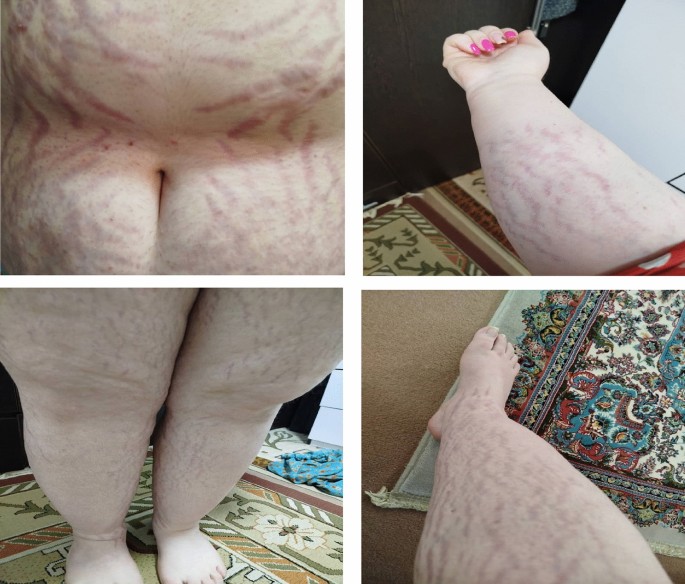
This is the case of a 21-year-old Iranian female who presented with a history of rapid weight gain (30 kg in 8 months), irregular menstrual cycles, and significant mood changes. Her body mass index (BMI) was calculated at 40.07 kg/m2, classifying her as obese, and her blood pressure was recorded at 115/75 mmHg. In addition, she exhibited red–purple striae on her abdomen and limbs and mild hirsutism (modified Ferriman–Gallwey Score (FGS) score = 10), prompting admission for further evaluation after multiple outpatient visits yielded no definitive diagnosis.

Figure 1 is a clinical photograph (with patient consent) or an illustration of the red–purple striae.

Fig. 1

figure 1

Clinical photograph showcasing the red–purplish striae on the patient’s abdomen, arms, and lower limbs

Upon admission, the patient’s history revealed prolonged use of betamethasone 0.1% 1 mg/mL nasal drops, administered at a daily dosage of 5 cc, in combination with oxymetazoline (a sympathomimetic nasal preparation) at a daily dosage of 1 cc, over approximately 12 months, to address nasal obstruction. Her symptoms began 6 months after starting the nasal drops. Further medication history revealed no other corticosteroid use. Notably, the patient had a past diagnosis of polycystic ovary (PCO) syndrome made on the basis of Rotterdam 2003 criteria (oligomenorrhea since menarche and clinically androgen excess) but did not undergo treatment or maintain laboratory records.

A detailed hormonal evaluation was undertaken. Morning plasma cortisol less than 0.05 µg/dL and adrenocorticotropic hormone (ACTH) less than 5 (10–56 pg/mL) measurements were abnormally low. Her 24-hour urine-free cortisol concentrations of 1.04 µg/24 h were significantly reduced, indicating suppression of the HPA axis secondary to prolonged exogenous corticosteroid exposure. All tests were repeated several times by endocrinologists during the time course of disease manifestations.

Table 1 summarizes the hormonal test results to clearly display the abnormalities.

Table 1 Hormonal and biochemical test results with reference values

Imaging studies before admission included a computed tomography (CT) scan of the adrenal glands, which showed that both adrenal glands were of normal size. However, a dynamic pituitary magnetic resonance imaging (MRI) revealed an 11 mm pituitary gland, despite there being no rationale for imaging studies in this scenario.

The patient was counseled extensively about the condition, and betamethasone nasal drops were discontinued immediately. Ear, nose, and throat (ENT) consultation revealed normal findings and the psychiatric team diagnosed her with major depressive disorder (MDD). She was discharged on 15 mg prednisolone with a structured tapering plan to allow for gradual recovery of adrenal function and to prevent acute adrenal insufficiency. Follow-up appointments were scheduled to monitor her clinical progress and re-evaluate her HPA axis recovery.

Discussion

This case highlights the rare but significant occurrence of iatrogenic CS secondary to prolonged use of intranasal betamethasone. Although oral corticosteroids are well-known to cause HPA axis suppression, INS is generally considered safer owing to their localized effects and lowering systemic absorption side effects. However, the associated potential of systemic absorption in INS remains a concern [13]. As demonstrated in this case, prolonged use of potent formulations such as betamethasone can lead to significant systemic effects, particularly when administered inappropriately or at high doses.

Betamethasone nasal drops, although effective for treating nasal congestion and inflammation [1415], carry a potential risk of systemic absorption through the nasal mucosa. Factors, such as prolonged use [61617], and high potency [18], can significantly increase systemic bioavailability. R. J. Perry et al. [19] in study of seven children highlights that even patients receiving doses within conventional safety ranges may exhibit varying sensitivity to glucocorticoids, leading to symptomatic adrenal suppression or glucocorticoid excess. Unlike newer corticosteroid compounds, such as fluticasone or mometasone, which undergo extensive first-pass metabolism in the liver, betamethasone exhibits minimal hepatic metabolism, contributing to its prolonged systemic activity [2021]. This pharmacokinetic profile underscores the need for careful regulation and monitoring of its use, even in ostensibly localized therapies.

The clinical manifestations in this patient, including central obesity, striae, hirsutism, and mood changes, were classic features of CS and guided the diagnostic process [22]. Scutelnicu et al. [23] reported a case of a patient in the second trimester of pregnancy who, owing to chronic sinusitis, underwent intranasal betamethasone spray therapy. The patient manifested extensive striae on the lower limbs, as well as edema in the legs, arms, and face, accompanied by a weight gain of 22 kg over 3 months. After switching the patient’s treatment to an alpha-1 adrenergic agonist spray, the condition was managed uneventfully without any symptoms of adrenal insufficiency.

Requesting imaging assessments, including a CT scan and MRI, as a first step further complicated the diagnostic process. This highlights a common diagnostic pitfall: the use of imaging as an initial approach can lead to the discovery of incidentalomas, which may misdirect clinical attention. Such findings risk overshadowing the primary etiology of the condition, potentially resulting in misdiagnosis or delayed treatment. This emphasizes the importance of prioritizing functional assessments over imaging in the early diagnostic workup to avoid unwarranted diagnostic confusion and ensure accurate identification of the underlying pathology.

Management involved the immediate cessation of betamethasone nasal drops and initiation of a structured tapering regimen with prednisolone to support adrenal recovery. The importance of stress-dose precautions during intercurrent illnesses was emphasized, alongside comprehensive patient education to prevent future misuse of corticosteroids. The gradual improvement in adrenal function during follow-up highlights the reversibility of glucocorticoid-induced adrenal suppression with appropriate intervention.

Conclusion

This case underscores several critical lessons. First, it emphasizes the importance of heightened awareness among healthcare providers regarding the potential systemic effects of topical corticosteroids, particularly potent formulations such as betamethasone. Second, it highlights the need for thorough history-taking and detailed patient education to prevent corticosteroid misuse. This report contributes to the limited body of literature on iatrogenic CS from intranasal corticosteroids, particularly in adults. Documenting the clinical presentation, diagnostic challenges, and successful management of this case, provides valuable insights into preventing, recognizing, and treating similar cases. It serves as a reminder of the delicate balance between therapeutic benefit and potential harm in corticosteroid therapy and advocates for ongoing research to establish safer prescribing practices.

Data availability

The data analyzed and generated in this study can be accessed through the corresponding author upon reasonable request.

Abbreviations

CS:
Cushing’s syndrome
INS:
Intranasal corticosteroids
HPA axis:
Hypothalamic–pituitary–adrenal axis
BMI:
Body mass index
FGS:
Ferriman–Gallwey Score
PCO:
Polycystic ovary
ACTH:
Adrenocorticotropic hormone
CT:
Computed tomography
MRI:
Magnetic resonance imaging
ENT:
Ear, nose, and throat
MDD:
Major depressive disorder

References

  1. Cristante J, Chabre O. Factitious, or iatrogenic but unexpected Cushing’s syndrome. Ann Endocrinol (Paris). 2023;84(3):370–2.

    PubMed Google Scholar

  2. Lacroix A, Feelders RA, Stratakis CA, Nieman LK. Cushing’s syndrome. Lancet. 2015;386(9996):913–27.

    CAS PubMed Google Scholar

  3. Scutelnicu A, Panaitescu AM, Ciobanu AM, Gica N, Botezatu R, Peltecu G, et al. Iatrogenic cushing’s syndrome as a consequence of nasal use of betamethasone spray during pregnancy. Acta Endocrinol. 2020;16(4):511–7.

    CAS Google Scholar

  4. Sakamoto M, Morita K, Okamura E, Uchino T, Okamoto K, Ozawa Y, et al. A case of iatrogenic cushing syndrome due to overuse of nasal steriod and concurrent administration of clarithromycin. Teikyo Med J. 2018;41(4):161–8.

    Google Scholar

  5. Nutting CM, Page SR. Iatrogenic Cushing’s syndrome due to nasal betamethasone: a problem not to be sniffed at! Postgrad Med J. 1995;71(834):231–2.

    CAS PubMed PubMed Central Google Scholar

  6. Stevens DJ. Cushing’s syndrome due to the abuse of betamethasone nasal drops. J Laryngol Otol. 1988;102(3):219–21.

    CAS PubMed Google Scholar

  7. Dow A, Yu R, Carmichael J. Too little or too much corticosteroid? Coexisting adrenal insufficiency and Cushing’s syndrome from chronic, intermittent use of intranasal betamethasone. Endocrinol Diabetes Metab Case Rep. 2013;2013:13–0036.

    Google Scholar

  8. Bachert C, Desrosiers MY, Hellings PW, Laidlaw TM. The role of biologics in chronic rhinosinusitis with nasal polyps. J Allergy Clin Immunol Pract. 2021;9(3):1099–106.

    CAS PubMed Google Scholar

  9. Bachert C, Han JK, Wagenmann M, Hosemann W, Lee SE, Backer V, et al. EUFOREA expert board meeting on uncontrolled severe chronic rhinosinusitis with nasal polyps (CRSwNP) and biologics: definitions and management. J Allergy Clin Immunol. 2021;147(1):29–36.

    CAS PubMed Google Scholar

  10. Quddusi S, Browne P, Toivola B, Hirsch IB. Cushing syndrome due to surreptitious glucocorticoid administration. Arch Intern Med. 1998;158(3):294–6.

    CAS PubMed Google Scholar

  11. Grayson JW, Harvey RJ. Topical corticosteroid irrigations in chronic rhinosinusitis. Int Forum Allergy Rhinol. 2019;9(S1):S9–15.

    PubMed Google Scholar

  12. Gagnier JJ, Kienle G, Altman DG, Moher D, Sox H, Riley D. The CARE guidelines: consensus-based clinical case reporting guideline development. Global Adv Health Med. 2013;2(5):38–43.

    Google Scholar

  13. McDonnell J, Weller K, Pien LC. Safety of intranasal steroids: an updated perspective. Curr Allergy Asthma Rep. 2020;20(11):69.

    PubMed Google Scholar

  14. Scadding GK. Other anti-inflammatory uses of intranasal corticosteroids in upper respiratory inflammatory diseases. Allergy. 2000;55(s62):19–23.

    PubMed Google Scholar

  15. Chong LY, Head K, Hopkins C, Philpott C, Burton MJ, Schilder AG. Different types of intranasal steroids for chronic rhinosinusitis. Cochrane Database Syst Rev. 2016;4(4):Cd011993.

    PubMed Google Scholar

  16. Findlay CA, Macdonald JF, Wallace AM, Geddes N, Donaldson MD. Childhood Cushing’s syndrome induced by betamethasone nose drops, and repeat prescriptions. BMJ. 1998;317(7160):739–40.

    CAS PubMed PubMed Central Google Scholar

  17. Reynolds C, Agrawal P, McCann A, O’Sullivan T, Chroinin MN, O’Riordan SMP. Cushing syndrome and adrenal insufficiency induced by high dose prolonged intranasal betamethasone. Arch Dis Child. 2019;104:A275.

    Google Scholar

  18. Oluwayemi IO, Oduwole AO, Oyenusi E, Onyiriuka AN, Abdullahi M, Fakeye-Udeogu OB, et al. Iatrogenic Cushing’s syndrome in children following nasal steroid. Pan Afr Med J. 2014;17:237.

    PubMed PubMed Central Google Scholar

  19. Perry RJ, Findlay CA, Donaldson MDC. Cushing’s syndrome, growth impairment, and occult adrenal suppression associated with intranasal steroids. Arch Dis Child. 2002;87(1):45–8.

    CAS PubMed PubMed Central Google Scholar

  20. Matera MG, Rinaldi B, Calzetta L, Rogliani P, Cazzola M. Pharmacokinetics and pharmacodynamics of inhaled corticosteroids for asthma treatment. Pulm Pharmacol Ther. 2019;58: 101828.

    CAS PubMed Google Scholar

  21. Krzyzanski W, Milad MA, Jobe AH, Peppard T, Bies RR, Jusko WJ. Population pharmacokinetic modeling of intramuscular and oral dexamethasone and betamethasone in Indian women. J Pharmacokinet Pharmacodyn. 2021;48(2):261–72.

    CAS PubMed PubMed Central Google Scholar

  22. Savas M, Mehta S, Agrawal N, van Rossum EFC, Feelders RA. Approach to the patient: diagnosis of Cushing syndrome. J Clin Endocrinol Metab. 2022;107(11):3162–74.

    PubMed PubMed Central Google Scholar

  23. Scutelnicu A, Panaitescu AM, Ciobanu AM, Gica N, Botezatu R, Peltecu G, et al. Iatrogenic Cushing’s syndrome as a consequence of nasal use of betamethasone spray during pregnancy. Acta Endocrinol (Buchar). 2020;16(4):511–7.

    CAS PubMed Google Scholar

Download references

Acknowledgements

Not applicable.

Funding

Not Applicable.

Author information

Authors and Affiliations

  1. Gastrointestinal and Liver Diseases Research Center, Iran University of Medical Sciences, Tehran, Iran

    Mohammadsadra Shamohammadi

  2. M.D., Endocrinologist Assistant Professor of Internal Medicine Assistant Professor of Internal Medicine, Iran University of Medical Sciences at Rasool Akram General Hospital, Tehran, Iran

    Delaram Eskandari

  3. Professor of Endocrinology Department of Endocrinology, Rasool Akram Medical Complex, School of Medicine, Iran University of Medical Sciences, Tehran, Iran

    Amir Ziaee

  4. Assistant Professor of Endocrinology & Metabolism Department of Internal Medicine, School of Medicine Hazrat-e Rasool General Hospital Iran University of Medical Sciences Medical Doctor at Iran University of Medical Sciences, Tehran, Iran

    Seyed Hossein Samadanifard

  5. Assistant Professor of Endocrinology & Metabolism Department of Internal Medicine, School of Medicine, Iran University of Medical Sciences, Tehran, Iran

    Haleh Chehrehgosha

  6. M.D., Endocrinologist Assistant Professor of Internal Medicine Assistant Professor of Internal Medicine, Iran University of Medical Sciences at Rasool Akram General Hospital, Tehran, Iran

    Amir Hossein Ghanooni

Contributions

MS and DE wrote the original draft; AZ and SHS collected the data. DE and HC were the patient’s doctors; MS and AHG reviewed, edited, and supervised the manuscript. All authors have read and approved the final version of the manuscript.

Corresponding author

Correspondence to Delaram Eskandari.

Ethics declarations

Ethics approval and consent to participate

This study was conducted in accordance with ethical guidelines and was approved by the Research Ethics Committee of Iran University of Medical Sciences under approval number IR.IUMS.REC.1404.208.

Consent for publication

Written informed consent was obtained from the patient for publication of this case report and any accompanying images. A copy of the written consent is available for review by the Editor-in-Chief of this journal.

Competing interests

The authors declare that they have no competing interests.

Additional information

Publisher’s Note

Springer Nature remains neutral with regard to jurisdictional claims in published maps and institutional affiliations.

Insights on Diagnosing and Managing Cushing’s Syndrome

Cushing’s syndrome, or endogenous hypercortisolemia, is a rare condition that both general practice clinicians and endocrinologists should be prepared to diagnose and treat. Including both the pituitary and adrenal forms of the disease, the Endocrine Society estimates that the disorder affects 10 to 15 people per million every year in the United States. It is more common in women and occurs most often in people between the ages of 20 and 50.

Even though Cushing’s remains a rare disease, cortisol recently made waves at the American Diabetes Association 84th Scientific Session. A highlight of the meeting was the initial presentation of data from the CATALYST trial, which assessed the prevalence of hypercortisolism in patients with difficult-to-control type 2 diabetes (A1c 7.5+).

CATALYST is a prospective, Phase 4 study with two parts. In the prevalence phase, 24% of 1,055 enrolled patients had hypercortisolism, defined as an overnight dexamethasone suppression test (ODST) value greater than 1.8 µg/dL and dexamethasone levels greater than 140 µg/dL. Results of CATALYST’s randomized treatment phase are expected in late 2024.

Elena Christofides, MD, FACE, founder of Endocrinology Associates, Inc., in Columbus, OH, believes the CATALYST results will be a wake-up call for both physicians and patients seeking to advocate for their own health. “This means that nearly 1 in 4 patients with type 2 diabetes have some other underlying hormonal/endocrine dysfunction as the reason for their diabetes, or significant contribution to their diabetes, and they should all be screened,” she said. “All providers need to get comfortable with diagnosing and treating hypercortisolemia, and you need to do it quickly because patients are going to pay attention as well.”

In Dr. Christofides’ experience, patients who suspect they have a hormonal issue may start with their primary care provider or they may self-refer to an endocrinologist. “A lot of Cushing’s patients are getting diagnosed and treated in primary care, which is completely appropriate. But I’ve also met endocrinologists who are uncomfortable diagnosing and managing Cushing’s because it is so rare,” she said. “The important thing is that the physician is comfortable with Cushing’s or is willing to put in the work get comfortable with it.”

According to Dr. Christofides, the widespread popular belief that “adrenal fatigue” is causing millions of Americans to feel sick, tired, and debilitated may be creating barriers to care for people who may actually have Cushing’s. “As physicians, we know that adrenal fatigue doesn’t exist, but we should still be receptive to seeing patients who raise that as a concern,” said Dr. Christofides. “We need to acknowledsalige their lived experience as being very real and it can be any number of diseases causing very real symptoms. If we don’t see these patients, real cases of hypercortisolemia could be left undiagnosed and untreated.”

Dr. Christofides, who also serves as a MedCentral Editor-at-Large, said she reminds colleagues that overnight dexamethasone suppression test (ODST) should always be the first test when you suspect Cushing’s. “While technically a screening test, the ODST can almost be considered diagnostic, depending on how abnormal the result is,” she noted. “But I always recommend that you do the ODST, the ACTH, a.m. cortisol, and the DHEAS levels at the same time because it allows you to differentiate more quickly between pituitary and adrenal problems.”

Dr. Christofides does see a place for 24-hour urine collection and salivary cortisol testing at times when diagnosing and monitoring patients with Cushing’s. “The 24-hour urine is only positive in ACTH-driven Cushing’s, so an abnormal result can help you identify the source, but too many physicians erroneously believe you can’t have Cushing’s if the 24-hour urine is normal,” she explained. “Surgeons tend to want this test before they operate and it’s a good benchmark for resolution of pituitary disease.” She reserves salivary cortisol testing for cases when the patient’s ODST is negative, but she suspects Cushing’s may be either nascent or cyclical.

Surgical resection has long been considered first-line treatment in both the pituitary and adrenal forms of Cushing’s. For example, data shared from Massachusetts General Hospital showed that nearly 90% of patients with microadenomas did not relapse within a 30-year period. A recent study found an overall recurrence rate of about 25% within a 10-year period. When reoperation is necessary, remission is achieved in up to 80% of patients.

As new medications for Cushing’s syndrome have become available, Dr. Christofides said she favors medical intervention prior to surgery. “The best part about medical therapy is you can easily stop it if you’re wrong,” she noted. “I would argue that every patient with confirmed Cushing’s deserves nonsurgical medical management prior to a consideration of surgery to improve their comorbidities and surgical risk management, and give time to have a proper informed consent discussion.”

In general, medications to treat Cushing’s disease rely on either cortisol production blockade or receptor blockade, said Dr. Christofides. Medications that directly limit cortisol production include ketoconazoleosilodrostat (Isturisa), mitotane (Lysodren), levoketoconazole (Recorlev), and metyrapone (Metopirone). Mifepristone (Korlym, Mifeprex) is approved for people with Cushing’s who also have type 2 diabetes to block the effects of cortisol. Mifepristone does not lower the amount of cortisol the body makes but limits its effects. Pasireotide (Signifor) lowers the amount of ACTH from the tumor. Cabergoline is sometimes used off-label in the US for the same purpose.

Following surgery, people with Cushing’s need replacement steroids until their adrenal function resumes, when replacement steroids must be tapered. But Dr. Christofides said she believes that all physicians who prescribe steroids should have a clear understanding of when and how to taper patients off steroids.

“Steroid dosing for therapeutic purposes is cumulative in terms of body exposure and the risk of needing to taper. A single 2-week dose of steroids in a year does not require a taper,” she said. “It’s patients who are getting repeated doses of more than 10 mg of prednisone equivalent per day for 2 or more weeks multiple times per year who are at risk of adrenal failure without tapering.”

Physicians often underestimate how long a safe, comfortable taper can take, per Dr. Christofides. “It takes 6 to 9 months for the adrenals to wake up so if you’re using high-dose steroids more frequently, that will cause the patient to need more steroids more frequently,” she explained. “If you’re treating an illness that responds to steroids and you stop them without tapering, the patient’s disease will flare, and then a month from then to 6 weeks from then you’ll be giving them steroids again, engendering a dependence on steroids by doing so.”

When developing a steroid taper plan for postoperative individuals with Cushing’s (and others), Dr. Christofides suggests basing it on the fact that 5 mg of prednisone or its equivalent is the physiologic dose. “Reduce the dose by 5 mg per month until you get to the last 5 mg, and then you’re going to reduce it by 1 mg monthly until done,” she said. “If a patient has difficulty during that last phase, consider a switch to hydrocortisone because a 1 mg reduction of hydrocortisone at a time may be easier to tolerate.”

Prednisone, hydrocortisone, and the other steroids have different half-lives, so you’ll need to plan accordingly, adds Dr. Christofides. “If you do a slower taper using hydrocortisone, the patient might feel worse than with prednisone unless you prescribe it BID.” She suggests thinking of the daily prednisone equivalent of hydrocortisone as 30 mg to allow for divided dosing, rather than the straight 20 mg/day conversion often used.

What happens after a patient’s Cushing’s has been successfully treated? Cushing’s is a chronic disease, even in remission, Dr. Christofides emphasized. “Once you have achieved remission, my general follow-up is to schedule visits every 6 months to a year with scans and labs, always with the instruction if the patient feels symptomatic, they should come in sooner,” she said.

More on Cushing’s diagnosis and therapies.

https://www.medcentral.com/endocrinology/cushings-syndrome-a-clinical-update

Cushing’s Disease Patients are More Likely to Have Ocular Hypertension

The following is the summary of “Increased Risk of Ocular Hypertension in Patients With Cushing’s Disease” published in the December 2022 issue of Glaucoma by Ma, et al.


Ocular hypertension was more common in people with Cushing’s illness. The usage of steroids in the body is a major contributor to high intraocular pressure (IOP). Topical or systemic glucocorticoid use may increase the prevalence of ocular hypertension in the general population from 30–40%. The prevalence of ocular hypertension in endogenous hypercortisolemia and the ophthalmological consequences following endocrine remission after surgical resection are unknown. During the period of January 2019 through July 2019, all patients with Cushing’s disease (CD) who were hospitalized at a tertiary pituitary facility for surgical intervention had their intraocular pressure (IOP), vision field, and peripapillary retinal nerve fiber layer thickness recorded.

Nonfunctioning pituitary adenoma (NFPA) patients and acromegaly patients from the same time period were used as comparison groups. Researchers showed postoperative changes in IOP, estimated the odds ratio (OR), and identified risk variables for the development of ocular hypertension. About 52 patients with CD were included in the study (mean age 38.4±12.4 years). Patients with CD had an IOP that was 19.4±5.4 mm Hg in the left eye and 20.0±7.1 mm Hg in the right eye, which was significantly higher than that of patients with acromegaly (17.5±2.3 mm Hg in the left eye and 18.6±7.0 mm Hg in the right eye, P=0.033) and NFPA (17.8±2.6 mm Hg in the left eye and 17.4±2.4 mm Hg in the right eye, Ocular hypertension was diagnosed in 21 eyes (20.2%) of CD patients, but only 4 eyes (4.7%) of acromegaly patients and 4 eyes (4.5%) of NFPA patients. Patients with CD had an odds ratio (OR) of 5.1 [95% CI, 1.3-25.1, P=0.029] and 6.6 [95% CI, 1.8-30.3, P=0.007] for developing ocular hypertension compared with the 2 control groups.

Higher levels of urine-free cortisol were associated with an increased risk of ocular hypertension in CD patients (OR=19.4, 95% CI, 1.7-72.6). Patients with CD saw a decrease in IOP at 1 month following surgery, and this improvement was maintained for another 2 months. Researchers conclude that endogenous hypercortisolemia should be included as part of the glaucoma assessment due to the increased risk of ocular hypertension in CD. Ophthalmologists and neuroendocrinologists should use their judgment in light of this finding.

Source:  journals.lww.com/glaucomajournal/Fulltext/2022/12000/Increased_Risk_of_Ocular_Hypertension_in_Patients.3.aspx

COVID-19 Targets Human Adrenal Glands

COVID-19 develops due to infection with SARS-CoV-2, which particularly in elderly with certain comorbidities (eg, metabolic syndrome)

can cause severe pneumonia and acute respiratory distress syndrome. Some patients with severe COVID-19 will develop a life-threatening sepsis with its typical manifestations including disseminated intravascular coagulation and multiorgan dysfunction.

Latest evidence suggests that even early treatment with inhaled steroids such as budesonide might prevent clinical deterioration in patients with COVID-19.

This evidence underlines the potentially important role for adrenal steroids in coping with COVID-19.

The adrenal gland is an effector organ of the hypothalamic–pituitary–adrenal axis and the main source of glucocorticoids, which are critical to manage and to survive sepsis. Therefore, patients with pre-existing adrenal insufficiency are advised to double their doses of glucocorticoid supplementation after developing moderate to more severe forms of COVID-19.

Adrenal glands are vulnerable to sepsis-induced organ damage and their high vascularisation and blood supply makes them particularly susceptible to endothelial dysfunction and haemorrhage. Accordingly, adrenal endothelial damage, bilateral haemorrhages, and infarctions have been already reported in patients with COVID-19.

Adrenal glands contain the highest concentration of antioxidants to compensate enhanced generation of reactive oxygen species, side products of steroidogenesis, which together with elevated intra-adrenal inflammation can contribute to adrenocortical cell death.

Furthermore, sepsis-associated critical illness-related corticosteroid insufficiency, which describes coexistence of the hypothalamic–pituitary–adrenal dysfunction, reduced cortisol metabolism, and tissue resistance to glucocorticoids, was reported in critically ill patients with COVID-19.

Low cortisol and adrenocorticotropic hormone (ACTH) responses during acute phase of infections consistent with critical illness-related corticosteroid insufficiency diagnosis (random plasma cortisol level lower than 10 μg/dL) were reported in one study with patients suffering from mild to moderate COVID-19 manifestations.

It is however possible those other factors triggered by COVID-19 such as hypothalamic or pituitary damage, adrenal infarcts, or previously undiagnosed conditions, such as antiphospholipid syndrome, might be responsible for reduced function of adrenal glands. However, contrary to this observation, a study with patients with moderate to severe COVID-19 revealed a very high cortisol response with values exceeding 744 nmol/L, which were positively correlated with severity of disease.

In this clinical study,

highly elevated cortisol concentrations showed an adequate adrenal cortisol production possibly reflecting the elevated stress level of those severely affected patients.

However, since ACTH measurements were not done, it is impossible to verify whether high concentrations of cortisol in those patients resulted from an increment of cortisol, or were confounded by reduced glucocorticoid metabolism.

A critical and yet unsolved major question is whether SARS-CoV-2 infection can contribute either directly or indirectly to adrenal gland dysfunction observed in some patients with COVID-19 or contribute to the slow recovery of some patients with long COVID.
We performed a comprehensive histopathological examination of adrenal tissue sections from autopsies of patients that died due to COVID-19 (40 cases), collected from three different pathology centres in Regensburg, Dresden, and Zurich (appendix pp 1–3). We observed evidence of cellular damage and frequently small vessel vasculitis (endotheliitis) in the periadrenal fat tissue (six cases with low and 13 cases with high density; appendix p 10) and much milder occurrence in adrenal parenchyma (ten cases with low and one case with moderate score; appendix p 10), but no evidence of thrombi formation was found (appendix p 10). Endotheliitis has been scored according to a semi-quantitative immunohistochemistry analysis as described in the appendix (p 4). Additionally, in the majority of cases (38 cases), we noticed enhanced perivascular lymphoplasmacellular infiltration of different density and sporadically a mild extravasation of erythrocytes (appendix p 10). However, no evidence of widespread haemorrhages and degradation of adrenocortical cells were found, which is consistent with histological findings reported previously.

In another autopsy study analysing adrenal glands of patients with COVID-19, additional signs of acute fibrinoid necrosis of small vessels in adrenal parenchyma, subendothelial vacuolisation and apoptotic debris were found.

Adrenal gland is frequently targeted by bacteria and viruses, including SARS-CoV,

which was responsible for the 2002–04 outbreak of SARS in Asia. Considering that SARS-CoV-2 shares cellular receptors with SARS-CoV, including angiotensin-converting enzyme 2 and transmembrane protease serine subtype 2, its tropism to the adrenal gland is therefore conceivable.

To investigate whether adrenal vascular cells and possibly steroid-producing cells are direct targets of SARS-CoV-2, we examined SARS-CoV-2 presence in adrenal gland tissues obtained from the 40 patients with COVID-19 (appendix pp 1–3). Adrenal tissues from patients who died before the COVID-19 pandemic were used as negative controls to validate antibody specificity. Using a monoclonal antibody (clone 1A9; appendix p 11), we detected SARS-CoV-2 spike protein in adrenocortical cells in 18 (45%) of 40 adrenal gland tissues (figure Bappendix p 12). In the same number of adrenal tissues (18 [45%] of 40), we have detected SARS-CoV-2 mRNA using in situ hybridisation (ISH; figure Aappendix p 12). The concordance rate between immunohistochemistry and ISH methods was 90% (36/40). Scattered and rather focal expression pattern of SARS-CoV-2 spike protein was found in the adrenal cortex (figure A and Bappendix p 12). In addition, SARS-CoV-2 expression was confirmed in 15 out of 30 adrenal gland tissues of patients with COVID-19 by multiplex RT-qPCR (appendix pp 6–7). The concordance between ISH, immunohistochemistry, and RT-qPCR techniques for SARS-CoV-2 positivity was only 23%, which is a technical limitation of our study possibly reflecting the low number of virus-positive cells. However, when considering triple-negative samples, an overall 53% consensus was found (appendix pp 7–8).

Figure thumbnail gr1
FigureDetection of SARS-CoV-2 in human adrenal gland from a patient who died due to COVID-19
Finally, to confirm the identity of infected cells, we have performed an ultrastructural analysis of adrenal tissue from a triple-positive patient case (by immunohistochemistry, ISH, and RT-qPCR), and found numerous SARS-CoV-2 virus-like particles in cells enriched with liposomes, which are typical markers of adrenocortical cells (figure C). The cortical identity of SARS-CoV-2 spike positive cells was also shown using serial tissue sections, demarcating regions with double positivity for viral protein and StAR RNA (appendix p 12). Furthermore, susceptibility of adrenocortical cells to SARS-CoV-2 infection was confirmed by in-vitro experiments (appendix p 7) showing detection of viral spike protein in adrenocortical carcinoma cells (NCI-H295R) cultured in a medium containing SARS-CoV-2 (figure D), and its absence in mock-treated control cells (figure E). We showed an uptake of viral particles in the adrenocortical cells, by ISH, immunohistochemistry, RT-qPCR and electron microscopy (figure A–C). Mechanistically, an uptake of SARS-CoV-2 like particles might involve expression of ACE2 in vascular cells (appendix p 13) and perhaps of the shorter isoform of ACE2 together with TMPRSS2 and other known or currently unknown virus-entry facilitating factors in adrenocortical cells (appendix p 13). An example of such factor is scavenger receptor type 1, which is highly expressed in adrenocortical cells.

Several forms of regulated cell necrosis were implicated in sepsis-mediated adrenal gland damage.

One of the prime examples of regulated necrosis triggered by sepsis-associated tissue inflammation is necroptosis. The necrotic process is characterised by loss of membrane integrity and release of danger-associated molecular patterns, which further promote tissue inflammation (necroinflammation) involving enhanced activation of the complement system and related activation of neutrophils. Whether necroptosis might be involved in COVID-19-associated adrenal damage is currently unknown. In our study, we showed prominent expression of phospho Mixed Lineage Kinase Domain Like Pseudokinase (pMLKL) indicating necroptosis activation in adrenomedullary cells (appendix p 14) in adrenal glands of COVID-19 patients. However, since we have also observed pMLKL expression in adrenal glands obtained from autopsies done before the COVID-19 pandemic (controls), necroptosis activation in medullary cells might be a rather frequent and SARS-CoV-2 independent event. However, contrary to the adrenal medulla, pMLKL positivity in the adrenal cortex was only found in virus-positive regions (appendix p 14). This finding suggests that SARS-CoV-2 infection might have directly triggered activation of necroptosis in infected cells in the adrenal cortex, whereas pMLKL expression in the adrenal medulla seems rather an indirect consequence of systemic inflammation.

In summary, in our study of 40 patients who died from COVID-19, we did not observe widespread degradation of human adrenals that might lead to manifestation of the adrenal crisis. However, our study shows that the adrenal gland is a prominent target for the viral infection and ensuing cellular damage, which could trigger a predisposition for adrenal dysfunction. Whether those changes directly contribute to adrenal insufficiency seen in some patients with COVID-19 or lead to its complications (such as long COVID) remains unclear. Large multicentre clinical studies should address this question.
WK, HC, and SRB declare funds from Deutsche Forschungsgemeinschaft (project number 314061271, TRR 205/1 [“The Adrenal: Central Relay in Health and Disease”] to WK and SRB; HA 8297/1-1 to HC), during the conduct of this Correspondence. All other authors declare no competing interests. We thank Maria Schuster, Linda Friedrich, and Uta Lehnert for performing some of the immunohistochemical staining and in-situ hybridisation.

Supplementary Material

References

  1. 1.
    • Bornstein SR
    • Rubino F
    • Khunti K
    • et al.
    Practical recommendations for the management of diabetes in patients with COVID-19.

    Lancet Diabetes Endocrinol. 2020; 8546-550

  2. 2.
    • Li H
    • Liu L
    • Zhang D
    • et al.
    SARS-CoV-2 and viral sepsis: observations and hypotheses.

    Lancet. 2020; 3951517-1520

  3. 3.Ramakrishnan S, Nicolau DV Jr, Langford B, et al. Inhaled budesonide in the treatment of early COVID-19 (STOIC): a phase 2, open-label, randomised controlled trial. Lancet Respir Med 202; 9: 763–72.
  4. 4.
    • Isidori AM
    • Pofi R
    • Hasenmajer V
    • Lenzi A
    • Pivonello R
    Use of glucocorticoids in patients with adrenal insufficiency and COVID-19 infection.

    Lancet Diabetes Endocrinol. 2020; 8472-473

  5. 5.
    • Iuga AC
    • Marboe CC
    • Yilmaz MM
    • Lefkowitch JH
    • Gauran C
    • Lagana SM
    Adrenal vascular changes in COVID-19 autopsies.

    Arch Pathol Lab Med. 2020; 1441159-1160

  6. 6.
    • Tonnus W
    • Gembardt F
    • Latk M
    • et al.
    The clinical relevance of necroinflammation-highlighting the importance of acute kidney injury and the adrenal glands.

    Cell Death Differ. 2019; 2668-82

  7. 7.
    • Hashim M
    • Athar S
    • Gaba WH
    New onset adrenal insufficiency in a patient with COVID-19.

    BMJ Case Rep. 2021; 14e237690

  8. 8.
    • Alzahrani AS
    • Mukhtar N
    • Aljomaiah A
    • et al.
    The impact of COVID-19 viral infection on the hypothalamic-pituitary-adrenal axis.

    Endocr Pract. 2021; 2783-89

  9. 9.
    • Tan T
    • Khoo B
    • Mills EG
    • et al.
    Association between high serum total cortisol concentrations and mortality from COVID-19.

    Lancet Diabetes Endocrinol. 2020; 8659-660

  10. 10.
    • Ding Y
    • He L
    • Zhang Q
    • et al.
    Organ distribution of severe acute respiratory syndrome (SARS) associated coronavirus (SARS-CoV) in SARS patients: implications for pathogenesis and virus transmission pathways.

    J Pathol. 2004; 203622-630

  11. 11.
    • Wei C
    • Wan L
    • Yan Q
    • et al.
    HDL-scavenger receptor B type 1 facilitates SARS-CoV-2 entry.

    Nat Metab. 2020; 21391-1400

Sparrow Pharmaceuticals Hopes To Change The Future Of Endocrinology

By Ed Miseta, Chief Editor, Clinical Leader
Follow Me On Twitter @EdClinical

Go ahead and continuously improvement iStock-1295289697

Sparrow Pharmaceuticals is an emerging biopharma company on a mission to help patients suffering from an excess of corticosteroids, with a focus on Cushing’s syndrome, autonomous cortisol secretion (ACS), and polymyalgia rheumatica (PMR).

Cushing’s and ACS are both caused by an excess of cortisol produced by tumors. Patients with Cushing’s can present physically with a fatty hump between their shoulders, a rounded face, and pink or purple stretch marks on their skin. Cushing’s syndrome and ACS can both result in high blood pressure, bone loss, type 2 diabetes, weight gain, and mood, cognition, and sleep disorders. Any of those symptoms may be side effects for patients with conditions such as PMR who rely on long-term treatment with corticosteroid medications such as prednisone.

“Cushing’s syndrome impacts around 20,000 patients in the U.S. alone,” says David Katz, Chief Scientific Officer for Sparrow. “Approximately 50% of those patients can be cured by surgery, but some will develop another tumor years later. ACS is an under-recognized condition, but it may affect up to 3 million patients in the U.S. There are also around 2 million people in the U.S. who rely on long-term use of corticosteroid medications to control autoimmune diseases and other conditions.”

The treatments being developed by Sparrow are based on recognition that cortisol and corticosteroid medications are activated in certain tissues such as the liver, bone, fat, and brain, where in excess they act to cause toxicity. The company’s investigational drugs inhibit HSD-1, the enzyme responsible for that activation.

Sparrow is about to launch a Phase 2 trial for Cushing’s syndrome. In early 2022 the company will also begin two additional Phase 2 trials for ACS and PMR, a common autoimmune disease in elderly patients. PMR is an arthritic syndrome characterized by a phenomenon known as claudication, which means the more you use a limb, the more it hurts and the harder it is to use. “For example, the more a PMR patient walks, the more painful and stiff their legs will become,” says Katz. “If they’re trying to do anything with their arms, the arms will get stiffer and more painful. The disease is pretty debilitating in terms of physical function. The only approved treatment for PMR is steroids, which have side effects such as diabetes, hypertension, osteoporosis, and fractures.”

Unknown Clinical Challenges

Katz is excited about the clinical trials for ACS and PMR because no sizable interventional trials have been reported in either of those conditions.

“We’re going into a completely new area, and we don’t know what we’re going to encounter in terms of patient recruitment and retention,” says Katz. “There is also no strong precedent for how to get approval for a drug in these conditions. The only treatment indicated for PMR is steroids, and that came without any efficacy clinical trials. There are no drugs approved for ACS. It’s hard to anticipate the challenges we will face when we are in an area that is very new.”

Patient centricity is a topic that is very important to Katz, and he spends a lot of time thinking about how to make trials a more pleasant experience for patients by limiting the burden placed on them. He notes that can sometimes be a difficult trade-off because of the procedures that must be performed to meet regulatory standards.

“In Cushing’s syndrome clinical care and clinical trials, the standard way for someone’s cortisol level to be measured is a 24-hour urine collection,” states Katz. “That involves looking at the amount of cortisol in the urine over a 24-hour period. That collection is inconvenient and burdensome, and the patient must then carry it somewhere to be analyzed.”

Sparrow hopes to shift that collection to a spot urine sample, like what patients would experience during a physical. The patient would urinate into a cup and hand it off to a clinic employee for analysis. The process would be much simpler and less burdensome for the patient. Sparrow will first need to prove that in a clinical trial the spot sample will work as well or better than the 24-hour collection. Subjects in the initial clinical trials will have to contribute the 24-hour collections so that Sparrow can demonstrate that future patients will not need to do so.

The Future of Endocrinology

Katz has a positive outlook on the future of endocrinology. Sparrow’s leading drug candidate, SPI-62, is an oral, small-molecule HSD-1 inhibitor. In four clinical trials, it demonstrated potent targeting of HSD-1 in both the brain and liver, and significantly lowered cortisol levels in the liver. The studies also showed a favorable safety and tolerability profile.

“If we are successful at developing SPI-62, I believe it will change the field of endocrinology,” says Katz. “We aim to shift the focus in Cushing’s syndrome to intracellular cortisol as the main driver of symptoms. What I mean by that is if we find that SPI-62 substantially reduces symptoms and that the degree of inhibition of our target HSD-1 correlates well with clinical improvement, then we can get to a new standard of care. We can potentially get rid of the 24-hour urine collections, which will be a big relief to patients. Additionally, many of today’s drugs have a side effect called adrenal insufficiency, which results when the drugs either reduce cortisol too much or completely block activity. Many of today’s drugs also require frequent monitoring and dose titration to prevent adrenal insufficiency. We believe that with HSD-1 inhibition we might avoid adrenal insufficiency as well.”

Katz is hopeful patients treated with SPI-62 will not require monitoring and dose titration. That proof will take years and lots of clinical trials. Sparrow may also produce the first targeted therapy for ACS. That could improve the recognition of ACS as a prevalent form of hypercortisolism and a substantial cause of morbidity and mortality.

“ACS is probably the most under-recognized condition in endocrinology based on recent epidemiological studies,” adds Katz. “It’s possible that as few as 3% of patients who have ACS actually have a diagnosis.  That is shocking for a condition that is associated with a lot of cardiometabolic and bone morbidity, negative effects on mood and cognition, sleep, and muscle strength, and is associated with excess mortality. We want to bring attention to this condition by bringing out a targeted therapy to treat a spectrum of symptoms by getting to the root cause of them.”

From https://www.clinicalleader.com/doc/sparrow-pharmaceuticals-hopes-to-change-the-future-of-endocrinology-0001