What Causes Cushing’s Disease?

0276f-pituitary-gland


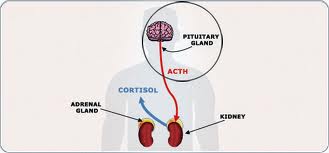
A condition in which the body produces too much cortisol, Cushing’s disease occurs when a tumor on the pituitary gland makes the gland create too much ACTH, the hormone that stimulates the production and release of cortisol (also known as “the stress hormone”). It may also occur with excess growth of the pituitary gland, known as hyperplasia. For most patients, Cushing’s disease will show itself through symptoms like red lines on the abdomen, abdominal weight gain and roundness to the face. And while the condition only affects 10 to 15 people per million per year, patients who suffer with it understandably wonder why. What are the causes? Where would a pituitary gland tumor come from? What leads to excess growth of that gland? To help answer these questions, here’s a look at Cushing’s disease causes:

Causes of Cushing’s Disease

The most common cause for Cushing’s disease is adenoma, a usually benign tumor on the pituitary gland. Because the tumors are normally pretty small, they can be hard to diagnose. For this reason, many patients who have Cushing’s disease don’t find out right away. Meeting with an endocrinologist can help the diagnosis process, improving your chances for a fast, successful recognition of the disease.

Risk Factors for Cushing’s Disease

Even though it’s a rare condition, Cushing’s disease occurs more commonly in women, particularly those between the ages of 20 and 50. Other factors that may increase the risk of Cushing’s disease include obesity, type 2 diabetes, poorly controlled blood sugar levels and high blood pressure. While none of these factors are a direct cause of the condition, they are associated with higher prevalence of it.

Cushing’s Disease vs. Cushing’s Syndrome

Often mistaken for one another, Cushing’s disease and Cushing’s syndrome are actually not the same condition. What they have in common is that they both involve the body’s producing too much cortisol. Cushing’s disease is a medical condition, however, while Cushing’s syndrome is a symptom of it. Cushing’s syndrome will often occur when a patient is taking corticosteroid medication.

Why You Should See an Endocrinologist

If you believe you or someone you love may have Cushing’s disease, it is best to see a specialist. Symptoms develop slowly and sometimes in cycles, so without proper testing it can be hard to identify what’s happening. A skilled endocrinologist can conduct hormone blood tests to measure blood cortisol levels at different times. He or she can also schedule an MRI for an individual who is not taking cortisol medications, in order to isolate the location of any tumors.

Have you been dealing with the symptoms of elevated cortisol levels, such as unexplained weight gain, particularly in the abdominal area and/or back of the neck? Is your skin or vision changing? These symptoms could be indicating a deeper problem in your body — so schedule an appointment to have your condition evaluated by a professional as soon as you can. Through proper treatment, you may be able to reduce or even eliminate your symptoms and be restored to full health again.

From http://www.hormone.org/diseases-and-conditions/pituitary/secretory-tumors/cushings-disease/cushings-disease-causes

Day 3 Coverage of ENDO 2015

ENDO_2015


OR24-Adrenal Tumors: Clinical Implications of the Recent Molecular and Genetic Findings

Long term follow-up of a pivotal phase 2 study of Ultratrace® Iobenguane I-131 (AZEDRA) in patients with malignant relapsed/refractory pheochromocytoma/paraganglioma
C Jimenez, DA Pryma, DC Sullivan, JK Schwarz, RB Noto, N Stambler, T Armor, JD Jensen, RJ Israel


OR27-Hyperandrogenic Ovarian Dysfunction — Winner: Outstanding Abstract Award

The neurokinin B receptor antagonist AZD4901 decreases LH and testosterone secretion in women with PCOS: A randomized, double-blind, placebo-controlled clinical trial
JT George, R Kakkar, J Marshall, ML Scott, R Finkelman, T Ho, S McIntosh, JD Veldhuis, RA Anderson, L Webber


OR28-Lipids – Liver, Muscle, and Patient Bench to Bedside

Diagnosing familial hypercholesterolemia (FH) in the United States: Results from the CASCADE FH patient registry
Z Ahmad, C Newman, E O’Brien, P Shrader, EM deGoma, CD Ahmed, PM Moriarty, MRF Linton, MD Shapiro, PB Due, CM Ballantyne, WA Neal, D Duffy, L Hudgins, LC Hemphill, JA Underberg, KE Watson, SS Gidding, S Baum, K Wilemon, D Pickhardt, I Kindt, DJ Rader, M Roe, JW Knowles


OR30-Neuroendocrinology

Assessment of primary cancers in growth hormone-treated pediatric patients compared to population databases: An epidemiological analysis of a large, multinational, prospective observational study
CJ Child, AG Zimmermann, N Jia, LL Robison, JH Bramswig, WF Blum


Hypophysitis in the age of cancer immunotherapy: Experience in a large cancer center
MJoelle Pitteloud, R Dadu, ME Cabanillas, K Shah, MI-N Hu, MA Habra, SG Waguespack


OR34-Testosterone Replacement Therapy: Risks and Benefits

The association between testosterone use and major adverse cardiovascular events (MACE): An exploratory retrospective cohort analysis of two large, contemporary, coronary heart disease clinical trials
S Janmohamed, G Cicconetti, CE Koro, RV Clark, E Tarka


Oral Presentations in Reproductive Science–Winner: Oral Abstract Award in Reproductive Science

Effects of androgens and estrogens on cardiometabolic parameters in young adult men
EW Yu, H Lee, S-AM Burnett-Bowie, SC Hirsch, G Abrishamian-Garcia, LF Borges, DW Goldstein, AP Taylor, KE Wulczyn, AF Moore, JS Finkelstein


PP27-Hyperandrogenic Ovarian Dysfunction

Role of insulin resistance and hyperandrogenemia in early vascular dysfunction in adolescents with PCOS
SK Bartz, MC Caldas, R Krishnamurthy, R Krishnamurthy, FF Bacha


SAT 379-412-Cushing’s Syndrome

Does a normal urine free cortisol result rule out Cushing’s syndrome?
ST Sharma, LK Nieman


SAT 418-443-Biochemical, Genetic and Pharmacological Studies of the Pituitary and Hypothalamus

Clinical and molecular differences between invasive and non-invasive pituitary adenomas
DA Cano, M Mendez-Muros, E Venegas, N Gros, E Dios, N Garcia-Hernandez, A Madrazo-Atutxa, I Martin-Scheffer, E Cardenas, A Kaen, F Roldan, A Soto-Moreno

Scientists Find Potential Therapeutic Target for Cushing’s Disease

Scientists at the Salk Institute for Biological Studies have identified a protein that drives the formation of pituitary tumors in Cushing’s disease, a development that may give clinicians a therapeutic target to treat this potentially life-threatening disorder.

The protein, called TR4 (testicular orphan nuclear receptor 4), is one of the human body’s 48 nuclear receptors, a class of proteins found in cells that are responsible for sensing hormones and, in response, regulating the expression of specific genes. Using a genome scan, the Salk team discovered that TR4 regulates a gene that produces adrenocorticotropic hormone (ACTH), which is overproduced by pituitary tumors in Cushing’s disease (CD). The findings were published in the May 6, 2013 early online edition of Proceedings of the National Academy of Sciences.

The diagram shows how adrenocorticotropin hormone is secreted in Cushing's disease.

“We were surprised by the scan, as TR4 and ACTH were not known to be functionally linked,” says senior author Ronald M. Evans, a professor in Salk’s Gene Expression Laboratory and a lead researcher in the Institute’s Helmsley Center for Genomic Medicine. “TR4 is driving the growth and overexpression of ACTH. Targeting this pathway could therapeutically benefit treatment of CD.”

In their study, Evans and his colleagues discovered that forced overexpression of TR4 in both human and mouse cells increased production of ACTH, cellular proliferation and tumor invasion rates. All of these events were reversed when TR4 expression was reduced.

First described more than 80 years ago, Cushing’s disease is a rare disorder that is caused by pituitary tumors or excess growth of the pituitary gland located at the base of the brain. People with CD have too much ACTH, which stimulates the production and release of cortisol, a hormone that is normally produced during stressful situations.

While these pituitary tumors are almost always benign, they result in excess ACTH and cortisol secretion, which can result in various disabling symptoms, including diabetes, hypertension, osteoporosis, obesity and psychological disturbances. Surgical removal of the tumors is the first-line therapy, with remission rates of approximately 80 percent; however, the disease recurs in up to 25 percent of cases.

Drugs such as cabergoline, which is used to treat certain pituitary tumors, alone or in combination with ketoconazole, a drug normally used to treat fungal infections, have been shown to be effective in some patients with Cushing’s disease. More recently, mefipristone-best known as the abortion pill RU-486-was approved by the FDA to treat CD. Despite these advances in medical therapy, the Salk scientists say additional therapeutic approaches are needed for CD.

“Pituitary tumors are extremely difficult to control,” says Michael Downes, a senior staff scientist in the Gene Expression Laboratory and a co-author of the study. “To control them, you have to kill cells in the pituitary gland that are proliferating, which could prevent the production of a vital hormone.”

Previous studies have found that, by itself, TR4 is a natural target for other signaling molecules in the pituitary. Small-molecule inhibitors that have been developed for other cancers could be potentially applied to disrupt this signaling cascade. “Our discovery,” says Evans, a Howard Hughes Medical Institute investigator and holder of the March of Dimes Chair in Molecular and Developmental Biology, “might lead clinicians to an existing drug that could be used to treat Cushing’s disease.

Notes about this neurogenetics and Cushing’s disease research

Other researchers on the study were Li Du, Marvin Bergsneider, Leili Mirsadraei, Stephen H. Young, William H. Yong and Anthony P. Heaney of the David A. Geffen School of Medicine at the University of California, Los Angeles, and Johan W. Jonker of the University of Groningen.

The study was supported by the National Institutes of Health, the Leona M. and Harry B. Helmsley Charitable Trust, the Samuel Waxman Cancer Research Foundation, the Jonsson Comprehensive Cancer Center at UCLA, and Ipsen/Biomeasure.

Contact: Andy Hoang – Salk Institute
Source: Salk Institute press release
Image Source: The ACTH Cushing’s disease diagram is credited to NIDDK/NIH and is available in the public domain.
Original Research: Abstract for “Evidence for orphan nuclear receptor TR4 in the etiology of Cushing disease” by Li Du, Marvin Bergsneider, Leili Mirsadraei, Steven H. Young, Johan W. Jonker, Michael Downes, William H. Yong, Ronald M. Evans, and Anthony P. Heaney in Proceedings of the National Academy of Sciences. Published May 6 2013 doi: 10.1073/pnas.1306182110

From http://neurosciencenews.com/tr4-cushings-disease-acth-neurogenetics-120/

Myth: “All types of Cushing’s are the same”

Myth: “All types of Cushing’s are the same”

myth-busted

Fact: In the words of our dear friend and advocate, Robin Ess, “There are many genetic varieties with quite a few discovered in the past couple of years. Plus, there are several types such as adrenal, ectopic, and pituitary. And so on”….Amazingly, some doctors do not realize that there are different varieties of Cushing’s and that the symptoms can come from a different source.

For instance, a doctor might rule out a pituitary tumor and completely dismiss the patient, even with biochemical evidence of Cushing’s. That doctor, instead of dismissing the patient, should thoroughly look for other potential sources, such as an adrenal tumor, or yet another source. Did you know that tumors on one’s lungs can even cause Cushing’s? Most people don’t know that.

For more information about the different types of Cushing’s, please read: http://www.mayoclinic.org/diseases-conditions/cushing-syndrome/basics/causes/con-20032115

Another great article regarding ectopic Cushing’s can be found here: http://www.nejm.org/doi/full/10.1056/NEJM199809243391304#.VH-80v5f2s8.facebook

MaryONote: Folks might be interested in listening to this podcast episode with Jayne, a Cushing’s patient who had pituitary surgeries and a bilateral adrenalectomy before finding the true source of her ectopic Cushing’s – lung tumors.

http://www.blogtalkradio.com/cushingshelp/2008/01/31/tentative-date-an-interview-with-jayne-cyclical-cushings-patient

Cushings Syndrome/Disease can be healed or cured through change in diet or exercise

Myth: Cushing’s Syndrome/Disease can be healed or cured through change in diet or exercise.

myth-busted

Fact: NO! Caloric intake or lack of exercise has NO impact on weight gain and/ or loss in persons with Cushing’s.

Saying that someone “cheated” on their diet may seem reasonable to some as a reason for weight gain but I assure you that a candy bar or a piece of pie does not make a person with Cushing’s gain weight or get sick. Excess cortisol is the reason for Cushing’s symptoms. Treating the disease is the only way to alleviate symptoms.

The first line of treatment with the highest rate of remission is currently surgery to remove the tumor (s) from the pituitary, adrenal gland, or ectopic source.