Recurrent sellar mass after resection of pituitary macroadenoma

A Puerto Rican woman aged 50 years presented to an ophthalmologist with complaints of vision changes, including difficulty seeing images in her peripheral vision in both eyes and difficulty in color perception. Her medical history was significant for menopause at age 43 years, type 2 diabetes and hypertension. She had no prior history of thyroid disease, changes in her weight, dizziness or lightheadedness, headaches, galactorrhea or growth of her hands or feet.

Formal visual fields showed bitemporal superior quadrantopsia, and she was sent to the ED for further evaluation.

Imaging and laboratory tests

A pituitary protocol MRI was performed that showed a large 3 cm x 2 cm x 2.2 cm mass in the pituitary with mild osseous remodeling of the sella turcica and mass effect on the optic chiasm (Figure 1). The mass was isointense with the brain parenchyma on T1-weighted and T2-weighted images and homogeneously enhanced after IV gadolinium contrast administration.

Baseline laboratory samples drawn at 11 p.m. in the ED showed a cortisol of 16.9 µg/dL (nighttime reference range: 3-16 µg/dL), adrenocorticotropic hormone 65 pg/mL (reference range: 6-50 pg/mL), prolactin 19.4 ng/mL (reference range: 5.2-26.5 ng/mL), thyroid-stimulating hormone 1.36 µIU/mL (reference range: 0.35-4.9 µIU/mL), free thyroxine 0.9 ng/dL (reference range: 0.6-1.8 ng/dL), triiodothyronine 85 ng/dL (reference range: 83-160 ng/dL), follicle-stimulating hormone (FSH) 11.1 mIU/mL (postmenopausal reference range: 26.7- 133.4 mIU/mL) and luteinizing hormone (LH) 1.2 mIU/mL (postmenopausal reference range: 5.2-62 mIU/mL).


Figure 1. T1-weighted MRI images with and without contrast of the pituitary. Coronal (A) and sagittal (C) images showed a large isodense (with brain parenchyma) 3 cm x 2 cm x 2.2 cm mass (red arrow) in the sella with superior extension to the optic chiasm. After gadolinium contrast, coronal (B) and sagittal (D) images show the mass homogenously enhances consistent with a pituitary adenoma.

Images courtesy of Pavani Srimatkandada, MD.

Given the patient’s high nighttime cortisol and adrenocorticotropic hormone (ACTH) levels, she underwent an overnight dexamethasone suppression test with 1 mg dexamethasone. Her morning cortisol was appropriately suppressed to less than 1 µg/dL, excluding Cushing’s disease.

Pituitary adenoma resection

The patient was diagnosed with a nonsecreting pituitary adenoma with suprasellar extension and optic chiasm compression with visual field deficits. The macroadenoma caused an inappropriately normal LH and FSH in a postmenopausal woman consistent with hypogonadotrophic hypogonadism.

She underwent transnasal transsphenoidal resection of the nonsecreting pituitary adenoma. The dural defect caused by the surgery was patched with an abdominal fat graft with a DuraSeal dura patch. A postoperative MRI showed complete resection of the adenoma with no evaluable tumor in the sella (Figure 2). Her postoperative course was complicated by transient diabetes insipidus requiring intermittent desmopressin; however, this resolved before her discharge from the hospital.

Figure 2. T1-weighted MRI images with contrast. Coronal views before (A) and after (B) transphenoidal tumor resection show complete resolution of the enhancing pituitary mass (A; red arrow) that is replaced with a new hypodense mass in the sella (B; yellow arrow). This mass is filled with cerebrospinal fluid with a residual rim of enhancing tissue. This is consistent with the development of a pseudomeningocele in the sella.


Postoperative testing confirmed secondary deficiency of the adrenal, thyroid and ovarian axes requiring hormone therapy. The patient had stable temporal hemianopia in the left eye with improved vision in the right eye.

Recurrent mass detected

One year after surgery, during a routine follow-up appointment, the patient reported no dizziness, lightheadedness, worsening vision changes, rhinorrhea or headache. She had a follow-up MRI of the brain with and without contrast, which showed the interval appearance of a mass in the sella that extended from the sphenoid sinus into the sella and came in contact with the optic nerve (Figure 3).

Figure 3. Axial MRI images of the sella after resection of pituitary adenoma. On T1-weighted images the mass (red arrow) in the sella is hypodense (black) compared with the brain parenchyma. On T2-weighted images, the mass (red arrow) is hyperdense (bright) compared with the brain, consistent with fluid. Cerebrospinal fluid in the sulci on the brain surface and the vitreous fluid within the eye are also hyperintense on T2-weighted images (yellow arrows).


On MRI, the mass was isodense with the cerebral spinal fluid (CSF) with a residual rim of enhancing normal pituitary tissue. This appearance is consistent with the postoperative development of a pseudomeningocele and not a solid mass in the sella (Table).

Pseudomeningoceles are abnormal collections of CSF that communicate with the CSF space around the brain; these occur after brain surgery involving duraplasty (incision and repair of the dura). Unlike meningoceles, pseudomeningoceles are not completely encased by a surrounding membrane, and they communicate with the circulating CSF. Similar to CSF, a pseudomeningocele is hypodense (dark) compared with brain on T1-weighted MRI images and hyperdense (bright) on T2-weight images.


Pseudomeningocele treatment

Treatment may be conservative or may involve neurosurgical repair if symptomatic. Little published data addresses the development of pseudomeningoceles after transsphenoidal pituitary surgery, but this complication occasionally occurs, especially if the dural incision is large. One study noted that pseudomeningoceles are one of the most common complications after suboccipital decompression for Chiari’s malformation, but the effect of this complication is unclear.

Endocrinologists must recognize that recurrent development of pituitary masses after transsphenoidal pituitary adenoma surgery may not represent regrowth of pituitary tissue, but instead development of a meningocele/pseudomeningocele. Pseudomeningocele can be easily confirmed because this fluid collection has very different MRI characteristics than pituitary adenoma (Table). Given that patients may remain asymptomatic after the development of a pseudomeningocele, periodic MRI imaging, hormonal evaluation and ophthalmologic monitoring of visual fields are required after transsphenoidal pituitary surgery.

References:
  • Hernandez Guilabert PM. Poster No C-1330. Presented at: European Society of Radiology; March 7-11, 2013; Vienna.
  • Parker SL, et al. J Neurosurg. 2013;doi:10.3171/2013.8.JNS122106.
For more information:
  • Stephanie L. Lee, MD, PhD, ECNU, is an associate professor of medicine and associate chief, in the Section of Endocrinology, Diabetes and Nutrition at Boston Medical Center. Lee can be reached at Boston Medical Center, 88 E. Newton St., Endocrinology Evans 201, Boston, MA 02118; email: stephanie.lee@bmc.org. Lee reports no relevant financial disclosures.
  • Pavani Srimatkandada, MD, is an endocrinology fellow in the Section of Endocrinology, Diabetes and Nutrition at Boston Medical Center. Srimatkandada can be reached at Boston Medical Center, 88 E. Newton St., Endocrinology Evans 201, Boston, MA 02118. She reports no relevant financial disclosures.

From http://www.healio.com/endocrinology/thyroid/news/print/endocrine-today/%7B82430fb6-bbe4-4908-a389-447eee8cd005%7D/recurrent-sellar-mass-after-resection-of-pituitary-macroadenoma

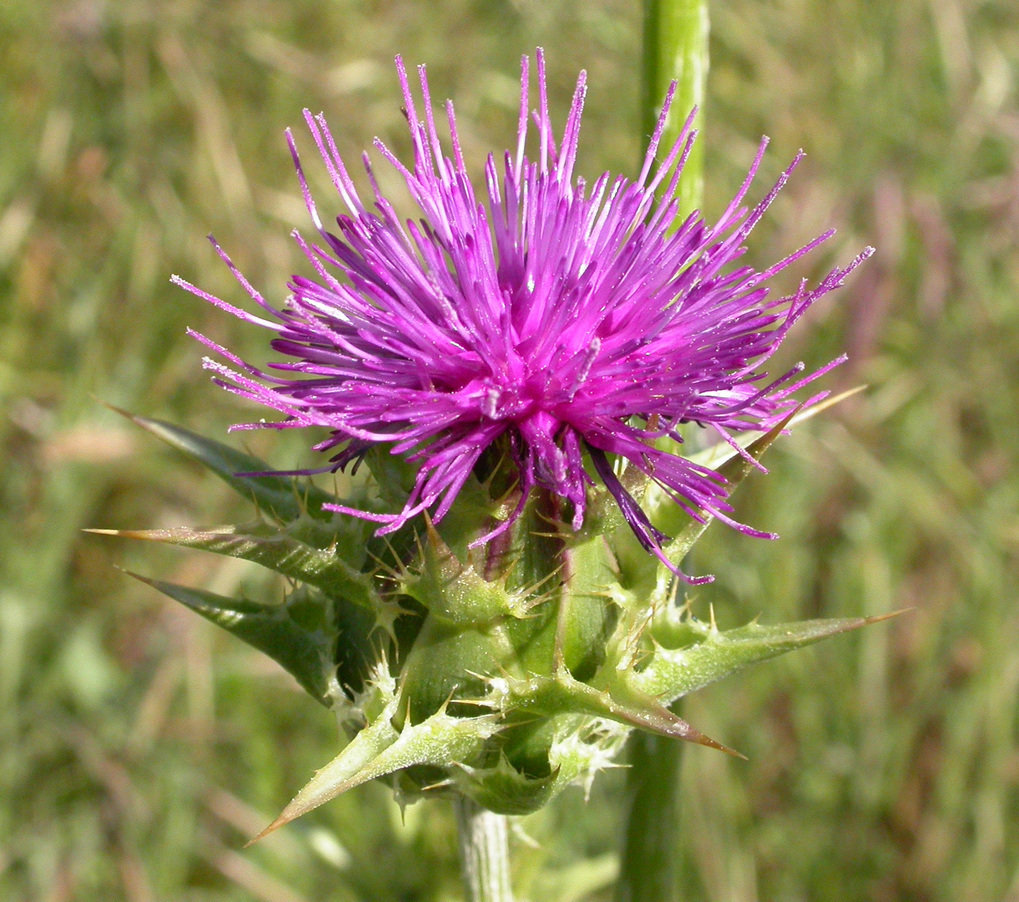
Silibinin from milk thistle seeds as novel, non-invasive treatment strategy for Cushing Disease

Silibinin has an outstanding safety profile in humans and is currently used for the treatment of liver disease and poisoning. Scientists at the Max Planck Institute of Psychiatry in Munich discovered in collaboration with scientists from the Helmholtz Zentrum München in cell cultures, animal models and human tumor tissue that silibinin can be applied to treat Cushing Disease, a rare hormone condition caused by a tumor in the pituitary gland in the brain. The researchers have filed a patent and now plan clinical trials using silibinin as a non-invasive treatment strategy. Thus, in future, patients might not have to undergo brain surgery anymore.
Treatment with silibinin, a constituent of milk thistle seeds, alleviated symptoms of Cushing Disease in cell cultures, animal models and human tumor tissue. In future, patients might not have to undergo brain surgery anymore.

Cushing Disease, not to be confused with Cushing’s Syndrome, is caused by a tumor in the pituitary gland in the brain. The tumor secrets increased amounts of the stress hormone adrenocorticotropin (ACTH) followed by cortisol release from the adrenal glands leading to rapid weight gain, elevated blood pressure and muscular weakness. Patients are prone to osteoporosis and infections and may show cognitive dysfunction or even depression. In 80 to 85 % of the patients, the tumor can be removed by uncomfortable brain surgery. For inoperable cases, there is currently only one targeted therapy approved, which unfortunately causes intense side effects such as hyperglycemia in more than 20 % of the patients.

Scientists around Günter Stalla, endocrinologist at the Max Planck Institute of Psychiatry in Munich, have now discovered in cell cultures, animal models and human tumor tissue that a harmless plant extract can be applied to treat Cushing Disease. “Silibinin is the major active constituent of milk thistle seeds. It has an outstanding safety profile in humans and is already used for the treatment of liver disease and poisoning,” explains Marcelo Paez-Pereda, leading scientist of the current study published in the renowned scientific journal Nature Medicine. After silibinin treatment, tumor cells resumed normal ACTH production, tumor growth slowed down and symptoms of Cushing Disease disappeared in mice.

In 2013, the Max Planck scientists filed a patent on a broad family of chemical and natural compounds, including silibinin, to treat pituitary tumors. Compared to humans, where only 5.5 in 100,000 people worldwide develop Cushing Disease, this condition is very common in several pets. For example, 4 % of dogs and even 7 % of horses suffer from Cushing Disease. Thus, the researchers now plan to test special formulations with a very pure substance and slow release of the active component silibinin in clinical trials.

Silibinin: Mode of action

“We knew that Cushing Disease is caused by the release of too much ACTH. So we asked ourselves what causes this over production and how to stop it,” says Paez-Pereda. In their first experiments, the researchers found tremendously high amounts of the heat shock protein 90 (HSP90) in tumor tissue from patients with Cushing Disease. In normal amounts, HSP90 helps to correctly fold another protein, the glucocorticoid receptor, which in turn inhibits the production of ACTH. “As there are too many HSP90 molecules in the tumor tissue, they stick to the glucocorticoid receptor,” explains Paez-Pereda. “We found that silibinin binds to HSP90 thus allowing glucocorticoid receptor molecules to dissolve from HSP90. With silibinin, we might have discovered a non-invasive treatment strategy not only for the rare Cushing Disease but also for other conditions with the involvement of glucocorticoid receptors, such as lung tumors, acute lymphoblastic leukemia or multiple myeloma,” concludes Paez-Pereda.

From http://www.psych.mpg.de/2034377/PM1507

Enzyme that triggers muscle wasting could be key to REVERSING signs of ageing | Daily Mail Online

Drawing on expertise from both the University of Birmingham and Queen Elizabeth Hospitals Birmingham, they applied their knowledge of Cushing’s syndrome to the new problem (sarcopenia).

Cushing’s is hormonal disorder caused by high levels of cortisol. Patients suffer from the syndrome see marked changes in their body composition.

The effects can be devastating for patients who can develop features such as muscle wasting and weakness, weight gain, thinning of the bones, diabetes, high blood pressure and heart disease.

Dr Hassan-Smith said: ‘Looking at this particular enzyme seemed like an intriguing way forward.

‘We knew how it works in relation to Cushing’s Syndrome, which is characterised by similar symptoms, and thought it would be worthwhile applying what we knew to the ageing population.’

Currently there are no treatments for sarcopenia, the team explained.

But pharmaceutical companies are developing and testing ways to block or switch off the enzyme, with a focus on treatments for conditions including diabetes.

The team is excited about taking the results of their study forward into future research, with one eye on adapting the inhibitors already in development to combat muscle ageing.

Dr Hassan Smith added: ‘The next stage is a “proof of concept” study to look at the effects of these inhibitive pharmaceuticals on muscle function, before opening it up into a clinical trial.

‘It’s an as yet unexplored area that could yield beneficial results for a problem that is becoming more prevalent as our lifespans increase.’

The study was published in the journal of Clinical Endocrinology and Metabolism.


via Enzyme that triggers muscle wasting could be key to REVERSING signs of ageing | Daily Mail Online.

TO BE RESCHEDULED! Interview with Stephanie – PCOS, Possibly Cushing’s Patient

interview

The next interview on BlogTalk Radio will be rescheduled.  The Call-In number for questions or comments is (657) 383-0416.

Steph has a bio posted here: http://cushingsbios.com/2015/04/16/stephanie-steph-undiagnosed-bio/

The archived interview will be available after 7:00 PM Eastern through iTunes Podcasts (Cushie Chats) or BlogTalkRadio.  While you’re waiting, there are currently 82 other past interviews to listen to!

In her bio, Steph writes:

Hi. My name Steph, and this has been a long journey for me so far, and I see a long road ahead. Hopefully their will be a rainbow once all these clouds have melted away.

I just turned 33 years old (this month) and have been dealing with symptoms of Cushing’s since I was a pre-teen without even knowing it. I was diagnosed (or possibly mis-diagnosed) with PCOS when I was about 11. That’s when the irregular (to almost non-existent) menstrual cycles, hirutism (chin, upper lip, upper and lower thighs, fingers, toes, basically everywhere) and weight problems began. I was immediately put on birth control to regulate my periods, which only made my life a living nightmare. They forced on a fake (non-ovulating) period and made my moods a disaster. I went on to be on birth control until from the age of 11 until about 3 years ago when I just couldn’t take it anymore, and took myself off. I’ve been using herbal supplements for menstrual regulalation since then, and feel MUCH better.

Over the years I’ve always felt like there was something “more than PCOS” wrong with me. From the extreme inability to lose weight normally, and the ease to gain it, to the weak legs, vitamen d insuffeciency, high cholesterol, high blood pressure, extreme irritability, now non-existent cycle, shortness of breath (just from walking up 1 flight of stairs), slow healing, hoarse voice, high testosterone, male pattern baldness, blurry vision, EXTREME brain fog etc….. It has been very, very, very tough and emotional over the years. It has taken a toll on my personality, emotions, and those around me….

The way that I found out about cushing’s is rather unique. I was on a popular PCOS message board site called “soul cysters”, and I have always been EXTREMELY self conscience of my round puffy face, and was wondering if it could be a side effect of PCOS. So I searched Puffy face on the message board to see if others on the board had experienced it, and sure enough Cushing’s came up, and a suprising number of women either had both (cushing’s and PCOS) or had been mis-diagnosed, which apparently is very common with cushing’s. it was like a gigantic light bulb went off in my head when I started googling cushings symptoms. All these things that I have been experiencing almost my entire life started coming together. I’m really not crazy!! Everything is possibly related. Im almost 100% sure that this is it!!! I don’t know if this is a good or bad thing, as I see that cushing’s is curable in most cases, but it is also scary, and diagnosing it seems like hell!!

I have began my -already slow- journey to diagnosis. And, the the Dr.’s don’t seem to be all that well informed. However, I am DETERMINED. I am excited at the thought of possibly being able to get my life back through surgery or meds. I went to a well respected Endo in my area, and she is gonna test all of my hormones, including my cortisol level. Though she didn’t seem to be too informed on Cushing’s when I brought it up, along with my “dead ringer” symptoms. I’m going to a pulmonologist on the 29th as suggested by my GP (who also thinks I have cushings, but admits he’s not well informed enough or equipped to diagnose). I’m also going to an OBGYN soon (tried going to one today, and had to walk out because it was such a bad experience). But I am determined to get 2nd, 3rd, and however many opinions are needed until I am satisfied.

Also, on a side note, possibly having cushing’s, along with having PCOS, has made me look at the doctors and the medical profession as a whole in a different light. I feel like if you find a genuinely good doctor who listens, cares, takes you seriously, and is willing to test you without question, and work with you, your levels, and your symptoms, you are blessed!! I have had so many doctors try to push meds down my throat (for their own pockets/greed obviously) when it wasn’t needed or necessary without hesitation or question. And, then when I tell them that the medicine is affecting me adversely, they just tell me to keep taking it! It’s sad and ridiculous. I’ve had to learn to do my own research, know my own body well, and trust my own judgement…..

I will be praying for myself and everyone on this message board who has had to deal with this horrific symptoms over the years.

Updates coming…..

HOME | Sitemap | Adrenal Crisis! | Abbreviations | Glossary | Forums |Donate | Bios | Add Your Bio

Interview with Stephanie – PCOS, Possibly Cushing’s Patient

interview

The next interview on BlogTalk Radio will be Wednesday, April 22 at 6:00 PM eastern.  The Call-In number for questions or comments is (657) 383-0416.

Steph has a bio posted here: http://cushingsbios.com/2015/04/16/stephanie-steph-undiagnosed-bio/

The archived interview will be available after 7:00 PM Eastern through iTunes Podcasts (Cushie Chats) or BlogTalkRadio.  While you’re waiting, there are currently 82 other past interviews to listen to!

In her bio, Steph writes:

Hi. My name Steph, and this has been a long journey for me so far, and I see a long road ahead. Hopefully their will be a rainbow once all these clouds have melted away.

I just turned 33 years old (this month) and have been dealing with symptoms of Cushing’s since I was a pre-teen without even knowing it. I was diagnosed (or possibly mis-diagnosed) with PCOS when I was about 11. That’s when the irregular (to almost non-existent) menstrual cycles, hirutism (chin, upper lip, upper and lower thighs, fingers, toes, basically everywhere) and weight problems began. I was immediately put on birth control to regulate my periods, which only made my life a living nightmare. They forced on a fake (non-ovulating) period and made my moods a disaster. I went on to be on birth control until from the age of 11 until about 3 years ago when I just couldn’t take it anymore, and took myself off. I’ve been using herbal supplements for menstrual regulalation since then, and feel MUCH better.

Over the years I’ve always felt like there was something “more than PCOS” wrong with me. From the extreme inability to lose weight normally, and the ease to gain it, to the weak legs, vitamen d insuffeciency, high cholesterol, high blood pressure, extreme irritability, now non-existent cycle, shortness of breath (just from walking up 1 flight of stairs), slow healing, hoarse voice, high testosterone, male pattern baldness, blurry vision, EXTREME brain fog etc….. It has been very, very, very tough and emotional over the years. It has taken a toll on my personality, emotions, and those around me….

The way that I found out about cushing’s is rather unique. I was on a popular PCOS message board site called “soul cysters”, and I have always been EXTREMELY self conscience of my round puffy face, and was wondering if it could be a side effect of PCOS. So I searched Puffy face on the message board to see if others on the board had experienced it, and sure enough Cushing’s came up, and a suprising number of women either had both (cushing’s and PCOS) or had been mis-diagnosed, which apparently is very common with cushing’s. it was like a gigantic light bulb went off in my head when I started googling cushings symptoms. All these things that I have been experiencing almost my entire life started coming together. I’m really not crazy!! Everything is possibly related. Im almost 100% sure that this is it!!! I don’t know if this is a good or bad thing, as I see that cushing’s is curable in most cases, but it is also scary, and diagnosing it seems like hell!!

I have began my -already slow- journey to diagnosis. And, the the Dr.’s don’t seem to be all that well informed. However, I am DETERMINED. I am excited at the thought of possibly being able to get my life back through surgery or meds. I went to a well respected Endo in my area, and she is gonna test all of my hormones, including my cortisol level. Though she didn’t seem to be too informed on Cushing’s when I brought it up, along with my “dead ringer” symptoms. I’m going to a pulmonologist on the 29th as suggested by my GP (who also thinks I have cushings, but admits he’s not well informed enough or equipped to diagnose). I’m also going to an OBGYN soon (tried going to one today, and had to walk out because it was such a bad experience). But I am determined to get 2nd, 3rd, and however many opinions are needed until I am satisfied.

Also, on a side note, possibly having cushing’s, along with having PCOS, has made me look at the doctors and the medical profession as a whole in a different light. I feel like if you find a genuinely good doctor who listens, cares, takes you seriously, and is willing to test you without question, and work with you, your levels, and your symptoms, you are blessed!! I have had so many doctors try to push meds down my throat (for their own pockets/greed obviously) when it wasn’t needed or necessary without hesitation or question. And, then when I tell them that the medicine is affecting me adversely, they just tell me to keep taking it! It’s sad and ridiculous. I’ve had to learn to do my own research, know my own body well, and trust my own judgement…..

I will be praying for myself and everyone on this message board who has had to deal with this horrific symptoms over the years.

Updates coming…..

HOME | Sitemap | Adrenal Crisis! | Abbreviations | Glossary | Forums |Donate | Bios | Add Your Bio