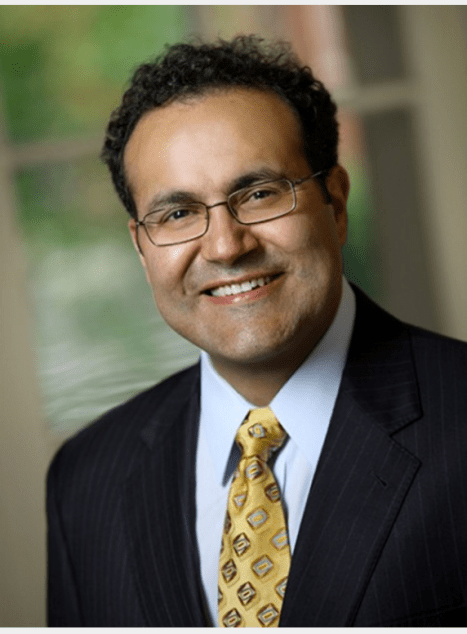
Webinar on Management Options for Pituitary Tumors March 22

Dr. Andaluz will cover the full breadth of treatment options from managing endocrine function, surgical procedures (transsphenoidal, endoscopic, and keyhole approaches), radiotherapy / radiosurgery, and the importance of getting care at a multidisciplinary center.

Dr. Norberto Andaluz is a neurosurgeon with the Mayfield Clinic and University of Cincinnati Brain Tumor Center. He is also Associate Professor of Neurosurgery at the University of Cincinnati, Surgical Director of the Neuroscience Intensive Care Unit, and Director of Neurotrauma at the University of Cincinnati Neuroscience Institute. He specializes in the treatment of all disorders and diseases of the brain and spine, but in particular, traumatic brain injury, aneurysms, arteriovenous malformations (AVMs), intracerebral hemorrhage, stroke, carotid artery disease, moyamoya disease and brain tumors (with special training in skull base tumors like pituitary adenoma). Dr. Andaluz received his medical degree from Unversidad Nacional de Rosario in Argentina. He completed his residency in neurosurgery at Instituto de Neurología y Neurocirugía at Sanatorio Parque in Rosario, Argentina and earned a fellowship in cerebrovascular surgery from the University of Cincinnati. Professional memberships include the American Heart Association, Congress of Neurological Surgeons, National Neurotrauma Society, Neurocritical Care Society and North American Skull Base Society.

Register at http://pituitary.org/events/webinar-management-options-for-pituitary-tumors

Interview with Deborah March 30, 2016

Deborah has many symptoms but is not yet diagnosed.

interview

Deborah will be our guest in an interview on BlogTalk Radio  Wednesday, March 30 at 6:00 PM eastern.  The Call-In number for questions or comments is (845) 241-9850.

The archived interview will be available after 7:00 PM Eastern through iTunes Podcasts (Cushie Chats) or BlogTalkRadio.  While you’re waiting, there are currently 89 other past interviews to listen to!

~~~~~~

Deborah’s Bio:

Hello all,

I do not know where to begin. For many years I have been struggling with these symptoms. I have proximal weakness, intolerance to stress, blood pressure fluctuations, hyperpigmentation, reactive hypoglycemia, sweating, severe dehydration, very bad confusion, vision, memory problems, physical body changes (hump, bruises), carb intolerance, and inability to exercise.

My endocrinologist did a workup for Cushing’s disease and the midnight saliva test was high. She brushed it off as “stress”. I am seeing a doctor now that says I have POTS and Dysautonomia. My doctor says I have inappropriate adrenaline rushes.

My body is falling apart because I haven’t found a doctor who will take my symptoms and test results serious. I would like to talk to others who are having trouble getting diagnosed and also to those who have gotten diagnosed who have a good doctor.

God Bless and Thank You,
Deborah

HOME | Sitemap | Adrenal Crisis! | Abbreviations | Glossary | Forums | Donate | Bios | Add Your Bio | Add Your Doctor | MemberMap | CushieWiki

Sharmyn McGraw on Blogtalk Radio

sharm


March 22, 2016 7:00pm Eastern  Sharmyn speaks to medical professionals about the spiritual side of pain advocacy for patients with pituitary tumors and hormonal related disorders!  She’ll share how she turned the darkest part of her life into the best part.  Watch out because Sharmyn will also use Tumor Humor to keep the message light and fun.

Sharmyn will be be speaking with her good friend Garrett Miller, Rated G Radio. Garrett is fun, smart and to say creative is an understatement.

Garrett and Sharmyn will be having a conversation about how she turned being misdiagnosed for seven horrible years with Cushing’s disease into one of the best parts of her life.

Many of you have heard her talk about Cushing’s, but very few people have heard the back story, the personal and raw part of Sharmyn’s journey… well join them on March 22, at 7:00pm eastern and you can hear it all and join in also.

Use the call in number and let’s chat.

Sharmyn McGraw joins the show Tuesday to talk about turning Pain into Passion and Passion into Action!

Listen to the archives at http://www.blogtalkradio.com/ratedgradio/2016/03/22/sharmyn-mcgraw-turning-pain-into-passion


Johns Hopkins surgeon ‘Dr. Q’ to get Hollywood treatment

DrQ


Brad Pitt’s production company Plan B has teamed up with Disney to develop a movie based on the life of Alfredo Quiñones-Hinojosa, the head of brain tumor surgery at Johns Hopkins Hospital.

Quiñones-Hinojosa’s path to becoming a physician started in an unlikely place: a cotton field. He had come to the United States in 1987 from his native Mexico at the age of 19, penniless and unable to speak English. Driven to have a better life than the one he would have had in Mexico, he took jobs picking cotton, painting, and welding to pay for his tuition at San Joaquin Delta Community College in Stockton, California.

“These very same hands that now do brain surgery, right around that time they had scars everywhere from pulling weeds. They were bloody,” he told CNN correspondent Sanjay Gupta in a 2012 interview.

After earning his medical degree from Harvard Medical School and training in both general surgery and neurosurgery at the University of California, San Francisco, Quiñones-Hinojosa came to Johns Hopkins in 2005 and became a faculty member and surgeon. He specializes in brain cancer and pituitary tumors. His autobiography Becoming Dr. Q: My Journey from Migrant Farm Worker to Brain Surgeon was published in 2011 and received the International Latino Book Award in 2012.

Feeling like an outsider helped keep Quiñones-Hinojosa focused and “at the top of his game,” he told CNN. In the keynote speech delivered at Johns Hopkins University’s 2013 commencement ceremony, he elaborates, weaving together memories of his own brush with death in a work accident with his experience operating on a patient with a massive brain tumor that unexpectedly ruptured during surgery. Quoting the migrant farm worker and civil rights activist Cesar Chavez, he says, “If you are afraid, you will work like crazy.”

Plan B began developing the project—titled Dr. Q, the nickname for Quiñones-Hinojosa adopted by his patients—in 2007 after hearing a radio broadcast about the doctor and his background.

Matt Lopez, author of the popular Civil War play The Whipping Man and a former staff writer for HBO’s The Newsroom, will write the script.

According to The Hollywood Reporter, Disney expects Dr. Q to be a modestly-budgeted inspirational drama. Plan B executives Pitt, Dede Gardner, and Jeremy Kleiner won Best Picture Oscars two years ago for their production work on 12 Years a Slave and were nominated this year for their work on The Big Short.

From http://hub.jhu.edu/2016/03/07/brad-pitt-disney-dr-q-movie


Familial isolated pituitary adenoma (AIP study)

Professor Márta Korbonits is the Chief Investigator for the NIHR Clinical Research Network supported familial pituitary adenomas study (AIP) which is investigating the cause, the clinical characteristics and family screening of this relatively recently established disease group.

Please tell us about the condition in layman’s terms?
Pituitary adenomas are benign tumours of the master gland of the body, the pituitary gland. It is found at the base of the brain. The most commonly identified adenoma type causing familial disease makes excess amounts of growth hormone, and if this starts in childhood the patient have accelerated growth leading them to become much taller than their peers. This condition is known as gigantism.

How rare is this condition?
Pituitary adenomas cause disease in 1 in a 1000 person of the general population. About five to seven percent of these cases are familial pituitary adenomas.

How it is normally diagnosed?
There are different types of pituitary adenomas causing quite varied diseases. Gigantism and its adult counterpart acromegaly is usually diagnosed due to rapid growth, headaches, joint pains, sweating, high blood pressure and visual problems. Pituitary adenomas grow slowly and it usually takes 2-10 years before they get diagnosed. The diagnosis finally is made by blood tests measuring hormones, such as growth hormone, and doing an MRI scan of the pituitary area.

What is the study aiming to find out?
The fact that pituitary adenomas can occur in families relatively commonly was not recognised until recently. Our study introduced testing for gene alterations in the AIP (Aryl Hydrocarbon Receptor Interacting Protein) gene in the UK, and identified until now 38 families with 160 gene carriers via screening. We also aim to identify the disease-causing genes in our other families as well.

How will it benefit patients?
The screening and early treatment of patients can have a huge benefit to patients as earlier treatment will lead to less complications and better chance to recovery. We hope we can stop the abnormal growth spurts therefore avoiding gigantism. Patients that are screened will find out if they carry the AIP gene and whether they are likely to pass on the gene to their families. For most patients, knowing they have a gene abnormality also helps them to understand and accept their condition.

How will it change practice?
As knowledge of the condition becomes more understood, genetic testing of patients to screen for AIP changes should be more commonplace. Patients can be treated knowing they have this condition, and family members who are carriers of the gene can benefit from MRI scans to monitor their pituitary gland and annual hormone tests.

How did the NIHR CRN support the study?
The familial pituitary adenoma study is on the NIHR CRN Portfolio. The study’s association with NIHR has allowed the widespread assessment of the patients, has incentivised referrals from clinicians and raised awareness of both our study and the familial pituitary adenoma condition itself.

For more information contact NIHR CRN Communications Officer, Damian Wilcock on 020 3328 6705  or email damian.wilcock@nihr.ac.uk

From https://www.crn.nihr.ac.uk/blog/case_study/national-rare-disease-day-2016-familial-isolated-pituitary-adenoma-aip-study/