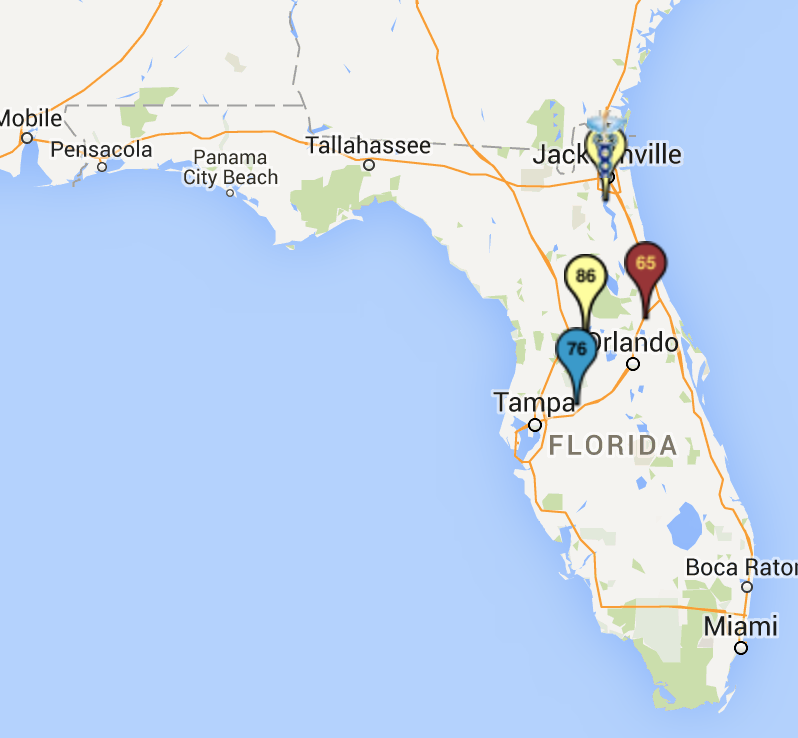
Florida Doctors ~ So Far

florida


The doctors listed here have been recommended to Cushing’s Help by other patients as being helpful to them.  These physicians are familiar with the symptoms and treatment of Cushing’s Disease (pituitary) and Cushing’s Syndrome. Your primary care physician may be able to order very basic screening tests. Some of these doctors may require a referral and/or an abnormal test result prior to scheduling an appointment.

Cushing’s Help does not endorse any particular physician. Choosing a particular physician and substantiating his/her expertise is the responsibility of the individual patient.

To recommend your own doctor for this list, please fill out this form.

These doctors are also available on this map.  Please add yourself and/or your doctor.

This list is a continuing resource as new doctors are added, edited OR removed.


Florida

Jacksonville

Dr. Eric Sauvageau 

Specialty: Endovascular Neurosurgeon

Location: 800 Prudential Drive – Suite 1100
Jacksonville, FL

Phone: 904-388-6518

Website: http://www.baptistjax.com/doctors/endovascular-neurosurgeon/dr-eric-sauvageau-md

Patient Comment: I went to him for my IPSS procedure. I was VERY impressed by the care that I received. Dr. Sauvageau is Top-Notch! He answered all of my questions & made me feel more comfortable about the IPSS. Very caring. He made a REALLY scary test (that I had cried about many times) EASY PEASY. In fact, everyone at the hospital was super nice! I went to him based on the reviews of 2 other Cushies . He is highly experienced in the procedure and used to do IPSS tests at OSU. I had no pain afterwards and I could barely find where they went in.


More coming soon!

California Doctors – So far

california


The doctors listed here have been recommended to Cushing’s Help by other patients as being helpful to them.  These physicians are familiar with the symptoms and treatment of Cushing’s Disease (pituitary) and Cushing’s Syndrome. Your primary care physician may be able to order very basic screening tests. Some of these doctors may require a referral and/or an abnormal test result prior to scheduling an appointment.

Cushing’s Help does not endorse any particular physician. Choosing a particular physician and substantiating his/her expertise is the responsibility of the individual patient.

To recommend your own doctor for this list, please fill out this form.

This list is a continuing resource as new doctors are added, edited OR removed.  

These doctors are also available on this map.  Please add yourself and/or your doctor

California

Beverly Hills

Cohan, Pejman 

Specialty: Neuroendocrine 

Location: 150 N Robertson Blvd # 210
Beverly Hills, CA

Phone: 310-657-3030

Patient Comment: He’s been my Endo for 15 years. Only sees neuroendocrine patients


Freemont

Kunwar, Sandeep

Specialty: Neurosurgeon

Hospital: Washington Hospital

Location: Freemont, CA

Hospital: UCSF

Location: San Francisco, CA

Website: http://www.ucsfhealth.org/sandeep.kunwar

Patient Comments: And dr kunwar at ucsf was my very skilled surgeon. I didn’t have to see his endo preop

I also had my surgery done with Dr. Kunwar at Washington Hospital in Fremont (East Bay). He does a few days a week in Fremont and the rest in SF. This is my third recurrence and I would definitely recommend him


Srinivasan, Lakshmi

Specialty: Endocrinologist

Hospital: Palo Alto Medical Foundation

Location: Freemont, CA

Patient Comments: My endo is Dr. Lakshmi Srinivasan at Palo Alto Medical Foundation in Fremont. She is fantastic–takes a lot of time during every appt and is very attentive and responsive to email and calls.


Los Angeles

Friedman, Theodore

Specialty: Cushing’s, Growth Hormone Deficient, Hypopituitary, adrenal, thyroid, fatigue

Address: 1125 S. Beverly Drive. Suite 730

Location: Los Angeles, CA

Hospital: Charles Drew

Website: http://goodhormonehealth.com

Patient Comments:  I am a Dr Friedman patient, he is wonderful.


 Orange

Linskey, Mark 

Specialty: Neurosurgeon 

Hospital: UCI

Location: Orange, CA

Website: http://www.ucirvinehealth.org/find-a-doctor/l/mark-linskey/

Patient Comment: The pit surgery was done by both Linskey and Bhendarkar and I am doing well post op, they are very diligent in their care. If I have to have another surgery for Cushing’s I will definitely use this team again.


Bhandarkar, Naveem

Specialty: ENT

Hospital: UCI

Location: Orange/Irving, CA

Website: http://www.ent.uci.edu/faculty/naveen-d-bhandarkar-md

Patient Comment: The pit surgery was done by both Linskey and Bhendarkar and I am doing well post op, they are very diligent in their care. If I have to have another surgery for Cushing’s I will definitely use this team again.


San Francisco

Kunwar, Sandeep

Specialty: Neurosurgeon

Hospital: Washington Hospital

Location: Freemont, CA

Hospital: UCSF

Location: San Francisco, CA

Website: http://www.ucsfhealth.org/sandeep.kunwar

Patient Comments: And dr kunwar at ucsf was my very skilled surgeon. I didn’t have to see his endo preop

I also had my surgery done with Dr. Kunwar at Washington Hospital in Fremont (East Bay). He does a few days a week in Fremont and the rest in SF. This is my third recurrence and I would definitely recommend him


More coming soon!

“My feet are killing me!” An unusual presentation of Cushing’s syndrome

Adverse effects of steroid excess on bone metabolism are well established but presentation of Cushing’s syndrome with metabolic bone disease is reported to be uncommon. We describe a case of Cushing’s syndrome presenting with pathological fractures probably present for 8 years before diagnosis.

A 33 year old nurse first sustained spontaneous stress fractures of her metatarsals in 1994, with repeated fractures occurring up to 2002. In 2001 she developed hypertension, acute lumbar back pain and gained weight.

In 2002 she was admitted to hospital with chest/back pain. Lumbar spine X-ray showed new fracture of L3,old fractures of L4/5,with fractured ribs on CXR. Isotope bone scan revealed multiple hot spots. MRI showed collapse of T8 with features consistent with malignant disease. The primary malignancy was sought and a left-sided 1.5 centimetre thyroid nodule detected.

Suspicious cytology prompted thyroid lobectomy revealing follicular variant of papillary carcinoma. T8 biopsy revealed chronic infection with Propionobacteria rather than metastatic carcinoma. Despite antibiotic therapy further spontaneous vertebral fractures developed. Bone densitometry revealed Z scores of minus 2.4 at L2-4, minus 2.5 and 2.9 at the hips.

Referral to our centre prompted investigations for Cushing’s syndrome. Serum potassium was 4.1 millimols per litre, androgens, calcitonin and urinary catecholamines all normal. TSH was suppressed by T4 therapy. Urinary free cortisol values were raised,(563-959 nanomols per 24hours) with loss of diurnal rhythm in cortisol secretion (9am 429-586,midnight 397-431 nanomols per litre)and no suppression on low or high dose dexamethasone. Abdominal CT showed a 3.5 centimetre adrenal mass. These findings were consistent with adrenal dependent Cushing’s syndrome. Risedronate and metyrapone were commenced before adrenalectomy, completion thyroidectomy and ablative radioiodine.
Comment: Cushing’s syndrome may present with spontaneous fractures in both axial and appendicular skeleton in the absence of marked clinical features. This case demonstrates the importance of thorough investigation of unexplained fractures.

LM Albon, JD Rippin & JA Franklyn

From http://www.endocrine-abstracts.org/ea/0005/ea0005p26.htm

Recurrent sellar mass after resection of pituitary macroadenoma

A Puerto Rican woman aged 50 years presented to an ophthalmologist with complaints of vision changes, including difficulty seeing images in her peripheral vision in both eyes and difficulty in color perception. Her medical history was significant for menopause at age 43 years, type 2 diabetes and hypertension. She had no prior history of thyroid disease, changes in her weight, dizziness or lightheadedness, headaches, galactorrhea or growth of her hands or feet.

Formal visual fields showed bitemporal superior quadrantopsia, and she was sent to the ED for further evaluation.

Imaging and laboratory tests

A pituitary protocol MRI was performed that showed a large 3 cm x 2 cm x 2.2 cm mass in the pituitary with mild osseous remodeling of the sella turcica and mass effect on the optic chiasm (Figure 1). The mass was isointense with the brain parenchyma on T1-weighted and T2-weighted images and homogeneously enhanced after IV gadolinium contrast administration.

Baseline laboratory samples drawn at 11 p.m. in the ED showed a cortisol of 16.9 µg/dL (nighttime reference range: 3-16 µg/dL), adrenocorticotropic hormone 65 pg/mL (reference range: 6-50 pg/mL), prolactin 19.4 ng/mL (reference range: 5.2-26.5 ng/mL), thyroid-stimulating hormone 1.36 µIU/mL (reference range: 0.35-4.9 µIU/mL), free thyroxine 0.9 ng/dL (reference range: 0.6-1.8 ng/dL), triiodothyronine 85 ng/dL (reference range: 83-160 ng/dL), follicle-stimulating hormone (FSH) 11.1 mIU/mL (postmenopausal reference range: 26.7- 133.4 mIU/mL) and luteinizing hormone (LH) 1.2 mIU/mL (postmenopausal reference range: 5.2-62 mIU/mL).


Figure 1. T1-weighted MRI images with and without contrast of the pituitary. Coronal (A) and sagittal (C) images showed a large isodense (with brain parenchyma) 3 cm x 2 cm x 2.2 cm mass (red arrow) in the sella with superior extension to the optic chiasm. After gadolinium contrast, coronal (B) and sagittal (D) images show the mass homogenously enhances consistent with a pituitary adenoma.

Images courtesy of Pavani Srimatkandada, MD.

Given the patient’s high nighttime cortisol and adrenocorticotropic hormone (ACTH) levels, she underwent an overnight dexamethasone suppression test with 1 mg dexamethasone. Her morning cortisol was appropriately suppressed to less than 1 µg/dL, excluding Cushing’s disease.

Pituitary adenoma resection

The patient was diagnosed with a nonsecreting pituitary adenoma with suprasellar extension and optic chiasm compression with visual field deficits. The macroadenoma caused an inappropriately normal LH and FSH in a postmenopausal woman consistent with hypogonadotrophic hypogonadism.

She underwent transnasal transsphenoidal resection of the nonsecreting pituitary adenoma. The dural defect caused by the surgery was patched with an abdominal fat graft with a DuraSeal dura patch. A postoperative MRI showed complete resection of the adenoma with no evaluable tumor in the sella (Figure 2). Her postoperative course was complicated by transient diabetes insipidus requiring intermittent desmopressin; however, this resolved before her discharge from the hospital.

Figure 2. T1-weighted MRI images with contrast. Coronal views before (A) and after (B) transphenoidal tumor resection show complete resolution of the enhancing pituitary mass (A; red arrow) that is replaced with a new hypodense mass in the sella (B; yellow arrow). This mass is filled with cerebrospinal fluid with a residual rim of enhancing tissue. This is consistent with the development of a pseudomeningocele in the sella.


Postoperative testing confirmed secondary deficiency of the adrenal, thyroid and ovarian axes requiring hormone therapy. The patient had stable temporal hemianopia in the left eye with improved vision in the right eye.

Recurrent mass detected

One year after surgery, during a routine follow-up appointment, the patient reported no dizziness, lightheadedness, worsening vision changes, rhinorrhea or headache. She had a follow-up MRI of the brain with and without contrast, which showed the interval appearance of a mass in the sella that extended from the sphenoid sinus into the sella and came in contact with the optic nerve (Figure 3).

Figure 3. Axial MRI images of the sella after resection of pituitary adenoma. On T1-weighted images the mass (red arrow) in the sella is hypodense (black) compared with the brain parenchyma. On T2-weighted images, the mass (red arrow) is hyperdense (bright) compared with the brain, consistent with fluid. Cerebrospinal fluid in the sulci on the brain surface and the vitreous fluid within the eye are also hyperintense on T2-weighted images (yellow arrows).


On MRI, the mass was isodense with the cerebral spinal fluid (CSF) with a residual rim of enhancing normal pituitary tissue. This appearance is consistent with the postoperative development of a pseudomeningocele and not a solid mass in the sella (Table).

Pseudomeningoceles are abnormal collections of CSF that communicate with the CSF space around the brain; these occur after brain surgery involving duraplasty (incision and repair of the dura). Unlike meningoceles, pseudomeningoceles are not completely encased by a surrounding membrane, and they communicate with the circulating CSF. Similar to CSF, a pseudomeningocele is hypodense (dark) compared with brain on T1-weighted MRI images and hyperdense (bright) on T2-weight images.


Pseudomeningocele treatment

Treatment may be conservative or may involve neurosurgical repair if symptomatic. Little published data addresses the development of pseudomeningoceles after transsphenoidal pituitary surgery, but this complication occasionally occurs, especially if the dural incision is large. One study noted that pseudomeningoceles are one of the most common complications after suboccipital decompression for Chiari’s malformation, but the effect of this complication is unclear.

Endocrinologists must recognize that recurrent development of pituitary masses after transsphenoidal pituitary adenoma surgery may not represent regrowth of pituitary tissue, but instead development of a meningocele/pseudomeningocele. Pseudomeningocele can be easily confirmed because this fluid collection has very different MRI characteristics than pituitary adenoma (Table). Given that patients may remain asymptomatic after the development of a pseudomeningocele, periodic MRI imaging, hormonal evaluation and ophthalmologic monitoring of visual fields are required after transsphenoidal pituitary surgery.

References:
  • Hernandez Guilabert PM. Poster No C-1330. Presented at: European Society of Radiology; March 7-11, 2013; Vienna.
  • Parker SL, et al. J Neurosurg. 2013;doi:10.3171/2013.8.JNS122106.
For more information:
  • Stephanie L. Lee, MD, PhD, ECNU, is an associate professor of medicine and associate chief, in the Section of Endocrinology, Diabetes and Nutrition at Boston Medical Center. Lee can be reached at Boston Medical Center, 88 E. Newton St., Endocrinology Evans 201, Boston, MA 02118; email: stephanie.lee@bmc.org. Lee reports no relevant financial disclosures.
  • Pavani Srimatkandada, MD, is an endocrinology fellow in the Section of Endocrinology, Diabetes and Nutrition at Boston Medical Center. Srimatkandada can be reached at Boston Medical Center, 88 E. Newton St., Endocrinology Evans 201, Boston, MA 02118. She reports no relevant financial disclosures.

From http://www.healio.com/endocrinology/thyroid/news/print/endocrine-today/%7B82430fb6-bbe4-4908-a389-447eee8cd005%7D/recurrent-sellar-mass-after-resection-of-pituitary-macroadenoma

Enzyme that triggers muscle wasting could be key to REVERSING signs of ageing | Daily Mail Online

Drawing on expertise from both the University of Birmingham and Queen Elizabeth Hospitals Birmingham, they applied their knowledge of Cushing’s syndrome to the new problem (sarcopenia).

Cushing’s is hormonal disorder caused by high levels of cortisol. Patients suffer from the syndrome see marked changes in their body composition.

The effects can be devastating for patients who can develop features such as muscle wasting and weakness, weight gain, thinning of the bones, diabetes, high blood pressure and heart disease.

Dr Hassan-Smith said: ‘Looking at this particular enzyme seemed like an intriguing way forward.

‘We knew how it works in relation to Cushing’s Syndrome, which is characterised by similar symptoms, and thought it would be worthwhile applying what we knew to the ageing population.’

Currently there are no treatments for sarcopenia, the team explained.

But pharmaceutical companies are developing and testing ways to block or switch off the enzyme, with a focus on treatments for conditions including diabetes.

The team is excited about taking the results of their study forward into future research, with one eye on adapting the inhibitors already in development to combat muscle ageing.

Dr Hassan Smith added: ‘The next stage is a “proof of concept” study to look at the effects of these inhibitive pharmaceuticals on muscle function, before opening it up into a clinical trial.

‘It’s an as yet unexplored area that could yield beneficial results for a problem that is becoming more prevalent as our lifespans increase.’

The study was published in the journal of Clinical Endocrinology and Metabolism.


via Enzyme that triggers muscle wasting could be key to REVERSING signs of ageing | Daily Mail Online.