What Is Adrenal Hyperplasia? – Yahoo News UK

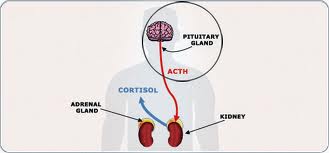
Adrenal hyperplasia is a rare genetic condition that involves the adrenal glands, which lie just above the kidneys.

It results in a blockage in the assembly line that makes the stress hormone cortisol from its chemical precursors.

People with the condition have low levels of cortisol, which helps to regulate blood sugar levels. If they fall too low, it can result in a coma.

But in some cases, the blockage can also reduce the production of aldosterone, a hormone involved in the regulation of salt in the bloodstream.

If salt levels fall too low it can lead to dehydration, vomiting and death.

Regular treatment with steroid medicines can help to maintain normal hormone levels and although the condition is lifelong, the outlook is generally good.

via Missing Boy: What Is Adrenal Hyperplasia? – Yahoo News UK.

PRKACA mutations in cortisol-producing adenomas and adrenal hyperplasia

Eur J Endocrinol. 2015 Mar 6. pii: EJE-14-1113. [Epub ahead of print]

PRKACA mutations in cortisol-producing adenomas and adrenal hyperplasia – a single-center study of 60 cases.

Abstract

Objective: Cortisol excess due to adrenal adenomas or hyperplasia causes Cushing’s syndrome. Recent genetic studies have identified a somatic PRKACAL206R mutation as a cause of cortisol-producing adenomas.

We aimed to compare the clinical features of lesions with PRKACA mutations to those with CTNNB1 mutations and to search for similar mutations in unilateral hyperplasia or tumors co-secreting aldosterone.

Design, patients and methods: 60 patients with cortisol excess who had adrenalectomies at our institution between 1992 and 2013 were assessed, and somatic mutations were determined by Sanger sequencing. 36 patients had overt Cushing’s syndrome, the remainder were subclinical. 59 cases were adenomas (three bilateral), one was classified as hyperplasia. Four tumors had proven co-secretion of aldosterone.

Results: Among cortisol-secreting unilateral lesions without evidence of co-secretion (n=52), we identified somatic mutations in PRKACA (L206R) in 23.1%, CTNNB1 (S45P, S45F) in 23.1%, GNAS (R201C) in 5.8% and CTNNB1 plus GNAS (S45P, R201H) in 1.9%. PRKACA and GNAS mutations were mutually exclusive. Of the co-secreting tumors, two (50%) had mutations in KCNJ5 (G151R and L168R). The hyperplastic gland showed a PRKACAL206R mutation, while patients with bilateral adenomas did not have known somatic mutations. PRKACA-mutant lesions were associated with younger age, overt Cushing’s syndrome and higher cortisol levels versus non-PRKACA-mutant or CTNNB1-mutant lesions. CTNNB1 mutations were more significantly associated with right than left lesions.

Conclusions: PRKACAL206R is present not only in adenomas, but also in unilateral hyperplasia and is associated with more severe autonomous cortisol secretion. Bilateral adenomas may be caused by yet-unknown germline mutations.

PMID:
25750087
[PubMed – as supplied by publisher]

From http://www.ncbi.nlm.nih.gov/pubmed/25750087

Clinical Trial for Cortendo

Cortendo Clinical Trial


About the Study

OBJECTIVE:

The purpose of this study is to test the effects of different doses of COR-003 on people with endogenous Cushing’s syndrome, primarily by measuring the cortisol levels in urine and secondarily by measuring other health parameters such as blood pressure, weight, liver function, etc. This study is also being conducted to find out if COR-003 is safe to use. This study is open-label, which means both the health providers and the participants in the study are aware of the drug or treatment being given.

STUDY DESIGN:

  • The study will begin with a screening period to make sure subjects are eligible to participate in the study.
  • After the screening period, subjects who are eligible for participation will each be given several different doses of COR-003, to be taken by mouth in tablet form.
  • After an individualized dose has been selected, participants will take COR-003 for 6 months.
  • Finally, participants will continue in the study for an additional 6 months at doses to be determined by the study doctor.
  • Throughout the study, participants will meet regularly with a study doctor and will take part in a variety of medical tests to make sure they are doing well and to see if COR-003 is working.
  • Participants in the study should be sure they have the time to participate. Participants will generally be followed for over a year.

See if you may be eligible for this clinical study. By providing your contact information, you will receive more information about the study and your eligibility.

About Cortendo

Cortendo is the sponsor of this study. This means Cortendo planned and organized this study. Cortendo will also collect and analyze the data from the study.

Cortendo is a global pharmaceutical company primarily focused on researching and providing treatments for rare diseases in endocrinology, such as Cushing’s syndrome. The company was founded in Sweden and its worldwide headquarters is located just outside of Philadelphia.

Fill out this form for more information: https://www.cushingssyndromestudy.com/registration.aspx

What Causes Cushing’s Disease?

0276f-pituitary-gland


A condition in which the body produces too much cortisol, Cushing’s disease occurs when a tumor on the pituitary gland makes the gland create too much ACTH, the hormone that stimulates the production and release of cortisol (also known as “the stress hormone”). It may also occur with excess growth of the pituitary gland, known as hyperplasia. For most patients, Cushing’s disease will show itself through symptoms like red lines on the abdomen, abdominal weight gain and roundness to the face. And while the condition only affects 10 to 15 people per million per year, patients who suffer with it understandably wonder why. What are the causes? Where would a pituitary gland tumor come from? What leads to excess growth of that gland? To help answer these questions, here’s a look at Cushing’s disease causes:

Causes of Cushing’s Disease

The most common cause for Cushing’s disease is adenoma, a usually benign tumor on the pituitary gland. Because the tumors are normally pretty small, they can be hard to diagnose. For this reason, many patients who have Cushing’s disease don’t find out right away. Meeting with an endocrinologist can help the diagnosis process, improving your chances for a fast, successful recognition of the disease.

Risk Factors for Cushing’s Disease

Even though it’s a rare condition, Cushing’s disease occurs more commonly in women, particularly those between the ages of 20 and 50. Other factors that may increase the risk of Cushing’s disease include obesity, type 2 diabetes, poorly controlled blood sugar levels and high blood pressure. While none of these factors are a direct cause of the condition, they are associated with higher prevalence of it.

Cushing’s Disease vs. Cushing’s Syndrome

Often mistaken for one another, Cushing’s disease and Cushing’s syndrome are actually not the same condition. What they have in common is that they both involve the body’s producing too much cortisol. Cushing’s disease is a medical condition, however, while Cushing’s syndrome is a symptom of it. Cushing’s syndrome will often occur when a patient is taking corticosteroid medication.

Why You Should See an Endocrinologist

If you believe you or someone you love may have Cushing’s disease, it is best to see a specialist. Symptoms develop slowly and sometimes in cycles, so without proper testing it can be hard to identify what’s happening. A skilled endocrinologist can conduct hormone blood tests to measure blood cortisol levels at different times. He or she can also schedule an MRI for an individual who is not taking cortisol medications, in order to isolate the location of any tumors.

Have you been dealing with the symptoms of elevated cortisol levels, such as unexplained weight gain, particularly in the abdominal area and/or back of the neck? Is your skin or vision changing? These symptoms could be indicating a deeper problem in your body — so schedule an appointment to have your condition evaluated by a professional as soon as you can. Through proper treatment, you may be able to reduce or even eliminate your symptoms and be restored to full health again.

From http://www.hormone.org/diseases-and-conditions/pituitary/secretory-tumors/cushings-disease/cushings-disease-causes

Day 4 Coverage of ENDO 2015

ENDO_2015


LB-OR02-Glucose Metabolism: From Bedside to Bench

A meta-analysis of the safety and efficacy of a glucagon-like peptide-1 receptor agonist added to basal insulin therapy versus basal insulin with or without a rapid-acting insulin in Type 2 diabetes
CH Wysham, J Lin, L Kuritzky


Hypoglycemia in patients newly-initiated on basal insulin: Impact on treatment discontinuation
M Dalal, M Kazemi, F Ye


OR36-Metabolism and Gestational Diabetes

Impact of gestational diabetes on long-term vascular function
O Ajala, L Jensen, EA Ryan, CL Chik


OR40-Obesity: Human Studies in Body Weight Regulation

Increased protein intake during overfeeding increases energy expenditure, satiety, and urinary cortisol
A Graham, MC Schlogl, J Krakoff, MS Thearle


OR40-Obesity: Human Studies in Body Weight Regulation–Winner: Outstanding Abstract Award

Acute weight loss stimulates lipolysis and macrophage infiltration in the subcutaneous adipose tissue of obese women
JO Alemán, NM Iyengar, J Walker, J Gonzalez, GL Milne, DD Giri, CA Hudis, JL Breslow, PR Holt, AJ Dannenberg


OR44-Thyroid Cancer

Salvage therapy: When a tyrosine kinase inhibitor (TKI) fails in advanced medullary thyroid cancer (MTC)
SP Weitzman, KT Peicher, R Dadu, MI-N Hu, C Jimenez, C Gardner, A Qayyum, M Hernandez, ME Cabanillas


OR44-Thyroid Cancer – Winner: Outstanding Abstract Award

Phase II clinical trial of sunitinib as adjunctive treatment in patients with advanced differentiated thyroid cancer
A Bikas, P Kundra, JA Wexler, M Mete, S Desale, L Wray, C Barett, B Clark, L Wartofsky, K Burman


OR45-What Is New in Vitamin D?

Bioavailable fractions are better markers than 25 hydroxy vitamin D for monitoring vitamin D status during pregnancy
MR Pandian, J Pandian, Z Seres, AN Elias


High dose vitamin D2 supplementation for a year does not cause serious adverse events including emergency room visits and hospitalizations in African American men with high burden of chronic disease
C Onochie, I Ciubotaru, A Domenico, Y Eisenberg, SC Kukreja, A Kouser, E Barengolts


OR45-What Is New in Vitamin D? – Winner: Outstanding Abstract Award

Incidence of hypercalciuria and hypercalcemia during vitamin D and calcium supplementation in older and younger women: A comparison between Caucasians and African Americans in two randomized trials
SH Tella, JC Gallagher, S Yousefian, V Yalamanchili