Clinical Trial for Cortendo

Cortendo Clinical Trial


About the Study

OBJECTIVE:

The purpose of this study is to test the effects of different doses of COR-003 on people with endogenous Cushing’s syndrome, primarily by measuring the cortisol levels in urine and secondarily by measuring other health parameters such as blood pressure, weight, liver function, etc. This study is also being conducted to find out if COR-003 is safe to use. This study is open-label, which means both the health providers and the participants in the study are aware of the drug or treatment being given.

STUDY DESIGN:

  • The study will begin with a screening period to make sure subjects are eligible to participate in the study.
  • After the screening period, subjects who are eligible for participation will each be given several different doses of COR-003, to be taken by mouth in tablet form.
  • After an individualized dose has been selected, participants will take COR-003 for 6 months.
  • Finally, participants will continue in the study for an additional 6 months at doses to be determined by the study doctor.
  • Throughout the study, participants will meet regularly with a study doctor and will take part in a variety of medical tests to make sure they are doing well and to see if COR-003 is working.
  • Participants in the study should be sure they have the time to participate. Participants will generally be followed for over a year.

See if you may be eligible for this clinical study. By providing your contact information, you will receive more information about the study and your eligibility.

About Cortendo

Cortendo is the sponsor of this study. This means Cortendo planned and organized this study. Cortendo will also collect and analyze the data from the study.

Cortendo is a global pharmaceutical company primarily focused on researching and providing treatments for rare diseases in endocrinology, such as Cushing’s syndrome. The company was founded in Sweden and its worldwide headquarters is located just outside of Philadelphia.

Fill out this form for more information: https://www.cushingssyndromestudy.com/registration.aspx

What Causes Cushing’s Disease?

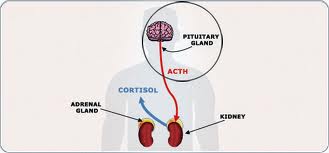
0276f-pituitary-gland


A condition in which the body produces too much cortisol, Cushing’s disease occurs when a tumor on the pituitary gland makes the gland create too much ACTH, the hormone that stimulates the production and release of cortisol (also known as “the stress hormone”). It may also occur with excess growth of the pituitary gland, known as hyperplasia. For most patients, Cushing’s disease will show itself through symptoms like red lines on the abdomen, abdominal weight gain and roundness to the face. And while the condition only affects 10 to 15 people per million per year, patients who suffer with it understandably wonder why. What are the causes? Where would a pituitary gland tumor come from? What leads to excess growth of that gland? To help answer these questions, here’s a look at Cushing’s disease causes:

Causes of Cushing’s Disease

The most common cause for Cushing’s disease is adenoma, a usually benign tumor on the pituitary gland. Because the tumors are normally pretty small, they can be hard to diagnose. For this reason, many patients who have Cushing’s disease don’t find out right away. Meeting with an endocrinologist can help the diagnosis process, improving your chances for a fast, successful recognition of the disease.

Risk Factors for Cushing’s Disease

Even though it’s a rare condition, Cushing’s disease occurs more commonly in women, particularly those between the ages of 20 and 50. Other factors that may increase the risk of Cushing’s disease include obesity, type 2 diabetes, poorly controlled blood sugar levels and high blood pressure. While none of these factors are a direct cause of the condition, they are associated with higher prevalence of it.

Cushing’s Disease vs. Cushing’s Syndrome

Often mistaken for one another, Cushing’s disease and Cushing’s syndrome are actually not the same condition. What they have in common is that they both involve the body’s producing too much cortisol. Cushing’s disease is a medical condition, however, while Cushing’s syndrome is a symptom of it. Cushing’s syndrome will often occur when a patient is taking corticosteroid medication.

Why You Should See an Endocrinologist

If you believe you or someone you love may have Cushing’s disease, it is best to see a specialist. Symptoms develop slowly and sometimes in cycles, so without proper testing it can be hard to identify what’s happening. A skilled endocrinologist can conduct hormone blood tests to measure blood cortisol levels at different times. He or she can also schedule an MRI for an individual who is not taking cortisol medications, in order to isolate the location of any tumors.

Have you been dealing with the symptoms of elevated cortisol levels, such as unexplained weight gain, particularly in the abdominal area and/or back of the neck? Is your skin or vision changing? These symptoms could be indicating a deeper problem in your body — so schedule an appointment to have your condition evaluated by a professional as soon as you can. Through proper treatment, you may be able to reduce or even eliminate your symptoms and be restored to full health again.

From http://www.hormone.org/diseases-and-conditions/pituitary/secretory-tumors/cushings-disease/cushings-disease-causes

Day 4 Coverage of ENDO 2015

ENDO_2015


LB-OR02-Glucose Metabolism: From Bedside to Bench

A meta-analysis of the safety and efficacy of a glucagon-like peptide-1 receptor agonist added to basal insulin therapy versus basal insulin with or without a rapid-acting insulin in Type 2 diabetes
CH Wysham, J Lin, L Kuritzky


Hypoglycemia in patients newly-initiated on basal insulin: Impact on treatment discontinuation
M Dalal, M Kazemi, F Ye


OR36-Metabolism and Gestational Diabetes

Impact of gestational diabetes on long-term vascular function
O Ajala, L Jensen, EA Ryan, CL Chik


OR40-Obesity: Human Studies in Body Weight Regulation

Increased protein intake during overfeeding increases energy expenditure, satiety, and urinary cortisol
A Graham, MC Schlogl, J Krakoff, MS Thearle


OR40-Obesity: Human Studies in Body Weight Regulation–Winner: Outstanding Abstract Award

Acute weight loss stimulates lipolysis and macrophage infiltration in the subcutaneous adipose tissue of obese women
JO Alemán, NM Iyengar, J Walker, J Gonzalez, GL Milne, DD Giri, CA Hudis, JL Breslow, PR Holt, AJ Dannenberg


OR44-Thyroid Cancer

Salvage therapy: When a tyrosine kinase inhibitor (TKI) fails in advanced medullary thyroid cancer (MTC)
SP Weitzman, KT Peicher, R Dadu, MI-N Hu, C Jimenez, C Gardner, A Qayyum, M Hernandez, ME Cabanillas


OR44-Thyroid Cancer – Winner: Outstanding Abstract Award

Phase II clinical trial of sunitinib as adjunctive treatment in patients with advanced differentiated thyroid cancer
A Bikas, P Kundra, JA Wexler, M Mete, S Desale, L Wray, C Barett, B Clark, L Wartofsky, K Burman


OR45-What Is New in Vitamin D?

Bioavailable fractions are better markers than 25 hydroxy vitamin D for monitoring vitamin D status during pregnancy
MR Pandian, J Pandian, Z Seres, AN Elias


High dose vitamin D2 supplementation for a year does not cause serious adverse events including emergency room visits and hospitalizations in African American men with high burden of chronic disease
C Onochie, I Ciubotaru, A Domenico, Y Eisenberg, SC Kukreja, A Kouser, E Barengolts


OR45-What Is New in Vitamin D? – Winner: Outstanding Abstract Award

Incidence of hypercalciuria and hypercalcemia during vitamin D and calcium supplementation in older and younger women: A comparison between Caucasians and African Americans in two randomized trials
SH Tella, JC Gallagher, S Yousefian, V Yalamanchili

OR17-Novel Aspects of Adrenal Tumors and the HPA Axis

ENDO_2015


March 06, 2015

OR17-Novel Aspects of Adrenal Tumors and the HPA Axis

Epigenetic modulation of DNA Is associated with fatigue, depression and anxiety in patients with Cushing’s syndrome in remission: A genome-wide methylation study

CAM Glad, JC Andersson-Assarsson, P Berglund, R Bergthorsdottir, O Ragnarsson, G Johannsson

Summary: Researchers conducted this study to determine whether patients with Cushing’s syndrome (CS) that is in remission have specific epigenetic alterations that are associated with persistent cognitive impairments, anxiety, fatigue, and depression. Patients with CS in remission were shows to have specific DNA methylation that differed from that of healthy controls and was strongly correlated with clinical traits of anxiety, depression and fatigue, they concluded, adding that their results may suggest that an interaction between the glucocorticoid and the retinoic acid receptor is implicated in the long-term outcome of patients with CS in remission. The persistent cognitive impairment observed in patients with CS in remission, therefore, may be due to epigenetic modulation of DNA, they concluded.

Methods:

  • For this cross-sectional, case-controlled, single center study, researchers included 48 women with CS in remission (mean age±SD: 52.9±14 years) and 16 controls (mean age±SD: 53.6±16 years) matched for age, gender and educational level.
  • The mean age at diagnosis of CS was 37±14 years and the median (interquartile range) duration of remission was 13 (5-19) years.
  • In all, 37 patients had Cushing’s disease (CD) and 11 had a cortisol producing adrenal adenoma.
  • Researchers used the fatigue impact scale (FIS) to evaluate fatigue, and the comprehensive psychopathological rating scale to evaluate depression and anxiety; they assessed cognitive function by standardized neuropsychological tests.
  • DNA was isolated from whole blood, and DNA methylation was analyzed on the Illumina Infinium HumanMethylation450K BeadChip, which simultaneously interrogates >465,000 methylation sites per sample.
  • Researchers performed data quality control and analysis using the ChAMP methylation analysis package in R, and used Spearmen’s rho to perform correlation analyses.

Results:

  • Researchers found that patients had higher median score for FIS, depression and anxiety.
  • Methylation analysis identified 3,903 probes (in 340 genes) in regions that were differently methylated between CS patients and controls, and they found that 28% of these were significantly correlated to at least one of the clinical traits.
  • Fatigue, depression and anxiety were the most commonly correlated traits, and two of the most highly correlated genes were RXRB and COL11A2.
  • Gene ontology analysis revealed that these belong to the same GO-terms and are involved in retinoic acid receptor activity.
  • Finally, researchers found that both genes were specifically hypomethylated in cases as compared to controls.


This project has received financial support from the Swedish federal government under the LUA/ALF agreement, The Health & Medical Care Committee of the Regional Executive Board, Region Västra Götaland, The Swedish Society of Medicine and The Swedish Society of Endocrinology.

From http://www.mdlinx.com/endocrinology/conference-abstract.cfm/ZZ5BA369FDE9DE4CED82CB6A7CD5BFD1BE/42321/?utm_source=confcoveragenl&utm_medium=newsletter&utm_content=abstract-list&utm_campaign=abstract-ENDO2015&nonus=0

Cortisol Dysregulation and Alcoholism: Consequence, Correlation or Causality?

What

The National Institute on Alcohol Abuse and Alcoholism (NIAAA), part of the National Institutes of Health, announces that Gary S. Wand, M.D., will deliver the 7th Annual Jack Mendelson Honorary Lecture. Dr. Wand is an internationally recognized neuroendocrinologist and the inaugural Rivière Professor in Endocrinology and Metabolism at The Johns Hopkins University School of Medicine. The title of his presentation is “Cortisol Dysregulation and Alcoholism: Consequence, Correlation or Causality?”

Who

Dr. Wand’s research has advanced our understanding of the genetic and environmental determinants of the stress response and has elucidated how excessive stress hormone production may contribute to neurobiological conditions such as alcohol or drug disorders.

Some of Dr. Wand’s seminal discoveries include identifying unique pharmacological responses to naloxone in individuals at increased risk for alcohol use disorders, identifying specific hormonal responses in subjects with alcohol use disorders, and characterizing human brain neurochemical changes using imaging in subjects with substance use disorders.

Dr. Wand is studying the epigenetic modulation of stress and cortisol exposure in rodent and human models, based on the hypothesis that specific epigenetic events affect how much cortisol an individual produces, which in turn influences dopamine transmission.

Dr. Wand received his medical degree and subsequent training in internal medicine from the George Washington University. Following post-doctoral training in Endocrinology and Metabolism at The Johns Hopkins University School of Medicine, he was a fellow in the peptide laboratories of Richard Mains, Ph.D. and Betty Eipper, Ph.D. in JHU’s Department of Neuroscience. Dr. Wand then joined the faculty of the Johns Hopkins University School of Medicine.

In 2000, NIAAA and the NIH honored Dr. Wand with a 10-year Merit Award to continue his research on the role of the HPA axis in alcoholism. He has also received numerous local and national “Best Doctor” awards. Dr. Wand is the author of more than 175 articles and chapters and is on the editorial board of several journals.

When

Thursday, March 19th at 1:30 p.m. EDT

Where

Masur Auditorium, NIH Building 10, Bethesda, Maryland

Background

NIAAA established the Jack Mendelson Honorary Lecture Series as a tribute to Dr. Jack Mendelson, who made remarkable scientific contributions to the field of clinical alcohol research. The purpose of this honorary lecture series is to highlight clinical/human research in the alcohol field by an outstanding investigator who has made significant and long-term contributions to our understanding of alcoholism susceptibility, alcohol’s effects on the brain and other organs, and the prevention and treatment of alcohol use disorders. NIAAA is pleased to present this series of scientific lectures to acknowledge the advances researchers are making in a wide range of alcohol-related areas of clinical research, and to honor the memory of an individual whose exciting and pioneering research with human alcoholics remains relevant today.

For additional information about the lecture see: http://www.niaaa.nih.gov/about-niaaa/our-work/research-portfolio/projects-initiatives/keller-and-mendelson-honorary-lecture

The Mendelson Honorary Lecture is free and open to the public. Sign language interpreters will be provided. For other reasonable accommodations or further information call Joanna Mayo, 301-443-3860, or visit www.niaaa.nih.gov. For TTY callers, please call the above number through the Federal Relay Service at 1-800-877-8339.

The National Institute on Alcohol Abuse and Alcoholism, part of the National Institutes of Health, is the primary U.S. agency for conducting and supporting research on the causes, consequences, prevention, and treatment of alcohol abuse, alcoholism, and alcohol problems. NIAAA also disseminates research findings to general, professional, and academic audiences. Additional alcohol research information and publications are available at http://www.niaaa.nih.gov.

About the National Institutes of Health (NIH): NIH, the nation’s medical research agency, includes 27 Institutes and Centers and is a component of the U.S. Department of Health and Human Services. NIH is the primary federal agency conducting and supporting basic, clinical, and translational medical research, and is investigating the causes, treatments, and cures for both common and rare diseases. For more information about NIH and its programs, visit www.nih.gov.