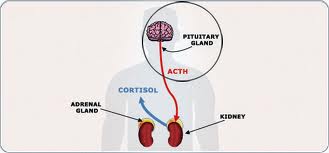
Pituitary Issues: Irregular Periods

Q: I am 28 years old and I have not yet started my periods naturally. I have to take medicine for periods — Novelon. The doctors say that there is some problem with my hormones in the pituitary gland. Please advise me how to get normal and natural periods, because after taking the medicine I get my period, but without medicines I don’t.

A by Dr Sharmaine Mitchell: The problem you have with your menstrual period being irregular is most likely due to overproduction of the hormone prolactin by the pituitary gland in the brain. The pituitary gland can sometimes enlarge and cause an overproduction of prolactin and this can result in inappropriate milk production in the breasts (white nipple discharge), irregular menstruation or absent menstrual periods, headaches and blurred vision. The blurred vision occurs as a result of compression of the optic nerve which supplies the eyes, by the enlarged brain tumour in the pituitary gland.

You should get a magnetic resonance imaging (MRI) or CT scan of the brain and pituitary gland done. You should also test your prolactin levels to determine the extent of overproduction of the hormone.

Other investigations should include a thyroid function test (TSH), follicle stimulating hormone (FSH) and leutinizing hormone (LH), and baseline testosterone level tests.

Abnormalities in the production of thyroid hormones can also cause menstrual irregularities and this should be ruled out.

Polycystic ovarian disease can also cause irregular menstrual periods and checking the level of FSH, LH and testosterone will help to rule out this diagnosis. This condition is usually associated with excessive weight gain, abnormal male pattern distribution on the face, chest and abdomen and an increased risk for diabetes mellitus. A pelvic ultrasound to look at the structure of the ovaries and to rule out polycystic ovaries is essential.

If the pituitary gland is enlarged, then medication can be prescribed to shrink it. Bromocriptine or Norprolac are commonly used drugs which work well in reducing the prolactin levels and establishing regular menstrual cycles. The use of these drugs will also help to establish ovulation and improve your fertility.

In some cases it may become necessary to have surgery done if the tumour in the pituitary gland is large and does not respond to the usual medications prescribed to shrink the pituitary gland. The MRI of the brain and pituitary gland will give an idea as to the size of the gland and help to determine if there is a need for you to see the neurosurgeon.

In most cases medical management with drugs will work well and there is no need for surgical intervention. This is a problem that can recur, so it may be necessary to take treatment intermittently for a long period of time, especially if fertility is desired.

Consult your doctor who will advise you further. Best wishes.

Dr Sharmaine Mitchell is an obstetrician and gynaecologist. Send questions via e-mail to allwoman@jamaicaobserver.com; write to All Woman, 40-42 1/2 Beechwood Ave, Kingston 5; or fax to 968-2025. All responses are published. Dr Mitchell cannot provide personal responses.

DISCLAIMER:

The contents of this article are for informational purposes only and must not be relied upon as an alternative to medical advice or treatment from your own doctor.

From http://www.jamaicaobserver.com/magazines/allwoman/Still-no-normal-period-at-28_87596

UAE Patient’s (Pituitary) Brain Tumour Removed Through Nostrils

Dubai: A 34-year-old patient working as a crane operator has undergone a remarkable new procedure of surgery at Thumbay Hospital, Dubai, that facilitated the removal of a brain tumour through the nostrils.

The patient, Mehnaj Khan, a Pakistani crane operator, underwent endoscopic trans-nasal trans-sphenoidal surgery in September, where the tumour was removed through the nose by endoscopic surgery without any cut or stitches on the skin. The father of five children has now made a full recovery, with improved vision, a hospital spokesperson said.

Khan first noticed something was wrong when his eyesight began to diminish, first the right eye, followed by the left eye. Although he had ignored his frequent bouts of headache for two years, Khan was compelled to visit an ophthalmologist due to vision deterioration. When an eye check-up revealed nothing was wrong, he was referred to to Thumbay Hospital, where an MRI scan of the brain revealed that he had a large tumour in the pituitary gland, pressing on the optic apparatus of brain and also hypothalamus, a very vital part of brain. This tumour was pressing on his optic nerves, causing him to slowly lose his sight.

Dr. Ishwar Chandra Premsagar, consultant neurosurgeon at Thumbay Hospital who operated on Khan, said: “Conventionally, such operations require surgeons to open the skull — a procedure known as a craniotomy. Alternatively, affected portions of the brain are reached via major incisions in the side of the face or inside the mouth, leaving behind major scars of the surgery. However, the patient’s tumour was removed by suctioning it out through his nose.”

An ear nose and throat (ENT) surgeon and an eye surgeon were consulted to plan the surgery and save further deterioration of vision while providing a chance for complete recovery.

Khan, who was nearly blind in one eye with the tumour growth, expressed his gratitude to the hospital and the teams of surgeons as he noticed improvement in his vision after the surgery. By the end of the week, he could read too. The patient was very thankful to the team of surgeons.

Dr Premsagar added: “The endoscope provides a close-up view of the pituitary, allowing the surgeon to remove the entire tumour out in one go through the nostrils, causing no disfigurement or damage to the brain. On the other hand, the procedure ensures far less danger of brain damage or stroke, and the patient usually makes a quicker recovery. Although post-surgery, deterioration of vision stops, but one cannot guarantee complete recovery of vision. This patient was lucky as his vision improved, but it may not happen in all patients. Hence, it is extremely important that one should ensure early consultation, diagnosis and surgery to ensure high chances of recovery.”

From http://gulfnews.com/news/uae/health/uae-patient-s-brain-tumour-removed-through-nostrils-1.1933841

All About the Pituitary Gland

0276f-pituitary-gland


The pituitary gland stimulates all the other endocrine glands to produce their own hormones. It produces a number of hormones including Human Growth Hormone (hGH) responsible for bone and muscle growth and Follicle Stimulating Hormone (FSH) which stimulates the production of the female egg or male sperm.  It is found at the base of the brain.
What can happen when it goes wrong?

When the pituitary gland doesn’t produce enough ‘trigger’ hormones, hypopituitarism occurs. Most often, it is caused by a benign tumor of the pituitary gland although it can also be caused by infections, head injury or even stroke.

Symptoms?
Excessive tiredness, reduced fertility, irregular periods, weight gain, poor libido, dry skin and headaches.
Treatment?
If caused by a tumor, surgery will be required to remove it. Regardless of whether this is successful, daily hormones will then be required to replace those no longer produced.

Adapted from http://www.hippocraticpost.com/palliative/whole-story-hormones/

Primary hyperaldosteronism: a case of unilateral adrenal hyperplasia with contralateral incidentaloma

BMJ Case Reports 2016; doi:10.1136/bcr-2016-216209
  • CASE REPORT
  1. Sujit Vakkalanka1,
  2. Andrew Zhao1,
  3. Mohammed Samannodi2

+Author Affiliations


  1. 1University at Buffalo, Buffalo, New York, USA

  2. 2Department of Medicine, Buffalo, New York, USA
  1. Correspondence toDr Mohammed Samannodi, samannodi@gmail.com
  • Accepted 28 June 2016
  • Published 14 July 2016

Summary

Primary hyperaldosteronism is one of the most common causes of secondary hypertension but clear differentiation between its various subtypes can be a clinical challenge.

We report the case of a 37-year-old African-American woman with refractory hypertension who was admitted to our hospital for palpitations, shortness of breath and headache. Her laboratory results showed hypokalaemia and an elevated aldosterone/renin ratio. An abdominal CT scan showed a nodule in the left adrenal gland but adrenal venous sampling showed elevated aldosterone/renin ratio from the right adrenal vein. The patient began a new medical regimen but declined any surgical options.

We recommend clinicians to maintain a high level of suspicion to consider the less common subtypes of primary hyperaldosteronism, especially given the fact that the management greatly varies.

From http://casereports.bmj.com/content/2016/bcr-2016-216209.short?rss=1

A Team Effort to Treat a Pea-Sized Gland

HYANNIS – Endoscopic surgery for pituitary tumors involves the use of small instruments, but neurosurgeon Nicholas Coppa, MD, FAANS, is quick to say it takes a big team to make the surgeries a success.

“It’s very much a collaborative effort among endocrinology, neurosurgery and otolaryngology specialties,” he said.

Dr. Coppa frequently works with endocrinologist Catalina Norman, MD, PhD, and ear, nose and throat surgeon Ross Johnston, MD.

The pituitary gland sits at the base of the brain. It makes important hormones that control several different systems in the body and help maintain normal body function.

“The overwhelming majority of patients with big tumors present with visual problems,” said Dr. Coppa. “They get tunnel vision from a tumor putting pressure on the vision nerves.

Many patients’ pituitary problems are detected incidentally while the physician is trying to diagnose a set of symptoms, most commonly headaches, he added. A variety of asymptomatic tumors are detected this way.

A subset of pituitary tumors secrete excess hormones, which create syndromes characterized by whatever hormone is being secreted in excess, Dr. Coppa added. Oftentimes these problems are diagnosed by an endocrinologist.

Before coming to Neurosurgeons of Cape Cod – now known as Cape Cod Healthcare Neurosurgery – in 2013, Dr. Coppa was professor of skull base surgery at Oregon Health and Science University’s Northwest Pituitary Center. He has performed more than 200 endoscopic surgeries for pituitary tumors, sinonasal malignancies and anterior skull base encephaloceles. The procedure is fairly new on Cape Cod, he said.

The pituitary gland is about the size of a pea, so operating on it is a tricky and delicate procedure.

The surgeon commonly works with an endoscope inserted through one nostril, and microsurgical instruments through the other nostril. This allows him to maneuver to the surgical area.

According to the Northwest Pituitary Center’s web site, “The tube is connected to a TV monitor that helps your doctor see the surgical area even more clearly than with a microscope. Your doctor can also use intraoperative neuro-navigation to perform image-guided surgery, based on a pre-operative CT scan or MRI. This helps the doctor see exactly where the tumor is and avoid damaging healthy brain tissue that is nearby.”

Nasal endoscopy for the neurosurgeon has really taken off in the last 10 years, according to Dr. Coppa. The main reason for the increase is because the technique allows better visualization of the anatomy, he said.

“We find that it allows, at least in my experience, more maneuverability of your micro-surgical instruments. That’s been very satisfying for patients. The nasal morbidity [adverse effects] is lower compared to historic ways of doing it.”

Ear, nose and throat doctors use trans-nasal surgery to treat many sinus conditions, said Dr. Coppa. But the procedure is predominantly used by neurosurgeons for pituitary tumors, other tumors of the skull base and malignancies of the sinus cavity that often invade the brain.

After endoscopic pituitary surgery, patients are typically in the hospital for several days and resume day-to-day activities within that first week.

By BILL O’NEILL, OneCape Health News


From http://www.capecod.com/newscenter/a-team-effort-to-treat-a-pea-sized-gland/