Think Like a Doctor: Red Herrings Solved!

By LISA SANDERS, M.D.

On Thursday we challenged Well readers to take the case of a 29-year-old woman with an injured groin, a swollen foot and other abnormalities. Many of you found it as challenging as the doctors who saw her. I asked for the right test as well as the right diagnosis. More than 200 answers were posted.

The right test was…

The dexamethasone suppression test,though I counted those of you who suggested measuring the cortisol in the urine.

The right diagnosis was…

Cushing’s disease

More than a dozen of you got the right answer or the right test, but Dr. Davin Quinn, a consultant psychiatrist at the University of New Mexico Hospital, was the first to be right on both counts. As soon as he saw that the patient’s cortisol level was increased, he thought of Cushing’s. And he had treated a young patient like this one some years ago as a second year resident.

The Diagnosis:

Cushing’s disease is caused by having too much of the stress hormone cortisol in the body. Cortisol is made in the adrenal glands, little pyramid shaped organs that sit atop the kidneys. It is normally a very tightly regulated hormone that helps the body respond to physical stress.

Sometimes the excess comes from a tumor in the adrenal gland itself that causes the little organ to go into overdrive, making too much cortisol. More often the excess occurs when a tumor in the pituitary gland in the brain results in too much ACTH, the hormone that controls the adrenal gland.

In the body, cortisol’s most fundamental job is to make sure we have enough glucose around to get the body’s work done. To that end, the hormone drives appetite, so that enough fuel is taken in through the food we eat. When needed, it can break muscle down into glucose. This essential function accounts for the most common symptoms of cortisol excess: hyperglycemia, weight gain and muscle wasting. However, cortisol has many functions in the body, and so an excess of the hormone can manifest itself in many different ways.

Cushing’s was first described by Dr. Harvey Cushing, a surgeon often considered the father of modern neurosurgery. In a case report in 1912, he described a 23-year-old woman with sudden weight gain, mostly in the abdomen; stretch marks from skin too thin and delicate to accommodate the excess girth; easy bruising; high blood pressure and diabetes.

Dr. Cushing’s case was, it turns out, a classic presentation of the illness. It wasn’t until 20 years later that he recognized that the disease had two forms. When it is a primary problem of an adrenal gland gone wild and producing too much cortisol on its own, the disease is known as Cushing’s syndrome. When the problem results from an overgrown part of the pituitary making too much ACTH and causing the completely normal adrenal glands to overproduce the hormone, the illness is called Cushing’s disease.

It was an important distinction, since the treatment often requires a surgical resection of the body part where the problem originates. Cushing’s syndrome can also be caused by steroid-containing medications, which are frequently used to treat certain pulmonary and autoimmune diseases.

How the Diagnosis Was Made:

After the young woman got her lab results from Dr. Becky Miller, the hematologist she had been referred to after seeing several other specialists, the patient started reading up on the abnormalities that had been found. And based on what she found on the Internet, she had an idea of what was going on with her body.

“I think I have Cushing’s disease,” the patient told her endocrinologist when she saw him again a few weeks later.

The patient laid out her argument. In Cushing’s, the body puts out too much cortisol, one of the fight-or-flight stress hormones. That would explain her high blood pressure. Just about everyone with Cushing’s disease has high blood pressure.

She had other symptoms of Cushing’s, too. She bruised easily. And she’d been waking up crazy early in the morning for the past year or so – around 4:30 – and couldn’t get back to sleep. She’d heard that too much cortisol could cause that as well. She was losing muscle mass – she used to have well-defined muscles in her thighs and calves. Not any more. Her belly – it wasn’t huge, but it was a lot bigger than it had been. Cushing’s seemed the obvious diagnosis.

The doctor was skeptical. He had seen Cushing’s before, and this patient didn’t match the typical pattern. She was the right age for Cushing’s and she had high blood pressure, but nothing else seemed to fit. She wasn’t obese. Indeed, she was tall (5- foot-10) and slim (150 pounds) and athletic looking. She didn’t have stretch marks; she didn’t have diabetes. She said she bruised easily, but the endocrinologist saw no bruises on exam. Her ankle was still swollen, and Cushing’s can do that, but so can lots of other diseases.

The blood tests that Dr. Miller ordered measuring the patient’s ACTH and cortisol levels were suggestive of the disease, but many common problems — depression, alcohol use, eating disorders — can cause the same result. Still, it was worth taking the next step: a dexamethasone suppression test.

Testing, Then Treatment:

The dexamethasone suppression test depends on a natural negative feedback loop whereby high levels of cortisol suppress further secretion of the hormone. Dexamethasone is an artificial form of cortisol. Given in high doses, it will cause the level of naturally-occurring cortisol to drop dramatically.

The patient was told to take the dexamethasone pills the night before having her blood tested. The doctor called her the next day.

“Are you sure you took the pills I gave you last night?” the endocrinologist asked her over the phone. The doctor’s voice sounded a little sharp to the young woman, tinged with a hint of accusation.

“Of course I took them,” she responded, trying to keep her voice clear of any irritation.

“Well, the results are crazy,” he told her and proposed she take another test: a 24-hour urine test.

Because cortisol is eliminated through the kidneys, collecting a full day’s urine would show how much cortisol her body was making. So the patient carefully collected a day’s worth of urine.

A few days later, the endocrinologist called again: her cortisol level was shockingly high. She was right, the doctor conceded, she really did have Cushing’s.

An M.R.I. scan revealed a tiny tumor on her pituitary. A couple of months later, she had surgery to remove the affected part of the gland.

After recovering from the surgery, the patient’s blood pressure returned to normal, as did her red blood cell count and her persistently swollen ankle. And she was able to once again sleep through the night.

Red Herrings Everywhere:

As many readers noted, there were lots of findings that didn’t really add up in this case. Was this woman’s groin sprain part of the Cushing’s? What about the lower extremity swelling, and the excess red blood cell count?

In the medical literature, there is a single case report of high red blood cell counts as the presenting symptom in a patient with Cushing’s. And with this patient, the problem resolved after her surgery – so maybe they were linked.

And what about the weird bone marrow biopsy? The gastritis? The enlarged spleen? It’s hard to say for certain if any of these problems was a result of the excess cortisol or if she just happened to have other medical problems.

Why the patient didn’t have the typical symptoms of Cushing’s is easier to explain. She was very early in the course of the disease when she got her diagnosis. Most patients are diagnosed once symptoms have become more prominent

By the time this patient had her surgery, a couple of months later, the round face and belly characteristic of cortisol excess were present. Now, two years after her surgery, none of the symptoms remain.

From http://well.blogs.nytimes.com/2014/01/17/think-like-a-doctor-red-herrings-solved/?_php=true&_type=blogs&_r=0

What Do *You* Think? Smartwatch Measures Cortisone

Share your thoughts here.

The human body responds to stress, from the everyday to the extreme, by producing a hormone called cortisol.

To date, it has been impractical to measure cortisol as a way to potentially identify conditions such as depression and post-traumatic stress, in which levels of the hormone are elevated. Cortisol levels traditionally have been evaluated through blood samples by professional labs, and while those measurements can be useful for diagnosing certain diseases, they fail to capture changes in cortisol levels over time.

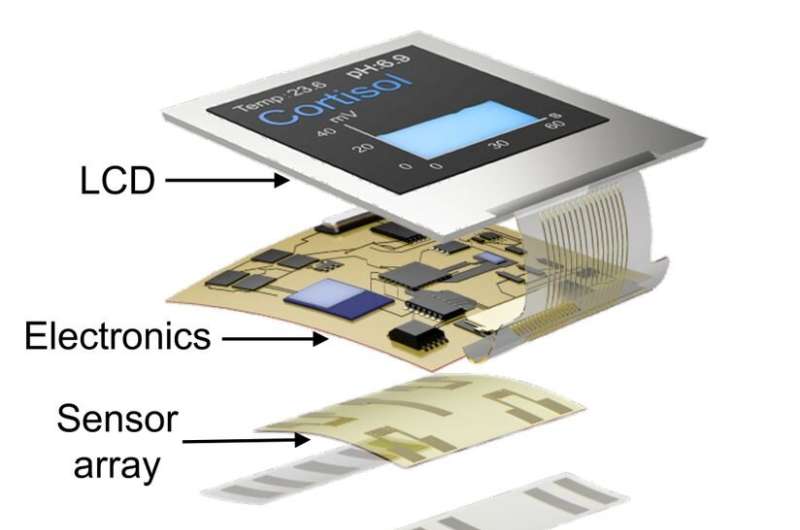
Now, a UCLA research team has developed a device that could be a major step forward: A smartwatch that assesses cortisol levels found in sweat—accurately, noninvasively and in real time. Described in a study published in Science Advances, the technology could offer wearers the ability to read and react to an essential biochemical indicator of stress.

“I anticipate that the ability to monitor variations in cortisol closely across time will be very instructive for people with psychiatric disorders,” said co-corresponding author Anne Andrews, a UCLA professor of psychiatry and biobehavioral sciences, member of the California NanoSystems Institute at UCLA and member of the Semel Institute for Neuroscience and Human Behavior. “They may be able to see something coming or monitor changes in their own personal patterns.”

Cortisol is well-suited for measurement through sweat, according to co-corresponding author Sam Emaminejad, an associate professor of electrical and computer engineering at the UCLA Samueli School of Engineering, and a member of CNSI.

“We determined that by tracking cortisol in sweat, we would be able to monitor such changes in a wearable format, as we have shown before for other small molecules such as metabolites and pharmaceuticals,” he said. “Because of its small molecular size, cortisol diffuses in sweat with concentration levels that closely reflect its circulating levels.”

The technology capitalizes on previous advances in wearable bioelectronics and biosensing transistors made by Emaminejad, Andrews and their research teams.

In the new smartwatch, a strip of specialized thin adhesive film collects tiny volumes of sweat, measurable in millionths of a liter. An attached sensor detects cortisol using engineered strands of DNA, called aptamers, which are designed so that a cortisol molecule will fit into each aptamer like a key fits a lock. When cortisol attaches, the aptamer changes shape in a way that alters electric fields at the surface of a transistor.

The invention—along with a 2021 study that demonstrated the ability to measure key chemicals in the brain using probes—is the culmination of a long scientific quest for Andrews. Over more than 20 years, she has spearheaded efforts to monitor molecules such as serotonin, a chemical messenger in the brain tied to mood regulation, in living things, despite transistors’ vulnerability to wet, salty biological environments.

Sweating the small stuff: Smartwatch developed at UCLA measures key stress hormone
The technology capitalizes on previous work by Sam Emaminejad, Anne Andrews and their UCLA research teams. Credit: Emaminejad Lab and Andrews Lab/UCLA

In 1999, she proposed using nucleic acids—rather than proteins, the standard mechanism—to recognize specific molecules.

“That strategy led us to crack a fundamental physics problem: how to make transistors work for electronic measurements in biological fluids,” said Andrews, who is also a professor of chemistry and biochemistry.

Meanwhile, Emaminejad has had a vision of ubiquitous personal health monitoring. His lab is pioneering wearable devices with biosensors that track the levels of certain molecules that are related to specific health measures.

“We’re entering the era of point-of-person monitoring, where instead of going to a doctor to get checked out, the doctor is basically always with us,” he said. “The data are collected, analyzed and provided right on the body, giving us real-time feedback to improve our health and well-being.”

Emaminejad’s lab had previously demonstrated that a disposable version of the specialized adhesive film enables smartwatches to analyze chemicals from sweat, as well as a technology that prompts small amounts of sweat even when the wearer is still. Earlier studies showed that sensors developed by Emaminejad’s group could be useful for diagnosing diseases such as cystic fibrosis and for personalizing drug dosages.

One challenge in using cortisol levels to diagnose depression and other disorders is that levels of the hormone can vary widely from person to person—so doctors can’t learn very much from any single measurement. But the authors foresee that tracking individual cortisol levels over time using the smartwatch may alert wearers, and their physicians, to changes that could be clinically significant for diagnosis or monitoring the effects of treatment.

Among the study’s other authors is Janet Tomiyama, a UCLA associate professor of psychology, who has collaborated with Emaminejad’s lab over the years to test his wearable devices in clinical settings.

“This work turned into an important paper by drawing together disparate parts of UCLA,” said Paul Weiss, a UCLA distinguished professor of chemistry and biochemistry and of materials science and engineering, a member of CNSI, and a co-author of the paper. “It comes from us being close in proximity, not having ego problems and being excited about working together. We can solve each other’s problems and take this technology in new directions.”

The paper’s co-first authors are UCLA postdoctoral scholar Bo Wang and Chuanzhen Zhao, a former UCLA graduate student. Other co-authors are Zhaoqing Wang, Xuanbing Cheng, Wenfei Liu, Wenzhuo Yu, Shuyu Lin, Yichao Zhao, Kevin Cheung and Haisong Lin, all of UCLA; and Milan Stojanović and Kyung-Ae Yang of Columbia University.

From https://techxplore.com/news/2022-02-small-newly-smartwatch-key-stress.html

History of Cortisone’s Discovery

It was Christmas Day in 1914 when the Mayo Clinic chemist Edward C. Kendall, PhD, first succeeded in isolating pure crystalline thyroxin using 6,500 pounds of hog thyroid glands, a success that would set him on the course for making one of the greatest discoveries in medicine in the last century.

His pivotal discovery, according to William F. Young, Jr., MD, MSc, chair of the division of endocrinology, diabetes, metabolism and nutrition at the Mayo Clinic College of Medicine, would lead Kendall, a self-described “hormone hunter,” to conduct adrenal experiments that would eventually change the course of medicine in ways he couldn’t have imagined. Kendall and his team’s discovery of cortisone would lead not only to a breakthrough treatment, Young said, but a Nobel Prize and international acclaim.

In an interview prior to presenting the Clark T. Swain Memorial History of Endocrinology Lecture at ENDO 2017, Young said that understanding the history behind such a monumental discovery can help endocrinologists see how hormone research has evolved, and provides insight into how to make advances in basic science and improve patient care. In preparing to tell Kendall’s story, Young completed archival research at Mayo and uncovered information that has not previously been published, he said.

“The cortisone story originated at Mayo Clinic, where I have been on staff for 33 years,” Young told Endocrine Today. “Although much of this story is not new information, it is not familiar to the current generations of endocrine scientists and clinical endocrinologists. It is a story of discovery science, clinical intuition, persistence, team science, patient volunteerism and sacrifice, hopes, and dreams.”

‘A big oak tree’

When Kendall first took on the project of preparing better adrenal extracts to potentially treat Addison’s disease in 1930, he was already thinking bigger, Young said.

“He once said, ‘I want to grow a great big oak tree … I am not interested in a bunch of blackberry bushes,’” Young said.

During his experiments at Mayo Clinic, the cost of bovine adrenals rose from 0.20 cents a pound to $3 per pound, equivalent to $42 per pound today. In 1934, Kendall struck a deal with Parke Davis Co., were he would extract “adrenalin” at no cost for the company if it would, in turn, deliver to him 600 pounds of bovine adrenals each week, Young said. He would then use the adrenal cortex for his studies.

In addition, Kendall struck a side deal with Wilson Labs, Young said, for an additional 300 pounds of bovine adrenals per week, to produce a cortical extract for them. He would in turn use the adrenal medullas to boost his production of adrenalin for the Park Davis deal.

“From 1934 to 1949, virtually all of the adrenaline used in North America was manufactured at Mayo Clinic in the small town of in Rochester, Minnesota,” Young said. “This lab ran 24 hours a day, in three shifts. By 1949, over 150 tons of adrenal glands had been processed at Mayo Clinic … $12.4 million in research supply dollars.”

A new discovery

In 1934, Kendall recognized through his work that the adrenal cortex produced more than one hormone, Young said. Over the next year, Kendall’s group isolated five crystalline compounds, naming them compounds “A” through “E” based on their order of identification. Compound “E” — what would later be named cortisone — was found to be biologically active, Young said.

Interest in synthesizing the active hormone from the adrenal cortex grew as part of the American war effort in the 1940s, Young said, and the U.S. National Research Council made it a priority. By 1948, 9,000 mg of “compound E” had been synthesized for clinical study; 2,000 mg were given to each of three investigators at Mayo Clinic for studies in patients with Addison’s disease and the remaining 3,000 mg were saved for future study.

In 1948, a patient known as H.G., a 28-year-old women with progressive inflammatory arthritis, presented to the clinic, Young said. After an unsuccessful treatment with the Swedish hepatoxin lactophenin — a therapy used at the time that induced jaundice in some patients, leading to remission — her physician, Philip Hench, went to Kendall for help. Kendall agreed to give Hench some of the remaining 3,000 mg of “compound E,” if Hench could convince Merck to grant permission.

The clinicians did get permission, and H.G. began treatment. Within days, Young said, the improvement was remarkable. Reading from the original, handwritten notes of Hench and his colleagues in rheumatology, , Young detailed the patient’s progress:

“Rolled over and turned off the radio with ease for the first time in weeks,” the notes said from “day 3.” “No more trembling of knees when moving.”

The clinicians were so amazed, Young said, that they filmed H.G’s progress. Young, who obtained the original films from the Mayo Clinic archives, showed footage of a crippled H.G. struggling to stand, only to be walking normally.

“They started taking videos because they realized no one would believe them,” Young said as the video played. “That they actually had something that could affect, up until this point, a crippling disorder.”

Hench came up with the acronym “cortisone,” adapted from corticosterone.

The discovery became international news. In December 1950, Kendall, Hench along with Tadeus Reichstein, received the 1950 Nobel Prize in Physiology and Medicine — just 27 months after H.G. received her first dose of “compound E.”

The future of corticosteroids

Today, Young said, corticosteroids are used for their anti-inflammatory and immunosuppressive properties across the field of medicine. Natural and synthetic glucocorticoids are used to treat a wide variety of non-adrenal diseases, from allergies, to gastrointestinal disorders and infectious diseases.

The important story of patient H.G. — and the scientific journey of Kendall and his colleagues — still resonates, Young said.

“My hope is that this story will remind us of our endocrine heritage and give us an opportunity to recognize the unlimited potential for discovery, research and clinical investigation that is taking place in research laboratories and clinical endocrine centers across the globe,” Young said in an interview. “In the current environment in the U.S., where federal research funds are being cut back, it is important to recall where the major advances in research and public health have come from.”

“There are many other messages in the presentation,” Young said. “For example, the importance of ‘team science’— a phrase only recently coined — has been in place for decades. It is team science that has led to many of the major advances in medicine, including the therapeutic use of corticosteroids.” – by Regina Schaffer

Reference:

Young WF. A Chemist, a Patient and the 1950 Nobel Prize in Physiology and Medicine: The Stories Behind the Stories on Cortisone. Presented at: The Endocrine Society Annual Meeting; April 1-4, 2017; Orlando, Fla.

Disclosures: Young reports no relevant financial disclosures.


From http://www.healio.com/endocrinology/adrenal/news/online/%7Bd8d71bcc-a981-418e-9d41-af4b2dcaa48f%7D/history-of-cortisones-discovery-offers-lessons-in-team-science-persistence

In Production: Quick and Cheap Bedside Test for Cortisol Uses Smartphone

An innovative method of measuring the stress hormone cortisol is being developed by researchers in Utah. Requiring just a simple kit and a smartphone to read results, this new approach should allow quick, affordable, and accurate testing of cortisol levels, enabling rapid diagnosis of adrenal diseases, the investigators say.

“A lab charges about $25 to $50 for a quantitative salivary cortisol test and has a turnaround time of days to a week,” said lead researcher Joel Ehrenkranz, MD, director of diabetes and endocrinology at Intermountain Medical Center, Murray, Utah. “This test, taken in a medical office or at home, will cost less than $5 and take less than 10 minutes,” he noted.

Dr. Ehrenkranz reported the details of the new test kit, developed at his institution, at ICE/ENDO 2014 week. He said he and his fellow researchers are now collating clinical data for a Food and Drug Administration (FDA) submission and hope to gain approval of the test as a class 2 medical device in the United States in 2015.

Chair of the session, Jeremy Tomlinson, MD, of University of Birmingham, United Kingdom, said the new approach employs “great technology and is an interesting innovation, but there are a few concerns. For example, how well will it perform against the state-of-the-art technique for measuring salivary cortisol, which is mass spectrometry — is it as sensitive?”

Also there is a possibility the immunoassay in the new test will cross react with another steroid hormone, prednisolone, that people might be taking for a whole range of inflammatory conditions, so “you would want to make sure it’s measuring what you want it to,” he noted.

And finally, there is the question of exactly how this would be used.

Cortisol levels are needed when conditions are suspected where too much or too little cortisol is produced, but the diagnosis for most of these doesn’t really need to be immediate, Dr. Tomlinson explained to Medscape Medical News. However, he conceded there might be a role for the assay in patients presenting to the emergency room or in developing nations.

No More Presumptive Treatment of Adrenal Insufficiency

At the meeting, Dr. Ehrenkranz said that adrenal diseases are commonly overlooked because current methods of measuring salivary cortisol require instrumentation and technical personnel and so are costly and unable to deliver timely results.

He noted also that a stint in the developing world convinced him that a simpler test was needed, so he and his colleagues set about developing an assay that would be inexpensive and easy to perform — they came up with disposable cortisol immunoassay strips containing a glass fiber element with colloidal gold-labeled murine anticortisol antibodies and a saliva collection pad.

The person being tested inserts a strawlike saliva collector under the tongue, which wicks the saliva to the immunoassay test strip housed in a cassette, which is then inserted into a reader in the device.

“The device…includes a case, a light pipe, and a lens and costs about a dollar to make. There is no battery power, and it’s unbreakable, passive, and reusable,” Dr Ehrenkranz said.

Because of the physical properties of the gold nanoparticles, a smartphone flash can illuminate and camera-image the color generated by the colloidal gold-labeled anticortisol antibodies, he explained.

The color subsequently generated is “read” by an app on the smartphone to give a cortisol reading, based on an algorithm derived from observed vs reference salivary cortisol values. The R value of this curve was 0.996 for salivary cortisol in the range of 0.012-3.0 µg/dL, Dr Ehrenkranz noted.

The new technology can therefore measure cortisol in a range sufficient to diagnose adrenal insufficiency and hypercortisolism and monitor physiologic variations in cortisol concentration, he said.

And the software is “operating-system agnostic,” he added, meaning the device can be used on all platforms, including iOS, Android, Windows, and BlackBerry, and it has a universal form factor that works with all smartphones.

“Measuring salivary cortisol at the point of care in 5 minutes using an inexpensive immunochromatographic assay, reader, and smartphone may obviate the need to presumptively treat patients for adrenal insufficiency and makes cortisol assays available to regions of the world that currently lack access to this diagnostic test,” he concluded.

Test of Use in Emergency Room, in Developing Countries

Dr. Tomlinson explained that diagnosis of Cushing’s syndrome — caused either by tumors of the pituitary gland producing too much ACTH or tumors of the adrenal gland producing too much cortisol — or alternatively, diagnosis of conditions where it’s thought too little cortisol is being secreted, such as Addison’s disease — an autoimmune process whereby the adrenal gland is destroyed — are not conditions “you necessarily have to diagnose in a few minutes by the bedside,” and therefore it is better to use the “gold standard” of diagnosis, mass spectrometry, in these cases.

But the new test “might be of use in determining whether people have enough of their own natural corticosteroid, in terms of deciding whether you need to give supplemental cortisol to people in an emergency situation,” he explained.

This could include patients presenting with suspected or underlying pituitary or adrenal disease or in people who have been on large doses of steroids who have then stopped taking them, so there will be a resulting suppression of their natural steroid production, he noted.

“That’s not an uncommon situation that we see in the emergency room. At the moment, if there’s suspicion, we might take a test but it takes a day or 2 to come back from the laboratory, and in the meantime we will give patients [presumptive] steroids. But you could do this test by the bedside,” he acknowledged.

And in developing countries, use of this test “is feasible, where cost comes into the equation and you might not have access to mass spectrometry; this could be an alternative and would help you to exclude or make these diagnoses,” he concluded.

This study was privately funded. Dr. Ehrenkranz and colleagues report no relevant financial relationships.

Joint Meeting of the International Society of Endocrinology and the Endocrine Society: ICE/ENDO 2014; June 24, 2014. Abstract OR48-2

From http://www.medscape.com/viewarticle/827580

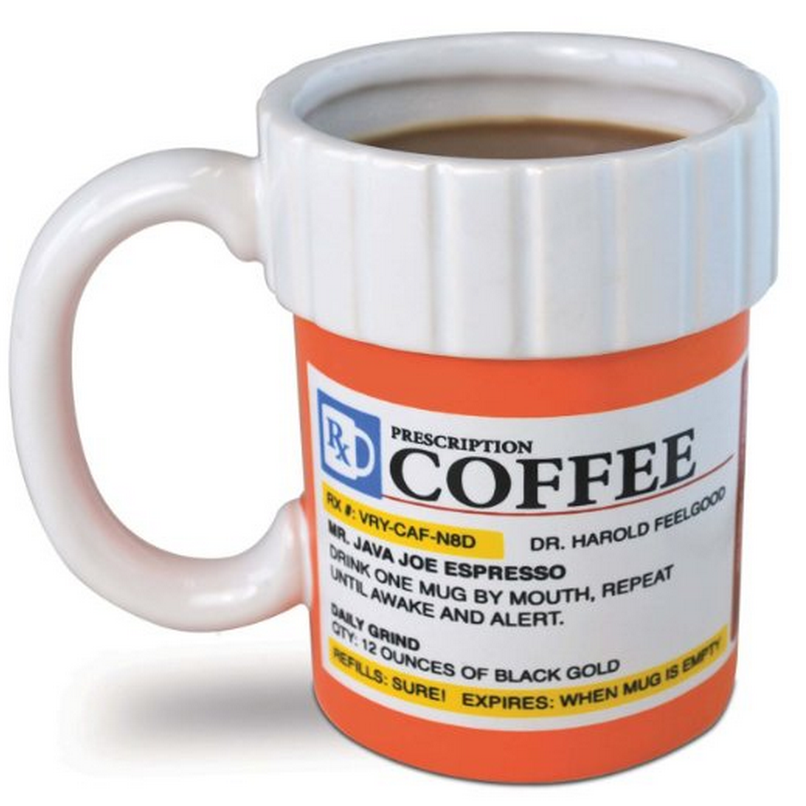
Does Coffee Trigger Cortisol Release?

coffee-prescription


Cortisol is the infamous hormone you release when you’re stressed. In high doses it inhibits brain function, slows metabolism, breaks down muscle, and increases blood pressure. Have you ever felt panicked before a public speech and forgotten everything you were going to say? That’s what a big bump in cortisol feels like. And if you’re looking for stress relief, lowering cortisol helps.

Cortisol isn’t all bad, though. In fact, it’s necessary for you to function. Cortisol peaks in the morning, helping to wake you up, and it can be a useful as an indicator of strain, letting you know when to slow down or stop something that’s stressing you out. Cortisol also decreases inflammation – that’s part of the reason your body releases it in response to, for example, a workout that tears your muscle tissue.

Low cortisol is an issue, too. Insufficient cortisol can leave you feeling tired, emotional, and anxious. As long as you avoid chronically elevated or depleted cortisol you can make the little hormone work to your advantage.

A common argument against drinking coffee is that it triggers cortisol release, but (forgive us for getting nitpicky) that may not be true. Caffeine definitely triggers cortisol release. In fact, the increase in cortisol is part of the reason caffeine makes you feel more alert.

Remember a few paragraphs ago, when we were talking about how you build a tolerance to some of caffeine’s effects but not others? Cortisol release is one of the effects to which you build tolerance. If you only take caffeine now and then, it causes a big boost in cortisol. But if you get caffeine daily (by drinking coffee every morning, for example) your body tempers the cortisol response. You still release cortisol, but not enough to worry about unless your cortisol is already out of whack.

Does coffee itself (separate from caffeine) cause cortisol release? Mycotoxins do, at least in mice, and they cause inflammation (a common trigger of cortisol release) in humans. It’s difficult to say whether mold-free coffee increases cortisol.

Regardless, studies suggest that cortisol release from caffeine is mild if you drink it daily. For most of us, that little bump shouldn’t be a problem.

From https://www.yahoo.com/health/caffeine-and-cortisol-does-coffee-1276507994071094.html