The Current Role Of Transcranial Surgery In The Management Of Pituitary Adenomas

Pituitary. 2013 Dec;16(4):419-34. doi: 10.1007/s11102-012-0439-z.

The current role of transcranial surgery in the management of pituitary adenomas.

Source

Section of Neurosurgery, Department of Neurological Sciences, Christian Medical College, Vellore, 632004, Tamil Nadu, India.

Abstract

The aim of this study was to determine the factors influencing the use of a transcranial (TC) approach in pituitary adenomas and suggest a decision-making tree for the surgical strategy.

The data for 23 (4.6 %) patients who underwent TC surgery from amongst 494 pituitary adenomas were retrospectively analyzed. Eight factors on magnetic resonance imaging (MRI) that could predict a difficult transsphenoidal (TS) surgery were noted.

Adverse findings at TS surgery leading to a 2nd stage TC surgery were documented. Eighteen of the 23 cases were giant adenomas. Thirteen patients underwent TC surgery alone or as an initial approach when combined with TS while 10 underwent 2nd stage TC surgery following a TS approach. Most cases in the first group had 3 or more radiological factors in combination with a small sella. The 2nd group had higher sellar tumor volumes and fewer unfavourable radiological factors that led to the initial use of the TS approach.

A hard, fibrous consistency or a significant residue obscured from the surgeon’s view, and difficulty in hemostasis were additional factors prompting the use of a TC approach. Tumor excision ≥90 % could be achieved in 13 cases (56.5 %). Post-operative RT was administered in 12 patients. There were 2 deaths (8.7 %) and the major morbidity rate was 43 %. Despite advances in endoscopic surgery the TC approach may be required in 5 % of cases.

A study of the preoperative MRI for factors that predict difficulty with the TS approach might encourage the surgeon to consider a TC surgery either as an initial approach or combined with a TS surgery.

PMID:
23076713
[PubMed – in process]

Prolactin Measure Didn’t Help Localize Pituitary Adenoma

By: SHERRY BOSCHERT, Clinical Endocrinology News Digital Network

SAN FRANCISCO – Measurements of prolactin levels during inferior petrosal sinus sampling did not help localize pituitary adenomas in patients with Cushing’s disease in a study of 28 patients, contradicting findings from a previous study of 28 patients.

The value of prolactin measurements in tumor localization using inferior petrosal sinus sampling (IPSS) remains unclear and needs further study in a larger, prospective study, Dr. Susmeeta T. Sharma said at the Endocrine Society’s Annual Meeting. The current and previous studies were retrospective analyses.

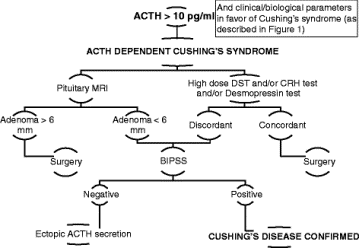
Although IPSS has been considered the standard test in patients with ACTH-dependent Cushing’s syndrome to differentiate between ectopic ACTH secretion and Cushing’s disease, there has been controversy about its value in localizing adenomas within the pituitary gland once a biochemical diagnosis of Cushing’s disease has been made. Various studies that used an intersinus ACTH ratio of 1.4 or greater before or after corticotropin-releasing hormone (CRH) stimulation have reported success rates as low as 50% and as high as 100% for tumor location.

A previous retrospective study of 28 patients with Cushing’s disease reported that adjusting the ACTH intersinus gradient by levels of prolactin before or after CRH stimulation, and combining the prolactin-adjusted ACTH intersinus ratio, improved pituitary adenoma localization. Magnetic resonance imaging (MRI) alone correctly localized the pituitary adenoma in 17 patients (61%), a prolactin-adjusted ACTH intersinus ratio of at least 1.4 improved the localization rate to 21 patients (75%), and combining MRI and the prolactin-adjusted ACTH intersinus ratio improved localization further to 23 patients, or 82% (Clin. Endocrinol. 2012;77:268-74).

The findings inspired the current retrospective study. The investigators looked at prolactin levels measured in stored petrosal and peripheral venous samples at baseline and at the time of peak ACTH levels after CRH stimulation for 28 patients with Cushing’s disease and ACTH-positive pituitary adenomas who underwent IPSS in 2007-2013. The investigators calculated prolactin-adjusted values by dividing each ACTH value by the concomitant ipsilateral prolactin value. They used an intersinus ACTH ratio of 1.4 or greater to predict tumor location.

At surgery, 26 patients had a single lateral tumor (meaning its epicenter was not in the midline), 1 patient had a central microadenoma, and 1 patient had a macroadenoma, reported Dr. Sharma of the National Institute of Child Health and Human Development, Bethesda, Md.

MRI findings accurately identified the location of 21 of the 26 lateral tumors (81%), compared with accurate localization in 18 patients using either the unadjusted ACTH intersinus ratio or the prolactin-adjusted ACTH intersinus ratio (69% for each), she said.

Incorrect tumor localization occurred with one patient using MRI alone and seven patients using either ratio. In four patients whose tumors could not be localized by MRI, the uncorrected and prolactin-adjusted ratios localized one tumor correctly and three tumors incorrectly. Only MRI correctly localized the one central microadenoma.

“We did not find any difference in localization rates by measurement of prolactin during IPSS,” she said. The small size of the study and its retrospective design invite further research in a more robust study.

Dr. Sharma reported having no financial disclosures.

From Clinical Endocrinology News

Cushing’s Disease – Rare Disease Quick Facts

cushings-diagnosis


Cushing’s disease is a rare condition due to excess cortisol levels that result from a pituitary tumor secreting adrenocorticotropic hormone (ACTH), which stimulates cortisol secretion.  Cushing’s disease should not be confused with Cushing’s syndrome which is increased cortisol levels but that increase can be due to any number of factors. However, Cushing’s disease is the most common form of Cushing’s syndrome.

Symptoms

The symptoms related to Cushing’s disease and Cushing’s syndrome are the same, since both are related to an excess of cortisol. Also, symptoms vary extensively among patients and that, with the inherent fluctuation in hormone levels make it difficult to diagnosis both conditions.

Changes in physical characteristics of the body

  • Fullness and rounding of the face
  • Added fat on back of neck (so-called “buffalo hump”)
  • Easy bruising
  • Purplish stretch marks on the abdomen (abdominal striae)
  • Excessive weight gain, especially in abdominal region
  • Red cheeks
  • Excess hair growth on the face, neck, chest, abdomen and thighs

Changes in physiology/psychology

  • Generalized weakness and fatigue
  • Menstrual disorder
  • Decreased fertility and/or sex drive
  • High blood pressure that is often difficult to treat
  • Diabetes mellitus
  • Mood and behavior disorders

Diagnosis

The early stages of Cushing’s disease may be difficult to recognize. However, if it is suspected, diagnosis is generally a 2 stage process. First to determine if cortisol levels are high, and if so, why they are high.

Tests to confirm high cortisol levels:

  • 24-hour urine cortisol
  • Dexamethasone suppression test (low dose)

Tests to determine cause:

  • Blood ACTH level
  • Brain MRI
  • Corticotropin-releasing hormone test
  • Dexamethasone suppression test (high dose)
  • Petrosal sinus sampling

Treatment

Surgery

  • Most patients with Cushing’s disease undergo surgery to remove the pituitary adenoma offers.
  • If the tumor is isolated to the pituitary, cure rates of 80-85% are common.
  • If the tumor has spread to nearby organs, cure rates of 50-55% are common.

Medicine (approved orphan drugs)

Signifor (pasireotide)

  • Approved for patients with Cushing’s disease for whom pituitary is not an option or surgery has been ineffective.
  • Signifor is a somatostatin receptor agonist that leads to inhibition of ACTY secretion (and subsequently decreased cortisol levels).

Korlym (mifepristone)

  • Approved for patients with Cushing’s syndrome who have type 2 diabetes or glucose intolerance and have failed surgery (or not candidates for surgery).
  • Korlym is a glucocorticoid receptor antagonist which in turn blocks the effects of the high levels of cortisol in the body. Korlym is used to treat high glucose levels due to elevated cortisol.

Medicines used but not indicated for Cushing’s disease include

Mitoden

ketoconazole

Metyrapone

Etomidate

Radiation

  • Radiation therapy may be used in some patients and can be very effective in controlling the growth of these tumors.

Prognosis

In most cases, treatment can cure Cushing’s disease. If not treated properly, the chronic hypercortisolism can lead to excess morbidity and mortality due to increased cardiovascular and other risk factors.

For more information

National Library of Medicine, National Institute of Health

Cushing’s Disease Information (provided by Novartis Pharmaceuticals)


Images courtesy of the open access journal Orhanet Journal for Rare Diseases.  Castinetti et al. Orphanet J Rare Dis. 2012 7:41   doi:10.1186/1750-1172-7-41

– See more at: http://www.raredr.com/front-page-medicine/articles/cushings-disease-rare-disease-quick-facts-0

From Bangladesh ~ Pituitary Adenoma: When headache is a headache

Location of the pituitary gland in the human brain

Location of the pituitary gland in the human brain (Photo credit: Wikipedia)

“Got headache? Take a paracetamol and get relieved in a short while.”

This is common practice in our country. Almost everyone has had a headache, but rarely headache becomes a headache in our lives. Not all headaches require doctor’s attention but sometimes it represent the tip of a huge iceberg.

Mr Shafiul Islam, 38 years of age, an active male developed a gradual onset of headache, which worsened at the morning, followed by vomiting. He visited a general practitioner and took prescribed medicines, but that failed to cure the symptoms. Rather he was gradually experiencing loss of outer side vision of both eyes.

When he revisited a doctor and was advised for MRI of brain he was diagnosed with a core of “Pituitary Macrodenoma,” a tumor of a hormone producing gland of brain. Then Shafiul was referred to Neurosurgeon of Comfort Nursing home Assistant Professor Dr Moshiur Rahman, who decided to perform operation for removal of the tumor after the initial evaluation.

The pituitary gland is an endocrine gland about the size of a pea and weighing 5 grams (0.18 oz) in humans. It is a protrusion off the bottom of the hypothalamus at the base of the brain, and rests in a small, bony cavity (sella turcica). The pituitary gland secretes nine hormones. A pituitary adenoma is a slow growing and less harmful tumor arising from cells in the pituitary gland. Because they originate from cells in the pituitary gland, which is the master hormone gland, they often cause problems related to hormonal dysfunction.

Some pituitary tumors result in excessive production and over-secretion of hormones, which can result in a variety of syndromes. A large proportion of these tumors, however, do not produce any functional hormones, but instead grow to a size where they cause symptoms because they compress surrounding structures. For these reasons, larger pituitary tumors (called macroadenomas) often present with headache, visual loss and pituitary gland dysfunction.

The specific cause of pituitary adenoma development is unknown, although they are likely to be caused in part by random mutations in cells of the pituitary gland. Surgery is the first line of treatment for many symptomatic pituitary tumors in patients that are good surgical candidates, especially in patients with nonfunctioning macroadenomas.

Dr Moshiur approached the tumor by entering through nasal opening with the help of ENT specialist Associate Professor Dr Sajol Ashfaq, under general aenesthesia (fully unconscious) done by Aenesthesiologist Associate Professor Dr Shamsul Alam. After elevation of a thin membrane over the nasal partition and breaking a bone in the base of the skull they got a vision of the tumor through endoscope. After that, the tumor was removed through the nose. After three days of post-operative care, the patient was discharged. All his symptoms, headache, vomiting and poor vision improved dramatically and he got back to his normal life.

Dr Moshiur Rahman said: “The surgical approach for removing pituitary tumours is usually an endonasal (through the nostril) transsphenoidal (through the sphenoid sinus) approach. This procedure is Endoscopic Transnasal Transphenoidal Pituitary Adenomectomy, which is a safe, minimally invasive but effective, modern treatment option for Pituitary Adenoma, with few side effects and short post-operative hospital stay. This latest technology is being practiced in some centres of the capital for last few years.”

He also said, he performed three operations before successfully with no long term adverse effect. He also paid gratefulness to Associate Professor Dr Sajol Ashfaq and Associate Professor Dr Shamsul Alam for their sincere and great effort.

Once, people had to go outside of the country for this operation. Nowadays, this operation is often performed by many neurosurgeons of the capital. A few centres have also developed to provide these facilities of operation. People can take this oppurtunity confidently by choosing a competent surgical team.

Endoscopic transsphenoidal pituitary surgery: a good and safe primary treatment option for Cushings disease, even in case of macroadenomas or invasive adenomas.

Abstract – European Journal of Endocrinology, 06/24/2013  Clinical Article

Wagenmakers MA et al. – This study aims to gain insight in the role of endoscopic TS as a primary treatment option for CD, especially in patients with MRI negative CD and (invasive) macroadenomas.

The data suggest that in patients with non–invasive and invasive macroadenomas the endoscopic technique of TS should be the technique of choice as remission rates seem to be higher than remission rates reported for microscopic TS, although no comparative study has been performed.

Get this article here.