Interview May 7 with Kathy C, Pituitary Patient

My name is Kathy Casey. I am a 63 year old retired school nurse. I am married with two wonderful sons and a grandson. My husband and I live in the mountain town of Mt. Shasta in northern California. I have always been athletic.

In 1995, I was diagnosed with a pituitary tumor. At the time the only symptom I was aware of was a severe headache. I had a transphenoidal resection by Dr. Wilson at UCSF Medical Center followed by radiation therapy for 23 days. At the time they said they could not remove all of the tumor.

In 2008/2009. I exhibited symptoms of Cushing’s and my cortisol level was outrageous, and I had to be hospitalized initially for a potassium level of 2. I returned to UCSF and Dr. Anwar Sandeep operated . By removing part of the tumor. My Cushing symptoms resolved. However, he said that the tumor was not encapsulated and was invading the cavernous sinus and stella turcica so it was still not possible to remove it all.

I was OK until December 2013 when I began exhibiting the symptoms of Cushings. One of my 24 hr. urines was 14,000. I had to be hospitalized for a potassium level of 1.9. Dr. Heaney said he has never seen a cortisol level that high. This time I decided to go to the UCLA Pituitary Tumor and Endocrinology Program where they were more oriented to follow-up and treating this disorder. Dr. Bergsneider decided that surgery was not an option. He and Dr. Heaney decided radiation was not an option. So now I am being followed by Dr. Heaney to see if medication can help.

I am now on Cabergoline 0.5 mg three tabs twice a week and Signifor 0.9 mg subcutaneosly twice a day. I think they are alleviating some of the symptoms. However, the Signifor caused my blood sugar to rise, and I had to go on Metformin which is causing nausea to a point where I have a hard time eating.

Anyway, this whole situation is depressing and overwhelming. I am tryng to stay positive, but I wonder how it will turn out. I am fortunate to have a supportive and helpful husband.

I am interested in communicating with people who may be going through a similar experience and learning more about this rare condition.

Kathy will be interviewed May 7, 2014 in BlogTalkRadio

HOME | Contents | Adrenal Crisis! | Abbreviations | Glossary | Forums | Donate | Bios | Add Your Bio

Cushing’s Awareness Challenge: Day 12

robin-head


Mail!  I get all kinds of email asking questions about a variety of Cushing’s issues.  I’m not a doctor and I don’t play one on TV.  I don’t even play one on the internet.  People are desperate for answers, though, so the questions keep coming and I try to answer the best I can.

Here’s a recent question and answer.  Note that you have to be logged into the message boards to view the links in this post.


Question: My daughter was diagnosed w/ cushings in 2001 at the age of 20 & had the pituitary surgery.

In late 2013 she was diagnosed with a recurrence. I’ve read that that usually happens within 5 years, not a dozen years.

Regardless, there is a new research program but she was told she doesn’t qualify for it. The other medications offered are either exhorbitant ($100-200,000/year), another causes liver damage, another causes uterine problems. A 2nd surgery is not recommended according to  the surgeon (because there would be only a 50% rate of success due to the scar tissue from the original surgery), and radiation is being vetoed as well, being recommended ONLY as a very last possible resort.

Are there other parents who chat & share experience here? Will I find help as a parent here with my frustration over this disease? Are there other patients who communicate here that are from Michigan?  Are there other patients here who are suffering from the recurrence? Don’t get me wrong, I’m happy to find on several sites online today that there are so many success stories; I would just like to know what other options there are that perhaps our Dr. is missing.  Thanks.

My response:

S, since you have a Board Name, I assume that you are a member of the message boards.

There are areas specifically for recurrence – http://cushings.invisionzone.com/index.php?/forum/35-recurrences/

People in Michigan: http://cushings.invisionzone.com/index.php?/topic/13696-michigan/

Parents of patients: http://cushings.invisionzone.com/index.php?/forum/31-parents-spouses-children-and-friends-of-patients/

The more you read, the more you will learn.  Many patients with a recurrence  have a second pituitary surgery.  She might need to get another opinion from another surgeon.

Another option is a BLA – or have her adrenal glands out.  That can cause other issues, though.

The 2 drugs you  mentioned are Signifor and Korlym.  Although both are expensive, each has a patient assistance plan which lowers the cost dramatically.  Doses can vary dramatically so that they don’t necessarily cause liver or uterine issues.

Ketoconazole is another drug that’s sometimes used.

I did a search on the boards and there are 69 topics for Mifepristone (generic Korlym), 51 topics discussing the brand name Korlym, 40 for pasireotide (generic Signifor), 13 for the brand name Signifor, and 69 for keto (the common abbreviation on the boards for ketoconazole)

Here’s a personal experience from a woman on Korlym who likes it: http://cushings.invisionzone.com/index.php?/topic/53342-i-like-korlym/?hl=korlym

So – the information is out there.

I know it’s hard to process all this and make decisions.

I know it’s hard to process all this and make decisions. I had my one pituitary surgery in 1987, before the Internet was available so I had to really research all this in medical texts.

At that time, there weren’t any drug options. Just surgery and radiation. I decided off the bat if I should have a recurrence, I would not do radiation. I’d go for another pituitary surgery first, then a BLA if needed.

But that was then and this is now.  There is way more information which is much easier to find.  There are better surgical options and even some more medical ones.

Good luck!

8e1d2-maryo_colorful_zebra

No High-Quality Studies for Cushing’s Drugs

By Salynn Boyles, Contributing Writer, MedPage Today

Reviewed by Zalman S. Agus, MD; Emeritus Professor, Perelman School of Medicine at the University of Pennsylvania and Dorothy Caputo, MA, BSN, RN, Nurse Planner

There is a paucity of clinical trial data supporting the efficacy of most drugs used to treat Cushing’s disease, researchers reported.

Just one drug — pasireotide — has been evaluated in a randomized, double-blind trial, but even it was judged by the researchers to have only a ‘moderate’ level of evidence supporting its effectiveness and safety.

The review of the literature evaluating drug treatments for Cushing’s disease, a rare pituitary disorder, is the first to employ a rigorous systematic approach with strict, predefined inclusion criteria and formal analysis of the quality of evidence using an established standard, researcher Monica Gadelha, MD, PhD, of Brazil’s Federal University of Rio de Janeiro, and colleagues wrote in the journal Clinical Endocrinology.

“This systematic review indicates that the majority of medical therapies currently used in the treatment of Cushing’s disease are supported by a low level of evidence,” the researchers wrote. “Further well-designed prospective studies of medications in Cushing’s disease would help to inform clinical practice further.”

Cushing’s disease is the most common form of endogenous Cushing’s syndrome, a hormonal disorder resulting from persistent exposure to abnormally high levels of the hormone cortisol. In the case of Cushing’s disease, the cortisol is secreted by a pituitary adenoma.

Prolonged exposure to high levels of cortisol raises the risk for diabetes mellitus, cardiovascular disease, osteoporosis and nephrolithiasis. Patients with persistent Cushing’s disease have a 3- to 5-fold higher mortality than the general population.

Surgery to remove the pituitary adenoma is the first-line treatment for Cushing’s disease in the U.S., and when the procedure is performed by an experienced surgeon, remission rates in patients with smaller tumors range from 65% to 90%. The long-term remission rate is lower, however, because many patients develop recurrent disease.

Several medical therapies are widely used to treat patients who are not candidates for surgery or who experience relapse following surgery.

Novartis Oncology’s somatostatin analog drug pasireotide (Signifor) became the only drug approved for this indication in December of last year. And the progesterone-blocking drug mifepristone, best known as the abortion pill once called RU-486, was approved in February of 2012 for the treatment of Cushing’s disease-associated hyperglycemia.

Other drugs — including metyrapone, mitotane, cabergoline, and ketoconazole — are also used off-label in the treatment of Cushing’s, and several have shown better response rates than pasireotide in small studies.

In their systematic review, Gadelha and colleagues identified 15 studies that included at least 10 adults with Cushing’s disease and reported treatment responses as the proportion of patients reaching a specified definition of response. Studies examining combinations of medications were excluded from the analysis, as were studies with indefinite diagnoses of Cushing’s disease.

For medications other than mifepristone, studies had to report the proportion of patients with normalized urinary free cortisol (UFC), midnight salivary cortisol or midnight serum cortisol.

The studies were scored according to the Grading of Recommendations, Assessment, Development and Evaluation (GRADE) system for rating quality of evidence.

Ten of the 15 included studies reported outcomes specifically for patients with Cushing’s disease and the remaining five included patients with other forms of Cushing’s syndrome.

The researchers reported that:

  • Pasireotide was the only treatment assessed in a randomized trial, and it was judged to have a ‘moderate’ level of evidence supporting its use. Response rates from three prospective studies of the drug ranged from 17% to 29%.
  • The remaining medications were supported by a ‘low’ or ‘very low’ level of evidence.
  • The highest response rates were reported in a small retrospective studies of metyrapone (75%, one study) and mitotane (72%, one study).
  • Response rates were 25% to 50% for cabergoline (four studies) and 45% for ketoconazole (one study).
  • Among studies that included patients with other forms of Cushing’s syndrome, response rates were 53% to 88% for ketoconazole (three studies), 70% for mitotane (one study), 57% for metyrapone (one study), and 38% to 60% for mifepristone (one study).


But the researchers urged caution in comparing the drugs, citing the variability in the study designs and patient selection endpoints, among other limitations in the research literature.

“The wide variation in the time-frames over which response to treatment was measured makes comparison a challenge,” they wrote. “Comparison of response rates reported in the included studies is also complicated by the variation in methodology used to assess response.”

They noted that well-designed clinical trials are needed to determine which drugs or drug combinations are most effective in the treatment of Cushing’s disease patients.

“Combinations of medical therapies with different modes of action might aid in optimizing the balance of efficacy and safety,” they wrote. “Investigational medications, such as bexarotene, LC1699 and retinoic acid, may help to expand the range of future therapeutic options.”

Maria Fleseriu, MD, who was not involved in the review, agreed that more drug treatments are needed. But she added that Cushing’s patients today have many more drug options than they did just a few years ago.

Fleseriu directs the Pituitary Center at Oregon Health & Science University, where she is an associate professor of medicine and endocrinology.

In a recently published analysis, Fleseriu wrote that pituitary-targeted medical therapies should soon play a more prominent role in treating Cushing’s disease, and may become first-line treatments when surgery fails or is contraindicated.

“We now have one drug approved for Cushing’s and another approved for diabetes symptoms associated with the disease,” she told MedPage Today. “We are moving forward, but we are not where we would like to be. Combination therapy is probably where we are heading, but further studies are needed.”

Financial support for this research was provided by Novartis Pharmaceuticals.

Researcher Monica Gadelha reports receiving speaker fees and participating on advisory boards for Novartis. Gadelha and co-author Leonardo Vieira Neto were investigators in Novartis’ clinical trials of pasireotide.


From http://www.medpagetoday.com/Endocrinology/GeneralEndocrinology/42043

Cushing’s Disease – Rare Disease Quick Facts

cushings-diagnosis


Cushing’s disease is a rare condition due to excess cortisol levels that result from a pituitary tumor secreting adrenocorticotropic hormone (ACTH), which stimulates cortisol secretion.  Cushing’s disease should not be confused with Cushing’s syndrome which is increased cortisol levels but that increase can be due to any number of factors. However, Cushing’s disease is the most common form of Cushing’s syndrome.

Symptoms

The symptoms related to Cushing’s disease and Cushing’s syndrome are the same, since both are related to an excess of cortisol. Also, symptoms vary extensively among patients and that, with the inherent fluctuation in hormone levels make it difficult to diagnosis both conditions.

Changes in physical characteristics of the body

  • Fullness and rounding of the face
  • Added fat on back of neck (so-called “buffalo hump”)
  • Easy bruising
  • Purplish stretch marks on the abdomen (abdominal striae)
  • Excessive weight gain, especially in abdominal region
  • Red cheeks
  • Excess hair growth on the face, neck, chest, abdomen and thighs

Changes in physiology/psychology

  • Generalized weakness and fatigue
  • Menstrual disorder
  • Decreased fertility and/or sex drive
  • High blood pressure that is often difficult to treat
  • Diabetes mellitus
  • Mood and behavior disorders

Diagnosis

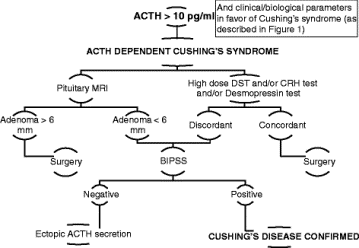
The early stages of Cushing’s disease may be difficult to recognize. However, if it is suspected, diagnosis is generally a 2 stage process. First to determine if cortisol levels are high, and if so, why they are high.

Tests to confirm high cortisol levels:

  • 24-hour urine cortisol
  • Dexamethasone suppression test (low dose)

Tests to determine cause:

  • Blood ACTH level
  • Brain MRI
  • Corticotropin-releasing hormone test
  • Dexamethasone suppression test (high dose)
  • Petrosal sinus sampling

Treatment

Surgery

  • Most patients with Cushing’s disease undergo surgery to remove the pituitary adenoma offers.
  • If the tumor is isolated to the pituitary, cure rates of 80-85% are common.
  • If the tumor has spread to nearby organs, cure rates of 50-55% are common.

Medicine (approved orphan drugs)

Signifor (pasireotide)

  • Approved for patients with Cushing’s disease for whom pituitary is not an option or surgery has been ineffective.
  • Signifor is a somatostatin receptor agonist that leads to inhibition of ACTY secretion (and subsequently decreased cortisol levels).

Korlym (mifepristone)

  • Approved for patients with Cushing’s syndrome who have type 2 diabetes or glucose intolerance and have failed surgery (or not candidates for surgery).
  • Korlym is a glucocorticoid receptor antagonist which in turn blocks the effects of the high levels of cortisol in the body. Korlym is used to treat high glucose levels due to elevated cortisol.

Medicines used but not indicated for Cushing’s disease include

Mitoden

ketoconazole

Metyrapone

Etomidate

Radiation

  • Radiation therapy may be used in some patients and can be very effective in controlling the growth of these tumors.

Prognosis

In most cases, treatment can cure Cushing’s disease. If not treated properly, the chronic hypercortisolism can lead to excess morbidity and mortality due to increased cardiovascular and other risk factors.

For more information

National Library of Medicine, National Institute of Health

Cushing’s Disease Information (provided by Novartis Pharmaceuticals)


Images courtesy of the open access journal Orhanet Journal for Rare Diseases.  Castinetti et al. Orphanet J Rare Dis. 2012 7:41   doi:10.1186/1750-1172-7-41

– See more at: http://www.raredr.com/front-page-medicine/articles/cushings-disease-rare-disease-quick-facts-0

Cushing’s Syndrome is Hazardous to Your Health

morbidity

People with Cushing’s syndrome, even when treated, have higher morbidity and mortality rates that comparable controls. That is the conclusion of a new study published in the June issue of the Journal of Clinical Endocrinology Metabolism. The study by Olaf Dekkers et al, examined data records from the Danish National Registry of Patients and the Danish Civil Registration System of 343 patients with benign Cushing’s syndrome of adrenal or pituitary origin (i.e., Cushing’s disease) and a matched population comparison cohort (n=34,300).  Due to the lengthy delay of many patients being diagnosed with Cushing’s syndrome, morbidity was investigated in the 3 years before diagnosis while  morbidity and mortality were assessed during complete follow-up after diagnosis and treatment.

The study found that mortality was twice as high in Cushing’s syndrome patients (HR 2.3, 95% CI 1.8-2.9) compared with controls over a mean follow-up period of 12.1 years. Furthermore, patients with Cushing’s syndrome were at increased risk for:

  • venous thromboembolism (HR 2.6, 95% CI 1.5-4.7)
  • myocardial infarction (HR 3.7, 95% CI 2.4-5.5)
  • stroke (HR 2.0, 95% CI 1.3-3.2)
  • peptic ulcers (HR 2.0, 95% CI 1.1-3.6)
  • fractures (HR 1.4, 95% CI 1.0-1.9)
  • infections (HR 4.9, 95% CI 3.7-6.4).

The study also found that this increased multimorbidity risk was present before diagnosis indicating that it was due to cortisol overproduction rather than treatment.

Many of the Cushing’s syndrome patients underwent surgery to remove the benign tumor. For this group, the investigators performed a sensitivity analysis of the  long-term mortality and cardiovascular risk in this  subgroup (n=186)  considered to be cured after operation (adrenal surgery and patients with pituitary surgery in combination with a diagnosis of hypopituitarism in the first 6 months after operation).  The risk estimates for mortality (HR 2.31, 95% CI 1.62-3.28), venous thromboembolism (HR 2.03, 95% CI 0.75-5.48), stroke (HR 1.91, 95% CI 0.90-4.05), and acute myocardial infarction (HR 4.38, 95% CI 2.31-8.28) were also increased in this subgroup one year after the operation.

The standard treatment for endogenous Cushing’s syndrome is surgery. This past year, Signifor (pasireotide) was approved for treatment of adults patients with Cushing’s disease for whom pituitary surgery is not an option or has not been curative.  Cushing’s disease, which accounts for the majority of Cushing’s syndrome patients, is defined as the presence of an ACTH producing tumor on the pituitary grand. In the study by Dekker’s et al, the percentage of patients with Cushing’s disease is not known. We look forward to reexamination of this dataset in a few years following the introduction of more treatment options for Cushing’s disease as well as an analysis that explores the differences in mortality/morbidity rates in the different subsets of patients that make of Cushing’s syndrome (Cushing’s disease, ectopic Cushing’s syndrome, Exogenous Cyshing’s syndrome).

References

Dekkers OM, Horvath-Pujo, Jorgensen JOL, et al, Multisystem morbidity and mortality in Cushing’s syndrome: a cohort study. J Clin Endocrinol Metab 2013 98(6): 2277–2284. doi: 10.1210/jc.2012-3582

– See more at: http://www.raredr.com/medicine/articles/cushing%E2%80%99s-syndrome-hazardous-your-health-0