The New Molecular Landscape of Cushing’s Disease

Silviu Sbiera#Timo Deutschbein#Isabel Weigand, Martin Reincke, Martin FassnachtcorrespondenceBruno Allolio
#These authors contributed equally to this work.
A few days after acceptance of this manuscript, Bruno Allolio passed away.

Cushing’s disease (CD) is caused by corticotropin-secreting pituitary adenomas and results in substantial morbidity and mortality. Its molecular basis has remained poorly understood until the past few years, when several proteins and genes [such as testicular orphan nuclear receptor 4 (TR4) and heat shock protein 90 (HSP90)] were found to play key roles in the disease. Most recently, mutations in the gene of ubiquitin-specific peptidase 8 (USP8) increasing its deubiquination activity were discovered in a high percentage of corticotroph adenomas. Here, we will discuss emerging insights in the molecular alterations that finally result in CD. The therapeutic potential of these findings needs to be carefully evaluated in the near future, hopefully resulting in new treatment options for this devastating disorder.

Trends

Transsphenoidal surgery and radiotherapy are the treatment of choice in CD. However, despite high initial remission rates, a significant percentage of patients relapse.

Owing to the poor understanding of the pathophysiology of CD, drug therapy is still limited and often only ameliorates the clinical manifestations through blocking of ACTH release or adrenal cortisol synthesis.

Recent research has identified several important proteins (e.g., EGFR, HSP90, TR4, and AVPR1b) whose deregulation is associated with CD and may therefore represent potential therapeutic targets.

Frequent, novel mutations in the USP8 gene that are associated with corticotroph pituitary adenomas were recently discovered that result in reduced EGFR degradation and increased POMC activation in vitro.

Keywords:

Cushing’s disease, pituitary, gene expression, epidermal growth factor receptor, ubiquitin-specific peptidase 8, 14-3-3 proteins

The entire article is available by subscription only.  More information here.

RARE Patient Advocacy Summit


I’m on my way to California today.  I was nominated for an award in the 2015 Tribute to Champions of Hope so I’ll be flying to Huntington Beach  for the 2-day  Fourth Annual RARE Patient Advocacy Summit. Follow along with LiveStream.

Saturday night will be the Gala.

Find my name on the list of nominees here: https://globalgenes.org/championsofhope/

One of the very best parts of this trip, though, is that I’m staying with a good friend from the Cushing’s Community.

WOOHOO


Pituitary Incidentaloma Treatment Guideline

0276f-pituitary-gland


It is unclear how many people have pituitary incidentaloma, but imaging and autopsy studies indicate they are quite common and occur in up to one-third of patients. Fortunately, the vast majority of these serendipitously discovered tumors are clinically insignificant.

A management guideline in the Annals of Endocrinology brings endocrinologists up to date on current thinking about pituitary incidentaloma management.   Endocrinologists classify these tumors as micro- or macro-. Microincidentalomas are discovered in around 10% of patients, often upon CT after a fall, and are less than 1 cm in diameter. They may grow, but only 5% proceed to macroincidentaloma.

Currently, experts recommend assessing nonfunctioning (NF) microincidentaloma clinically for signs of hypersecretion (hyperprolactinemia, acromegaly or Cushing’s syndrome), with subsequent systematic prolactin and IGF-1 assay.   Pituitary incidentalomas that are larger than 1 cm at discovery—macroincidentalomas—are more likely to grow, with 25% and 24%-40% of patients having larger tumors at 4 and 8 years after diagnosis respectively.

Concerns escalate and closer surveillance is needed if a macroadenoma is in contact with the optic chiasm. With any NF macroincidentaloma, experts recommend assessing patients for signs of hormonal hypersecretion or hypopituitarism. Then, laboratory screening for hypersecretion or hormonal deficiency is needed, as is ophthalmologic assessment (visual acuity and visual field) if the lesion is near the optic chiasm (OC).   Surveillance differs by tumor size, with 5 mm the cutoff for NF microincidentaloma.

Tumors smaller than that require no surveillance, and those larger need to be monitored with MRI at 6 months and then 2 years. Endocrinologists should revisit macroincidentaloma distant from the optic chiasm with MRI at 1 year and conduct hormonal exploration (for anterior pituitary deficiency), then monitor every 2 years.   Proximity to the optic chiasm often creates a need for surgery or increased vigilance. MRI is recommended at 6 months, with hormonal and visual assessment, then annual MRI and hormonal and visual assessment every 6 months.

Specific types of pituitary incidentaloma call for surgery: evolutive NF microincidentaloma, NF macroincidentaloma associated with hypopituitarism or showing progression, incidentaloma compressing the optic chiasm, possible malignancy, non-compliant patient, pregnancy desired in the short-term, or context at risk of apoplexy.

Few guidelines are published for pituitary incidentaloma, and this one is enhanced with a decision tree that walks endocrinologist through the recommendations. –

See more at: http://www.hcplive.com/medical-news/pituitary-incidentaloma-treatment-guideline#sthash.0DqxeTru.dpuf

Roundup may cause potentially fatal ‘adrenal insufficiency’

IMPORTANT!  A new study finds that the Roundup herbicide disrupts the hormonal system of rats at low levels at which it’s meant to produce no adverse effects. By the same mechanism It may be causing the potentially fatal condition of ‘adrenal insufficiency’ in humans.

Monsanto’s glyphosate-based herbicide Roundup is an endocrine (hormone) disruptor in adult male rats, a new study shows.

The lowest dose tested of 10 mg/kg bw/d (bodyweight per day) was found to reduce levels of corticosterone, a steroid hormone produced in the adrenal glands. This was only one manifestation of a widespread disruption of adrenal function.

No other toxic effects were seen at that dose, so if endocrine disruption were not being specifically looked for, there would be no other signs that the dose was toxic. However a 2012 study detected a 35% testosterone down-regulation in rats at a concentration of 1 part per million.

In both studies endocrine disruption was detected at the lowest level tested for, so we don’t know if, when it comes to endocrine disruption, there are ‘safe’ lower doses of Roundup. In technical parlance, this means that no NOAEL (no observed adverse effect level), was found.

Significantly, the authors believe that the hormonal disruption could lead to the potentially fatal condition know as ‘adrenal insufficiency’ in humans, which causes fatigue, anorexia, sweating, anxiety, shaking, nausea, heart palpitations and weight loss.

“A progressive increase in its prevalence has been observed in humans, while a very few studies relating to xenobiotic exposure and adrenal insufficiency development have been reported”, they write. The increasing levels of Roundup in the environment and food could be “one of the possible mechanisms of adrenal insufficiency.”

How does this level relate to safety limits set by regulators?

One problem with trying to work out how the endocrine disruptive level of 10 mg/kg bw/d relates to how ‘safe’ levels are set by regulators.

The experiment looked at Roundup, the complete herbicide formulation as sold and used, but regulators only look at the long-term safety of glyphosate alone, the supposed active ingredient of Roundup.

Safe levels for chronic exposure to the Roundup herbicide product have never been tested or assessed for regulatory processes. This is a serious omission because Roundup has been shown in many tests to be more disruptive to hormones than glyphosate alone, thanks to the numerous other ingredients it contains to enhance its weed-killing properties.

Given this yawning data gap, let’s for a moment assume that the regulatory limits set for glyphosate alone can be used as a guide for the safe level of Roundup.

The endocrine disruptive level of Roundup found in the experiment, of 10 mg/kg bw/d, is is well above the acceptable daily intake (ADI) set for glyphosate in Europe (0.3 mg/kg bw/d) and the US (1.75 mg/kg bw/d). But this isn’t a reason to feel reassured, since with endocrine effects, low doses can be more disruptive than higher doses.

Another worrying factor is that 10 mg/kg bw/d is well below the NOAEL (no observed adverse effect level) for chronic toxicity of glyphosate: 500 mg/kg bw/d for chronic toxicity, according to the US EPA.

In other words, the level of 500 mg/kg bw/d – a massive 50 times higher than the level of Roundup found to be endocrine disruptive in the experiment – is deemed by US regulators not to cause chronic toxicity.

This experiment shows they are wrong by a long shot. They failed to see toxicity below that level because they failed to take endocrine disruptive effects from low doses into account and industry does not test for them.

Hormone disruption take place at or below ‘no adverse effects’ levels

Interestingly, the NOAEL for glyphosate in industry’s three-generation reproductive studies in rats was much lower than that for chronic toxicity – 30 mg/kg bw/day for adults and 10 mg/kg bw/day for offspring.

However the latter figures – at which no adverse effects should be apparent from glyphosate – are at the same as or higher level than the level of Roundup found to be endocrine disruptive in the new study.

These results therefore show that the reproductive processes of the rats are sensitive to low doses that are apparently not overtly toxic. This in turn suggests that the reproductive toxicity findings are due to endocrine disruptive effects.

Regulatory tests still do not include tests for endocrine disruption from low doses, in spite of the fact that scientists have known about the syndrome since the 1990s.

In the final section of the new study, the researchers discuss its implications. They note that the effects seen in the Roundup-treated rats to the Adrenocorticotropic hormone receptor (ACTH) were similar to adrenal insufficiency in humans:

“The findings that Roundup treatment down regulates endogenous ACTH, is similar to the condition known as adrenal insufficiency in humans. This condition manifests as fatigue, anorexia, sweating, anxiety, shaking, nausea, heart palpitations and weight loss. Chronic adrenal insufficiency could be fatal, if untreated.

“A progressive increase in its prevalence has been observed in humans, while a very few studies relating to xenobiotic exposure and adrenal insufficiency development have been reported. The present study describes one of the possible mechanisms of adrenal insufficiency due to Roundup and suggests more systematic studies, to investigate the area further. “

Claire Robinson of GMWatch commented: “Since no safe dose has been established for Roundup with regard to endocrine disrupting effects, it should be banned.”


The study:Analysis of endocrine disruption effect of Roundup in adrenal gland of male rats‘ is by Aparamita Pandey and Medhamurthy Rudraiah, and published in Toxicology Reports 2 (2015) pp.1075-1085 on open access.

This article was originally published by GMWatch. This version has been subject to some edits and additions by The Ecologist.

From http://www.theecologist.org/News/news_round_up/2985058/roundup_may_cause_potentially_fatal_adrenal_insufficiency.html

BLA Instead of Second Pituitary Surgery

One of the problems that can arise with a BLA (bilateral adrenalectomy) instead of a repeat pituitary surgery for Cushing’s recurrence is Adrenal Insufficiency.  Another is Nelson’s Syndrome.

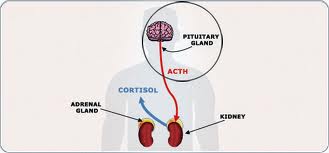
Nelson’s syndrome is a rare disorder that occurs in some patients with Cushing’s disease patients as a result of removing both adrenal glands. In Nelson’s syndrome, the pituitary tumor continues to grow and release the hormone ACTH.

This invasive tumor enlarges, often causing visual loss, pituitary failure and headaches. One key characteristic of Nelson’s disease is dark skin pigmentation, resulting from the skin pigment cells responding to the release of ACTH.


AnchorNelson’s Syndrome: Physiology

Nelson’s syndrome can develop as a result of a specific treatment (bilateral adrenalecomy) for the pituitary disease called Cushing’s disease. The harmful effects of Cushing’s disease are due to the excessive amount of the hormone cortisol produced by the adrenal glands.

To treat Cushing’s disease, your doctor may recommend removing the adrenal glands, during a procedure called a bilateral adrenalectomy. The procedure will stop cortisol production and provide relief. However, the procedure does not treat the actual tumor. Rapid growth of the pituitary tumor can occur.

In about 15-25 percent of patients who had a bilateral adrenalectomy, Nelson’ syndrome develops within one to four years.


Darkening of Skin Color - Nelson's Syndrome SymptomAnchor

Nelson’s Syndrome: Symptoms

The most obvious symptom of Nelson’s syndrome is the darkening of the skin color (hyperpigmentation).

Macroadenomas

Macroadenomas are large pituitary tumors. Large tumors can compress surrounding structures, primarily the normal pituitary gland and optic (visual) pathways, causing symptoms. The symptoms that result from the compression are independent of the effects of excess growth hormone secretion.
This may result in vision problems:

  • Vision loss. This occurs when macroadenomas grow upward into the brain cavity, compressing the optic chiasm.
  • A loss of the outer peripheral vision, called a bitemporal hemianopsia Bitemporal Hemianopsia - Symptom of Nelson's Syndrome
    • When severe, a patient can only see what is directly in front of them.
    • Many patients do not become aware of their visual loss until it is quite severe.
  • Other visual problems can include:
    • Loss of visual acuity (blurry vision), especially if the macroadenoma grows forward and compresses an optic nerve.
    • Colors not perceived as bright as usual

Pituitary Failure or Hypopituitarism

Increased compression of the normal gland can cause hormone insufficiency, called hypopituitarism. The symptoms depend upon which hormone is involved.


AnchorNelson’s Syndrome: Diagnosis

Most patients with Nelson’s syndrome have undergone a bilateral adrenalectomy for the treatment of Cushing’s disease

Diagnostic testing includes:

  • Hormone testing. Typically, the blood ACTH levels are very elevated. Learn more about hormone testing at the UCLA Pituitary Tumor Program.
  • MRI imaging. Magnetic resonance imaging (MRI) scan of the pituitary gland can detect the presence of an adenoma, a pituitary tumor.

AnchorNelson’s Syndrome: Treatment Options

Surgery for Nelson's Syndrome

Treating Nelson’s syndrome effectively requires an experienced team of experts. Specialists at the UCLA’s Pituitary Tumor Program have years of experience managing the complex coordination and care for treatment of Nelsons’ syndrome.

Treatment options include:

AnchorSurgery for Nelson’s Syndrome

Surgical removal of the pituitary adenoma is the ideal treatment; however, it is not always possible. Surgical removal requires advanced surgical approaches, including delicate procedures involving the cavernous sinus.

If surgery is required, typically the best procedure is through a nasal approach. Our neurosurgeons who specialize in pituitary tumor surgery are experts in the minimally invasive expanded endoscopic endonasal technique. This procedure removes the tumor while minimizing complications, hospital time and discomfort. This advanced technique requires specialized training and equipment.

Very large tumors that extend into the brain cavity may require opening the skull (craniotomy) to access the tumor. Our surgeons are also experts in the minimally invasive “key-hole” craniotomy, utilizing a small incision hidden in the eyebrow.

AnchorRadiation Therapy for Nelson’s Syndrome

Radiation Therapy for Nelson's SyndromeRadiation therapy can be effective in controlling the growth of the tumor. However, if you received radiation therapy in the past, additional radiation may not be safe.

Our Pituitary Tumor Program offers the latest in radiation therapy, including stereotactic radiosurgery. This approach delivers a highly focused dose of radiation to the tumor while leaving the surrounding brain structures unharmed (with the exception of the normal pituitary gland).

One consequence of radiation treatment is that it can cause delayed pituitary failure. This typically occurs several years after treatment, and continued long-term follow-up with an endocrinologist is important. You may require hormone replacement therapy.

Medical Therapy for Nelson’s Syndrome

Medication for Nelson's SyndromeMedical therapies for the treatment of Nelson’s syndrome are currently limited, but include:

  • Somatostatin-analogs (SSAs). These medications are typically used to treat acromegaly. A small number of Nelson’s syndrome patients may respond.
  • Cabergoline. This medication is typically used to treat prolactinomas; you may require a very high dose.
  • Temozolomide. This is a type of chemotherapy used to treat primary brain tumors called glioblastoma.

If you require medication to treat Nelson’s syndrome, our endocrinologists will monitor you closely.

From http://pituitary.ucla.edu/body.cfm?id=53