Cushing’s Disease Treatment Market to Witness an Outstanding Growth by 2017 – 2025

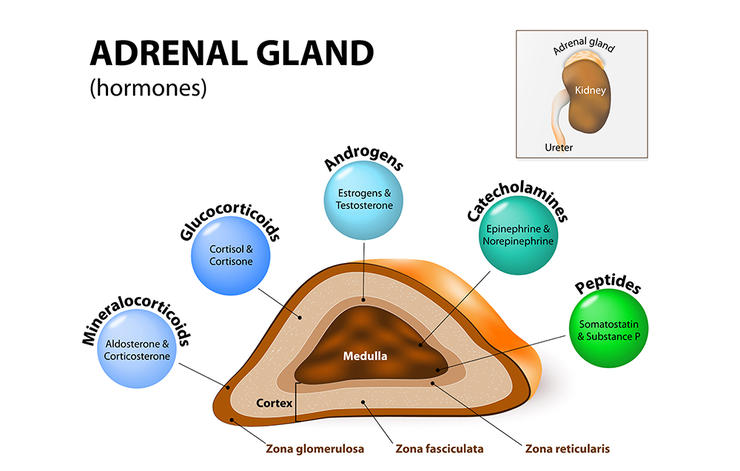
Cushing disease is caused by tumour in the pituitary gland which leads to excessive secretion of a hormone called adrenocorticotrophic (ACTH), which in turn leads to increasing levels of cortisol in the body. Cortisol is a steroid hormone released by the adrenal glands and helps the body to deal with injury or infection. Increasing levels of cortisol increases the blood sugar and can even cause diabetes mellitus. However the disease is also caused due to excess production of hypothalamus corticotropin releasing hormone (CRH) which stimulates the synthesis of cortisol by the adrenal glands.

The condition is named after Harvey Cushing, the doctor who first identified the disease in 1912. Cushing disease results in Cushing syndrome. Cushing syndrome is a group of signs and symptoms developed due to prolonged exposure to cortisol.

Signs and symptoms of Cushing syndrome includes hypertension, abdominal obesity, muscle weakness, headache, fragile skin, acne, thin arms and legs, red stretch marks on stomach, fluid retention or swelling, excess body and facial hair, weight gain, acne, buffalo hump, tiredness, fatigue, brittle bones, low back pain, moon shaped face etc.

Symptoms vary from individual to individual depending upon the disease duration, age and gender of the patient.  Disease diagnosis is done by measuring levels of cortisol in patient’s urine, saliva or blood. For confirming the diagnosis, a blood test for ACTH is performed. The first-line treatment of the disease is through surgical resection of ACTH-secreting pituitary adenoma, however disease management is also done through medications, Cushing disease treatment market comprises of the drugs designed for lowering the level of cortisol in the body. Thus patients suffering from Cushing disease are prescribed medications such as ketoconazole, mitotane, aminoglutethimide metyrapone, mifepristone, etomidate and pasireotide.

Request to View Tables of Content @ http://www.persistencemarketresearch.com/toc/14155

Cushing’s disease treatment market revenue is growing with a stable growth rate, this is attributed to increasing number of pipeline drugs. Also increasing interest of pharmaceutical companies to develop Cushing disease drugs is a major factor contributing to the revenue growth of Cushing disease treatment market over the forecast period. Current and emerging players’ focuses on physician education and awareness regarding availability of different drugs for curing Cushing disease, thus increasing the referral speeds, time to diagnosis and volume of diagnosed Cushing disease individuals. Growing healthcare expenditure and increasing awareness regarding Cushing syndrome aids in the revenue growth of Cushing’s disease treatment market. Increasing number of new product launches also drives the market for Cushing’s disease Treatment devices. However availability of alternative therapies for curing Cushing syndrome is expected to hamper the growth of the Cushing’s disease treatment market over the forecast period.

The Cushing’s disease Treatment market is segment based on the product type, technology type and end user

Cushing’s disease Treatment market is segmented into following types:

By Drug Type

  • Ketoconazole
  • Mitotane
  • Aminoglutethimide
  • Metyrapone
  • Mifepristone
  • Etomidate
  • Pasireotide

By End User

  • Hospital Pharmacies
  • Retail Pharmacies
  • Drug Stores
  • Clinics
  • e-Commerce/Online Pharmacies

Cushing’s disease treatment market revenue is expected to grow at a good growth rate, over the forecast period. The market is anticipated to perform well in the near future due to increasing awareness regarding the condition. Also the market is anticipated to grow with a fastest CAGR over the forecast period, attributed to increasing investment in R&D and increasing number of new product launches which is estimated to drive the revenue growth of Cushing’s disease treatment market over the forecast period.

Depending on geographic region, the Cushing’s disease treatment market is segmented into five key regions: North America, Latin America, Europe, Asia Pacific (APAC) and Middle East & Africa (MEA).

North America is occupying the largest regional market share in the global Cushing’s disease treatment market owing to the presence of more number of market players, high awareness levels regarding Cushing syndrome. Healthcare expenditure and relatively larger number of R&D exercises pertaining to drug manufacturing and marketing activities in the region. Also Europe is expected to perform well in the near future due to increasing prevalence of the condition in the region.

Asia Pacific is expected to grow at the fastest CAGR because of increase in the number of people showing the symptoms of Cushing syndrome, thus boosting the market growth of Cushing’s disease treatment market throughout the forecast period.

Some players of Cushing’s disease Treatment market includes CORCEPT THERAPEUTICS, HRA Pharma, Strongbridge Biopharma plc, Novartis AG, etc. However there are numerous companies producing branded generics for Cushing disease. The companies in Cushing’s disease treatment market are increasingly engaged in strategic partnerships, collaborations and promotional activities to capture a greater pie of market share.

Buy Now: You can now buy a single user license of the report at http://www.persistencemarketresearch.com/checkout/14155

The final report customized as per your specific requirement will be sent to your e-mail id within 7-20 days, depending on the scope of the report.

The research report presents a comprehensive assessment of the market and contains thoughtful insights, facts, historical data, and statistically supported and industry-validated market data. It also contains projections using a suitable set of assumptions and methodologies. The research report provides analysis and information according to categories such as market segments, geographies, types, technology and applications.

For more information, please e-mail us at sales@persistencemarketresearch.com

About Us 

Persistence Market Research (PMR) is a U.S.-based full-service market intelligence firm specializing in syndicated research, custom research, and consulting services. PMR boasts market research expertise across the Healthcare, Chemicals and Materials, Technology and Media, Energy and Mining, Food and Beverages, Semiconductor and Electronics, Consumer Goods, and Shipping and Transportation industries. The company draws from its multi-disciplinary capabilities and high-pedigree team of analysts to share data that precisely corresponds to clients’ business needs.

PMR stands committed to bringing more accuracy and speed to clients’ business decisions. From ready-to-purchase market research reports to customized research solutions, PMR’s engagement models are highly flexible without compromising on its deep-seated research values.

Contact

Persistence Market Research Pvt. Ltd

305 Broadway

7th Floor, New York City,

NY 10007, United States,

USA – Canada Toll Free: 800-961-0353

Email: sales@persistencemarketresearch.com

 media@persistencemarketresearch.com

 Web: http://www.persistencemarketresearch.com

Hair Test for Cushing Syndrome?

Cortisol levels in hair correlated strongly with standard tests

by Jeff Minerd
Contributing Writer, MedPage Today

Analyzing the levels of cortisol in hair may aid in the diagnosis of Cushing syndrome, perhaps one day replacing invasive blood tests, scientists said.

Cortisol levels in the proximal ends of hair samples taken from patients with the syndrome correlated strongly with blood tests (R=0.4; P=0.03) and urine tests (R=0.5; P=0.005) for cortisol, reported Mihail Zilbermint, MD, of the National Institute of Child Health and Human Development in Bethesda, Md., and colleagues.

“The diagnosis of Cushing syndrome is often challenging and inconclusive, despite numerous tests used for the detection of hypercortisolemia and its origin, and is associated with high morbidity and high risk for mortality, if undiagnosed and untreated,” Zilbermint and colleagues wrote online in Endocrine: International Journal of Basic and Clinical Endocrinology.

“As a potential solution to the limitations of these tests, hair cortisol has been increasingly studied as an additional means to diagnose patients with Cushing Syndrome. Much like hemoglobin A1C is a longitudinal marker of blood glucose levels, hair cortisol can be a measure of the body’s glucocorticoid levels over the previous several weeks to months.”

“Our results are encouraging,” Zilbermint said in a statement. “We are hopeful that hair analysis may ultimately prove useful as a less-invasive screening test for Cushing syndrome or in helping to confirm the diagnosis.”

The study included 30 patients with Cushing syndrome and six control individuals without the disease. The participants’ average age was 26, and 75% were female and 75% were Caucasian.

The investigators took 3 cm-long hair samples from all patients, analyzed the proximal, medial, and distal segments of the samples for cortisol, and compared the results with results of standard blood and urine tests. Cortisol levels were highest in the proximal segments and correlated best with the standard tests, the investigators reported.

“We found that proximal hair cortisol directly correlates with late night serum cortisol and UFC [urinary free cortisol] in patients with and without Cushing syndrome. The most proximal 1 cm of hair was the best section of hair for stratifying the two groups of patients in our cohort.

“These findings support further research on the use of this modality in the workup for Cushing syndrome.”

Regarding the study’s limitations, the team pointed to the small control group of only six patients. Another limitation is that more than half of the participants (58%) were younger than age 18, and pubertal status on cortisol metabolism may be a factor in hair cortisol measurement.

“However, our study’s strengths are that it is the largest sample so far to analyze segmental hair cortisol in Cushing syndrome, and that it is the largest study to compare hair cortisol to any biochemical test for hypercortisolemia in patients with Cushing syndrome,” Zilbermint and colleagues said. “Our study also included a large cohort of Cushing Disease patients, which has been under-represented in prior studies on hair cortisol.”

The study was funded by the National Institutes of Health. Zilbermint and colleagues reported having no relevant financial relationships with industry.

8 Things You Should Know About Addison’s Disease

adrenal-insufficiency


Cortisol gets a bad rap these days. (Guilty!) Yes, this hormone surges when you’re stressed. And yes, chronic stress is bad news for your health. But while too much cortisol can lead to all sorts of stress-related side effects, too little cortisol is equally debilitating.

Just ask someone with Addison’s disease. If you suffer from this condition, your adrenal glands fail to make adequate amounts of cortisol, says Betul Hatipoglu, MD, an endocrinologist at Cleveland Clinic.

Cortisol plays a role in regulating your blood pressure, heart function, digestion, and a lot else, Hatipoglu explains. So if your adrenal glands poop out and your cortisol levels plummet, a lot can go wrong. (In as little as 30 days, you can be a whole lot slimmer, way more energetic, and so much healthier just by following the simple, groundbreaking plan in The Thyroid Cure!)

Here’s what you need to know about this condition—starting with its craziest symptom.

It can make your teeth appear whiter.

Hatipoglu once met with a patient who was suffering from fatigue, belly pain, and mild weight loss. “Her doctors thought she was depressed,” Hatipoglu recalls. Toward the end of their appointment, Hatipoglu noticed the woman’s teeth looked very white. She realized they looked white because the woman’s skin was tan. “I asked her if she’d been on vacation, and she said she hadn’t been in the sun, and that’s when I knew,” Hatipoglu says. Some Addison’s-related hormone shifts can make the skin appear darker, almost like a tan. “Addison’s is the only disease I know of that can cause darkening of the skin,” she says.

Its (other) symptoms are popular ones.

 Along with darker skin, other symptoms of Addison’s include nausea, mild-to-severe abdominal or bone pain, weight loss, a lack of energy, forgetfulness, and low blood pressure, Hatipoglu says. Of course, those same symptoms are linked to many other health issues, from thyroid disease to cancer. “It’s very easy to confuse with other disorders, so many people see a lot of doctors before finally receiving a proper diagnosis,” she says. (One exception: For young women who develop Addison’s disease, loss of body hair is a warning sign, Hatipoglu adds.)
It’s rare.
Doctors also miss or misinterpret the symptoms of Addison’s disease because it’s very uncommon. “I’m not sure if it’s quite one in a million, but it’s very rare,” Hatipoglu says. “It makes sense that many doctors don’t think of it when examining a patient with these symptoms.”
It’s often confused with adrenal insufficiency.

A lot of online resources mention Addison’s disease and adrenal insufficiency as though they were two names for the same condition. They’re not the same, Hatipoglu says. While a thyroid issue or some other hormone-related imbalance could mess with your adrenal function, Addison’s disease refers to an autoimmune disorder in which your body attacks and destroys your adrenal glands.

That destruction can happen quickly.

While it takes months or even years for some Addison’s sufferers to lose all hormone production in their adrenal glands, for others the disease can knock out those organs very rapidly—in a matter of days, Hatipoglu says. “That’s very uncommon,” she adds. But compared to other less-severe adrenal issues, the symptoms of Addison’s tend to present more dramatically, she explains. That means a sufferer is likely to experience several of the symptoms mentioned above, and those symptoms will continue to grow worse as time passes.

Anybody can get it.

Addison’s is not picky. It can strike at any age, regardless of your sex or ethnicity, Hatipoglu says. While there’s some evidence that genetics may play a role—if other people in your family have the disease or some other endocrine disorder, that may increase your risk—there’s really no way to predict who will develop the disease, she adds.

Screening for Addison’s is pretty simple.

If your doctor suspects Addison’s, he or she will conduct a blood test to check for your levels of cortisol and another hormone called ACTH. “Usually the results of that screening are very clear,” Hatipoglu says. If they’re not, some follow-up tests can determine for sure if you have the condition.

There are effective treatments.

Those treatments involve taking oral hormone supplements.  In extreme cases, if the patient’s body does not properly absorb those supplements, injections may be necessary, Hatipoglu explains. “But patients live a normal life,” she adds. “It’s a treatable disease, and the treatments are effective.”

From http://www.prevention.com/health/addisons-disease-symptoms

Severe Trauma May Damage The Brain as Well as the Psyche

NOTE: This is only a portion of the article.  Read the entire post at http://www.nytimes.com/1995/08/01/science/severe-trauma-may-damage-the-brain-as-well-as-the-psyche.html?pagewanted=all

Cortisol is a major means the body uses, with adrenaline, to arouse itself so quickly; its action, for example, triggers an increase in blood pressure and mobilizes energy from fat tissue and the liver.

“The dark side of this picture is the neurological effects,” said Dr. Sapolsky. “It’s necessary for survival, but it can be disastrous if you secrete cortisol for months or years on end. We’ve known it could lead to stress-exacerbated diseases like hypertension or adult onset diabetes. But now we’re finding the hippocampus is also damaged by these secretions.”

Studies in animals show that when glucocorticoids are secreted at high levels for several hours or days, there is a detectable effect on memory, though no neuronal death. But with sustained release from repeated stress, “it eventually kills neurons in the hippocampus,” said Dr. Sapolsky. “This has been shown solidly in rats, with the cell biology well understood.”

A parallel effect has long been known among patients with Cushing’s disease, a hormonal condition in which tumors in the adrenal or pituitary glands or corticosteroid drugs used for a prolonged time cause the adrenal glands to secrete high levels of a hormone called ACTHm and of cortisol. Such patients are prone to a range of diseases “in any organ with stress sensitivity,” including diabetes, hypertension and suppression of the immune system, said Dr. Sapolsky.

Cushing’s patients also have pronounced memory problems, especially for facts like where a car was parked. “The hippocampus is essential for transferring such facts from short-term to long-term memory,” said Dr. Sapolsky.

In 1993, researchers at the University of Michigan reported that magnetic resonance imaging had shown an atrophy and shrinkage of the hippocampus in patients with Cushing’s disease; the higher their levels of cortisol, the more shrinkage.

In an apparent paradox, low levels of cortisol in post-trauma victims were found in a separate research report, also in the July issue of The American Journal of Psychiatry. Dr. Rachel Yehuda, a psychologist at Mount Sinai Medical School in New York City, found the lower levels of cortisol in Holocaust survivors who had been in concentration camps 50 years ago and who still had post-traumatic symptoms.

“There are mixed findings on cortisol levels in trauma victims, with some researchers finding very high levels and others finding very low levels,” said Dr. Sapolsky. “Biologically speaking, there may be different kinds of post-traumatic stress.”

In a series of studies, Dr. Yehuda has found that those post-trauma patients who have low cortisol levels also seem to have “a hypersensitivity in cell receptors for cortisol,” she said. To protect itself, the body seems to reset its cortisol levels at a lower point.

The low cortisol levels “seem paradoxical, but both too much and too little can be bad,” said Dr. Yehuda. “There are different kinds of cells in various regions of the hippocampus that react to cortisol. Some atrophy or die if there is too little cortisol, some if there is too much.”

Dr. Yehuda added, “In a brain scan, there’s no way to know exactly which cells have died.”

To be sure that the shrinkage found in the hippocampus of trauma victims is indeed because of the events they suffered through, researchers are now turning to prospective studies, where before-and-after brain images can be made of people who have not yet undergone trauma, but are at high risk, or who have undergone it so recently that cell death has not had time to occur.

Dr. Charney, for example, is planning to take M.R.I. scans of the brains of emergency workers like police officers and firefighters and hopes to do the same with young inner-city children, who are at very high risk of being traumatized over the course of childhood and adolescence. Dr. Pitman, with Dr. Yehuda, plans a similar study of trauma victims in Israel as they are being treated in emergency rooms.

Dr. Yehuda held out some hope for people who have suffered through traumatic events. “It’s not necessarily the case that if you’ve been traumatized your hippocampus is smaller,” she said. She cited research with rats by Dr. Bruce McEwen, a neuroscientist at Rockefeller University, showing that atrophied dendritic extensions to other cells in the hippocampus grew back when the rats were given drugs that blocked stress hormones.

Dr. Sapolsky cited similar results in patients with Cushing’s disease whose cortisol levels returned to normal after tumors were removed. “If the loss of hippocampal volume in trauma victims is due to the atrophy of dendrites rather than to cell death, then it is potentially reversible, or may be so one day,” he said.

NOTE: This is only a portion of the article.  Read the entire post at http://www.nytimes.com/1995/08/01/science/severe-trauma-may-damage-the-brain-as-well-as-the-psyche.html?pagewanted=all

Endocrine Society issues new guidelines on hypopituitarism

The Endocrine Society today issued a Clinical Practice Guideline that recommends treating insufficient hormone levels in individuals with hypopituitarism by replacing hormones at levels as close to the body’s natural patterns as possible.

The guideline, titled “Hormonal Replacement in Hypopituitarism in Adults: An Endocrine Society Clinical Practice Guideline,” was published online and will appear in the November 2016 print issue of The Journal of Clinical Endocrinology & Metabolism (JCEM), a publication of the Endocrine Society.

Hypopituitarism, or pituitary insufficiency, occurs when the pituitary gland does not produce sufficient amounts of hormones–the chemical signals that regulate respiration, reproduction, growth, metabolism, sexual function and other important biological functions. The pituitary gland is often called the master gland because the hormones it produces impact many bodily functions. As a result, hypopituitarism can cause a range of symptoms, according to the Hormone Health Network.

The rare disorder can occur due to abnormal development or later in life as a result of a tumor, traumatic brain injury, hemorrhage or autoimmune condition, according to the Society’s

“Hypopituitarism can manifest as low levels of a variety of hormones, including cortisol, thyroid hormone, estrogen, testosterone and growth hormone,” said Maria Fleseriu, MD, FACE, of Oregon Health & Science University in Portland, OR. Fleseriu chaired the task force that developed the guideline. “The goal of treatment should be to restore hormone levels as close to healthy levels as possible The interactions between these hormones also are very important, and patients might require dose changes of one or more of the replacement hormones after starting or discontinuing another one.”

In recommending treatment options, the guideline task force followed the overriding principle of using hormone replacement therapy dose size and timing to mimic the body’s natural functioning as closely as possible.

Accurate and reliable measurements of hormones play a central role in diagnosing hypopituitarism and monitoring the effectiveness of treatments, Fleseriu said. Healthcare providers need to keep in mind technical considerations to ensure the testing procedure is as accurate as possible.

The guideline addresses special circumstances that may affect the treatment of patients with hypopituitarism, including pregnancy care, post-surgical care following pituitary or other operations, treatment in combination with anti-epilepsy medication, and care following pituitary apoplexy–a serious condition that occurs when there is bleeding into the gland or blood flow to it is blocked.

Recommendations from the guideline include:

  • Measurements of both free thyroxine and thyroid-stimulating hormone are needed to evaluate central hypothyroidism, a condition where the thyroid gland does not produce enough hormones because it isn’t stimulated by the pituitary gland.
  • People who have central hypothyroidism should be treated with levothyroxine in doses sufficient to raise levels of the thyroid hormone free thyroxine to the upper half of the reference range.
  • Growth hormone stimulation testing should be used to diagnose patients with suspected growth hormone deficiency.
  • People who have proven cases of growth hormone deficiency and no contraindications should be offered growth hormone replacement as a treatment option.
  • Premenopausal women who have central hypogonadism, a condition where the sex glands produce minimal amounts or no hormones, can undergo hormone treatment, provided there are no contraindications.
  • People producing abnormally large volumes of dilute urine should be tested for central diabetes insipidus–a rare condition that leads to frequent urination–by analyzing the concentration of their blood and urine.
  • For patients who have low levels of glucocorticoid hormones, hydrocortisone can be given in a daily single or divided dose.
  • All hypopituitarism patients should be instructed to obtain an emergency card, bracelet or necklace warning about the possibility of adrenal insufficiency.
  • Patients who are suspected of having an adrenal crisis due to secondary adrenal insufficiency should receive an immediate injection of 50 to 100 milligrams of hydrocortisone.
  • People who have central adrenal insufficiency should receive the lowest tolerable dose of hydrocortisone replacement on a long-term basis to reduce the risk of metabolic and cardiovascular disease.
Source:

The Endocrine Society

From http://www.news-medical.net/news/20161013/Endocrine-Society-issues-new-guidelines-on-hypopituitarism.aspx