Study links genetic mutations, Cushing syndrome

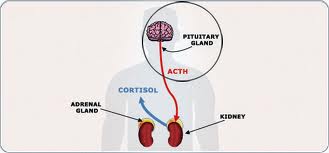
Researchers have determined mutations in the gene CABLES1 may lead to Cushing syndrome, a rare disorder in which the body overproduces the stress hormone cortisol.

The National Institutes of Health study findings published in Endocrine-Related Cancer found four of the 181 children and adult patient examined had mutant forms of CABLES1 that do not respond to cortisol.

The determination proved significant because normal functioning CABLES1 protein, expressed by the CABLES1 gene, slows the division and growth of pituitary cells that produce the hormone adrenocorticotropin (ACTH).

Researchers at the NIH’s Eunice Kennedy Shriver National Institute of Child Health and Human Development (NICHD) joined scientists from other institutions in the United States, France and Canada, in the evaluation.

“The mutations we identified impair the tumor suppressor function in the pituitary gland,” Constantine A. Stratakis, the study’s senior author and director of the NICHD Division of Intramural Research, said. “This discovery could lead to the development of treatment strategies that simulate the function of the CABLES1 protein and prevent recurrence of pituitary tumors in people with Cushing syndrome.”

Cushing syndrome symptoms include obesity, muscle weakness, fatigue, high blood pressure, high blood sugar, depression and anxiety, officials said, adding excess cortisol found in the disorder can result from certain steroid medications or from tumors of the pituitary or adrenal glands.

Researchers maintain that more studies are needed to fully understand how CABLES1 suppresses tumor formation in the pituitary gland.


From https://lifesciencedaily.com/stories/21624-study-links-genetic-mutations-cushing-syndrome/

Primary Adrenal Insufficiency (PAI)

 Al-Jurayyan NA
Background: Primary adrenal insufficiency (PAI) in children is an uncommon, but potentially fatal. The current symptoms include weakness, fatigue, anorexia, abdominal pain, weight loss, orthostatic hypotension, salt craving and characterized by hyperpigmentation.
Material and Methods: This is a retrospective, hospital based-study, conducted at King Khalid University Hospital (KKUH), during the period January 1989 and December 2014. Review of medical record of patient diagnosed with primary adrenal insufficiency. The diagnosis was based on medical history, physical examination and low levels of glucocorticoids and raised adrenocorticotropic hormone (ACTH). Appropriate laboratory and radiological investigations were also reviewed.
Results: During the period under review, January 1989 and December 2014, a total of 125 patients with the diagnosis of primary adrenal insufficiency were seen. Inherited disorders like congenital adrenal hyperplasia and hypoplasia were common, 85.5%. However, variable autoimmune mediated etiologic diagnosis accounted for, 13%, were also seen. The appropriate various laboratory and radiological investigations should be planned.
Conclusion: Although, congenital adrenal hyperplasia was the commonest etiology, however, congenital adrenal hypoplasia should not be over looked. The diagnosis of PAI can be challenging in some patients, and therefore appropriate serological and radiological investigations should be done.

Pituitary Dysfunction as a Result of Traumatic Brain Injury

A victim of brain injury can experience many consequences and complications as a result of brain damage. Unfortunately, the problems caused by a traumatic brain injury can extend even beyond what most people think of as the standard symptoms of a brain injury, like mood change and cognitive impairment. One issue which can occur is pituitary dysfunction. If the pituitary gland is damaged due to injury to the brain, the consequences can be dramatic as the pituitary gland works together with the hypothalamus to control every hormonal aspect of a person’s body.

Pituitary dysfunction as a result of a brain injury can be difficult to diagnose, as you may not immediately connect your symptoms to the head injury you experienced. If you did suffer injury to the pituitary gland, you need to know about it so you can get proper treatment. If someone else caused your brain injury to occur, you also want to know about your pituitary dysfunction so you can receive compensation for costs and losses associated with this serious health problem.

The pituitary is a small area of the center of your brain that is about the size of the uvula. The pituitary is surrounded and guarded by bone, but it does hang down.  When it becomes damaged as a result of a brain injury, the damage normally occurs as a result of the fact the pituitary was affected by reduced by reduced blood flow. It can also be harmed directly from the trauma, and only a tiny amount of damage can cause profound consequences.

Many of the important hormones that your body needs are controlled by the pituitary working with the hypothalamus. If the pituitary is damaged, the result can include a deficiency of Human Growth Hormone (HGH). This deficiency can affect your heart and can impact bone development.  Thyroid Stimulating Hormone (TSH) can also be affected, which could result in hypothyroidism. Sex hormones (gonodotropin); Adrenocorticotopic hormone; and many other hormones could be impacted as well, causing fertility problems; muscle loss; sexual dysfunction; kidney problems; fatigue; or even death.

Unfortunately, problems with the pituitary gland may not always be visible on MRIs or other imaging tests because the pituitary is so small. Endocrinologists who handle hormone therapy frequently are not familiar with brain injuries, and may not make the connection that your brain injury was the cause of the problem.

If you begin to experience hormonal issues following an accident, you should be certain to get an accurate diagnosis to determine if your brain injury played a role. If it did, those responsible for causing the accident could be responsible for compensating you for the harm you have experienced to your pituitary and to the body systems which malfunction as a result of your new hormonal issues.

Nelson Blair Langer Engle, PLLC

From http://www.nblelaw.com/posts/pituitary-dysfunction-result-of-traumatic-brain-injury

All About the Pituitary Gland

0276f-pituitary-gland


The pituitary gland stimulates all the other endocrine glands to produce their own hormones. It produces a number of hormones including Human Growth Hormone (hGH) responsible for bone and muscle growth and Follicle Stimulating Hormone (FSH) which stimulates the production of the female egg or male sperm.  It is found at the base of the brain.
What can happen when it goes wrong?

When the pituitary gland doesn’t produce enough ‘trigger’ hormones, hypopituitarism occurs. Most often, it is caused by a benign tumor of the pituitary gland although it can also be caused by infections, head injury or even stroke.

Symptoms?
Excessive tiredness, reduced fertility, irregular periods, weight gain, poor libido, dry skin and headaches.
Treatment?
If caused by a tumor, surgery will be required to remove it. Regardless of whether this is successful, daily hormones will then be required to replace those no longer produced.

Adapted from http://www.hippocraticpost.com/palliative/whole-story-hormones/

What a Hoot! Healing Cushing’s Syndrome Naturally

This guy must be nuts!

Healing Cushing’s Syndrome Naturally

by Dr. Paul Haider, Spiritual Teacher and Master Herbalist

Cushing’s Syndrome is the over production of cortisol by the adrenals glands and the resulting obesity, high blood pressure, fatigue, depression, muscle weakness, glucose intolerance, and more… are all part of the syndrome.

But there is hope, here are a few great herbs and other processes that can heal Cushing’s Syndrome naturally.

Read more of how you, too, can “Heal Your Cushing’s here: https://www.linkedin.com/pulse/healing-cushings-syndrome-naturally-dr-paul-haider