The Outcome of Abnormal Glucose Metabolism and Its Clinical Features in Patients With Cushing’s Disease After Curative Surgery

Abstract

Objective

To investigate the outcomes of abnormal glucose metabolism and its clinical characteristics in patients with Cushing’s disease (CD) who achieved biochemical remission after surgery.

Methods

Patients diagnosed with CD who achieved biochemical remission and underwent regular follow-up after surgery were enrolled. Pre- and postoperative clinical data were collected and analyzed.

Result

151CD patients were included, of whom 80 (53 %) had preoperative abnormal glucose metabolism, including 56 with diabetes mellitus (DM) and 24 with impaired glucose regulation (IGR). At one year after surgery, 57 patients exhibited improved glucose metabolism, accompanied by a significant reduction in the homeostasis model assessment of insulin resistance (HOMA-IR). Improvements were mainly observed at 3 and 6 months after surgery. At one-year after surgery, there were 20 patients with diabetes and 16 with IGR. Compared to those with NGT, these individuals exhibited a higher prevalence of hypertension, hyperlipidemia, fatty liver, and abnormal bone metabolism.

Conclusion

CD patients demonstrated a high incidence of abnormal glucose metabolism. Notably, approximately two-thirds demonstrated improved glucose metabolism one year after curative surgery, with the greatest improvements observed at 3- to 6-month postoperative follow-up.

Introduction

Cushing’s disease (CD) is characterized by excessive endogenous cortisol production caused by pituitary adrenocorticotropic hormone adenoma and is the main cause of Cushing’s syndrome (CS). Surgical resection of the tumor is the preferred treatment. Prolonged exposure to hypercortisolism increases the risk of metabolic abnormalities, including obesity, hypertension, glucose and lipid abnormalities, osteoporosis, etc. Additionally, it significantly elevates the risk of infection, thrombosis, and hypokalemia. Abnormal glucose metabolism is a common complication of CS, with an incidence ranging from 13.1 % to 47 %[1], and diabetes is an independent risk factor for mortality in CD patients[2].
Previous clinical studies have found that metabolic abnormalities such as diabetes, hypertension, and hyperlipidemia improve in CS patients who achieve biochemical remission after surgical treatment. However, the concept of improvement in glucose metabolism, the incidence of improvement, and its related factors are inconsistent in various reports. Previous studies primarily assessed the outcome of glucose metabolism based on plasma glucose results at a single fixed follow-up time after surgery. The lack of regular follow-up data makes it difficult to clearly understand the trend of postoperative plasma glucose changes, and there are no clinical data on when glucose metabolism begins to improve or change. Therefore, this study retrospectively analyzed the follow-up data of patients with Cushing’s disease in our hospital before and after surgery, and monitored the changes in glucose metabolism, to explore the characteristics and clinical features of such changes in patients with Cushing’s disease who achieved remission from CD following surgery..

Access through your organization

Check access to the full text by signing in through your organization.

Access through your organization

Section snippets

Subjects

This study enrolled hospitalized patients with Cushing’s disease at Huashan Hospital, Fudan University from January 2014 to February 2020. Inclusion criteria were as follows: (1) Age ≥ 18 years; (2) diagnosis of Cushing’s disease according to the 2021 Consensus on the Diagnosis and Management of Cushing’s Disease, confirmed by pathology[3]; (3) biochemical remission after transsphenoidal surgery; (4) complete preoperative data and regular follow-up visits (including visits at 1, 3, 6, and

Patients’ baseline characteristics

A total of 168 patients with CD were admitted to Huashan Hospital from 2014 to 2020 with pathological diagnosis and regular postoperative follow-up; however, 17 patients were excluded due to no biochemical remission after surgery or relapse during follow-up (Fig. 1). Ultimately, 151 patients (32 males and 119 females) were included in this study. The baseline characteristics of the included patients were shown in Table 1. There were 80 cases (53 %) complicated with abnormal glucose metabolism

Discussion

CD was a rare disease often associated with abnormal glucose metabolism. Based on medical history and OGTT screening, we found that over half (53 %) of CD patients exhibited abnormal glucose metabolism before surgery, with 37.1 % being diagnosed with diabetes. Previous studies have shown that the prevalence of diabetes in CS patients ranged from 13.1 % to 47 %, and most reports falling between 35 % and 45 %, which is consistent with our findings [1,12,13]. However, it should be noted that CD

Author contributions

Q.C. analyzed the data and wrote the manuscript. Q.C., Y.L., X.L., Q.S., W.S., and H.Z. collected the data. Y.L., Z.Z., M.H., S.Z., and H.Y. recruited patients. J.Z., Y.S., and S.Z. conducted the study design and revised the manuscript. All authors read and approved the final manuscript.

CRediT authorship contribution statement

Qiaoli Cui: Writing – review & editing, Writing – original draft, Methodology, Investigation, Formal analysis, Data curation, Conceptualization. Yujia Li: Writing – original draft, Investigation, Formal analysis, Data curation. Xiaoyu Liu: Investigation, Formal analysis, Data curation. Quanya Sun: Investigation, Data curation. Wanwan Sun: Investigation, Formal analysis, Data curation. Min He: Project administration, Investigation. Jie Zhang: Writing – review & editing, Supervision, Funding

Declaration of competing interest

The authors declare that they have no known competing financial interests or personal relationships that could have appeared to influence the work reported in this paper.

Acknowledgments

We are indebted to the patients who participated in this study and all the doctors who contributed to the diagnosis and treatment of these patients. This work was supported by grants from the Multidisciplinary Diagnosis and Treatment (MDT) demonstration project in research hospitals (Shanghai Medical College, Fudan University, NO: DGF501069/017), National Science and Technology Major Project (NO: 2023ZD0506800,2023ZD0506802), 2023 Ningbo International Cooperation Program (NO: 2023H024).

References (16)

  • R.N. Clayton et al.

    Mortality in patients with Cushing’s disease more than 10 years after remission: a multicentre, multinational, retrospective cohort study

    Lancet Diabetes Endocrinol

    (2016)
  • M. Fleseriu et al.

    Consensus on diagnosis and management of Cushing’s disease: a guideline update

    Lancet Diabetes Endocrinol

    (2021)
  • C. Scaroni et al.

    Glucose Metabolism Abnormalities in Cushing Syndrome: from Molecular Basis to Clinical Management

    Endocr Rev

    (2017)
  • C. Dai et al.

    Surgical outcome of transsphenoidal surgery in Cushing’s disease: a case series of 1106 patients from a single center over 30 years

    Endocrine

    (2022)
  • E. Valassi et al.

    Delayed remission after transsphenoidal surgery in patients with Cushing’s disease

    J Clin Endocrinol Metab

    (2010)
  • X. He et al.

    Glucocorticoid Withdrawal Syndrome following treatment of endogenous Cushing Syndrome

    (2022)
  • E.V. Varlamov et al.

    Perioperative Management of a Patient with Cushing Disease

    J Endocr Soc

    (2022)
  • Q. Cui et al.

    The recovery time of hypothalamic-pituitary-adrenal axis after curative surgery in Cushing’s disease and its related factor

    Endocrine

    (2023)
There are more references available in the full text version of this article.

Increase in Glucose Uptake by Cushing’s Disease-associated Tumors Could Improve Early Detection

An increase in glucose uptake by Cushing’s disease-associated pituitary tumors could improve their detection, new research shows.

The study, “Corticotropin releasing hormone can selectively stimulate glucose uptake in corticotropinoma via glucose transporter 1,” appeared in the journal Molecular and Cellular Endocrinology.

The study’s senior author was Dr. Prashant Chittiboina, MD, from the Department of Neurosurgery, Wexner Medical Center, The Ohio State University, in Columbus, Ohio.

Microadenomas – tumors in the pituitary gland measuring less than 10 mm in diameter – that release corticotropin, or corticotropinomas, can lead to Cushing’s disease. The presurgical detection of these microadenomas could improve surgical outcomes in patients with Cushing’s.

But current tumor visualization methodologies – magnetic resonance imaging (MRI) and 18F-fluorodeoxyglucose (18F-FDG) positron emission tomography (PET) – failed to detect a significant percentage of pituitary microadenomas.

Stimulation with corticotropin-releasing hormone (CRH), which increases glucose uptake, has been suggested as a method of increasing the detection of adenomas with 18F-FDG PET, by augmenting the uptake of 18F-FDG – a glucose analog.

However, previous studies aiming to validate this idea have failed, leading the research team to hypothesize that it may be due to a delayed elevation in glucose uptake in corticotropinomas.

The scientists used clinical data to determine the effectiveness of CRH in improving the detection of corticotropinomas with 18F-FDG PET in Cushing’s disease.

They found that CRH increased glucose uptake in human and mouse tumor cells, but not in healthy mouse or human pituitary cells that produce the adrenocorticotropic hormone (ACTH). Exposure to CRH increased glucose uptake in mouse tumor cells, with a maximal effect at four hours after stimulation.

Similarly, the glucose transporter GLUT1, which is located at the cell membrane, was increased two hours after stimulation, as was GLUT1-mediated glucose transport.

These findings indicate a potential mechanism linking CRH exposure to augmented glucose uptake through GLUT1. Expectedly, the inhibition of glucose transport with fasentin suppressed glucose uptake.

The researchers consistently observed exaggerated evidence of GLUT1 in human corticotropinomas. In addition, human corticotroph tumor cells showed an increased breakdown of glucose, which indicates that, unlike healthy cells, pituitary adenomas use glucose as their primary source of energy.

Overall, the study shows that corticotropin-releasing hormone (CRH) leads to a specific and delayed increase in glucose uptake in tumor corticotrophs.

“Taken together, these novel findings support the potential use of delayed 18F-FDG PET imaging following CRH stimulation to improve microadenoma detection in [Cushing’s disease],” researchers wrote. The scientists are now conducting a clinical trial to further explore this promising finding.

From https://cushingsdiseasenews.com/2017/10/12/glucose-uptake-in-cushings-disease-could-improve-presurgical-tumor-detection/

Crinetics Pharmaceuticals Awarded Two SBIR Grants to Develop New Therapeutics for Congenital Hyperinsulinism and Cushing’s Disease

SAN DIEGO, Sept. 06, 2017 (GLOBE NEWSWIRE) — Crinetics Pharmaceuticals, Inc., a rare disease therapeutics company focused on endocrine disorders and endocrine-related cancers, announced today that it was awarded two new grants from the National Institute of Diabetes and Digestive and Kidney Diseases (NIDDK) of the National Institutes of Health (NIH) that could total $2.4 million. Both are Small Business Innovation Research (SBIR) grants and include a Fast Track grant for up to $2.1 million and a Phase I grant of $0.3 million, which will be used for the development of Crinetics’ nonpeptide, oral somatostatin agonists for congenital hyperinsulinemia, and the discovery of novel small molecule drugs for Cushing’s disease, respectively.

“We are delighted with the NIH’s continuing support of our programs to develop new drugs for patients with rare endocrine disorders,” said Stephen Betz, Ph. D., Founder and Vice President of Biology of Crinetics. “These awards will enable us to advance our efforts in both hyperinsulinemia and Cushing’s disease, expanding our pipeline to include these diseases with significant unmet medical needs, and bring these treatments to the patients who need them.”

Presently, there are no medical therapies that were specifically developed to treat the life-threatening chronic hypoglycemia precipitated by congenital hyperinsulinism (CHI). The current options for patients are limited to drugs developed for other purposes in the hope that they might help. Despite their poor profiles, these drugs are prescribed because the next line of treatment is typically a partial or full pancreatectomy. Even when successful, patients who undergo the surgery often become diabetic and must actively manage glucose with multiple daily insulin injections for the rest of their lives.

Similarly, first line treatments for Cushing’s disease are surgical and involve removal of either the ACTH-secreting tumor in the pituitary or the adrenal glands themselves. As this is often unsuccessful, contraindicated or delayed, medical therapy for these patients becomes necessary. Current treatment options include inhibitors of steroid synthesis enzymes that can prevent the production of cortisol and improve symptoms, but these treatments also induce a host of unwanted side effects due to the accumulation of other steroid products.

About Congenital Hyperinsulinism (CHI)

Hyperinsulinemic hypoglycemia (HH) is one of the most frequent causes of persistent hypoglycemia in infants and can result in seizures, developmental delays, learning disabilities, and even death. The most severe form of HH is inherited and referred to as CHI. CHI largely results from mutations in key genes in the insulin secretion pathway in the islets of Langerhans in the pancreas.

About Cushing’s Disease

Clinical signs of Cushing’s syndrome include growth of fat pads (collarbone, back of neck, face and trunk), excessive sweating, dilation of capillaries, thinning of the skin, muscle weakness, hirsutism, depression/anxiety, hypertension, osteoporosis, insulin resistance, hyperglycemia, heart disease, and a range of other metabolic disturbances resulting in high morbidity. If inadequately controlled in its severe forms, Cushing’s syndrome is associated with high mortality. The most common form of Cushing’s syndrome is Cushing’s disease which is caused by microadenomas of pituitary corticotropic cells that secrete excess adrenocorticotropic hormone (ACTH).

About the NIDDK

The National Institute of Diabetes and Digestive and Kidney Diseases (NIDDK) conducts and supports research on diabetes and other endocrine and metabolic diseases; digestive diseases, nutrition, and obesity; and kidney, urologic, and hematologic diseases. Spanning the full spectrum of medicine and afflicting people of all ages and ethnic groups, these diseases encompass some of the most common, severe, and disabling conditions affecting Americans. For more information about the NIDDK and its programs, visit www.niddk.nih.gov.

About Crinetics Pharmaceuticals

Crinetics Pharmaceuticals discovers and develops novel therapeutics targeting peptide hormone receptors for the treatment of rare endocrine disorders and endocrine-related cancers. Crinetics was founded by a team of scientists with a proven track record of endocrine drug discovery and development to create important new therapeutic options for endocrinologists and their patients. The company is backed by top life sciences investors, 5AM Ventures, Versant Ventures, and Vivo Capital and is headquartered in San Diego. For more information, please visit www.crinetics.com.

More: http://www.pharmiweb.com/pressreleases/pressrel.asp?ROW_ID=241628#.WbFJGNN97-Y

Day 4 Coverage of ENDO 2015

ENDO_2015


LB-OR02-Glucose Metabolism: From Bedside to Bench

A meta-analysis of the safety and efficacy of a glucagon-like peptide-1 receptor agonist added to basal insulin therapy versus basal insulin with or without a rapid-acting insulin in Type 2 diabetes
CH Wysham, J Lin, L Kuritzky


Hypoglycemia in patients newly-initiated on basal insulin: Impact on treatment discontinuation
M Dalal, M Kazemi, F Ye


OR36-Metabolism and Gestational Diabetes

Impact of gestational diabetes on long-term vascular function
O Ajala, L Jensen, EA Ryan, CL Chik


OR40-Obesity: Human Studies in Body Weight Regulation

Increased protein intake during overfeeding increases energy expenditure, satiety, and urinary cortisol
A Graham, MC Schlogl, J Krakoff, MS Thearle


OR40-Obesity: Human Studies in Body Weight Regulation–Winner: Outstanding Abstract Award

Acute weight loss stimulates lipolysis and macrophage infiltration in the subcutaneous adipose tissue of obese women
JO Alemán, NM Iyengar, J Walker, J Gonzalez, GL Milne, DD Giri, CA Hudis, JL Breslow, PR Holt, AJ Dannenberg


OR44-Thyroid Cancer

Salvage therapy: When a tyrosine kinase inhibitor (TKI) fails in advanced medullary thyroid cancer (MTC)
SP Weitzman, KT Peicher, R Dadu, MI-N Hu, C Jimenez, C Gardner, A Qayyum, M Hernandez, ME Cabanillas


OR44-Thyroid Cancer – Winner: Outstanding Abstract Award

Phase II clinical trial of sunitinib as adjunctive treatment in patients with advanced differentiated thyroid cancer
A Bikas, P Kundra, JA Wexler, M Mete, S Desale, L Wray, C Barett, B Clark, L Wartofsky, K Burman


OR45-What Is New in Vitamin D?

Bioavailable fractions are better markers than 25 hydroxy vitamin D for monitoring vitamin D status during pregnancy
MR Pandian, J Pandian, Z Seres, AN Elias


High dose vitamin D2 supplementation for a year does not cause serious adverse events including emergency room visits and hospitalizations in African American men with high burden of chronic disease
C Onochie, I Ciubotaru, A Domenico, Y Eisenberg, SC Kukreja, A Kouser, E Barengolts


OR45-What Is New in Vitamin D? – Winner: Outstanding Abstract Award

Incidence of hypercalciuria and hypercalcemia during vitamin D and calcium supplementation in older and younger women: A comparison between Caucasians and African Americans in two randomized trials
SH Tella, JC Gallagher, S Yousefian, V Yalamanchili

Cushing’s Disease – Rare Disease Quick Facts

cushings-diagnosis


Cushing’s disease is a rare condition due to excess cortisol levels that result from a pituitary tumor secreting adrenocorticotropic hormone (ACTH), which stimulates cortisol secretion.  Cushing’s disease should not be confused with Cushing’s syndrome which is increased cortisol levels but that increase can be due to any number of factors. However, Cushing’s disease is the most common form of Cushing’s syndrome.

Symptoms

The symptoms related to Cushing’s disease and Cushing’s syndrome are the same, since both are related to an excess of cortisol. Also, symptoms vary extensively among patients and that, with the inherent fluctuation in hormone levels make it difficult to diagnosis both conditions.

Changes in physical characteristics of the body

  • Fullness and rounding of the face
  • Added fat on back of neck (so-called “buffalo hump”)
  • Easy bruising
  • Purplish stretch marks on the abdomen (abdominal striae)
  • Excessive weight gain, especially in abdominal region
  • Red cheeks
  • Excess hair growth on the face, neck, chest, abdomen and thighs

Changes in physiology/psychology

  • Generalized weakness and fatigue
  • Menstrual disorder
  • Decreased fertility and/or sex drive
  • High blood pressure that is often difficult to treat
  • Diabetes mellitus
  • Mood and behavior disorders

Diagnosis

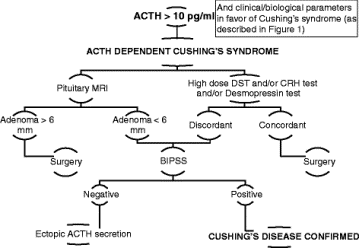
The early stages of Cushing’s disease may be difficult to recognize. However, if it is suspected, diagnosis is generally a 2 stage process. First to determine if cortisol levels are high, and if so, why they are high.

Tests to confirm high cortisol levels:

  • 24-hour urine cortisol
  • Dexamethasone suppression test (low dose)

Tests to determine cause:

  • Blood ACTH level
  • Brain MRI
  • Corticotropin-releasing hormone test
  • Dexamethasone suppression test (high dose)
  • Petrosal sinus sampling

Treatment

Surgery

  • Most patients with Cushing’s disease undergo surgery to remove the pituitary adenoma offers.
  • If the tumor is isolated to the pituitary, cure rates of 80-85% are common.
  • If the tumor has spread to nearby organs, cure rates of 50-55% are common.

Medicine (approved orphan drugs)

Signifor (pasireotide)

  • Approved for patients with Cushing’s disease for whom pituitary is not an option or surgery has been ineffective.
  • Signifor is a somatostatin receptor agonist that leads to inhibition of ACTY secretion (and subsequently decreased cortisol levels).

Korlym (mifepristone)

  • Approved for patients with Cushing’s syndrome who have type 2 diabetes or glucose intolerance and have failed surgery (or not candidates for surgery).
  • Korlym is a glucocorticoid receptor antagonist which in turn blocks the effects of the high levels of cortisol in the body. Korlym is used to treat high glucose levels due to elevated cortisol.

Medicines used but not indicated for Cushing’s disease include

Mitoden

ketoconazole

Metyrapone

Etomidate

Radiation

  • Radiation therapy may be used in some patients and can be very effective in controlling the growth of these tumors.

Prognosis

In most cases, treatment can cure Cushing’s disease. If not treated properly, the chronic hypercortisolism can lead to excess morbidity and mortality due to increased cardiovascular and other risk factors.

For more information

National Library of Medicine, National Institute of Health

Cushing’s Disease Information (provided by Novartis Pharmaceuticals)


Images courtesy of the open access journal Orhanet Journal for Rare Diseases.  Castinetti et al. Orphanet J Rare Dis. 2012 7:41   doi:10.1186/1750-1172-7-41

– See more at: http://www.raredr.com/front-page-medicine/articles/cushings-disease-rare-disease-quick-facts-0