1Eunice Kennedy Shriver National Institute of Child Health and Human Development, National Institutes of Health, Bethesda, MD
2National Institutes of Health, Bethesda, MD
Presentation Number: SAT-384
Date of Presentation: March 7, 2015
Abstract:Background: Urine free cortisol (UFC) has been traditionally used as one of the first steps in the diagnostic evaluation of Cushing’s syndrome (CS) (1). False positive results, especially values less than twice the upper limit of normal (ULN), can be seen in uncontrolled diabetes, obesity, depression, alcoholism, increased fluid intake, overcollection and stress. False negative results have also been reported with incomplete collection, in mild or cyclic CS and in patients with renal insufficiency (2-3). We evaluated the diagnostic accuracy of UFC and 24-hour urine 17-hydroxycorticosteroids (17OHCS) in patients with CS.Methods: Retrospective study of all CS patients evaluated at the National Institutes of Health (NIH) from 2009 to 2014. Screening tests used for CS included UFC, 17OHCS, late night salivary cortisol (LNSC), midnight serum cortisol and low dose (1mg overnight or 2-day 2mg/day) dexamethasone suppression test (DST). Values above reference range for UFC, 17OHCS and LNSC, a midnight serum cortisol ≥ 7.5 mcg/dL, and post-dexamethasone cortisol values ≥ 1.8 mcg/dL were considered abnormal. Hourly 24-hour sampling for cortisol was performed in a few cases with a mild clinical phenotype and equivocal test results. UFC was measured using liquid chromatography/tandem mass spectrometry (LC-MS/MS). 17OHCS was measured using colorimetric methodology with Porter-Silber reaction (reported as mg/g of creatinine). Mean of the first two UFC and 17OHCS values (appropriate collection by urine volume and creatinine) obtained within 30 days of initial NIH presentation were used for the purpose of this study.
Results: Seventy-two patients were diagnosed with CS (aged 18-77 years, 51 females). Of these, 51 had Cushing’s disease (CD), 10 had ectopic CS while 2 had an adrenal source of Cushing’s based on pathology. Biochemical tests including inferior petrosal sinus sampling (IPSS) suggested ectopic CS but no tumor was found (occult) in 6 patients. IPSS was indicative of a pituitary source in 2 patients with failed transsphenoidal surgery while one patient did not complete evaluation for ACTH-dependent CS. UFC results were available in all, 17OHCS in 70, LNSC in 21, midnight serum cortisol in 68 and DST results in 37 patients. UFC was falsely normal in six and only minimally elevated (< 2 x ULN) in 13 patients (normal renal function, no history of cyclicity, all had CD). Of these 19 patients, 24h 17OHCS was abnormal in all, LNSC was abnormal in 12, midnight serum cortisol was abnormal in 18 and DST was abnormal in 12 patients. Hourly 24-hour sampling for cortisol performed in 3 of these patients revealed abnormal nadir (> 7.5 mcg/dL) and mean daily serum cortisol (> 9 mcg/dL) levels.
Conclusion: UFC can be falsely normal or only minimally elevated in mild CS. Multiple collections and use of complimentary screening tests including 24-hour urine 17OHCS and LNSC can help make a diagnosis and prevent delay in treatment.
(1) Newell-Price J, et al. Cushing’s syndrome. Lancet. 2006;367(9522):1605-17. (2) Alexandraki KI, et al. Is urinary free cortisol of value in the diagnosis of Cushing’s syndrome. Curr Opin Endocrinol Diabetes Obes. 2011;18:259–63. (3) Kidambi S, et al. Limitations of nocturnal salivary cortisol and urine free cortisol in the diagnosis of mild Cushing’s syndrome. Eur J Endocrinol. 2007;157(6):725-31
Nothing to Disclose: STS, LKN
Sources of Research Support: This research was in part supported by the intramural research program of NICHD/NIH
The Endocrine Society today issued a Clinical Practice Guideline (CPG) on strategies for treating Cushing’s syndrome, a condition caused by overexposure to the hormone cortisol.
The CPG, entitled “Treatment of Cushing’s Syndrome: An Endocrine Society Clinical Practice Guideline,” was published online and will appear in the August 2015 print issue of the Journal of Clinical Endocrinology and Metabolism (JCEM), a publication of the Endocrine Society.
Cushing’s syndrome occurs when a person has excess cortisol in the blood for an extended period, according to the Hormone Health Network. When it is present in normal amounts, cortisol is involved in the body’s response to stress, maintains blood pressure and cardiovascular function, keeps the immune system in check, and converts fat, carbohydrates and proteins into energy. Chronic overexposure to the hormone can contribute to the development of cardiovascular disease, infections and blood clots in veins.
People who take cortisol-like medications such as prednisone to treat inflammatory conditions, including asthma and rheumatoid arthritis, can develop Cushing’s syndrome. The high cortisol levels return to normal when they stop taking the medication. This is called exogenous Cushing’s syndrome.
In other cases, tumors found on the adrenal or pituitary glands or elsewhere in the body cause the overproduction of cortisol and lead to the development of Cushing’s syndrome. The Clinical Practice Guidelines focus on this form of the condition, known as endogenous Cushing’s syndrome.
“People who have active Cushing’s syndrome face a greater risk of death – anywhere from nearly twice as high to nearly five times higher – than the general population,” said Lynnette K. Nieman, MD, of the National Institutes of Health’s Eunice Kennedy Shriver National Institute of Child Health and Human Development in Bethesda, MD, and chair of the task force that authored the guideline. “To reduce the risk of fatal cardiovascular disease, infections or blood clots, it is critical to identify the cause of the Cushing’s syndrome and restore cortisol levels to the normal range.”
In the CPG, the Endocrine Society recommends that the first-line treatment for endogenous Cushing’s syndrome be the removal of the tumor unless surgery is not possible or unlikely to address the excess cortisol. Surgical removal of the tumor is optimal because it leaves intact the hypothalamic-pituitary-adrenal axis, which is integral to the body’s central stress response.
Other recommendations from the CPG include:
Tumors should be removed by experienced surgeons in the following situations:— A tumor has formed on one or both of the two adrenal glands.— A tumor that secretes adrenocorticotropic hormone (ACTH) – the hormone that signals the adrenal glands to produce cortisol – has formed somewhere in the body other than the adrenal or pituitary gland.
— A tumor has formed on the pituitary gland itself.
Patients who continue to have high levels of cortisol in the blood after surgery should undergo additional treatment.
People who had an ACTH-producing tumor should be screened regularly for the rest of their lives for high cortisol levels to spot recurrences.
If patients’ cortisol levels are too low following surgery, they should receive glucocorticoid replacement medications and be educated about adrenal insufficiency, a condition where the adrenal glands produce too little cortisol. This condition often resolves in 1-2 years.
Morning cortisol and/or ACTH stimulation tests, or insulin-induced hypoglycemia, can be used to test for the recovery of the hypothalamic-pituitary-adrenal axis in people who have low cortisol levels after surgery. Once the tests results return to normal, glucocorticoid replacement can be stopped.
People who have undergone pituitary surgery should be re-evaluated for other pituitary hormone deficiencies during the post-operative period.
Patients who have a pituitary tumor and have undergone surgery to remove both adrenal glands should be regularly evaluated for tumor progression using pituitary MRIs and tests for ACTH levels.
Radiation therapy may be used to treat a pituitary tumor, especially if it is growing. While awaiting the effect of radiation, which may take months to years, treatment with medication is advised.
To assess the effect of radiation therapy, the patient’s cortisol levels should be measured at 6- to 12-month intervals.
Medications may be used to control cortisol levels as a second-line treatment after surgery for a pituitary gland tumor, as a primary treatment for ACTH-secreting tumors that have spread to other parts of the body or suspected ACTH-secreting tumors that cannot be detected on scans. Medications also can be used as adjunctive treatment to reduce cortisol levels in people with adrenal cortical carcinoma, a rare condition where a cancerous growth develops in the adrenal gland.
People with Cushing’s syndrome should be treated for conditions associated with the disease, such as cardiovascular disease risk factors, osteoporosis and psychiatric symptoms.
Patients should be tested for recurrence throughout their lives except in cases where the person had a benign adrenal tumor removed.
Patients should undergo urgent treatment within 24 to 72 hours of detecting excess cortisol if life-threatening complications such as serious infection, pulmonary thromboembolism, cardiovascular complications and acute psychosis are present.
Cushing’s disease in children is associated with similar biochemical measures whether the disease is due to macroadenomas or microadenomas, according to a presentation at the AACE 24th Annual Scientific & Clinical Congress.
This contrasts with the disease behavior in adults, in whom macrodenomas demonstrate less glucocorticoid suppression and adrenocorticotropic hormone (ACTH) response to laboratory tests than do microadenomas, according to researchers.
“Children with pituitary macroadenomas are more likely to have the classical response to Cushing’s disease functional testing as microadenomas,”Ricardo Correa, MD, a clinical and research endocrinology fellow at National Institutes of Health, told Endocrine Today.
Correa and colleagues conducted a retrospective review of patients with Cushing’s disease who were younger than 18 years when they were admitted to the NIH between 1997 and 2014. All Cushing’s diagnoses were confirmed by pathology.
Pituitary macroadenoma was identified in 13 patients (69% female) and microadenoma in 74 (58% female). The groups had similar mean age (14 years) and BMI (31.8 kg/m2 and 30.2 kg/m2 for macroadenoma and microadenoma, respectively). The macroadenoma group had a median (25% to 75%) 24-hour urine free cortisol of 263.60 mcg/24 hr (range 170.7-528) compared with 371.6 mcg/ 24 hr (range 244.2-625.3) in the microadenoma group (P = 0.47). Median 24-hr urinary 17-hydroxysteroid excretion in the macroadenoma group was 12.6 mg/24 hr (range 8.9-42.5) and 31.6 mg/24 hr (range 4.3-39.9) in the microadenoma group.
Mean morning serum cortisol was 38.9 ± 40.4 mcg/dL compared with 20.2 ± 15.8 mcg/dL in the macroademona and microadenoma groups, respectively (P = 0.16). Mean morning basal plasma ACTH was 106.3 ± 112.3 pg/mL compared with 49.9±44.3 pg/mL for the macroadenoma and microadenoma groups, respectively (P = 0.11), while ACTH responses to the ovine corticotropin-releasing hormone test revealed no statistically significant differences. Using the high dose dexamethasone suppression test, 58% (7/12) suppressed more than 69% in the macroadenoma group compared to 69% (44/64) in the microadenoma group (P = .51).
“Studies in adult patients have demonstrated that macroadenomas have less glucocorticoid suppressibility after the high-dose dexamethasone suppression test and attenuated ACTH response to CRH compared to pituitary microadenomas,” according to Correa. “However, the present study shows that this is not true in children; although patients with macroadenomas had a tendency for higher baseline serum ACTH and cortisol levels, their responses to dynamic testing were similar to those with microadenomas.”
Reference:
Correa R, et al. Abstract #803. Presented at: AACE 24th Annual Scientific & Clinical Congress; May 13-17, 2015; Nashville, Tenn.
Disclosure: The researchers report no relevant financial disclosures.
So often during the diagnosis phase of Cushing’s I felt like this picture – I was walking alone to an unknown place with an unknown future.
My diagnosis was pre-Internet which meant that any information had to be gotten from libraries, bookstores, magazines…or doctors. In 1983 to 1986 I knew something was terribly wrong but there was no backup from doctors, family or friends. My first hope was from a magazine (see Day Six)
After I got that first glimmer of hope, it was off to the library to try to understand medical texts. I would pick out words I did understand – and it was more words each trip. All my research led me to Cushing’s.
Unfortunately, the research didn’t lead me to doctors who could help for several years. That contributed greatly to the loneliness. If a Doctor says you’re not sick, friends and family are going to believe the doctor, not you. After all, he’s the one trained to know what’s wrong, or find out.
I was so grateful when I finally got into a clinical trial at NIH and was so nice not to be alone with this mystery illness. I was also surprised to learn, awful as I felt, there were Cushies much worse off than I was.
I am so glad that the Internet is here now helping us all know that we’re not alone anymore.
Mary, I am delighted to see you here. Cushings – because of the persistent central obesity caused by (we know now) the lack of growth hormone plus the hypothyroidism I was diagnosed with (but for which treatment was ineffective due to my lack of cortisol) – was one of the things I considered as an explanation for my symptoms. Your site was enormously educational and helpful to me in figuring out what might be happening to me. Those other patient testimonies I referred to? Many of them were the bios you posted. Thank you so much for commenting. I am so grateful for the support and encouragement. I really hope that my experiences will help other undiagnosed hypopituitary patients find their way to a diagnosis. I often used to dream that one day I’d get to say to others what was so often said to me: don’t give up, there will be an answer. I kept believing in myself because people I hadn’t even met believed in me. Now I am finally here and I do hope my story will help others to have faith in their own instincts.
It’s Sunday again, so this is another semi-religious post so feel free to skip it 🙂
I’m sure that many would think that this is a semi-odd choice for all-time favorite hymn.
My dad was a Congregational (now United Church of Christ) minister so I was pretty regular in church attendance in my younger years.
Some Sunday evenings, he would preach on a circuit and I’d go with him to some of these tiny churches. The people there, mostly older folks, liked the old hymns best – Fanny Crosby and so on.
So, some of my “favorite hymns” are those that I sang when I was out with my Dad. Fond memories from long ago.
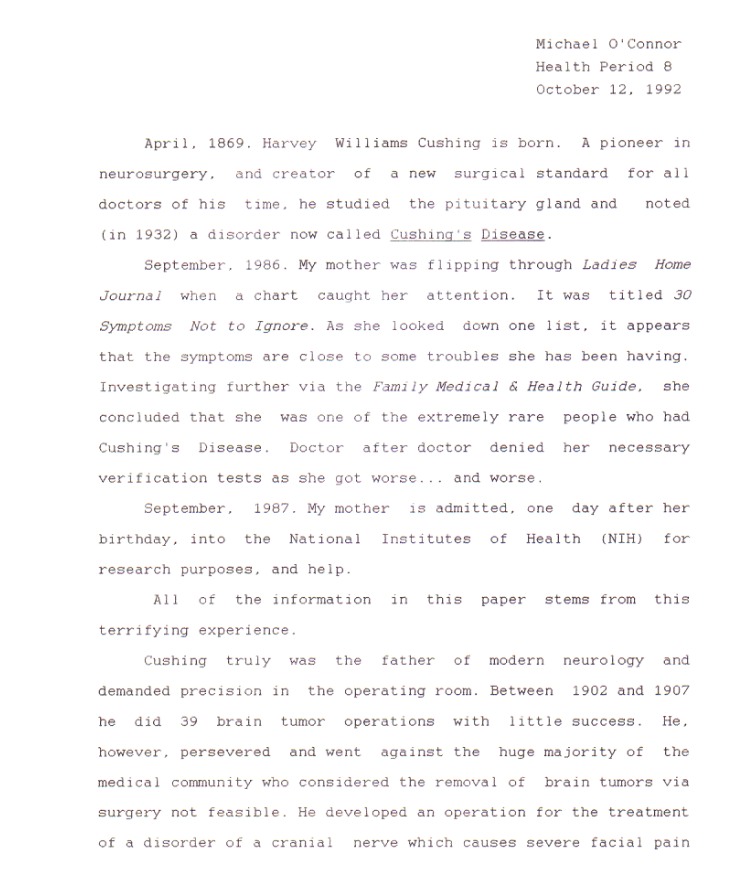
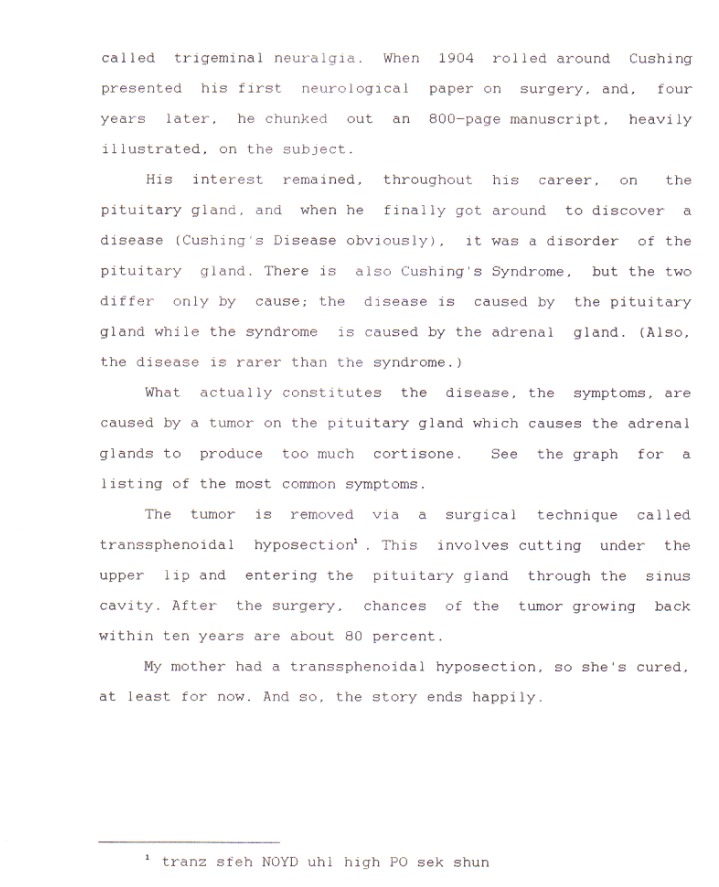
In 1986 I was finally diagnosed with Cushing’s after struggling with doctors and trying to get them to test for about 5 years. I was going to go into the NIH (National Institutes of Health) in Bethesda, MD for final testing and then-experimental pituitary surgery.
I was terrified and sure that I wouldn’t survive the surgery.
Somehow, I found a 3-tape set of Readers Digest Hymns and Songs of Inspiration and ordered that. The set came just before I went to NIH and I had it with me.
At NIH I set up a daily “routine” of sorts and listening to these tapes was a very important part of my day and helped me get through the ordeal of more testing, surgery, post-op and more.
When I had my kidney cancer surgery, the tapes were long broken, but I had replaced all the songs – this time on my iPod.
Abide With Me was on this tape set and it remains a favorite to this day. Whenever we have an opportunity in church to pick a favorite, my hand always shoots up and I request page 700. When someone in one of my handbell groups moves away, we always sign a hymnbook and give it to them. I sign page 700.
I think that many people would probably think that this hymn is depressing. Maybe it is but to me it signifies times in my life when I thought I might die and I was so comforted by the sentiments here.
This hymn is often associated with funeral services and has given hope and comfort to so many over the years – me included.
If you abide in Me, and My words abide in you, you will ask what you desire, and it shall be done for you.
~John 15:7
Abide With Me
Words: Henry F. Lyte, 1847.
Music: Eventide, William H. Monk, 1861. Mrs. Monk described the setting:
This tune was written at a time of great sorrow—when together we watched, as we did daily, the glories of the setting sun. As the last golden ray faded, he took some paper and penciled that tune which has gone all over the earth.
Lyte was inspired to write this hymn as he was dying of tuberculosis; he finished it the Sunday he gave his farewell sermon in the parish he served so many years. The next day, he left for Italy to regain his health. He didn’t make it, though—he died in Nice, France, three weeks after writing these words. Here is an excerpt from his farewell sermon:
O brethren, I stand here among you today, as alive from the dead, if I may hope to impress it upon you, and induce you to prepare for that solemn hour which must come to all, by a timely acquaintance with the death of Christ.
For over a century, the bells of his church at All Saints in Lower Brixham, Devonshire, have rung out “Abide with Me” daily. The hymn was sung at the wedding of King George VI, at the wedding of his daughter, the future Queen Elizabeth II, and at the funeral of Nobel peace prize winner Mother Teresa of Calcutta in1997.
Abide with me; fast falls the eventide;
The darkness deepens; Lord with me abide.
When other helpers fail and comforts flee,
Help of the helpless, O abide with me.
Swift to its close ebbs out life’s little day;
Earth’s joys grow dim; its glories pass away;
Change and decay in all around I see;
O Thou who changest not, abide with me.
Not a brief glance I beg, a passing word;
But as Thou dwell’st with Thy disciples, Lord,
Familiar, condescending, patient, free.
Come not to sojourn, but abide with me.
Come not in terrors, as the King of kings,
But kind and good, with healing in Thy wings,
Tears for all woes, a heart for every plea—
Come, Friend of sinners, and thus bide with me.
Thou on my head in early youth didst smile;
And, though rebellious and perverse meanwhile,
Thou hast not left me, oft as I left Thee,
On to the close, O Lord, abide with me.
I need Thy presence every passing hour.
What but Thy grace can foil the tempter’s power?
Who, like Thyself, my guide and stay can be?
Through cloud and sunshine, Lord, abide with me.
I fear no foe, with Thee at hand to bless;
Ills have no weight, and tears no bitterness.
Where is death’s sting? Where, grave, thy victory?
I triumph still, if Thou abide with me.
Hold Thou Thy cross before my closing eyes;
Shine through the gloom and point me to the skies.
Heaven’s morning breaks, and earth’s vain shadows flee;