COVID-19 May Be Severe in Cushing’s Patients

A young healthcare worker who contracted COVID-19 shortly after being diagnosed with Cushing’s disease was detailed in a case report from Japan.

While the woman was successfully treated for both conditions, Cushing’s may worsen a COVID-19 infection. Prompt treatment and multidisciplinary care is required for Cushing’s patients who get COVID-19, its researchers said.

The report, “Successful management of a patient with active Cushing’s disease complicated with coronavirus disease 2019 (COVID-19) pneumonia,” was published in Endocrine Journal.

Cushing’s disease is caused by a tumor on the pituitary gland, which results in abnormally high levels of the stress hormone cortisol (hypercortisolism). Since COVID-19 is still a fairly new disease, and Cushing’s is rare, there is scant data on how COVID-19 tends to affect Cushing’s patients.

In the report, researchers described the case of a 27-year-old Japanese female healthcare worker with active Cushing’s disease who contracted COVID-19.

The patient had a six-year-long history of amenorrhea (missed periods) and dyslipidemia (abnormal fat levels in the body). She had also experienced weight gain, a rounding face, and acne.

After transferring to a new workplace, the woman visited a new gynecologist, who checked her hormonal status. Abnormal findings prompted a visit to the endocrinology department.

Clinical examination revealed features indicative of Cushing’s syndrome, such as a round face with acne, central obesity, and buffalo hump. Laboratory testing confirmed hypercortisolism, and MRI revealed a tumor in the patient’s pituitary gland.

She was scheduled for surgery to remove the tumor, and treated with metyrapone, a medication that can decrease cortisol production in the body. Shortly thereafter, she had close contact with a patient she was helping to care for, who was infected with COVID-19 but not yet diagnosed.

A few days later, the woman experienced a fever, nausea, and headache. These persisted for a few days, and then she started having difficulty breathing. Imaging of her lungs revealed a fluid buildup (pneumonia), and a test for SARS-CoV-2 — the virus that causes COVID-19 — came back positive.

A week after symptoms developed, the patient required supplemental oxygen. Her condition worsened 10 days later, and laboratory tests were indicative of increased inflammation.

To control the patient’s Cushing’s disease, she was treated with increasing doses of metyrapone and similar medications to decrease cortisol production; she was also administered cortisol — this “block and replace” approach aims to maintain cortisol levels within the normal range.

The patient experienced metyrapone side effects that included stomach upset, nausea, dizziness, swelling, increased acne, and hypokalemia (low potassium levels).

She was given antiviral therapies (e.g., favipiravir) to help manage the COVID-19. Additional medications to prevent opportunistic fungal infections were also administered.

From the next day onward, her symptoms eased, and the woman was eventually discharged from the hospital. A month after being discharged, she tested negative for SARS-CoV-2.

Surgery for the pituitary tumor was then again possible. Appropriate safeguards were put in place to protect the medical team caring for her from infection, during and after the surgery.

The patient didn’t have any noteworthy complications from the surgery, and her cortisol levels soon dropped to within normal limits. She was considered to be in remission.

Although broad conclusions cannot be reliably drawn from a single case, the researchers suggested that the patient’s underlying Cushing’s disease may have made her more susceptible to severe pneumonia due to COVID-19.

“Since hypercortisolism due to active Cushing’s disease may enhance the severity of COVID-19 infection, it is necessary to provide appropriate, multidisciplinary and prompt treatment,” the researchers wrote.

From https://cushingsdiseasenews.com/2021/01/15/covid-19-may-be-severe-cushings-patients-case-report-suggests/?cn-reloaded=1

Myth: “Each Person Requires the Same Dose of Steroid in Order to Survive…

Myth: “Each person requires the same dose of steroid in order to survive with Secondary or Primary Adrenal Insufficiency”

myth-busted

Fact: In simple terms, Adrenal Insufficiency occurs when the body does not have enough cortisol in it. You see, cortisol is life sustaining and we actually do need cortisol to survive. You have probably seen the commercials about “getting rid of extra belly fat” by lowering your cortisol. These advertisements make it hard for people to actually understand the importance of the function of cortisol.

After a Cushing’s patient has surgery, he/she goes from having very high levels of cortisol to no cortisol at all. For pituitary patients, the pituitary, in theory, should start working eventually again and cause the adrenal glands to produce enough cortisol. However, in many cases; the pituitary gland does not resume normal functioning and leaves a person adrenally insufficient. The first year after pit surgery is spent trying to get that hormone to regulate on its own normally again. For a patient who has had a Bilateral Adrenalectomy (BLA), where both adrenal glands are removed as a last resort to “cure” Cushing’s; his/her body will not produce cortisol at all for his/her life. This causes Primary Adrenal Insufficiency.

All Cushing’s patients spend time after surgery adjusting medications and weaning slowly from steroid (cortisol) to get the body to a maintenance dose, which is the dose that a “normal” body produces. This process can be a very long one. Once on maintenance, a patient’s job is not over. He/She has to learn what situations require even more cortisol. You see, cortisol is the stress hormone and also known as the Fight or Flight hormone. Its function is to help a person respond effectively to stress and cortisol helps the body compensate for both physical and emotional stress. So, when faced with a stressor, the body will produce 10X the baseline levels in order to compensate. When a person can not produce adequate amounts of cortisol to compensate, we call that Adrenal Insufficiency. If it gets to the point of an “Adrenal Crisis”, this means that the body can no longer deal and will go into shock unless introduced to extremely high levels of cortisol, usually administered through an emergency shot of steroid.

There are ways to help prevent a crisis, by taking more steroid than the maintenance dose during times of stress. This can be anything from going to a family function (good stress counts too) to fighting an infection or illness. Acute stressors such as getting into a car accident or sometimes even having a really bad fight require more cortisol as well.

It was once believed that everyone responded to every stressor in the exact same way. So, there are general guidelines about how much more cortisol to introduce to the body during certain stressors. For instance, during infection, a patient should take 2-3X the maintenance dose of steroid (cortisol). Also, even the maintenance dose was considered the same for everyone. Now a days, most doctors will say that 20 mg of Hydrocortisone (Steroid/Cortisol) is the appropriate maintenance dose for EVERYONE. Now, we know that neither is necessarily true. Although the required maintenance dose is about the same for everyone; some patients require less and some require more. I have friends who will go into an adrenal crisis if they take LESS than 30 mg of daily steroid. On the other hand, 30 mg may be way too much for some and those folks may even require LESS daily steroid, like 15 mg. Also, I want to stress (no pun intended) that different stressors affect different people differently. For some, for instance, an acute scare may not affect them. However, for others, receiving bad news or being in shock WILL put their bodies into crisis. That person must then figure out how much additional steroid is needed.

Each situation is different and each time may be different. Depending on the stressor, a person may need just a little more cortisol or a lot. Every person must, therefore, learn their own bodies when dealing with Adrenal Insufficiency. This is VERY important! I learned this the hard way. As a Clinical Psychologist; I assumed that my “coping skills” would be enough to prevent a stressor from putting me into crisis. That was FAR from the truth! I have learned that I can not necessarily prevent my body’s physiological response to stress. People often ask me, “BUT you are a psychologist! Shouldn’t you be able to deal with stress?!!!!” What they don’t realize is that my BODY is the one that has to do the job of compensating. Since my body can not produce cortisol at all, my job is to pay close attention to it so that I can take enough steroid to respond to any given situation. We all have to do that. We all have to learn our own bodies. This is vitally important and will save our lives!

To those we have lost in our community to Adrenal Insufficiency after treatment of Cushing’s, Rest in Peace my friends! Your legacies live on forever!

~ By Karen Ternier Thames

Johns Hopkins Pituitary Patient Education Day

October 25 @ 9:00 am – 1:00 pm

The annual Pituitary Patient Education Day is a free event that features presentations from Johns Hopkins pituitary experts.

To RSVP, please email pituitaryday@jhmi.edu. Space is limited. Each person can bring up to one guest. If you RSVP yes but you cannot make it, please inform us as soon as possible by email, so that the slot can be offered to someone else.

List of presentations will be posted when finalized. Topics covered in previous years include:

Free
1800 Orleans Street, Zayed 2117
Baltimore, Maryland 21287 United States

410-955-5000

Day 8, Cushing’s Awareness Challenge

It’s Here!

Dr. Cushing was born in Cleveland Ohio. The fourth generation in his family to become a physician, he showed great promise at Harvard Medical School and in his residency at Johns Hopkins Hospital (1896 to 1900), where he learned cerebral surgery under William S. Halsted.

After studying a year in Europe, he introduced the blood pressure sphygmomanometer to the U.S.A. He began a surgical practice in Baltimore while teaching at Johns Hopkins Hospital (1901 to 1911), and gained a national reputation for operations such as the removal of brain tumors. From 1912 until 1932 he was a professor of surgery at Harvard Medical School and surgeon in chief at Peter Bent Brigham Hospital in Boston, with time off during World War I to perform surgery for the U.S. forces in France; out of this experience came his major paper on wartime brain injuries (1918). In addition to his pioneering work in performing and teaching brain surgery, he was the reigning expert on the pituitary gland since his 1912 publication on the subject; later he discovered the condition of the pituitary now known as “Cushing’s disease“.

Read more about Dr. Cushing

Today, April 8th, is Cushing’s Awareness Day. Please wear your Cushing’s ribbons, t-shirts, awareness bracelets or Cushing’s colors (blue and yellow) and hand out Robin’s wonderful Awareness Cards to get a discussion going with anyone who will listen.

And don’t just raise awareness on April 8.  Any day is a good day to raise awareness.


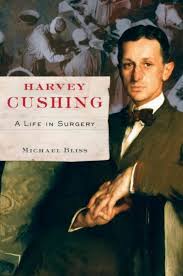
harvey-book

I found this biography fascinating!

I found Dr. Cushing’s life to be most interesting. I had previously known of him mainly because his name is associated with a disease I had – Cushing’s. This book doesn’t talk nearly enough about how he came to discover the causes of Cushing’s disease, but I found it to be a valuable resource, anyway.
I was so surprised to learn of all the “firsts” Dr. Cushing brought to medicine and the improvements that came about because of him. Dr. Cushing introduced the blood pressure sphygmomanometer to America, and was a pioneer in the use of X-rays.

He even won a Pulitzer Prize. Not for medicine, but for writing the biography of another Doctor (Sir William Osler).

Before his day, nearly all brain tumor patients died. He was able to get the number down to only 5%, unheard of in the early 1900s.

This is a very good book to read if you want to learn more about this most interesting, influential and innovative brain surgeon.


What Would Harvey Say?

harvey-book

(BPT) – More than 80 years ago renowned neurosurgeon, Dr. Harvey Cushing, discovered a tumor on the pituitary gland as the cause of a serious, hormone disorder that leads to dramatic physical changes in the body in addition to life-threatening health concerns. The discovery was so profound it came to be known as Cushing’s disease. While much has been learned about Cushing’s disease since the 1930s, awareness of this rare pituitary condition is still low and people often struggle for years before finding the right diagnosis.

Read on to meet the man behind the discovery and get his perspective on the present state of Cushing’s disease.

* What would Harvey Cushing say about the time it takes for people with Cushing’s disease to receive an accurate diagnosis?

Cushing’s disease still takes too long to diagnose!

Despite advances in modern technology, the time to diagnosis for a person with Cushing’s disease is on average six years. This is partly due to the fact that symptoms, which may include facial rounding, thin skin and easy bruising, excess body and facial hair and central obesity, can be easily mistaken for other conditions. Further awareness of the disease is needed as early diagnosis has the potential to lead to a more favorable outcome for people with the condition.

* What would Harvey Cushing say about the advances made in how the disease is diagnosed?

Significant progress has been made as several options are now available for physicians to use in diagnosing Cushing’s disease.

In addition to routine blood work and urine testing, health care professionals are now also able to test for biochemical markers – molecules that are found in certain parts of the body including blood and urine and can help to identify the presence of a disease or condition.

* What would Harvey Cushing say about disease management for those with Cushing’s disease today?

Patients now have choices but more research is still needed.

There are a variety of disease management options for those living with Cushing’s disease today. The first line and most common management approach for Cushing’s disease is the surgical removal of the tumor. However, there are other management options, such as medication and radiation that may be considered for patients when surgery is not appropriate or effective.

* What would Harvey Cushing say about the importance of ongoing monitoring in patients with Cushing’s disease?

Routine check-ups and ongoing monitoring are key to successfully managing Cushing’s disease.

The same tests used in diagnosing Cushing’s disease, along with imaging tests and clinical suspicion, are used to assess patients’ hormone levels and monitor for signs and symptoms of a relapse. Unfortunately, more than a third of patients experience a relapse in the condition so even patients who have been surgically treated require careful long-term follow up.

* What would Harvey Cushing say about Cushing’s disease patient care?

Cushing’s disease is complex and the best approach for patients is a multidisciplinary team of health care professionals working together guiding patient care.

Whereas years ago patients may have only worked with a neurosurgeon, today patients are typically treated by a variety of health care professionals including endocrinologists, neurologists, radiologists, mental health professionals and nurses. We are much more aware of the psychosocial impact of Cushing’s disease and patients now have access to mental health professionals, literature, patient advocacy groups and support groups to help them manage the emotional aspects of the disease.

Learn More

Novartis is committed to helping transform the care of rare pituitary conditions and bringing meaningful solutions to people living with Cushing’s disease. Recognizing the need for increased awareness, Novartis developed the “What Would Harvey Cushing Say?” educational initiative that provides hypothetical responses from Dr. Cushing about various aspects of Cushing’s disease management based on the Endocrine Society’s Clinical Guidelines.

For more information about Cushing’s disease, visit www.CushingsDisease.com or watch educational Cushing’s disease videos on the Novartis YouTube channel at www.youtube.com/Novartis.

From http://www.jsonline.com/sponsoredarticles/health-wellness/what-would-harvey-cushing-say-about-cushings-disease-today8087390508-253383751.html

Hypopituitarism and COVID-19 – exploring a possible bidirectional relationship?

As of September 1, 2021, the severe acute respiratory syndrome coronavirus 2 (SARS-CoV-2), which is the virus responsible for the coronavirus disease 2019 (COVID-19), has infected over 219 million and caused the deaths of over 4.5 million worldwide. Although COVID-19 has been traditionally associated with its ability to cause varied symptoms resembling acute respiratory distress syndrome (ARDS), emerging scientific evidence has demonstrated that SARS-CoV-2 causes much more damage beyond its effects on the upper respiratory tract.

To this end, in a recent study published in Reviews in Endocrine and Metabolic Disorders, the researchers discuss the extra-pulmonary manifestations of COVID-19.

Risk factors for severe COVID-19

It is now a well-known fact that the likelihood of people falling severely ill or dying from COVID-19 is increases if these individuals are obese, or have certain comorbidities like diabetes mellitus (DM), vitamin D deficiency, and vertebral fractures (VFs).

Any abnormality in the pituitary gland may lead to metabolic disorders, impaired immunity, and a host of other conditions that also make the body susceptible to infections. Since such conditions are common in patients with COVID-19 as well, it has been hypothesized that there might be a relationship between COVID-19 and pituitary gland disorders.

On the other hand, researchers have also observed that COVID-19 causes increased severity of pituitary-related disorders, and even pituitary apoplexy, which is a condition defined as internal bleeding or impaired blood supply in the pituitary gland. A group of Italian researchers has reviewed this bidirectional relationship between the pituitary gland abnormalities and COVID-19 in their study recently published in Reviews in Endocrine and Metabolic Disorders.

The link between pituitary gland abnormalities and COVID19

The pituitary gland releases hormones that regulate and control some of the most important functions of the body like growth, metabolism, energy levels, bone health, mood swings, vision, reproduction, and immunity, to name a few. The inability of the pituitary gland to release one or more of these hormones is known as ‘hypopituitarism.’  Factors responsible for hypopituitarism include traumatic brain injury, pituitary adenomas (tumors), genetic mutations, as well as infiltrative and infectious diseases.

Hypopituitarism can lead to severe cases of DM, growth hormone deficiency (GHD), abnormal lipid profile, obesity, arterial hypertension, and immune dysfunctions. Interestingly, similar consequences of COVID-19 have also been reported.

SARS-CoV-2 infects the human body by binding to a special class of receptors known as the angiotensin-converting enzyme 2 (ACE2) receptors. These receptors are located in the endothelial linings of most organs like the brain, heart, lungs, kidneys, intestine, liver, and pancreas, among others. The main function of the ACE2 receptors is binding to specific target molecules to maintain the renin-angiotensin system that is crucial for regulating dilation of blood vessels, as well as maintain blood glucose levels, the immune system, and homeostasis.

Therefore, SARS-CoV-2 binding to these ACE2 receptors facilitates the entry of this virus into all the organs that have these receptors, thus leading to the ability of SARS-CoV-2 to cause widespread damage in the body. Upon entry into the pancreas, for example, SARS-CoV-2 can inhibit ß-cells function, which worsens hyperglycemia and increases the risk for acute diabetic complications.

Similarly, the presence of ACE2 receptors in brain tissues may cause invasion into the pituitary gland and lead to pituitary apoplexy. The entry of SARS-CoV-2 into the brain can also cause neurological damage in infected patients, which may account for some of the common neurological complaints of COVID-19 including headaches, confusion, dysgeusia, anosmia, nausea, and vomiting.

Study findings

Hypopituitarism leading to metabolic syndrome has been scientifically linked to higher mortality in COVID-19 patients. In fact, the presence of a single metabolic syndrome component has been observed to double the risk of death by COVID-19. This risk was even higher among patients with DM and hypertension.

There was also an increased incidence of VFs in COVID-19 patients with hypopituitarism. Hence, patients with DM, obesity, hypertension, and chronic inflammatory disease, are all at an increased risk of poor outcomes and death in COVID-19.

Arterial hypertension is a common finding in adults with GHD, which is another consequence of hypopituitarism. Hypopituitarism also causes adrenal insufficiency, a condition that is primarily managed with glucocorticoids and hormonal replacement therapies.

Notably, patients with COVID-19 are often treated for prolonged periods with high-dose exogenous glucocorticoids, which is a class of steroids that suppress some activities of the immune system. This treatment approach may result in suppression of the hypothalamic-pituitary–adrenal axis that can lead to adrenal insufficiency.

Hypogonadism is another aspect of pituitary insufficiency that predisposes patients, especially males, to COVID-19. Evidence shows that males with hypogonadism were more frequently affected by metabolic syndrome.

Pituitary apoplexy, albeit rare, has also been linked to COVID-19, especially in patients with pituitary adenomas and those who are being treated with anticoagulant therapy. This may be because the pituitary gland becomes overstimulated during an infectious disease, which may increase pituitary blood demand and lead to sudden infarction precipitating acute apoplexy.

This phenomenon has also been shown in patients suffering from infectious diseases that cause hemorrhagic fevers. Taken together, pituitary apoplexy complicates treatment and management procedures in COVID-19 patients.

Despite the use of steroids in COVID-19 patients, there have been no contraindications for vaccination in such patients. However, those on extensive hormonal therapies need constant monitoring for best results.

Implications

The pituitary gland acts like a double-edged sword for COVID-19. On one end, hypopituitarism predisposes patients to metabolic disorders like DM, obesity, and VFs, all of which are known risk factors for COVID-19.

On the other hand, COVID-19 may cause direct or indirect damage to the pituitary glands by entering the brain and inducing unfavorable vascular events – though evidence on this remains lesser in comparison to that of hypopituitarism. Ultimately, the researchers of the current study conclude that managing patients with hormonal insufficiencies optimally with steroids is likely to improve outcomes in severe COVID-19.

Journal reference: