Day 1: Cushing’s Awareness Challenge 2015

April is always Cushing’s Awareness Challenge month because Dr. Harvey Cushing was born on the 8th.
30-posts


Thanks to Robin for this wonderful past logo!  I’ve participated in these 30 days for Cushing’s Awareness several times so I’m not quite sure what is left to say this year but I always want to get the word out when I can.

As I see it, there have been some strides the diagnosis or treatment of Cushing’s since last year.  More drug companies are getting involved, more doctors seem to be willing to test, a bit more awareness, maybe.

This year’s logo, also thanks to Robin:
cushie-blogger-2015-large


April Fool's Day

How fitting that this challenge should begin on April Fool’s Day.  So much of Cushing’s  Syndrome/Disease makes us Cushies seem like we’re the April Fool.  Maybe, just maybe, it’s the doctors who are the April Fools…

Doctors tell us Cushing’s is too rare – you couldn’t possibly have it.  April Fools!

All you have to do is exercise and diet.  You’ll feel better.  April Fools!

Those bruises on your legs?  You’re just clumsy. April Fools!

Sorry you’re growing all that hair on your chin.  That happens as you age, you know.  April Fools!

Did you say you sleep all day?  You’re just lazy.  If you exercised more, you’d have more energy. April Fools!

You don’t have stretch marks.  April Fools!

You have stretch marks but they are the wrong [color/length/direction] April Fools!

The hump on the back of your neck is from your poor posture. April Fools!

Your MRI didn’t show a tumor.  You couldn’t have Cushing’s. April Fools!

This is all in your mind.  Take this prescription for antidepressants and go home.  April Fools!

If you have this one surgery, your life will get back to normal within a few months. April Fools!

What?  You had transsphenoidal surgery for Cushing’s?  You wasted your time and money. April Fools!

I am the doctor.  I know everything.  Do not try to find out any information online. You could not have Cushing’s.  It’s too rare…  April FOOL!

All this reminds me of a wonderful video a message board member posted a while ago:

It’s Literally Impossible to Have Cushing’s


So now – who is the April Fool?  It wasn’t me.  Don’t let it be you, either!


Webinar: Psychosocial Aspects of Pituitary Disease

Jessica Diller Martino
Professor – History of Psychology
City University of New York

Register Now!

After registering you will receive a confirmation email with details about joining the webinar.

Contact us at webinar@pituitary.org with any questions or suggestions.

Date: Thursday, March 19, 2015
Time: 10:00 AM – 11:00 AM Pacific Standard Time

Webinar Description:

Please join us on March 19th for a webinar on a topic that is too often ignored: the mental health of pituitary patients. Jessica Diller Kovler, Professor in the History of Psychology at the City University of New York, will join us to discuss psychosocial aspects of pituitary disease.

Learn about the symptoms before and after diagnosis, which symptoms are observed in each type of pituitary dysfunction, and learn ways to cope and connect with others.

Presenter Bio:

Jessica Diller Kovler is a Professor in the History of Psychology at the City University of New York, where she is researching psychosocial aspects of pituitary disease. She is also a medical journalist and former reporter for The New York Times, and has worked collaboratively with the Pituitary Network Association for over a decade.

Ohio Pituitary Patient Symposium at OSU and Gentle Giant Awards Dinner

Please join the Pituitary Network Association and The Ohio State University for a Pituitary Patient Symposium featuring a series of pituitary and hormonal patient education seminars presented by some of the top physicians of pituitary and hormonal medicine. The symposium faculty will share the most up-to-date information and be available to answer your most pressing questions.

Following the Patient Symposium you are cordially invited to attend Pituitary Network Association’s Gentle Giant Award Reception and Dinner. Join us in honoring Dr. Daniel Prevedello for his exemplary accomplishments in the field of pituitary medicine.  Dr. Prevedello is an Associate Professor of Neurosurgery at The Ohio State University Wexner Medical center and Director of OSU’S Minimally Invasive Cranial Surgery Program.  Dr. Prevedello is internationally recognized in the field of minimally invasive surgery for brain, pituitary, and skull based tumors and has been a member of Best Doctors of America the last five years.  As a practicing neurosurgeon for over 15 years, Dr. Prevedello has performed over 1,800 procedures of which, over 800 were using the Endoscopic Endonasal Approach.  His current surgical practice encompasses the full spectrum of brain and skull based tumors, both benign and malignant, treated with minimally invasive and conventional approaches.

Registration is available for one or both events. The Patient Symposium registration fee is $30 and includes continental breakfast and lunch*. The Award Reception and Dinner is $50 per person or $80 for two (bring a friend or loved one and receive a discount of $20 on the purchase of 2 tickets).


*This registration is for the Patient Symposium only. The Ohio State University is offering a CME Course separate from our Symposium. For information on the CME course go to ccme.osu.edu

Date:  April 18, 2015

Fawcett Event Center
Ohio State University
Columbus, OH

Registration and Continental Breakfast 8:00 – 9:00am

Opening remarks 9:00am – Dr. Prevedello

Pituitary Disorders and the Effects on the Family

Epidemiology of Pituitary Tumors

Defining Clinically Significant Pituitary Disease

Treatment Options: Surgery

State of the Art Surgery for Cushing’s Disease

Question and Answer Session with Morning Symposium Faculty

Lunch with guest patient speakers: Concetta Troskie, Lori Burkhoff

Sexual Dysfunction and Infertility

Acromegaly

Pituitary Trivial Pursuit

Psychosocial Aspects of Pituitary Disease

Pituitary Disease and Your Symptoms

Question and Answer Session with Afternoon Symposium Faculty

Closing Remarks – Dr. Prevedello

Symposium Adjourns 5:45pm

What Causes Cushing’s Disease?

0276f-pituitary-gland


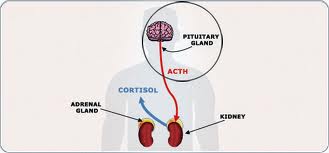
A condition in which the body produces too much cortisol, Cushing’s disease occurs when a tumor on the pituitary gland makes the gland create too much ACTH, the hormone that stimulates the production and release of cortisol (also known as “the stress hormone”). It may also occur with excess growth of the pituitary gland, known as hyperplasia. For most patients, Cushing’s disease will show itself through symptoms like red lines on the abdomen, abdominal weight gain and roundness to the face. And while the condition only affects 10 to 15 people per million per year, patients who suffer with it understandably wonder why. What are the causes? Where would a pituitary gland tumor come from? What leads to excess growth of that gland? To help answer these questions, here’s a look at Cushing’s disease causes:

Causes of Cushing’s Disease

The most common cause for Cushing’s disease is adenoma, a usually benign tumor on the pituitary gland. Because the tumors are normally pretty small, they can be hard to diagnose. For this reason, many patients who have Cushing’s disease don’t find out right away. Meeting with an endocrinologist can help the diagnosis process, improving your chances for a fast, successful recognition of the disease.

Risk Factors for Cushing’s Disease

Even though it’s a rare condition, Cushing’s disease occurs more commonly in women, particularly those between the ages of 20 and 50. Other factors that may increase the risk of Cushing’s disease include obesity, type 2 diabetes, poorly controlled blood sugar levels and high blood pressure. While none of these factors are a direct cause of the condition, they are associated with higher prevalence of it.

Cushing’s Disease vs. Cushing’s Syndrome

Often mistaken for one another, Cushing’s disease and Cushing’s syndrome are actually not the same condition. What they have in common is that they both involve the body’s producing too much cortisol. Cushing’s disease is a medical condition, however, while Cushing’s syndrome is a symptom of it. Cushing’s syndrome will often occur when a patient is taking corticosteroid medication.

Why You Should See an Endocrinologist

If you believe you or someone you love may have Cushing’s disease, it is best to see a specialist. Symptoms develop slowly and sometimes in cycles, so without proper testing it can be hard to identify what’s happening. A skilled endocrinologist can conduct hormone blood tests to measure blood cortisol levels at different times. He or she can also schedule an MRI for an individual who is not taking cortisol medications, in order to isolate the location of any tumors.

Have you been dealing with the symptoms of elevated cortisol levels, such as unexplained weight gain, particularly in the abdominal area and/or back of the neck? Is your skin or vision changing? These symptoms could be indicating a deeper problem in your body — so schedule an appointment to have your condition evaluated by a professional as soon as you can. Through proper treatment, you may be able to reduce or even eliminate your symptoms and be restored to full health again.

From http://www.hormone.org/diseases-and-conditions/pituitary/secretory-tumors/cushings-disease/cushings-disease-causes

Day 3 Coverage of ENDO 2015

ENDO_2015


OR24-Adrenal Tumors: Clinical Implications of the Recent Molecular and Genetic Findings

Long term follow-up of a pivotal phase 2 study of Ultratrace® Iobenguane I-131 (AZEDRA) in patients with malignant relapsed/refractory pheochromocytoma/paraganglioma
C Jimenez, DA Pryma, DC Sullivan, JK Schwarz, RB Noto, N Stambler, T Armor, JD Jensen, RJ Israel


OR27-Hyperandrogenic Ovarian Dysfunction — Winner: Outstanding Abstract Award

The neurokinin B receptor antagonist AZD4901 decreases LH and testosterone secretion in women with PCOS: A randomized, double-blind, placebo-controlled clinical trial
JT George, R Kakkar, J Marshall, ML Scott, R Finkelman, T Ho, S McIntosh, JD Veldhuis, RA Anderson, L Webber


OR28-Lipids – Liver, Muscle, and Patient Bench to Bedside

Diagnosing familial hypercholesterolemia (FH) in the United States: Results from the CASCADE FH patient registry
Z Ahmad, C Newman, E O’Brien, P Shrader, EM deGoma, CD Ahmed, PM Moriarty, MRF Linton, MD Shapiro, PB Due, CM Ballantyne, WA Neal, D Duffy, L Hudgins, LC Hemphill, JA Underberg, KE Watson, SS Gidding, S Baum, K Wilemon, D Pickhardt, I Kindt, DJ Rader, M Roe, JW Knowles


OR30-Neuroendocrinology

Assessment of primary cancers in growth hormone-treated pediatric patients compared to population databases: An epidemiological analysis of a large, multinational, prospective observational study
CJ Child, AG Zimmermann, N Jia, LL Robison, JH Bramswig, WF Blum


Hypophysitis in the age of cancer immunotherapy: Experience in a large cancer center
MJoelle Pitteloud, R Dadu, ME Cabanillas, K Shah, MI-N Hu, MA Habra, SG Waguespack


OR34-Testosterone Replacement Therapy: Risks and Benefits

The association between testosterone use and major adverse cardiovascular events (MACE): An exploratory retrospective cohort analysis of two large, contemporary, coronary heart disease clinical trials
S Janmohamed, G Cicconetti, CE Koro, RV Clark, E Tarka


Oral Presentations in Reproductive Science–Winner: Oral Abstract Award in Reproductive Science

Effects of androgens and estrogens on cardiometabolic parameters in young adult men
EW Yu, H Lee, S-AM Burnett-Bowie, SC Hirsch, G Abrishamian-Garcia, LF Borges, DW Goldstein, AP Taylor, KE Wulczyn, AF Moore, JS Finkelstein


PP27-Hyperandrogenic Ovarian Dysfunction

Role of insulin resistance and hyperandrogenemia in early vascular dysfunction in adolescents with PCOS
SK Bartz, MC Caldas, R Krishnamurthy, R Krishnamurthy, FF Bacha


SAT 379-412-Cushing’s Syndrome

Does a normal urine free cortisol result rule out Cushing’s syndrome?
ST Sharma, LK Nieman


SAT 418-443-Biochemical, Genetic and Pharmacological Studies of the Pituitary and Hypothalamus

Clinical and molecular differences between invasive and non-invasive pituitary adenomas
DA Cano, M Mendez-Muros, E Venegas, N Gros, E Dios, N Garcia-Hernandez, A Madrazo-Atutxa, I Martin-Scheffer, E Cardenas, A Kaen, F Roldan, A Soto-Moreno