Cushing’s syndrome caused by ACTH-producing thymic typical carcinoid with local invasion and regional lymph node metastasis: a case report

  • Wakako Fujiwara Email author View ORCID ID profile,
  • Tomohiro Haruki,
  • Yoshiteru Kidokoro,
  • Takashi Ohno,
  • Yohei Yurugi,
  • Ken Miwa,
  • Yuji Taniguchi and
  • Hiroshige Nakamura
Surgical Case Reports20184:55

https://doi.org/10.1186/s40792-018-0459-7

Received: 28 March 2018

Accepted: 31 May 2018

Published: 11 June 2018

Abstract

Background

Ectopic ACTH-producing thymic carcinoid tumors are rare, but often behave aggressively with local invasion and distant metastasis. We herein report a case of ACTH-producing thymic typical carcinoid tumor with lymph node metastasis treated by surgery and postoperative radiation therapy.

Case presentation

A 61-year-old woman was admitted to be evaluated for hypoglycemia and hypokalemia. Laboratory data revealed elevation of serum cortisol and ACTH levels. Overnight administration of 8 mg dexamethasone did not suppress plasma ACTH. Chest CT demonstrated a tumor of 30 mm in diameter and enlargement of the lymph node at the anterior mediastinum. Ectopic ACTH syndrome was suspected and total thymectomy and lymph node dissection were performed. The histopathological examination indicated typical carcinoid tumor and mediastinal lymph node metastasis, and immunohistochemical staining was positive for ACTH. The plasma ACTH level decreased immediately after surgery. She received postoperative radiation therapy of 60 Gy.

Conclusion

Ectopic ACTH-producing thymic typical carcinoid tumors are rare, and it is important to consider this disease and perform appropriate treatment.

Keywords

Thymic carcinoid ACTH Cushing’s syndrome Total thymectomy

Background

Among adrenocorticotrophic hormone (ACTH)-dependent Cushing’s syndrome, 10–20% is due to nonpituitary tumors termed ectopic ACTH syndrome (EAS). The most common cause of EAS is small cell lung cancer, followed by thymic carcinoids. Thymic carcinoids are very rare neuroendocrine tumors that often complicate endocrine disorders. Although previously assumed to be variants of bronchopulmonary carcinoid tumors, they are generally more aggressive and difficult to treat. It is widely accepted that surgical resection is the only curative treatment for localized lesions, and the efficacy of chemotherapy and radiotherapy has not been well established.

We herein report a case of EAS caused due to a thymic typical carcinoid tumor successfully treated by surgery followed by radiation.

Case presentation

A 61-year-old woman visited her primary care doctor because of general malaise, face edema, skin pigmentation, insomnia, and polyuria. Blood examination revealed marked hypokalemia and impaired glucose tolerance. Bilateral adrenal enlargement was observed on abdominal ultrasonography, and she was referred to our hospital for further examination. Endocrine examination showed both elevated plasma cortisol (107.7 pg/mL) and ACTH levels (1100 pg/mL), and increased urinary excretion of free cortisol (6650 mcg/day) and 17-ketogenic steroids (78.7 mg/day). Plasma cortisol and ACTH levels were elevated without any diurnal rhythm. Plasma cortisol was not suppressed by the overnight 8-mg dexamethasone suppression test. There was no response of plasma ACTH or cortisol to exogenous corticotropin-releasing hormone (CRH). Other hormones of the pituitary, thyroid, and adrenal medulla were all in normal ranges. Thus, ectopic ACTH syndrome was strongly suggested.

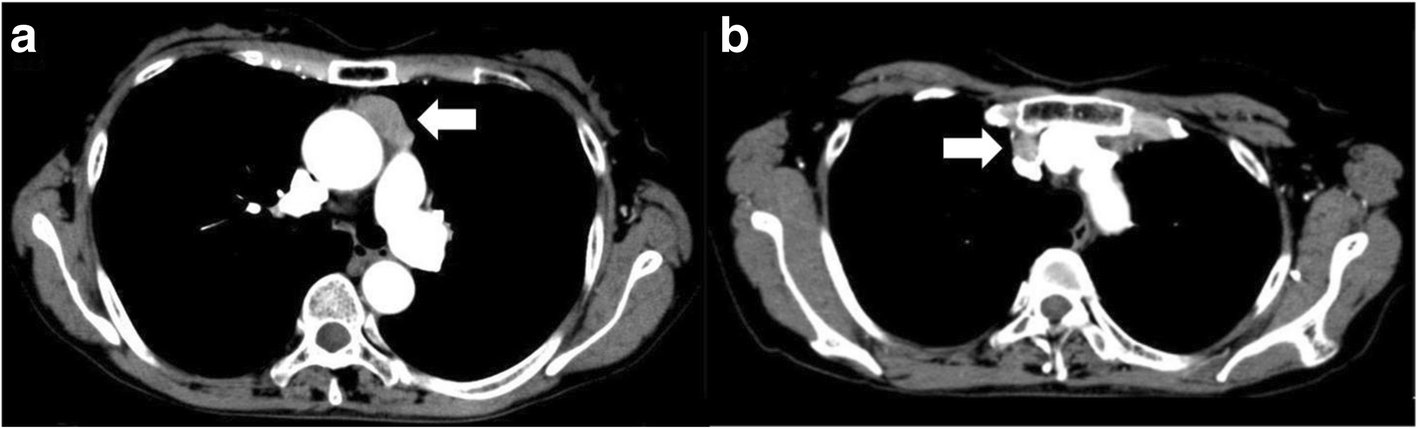
Chest computed tomography (CT) demonstrated a tumor of approximately 30 mm in diameter and enlargement of the lymph node in the anterior mediastinum (Fig. 1). High accumulation of 18-fluorodeoxyglucose in the anterior mediastinum tumor (maximum standardized uptake value [SUV] 2.48) but not in the lymph node was observed on positron emission tomography (PET)/CT. Somatostatin receptor scintigraphy also revealed mild uptake in the tumor. Collectively, these data were consistent with a diagnosis of EAS caused by an anterior mediastinum tumor, possibly thymic carcinoid tumor. There was no abnormal finding indicating multiple endocrine neoplasia (MEN).

Figure 1
Fig. 1

Chest CT image. A tumor (30 × 30 × 14 mm) without invasion localized in the anterior mediastinum (a). Enlargement of lymph node (b)

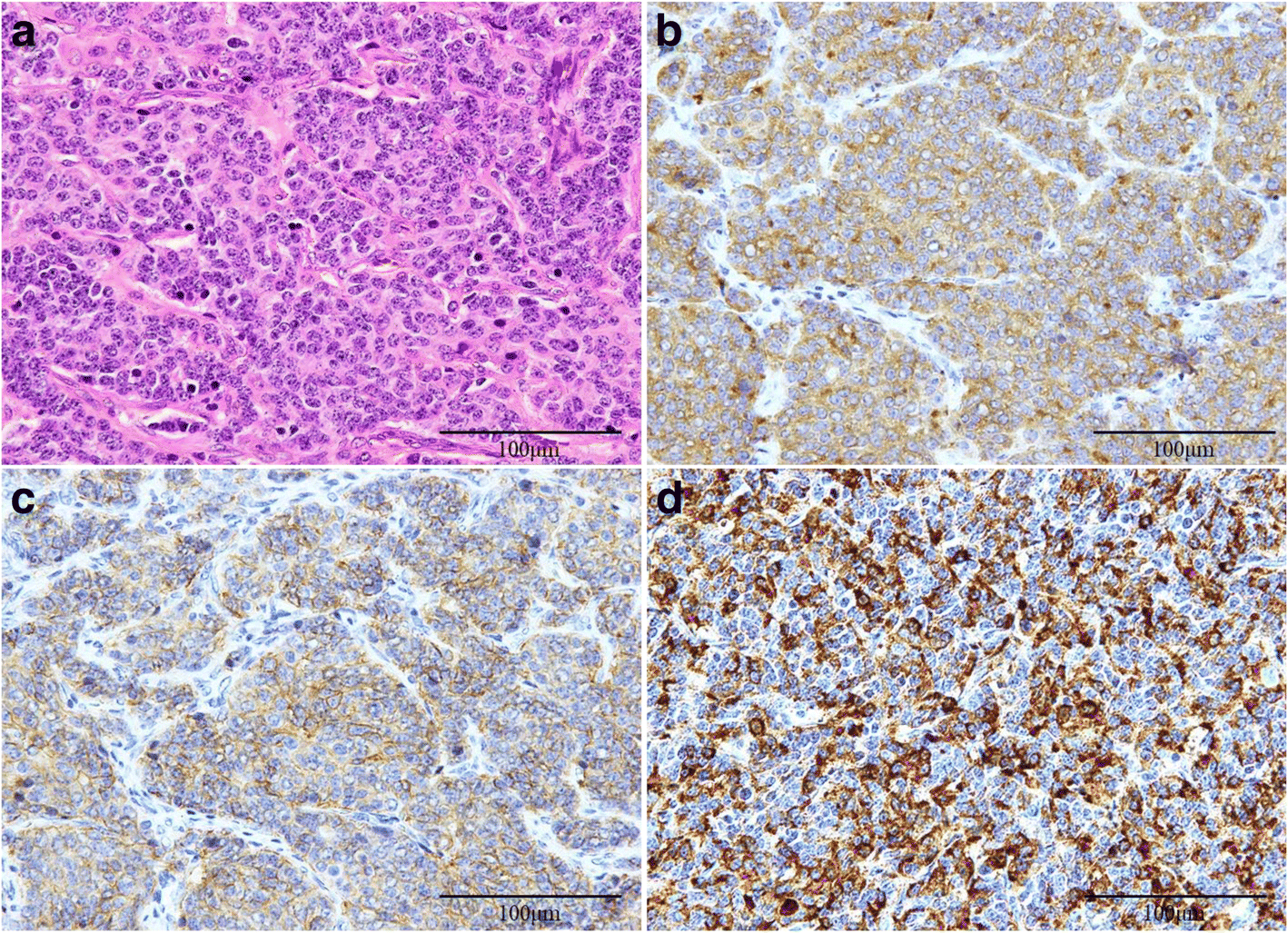
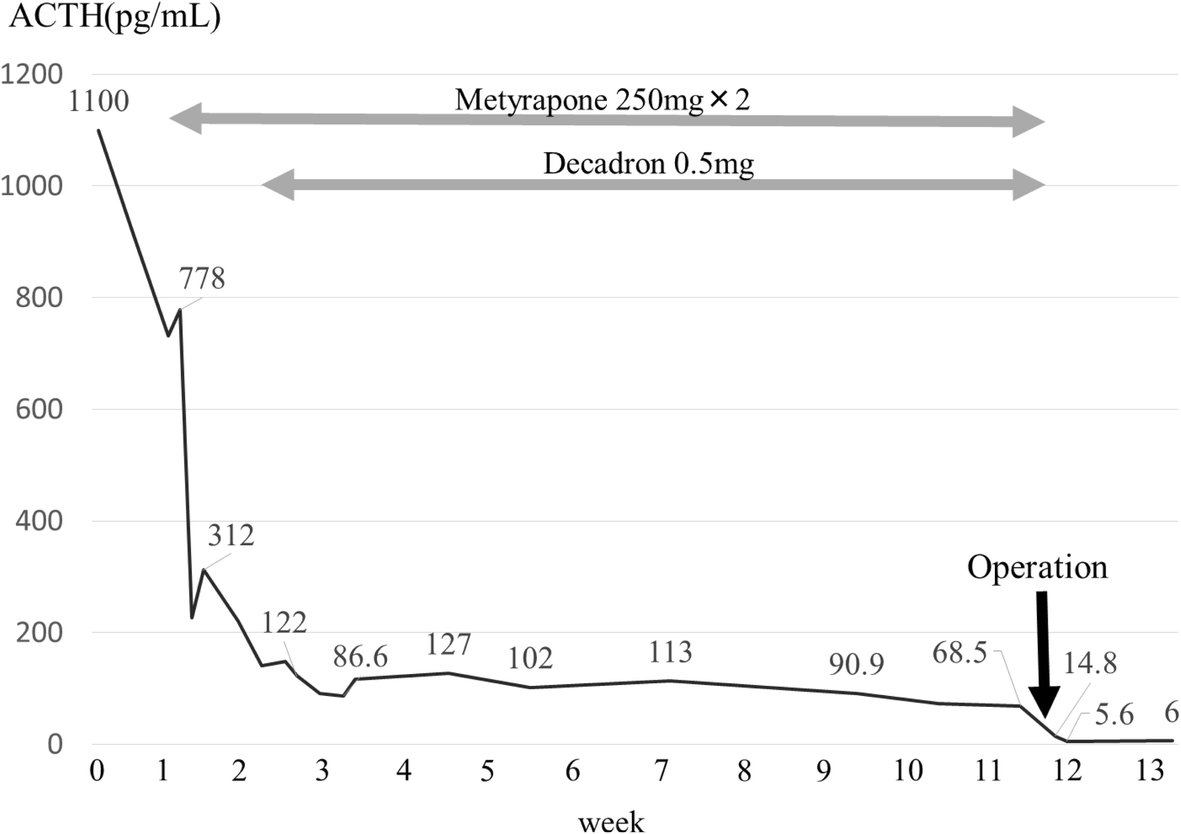
Before the operation, we administered 500 mg/day of metyrapone, and both ACTH and cortisol levels decreased to 68.5 pg/mL and 3.02 mcg/mL respectively. After 2 months of medical treatment, her symptoms were relieved and bilateral adrenal enlargement decreased. Under open thoracotomy by median sternotomy, she underwent total thymectomy, pericardial partial resection, dissection of the anterior regional and the right paratracheal lymph nodes, and sampling of the subcarinal lymph node. Histopathologically, the tumor consisted of round to spindle-shaped cells with high nucleus/cytoplasm ratios containing finely granular chromatin. Necrosis was absent, and mitotic figures were infrequent, with less than two per ten high-power fields (HPF). Tumor cells were positive for chromogranin A, synaptophysin, CD-56, and ACTH on immunohistochemistry (Fig. 2). The tumor had invaded the pericardium, and mediastinal lymph nodes were positive for metastasis. The final diagnosis was stage IVA (pT2N1M0) ACTH-producing thymic typical carcinoid tumor. The plasma ACTH level decreased to 14.8 pg/mL, less than normal, immediately after surgery (Fig. 3). Hydrocortisone was administered during the perioperative period and was gradually tapered, and finished 4 months after surgery. She received postoperative radiation therapy of 60 Gy. At 8 months after surgery, she showed no sign of Cushing’s syndrome or recurrence of the tumor without any medications.

Figure 2
Fig. 2

HE staining (a) indicated typical carcinoid tumor. Tumor cells were positive for synaptophysin (b), CD-56 (c), and ACTH (d) on immunostaining

Figure 3
Fig. 3

Changes in plasma ACTH levels during the clinical course

Discussion

Ectopic ACTH-producing thymic carcinoid tumor is an extremely rare clinical condition, comprising 29% of all thymic carcinoids and 5–42% of all ectopic ACTH-producing syndrome [12]. It has been reported that radical surgical resection of the ACTH source is the only effective treatment [3]. Prior to surgery, medication therapy should be done to prevent perioperative complications and perform surgery when hormone values and symptoms are controlled. Furthermore, there is a risk of postoperative adrenal insufficiency; strict perioperative management is desirable.

Unlike pulmonary and other carcinoid tumors, thymic carcinoids often behave aggressively as an advanced disease with local invasion, lymph node metastasis, and distant metastasis because of the high proportion of atypical carcinoid tumors. Regarding ACTH-producing thymic tumors, Neary et al. reported three cases of well-differentiated ACTH-producing thymic neuroendocrine carcinomas, and the patients had no lymph node metastasis, recurrence, or death. On the other hand, nine cases of moderately differentiated ACTH-producing thymic neuroendocrine carcinomas almost had lymph node metastasis, and all patients had recurred [4]. However, our case was a typical carcinoid tumor with lymph node metastasis and local invasion.

As a surgical procedure, a median sternotomy approach is generally recommended because this enables excision of the entire thymus, perithymic fat, other affected mediastinal structure, and aggressive lymph node dissection. However, there is no standard for lymph node dissection in thymic epithelial tumors even though lymph node metastasis is an important prognostic factor. Hwang et al. recommended right paratracheal node dissection in addition to anterior regional lymph node dissection for TNM clinical stage II or higher diseases because they are crucial stations on the lymphatic pathway of thymic malignancies [5]. In the present case, we performed total thymectomy, followed by lymph node dissection of the anterior regional and right paratracheal nodes, and sampling of subcarinal lymph node via median sternotomy. The anterior mediastinal lymph nodes were positive for metastasis. Consequently, we considered the extent of lymph node dissection to be adequate, and radical resection was completed because the postoperative plasma ACTH level was successfully decreased. Although a good prognosis is expected by combined surgery and radiation, relatively high malignancy characteristics are observed compared with typical carcinoids, and strict follow-up is needed.

Conclusion

We report a rare case of ectopic ACTH-producing thymic typical carcinoid with local invasion and regional lymph node metastasis. Surgical resection was effective to control Cushing’s syndrome in this case, and nodal staging may help to guide adjuvant treatment, but systemic nodal dissection/sampling is yet to be standardized.

Abbreviations

ACTH: 

Adrenocorticotrophic hormone

CRH: 

Corticotropin-releasing hormone

CT: 

Computed tomography

SUV: 

Standardized uptake value

PET: 

Positron emission tomography

MEN: 

Multiple endocrine neoplasia

HPF: 

High-power fields

CD-56: 

Cluster of differentiation-56

Declarations

Acknowledgements

The authors thank Dr. Nosaka and Dr. Umekita for diagnostic assessment of this case.

Availability of data and materials

The dataset supporting the conclusions of this article is included within the article.

Authors’ contributions

WF and YT were the attending doctors for the patient. WF, YK, KM, YT, and HN performed the operation. WF, TH, and HN drafted this manuscript. All authors have read and approved the final manuscript.

Ethics approval and consent to participate

No applicable.

Consent for publication

This patient consented to the reporting of this case in a scientific publication.

Competing interests

The authors declare that they have no competing interests.

Publisher’s Note

Springer Nature remains neutral with regard to jurisdictional claims in published maps and institutional affiliations.

Open AccessThis article is distributed under the terms of the Creative Commons Attribution 4.0 International License (http://creativecommons.org/licenses/by/4.0/), which permits unrestricted use, distribution, and reproduction in any medium, provided you give appropriate credit to the original author(s) and the source, provide a link to the Creative Commons license, and indicate if changes were made.

References

  1. Yoshikawa T, Noguchi Y, Matsukawa H, et al. Thymus carcinoid producing parathyroid hormone (PTH)-related protein: report of a case. Surg Today. 1994;24:544–7.View ArticlePubMedGoogle Scholar
  2. Alexandraki KI, Grossman AB. The ectopic ACTH syndrome. Rev Endocr Metab Disord. 2010;11:117–26.View ArticlePubMedGoogle Scholar
  3. Zhou X, Hnag J, Che J, et al. Surgical treatment of ectopic adrenocorticotropic hormone syndrome with intra-thoracic tumor. J Thorac Dis. 2016;8:888–93.View ArticlePubMedPubMed CentralGoogle Scholar
  4. Neary NM, Lopez-Chavez A, Abel BS, et al. Neuroendocrine ACTH-producing tumor of the thymus—experience with 12 patients over 25 years. J Clin Endocrinol Metab. 2012;97:2223–30.View ArticlePubMedPubMed CentralGoogle Scholar
  5. Hwang Y, Park IK, Park S, et al. Lymph node dissection in thymic malignancies: implication of the ITMIG lymph node map, TNM stage classification, and recommendations. J Thorac Oncol. 2016;11:108–14.View ArticlePubMedGoogle Scholar

Copyright

© The Author(s). 2018

What You Should Know About Pituitary Tumors

Ask the Experts

Igor Kravets, MD
Endocrinologist, Assistant Professor Division of Endocrinology,
Diabetes and Metabolism
Stony Brook Medicine
Raphael Davis, MD
Neurosurgeon, Professor and Chair Department of Neurosurgery
Co-Director, Stony Brook University Neurosciences Institute


Where do pituitary tumors form?
Dr. Kravets: A pituitary tumor is an abnormal growth of cells in the pituitary gland, which is a small, pea-sized organ located in the center of the brain, behind the nose and eyes. The pituitary is a “master gland” of the body; it produces many hormones that control other endocrine glands and certain functions of the body.
Are they mostly benign or malignant?
Dr. Davis: Most pituitary tumors are benign (non-cancerous). However, because of the location of the pituitary gland at the base of the skull, pituitary tumors can cause problems since they grow upward. Eventually some will press against the area where the optic nerves intersect, causing vision problems. They can also cause hormonal imbalance.What causes pituitary tumors?
Dr. Kravets: No one knows for sure what causes pituitary tumors. About one to five percent of pituitary tumors occur within families. Most are not inherited, however there are certain, rare, inherited conditions such as multiple endocrine neoplasia type 1 (MEN 1), that carry a higher risk of pituitary tumors.

What are the different types of pituitary tumors?
Dr. Davis: Adenomas are benign tumors that develop on the pituitary gland behind the eyes. These tumors can change levels in hormone production or cause vision loss. Craniopharyngiomas are benign tumors that develop at the base of the brain where it meets the pituitary gland. They commonly affect children 5 to 10 years of age, but adults can sometimes be affected in their 50s and 60s.

What are the symptoms?
Dr. Kravets: Symptoms vary depending on the type and size of a pituitary tumor but not all pituitary tumors cause symptoms. Many pituitary tumors are not diagnosed until symptoms appear. Some pituitary tumors are found incidentally on brain imaging obtained for a reason unrelated to the pituitary. Certain symptoms may develop when pituitary tumors grow so large that they exert pressure on surrounding structures.

Such symptoms include:
• Changes in vision (particularly loss of peripheral/outer edge vision)
• Headache

Other symptoms are related to either deficiency or excessive production of certain hormones. Common symptoms caused by such hormonal disturbances include:
• Menstrual cycle changes (irregular or lack of menstrual periods
• Erectile dysfunction or loss of sex drive
• Weight changes
• Production of breast milk by a woman who has not given birth
• Accelerated or stunted growth in a child or teenager
• Growth of the hands, feet, forehead and jaw in adults
• Development of a round face, a hump between the shoulders or both

How is a pituitary tumor diagnosed?
Dr. Kravets: An endocrinologist will ask you about the symptoms you are experiencing, and about your personal and family health history. He or she will perform a physical exam and order tests of your blood and urine. A magnetic resonance imaging (MRI) scan or computerized tomography (CT or CAT) scan may also be ordered to obtain detailed images of the brain and the pituitary gland. In rare instances, a biopsy (surgical procedure to remove a small sample of the tumor for examination) is required.

What treatments are available?
Dr. Davis: Treatments may include surgery, radiation therapy or medication. Transsphenoidal surgery is surgery performed through the nose and sphenoid sinus (located in the very back part of the nose, just beneath the base of the brain) to remove a pituitary tumor. It can be performed with an endoscope, microscope or both and is a team effort between neurosurgeons and ear, nose and throat (otolaryngology/ENT) surgeons. Radiation therapy uses high-energy x-rays to kill the tumor cells and is recommended when surgery is not an option, if the pituitary tumor remains, or if the tumor causes symptoms that are not relieved by medicine.

Why choose Stony Brook?
Dr. Kravets: Our Pituitary Care Center provides access to all of the coordinated expert care you need in one location, close to home — which can make the course of your treatment easier. Our team includes specialists from endocrinology, neurosurgery, otolaryngology (ENT), radiation oncology, neuropathology, neuroradiology, neuro-ophthalmology, and patient education and support.

To make an appointment with one of our Pituitary Care Center endocrinologists, call
(631) 444-0580. To make an appointment with one of our Pituitary Care Center neurosurgeons,
call (631) 444-1213. To learn more, visit stonybrookmedicine.edu/pituitary.

All health and health-related information contained in this article is intended to be general and/or educational in nature and should not be used as a substitute for a visit with a healthcare professional for help, diagnosis, guidance, and treatment. The information is intended to offer only general information for individuals to discuss with their healthcare provider. It is not intended to constitute a medical diagnosis or treatment or endorsement of any particular test, treatment, procedure, service, etc. Reliance on information provided is at the user’s risk. Your healthcare provider should be consulted regarding matters concerning the medical condition, treatment, and needs of you and your family. Stony Brook University/SUNY is an affirmative action, equal opportunity educator and employer.

From https://www.stonybrookmedicine.edu/patientcare/pituitarytumors

Medical Therapies in Cushing’s Syndrome

Chapter

The Hypothalamic-Pituitary-Adrenal Axis in Health and Disease

pp 165-179

Date: 03 December 2016

Medical Therapies in Cushing’s Syndrome

Abstract

Medical therapy has an important, albeit secondary, role in patients with Cushing’s syndrome. While medications are not currently used as definitive therapy of this condition, they can be very effective in controlling hypercortisolism in patients who fail surgery, those who are not surgical candidates, or those whose tumor location is unknown. Medical therapies can be particularly helpful to control hypercortisolism in patients with Cushing’s disease who underwent radiation therapy and are awaiting its salutary effects.

Currently available treatment options include several steroidogenesis inhibitors (ketoconazole, metyrapone, mitotane, etomidate), which block one or several steps in cortisol synthesis in the adrenal glands, centrally acting agents (cabergoline, pasireotide), which decrease ACTH secretion, and glucocorticoid receptor antagonists, which are represented by a single agent (mifepristone). With the exception of pasireotide and mifepristone, available agents are used “off-label” to manage hypercortisolism. Several other medications are at various stages of development and may offer additional options for the management of this serious condition.

As more potential molecular targets become known and our understanding of the pathogenesis of Cushing’s syndrome improves, it is anticipated that novel, rationally designed medical therapies may emerge. Clinical trials are needed to further investigate the relative risks and benefits of currently available and novel medical therapies and examine the potential role of combination therapy in the management of Cushing’s syndrome.

Keywords

Cabergoline, Etomidate, Ketoconazole, Levoketoconazole, Metyrapone, Mifepristone, Mitotane, Osilodrostat, Pasireotide, Pituitary adenoma

Johns Hopkins Pituitary Patient Day

Join us on Saturday, September 19, 2015

7th Annual Johns Hopkins Pituitary Patient Day
Saturday, September 19, 2015, 9:30 a.m.
Location:
Johns Hopkins Mt. Washington Conference Center
5801 Smith Avenue
Baltimore, MD 21209
map and directions

This is a free event, but seating is limited. Reserve your space now: Please R.S.V.P. by September 9, 2015 by email (preferred) to PituitaryDay@jhmi.edu  or by calling Alison Dimick at 410-955-3921.

Agenda

Time Topic Speaker(s)
9:30 – 9:55 AM Registration
9:55 – 10:00 AM Welcome and acknowledgements Roberto Salvatori, M.D.
10:00 – 10:25 AM Different kinds of pituitary adenomas: non-functioning, acromegaly, Cushing Gary Wand, M.D.
10:25 – 10:50 AM New and old medications for pituitary disease (acromegaly, Cushing, prolactinoma, hypopituitarism) Roberto Salvatori, M.D.
10:50 – 11:10 AM A patient’s story TBA
11:10 – 11:30 AM The eye and the pituitary gland: Why it is important to see the right doctor Dan Gold, D.O.
11:30 – 11:50 AM Surgery for pituitary tumors: Pictures from the operating room in acromegaly, Cushing, non-functioning masses Gary Gallia, M.D., Ph.D.
11:50 – 12:10 PM Radiation therapy for non-functioning ademomas, acromegaly or Cushing: Not so scary after all Lawrence Kleinberg, M.D.
12:10 – 12:30 PM Psychological issues in Cushing, acromegaly and other pituitary disease Tracy Vannorsdall, Ph.D.


Myth: It is MY fault that I got Cushing’s…

Myth: “It is MY fault that I got Cushing’s. I did something wrong that caused me to be sick! If I would have just done XYZ, this would not be happening to me!”

myth-busted

Fact: This is a very controversial topic because we don’t like to talk about it. However, many people struggle with this myth. We NEED to dispel this myth my friends! Patients themselves assume responsibility, accountability, and self blame for becoming ill.

To compound all of that, patients are often told by loved ones, family, and sometimes even their churches or other supports that there is something that THEY could be doing or haven’t done that has caused their declining health. “If you would just follow that raw food diet, then all of your symptoms would go away”, “Juicing is the answer! I told you to juice and you wouldn’t get those tumors!”, Sometimes, you are told that if you would just pray harder or have greater faith, then there is no way that you would be sick right now. And my absolute favorite, “you are just too obsessed with being sick and having Cushing’s!  Stop thinking that you have it and it will go away!”.

Now, don’t get me wrong, I find value in “positive thinking” and affirming health, wealth, and all kinds of great things. This helps build up strength and personally keeps me motivated, especially during the times that I feel like absolutely throwing in the towel and giving up!

However, I am NOT the reason and YOU are not the reason for this war with this dreadful disease. What many people don’t understand is how tenacious, brave, courageous, and INDOMITABLE you are! Cushing’s patients do not just get surgery and then everything is magically OK.

Many patients have to go through multiple surgeries, sometimes radiation, sometimes years of testing to find the ultimate source of the disease, even after having several organs messed with. Even after patients obtain their “cure”, they are faced with residual and lingering negative effects of the illness, other hormone dysregulation issues, and the anxiety and fear of a recurrence which is based in absolute reality.

There are people, like myself, who are in remission from Cushing’s, BUT we now have Addison’s Disease/Adrenal Insufficiency as a result of removing vital organs in order to save our lives from Cushing’s. So, are we to think that Adrenal Insufficiency is ALSO our faults every time we near death after an adrenal crisis?! NO! NO! NO!

This is NOT your fault! This is NOT your doing! STOP blaming yourself! The best you can do is to FIGHT! Take an empowered stance by saying “NO” to those who won’t listen. Say “NO” to those who project blame onto you and tell you that this is just a “fat person’s excuse to stay fat”. You are not just a “fat person”! YOU are an amazing person who is fighting for your life!

Let me be clear that this blaming is common and we all do it. In my “5 stages of Loss” series on Youtube; I address the “Bargaining” stage of loss, in which we assume responsibility for getting sick or even for getting better.

Everyone should watch this to understand why and how we do this:

Remember, you are a survivor! YOU are Indomitable!!! This is NOT your fault! You WILL overcome!