Cushing’s Awareness Challenge 15

robin-dontsay

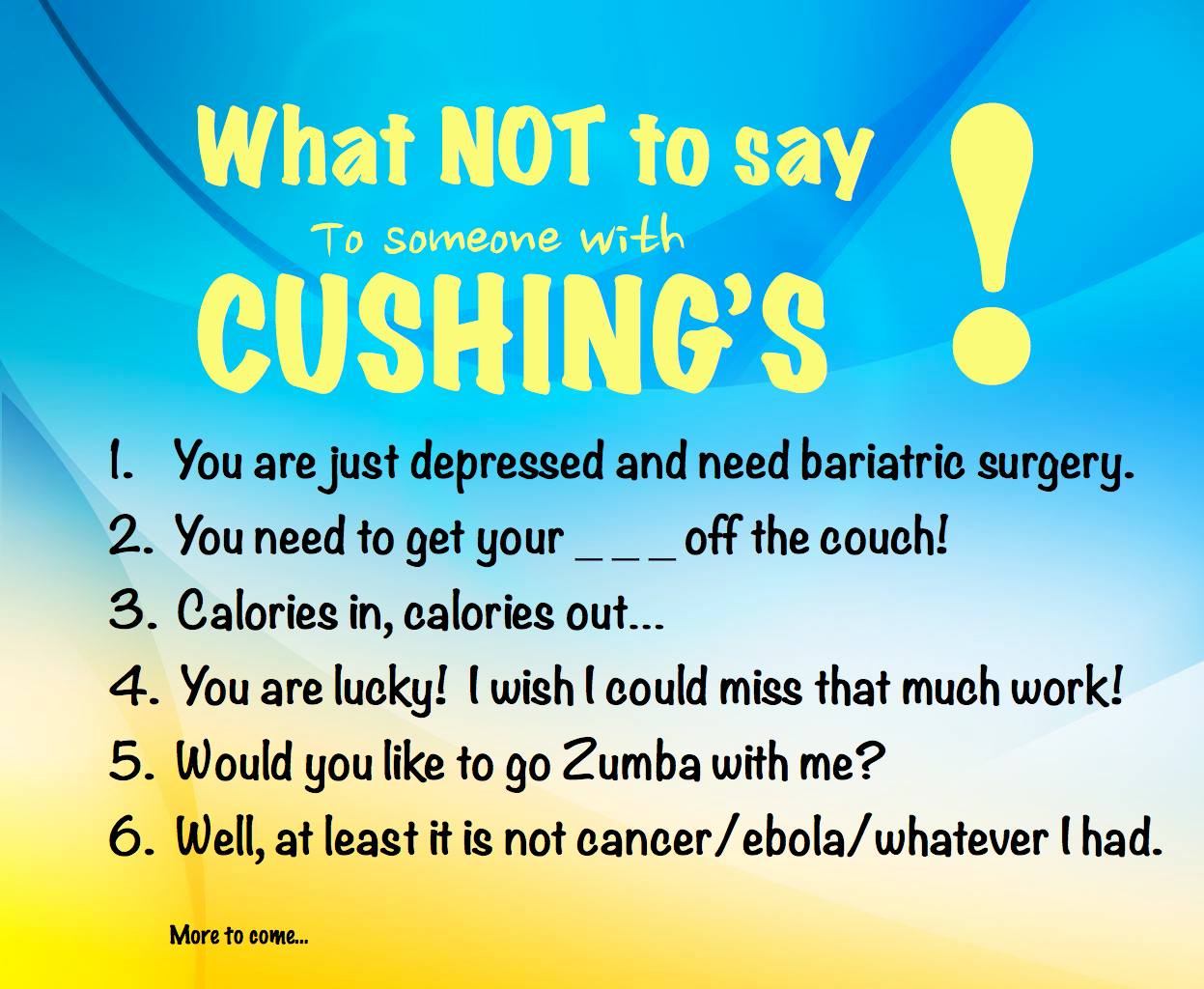
A continuation of the last post with another of Robin’s great images.  I’ve also heard many of these comments.

I did have #6, cancer – kidney cancer or renal cell carcinoma – in 2006 and the diagnosis was much faster/easier than Cushing’s.  My cancer diagnosis took about an hour in the emergency room.  Cushing’s took about 5 years or so.  Cancer surgery recovery was faster with fewer long-term consequences.

When I told people I had cancer, everyone understood.  When I told them I had Cushing’s, no one did.

That being said, I don’t recommend getting either cancer or Cushing’s!


maryo colorful zebra

Cushing’s Awareness Challenge: Day 13

robin-complications

What can I say?  Robin’s images area always right on!

My only addition to this list would be the ongoing daily fatigue.  Maybe that’s not really a complication but more of an annoyance.

My bone loss has stopped  (or  slowed down some) over  the years since my pituitary surgery in 1987 but I doubt that I’ll ever gain back any height!

Luckily, I haven’t had a stroke – knock on wood!

Cushing’s – the “gift” that keeps on giving!

maryo colorful zebra


Cushing’s Awareness Challenge: Day 12

robin-head


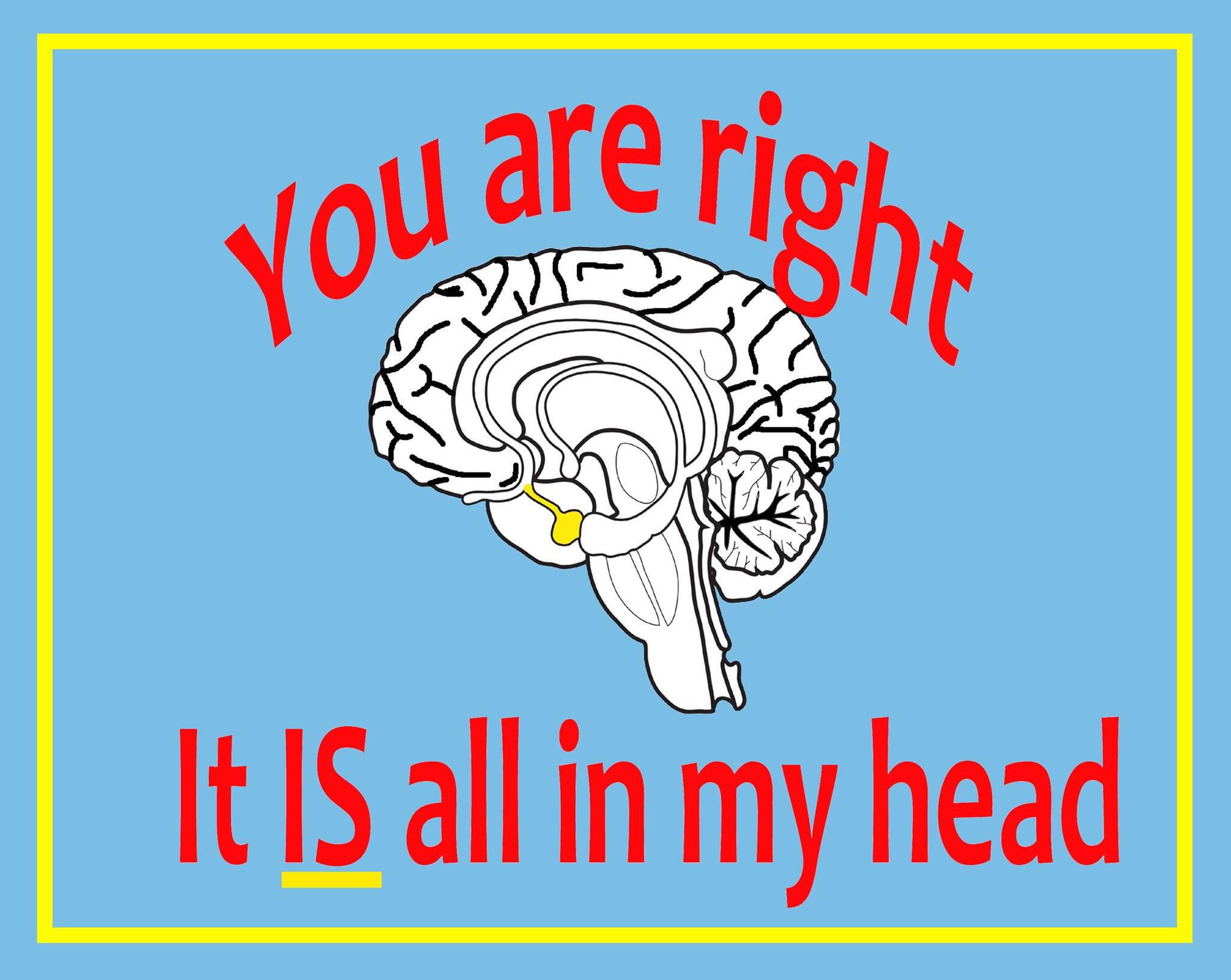
Mail!  I get all kinds of email asking questions about a variety of Cushing’s issues.  I’m not a doctor and I don’t play one on TV.  I don’t even play one on the internet.  People are desperate for answers, though, so the questions keep coming and I try to answer the best I can.

Here’s a recent question and answer.  Note that you have to be logged into the message boards to view the links in this post.


Question: My daughter was diagnosed w/ cushings in 2001 at the age of 20 & had the pituitary surgery.

In late 2013 she was diagnosed with a recurrence. I’ve read that that usually happens within 5 years, not a dozen years.

Regardless, there is a new research program but she was told she doesn’t qualify for it. The other medications offered are either exhorbitant ($100-200,000/year), another causes liver damage, another causes uterine problems. A 2nd surgery is not recommended according to  the surgeon (because there would be only a 50% rate of success due to the scar tissue from the original surgery), and radiation is being vetoed as well, being recommended ONLY as a very last possible resort.

Are there other parents who chat & share experience here? Will I find help as a parent here with my frustration over this disease? Are there other patients who communicate here that are from Michigan?  Are there other patients here who are suffering from the recurrence? Don’t get me wrong, I’m happy to find on several sites online today that there are so many success stories; I would just like to know what other options there are that perhaps our Dr. is missing.  Thanks.

My response:

S, since you have a Board Name, I assume that you are a member of the message boards.

There are areas specifically for recurrence – http://cushings.invisionzone.com/index.php?/forum/35-recurrences/

People in Michigan: http://cushings.invisionzone.com/index.php?/topic/13696-michigan/

Parents of patients: http://cushings.invisionzone.com/index.php?/forum/31-parents-spouses-children-and-friends-of-patients/

The more you read, the more you will learn.  Many patients with a recurrence  have a second pituitary surgery.  She might need to get another opinion from another surgeon.

Another option is a BLA – or have her adrenal glands out.  That can cause other issues, though.

The 2 drugs you  mentioned are Signifor and Korlym.  Although both are expensive, each has a patient assistance plan which lowers the cost dramatically.  Doses can vary dramatically so that they don’t necessarily cause liver or uterine issues.

Ketoconazole is another drug that’s sometimes used.

I did a search on the boards and there are 69 topics for Mifepristone (generic Korlym), 51 topics discussing the brand name Korlym, 40 for pasireotide (generic Signifor), 13 for the brand name Signifor, and 69 for keto (the common abbreviation on the boards for ketoconazole)

Here’s a personal experience from a woman on Korlym who likes it: http://cushings.invisionzone.com/index.php?/topic/53342-i-like-korlym/?hl=korlym

So – the information is out there.

I know it’s hard to process all this and make decisions.

I know it’s hard to process all this and make decisions. I had my one pituitary surgery in 1987, before the Internet was available so I had to really research all this in medical texts.

At that time, there weren’t any drug options. Just surgery and radiation. I decided off the bat if I should have a recurrence, I would not do radiation. I’d go for another pituitary surgery first, then a BLA if needed.

But that was then and this is now.  There is way more information which is much easier to find.  There are better surgical options and even some more medical ones.

Good luck!

8e1d2-maryo_colorful_zebra

What would Harvey Cushing say about Cushing’s disease today?

harvey-book

(BPT) – More than 80 years ago renowned neurosurgeon, Dr. Harvey Cushing, discovered a tumor on the pituitary gland as the cause of a serious, hormone disorder that leads to dramatic physical changes in the body in addition to life-threatening health concerns. The discovery was so profound it came to be known as Cushing’s disease. While much has been learned about Cushing’s disease since the 1930s, awareness of this rare pituitary condition is still low and people often struggle for years before finding the right diagnosis.

Read on to meet the man behind the discovery and get his perspective on the present state of Cushing’s disease.

* What would Harvey Cushing say about the time it takes for people with Cushing’s disease to receive an accurate diagnosis?

Cushing’s disease still takes too long to diagnose!

Despite advances in modern technology, the time to diagnosis for a person with Cushing’s disease is on average six years. This is partly due to the fact that symptoms, which may include facial rounding, thin skin and easy bruising, excess body and facial hair and central obesity, can be easily mistaken for other conditions. Further awareness of the disease is needed as early diagnosis has the potential to lead to a more favorable outcome for people with the condition.

* What would Harvey Cushing say about the advances made in how the disease is diagnosed?

Significant progress has been made as several options are now available for physicians to use in diagnosing Cushing’s disease.

In addition to routine blood work and urine testing, health care professionals are now also able to test for biochemical markers – molecules that are found in certain parts of the body including blood and urine and can help to identify the presence of a disease or condition.

* What would Harvey Cushing say about disease management for those with Cushing’s disease today?

Patients now have choices but more research is still needed.

There are a variety of disease management options for those living with Cushing’s disease today. The first line and most common management approach for Cushing’s disease is the surgical removal of the tumor. However, there are other management options, such as medication and radiation that may be considered for patients when surgery is not appropriate or effective.

* What would Harvey Cushing say about the importance of ongoing monitoring in patients with Cushing’s disease?

Routine check-ups and ongoing monitoring are key to successfully managing Cushing’s disease.

The same tests used in diagnosing Cushing’s disease, along with imaging tests and clinical suspicion, are used to assess patients’ hormone levels and monitor for signs and symptoms of a relapse. Unfortunately, more than a third of patients experience a relapse in the condition so even patients who have been surgically treated require careful long-term follow up.

* What would Harvey Cushing say about Cushing’s disease patient care?

Cushing’s disease is complex and the best approach for patients is a multidisciplinary team of health care professionals working together guiding patient care.

Whereas years ago patients may have only worked with a neurosurgeon, today patients are typically treated by a variety of health care professionals including endocrinologists, neurologists, radiologists, mental health professionals and nurses. We are much more aware of the psychosocial impact of Cushing’s disease and patients now have access to mental health professionals, literature, patient advocacy groups and support groups to help them manage the emotional aspects of the disease.

Learn More

Novartis is committed to helping transform the care of rare pituitary conditions and bringing meaningful solutions to people living with Cushing’s disease. Recognizing the need for increased awareness, Novartis developed the “What Would Harvey Cushing Say?” educational initiative that provides hypothetical responses from Dr. Cushing about various aspects of Cushing’s disease management based on the Endocrine Society’s Clinical Guidelines.

For more information about Cushing’s disease, visit www.CushingsDisease.com or watch educational Cushing’s disease videos on the Novartis YouTube channel at www.youtube.com/Novartis.


From http://www.jsonline.com/sponsoredarticles/health-wellness/what-would-harvey-cushing-say-about-cushings-disease-today8087390508-253383751.html

The Current Role Of Transcranial Surgery In The Management Of Pituitary Adenomas

Pituitary. 2013 Dec;16(4):419-34. doi: 10.1007/s11102-012-0439-z.

The current role of transcranial surgery in the management of pituitary adenomas.

Source

Section of Neurosurgery, Department of Neurological Sciences, Christian Medical College, Vellore, 632004, Tamil Nadu, India.

Abstract

The aim of this study was to determine the factors influencing the use of a transcranial (TC) approach in pituitary adenomas and suggest a decision-making tree for the surgical strategy.

The data for 23 (4.6 %) patients who underwent TC surgery from amongst 494 pituitary adenomas were retrospectively analyzed. Eight factors on magnetic resonance imaging (MRI) that could predict a difficult transsphenoidal (TS) surgery were noted.

Adverse findings at TS surgery leading to a 2nd stage TC surgery were documented. Eighteen of the 23 cases were giant adenomas. Thirteen patients underwent TC surgery alone or as an initial approach when combined with TS while 10 underwent 2nd stage TC surgery following a TS approach. Most cases in the first group had 3 or more radiological factors in combination with a small sella. The 2nd group had higher sellar tumor volumes and fewer unfavourable radiological factors that led to the initial use of the TS approach.

A hard, fibrous consistency or a significant residue obscured from the surgeon’s view, and difficulty in hemostasis were additional factors prompting the use of a TC approach. Tumor excision ≥90 % could be achieved in 13 cases (56.5 %). Post-operative RT was administered in 12 patients. There were 2 deaths (8.7 %) and the major morbidity rate was 43 %. Despite advances in endoscopic surgery the TC approach may be required in 5 % of cases.

A study of the preoperative MRI for factors that predict difficulty with the TS approach might encourage the surgeon to consider a TC surgery either as an initial approach or combined with a TS surgery.

PMID:
23076713
[PubMed – in process]