NIH: An Open-Label Study of The Safety, Pharmacokinetics and Pharmacodynamics of Mifepristone in Children With Refractory Cushing’s Disease

This study is currently recruiting participants.

Summary

Number 13-CH-0170
Sponsoring Institute National Institute of Child Health and Human Development (NICHD)
Recruitment Detail Type: Participants currently recruited/enrolled
Gender: Male & Female
Min Age: 6
Max Age: 17
Referral Letter Required No
Population Exclusion(s) None
Special Instructions Currently Not Provided
Keywords Child;
Cushing Syndrome;
Metabolism;
Mifepristone;
Pharmacokinetic-Pharmacodynamic
Recruitment Keyword(s) None
Condition(s) Cushing’s Syndrome;
Cushing Syndrome
Investigational Drug(s) Mifepristone
Investigational Device(s) None
Intervention(s) Drug: mifepristone
Supporting Site National Institute of Child Health and Human Development

Background:

– There are currently no approved therapies for children with Cushing’s disease who are not cured by surgery alone. A drug called mifepristone has been approved to treat adults with Cushing’s syndrome and elevated blood glucose caused by Cushing’s. The drug is marketed under the name Korlym(Registered Trademark). The study drug may have a different effect on a child’s body than an adult’s, so researchers want to know how much of the drug to give children and what effect it will have. They want to learn if mifepristone improves Cushing’s disease in children as it does in adults. They also want to know about the drug’s side effects in children.

Objectives:

– To study the effect of a medication called mifepristone in children with Cushing’s disease that has not been helped by pituitary surgery.

Eligibility:

– Children ages 6 to 17 with active Cushing’s disease following pituitary surgery and who have a body weight higher than expected for their height and age.

Design:

– Participants will be screened for up to 8 weeks with a physical exam, medical history, and medical tests including blood tests and X-rays.

– Participants will take tablets of the study drug each day for 12 weeks.

– Participants will stay at the clinic for 4 nights at the beginning of the study. They will have three 1-day visits during the study. They will stay at the clinic the last 3 days of the study.

– At these visits, participants will be given several tests. In one test, a small wire is inserted under the skin of the belly and a small monitor is attached taped to the belly. In another, the participant drinks a liquid and blood samples are taken.

– Follow-up visits will occur 4 weeks and 12 weeks after the study ends.

–Back to Top–

Eligibility

INCLUSION CRITERIAPatients who are eligible for enrollment must meet the following eligibility criteria:

– Males and females 6-17 years at informed consent

– Active Cushing’s disease as demonstrated by the following:

–24 hour Urinary Free Cortisol greater than the upper limit of normal for age on two urine collections during screening and

— midnight serum cortisol > 4.4 mcg/dL (mean of two determinations on a single day at 2330 and 2400 during screening)

– Previous trans-sphenoidal surgery (TSS) for ACTH secreting pituitary tumor at least 3 months prior to screening

– Increased body weight defined by BMI Z-score of 1.5 or above

– Able to provide consent/assent

– Able to swallow study drug tablets (not crushed or split)

– Willing to use non-hormonal method of contraception in patients of reproductive potential

– Primary health care provider in home location

EXCLUSION CRITERIA:

– Hypercortisolism not due to Cushing’s disease.

– Type 1 diabetes mellitus

– HbA1c geater than or equal to 9.5% at Screening

– Body weight < 25 kg

– Use of certain medications that are CYP3A substrates with narrow therapeutic ranges, such as simvastatin, lovastatin, cyclosporine, dihydroergotamine, ergotamine, fentanyl, pimozide, quinidine, sirolimus, and tacrolimus during the 4 weeks prior to starting study drug. Use of these medications is also prohibited until 2 weeks after end of dosing.

– Use of certain medications that are strong CYP3A inhibitors such as itraconazole, nefazodone, ritonavir, nelfinavir, indinavir, atazanavir, amprenavir, fosamprenavir, boceprevir, clarithromycin, conivaptan, lopinavir, mibefradil, posaconazole, saquinavir, telaprevir, telithromycin, and voriconazole during the 2 weeks prior to starting study drug.

Use of these medications is also prohibited until 2 weeks after end of dosing. Grapefruit and grapefruit juice are prohibited during this time frame.

– Use of certain medications that are strong inducers on CYP3A such as rifampin, rifabutin, rifapentin, phenobarbital, phenytoin, carbamazepine, St. John’s wort during the 2 weeks prior to starting study drug. Use of these medications is also prohibited until 2 weeks after end of dosing.

– Use of medications used to treat hypercortisolism from the duration indicated below prior to Day 1. Use of the medications is also prohibited until after the end of study 4 week follow up visit.

–steroidogenesis inhibitors such as ketoconazole, metyrapone: 4 weeks

–cabergoline, bromocriptine, somatostatin analogs such as octreotide, lanreotide, pasireotide long acting formulations: 8 weeks (immediate release formulations: 2 weeks)

–mitotane: 8 weeks

– Use of systemic glucocorticoid medications beginning 1 month prior to screening or anticipated use of these medications except for the treatment of adrenal insufficiency. Use of glucocorticoid medications is prohibited during the study until after the end of study 4 week study visit.

– Inflammatory, rheumatological, proliferative or other disorder(s) that would be anticipated to worsen with glucocorticoid blockade (e.g. inflammatory bowel disease, rheumatoid arthritis, psoriasis, etc.).

– Uncontrolled hypo- or hyperthyroidism.

– Uncorrected hypokalemia (< 3.5 mEq/L). The screening period may be used to correct hypokalemia prior to starting study drug. Use of potassium and/or mineralocorticoid antagonists is permitted during the study.

– QTc geater than or equal to 450 msec on Screening electrocardiogram

– Unexplained vaginal bleeding in females and/or any history of endometrial pathology.

– Positive pregnancy test in females.

From http://clinicalstudies.info.nih.gov/cgi/detail.cgi?A_2013-CH-0170.html

Cyclic Cushing’s syndrome: a clinical challenge

  1. J R Meinardi1,2,
  2. B H R Wolffenbuttel2 and
  3. R P F Dullaart2

+Author Affiliations


  1. 1Department of Internal Medicine, Canisius Wilhelmina Ziekenhuis, PO Box 9015, 6500 GS Nijmegen, The Netherlands and 2Department of Endocrinology, University Medical Centre Groningen, University of Groningen, PO Box 30001, 9700 RB Groningen, The Netherlands
  1. (Correspondence should be addressed to: R P F Dullaart; Email:r.p.f.dullaart@int.umcg.nl)

Abstract

Cyclic Cushing’s syndrome (CS) is a rare disorder, characterized by repeated episodes of cortisol excess interspersed by periods of normal cortisol secretion. The so-called cycles of hypercortisolism can occur regularly or irregularly with intercyclic phases ranging from days to years.

To formally diagnose cyclic CS, three peaks and two troughs of cortisol production should be demonstrated. Our review of 65 reported cases demonstrates that cyclic CS originates in 54% of cases from a pituitary corticotroph adenoma, in 26% from an ectopic ACTH-producing tumour and in about 11% from an adrenal tumour, the remainder being unclassified. The pathophysiology of cyclic CS is largely unknown.

The majority of patients with cyclic CS have clinical signs of CS, which can be either fluctuating or permanent. In a minority of patients, clinical signs of CS are absent. The fluctuating clinical picture and discrepant biochemical findings make cyclic CS extremely hard to diagnose. Clinicians should therefore be aware of this clinical entity and actively search for it in all patients with suspected CS but normal biochemistry or vice versa.

Frequent measurements of urinary cortisol or salivary cortisol levels are a reliable and convenient screening tool for suspected cyclic CS. Cortisol stimulation or suppression tests may give spurious results owing to spontaneous falls or rises in serum cortisol at the time of testing. When cyclic CS is biochemically confirmed, further imaging and laboratory studies are guided by the presence or absence of ACTH dependency. In cases of suspected ectopic ACTH production, specific biochemical testing for carcinoids or neuroendocrine tumours is required, including measurements of serotonin in platelets and/or urine, chromogranin A and calcitonin.

Read the entire article here:  http://www.scribd.com/doc/159503297/Cyclic-Cushing%E2%80%99s-syndrome-a-clinical-challenge

When to think Cushing’s syndrome in type 2 diabetes

ESTES PARK, COLO. – Diabetes mellitus, osteoporosis, and hypertension are conditions that should boost the index of suspicion that a patient with some cushingoid features may in fact have endogenous Cushing’s syndrome, Dr. Michael T. McDermott said at a conference on internal medicine sponsored by the University of Colorado.

An estimated 1 in 20 patients with type 2 diabetes has endogenous Cushing’s syndrome. The prevalence of this form of hypercortisolism is even greater – estimated at up to 11% – among individuals with osteoporosis. In hypertensive patients, the figure is 1%. And among patients with an incidentally detected adrenal mass, it’s 6%-9%, according to Dr. McDermott, professor of medicine and director of endocrinology and diabetes at the University of Colorado.

“Endogenous Cushing’s syndrome is not rare. I suspect I’ve seen more cases than I’ve diagnosed,” he observed. “I’ve probably missed a lot because I failed to screen people, not recognizing that they had cushingoid features. Not everyone looks classic.”

There are three screening tests for endogenous Cushing’s syndrome that all primary care physicians ought to be familiar with: the 24-hour urine cortisol test, the bedtime salivary cortisol test, and the overnight 1-mg dexamethasone suppression test.

“I think if you have moderate or mild suspicion, you should use one of these tests. If you have more than moderate suspicion – if a patient really looks like he or she has Cushing’s syndrome – then I would use at least two screening tests to rule out endogenous Cushing’s syndrome,” the endocrinologist continued.

The patient performs the bedtime salivary cortisol test at home, obtaining samples two nights in a row and mailing them to an outside laboratory. The overnight dexamethasone suppression test entails taking 1 mg of dexamethasone at bedtime, then measuring serum cortisol the next morning. A value greater than 1.8 mcg/dL is a positive result.

Pregnant women constitute a special population for whom the screening method recommended in Endocrine Society clinical practice guidelines (J. Clin. Endocrinol. Metab. 2008;93:1526-40) is the 24-hour urine cortisol test. That’s because pregnancy is a state featuring high levels of cortisol-binding globulins, which invalidates the other tests. In patients with renal failure, the recommended screening test is the 1-mg dexamethasone suppression test. In patients on antiepileptic drugs, the 24-hour urine cortisol or bedtime salivary cortisol test is advised, because antiseizure medications enhance the metabolism of dexamethasone.

Dr. McDermott said that “by far” the most discriminatory clinical features of endogenous Cushing’s syndrome are easy bruising, violaceous striae on the trunk, facial plethora, and proximal muscle weakness.

“They’re by no means specific. You’ll see these features in people who don’t have Cushing’s syndrome. But those are the four things that should make you really consider Cushing’s syndrome in your differential diagnosis,” he stressed.

More widely recognized yet actually less discriminatory clinical features include facial fullness and the “buffalo hump,” supraclavicular fullness, central obesity, hirsutism, reduced libido, edema, and thin or poorly healing skin.

Endogenous Cushing’s syndrome can have three causes. An adrenocorticotropic hormone (ACTH)-secreting pituitary adenoma accounts for 80% of cases. A cortisol-secreting adrenal tumor is the cause of 10%. And another 10% are due to an ectopic ACTH-secreting tumor, most commonly a bronchial carcinoid tumor.

Once the primary care physician has a positive screening test in hand, it’s typical to refer the affected patient to an endocrinologist in order to differentiate which of the three causes is present. This is accomplished based upon the results of a large, 8-mg dexamethasone suppression test coupled with measurement of plasma ACTH levels.

Dr. McDermott recommended as a good read on the topic of evaluating a patient with endogenous Cushing’s syndrome a recent review article that included a useful algorithm (N. Engl. J. Med. 2013;368:2126-36).

He reported having no financial conflicts.

bjancin@frontlinemedcom.com

From http://www.clinicalendocrinologynews.com

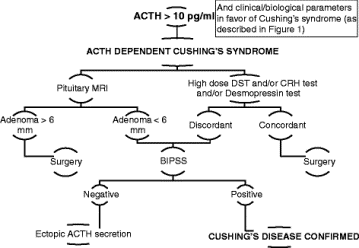
Cushing’s Disease – Rare Disease Quick Facts

cushings-diagnosis


Cushing’s disease is a rare condition due to excess cortisol levels that result from a pituitary tumor secreting adrenocorticotropic hormone (ACTH), which stimulates cortisol secretion.  Cushing’s disease should not be confused with Cushing’s syndrome which is increased cortisol levels but that increase can be due to any number of factors. However, Cushing’s disease is the most common form of Cushing’s syndrome.

Symptoms

The symptoms related to Cushing’s disease and Cushing’s syndrome are the same, since both are related to an excess of cortisol. Also, symptoms vary extensively among patients and that, with the inherent fluctuation in hormone levels make it difficult to diagnosis both conditions.

Changes in physical characteristics of the body

  • Fullness and rounding of the face
  • Added fat on back of neck (so-called “buffalo hump”)
  • Easy bruising
  • Purplish stretch marks on the abdomen (abdominal striae)
  • Excessive weight gain, especially in abdominal region
  • Red cheeks
  • Excess hair growth on the face, neck, chest, abdomen and thighs

Changes in physiology/psychology

  • Generalized weakness and fatigue
  • Menstrual disorder
  • Decreased fertility and/or sex drive
  • High blood pressure that is often difficult to treat
  • Diabetes mellitus
  • Mood and behavior disorders

Diagnosis

The early stages of Cushing’s disease may be difficult to recognize. However, if it is suspected, diagnosis is generally a 2 stage process. First to determine if cortisol levels are high, and if so, why they are high.

Tests to confirm high cortisol levels:

  • 24-hour urine cortisol
  • Dexamethasone suppression test (low dose)

Tests to determine cause:

  • Blood ACTH level
  • Brain MRI
  • Corticotropin-releasing hormone test
  • Dexamethasone suppression test (high dose)
  • Petrosal sinus sampling

Treatment

Surgery

  • Most patients with Cushing’s disease undergo surgery to remove the pituitary adenoma offers.
  • If the tumor is isolated to the pituitary, cure rates of 80-85% are common.
  • If the tumor has spread to nearby organs, cure rates of 50-55% are common.

Medicine (approved orphan drugs)

Signifor (pasireotide)

  • Approved for patients with Cushing’s disease for whom pituitary is not an option or surgery has been ineffective.
  • Signifor is a somatostatin receptor agonist that leads to inhibition of ACTY secretion (and subsequently decreased cortisol levels).

Korlym (mifepristone)

  • Approved for patients with Cushing’s syndrome who have type 2 diabetes or glucose intolerance and have failed surgery (or not candidates for surgery).
  • Korlym is a glucocorticoid receptor antagonist which in turn blocks the effects of the high levels of cortisol in the body. Korlym is used to treat high glucose levels due to elevated cortisol.

Medicines used but not indicated for Cushing’s disease include

Mitoden

ketoconazole

Metyrapone

Etomidate

Radiation

  • Radiation therapy may be used in some patients and can be very effective in controlling the growth of these tumors.

Prognosis

In most cases, treatment can cure Cushing’s disease. If not treated properly, the chronic hypercortisolism can lead to excess morbidity and mortality due to increased cardiovascular and other risk factors.

For more information

National Library of Medicine, National Institute of Health

Cushing’s Disease Information (provided by Novartis Pharmaceuticals)


Images courtesy of the open access journal Orhanet Journal for Rare Diseases.  Castinetti et al. Orphanet J Rare Dis. 2012 7:41   doi:10.1186/1750-1172-7-41

– See more at: http://www.raredr.com/front-page-medicine/articles/cushings-disease-rare-disease-quick-facts-0

Pasireotide for the treatment of Cushing’s disease

Posted online on June 17, 2013. (doi:10.1517/21678707.2013.807731)

Annamaria Colao Chiara Simeoli Monica De Leo Alessia Cozzolino Rosario Pivonello

Department of Clinical Medicine and Surgery, Section of Endocrinology, Federico II University, Via Sergio Pansini 5,

80131 Naples

, Italy +39 0817462132; +39 0815465443; colao@unina.it

Author for correspondence

Introduction: Pasireotide, a novel multireceptor targeted somatostatin analog is the first drug approved for treatment of adult patients with Cushing’s disease (CD) for whom pituitary surgery is not an option or has not been curative.

Areas covered: The review describes published data on efficacy and safety of pasireotide in CD patients. In particular, the review focuses on a Phase III study (CSOM230B2305) evaluating the outcomes of treatment with pasireotide at the doses of 600 and 900 µg twice daily for 12 months in 162 CD patients. This clinical trial reported a decrease in urinary free cortisol levels in the majority of patients, with a substantial reduction in nearly half and a normalization in > 25% of patients included in the study, accompanied by an improvement in clinical picture as well as a significant reduction in pituitary tumor size. Hyperglycemia appears as the most important side effect, requiring a careful monitoring and a prompt administration of glucose-lowering medications.

Expert opinion: Pasireotide seems to have a promising role as medical option for CD patients who experienced a failure or not candidate for neurosurgery; its employment will probably induce in the near future significant changes in the therapeutic approach to CD.

Read More: http://informahealthcare.com/doi/abs/10.1517/21678707.2013.807731