MENLO PARK, CA–(Marketwired – Apr 28, 2016) – Corcept Therapeutics Incorporated (NASDAQ: CORT), a pharmaceutical company engaged in the discovery, development and commercialization of drugs that treat severe metabolic, oncologic and psychiatric disorders by modulating the effects of cortisol, today released data supporting the clinical advancement of its proprietary, selective cortisol modulator, CORT125134. The company has begun recruiting patients for a Phase 1/2 trial of the compound to treat patients with solid-tumor cancers. It also expects to begin recruiting patients for a Phase 2 study of CORT125134 to treat patients with Cushing’s syndrome this quarter.
“Advancing CORT125134 is an important step in protecting and extending our growing Cushing’s syndrome franchise and in developing cortisol modulation for a wide range of other serious diseases,” said Joseph K. Belanoff, MD, Corcept’s Chief Executive Officer. “This selective cortisol modulator has shown great promise. We are optimistic that, for some patients with Cushing’s syndrome, CORT125134 may be even better than our approved product, Korlym® — just as effective, but without the side effects associated with Korlym’s affinity for the progesterone receptor. Equally important, we look forward to investigating its potential as a treatment for solid-tumor cancers.”
CORT125134 is the lead compound in Corcept’s proprietary portfolio of selective cortisol modulators. It is a non-steroidal competitive antagonist of the glucocorticoid receptor (GR) that does not bind to the body’s other hormone receptors, including the progesterone receptor (PR). Korlym’s interaction with PR results in termination of pregnancy and can cause endometrial thickening and irregular vaginal bleeding in some women. CORT125134 is proprietary to Corcept and is protected by composition of matter and method of use patents extending to 2033.
Advancement to Phase 2 Trials Supported by Positive Pre-Clinical and Phase 1 Data
“The data generated so far make this compound a promising candidate to treat both Cushing’s syndrome and, potentially, a number of solid-tumor cancers,” said Hazel Hunt, Ph.D., Corcept’s Vice President of Research. “Its Phase 1 data showed that it shares Korlym’s potent affinity for GR, one of the receptors to which cortisol binds. Our clinical testing showed that it can prevent the effects of the steroid prednisone, a commonly-used synthetic GR agonist. Preventing the effects of prednisone is a very important finding, as it mirrors the essential quality of an effective medical treatment for patients with Cushing’s syndrome.”
Corcept’s Phase 1 trial of CORT125134 enrolled 124 healthy volunteers. GR antagonism was tested by measuring CORT125134’s ability to modulate prednisone’s effects on serum osteocalcin, white blood cell counts, glucose metabolism and expression of the FKBP5 gene — a marker of GR activation. With respect to all parameters, CORT125134 was as potent a modulator of prednisone’s activity as Korlym (see Figure 1; p value < 0.0003).
Pharmacokinetic data indicate that CORT125134 is suitable for once-daily dosing.
“Positive Phase 1 data, together with encouraging pre-clinical results, prompted us to advance CORT125134 as a treatment for Cushing’s syndrome as well as a treatment for cancer,” continued Dr. Hunt. “Substantial pre-clinical and clinical research suggests that cortisol modulation increases the effectiveness of chemotherapy in some solid-tumor cancers. Pre-clinical data suggest that CORT125134 may be even more potent than Korlym in treating some tumor types.”
Corcept and investigators at the University of Chicago have studied the effectiveness of CORT125134 in transgenic mouse models of triple-negative breast cancer (TNBC) and castration-resistant prostate cancer. Mice implanted with TNBC tumor cells were treated with a combination of paclitaxel and CORT125134. Mifepristone (the active ingredient in Korlym) in combination with paclitaxel served as a positive control. As expected, the combination of mifepristone and paclitaxel significantly slowed tumor progression. However, the combination of CORT125134 and paclitaxel slowed it even more (see Figure 2; p value = 0.0004). In a similar experiment, castrated mice seeded with prostate cancer tumor cells were treated with either mifepristone or CORT125134. The outcome was comparable to the TNBC study: When combined with castration (which in humans would be achieved pharmacologically by the administration of an androgen receptor antagonist such as enzalutamide), mifepristone retarded tumor progression, but CORT125134 had an even more pronounced effect (see Figure 3; p value = 0.037).
CORT125134 may also enhance the efficacy of immune-modulation therapy. In an animal model of colon cancer, the addition of CORT125134 to PD-1 monotherapy significantly slowed tumor progression (see Figure 4; p value = 0.013):
Oncology Trial Design
This trial’s initial phase will investigate nab-paclitaxel in combination with CORT125134 to treat any solid-tumor cancer susceptible to treatment with nab-paclitaxel. (“Nab-paclitaxel” is the generic name for Celgene’s drug, Abraxane®.) Once a maximum tolerated dose is identified, Corcept plans to open one or more expansion cohorts, each containing 20 patients, to test the combination’s efficacy in one or more of the solid-tumor cancers studied in the dose-finding phase. Possible target indications include TNBC, castration-resistant prostate cancer, ovarian cancer, pancreatic cancer and sarcoma. Other dose-finding cohorts may be enrolled to study CORT125134 in combination with different companion therapeutic agents, including PD-1 inhibitors.
The trial is open-label and will be conducted at sites in the United States, the first of which is open and has begun screening patients.
“That we are advancing the same selective cortisol modulator as a treatment for both a metabolic disease and one or more oncologic indications is a testament to the broad therapeutic potential of cortisol modulation,” said Robert S. Fishman, MD, Corcept’s Chief Medical Officer. “We are excited to start these trials.”
Cushing’s Syndrome Trial Design
This Phase 2 trial of CORT125134 will enroll 30 patients with endogenous Cushing’s syndrome. Patients will be assigned to a low- or high-dose group and will receive CORT125134 for 12 weeks, with up-titration possible in each group at weeks four and eight. The trial will be open label. Study centers will be located in both the European Union and the United States.
About Korlym®
Korlym modulates the effect of cortisol at GR, one of the two receptors to which cortisol binds, thereby inhibiting the effects of excess cortisol in patients with Cushing’s syndrome. Since 2012, Corcept has made Korlym available as a once-daily oral treatment of hyperglycemia secondary to endogenous Cushing’s syndrome in adult patients with glucose intolerance or diabetes mellitus type 2 who have failed surgery or are not candidates for surgery. Korlym was the first FDA-approved treatment for that illness and the FDA has designated it as an Orphan Drug for that indication.
About Cushing’s Syndrome
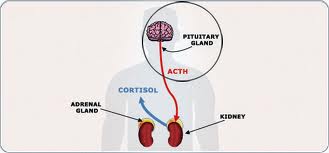
Endogenous Cushing’s syndrome is caused by prolonged exposure of the body’s tissues to high levels of the hormone cortisol and is generated by tumors that produce cortisol or ACTH. Cushing’s syndrome is an orphan indication that most commonly affects adults aged 20-50. An estimated 10-15 of every one million people are newly diagnosed with this syndrome each year, resulting in over 3,000 new patients annually in the United States. An estimated 20,000 patients in the United States have Cushing’s syndrome. Symptoms vary, but most people have one or more of the following manifestations: high blood sugar, diabetes, high blood pressure, upper body obesity, rounded face, increased fat around the neck, thinning arms and legs, severe fatigue and weak muscles. Irritability, anxiety, cognitive disturbances and depression are also common. Cushing’s syndrome can affect every organ system in the body and can be lethal if not treated effectively.
About Triple-Negative Breast Cancer
Triple-negative breast cancer is a form of the disease in which the three receptors that fuel most breast cancer growth — estrogen, progesterone and the HER-2/neu gene — are not present. Because the tumor cells lack the necessary receptors, treatments that target estrogen, progesterone and HER-2 receptors are ineffective. In 2013, approximately 40,000 women were diagnosed with TNBC. It is estimated that more than 75 percent of these women’s tumor cells expressed the GR receptor to which cortisol binds. There is no FDA-approved treatment and neither a targeted treatment nor an approved standard chemotherapy regimen for relapsed TNBC patients exists.
About Corcept Therapeutics Incorporated
Corcept is a pharmaceutical company engaged in the discovery, development and commercialization of drugs that treat severe metabolic, oncologic and psychiatric disorders by modulating the effects of cortisol. Korlym, a first-generation cortisol modulator, is the company’s first FDA-approved medication. The company is conducting a Phase 1/2 trial of mifepristone for the treatment of TNBC, a Phase 1/2 trial of CORT125134 to treat a variety of solid-tumor cancers and has a proprietary portfolio of other selective GR antagonists that modulate the effects of cortisol but not progesterone. Corcept owns extensive intellectual property covering the use of cortisol modulators, including mifepristone and CORT125134, in the treatment of a wide variety of metabolic, oncologic and psychiatric disorders. It also holds composition of matter patents for CORT125134 and its other selective cortisol modulators.
Forward-Looking Statements
Statements made in this news release, other than statements of historical fact, are forward-looking statements. These forward-looking statements, including statements regarding the initiation and advancement of clinical trials and the development of Corcept’s pre-clinical and clinical pipeline, are subject to known and unknown risks and uncertainties that might cause actual results to differ materially from those expressed or implied by such statements, including the pace of enrollment in or the outcome of the company’s Phase 1/2 study of CORT125134 to treat solid-tumor cancers and planned Phase 2 trial of CORT125134 to treat patients with Cushing’s syndrome, the effects of rapid technological change and competition, the protections afforded by Corcept’s intellectual property rights, or the cost, pace and success of Corcept’s other product development efforts. These and other risks are set forth in the company’s SEC filings, all of which are available from the company’s website (www.corcept.com) or from the SEC’s website (www.sec.gov). Corcept disclaims any intention or duty to update any forward-looking statement made in this news release.
Abraxane® is a registered trademark of Celgene Corporation.
From http://www.marketwired.com/press-release/promising-pre-clinical-phase-1-data-support-advance-selective-cortisol-modulator-cort125134-nasdaq-cort-2119635.htm
Filed under: Clinical trials, Cushing's, Treatments | Tagged: clinical trial, Corcept, CORT125134, cortisol, Cushing's Syndrome, endometrial thickening, glucorticoid, Korlym, mifepristone, pregnancy, vaginal bleeding | Leave a comment »