A Case of Recurrent Cushing’s Disease With Optimised Perinatal Outcomes

Abstract

Summary

This is a case of a patient with a 10-year history of Cushing’s disease (CD) that was previously treated with transsphenoidal pituitary tumour resection. Conception occurred spontaneously, and during early pregnancy recurrent CD became apparent both clinically and biochemically. Repeat transsphenoidal surgery took place during the second trimester, and the high-risk pregnancy resulted in a live neonate. Despite evidence of hypercortisolism and recurrent CD at 6 months postpartum, the patient had a second successful, uncomplicated pregnancy, further adding to the rarity and complexity of this case. Pregnancy in CD is rare because hypercortisolism seen in CD suppresses gonadotropin release, leading to menstrual irregularities and infertility. Diagnosis of CD is particularly challenging because many clinical and biochemical features of normal pregnancy overlap considerably with those seen in CD. Diagnosis and treatment are extremely important to reduce rates of perinatal morbidity and mortality.

Learning points

  • Hypercortisolism suppresses gonadotropin release, leading to menstrual irregularities and infertility. In CD, hypersecretion of both androgens and cortisol further contributes to higher rates of amenorrhoea and infertility.
  • Pregnancy itself is a state of hypercortisolism, with very few studies detailing normal ranges of cortisol in each trimester of pregnancy for midnight salivary cortisol and urinary free cortisol testing.
  • Treatment of CD reduces maternal morbidity and rates of foetal loss, and can be either surgical (preferred) or medical.
  • CD can relapse, often many years after initial surgery.
  • There are a limited number of cases of Cushing’s syndrome in pregnancy, therefore, the best possible treatment is difficult to determine and should be individualised to the patient.

Background

CD is rare in the general population. It is even rarer to present as a clinical conundrum during pregnancy. Diagnosis is challenging due to the overlap of physiological hormonal changes during pregnancy with features of Cushing’s syndrome, and it is further complicated by limited data for cortisol reference ranges in a pregnant state. The prognostic benefits of treatment of CD in pregnancy in reducing perinatal morbidity and mortality must be carefully weighed up against the risks of surgery and/or medical management in pregnancy.

Case presentation

The patient was a 31-year-old female diagnosed with Cushing’s disease at age 20 years. Initial clinical features were oligomenorrhoea, weight gain, hypertension, and impaired glucose tolerance. She had markedly elevated 24 h urinary free cortisol (UFC) of 1,984 nmol/day, which was six times the upper limit of normal (ULN). Results of a 1 mg dexamethasone suppression test (DST) showed failure to suppress cortisol levels, with an elevated morning cortisol of 695 nmol/L (reference range (RR): 100–690). ACTH levels remained inappropriately normal at 7.3 pmol/L (RR: < 12.1), suggesting ACTH-dependent hypercortisolism. A 5 mm by 4.4 mm microadenoma was identified on magnetic resonance imaging (MRI) scan of the pituitary gland, and she underwent initial transsphenoidal pituitary adenectomy. Histopathological examination demonstrated positive staining for adrenocorticotrophic hormone (ACTH). Immediately after surgery, she required hydrocortisone and levothyroxine replacement for several months, which was gradually weaned and eventually ceased. She had routine MRI with gadolinium and biochemical surveillance for 5 years, which showed cortisol levels within the normal ranges and no visible pituitary lesion on imaging, and she was then lost to follow-up. Results of 1 mg DST and 24 h UFC measurements were not available from this time period. Other medical history was significant for mild depression. The patient was a non-smoker and did not drink alcohol.

At age 30 years, the patient experienced weight gain and facial rounding, prompting an endocrinology referral. While awaiting review, she spontaneously achieved conception and was confirmed to be 6 weeks’ gestation at time of the first visit. An early diagnosis of gestational diabetes mellitus was made, and she commenced insulin therapy. Gestational hypertension was also confirmed, treated with methyldopa 500 mg mane and 250 mg midi. Other medications included folic acid 5 mg daily, cholecalciferol, and ferrous sulphate.

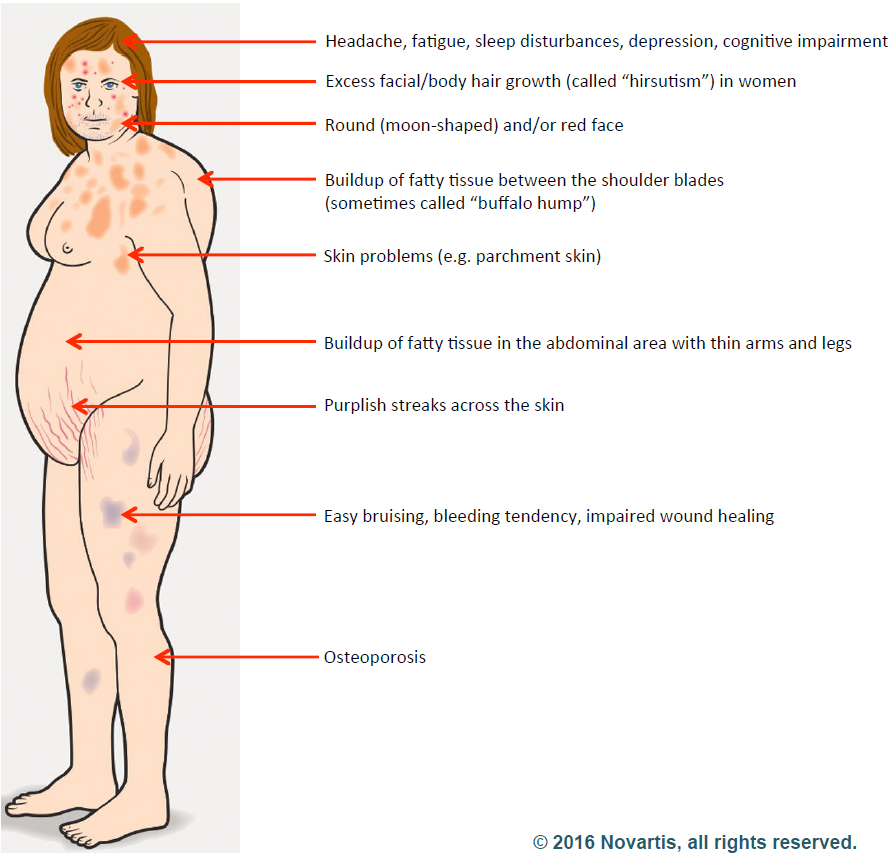
The patient was referred to a tertiary hospital high-risk pregnancy service for ongoing care. She was initially reviewed at 8 + 5 weeks’ gestation and was noted to have plethora, round facies, and prominent dorsocervical fat pads. Central adiposity with violaceous striae over the lower abdomen was evident. Visual fields were normal to gross confrontation, and formal visual field assessment was confirmed to be normal. Weight was 70 kg, with BMI 26.7 kg/m2.

As pregnancy progressed, insulin and antihypertensive requirements increased, with an additional methyldopa 250 mg nocte required to keep blood pressure at target.

Investigation

The 24 h UFC was 450 nmol/24 h (1.5× ULN of non-pregnant reference range). Late-night salivary cortisol (LNSC) was 17 nmol/L (non-pregnant reference range <8 nmol/L). Serum pathology results are shown in Table 1. MRI brain performed at 6 weeks’ gestation revealed a possible 6 by 4 mm nodule in the left lateral aspect of the sella (Fig. 1). IV contrast was not used as the patient was within the first trimester.

Table 1Laboratory investigations at initial consultation (8 + 5 weeks gestation). Bold values indicate abnormal results.

Investigation Result Reference range
Fasting glucose, mmol/L 5.2
HbA1c, % 5.4
24 h urinary cortisol, nmol/d 450 54–319
Cortisol (08:22), nmol/L 521 138–650
Midnight salivary cortisol, nmol/L 17 <8
ACTH, pmol/L 10 <12.1
IGF-1, nmol/L 31 12–42
Growth hormone, mIU/L 2.9 0–15
TSH, mIU/L 2.34 0.4–3.2
FT4, pmol/L 11.9 11–17
Figure 1
Figure 1
MRI brain without IV contrast performed in the first trimester of the patient’s first pregnancy, demonstrating a T2 hypointense lesion in the left lateral aspect of the sella, which is most likely consistent with a pituitary adenoma.

Citation: Endocrinology, Diabetes & Metabolism Case Reports 2025, 4; 10.1530/EDM-25-0092

At 14 weeks’ gestation, the repeat 24 h UFC was 542 nmol/L and LNSC was 17 nmol. There is a lack of pregnancy-specific reference ranges for 24 h UFC or LNSC measurements, making it difficult to make a definitive biochemical diagnosis. After careful discussion in a multidisciplinary team meeting, she proceeded with bilateral inferior petrosal sinus sampling (IPSS), which demonstrated a central to peripheral gradient with values presented in Table 2.

Table 2Results of bilateral inferior petrosal sinus sampling. ACTH (ng/L) at different timepoints are presented.

0 2 min 5 min 10 min 15 min
Right 258 823 1,040 864 728
Left 73 196 228 263 234
Peripheral 12 41 56 81 86
Right: peripheral 21.50 20.07 18.57 10.67 8.46
Left: peripheral 6.08 4.78 4.07 3.25 2.72

Treatment

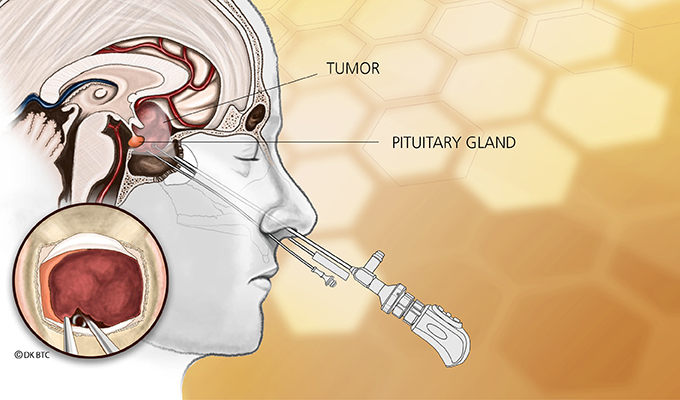
The patient underwent transsphenoidal resection of her adenoma at 17+ weeks’ gestation. She recovered uneventfully.

Day 1 postoperative cortisol level remained elevated at 706 nmol/L, falling to 587 nmol/L by Day 3. Postoperative steroid treatment was not required.

Histopathological examination demonstrated a pituitary adenoma with mild nuclear atypia and infrequent positive ACTH staining (Fig. 2). In addition to the tumour and normal pituitary tissue, there was also abundant eosinophilic proteinaceous material present, which may have suggested contents of an associated cyst, although presence of cyst lining was not present to confirm this diagnosis. A small fragment of included bone appeared invaded by the adenoma within the resected tissue.

Figure 2
Figure 2
Positive ACTH staining in pituitary adenoma.

Citation: Endocrinology, Diabetes & Metabolism Case Reports 2025, 4; 10.1530/EDM-25-0092

Outcome and follow-up

The patient’s insulin and antihypertensive requirements plateaued postoperatively. Serial ultrasound showed that the fetal size was consistently in the 15th percentile. There were no features of preeclampsia throughout gestation.

At 35 + 5 weeks’ gestation, she had premature rupture of membranes and delivered a healthy live male infant weighing 2,250 g via normal vaginal delivery. Diabetes and hypertension resolved promptly after delivery, with cessation of insulin and antihypertensive medications.

At 5 weeks postpartum morning cortisol was within normal range at 265 nmol/L, with ACTH 6.8 pmol/L. At 10 weeks postpartum, the 24 h UFC was within normal limits at 136 nmol/day, and a 1 mg DST showed a detectable, equivocal cortisol level of 98 nmol/L. Repeat MRI pituitary was performed 2 months postpartum, which did not show any residual pituitary adenoma. No pituitary hormone replacement was required.

By 6 months postpartum, repeat 1 mg DST showed failure to suppress cortisol, with cortisol level at 154 nmol/L (RR without dexamethasone: 138–650 nmol/L), suggesting residual CD. Ambulatory blood pressure monitoring revealed essential hypertension, with average BP 141/101 mmHg across 24 h, requiring treatment with methyldopa. Despite evidence of residual CD, the patient desired a second pregnancy. Reassuringly, her cortisol burden was low, with LNSC 5 nmol/L (RR: < 8) and 24 h UFC 143 nmol/day (non-pregnant RR: 54–319), both within reference range. No definite lesion was identified on MRI brain with intravenous contrast. Extensive discussions between the endocrinologist, maternal–foetal medicine specialist, neurosurgeon, and the patient were held. The pros and cons of pursuing further treatment such as radiotherapy versus proceeding with pregnancy despite suggestion of active Cushing’s disease were explicitly discussed.

The patient confirmed her second pregnancy 11 months after the birth of her first child, and this proceeded without complications. There was no evidence of gestational diabetes on 75 g glucose tolerance tests performed at 16 and 26 weeks’ gestation. Blood pressure was well managed on methyldopa alone. She delivered a healthy male infant via normal vaginal delivery at 38 weeks’ gestation and breastfed successfully. MRI was performed at 16 weeks postpartum and did not show an appreciable sella/suprasellar mass. Repeat 24 h UFC was 275 nmol/day, consistent with ongoing CD. Clinical features of CD returned, included central adiposity, liver function test derangement, and raised HbA1c with fasting hyperinsulinaemia. Pituitary radiation therapy was discussed, including the possibility of more than one dose being required, the strong likelihood of inducing panhypopituitarism, and the unknown duration of time between radiation and remission (1). The alternative option of medical management with osilodrostat was discussed, given its recent availability and government subsidy in Australia. The patient was recently commenced on osilodrostat 1 mg twice daily after ECG attendance to exclude prolonged QTc, and patient education regarding the potential risk of hypoadrenalism and when to seek medical attention.

Discussion

Managing Cushing’s disease (CD) in pregnancy is complex and requires a multidisciplinary approach, as recurrence can occur years after initial remission. Suspected Cushing’s syndrome (CS) requires careful assessment. In cases where active disease poses significant maternal and foetal risks, transsphenoidal pituitary surgery can be safely performed in the second trimester. CD increases the risk of gestational diabetes and hypertension, requiring close monitoring to optimise outcomes. Postpartum, persistent hypercortisolism may indicate recurrence, highlighting the need for long-term endocrine follow-up. Despite mild residual disease, successful pregnancies are possible with appropriate monitoring and management, emphasising the importance of thorough family planning discussions.

UFC values are twice as high in pregnant patients compared to non-pregnant controls (2). In the first trimester of normal pregnancy, UFC values are normal, but by the third trimester, they increase three-fold up to values seen in CS (3). Therefore, CS should only be suspected when UFC values in the second and third trimesters are greater than three times the upper limit of normal (3). LNSC is a useful screening test because in CS, the usual circadian nadir of cortisol secretion is lost. At least 2–3 UFC and/or NSC screening tests are recommended (4). Lopes et al. (5) established reference values for LNSC with suggested normal ranges of 0.8–6.9 nmol/L in the first trimester, 1.1–7.2 nmol/L in the second trimester, and 1.9–9.1 nmol/L in the third trimester (5). The use of a 1 mg DST in pregnancy is not recommended because the hypothalamus–pituitary–adrenal (HPA) axis response to exogenous glucocorticoids is blunted, making it difficult to interpret test results (3).

Adrenal adenomas are responsible for 40–50% of CS cases in pregnancy, while CD causes 33% (3). In non-pregnant patients, ACTH levels are useful to classify the likely cause of CS. Undetectable ACTH levels cannot be relied upon for diagnosis in pregnancy because ACTH levels are elevated in pregnancy (3). Using high-dose dexamethasone suppression testing (HDST) as an initial test in pregnant patients has been recommended (3). A lack of suppression of ACTH with administration of high-dose dexamethasone suggests adrenal aetiology. However, HDST is not always definitive (3). Ultrasound imaging of the adrenal glands is also recommended as an initial investigation because most adrenal lesions can be visualised (35). Pregnancy complicates visualisation of a pituitary mass by MRI imaging because physiologic enlargement of the pituitary gland during pregnancy may mask small tumours (6). Non-contrast MRI has reduced sensitivity for detection of CD. However, gadolinium contrast is not recommended in pregnant women (7).

Inferior petrosal sinus sampling (IPSS) is the gold standard for diagnosing CD in the non-pregnant population (4). The most recent guidelines for diagnosis of CS suggest that IPSS is not necessary for diagnosis if MRI clearly shows a tumour >10 mm in the context of dynamic test results and clinical features that also strongly suggest CD (4). Lindsay and colleagues (3) caution the use of IPSS unless prior non-invasive testing remains equivocal due to risks of thromboembolism and exposure to radiation posed by IPSS (3). However, these risks can be mitigated with extra precautions during pregnancy, including use of lead barrier protection, a direct jugular approach, and with the procedure occurring at a specialised centre (3).

Treatment of CS in pregnancy should be individualised depending on the patient presentation and gestational age (4). Active treatment of CS, by either medical or surgical intervention, reduces maternal morbidity and rates of foetal loss (4). Surgery is usually preferred because there are fewer complications at delivery and it has high rates of remission (8). Surgery reduces rates of perinatal and maternal morbidity but does not reduce rates of preterm birth and intrauterine growth restriction (IUGR) (9). Pituitary or adrenal surgery should ideally be done in the second trimester, before week 24 of pregnancy, in a high-volume centre with multidisciplinary team input (8). There is a risk of spontaneous abortion with anaesthesia given in the first trimester and an increased risk of premature labour with anaesthesia given in the third trimester (7).

Unfortunately, CD can recur, and 50% of recurrence occurs within 50 months of pituitary surgery (14). Recurrence is defined as ongoing clinical and biochemical evidence of hypercortisolism after an initial period of remission. Factors that increase the likelihood of postoperative remission included the identification of a tumour on MRI pre-surgery, no invasion of the sinus cavernous by the adenoma, older age (greater than 35 years), low postoperative cortisol and ACTH levels, and long-term hypocortisolism (greater than 1 year) (1). A second pituitary surgery is often the first-line treatment option in recurrence, which has overall lower rates of remission compared to first surgery and increased risk of hypopituitarism due to scar tissue in the pituitary and often the need for more aggressive surgical technique (1). Both fractionated radiotherapy and stereotactic radiosurgery are therapeutic options and achieve high rates of remission (1).

There are no medications that are approved for treatment of CD in pregnancy, although the latest guidelines suggest consideration of metyrapone, ketoconazole, or cabergoline (46). The newer agent, osilodrostat inhibits the enzymes 11-beta-hydroxylase and 18-hydroxylase, reducing production of cortisol and aldosterone respectively, thereby normalising UFC values, reducing systolic and diastolic blood pressure, fasting blood glucose levels, and improving body weight in clinical trials (10). There is no information on osilodrostat use and safety in pregnancy, but it is an effective agent in patients who are unsuitable for surgery and patients with recurrent disease after surgery (10). It is associated with risk of hypoadrenalism, prolongation of the QTc interval, and increased serum testosterone levels, particularly at higher doses (10). Each medication poses its own risk of side effects and therefore treatment must be individualised. Overall, medical treatment should only be used in pregnancy when surgical treatment is contraindicated (6).

Our case demonstrates a rare case of CD in pregnancy with no significant adverse perinatal outcomes for mother or baby, albeit late preterm delivery in the first pregnancy. Ongoing endocrinology surveillance is essential to monitor for recurrent CD.

Declaration of interest

The authors declare that there is no conflict of interest that could be perceived as prejudicing the impartiality of the research reported.

Funding

This research did not receive any specific grant from any funding agency in the public, commercial, or not-for-profit sector.

Patient consent

Written informed consent for publication of their clinical details was obtained from the patient.

Author contribution statement

Several case details and timeline of events were gathered by EW. This is a patient of SG.

References

Consecutive Resections of Double Pituitary Adenoma for Resolution of Cushing Disease

BACKGROUND

Double pituitary adenomas are rare presentations of two distinct adenohypophyseal lesions seen in <1% of surgical cases. Increased rates of recurrence or persistence are reported in the resection of Cushing microadenomas and are attributed to the small tumor size and localization difficulties. The authors report a case of surgical treatment failure of Cushing disease because of the presence of a secondary pituitary adenoma.

OBSERVATIONS

A 32-year-old woman with a history of prolactin excess and pituitary lesion presented with oligomenorrhea, weight gain, facial fullness, and hirsutism. Urinary and nighttime salivary cortisol elevation were elevated. Magnetic resonance imaging confirmed a 4-mm3 pituitary lesion. Inferior petrosal sinus sampling was diagnostic for Cushing disease. Primary endoscopic endonasal transsphenoidal resection was performed to remove what was determined to be a lactotroph-secreting tumor on immunohistochemistry with persistent hypercortisolism. Repeat resection yielded a corticotroph-secreting tumor and postoperative hypoadrenalism followed by long-term normalization of the hypothalamic-pituitary-adrenal axis.

LESSONS

This case demonstrates the importance of multidisciplinary management and postoperative hormonal follow-up in patients with Cushing disease. Improved strategies for localization of the active tumor in double pituitary adenomas are essential for primary surgical success and resolution of endocrinopathies.

ABBREVIATIONS

ACTH = adrenocorticotrophic hormone;  BMI = body mass index;  DHEA-S = dehydroepiandrosterone sulfate;  FSH = follicle-stimulating hormone;  GH = growth hormone;  IHC = immunohistochemical;  IPSS = inferior petrosal sinus sampling;  LH = luteinizing hormone;  MRI = magnetic resonance imaging;  POD = postoperative day;  T4 = thyroxine;  TF = transcription factor;  TSH = thyroid-stimulating hormone;  UFC = urinary free cortisol

Pituitary adenomas are adenohypophyseal tumors that can cause endocrinopathies, such as pituitary hormone hypersecretion or anterior hypopituitarism. Cell lineages are used to classify these tumors on the basis of immunohistochemical (IHC) staining of transcription factors, hormones, and other biomarkers.1 Pituitary adenomas differentiate from pluripotent stem cells along one of three lineage pathways, depending on the following active transcription factors (TFs): pituitary transcription factor 1 (PIT-1), T-box transcription factor (TPIT), or steroidogenic factor-1 (SF-1). Rarely, two or more discrete pituitary adenomas from different lineages are identified in patients; however, the etiology remains unclear.2 The incidence of multiple pituitary adenomas has been reported to be 1%–2% of all resected pituitary adenomas but is likely underestimated based on data from large autopsy series.1–4 Pluri-hormonal adenomas are also rare entities in which a single tumor contains multiple TF lineages with one or more hormonal excesses.1–3 Preoperative recognition of multiple or pluri-hormonal pituitary adenomas is rare, and most tumors are discovered incidentally upon autopsy, intraoperatively, or on histological analysis.2,3,5

In cases of multiple synchronous pituitary adenomas, only one hormone excess syndrome is most frequently evident on clinical presentation and endocrine workup. Silent pituitary tumors positive for prolactin on immunohistochemistry are the most prevalent additional, incidentally found tumor in cases of multiple pituitary adenomas.5 This is particularly true in Cushing disease.6,7 It is important to recognize the presence of multiple pituitary adenomas especially in the setting of hormonally active pituitary adenomas to provide optimal management for this subset of patients. Complete resection is curative for Cushing disease with the standard of care achieved through a transsphenoidal approach. Localization of the tumor presents a challenge because of suboptimal sensitivity of magnetic resonance imaging (MRI) in demonstrating microadenomas, the inconsistency of lateralization with inferior petrosal sinus sampling (IPSS), and delays in pathological analysis.1,8,9 Additionally, the presence of an additional pituitary adenoma can obscure the microtumor through its large size and mass effect and can act as a “decoy lesion” during MRI, IPSS, and resection.6

Consideration of multiple pituitary tumors is necessary for successful resection. In a patient with a biochemical picture of Cushing disease, the demonstration of an adenoma with negative adrenocorticotrophic hormone (ACTH) immunostaining and the absence of postoperative hypoadrenalism may indicate the existence of a double adenoma. Few cases have described a lack of remission of an endocrinopathy after transsphenoidal resection due to the presence of an additional adenoma,2,6,10 and even less so in the instance of the persistence of Cushing disease.6 We present a rare case of double pituitary adenomas in a patient presenting with Cushing disease who underwent two endoscopic endonasal transsphenoidal resections and immunostaining for prolactin and ACTH, respectively, with long-term normalization of her hypothalamic-pituitary-adrenal (HPA) axis.

Illustrative Case

History and Presentation

A 32-year-old female, gravida 0 para 0, with a history of a pituitary lesion and hyperprolactinemia presented to our institution for the evaluation for Cushing disease. Ten years earlier, the patient had presented to a gynecologist with hirsutism, galactorrhea, and oligomenorrhea. Her endocrine workup was remarkable for an elevated prolactin at 33.8 ng/mL (2.3–23.3 ng/mL), while follicle-stimulating hormone (FSH), luteinizing hormone (LH), and thyroid-stimulating hormone (TSH) levels were normal. No ACTH or cortisol levels were available. MRI demonstrated a 5 × 6 × 5–mm T1-weighted isointense pituitary lesion protruding into the suprasellar cistern due to a small sella size. She was treated with bromocriptine 2.5 mg daily for 5 years, with normalization of her prolactin level. Subsequent MRI demonstrated a stable lesion size and T1 and T2 hyperintensity in the region of the known pituitary lesion, considered to be posttreatment cystic change with proteinaceous contents and blood. After the normalization of her prolactin levels, she continued to have oligomenorrhea and abnormal hair growth. Polycystic ovaries were not visualized on ultrasound. She was started on oral contraceptives and then switched to the etonorgestrel implant.

A decade after initial presentation, she presented to endocrinology at our institution with 3 years of weight gain, hirsutism, and potential oligomenorrhea. Vital signs were stable (blood pressure: 122/86; heart rate: 72 beats/min), and facial fullness and striae on her bilateral breasts were appreciated on physical examination. She was taking isoniazid and pyridoxine for a recent diagnosis of latent tuberculosis and had discontinued bromocriptine 5 years earlier. Her weight was 66.3 kg and body mass index (BMI) was 23.9 kg/m2. She reported that her maternal uncle had a pituitary tumor. Laboratory analysis was positive for elevated urinary free cortisol (UFC) of 109 µg per 24 hours (2.5–45 µg/24 h; Table 1) and nighttime salivary cortisol of 142 ng/mL (<100 ng/dL) with high-normal prolactin of 22.8 ng/mL (2.3–23.3 ng/dL) and normal FSH, LH, TSH, and thyroxine (T4). Dehydroepiandrosterone sulfate (DHEA-S) was 128 µg/dL (98.8–340.0 µg/dL). Imaging demonstrated a 4 × 4 × 4–mm pituitary lesion with decreased T1-weighted and increased central T2-weighted signal intensity in the left lateral pituitary (Fig. 1A–C). Desmopressin (Ferring Pharmaceuticals DDAVP) stimulation increased a basal ACTH of 49.9 pg/mL to ACTH of 91.2 pg/mL, and cortisol increased from 13.7 µg/dL to 21.2 µg/dL, consistent with neoplastic hypercortisolism. IPSS was performed, which showed a right-sided, central-to-peripheral ACTH gradient (Table 2). The patient elected to undergo endoscopic endonasal resection with the initial target as the left-lateral pituitary mass to achieve a cure for Cushing disease.

TABLE 1Urinary free cortisol at baseline and 3, 5, and 7 months after the primary resection

Variable Baseline 3 Mos 5 Mos 7 Mos on Osilodrostat
Urinary free cortisol (4–50 µg/24 hrs) 109 134.2 125.4 40.3
Urinary creatinine (0.5–2.5 g/24 hrs) 0.995 1.17 1.42 1.11
Urinary vol (mL) 1950 2300 2100 2125
FIG. 1
FIG. 1

Preoperative coronal precontrast (A) and postcontrast (B) T1-weighted magnetic resonance imaging (MRI) and T2-weighted MRI (C) demonstrated a 4-mm3 lesion (arrows) with decreased T1 and increased central T2 signal intensity in the left lateral pituitary. Two days after surgery, coronal precontrast (D) and postcontrast T1-weighted (E) and T2-weighted (F) MRI demonstrated the unchanged adenoma.

TABLE 2Preoperative inferior petrosal sinus sampling with corticorelin ovine triflutate 68 µg

Time (mins) ACTH (pg/mL) Prolactin (ng/mL)
Peripheral Petrosal Sinus ACTH Ratio Peripheral Petrosal Sinus Prolactin Ratio
Rt Lt Rt Lt Rt Lt Rt Lt
−5 50.6 225 1586 4.45 31.34 21 124 295 5.90 14.05
0 48.8 389 1376 7.97 28.20 22.2 185 198 8.33 8.92
3 69.8 4680 1333 67.05 19.1 22.1 396 32.5 17.92 1.47
5 80.9 4590 1623 56.74 20.06 22.1 436 32.2 19.73 1.46
10 112 4160 1660 37.14 14.82 20.2 367 42 17.90 2.05

ACTH or prolactin ratio = inferior petrosal sinus ACTH or prolactin/peripheral blood ACTH or prolactin.

Primary Resection and Outcomes

During the primary resection, abnormal tissue was immediately visible after a linear incision along the bottom of the dura, with an excellent plane of dissection. The inferomedial adenoma was distinct from the known left lateral lesion, and the resection was considered complete by the primary neurosurgeon. Subsequently, the left-sided adenoma was not pursued because of the historical prolactinoma diagnosis and an assumption that the newly discovered adenoma was the cause of ACTH hypersecretion. However, pathology of the inferomedial tumor was strongly and diffusely positive for prolactin (Fig. 2B), synaptophysin, and cytokeratin, with an Mindbomb Homolog-1 (MIB-1) proliferative index of 2.4%. ACTH, growth hormone (GH), FSH, LH, and TSH immunostaining were negative. TF immunohistochemistry was not available. On postoperative day (POD) 1, pituitary MRI was performed and demonstrated the unchanged 4-mm3 T1-weighted hypointense lesion with small central T2-weighted hyperintensity in the left lateral gland (Fig. 1D–F). Cortisol levels ranged from 9.7 to 76.2 µg/dL (4.8–19.5 µg/dL), and ACTH was 19.5 pg/mL (7.2–63.3 pg/mL) on POD 1.

FIG. 2
FIG. 2

Histological examination of surgical specimens from the inferomedial (A–C) and left lateral (D–F) lesions. The initial resection (hematoxylin and eosin [H&E], A) was strongly and diffusely positive for prolactin (B) with normal reticulin levels (C) indicating a lactotrophic pituitary adenoma. The second operation (H&E, D) was diagnostic for a corticotropic pituitary adenoma with diffusely positive adrenocorticotrophic hormone (ACTH) (E) and decreased reticulin (F). Original magnification ×100.

Early reoperation was discussed with the patient based on the pathology and persistent hypercortisolism; however, she elected to pursue conservative management with close follow-up. Postoperative cortisol nadir was 4.8 µg/dL (4.8–19.5 µg/dL) on POD 2 during her 4-day hospital stay. DHEA-S was significantly decreased from baseline at 22.3 µg/dL (98.8–340.0 µg/dL) and a prolactin level of 3.4 ng/mL (2.3–23.3 ng/dL) was low-normal. No glucocorticoids were administered during her hospital course. There was no clinical evidence of vasopressin deficiency while she was an inpatient.

Three months postoperatively, the patient reported insomnia, poor hair quality, fatigue, nocturnal sweating, and continued increasing weight gain with fat accumulation in the supraclavicular and dorsal cervical area. She had one spontaneous menstrual period despite the use of etonogestrel implant. UFC was increased at 134.2 µg/24 hours (4–50 µg/24 h; Table 1). The 8:00 am serum cortisol was 10.2 µg/dL (5.0–25.0 µg/dL). She was started on osilodrostat 2 mg twice daily for her persistent hypercortisolism, and she reported some clinical improvement; however, she had continued elevation in her late-night salivary cortisol levels up to 7.0 nmol/L. Other endocrine lab work was normal, with a prolactin of 13.5 ng/mL (2.8–23.3 ng/mL) and TSH of 3.67 µIU/mL (0.4–4.0 µIU/mL). Her weight had increased by 4.9 kg to 71.2 kg with a BMI of 25.3 kg/m2. Approximately 6 months postoperatively, she was amenable to a secondary resection targeting the remaining left lateral pituitary adenoma.

Secondary Resection and Outcomes

After obtaining adequate exposure for the secondary resection, the lesion in the left lateral aspect of the pituitary was targeted. The tumor was clearly identified and completely resected without intraoperative complication. IHC staining was diffusely positive for ACTH (Fig. 2E), synaptophysin, and cytokeratin with decreased reticulin and an MIB-1 index of 3.3%. Prolactin, GH, TSH, LH, and FSH immunostaining were negative. Postoperative cortisol monitoring demonstrated decreased levels, with a nadir of 2.0 µg/dL on POD 0. Levels of ACTH and DHEA-S were decreased at 4.4 pg/mL (7.2–63.3 pg/mL) and 13.3 µg/dL (98.8–340 µg/dL), respectively, on POD 1. Prolactin remained within the normal range at 8.2 ng/mL (2.8–23.3 ng/mL). The patient was started on intravenous hydrocortisone 50 mg every 8 hours for adrenal insufficiency. Postoperative symptoms of nausea, headache, and muscle weakness resolved with hydrocortisone administration. She was discharged on hydrocortisone 60 mg daily in divided doses for adrenal insufficiency and had no signs of vasopressin deficiency during her 2-day hospital course.

By 3 months, the patient reported decreased fatigue, myalgia, and insomnia and improved overall well-being and physical appearance. She was weaned down to a total daily dose of 20 mg of hydrocortisone and had lost 5.2 kg. Her menstruation returned while having an etonogestrel implant. Rapid ACTH stimulation was abnormal, with decreased cortisol at 30 minutes of 4.1 µg/dL (7.2–63.3 pg/mL) demonstrating continued adrenal insufficiency. Follow-up MRI demonstrated miniscule remaining left pituitary adenoma (Fig. 3). Seven months after her second surgery, she was started on 50 µg levothyroxine for primary hypothyroidism in the setting of slightly elevated TSH of 4.1 µIU/mL (0.4–4.0 µIU/mL) and a low-normal T4 of 0.8 ng/dL (0.7–1.5 ng/dL).

FIG. 3
FIG. 3

Postoperative imaging 3 months after the second operation demonstrates near gross-total resection (yellow arrows: surgical cavity) of the left lateral pituitary adenoma on coronal precontrast (A) and postcontrast T1-weighted (B) and T2-weighted (C) MRI.

Two years after the second resection, the patient lost 10.1 kg (weight, 61.1 kg; BMI, 21.76 kg/m2). Her ACTH stimulation test became normal, and hydrocortisone therapy was discontinued. At the 2-year time point, the patient and her husband successfully conceived a child.

Patient Informed Consent

The necessary patient informed consent was obtained in this study.

Discussion

Double or multiple pituitary adenomas are discovered in 0.37%–2.6% of resected pituitary lesions.3,4,6,11,12 A majority of multiple pituitary adenomas are not suspected before surgery with an inconclusive clinical presentation or endocrine laboratory workup.6 The presentation of multiple synchronous neoplasms is thought to be more common than having a single neoplasm with multiple lineages.1 Studies have shown that additional pituitary adenomas are seen at a rate of 1.6%–3.3% in Cushing disease in studies including both contiguous and noncontiguous double pituitary adenomas.6 Additional pituitary adenomas that are hormonally active make up 40% of resected double pituitary adenomas, with most staining for gonadotroph adenoma.13 Overall, the most common incidental pituitary adenoma is prolactinoma,6 which occurs most frequently with GH or ACTH adenomas.5 In very rare instances, Cushing cases can present with hyperprolactinemia and Cushing synchronously.6 Hormonal secretion and clinical presentation are variable, with the pathology most often attributed to only one component of double pituitary adenoma.3,14 The multiple-hit theory is the most common hypothesis for double pituitary adenoma etiology with coincidental monoclonal expansion of two or more lineages, which present with separate pseudo-capsules for each lesion.15

Observations

On presenting with Cushing disease, the differential diagnosis before the initial operation considered that the known left lateral pituitary adenoma could be a mixed tumor with both prolactin and ACTH lineages. Therefore, it was the initial target of the resection until discovering the second adenoma intraoperatively. With two distinct adenomas, the inferomedial adenoma was presumed to be the source of the ACTH hypersecretion and was subsequently resected. The left lesion was thought to be a prolactinoma and hormonally inactive after historical dopaminergic therapy and thus was not pursued during the initial surgery. However, pathology confirmed that the opposite was true. Few cases have also involved incidental pituitary tumors that look like the hormonally active adenoma and encourage resection of it, leaving the primary pituitary adenoma behind.6,7 It has been reported that these “decoy lesions” can cause surgical failure and require secondary operations.6,7,10,16 Intraoperative localization and confirmation of the adenoma classification may have also been helpful during the case, including tissue-based ACTH antibody assay,9 plasma ACTH measurements with a immunochemiluminometric method,17 or intraoperative ultrasound.5,6

The inferomedial second tumor was not appreciated or reported throughout her serial MRI studies from 2010 to 2020. Interestingly, imaging did demonstrate the left pituitary adenoma that was medically treated as a prolactinoma, although it was later diagnosed as an ACTH-secreting lesion on IHC staining. Preoperative visualization of a pituitary adenoma in Cushing disease is reported to be limited, with a reported 50% incidence with negative MRI with standard 1.5 T.1,18,19 MRI technical refinements in magnet strength, slice thickness, or enhanced spin sequences have increased sensitivity, but one-third of patients with Cushing disease still have negative scans.20 Small prolactinomas, especially those near the cavernous sinus, are also notoriously difficult to visualize on MRI, although recent advances using co-registration of 11C-methionine positron emission tomography–computed tomography with MRI (Met-PET/MRICR) may prove useful.21 Difficulty with preoperative visualization complicates a diagnosis of multiple adenomas, with or without multiple endocrinopathies, and negatively affects surgical planning. In a single-institution retrospective review of MRI in all cases of double pituitary tumors, only one of eight patients (12.5%) over 16 years of age had a positive MRI for double pituitary tumors and was diagnosed preoperatively.2

The patient’s preoperative IPSS demonstrated a right central-to-peripheral gradient. This was incongruent with the MRI demonstrating the single left-sided tumor. While IPSS is useful in confirming Cushing disease, its sensitivity for lateralization has been reported at only 59%–71%.9 With this in mind and a known left-sided adenoma on MRI, exploration of the right side of the pituitary was not originally planned. Ultimately, the left-sided adenoma was the source of ACTH hypersecretion, which remains incongruent with preoperative IPSS. It has been suggested that multiple pituitary adenomas in Cushing disease could further decrease its accuracy.1,6

The patient’s initial historical prolactin levels (33.8 ng/dL) were lower than reported levels of 100–250 ng/dL for microadenoma and >250 ng/dL in cases of macroadenoma. Normally, in active single prolactinoma, prolactin secretion is correlated to size. We do not suspect that the presence of more than one pituitary adenoma would affect the level of prolactin hypersecretion.6 Slight elevations in prolactin can be attributed to causes such as pituitary stalk effect, medications, and physiological stimulation. During the 5 years of bromocriptine therapy, the effect on the inferomedial prolactinoma was unknown, as it was not appreciated on MRI. There are reports of prolactinomas being less responsive to dopaminergic agonist therapy in cases of double adenomas.14,22 Upon resection of the inferomedial prolactinoma during the initial operation, there was no further change in the patient’s prolactin levels, which could most likely be attributed to prior dopaminergic therapy. Unfortunately, the initial endocrine laboratory workup did not include levels of ACTH or cortisol. In addition to hyperprolactinemia, Cushing disease can also present with changes in menstruation. After the secondary resection and removal of the ACTH-secreting pituitary adenoma, the patient’s oligomenorrhea resolved and she achieved pregnancy. Retrospectively, it remains unclear if the prolactinoma was once truly active hormonally.

Lessons

The rare presence of two pituitary adenomas can complicate the diagnosis, medical and surgical management, and long-term outcomes for patients. A complete endocrine workup is essential when a pituitary adenoma is suspected and can help screen for pluri-hormonal and multiple pituitary adenomas. In our patient, it is unknown when the onset of hypercortisolism was with the limited initial hormonal workup.

Currently, localizing and resecting the hormonally active adenoma in double or multiple pituitary adenomas remain a challenge, with limitations in preoperative imaging and intraoperative measures. After encountering the additional inferomedial lesion during surgery, resection of both adenomas during the initial surgery may have been prudent to ensure the resolution of Cushing disease. Although exploration for additional pituitary adenomas is not usually recommended, it could be considered in cases of multiple pituitary adenomas and uncertainty of the culprit of Cushing disease.

The current characterization of pituitary tumors by the World Health Organization includes immunohistochemistry for both transcription factors and pituitary hormones, with clinical usefulness to be determined by future studies. Multiple lineages can occur mixed in a single pituitary adenoma or across different noncontiguous adenomas and can only be determined by TF immunostaining. The left ACTH-staining lesion in our patient had some shrinkage and MRI changes, which may have been a response to dopaminergic therapy. Full characterization of the tumor cell lineages in this case remains undetermined without staining for TFs.

In conclusion, we report a rare case of Cushing disease concurrent with a prolactinoma leading to the need for repeat resection. This is one of the few reported cases of a double pituitary adenoma leading to a lack of biochemical remission of hypercortisolism after the initial surgery. Strategies for localization of the active tumor in double pituitary adenomas are essential for primary surgical success and the resolution of endocrinopathies.

Author Contributions

Conception and design: Zwagerman, Tavakoli, Shah, Findling. Acquisition of data: Zwagerman, Armstrong, Tavakoli, Shah, Ioachimescu, Findling. Analysis and interpretation of data: Zwagerman, Armstrong, Tavakoli, Shah, Coss, Ioachimescu, Findling. Drafting of the article: Zwagerman, Armstrong, Shah. Critically revising the article: Zwagerman, Armstrong, Tavakoli, Shah, Ioachimescu, Findling. Reviewed submitted version of the manuscript: Zwagerman, Armstrong, Tavakoli, Shah, Laing, Ioachimescu, Findling. Approved the final version of the manuscript on behalf of all authors: Zwagerman. Statistical analysis: Armstrong, Shah. Administrative/technical/material support: Zwagerman, Armstrong, Shah. Study supervision: Zwagerman, Tavakoli, Shah, Laing.

References

Approach to the Patient with Cushing’s Syndrome: Use of Anticoagulation Therapy

Abstract

There is an increased awareness on the higher hypecoagulability risks in patients with Cushing’s syndrome (CS) but management remains controversial. Here, we present four illustrative cases of CS that exemplify some “grey areas” on venous thromboembolism (VTE) prevention—when to start, how long to continue, what to use, and when to stop.

The cases span: initiation of prophylaxis at diagnosis of active CS; periprocedural management around inferior petrosal sinus sampling; peri-operative prophylaxis after transsphenoidal surgery (TSS); and discontinuation decisions in medically controlled disease. We synthesise current evidence and expert practice and recommend considering low-molecular-weight heparin at diagnosis of active CS, continuing through surgery, and extending for approximately three months after biochemical remission in selected patients to address the highest-events risk window.

Based on recent data, we discourage routine use of graduated compression stockings for VTE prevention. Though bleeding complications appear uncommon, they need to be carefully considered on an individualized basis. Finally, scenarios where prophylaxis can be safely discontinued once eucortisolaemia is achieved are outlined. This case-anchored framework translates heterogeneous data into actionable guidance and highlights priorities for prospective evaluation.

The Journal of Clinical Endocrinology & Metabolism, dgaf671, https://doi.org/10.1210/clinem/dgaf671

Is Cushing’s really that rare? Or is it simply undiagnosed?

Here are some thoughts from the Cushing’s Help message boards over the years.

  • Is this really such a rare disease, or more of a rare diagnosis? I mean, I remember when Thyroid issues were taboo and non-existant to regular docs, but now they all see to know something and are recognizing the issues…Seriously, if only 10-15 in every million have Cushings, how on earth did a well visited forum get created???
  • My personal opinion is a rare diagnosis….I see people with acne covered red moon faces, frontal obesity and a hump and just shake my head. If I can talk to them I will mention it but I am super sensitive about my weight and don’t want to insult anyone.
  • I believe it is both. The disease itself is rare, but more and more people are coming forward. I don’t think it is as rare as they think it is in research. It is also rare to find an educated physician for this disease. They are out there, but why aren’t there more? This makes for rare diagnosis. It is not like I can walk down the street and see tons of people with cushings symptoms, but now that I am aware of it I DO see some.
  • i believe until it is not so underdiagnosed we will never know if it is actually rare.
  • I don’t think it’s as rare as doctors think it is. I think the problem is they send people out based on individual symptoms versus looking at them all as a package. For example I got sent to: a psychiatrist for depression, a gastroenterologist for stomach stuff (diarrhea and constipation), an endocrinologist for the hormone/insulin issues, a neurologist for the headaches, an OB/GYN for the “missed periods” and an opthamologist for the vision issues. None of them talk to each other and none of them work together. How could they make a diagnosis of anything other than their specialty based on that? I think until docs take a team approach, it won’t be diagnosed more.
  • We all tend to think it is rarely diagnosed, more than it being a rare disease. Then, you get into the whole idea of, what causes it anyway?

    Who knows? Nobody knows for sure, but say it is from our environmental issues. Maybe it’s from chemicals we are exposed to, and this is how our bodies react. Then if it is environmental, you will start to see more and more people with it because more and more people are exposed to the same environmental issues. Maybe the same thing causes cancer in some people, and pituitary tumors in others. I’m not saying this is the case, I’m just throwing ideas out there. You didn’t hear of Chronic Fatigue and Fibromyalgia 30 yrs. ago either. Maybe in another 30 yrs., Cushing’s will be a disease that most people know about. That would mean more people getting diagnosed, and it would seem that Cushing’s would be on the rise, but awareness is probably the key.

  • What do YOU think?

Bone Material Strength Index Is Low in Patients With Cushing’s Syndrome Even After Long-term Remission

I sure know this to be true, even though my surgery was in 1987

Abstract

Objective

Hypercortisolism in endogenous Cushing’s syndrome (CS) results in decreased bone mineral density (BMD) and increased fracture risk. Although after remission BMD improves, the fracture rate remains elevated, suggesting that BMD may not adequately reflect fracture risk in this group. The aim was to evaluate bone material properties, another component of bone quality, using impact microindentation in patients with CS in remission.

Methods

Cross-sectional study in 60 CS patients and 60 age-, sex-, and BMD-matched controls at a tertiary referral center between 2019 and 2021. Bone material strength index (BMSi) was measured by impact microindentation using the OsteoProbe® device at the tibia. In addition, laboratory investigation, BMD, and vertebral fracture assessment were performed.

Results

By design, patients and controls were comparable for age (median age 56.5 years), sex (48 women), and BMD at the lumbar spine and femoral neck. They were also comparable regarding the number of fragility fractures (21 vs 27, P = .22). The median time of remission in patients was 6 years (range 1 to 41). Despite comparable BMD, BMSi was significantly lower in CS patients compared to controls (76.2 ± 6.7 vs 80.5 ± 4.9, P < .001). In CS patients, BMSi was negatively correlated with body mass index (r = −0.354, P = .01) but not related to the presence of fracture, physiological hydrocortisone replacement use, other pituitary insufficiencies, or time since remission.

Conclusion

Bone material properties remain altered in patients with endogenous CS, even after long-term remission. These abnormalities, known to be associated with fractures in other populations, may play a role in the persistent bone fragility of steroid excess.