Cushing’s Awareness Challenge 17

robin-causes

Another of Robin’s wonderful images.

A similar image from the CushieWiki

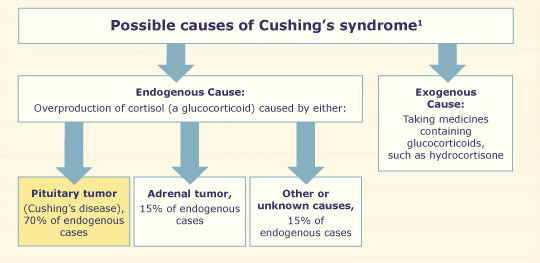
cushings-causes

No wonder Cushing’s is so hard to diagnose!

maryo colorful zebra

Could you Shed Some Light on Cushing’s Disease?

Dear Dr. Roach: Could you shed some light on Cushing’s disease? Four people in the same family have it. The doctors say it has something to do with the thyroid gland.

— Anon.

A: Cushing’s syndrome, which is different from Cushing’s disease, is an excess of cortisone or similar corticosteroids. It can be caused by taking too much steroid for too long, usually as treatment for a serious medical condition. Cushing’s disease is a special case of Cushing’s syndrome, when the excess cortisone is caused by a tumor in the pituitary gland, which spurs the adrenal gland to make excess amounts of hormone. Weight gain, almost exclusively in the abdomen, a striking round “moon” face, a fat pad on the back of the neck and upper back (“buffalo hump”), diabetes, pigmented stretch marks and high blood pressure are common findings in any form of Cushing’s syndrome.

It is very unusual for Cushing’s disease to run in families. Also, it does not affect the thyroid, although thyroid conditions can sometimes mimic Cushing’s (and vice versa). I suspect that what this might be is a rare condition called multiple endocrine neoplasia type I (MEN-1). This does run in families, and combines risk for pituitary, parathyroid and pancreatic islet cell tumors. (The parathyroid glands sit on top of the thyroid gland and secrete parathyroid hormone, responsible for calcium metabolism. The pancreatic islet cells are where insulin is made.) Not everybody with MEN-1 will have tumors in all of these glands. Parathyroid tumors are the most common.

An endocrinologist is the expert in Cushing’s and the MEN syndromes.

​Dr. Keith Roach writes for North America Syndicate. Send letters to Box 536475, Orlando, FL 32853-6475 or email ToYourGoodHealth@med.cornell.edu.

From http://herald-review.com/news/opinion/editorial/columnists/roach/dr-keith-roach-teeth-grinding-is-common-in-the-elderly/article_bef63ba4-9b5e-5bff-b66a-3530be158857.html

Cushing’s Awareness Challenge: Day 13

robin-complications

What can I say?  Robin’s images area always right on!

My only addition to this list would be the ongoing daily fatigue.  Maybe that’s not really a complication but more of an annoyance.

My bone loss has stopped  (or  slowed down some) over  the years since my pituitary surgery in 1987 but I doubt that I’ll ever gain back any height!

Luckily, I haven’t had a stroke – knock on wood!

Cushing’s – the “gift” that keeps on giving!

maryo colorful zebra


Cushing’s Awareness Challenge, Day 7

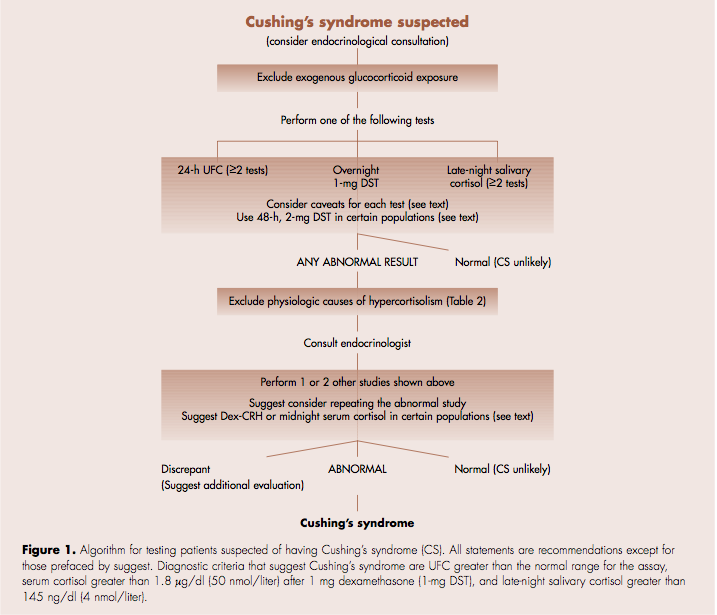
A Cushing’s diagnosis can be a long and frustrating event with testing, repeat testing, redoing testing.

Sometimes, I think that this was the path that some of my UFCs took on the way to my diagnosis:


cushie-diagnosis


It took three years from 1983 to 1986 before doctors would consider testing me for Cushing’s, even though I was sure that this was what my problem was.

My first 24-hour urine free cortisol was run by a Hematologist/Oncologist.  After that, things seemed to move a little better, if not faster.  That UFC got me to my first endo.

The Endocrinologist, of course, didn’t trust the other test so I was back to square one. He ran his own multitude of tests. He had to draw blood at certain times like 9 AM. and 5 PM. There was a dexamethasone suppression test where I took a pill at 10 p.m. and gave blood at 9 am the next day.

ufcI collected gallons of urine in BIG boxes (Fun in the fridge!). Those were from 6 a.m. to 6 a.m. to be delivered to his office by 9 a.m. same day. I was always worried that I’d be stopped in rush hour and the police would ask about what was in that big container. I did those daily for a week.

When the endo confirmed that I had Cushing’s in 1987 he sent me to a local hospital where they repeated all those same tests for another week and decided that it was not my adrenal gland (Cushing’s Syndrome) creating the problem. The doctors and nurses had no idea what to do with me, so they put me on the brain cancer ward.

When I left this hospital after a week, we didn’t know any more than we had before.

As luck would have it, NIH (National Institutes of Health, Bethesda, Maryland) was doing a clinical trial of Cushing’s. I live in the same area as NIH so it was not too inconvenient but very scary at first to think of being tested there. At that time I only had a choice of NIH, Mayo Clinic and a place in Quebec to do this then-rare pituitary surgery called a Transsphenoidal Resection. I chose NIH – closest and free. After I was interviewed by the Doctors there, I got a letter that I had been accepted into the clinical trial. The first time I was there was for 6 weeks as an inpatient. More of the same tests.

Six weeks of daily UFC testing.  To this day, I still remember nurses waking me just after 6 am to “close out your urine”.  Sounded like a bank account!

The testing pathway today looks a little more organized but it still takes far too long:

testing-cushings


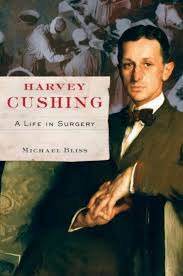
What would Harvey Cushing say about Cushing’s disease today?

harvey-book

(BPT) – More than 80 years ago renowned neurosurgeon, Dr. Harvey Cushing, discovered a tumor on the pituitary gland as the cause of a serious, hormone disorder that leads to dramatic physical changes in the body in addition to life-threatening health concerns. The discovery was so profound it came to be known as Cushing’s disease. While much has been learned about Cushing’s disease since the 1930s, awareness of this rare pituitary condition is still low and people often struggle for years before finding the right diagnosis.

Read on to meet the man behind the discovery and get his perspective on the present state of Cushing’s disease.

* What would Harvey Cushing say about the time it takes for people with Cushing’s disease to receive an accurate diagnosis?

Cushing’s disease still takes too long to diagnose!

Despite advances in modern technology, the time to diagnosis for a person with Cushing’s disease is on average six years. This is partly due to the fact that symptoms, which may include facial rounding, thin skin and easy bruising, excess body and facial hair and central obesity, can be easily mistaken for other conditions. Further awareness of the disease is needed as early diagnosis has the potential to lead to a more favorable outcome for people with the condition.

* What would Harvey Cushing say about the advances made in how the disease is diagnosed?

Significant progress has been made as several options are now available for physicians to use in diagnosing Cushing’s disease.

In addition to routine blood work and urine testing, health care professionals are now also able to test for biochemical markers – molecules that are found in certain parts of the body including blood and urine and can help to identify the presence of a disease or condition.

* What would Harvey Cushing say about disease management for those with Cushing’s disease today?

Patients now have choices but more research is still needed.

There are a variety of disease management options for those living with Cushing’s disease today. The first line and most common management approach for Cushing’s disease is the surgical removal of the tumor. However, there are other management options, such as medication and radiation that may be considered for patients when surgery is not appropriate or effective.

* What would Harvey Cushing say about the importance of ongoing monitoring in patients with Cushing’s disease?

Routine check-ups and ongoing monitoring are key to successfully managing Cushing’s disease.

The same tests used in diagnosing Cushing’s disease, along with imaging tests and clinical suspicion, are used to assess patients’ hormone levels and monitor for signs and symptoms of a relapse. Unfortunately, more than a third of patients experience a relapse in the condition so even patients who have been surgically treated require careful long-term follow up.

* What would Harvey Cushing say about Cushing’s disease patient care?

Cushing’s disease is complex and the best approach for patients is a multidisciplinary team of health care professionals working together guiding patient care.

Whereas years ago patients may have only worked with a neurosurgeon, today patients are typically treated by a variety of health care professionals including endocrinologists, neurologists, radiologists, mental health professionals and nurses. We are much more aware of the psychosocial impact of Cushing’s disease and patients now have access to mental health professionals, literature, patient advocacy groups and support groups to help them manage the emotional aspects of the disease.

Learn More

Novartis is committed to helping transform the care of rare pituitary conditions and bringing meaningful solutions to people living with Cushing’s disease. Recognizing the need for increased awareness, Novartis developed the “What Would Harvey Cushing Say?” educational initiative that provides hypothetical responses from Dr. Cushing about various aspects of Cushing’s disease management based on the Endocrine Society’s Clinical Guidelines.

For more information about Cushing’s disease, visit www.CushingsDisease.com or watch educational Cushing’s disease videos on the Novartis YouTube channel at www.youtube.com/Novartis.


From http://www.jsonline.com/sponsoredarticles/health-wellness/what-would-harvey-cushing-say-about-cushings-disease-today8087390508-253383751.html