Day 1: Cushing’s Awareness Challenge 2015

April is always Cushing’s Awareness Challenge month because Dr. Harvey Cushing was born on the 8th.
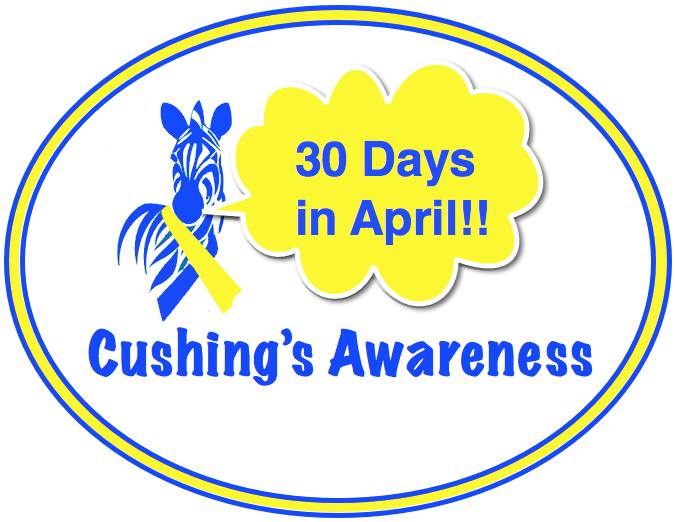
30-posts


Thanks to Robin for this wonderful past logo!  I’ve participated in these 30 days for Cushing’s Awareness several times so I’m not quite sure what is left to say this year but I always want to get the word out when I can.

As I see it, there have been some strides the diagnosis or treatment of Cushing’s since last year.  More drug companies are getting involved, more doctors seem to be willing to test, a bit more awareness, maybe.

This year’s logo, also thanks to Robin:

cushie-blogger-2015-large


April Fool's Day

How fitting that this challenge should begin on April Fool’s Day.  So much of Cushing’s  Syndrome/Disease makes us Cushies seem like we’re the April Fool.  Maybe, just maybe, it’s the doctors who are the April Fools…

Doctors tell us Cushing’s is too rare – you couldn’t possibly have it.  April Fools!

All you have to do is exercise and diet.  You’ll feel better.  April Fools!

Those bruises on your legs?  You’re just clumsy. April Fools!

Sorry you’re growing all that hair on your chin.  That happens as you age, you know.  April Fools!

Did you say you sleep all day?  You’re just lazy.  If you exercised more, you’d have more energy. April Fools!

You don’t have stretch marks.  April Fools!

You have stretch marks but they are the wrong [color/length/direction] April Fools!

The hump on the back of your neck is from your poor posture. April Fools!

Your MRI didn’t show a tumor.  You couldn’t have Cushing’s. April Fools!

This is all in your mind.  Take this prescription for antidepressants and go home.  April Fools!

If you have this one surgery, your life will get back to normal within a few months. April Fools!

What?  You had transsphenoidal surgery for Cushing’s?  You wasted your time and money. April Fools!

I am the doctor.  I know everything.  Do not try to find out any information online. You could not have Cushing’s.  It’s too rare…  April FOOL!

All this reminds me of a wonderful video a message board member posted a while ago:

It’s Literally Impossible to Have Cushing’s


So now – who is the April Fool?  It wasn’t me.  Don’t let it be you, either!


PRKACA mutations in cortisol-producing adenomas and adrenal hyperplasia

Eur J Endocrinol. 2015 Mar 6. pii: EJE-14-1113. [Epub ahead of print]

PRKACA mutations in cortisol-producing adenomas and adrenal hyperplasia – a single-center study of 60 cases.

Abstract

Objective: Cortisol excess due to adrenal adenomas or hyperplasia causes Cushing’s syndrome. Recent genetic studies have identified a somatic PRKACAL206R mutation as a cause of cortisol-producing adenomas.

We aimed to compare the clinical features of lesions with PRKACA mutations to those with CTNNB1 mutations and to search for similar mutations in unilateral hyperplasia or tumors co-secreting aldosterone.

Design, patients and methods: 60 patients with cortisol excess who had adrenalectomies at our institution between 1992 and 2013 were assessed, and somatic mutations were determined by Sanger sequencing. 36 patients had overt Cushing’s syndrome, the remainder were subclinical. 59 cases were adenomas (three bilateral), one was classified as hyperplasia. Four tumors had proven co-secretion of aldosterone.

Results: Among cortisol-secreting unilateral lesions without evidence of co-secretion (n=52), we identified somatic mutations in PRKACA (L206R) in 23.1%, CTNNB1 (S45P, S45F) in 23.1%, GNAS (R201C) in 5.8% and CTNNB1 plus GNAS (S45P, R201H) in 1.9%. PRKACA and GNAS mutations were mutually exclusive. Of the co-secreting tumors, two (50%) had mutations in KCNJ5 (G151R and L168R). The hyperplastic gland showed a PRKACAL206R mutation, while patients with bilateral adenomas did not have known somatic mutations. PRKACA-mutant lesions were associated with younger age, overt Cushing’s syndrome and higher cortisol levels versus non-PRKACA-mutant or CTNNB1-mutant lesions. CTNNB1 mutations were more significantly associated with right than left lesions.

Conclusions: PRKACAL206R is present not only in adenomas, but also in unilateral hyperplasia and is associated with more severe autonomous cortisol secretion. Bilateral adenomas may be caused by yet-unknown germline mutations.

PMID:
25750087
[PubMed – as supplied by publisher]

From http://www.ncbi.nlm.nih.gov/pubmed/25750087

Ohio Pituitary Patient Symposium at OSU and Gentle Giant Awards Dinner

Please join the Pituitary Network Association and The Ohio State University for a Pituitary Patient Symposium featuring a series of pituitary and hormonal patient education seminars presented by some of the top physicians of pituitary and hormonal medicine. The symposium faculty will share the most up-to-date information and be available to answer your most pressing questions.

Following the Patient Symposium you are cordially invited to attend Pituitary Network Association’s Gentle Giant Award Reception and Dinner. Join us in honoring Dr. Daniel Prevedello for his exemplary accomplishments in the field of pituitary medicine.  Dr. Prevedello is an Associate Professor of Neurosurgery at The Ohio State University Wexner Medical center and Director of OSU’S Minimally Invasive Cranial Surgery Program.  Dr. Prevedello is internationally recognized in the field of minimally invasive surgery for brain, pituitary, and skull based tumors and has been a member of Best Doctors of America the last five years.  As a practicing neurosurgeon for over 15 years, Dr. Prevedello has performed over 1,800 procedures of which, over 800 were using the Endoscopic Endonasal Approach.  His current surgical practice encompasses the full spectrum of brain and skull based tumors, both benign and malignant, treated with minimally invasive and conventional approaches.

Registration is available for one or both events. The Patient Symposium registration fee is $30 and includes continental breakfast and lunch*. The Award Reception and Dinner is $50 per person or $80 for two (bring a friend or loved one and receive a discount of $20 on the purchase of 2 tickets).


*This registration is for the Patient Symposium only. The Ohio State University is offering a CME Course separate from our Symposium. For information on the CME course go to ccme.osu.edu

Date:  April 18, 2015

Fawcett Event Center
Ohio State University
Columbus, OH

Registration and Continental Breakfast 8:00 – 9:00am

Opening remarks 9:00am – Dr. Prevedello

Pituitary Disorders and the Effects on the Family

Epidemiology of Pituitary Tumors

Defining Clinically Significant Pituitary Disease

Treatment Options: Surgery

State of the Art Surgery for Cushing’s Disease

Question and Answer Session with Morning Symposium Faculty

Lunch with guest patient speakers: Concetta Troskie, Lori Burkhoff

Sexual Dysfunction and Infertility

Acromegaly

Pituitary Trivial Pursuit

Psychosocial Aspects of Pituitary Disease

Pituitary Disease and Your Symptoms

Question and Answer Session with Afternoon Symposium Faculty

Closing Remarks – Dr. Prevedello

Symposium Adjourns 5:45pm

Clinical Trial for Cortendo

Cortendo Clinical Trial


About the Study

OBJECTIVE:

The purpose of this study is to test the effects of different doses of COR-003 on people with endogenous Cushing’s syndrome, primarily by measuring the cortisol levels in urine and secondarily by measuring other health parameters such as blood pressure, weight, liver function, etc. This study is also being conducted to find out if COR-003 is safe to use. This study is open-label, which means both the health providers and the participants in the study are aware of the drug or treatment being given.

STUDY DESIGN:

  • The study will begin with a screening period to make sure subjects are eligible to participate in the study.
  • After the screening period, subjects who are eligible for participation will each be given several different doses of COR-003, to be taken by mouth in tablet form.
  • After an individualized dose has been selected, participants will take COR-003 for 6 months.
  • Finally, participants will continue in the study for an additional 6 months at doses to be determined by the study doctor.
  • Throughout the study, participants will meet regularly with a study doctor and will take part in a variety of medical tests to make sure they are doing well and to see if COR-003 is working.
  • Participants in the study should be sure they have the time to participate. Participants will generally be followed for over a year.

See if you may be eligible for this clinical study. By providing your contact information, you will receive more information about the study and your eligibility.

About Cortendo

Cortendo is the sponsor of this study. This means Cortendo planned and organized this study. Cortendo will also collect and analyze the data from the study.

Cortendo is a global pharmaceutical company primarily focused on researching and providing treatments for rare diseases in endocrinology, such as Cushing’s syndrome. The company was founded in Sweden and its worldwide headquarters is located just outside of Philadelphia.

Fill out this form for more information: https://www.cushingssyndromestudy.com/registration.aspx

Does a normal urine free cortisol result rule out Cushing’s syndrome?

ENDO_2015


March 07, 2015

SAT 379-412-Cushing’s Syndrome

Does a normal urine free cortisol result rule out Cushing’s syndrome?

ST Sharma, LK Nieman

Summary: Researchers conducted this study to assess the diagnostic accuarcy of urine free cortisol (UFC) and 24-hour urine 17-hydroxycorticosteroids (170HCS) in patients with Cushing’s syndrome, concluding that in patients with mild CS, UFC can be falsely normal or only minimally elevated. Further, they found that to help in making a diagnosis and prevent treatment delays, clinicians may consider incorporating multiple collections and use of complimentary screening tests including 24-hour urine 17OHCS and late night salivary cortisol (LNSC) testing.

Methods:

  • For this retrospective study, researchers included all CS patients evaluated at the National Institutes of Health (NIH) from 2009 to 2014.
  • The screening tests used for CS included UFC, 17OHCS, midnight serum cortisol and low dose (1 mg overnight or 2-day 2 mg/day) dexamethasone suppression test (DST).
  • They defined abnormal as values above reference range for UFC, 17OHCS and LNSC, a midnight serum cortisol ≥7.5 mcg/dL, and post-dexamethasone cortisol values ≥1.8 mcg/dL.
  • Hourly 24-hour sampling for cortisol was performed in a few cases with a mild clinical phenotype and equivocal test results.
  • Researchers measured UFC using liquid chromatography/tandem mass spectrometry (LC-MS/MS), and 17OHCS was measured using colorimetric methodology with Porter-Silber reaction (reported as mg/g of creatinine).
  • For this study, they used the mean of the first two UFC and 17OHCS values (appropriate collection by urine volume and creatinine) obtained within 30 days of initial NIH presentation.

Results:

  • In all, 72 patients were diagnosed with CS (aged 18-77 years, 51 females), 51 of whom had CD, 10 had ectopic CS, and 2 had an adrenal source of Cushing’s based on pathology.
  • Biochemical tests such as inferior petrosal sinus sampling (IPSS) suggested ectopic CS, but no tumor was found (occult) in 6 patients.
  • In 2 patients with failed transsphenoidal surgery, IPSS was indicative of a pituitary source, and one patient did not complete evaluation for ACTH-dependent CS.
  • UFC results were available in all patients, 17OHCS in 70, LNSC in 21, midnight serum cortisol in 68, and DST results in 37 patients.
  • UFC was falsely normal in 6 patients and only minimally elevated (<2 x ULN) in 13 patients (normal renal function, no history of cyclicity, all had CD); of these 19 patients, 24-hour 17OHCS was abnormal in all, LNSC was abnormal in 12, midnight serum cortisol was abnormal in 18, and DST was abnormal in 12 patients.
  • Hourly 24-hour sampling for cortisol performed in 3 of these patients revealed abnormal nadir (>7.5 mcg/dL) and mean daily serum cortisol (>9 mcg/dL) levels.

From http://www.mdlinx.com/endocrinology/conference-abstract.cfm/ZZ5BA369FDE9DE4CED82CB6A7CD5BFD1BE/42581/?utm_source=confcoveragenl&utm_medium=newsletter&utm_content=abstract-list&utm_campaign=abstract-ENDO2015&nonus=0