Young people with Cushing syndrome may be at higher risk for suicide, depression

Children with Cushing syndrome may be at higher risk for suicide as well as for depression, anxiety and other mental health conditions long after their disease has been successfully treated, according to a study by researchers at the National Institutes of Health.

Cushing syndrome results from high levels of the hormone cortisol. Long-term complications of the syndrome include obesity, diabetes, bone fractures, high blood pressure, kidney stones and serious infections. Cushing’s syndrome may be caused by tumors of the adrenal glands or other parts of the body that produce excess cortisol. It also may be caused by a pituitary tumor that stimulates the adrenal glands to produce high cortisol levels. Treatment usually involves stopping excess cortisol production by removing the tumor.

“Our results indicate that physicians who care for young people with Cushing syndrome should screen their patients for depression-related mental illness after the underlying disease has been successfully treated,” said the study’s senior author, Constantine Stratakis, D(med)Sci, director of the Division of Intramural Research at NIH’s Eunice Kennedy Shriver National Institute of Child Health and Human Development. “Patients may not tell their doctors that they’re feeling depressed, so it’s a good idea for physicians to screen their patients proactively for depression and related conditions.”

Cushing syndrome may affect both adults and children. A recent study estimated that in the United States, there are 8 cases of Cushing syndrome per 1 million people per year.

The researchers published their findings in the journal Pediatrics. They reviewed the case histories of all children and youth treated for Cushing syndrome at NIH from 2003 to 2014, a total of 149 patients. The researchers found that, months after treatment, 9 children (roughly 6 percent) had thoughts of suicide and experienced outbursts of anger and rage, depression, irritability and anxiety. Of these, 7 experienced symptoms within 7 months of their treatment.

Two others began experiencing symptoms at least 48 months after treatment.

The authors noted that children with Cushing syndrome often develop compulsive behaviors and tend to become over-achievers in school. After treatment, however, they then become depressed and anxious. This is in direct contrast to adults with Cushing syndrome, who tend to become depressed and anxious before treatment and gradually overcome these symptoms after treatment.

The authors stated that health care providers might try to prepare children with Cushing syndrome before they undergo treatment, letting them know that their mood may change after surgery and may not improve for months or years. Similarly, providers should consider screening their patients periodically for suicide risk in the years following their treatment.

Source: NIH/Eunice Kennedy Shriver National Institute of Child Health and Human Development

Interview with Deborah March 30, 2016

Deborah has many symptoms but is not yet diagnosed.

interview

Deborah will be our guest in an interview on BlogTalk Radio  Wednesday, March 30 at 6:00 PM eastern.  The Call-In number for questions or comments is (845) 241-9850.

The archived interview will be available after 7:00 PM Eastern through iTunes Podcasts (Cushie Chats) or BlogTalkRadio.  While you’re waiting, there are currently 89 other past interviews to listen to!

~~~~~~

Deborah’s Bio:

Hello all,

I do not know where to begin. For many years I have been struggling with these symptoms. I have proximal weakness, intolerance to stress, blood pressure fluctuations, hyperpigmentation, reactive hypoglycemia, sweating, severe dehydration, very bad confusion, vision, memory problems, physical body changes (hump, bruises), carb intolerance, and inability to exercise.

My endocrinologist did a workup for Cushing’s disease and the midnight saliva test was high. She brushed it off as “stress”. I am seeing a doctor now that says I have POTS and Dysautonomia. My doctor says I have inappropriate adrenaline rushes.

My body is falling apart because I haven’t found a doctor who will take my symptoms and test results serious. I would like to talk to others who are having trouble getting diagnosed and also to those who have gotten diagnosed who have a good doctor.

God Bless and Thank You,
Deborah

HOME | Sitemap | Adrenal Crisis! | Abbreviations | Glossary | Forums | Donate | Bios | Add Your Bio | Add Your Doctor | MemberMap | CushieWiki

Unilateral andrenalectomy may be valid first-line treatment for Cushing’s syndrome

Debillon E, et al. J Clin Endocrinol Metab. 2015;doi:10.1210/jc.2015-2662.

In patients with evident Cushing’s syndrome related to primary bilateral macronodular adrenal hyperplasia, unilateral adrenalectomy of the large gland appears to be a suitable alternative to bilateral adrenalectomy as a first-line treatment, according to recent findings.

Unilateral adrenalectomy yielded normalized urinary free cortisol and improved Cushing’s syndrome, according to the researchers.

Olivier Chabre , MD, PhD, of the Service d’Endocrinologie-Diabétologie-Nutrition in France, and colleagues evaluated all patients (n = 15) with overt Cushing’s syndrome related to primary bilateral macronodular adrenal hyperplasia who underwent unilateral laparoscopic adrenalectomy of the larger gland between 2001 and 2015. Patients were seen for clinical and biological follow-up assessments at 1, 3 and 6 months postoperatively, 5 years after surgery and at the time of the last available urinary free cortisol measurement.

The study’s primary outcome measures were pre- and postoperative levels of urinary free cortisol, plasma cortisol, adrenocorticotropic hormone (ACTH), BMI, blood pressure, plasma glucose and lipids and measurements of these values on follow-up assessments. Patients were followed for a median of 60 months.

The researchers found that in early postoperative measurements, all 15 patients who underwent unilateral adrenalectomy achieved normal or low urinary free cortisol. Between 7 days and 1 month, there was a decrease in median urinary free cortisol from 2.19 times the upper limit of normal (ULN) at baseline to 0.27 ULN (P = .001). At 1 month, only one patient had elevated urinary free cortisol, and this patient went into remission by month 3 and continued to be in remission after 12 years of follow-up.

Forty percent of the patients developed adrenal insufficiency after unilateral adrenalectomy and latent adrenal insufficiency could not be excluded in two of the other patients. No predictors of postoperative adrenal insufficiency were identified.

Six of the patients had diabetes before unilateral adrenalectomy surgery; four of those were treated with antidiabetes drugs. At 12 months, only two of these patients had a continued need for antidiabetes drugs and had reductions in HbA1c despite decreases in their treatment. Recurrence occurred in two patients, demonstrating urinary free cortisol above the ULN at 7 years postoperatively and 8 years postoperatively. Both cases required treatment with mitotane, and in one of the patients, adrenalectomy of the second gland was required 9 years after the initial adrenalectomy.

According to the researchers, postoperative management and vigilant follow-up is needed in order to monitor patients for the risk for adrenal insufficiency.

“Further prospective studies are needed to better evaluate the long-term benefits of [unilateral adrenalectomy], which has one major benefit over [bilateral adrenalectomy]: if needed, [unilateral adrenalectomy] can be transformed in [bilateral adrenalectomy], while the opposite is obviously not true,” the researchers wrote. “One could propose that in further prospective studies [bilateral adrenalectomy] could be performed only if [unilateral adrenalectomy] fails to normalize [urinary free cortisol] at 1 month postoperatively.” – by Jennifer Byrne

Disclosure: The researchers report no relevant financial disclosures.

From Healio

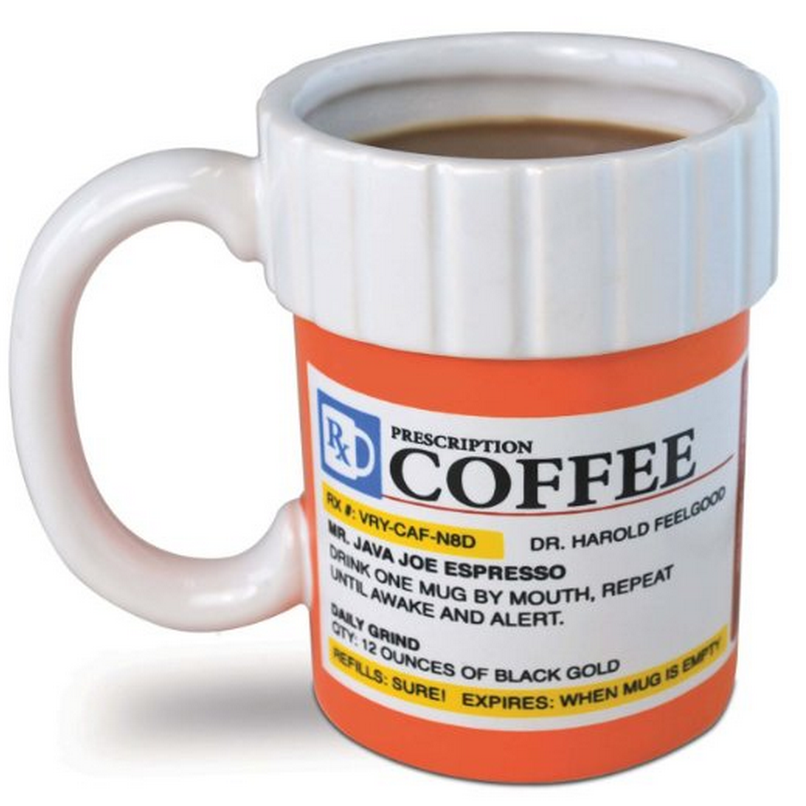
Does Coffee Trigger Cortisol Release?

coffee-prescription


Cortisol is the infamous hormone you release when you’re stressed. In high doses it inhibits brain function, slows metabolism, breaks down muscle, and increases blood pressure. Have you ever felt panicked before a public speech and forgotten everything you were going to say? That’s what a big bump in cortisol feels like. And if you’re looking for stress relief, lowering cortisol helps.

Cortisol isn’t all bad, though. In fact, it’s necessary for you to function. Cortisol peaks in the morning, helping to wake you up, and it can be a useful as an indicator of strain, letting you know when to slow down or stop something that’s stressing you out. Cortisol also decreases inflammation – that’s part of the reason your body releases it in response to, for example, a workout that tears your muscle tissue.

Low cortisol is an issue, too. Insufficient cortisol can leave you feeling tired, emotional, and anxious. As long as you avoid chronically elevated or depleted cortisol you can make the little hormone work to your advantage.

A common argument against drinking coffee is that it triggers cortisol release, but (forgive us for getting nitpicky) that may not be true. Caffeine definitely triggers cortisol release. In fact, the increase in cortisol is part of the reason caffeine makes you feel more alert.

Remember a few paragraphs ago, when we were talking about how you build a tolerance to some of caffeine’s effects but not others? Cortisol release is one of the effects to which you build tolerance. If you only take caffeine now and then, it causes a big boost in cortisol. But if you get caffeine daily (by drinking coffee every morning, for example) your body tempers the cortisol response. You still release cortisol, but not enough to worry about unless your cortisol is already out of whack.

Does coffee itself (separate from caffeine) cause cortisol release? Mycotoxins do, at least in mice, and they cause inflammation (a common trigger of cortisol release) in humans. It’s difficult to say whether mold-free coffee increases cortisol.

Regardless, studies suggest that cortisol release from caffeine is mild if you drink it daily. For most of us, that little bump shouldn’t be a problem.

From https://www.yahoo.com/health/caffeine-and-cortisol-does-coffee-1276507994071094.html

Endocrine Society Releases Guidelines on Treatment of Cushing’s Syndrome

To lessen the risk for comorbidity and death, the Endocrine Society’s newly published guidelines on the treatment of Cushing’s syndrome focus on surgical resection of the causal tumor with the goal of normalizing cortisol levels. Furthermore, there is increased emphasis on individualizing treatment options when choosing a second-line treatment.

In July 2015, the Endocrine Society published treatment guidelines to assist endocrinologists in appropriately initiating treatment or referring patients with Cushing’s syndrome to treatment. A task force of experts compiled evidence from systematic reviews and graded the strength of the recommendations.

“We hope that it will lead to improved treatment of comorbidities both before and after definitive treatment of the syndrome, and to increased individualization of patient treatment,” said chair of the task force Lynnette Nieman, MD, who is chief of the Endocrinology Consultation Service at the National Institutes of Health Clinical Center.

“There are two new drugs that were approved in 2012, and so I think that is what prompted the review. Still, medications are not the first line of treatment, but we have some new therapeutic options, and I think the idea was to help people understand where to use them,” Julie Sharpless, MD, assistant professor and director of the UNC Multidisciplinary Pituitary Adenoma Program, told Endocrinology Advisor.

“The primary treatment is surgical resection of the causal tumor(s). If that cannot be done (because the tumor is occult or metastatic) or is not successful, then the choice of secondary treatment should be individualized to the patient. The comorbidities of Cushing’s syndrome, for example hypertension and diabetes, should be treated separately as well,” Nieman said.

For example, the guidelines recommend surgical removal of the causative lesion, with the exception of cases which are unlikely to cause a drop in glucocorticoids or in patients who are not surgical candidates.

Likewise, in patients with benign unilateral adrenal adenoma, adrenalectomy by an experienced surgeon has a high rate of cure in children and adults. Because of the poor prognosis associated with adrenal carcinoma, the guidelines highlight the need for complete resection and possibly medical treatment to stabilize cortisol levels.

Other first-line treatment options include recommending surgical resection of ectopic ACTH-secreting tumors; referring to an experienced pituitary surgeon for transsphenoidal selective adenomectomy; treatments to block hormone receptors in bilateral micronodular adrenal hyperplasia; and surgical removal in bilateral adrenal disorders.

The elevated mortality rate seen in patients with Cushing’s syndrome is due to infection, venous thrombosis and cardiovascular disease (CVD). Appropriately lowering cortisol levels improves hypertension, insulin resistance, dyslipidemia and obesity in patients with Cushing’s syndrome. Therefore, the guidelines highlight the need for restoring cortisol levels and treating the associated comorbidities.

Nevertheless, the task force specifically recommends against treatment without an established diagnosis or when there are no signs of Cushing’s syndrome and hypothalamic-pituitary-adrenal laboratory studies are borderline.

In patients who are not surgical candidates or in cases of noncurative resection, the decision on whether to consider second-line treatment options such as medical therapy, radiation, bilateral adrenalectomy or repeat transsphenoidal surgery should be based on several factors. For instance, the guidelines recommend taking into consideration location and size of the tumor, patient desires, goals of treatment and level of biochemical control.

The guidelines note medical therapy should be based on cost, efficacy and individualization of treatment. Endocrinologists can approach medical therapy with a goal of establishing normal cortisol levels or reducing cortisol levels to very low levels and replacing to achieve desired levels.

Remission in Cushing’s syndrome is associated with notable improvement; however, long-term follow-up is recommended for osteoporosis, CVD and psychiatric conditions.

After treatment, patients may experience reductions in weight, blood pressure, lipids and glucose levels that may allow reduction or discontinuation of medications. Even so, patients with a history of Cushing’s syndrome tend to have higher rates of hypertension, hyperlipidemia and diabetes. Likewise, rates of myocardial infarction are higher in this population, further emphasizing the need for treatment and management of diabetes and hypertension.

Sharpless highlighted that Cushing’s syndrome is rare.

“There are multiple studies that have shown that patients do better when they are treated in a specialty center where people see a lot of cases of this. So in that sense, treatment is not usually going to fall to the general practitioner,” she said.

She continued that the guidelines are helpful and provide guidance to endocrinologist who “can’t readily refer their patient to a pituitary center.”

Sharpless went on to describe the multidisciplinary care involved in Cushing’s syndrome including endocrinologists, neurosurgeons, radiologists, counselors and radiation oncologist.

“When the care is complicated, you want to ensure all of your providers have reviewed your case together and figured out the best plan.”

The guidelines were co-sponsored by the European Society of Endocrinology. Nieman received salary support for her work on the manuscript from the Intramural Research Program of the Eunice Kennedy Shiver Institute of Child Health and Human Development. Members of the task force reported multiple disclosures.

Reference

  1. Nieman LK et al. J Clin Endocrinol Metab. 2015;100(8):2807-2831.

From http://www.endocrinologyadvisor.com/adrenal/cushings-syndrome-endocrine-society-guidelines/article/434307/