Help Advance Research for Better Cushing’s Syndrome Treatment

clinical-trials


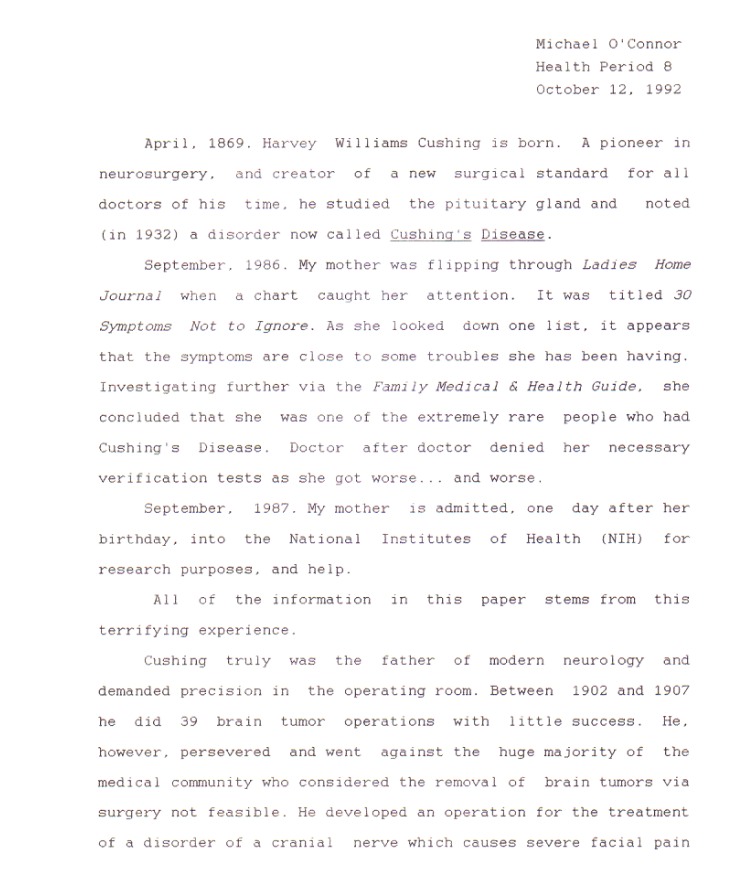
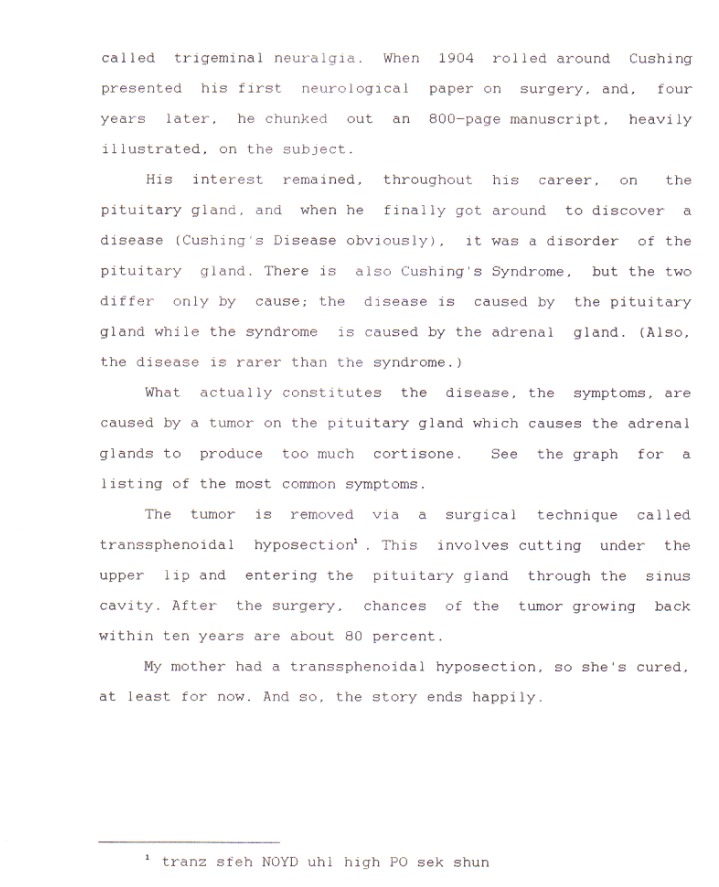
I am so passionate about Clinical Trials, especially for Cushing’s because I was only diagnosed in 1987 because I was a part of a clinical trial at the NIH.  In addition to helping myself, I knew I’d be helping other Cushies coming along after me – something positive I could do while I was at my worst.

I hope that others will consider doing Clinical Trials, if they qualify for them.  You never know who else you might help!


This trial is testing the safety and effectiveness of an investigational drug for the treatment of Cushing’s Syndrome. Under the supervision of qualified physicians, cortisol levels and symptoms of Cushing’s Syndrome will be closely followed along with any signs of side effects.

More about the study:

The study drug (COR-003) is administered by tablets.

  • There will be 90 participants in this trial
  • There is no placebo used in the trial

If you are interested, please find the full study details and eligibility criteria listed here.

Eligibility Criteria:

Participants must:

  • be at least 18 years old
  • have been diagnosed with endogenous Cushing’s Syndrome by a medical professional (not caused by the use of steroid medications)

Participants must not:

  • have been treated with radiation for Cushing’s Syndrome in the past 4 years
  • be currently using weight loss medication
  • have been diagnosed with uncontrolled hypertension, some forms of cancer, adrenal carcinoma, Hepatitis B / C, or HIV

Please complete the online questionnaire to check if you’re eligible for the trial.

If you’re not familiar with clinical trials, here are some FAQs:

What are clinical trials?

Clinical trials are research studies to determine whether investigational drugs or treatments are safe and effective for humans. All new investigational medications and devices must undergo several clinical trials, often involving thousands of people.

Why participate in a clinical trial?

You will have access to investigational treatments that would be available to the general public only upon approval. You will also receive study-related medical care and attention from clinical trial staff at research facilities. Clinical trials offer hope for many people and an opportunity to help researchers find better treatments for others in the future.

Learn why I’m talking about Clinical Trials

Patients with ARMC5 mutations: The NIH clinical experience

Screenshot 2016-05-27 13.12.55


Adrenal Disorders

R Correa, M Zilbermint, A Demidowich, F Faucz, A Berthon, J Bertherat, M Lodish, C Stratakis

Summary: Researchers conducted this study to describe the different phenotypical characteristics of patients with armadillo repeat containing 5 (ARMC5) mutations, located in 16p11.2 and a likely tumor-suppressor gene. They determined that patients with bilateral adrenal enlargement, found on imaging tests, should be screened for ARMC5 mutations, which are associated with subclinical Cushing’s syndrome (CS) and primary hyperaldosteronism (PA).

Methods:

  • Researchers identified 20 patients with ARMC5 mutations (germline and/or somatic) who were enrolled in a National Institutes of Health (NIH) protocol.
  • They obtained sociodemographic, clinical, laboratory, and radiological data for all participants.

Results:

  • Three families (with a total of 8 patients) were identified with ARMC5 germline mutations; the rest of the patients (13/20) had sporadic mutations.
  • The male to female ratio was 1.2:1; mean age was 48 years and 60% of patients were African American.
  • Forty percent of patients were diagnosed with CS, 20% with subclinical CS, 30% with hyperaldosteronism, and 10% had no diagnosis.
  • The mean serum cortisol (8 am) and Urinary Free Cortisol were 13.1 mcg/dl and 77 mcg/24 hours, respectively.
  • Nearly all patients (95%) had bilateral adrenal enlargement found on CT or MRI.
  • Patients underwent the following treatments: Bilateral adrenalectomy (45%), unilateral adrenalectomy (25%), medical treatment (20%), and no treatment (10%).
  • ARMC5 mutations are associated with primary macronodular adrenal hyperplasia (PMAH) and are also seen in patients with PA, especially among African Americans.

From http://www.mdlinx.com/endocrinology/conference-abstract.cfm/ZZ37C4C5D3BF1A4FAE9C479A696660535B/57884/?utm_source=confcoveragenl&utm_medium=newsletter&utm_content=abstract-list&utm_campaign=abstract-AACE2016&nonus=0

Rally for Medical Research Hill Day

Held every September, this Capitol Hill Day event continues the momentum established in 2013, and includes nearly 300 national organizations coming together in support of the Rally for Medical Research.

The purpose of the Rally is to call on our nation’s policymakers to make funding for National Institutes of Health (NIH) a national priority and raise awareness about the importance of continued investment in medical research that leads to MORE PROGRESS, MORE HOPE and MORE LIVES SAVED.

The next Rally for Medical Research Hill Day is Sept. 22, 2016.

Sign up to receive updates, including a link to register once it becomes available.

Delayed diagnosis, barriers to care increase morbidity in children with Cushing’s syndrome

Hispanic and black children diagnosed with Cushing’s syndrome are more likely to present with higher cortisol measurements and larger tumor size vs. white children, according to study findings presented at the annual Pediatric Academic Societies Meeting in Baltimore.

“Racial and socioeconomic disparities may contribute to the severity of disease presentation for children with Cushing’s [syndrome],” Alexandra Gkourogianni, MD, of the section on endocrinology and genetics at the Eunice Kennedy Shriver National Institute of Child Health and Human Development, and colleagues wrote. “Minority children from disadvantaged backgrounds present more frequently with comorbidities associated with longstanding [Cushing’s syndrome].”

Gkourogianni and colleagues analyzed data from 135 children treated for Cushing’s syndrome (transsphenoidal surgery) at the NIH between 1997 and 2015 (mean age, 13 years; 51% girls; 33% Hispanic or black). Researchers used a 10-point index for rating severity in pediatric Cushing’s syndrome based on predefined cutoffs; degree of hypercortisolemia, impaired glucose tolerance, and hypertension were graded on a 3-point scale (0-2); height, BMI z scores, duration of disease, and tumor invasion were graded on a 2-point scale (0-1).

Researchers found that midnight cortisol measurements were higher among Hispanic and black children vs. white children (23.3 µg/dL vs. 16 µg/dL; P = .019), as were tumor sizes (mean 6.3 mm vs. 3.3 mm; P = .016). Height standard deviation score was more severely affected in black and Hispanic children (–1.6 vs. –1.1; P = .038), and mean Cushing’s syndrome score for Hispanic and black children was higher vs. white children (4.5 vs. 3.8; P = .033).

Researchers found that median income had an independent correlation with Cushing’s syndrome score in univariate regression analysis for covariates of socioeconomic status and demographics (P = .025). Multivariable regression analysis using race, prevalence of obesity, estimated income, access to pediatric endocrinologist, age and sex confirmed that race, along with lower socioeconomic status and older age, were predictors of a higher Cushing’s syndrome score (P = .002).

“We speculate that delayed diagnosis, barriers to access to care and poorer quality health care for these underserved patients may contribute to presentation at a later age and increased morbidity,” the researchers wrote. “Additional research is needed to identify potential modifiable factors that may improve care for these patients.” – by Regina Schaffer

Reference:

Gkourogianni A, et al. Poster #445. Presented at: Pediatric Academic Societies Meeting; April 30- May 3, 2016; Baltimore.

Disclosure: Endocrine Today was unable to determine relevant financial disclosures.

From http://www.healio.com/endocrinology/adrenal/news/online/%7Be79d7c84-d539-4a04-a548-882b9f4caadd%7D/delayed-diagnosis-barriers-to-care-increase-morbidity-in-children-with-cushings-syndrome

Day 17, Cushing’s Awareness Challenge 2016


Because it’s a Sunday again, this is a semi-religious post…

After I was finished with the Cushing’s long diagnostic process, surgery and several post-op visits to NIH, I was asked to give the scripture reading at my church. The man who preached the sermon that week was the survivor of a horrific accident where he and his family were hit by a van while waiting at an airport.

I thought I had written down the scripture reading carefully. I practiced and practiced. I don’t like speaking in front of a crowd but I said I would. When I got to church, the reading was different from what I had practiced. Maybe I wrote it down wrong, maybe someone changed it. Whatever.

The real scripture turned out to be Psalm 116. I got very emotional while reading this and started crying when I got to verse 8 “For you, O LORD, have delivered my soul from death“.  Others in the congregation who knew part of my story were very moved, too.

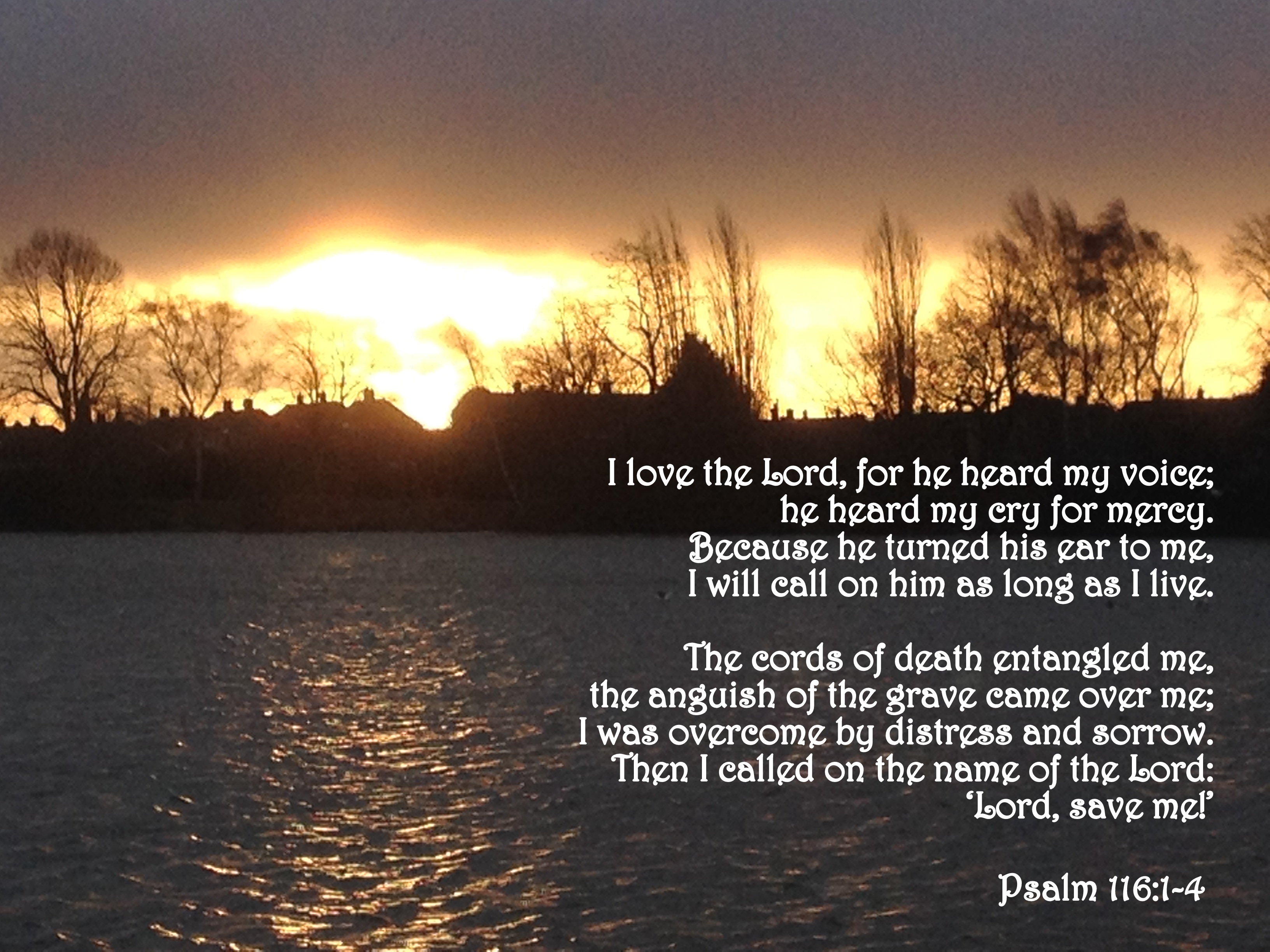
psalm-116-1-4

Psalm 116 (New International Version)

1 I love the LORD, for he heard my voice;
he heard my cry for mercy.

2 Because he turned his ear to me,
I will call on him as long as I live.

3 The cords of death entangled me,
the anguish of the grave came upon me;
I was overcome by trouble and sorrow.

4 Then I called on the name of the LORD:
“O LORD, save me!”

5 The LORD is gracious and righteous;
our God is full of compassion.

6 The LORD protects the simplehearted;
when I was in great need, he saved me.

7 Be at rest once more, O my soul,
for the LORD has been good to you.

8 For you, O LORD, have delivered my soul from death,
my eyes from tears,
my feet from stumbling,

9 that I may walk before the LORD
in the land of the living.

10 I believed; therefore I said,
“I am greatly afflicted.”

11 And in my dismay I said,
“All men are liars.”

12 How can I repay the LORD
for all his goodness to me?

13 I will lift up the cup of salvation
and call on the name of the LORD.

14 I will fulfill my vows to the LORD
in the presence of all his people.

15 Precious in the sight of the LORD
is the death of his saints.

16 O LORD, truly I am your servant;
I am your servant, the son of your maidservant;
you have freed me from my chains.

17 I will sacrifice a thank offering to you
and call on the name of the LORD.

18 I will fulfill my vows to the LORD
in the presence of all his people,

19 in the courts of the house of the LORD—
in your midst, O Jerusalem.
Praise the LORD.

This Psalm has come to have so much meaning in my life. When I saw at a book called A Musician’s Book of Psalms each day had a different psalm. “My” psalm  was listed as the reading for my birthday, so I had to buy this book!  For a while, it was the license plate on my car.

I used to carry a print out of this everywhere I go because I find it very soothing. “when I was in great need, he saved me.” This print out is in a plastic page saver but now I have this info on my phone and iPad.

On the other side there is an article I found after my kidney cancer.  You can read that article in yesterday’s post.