The Man Unable to Feel Fear

Jordy is a British man who has been dealing with Cushing’s and many surgeries.


Jordy-Cernik

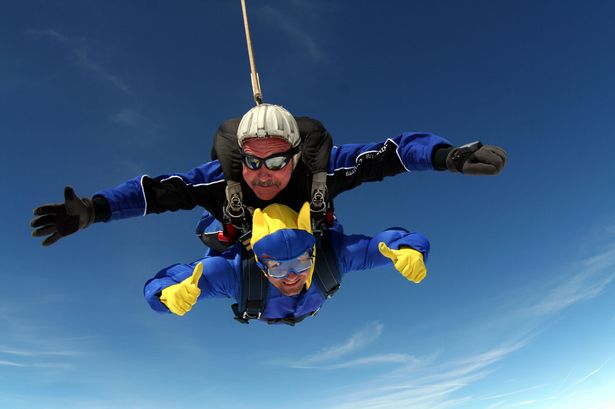
He finds rollercoasters boring, barely broke a sweat zip-wiring off the Tyne bridge and even a parachute jump did not raise his heart rate.

Just a few years ago even the thought of daredevil exploits would have terrified him, but now Jordy Cernik is frightened of nothing.

While that might sound an ideal scenario, the 38-year-old’s new-found bravery is actually the unexpected side-effect of surgery for a rare condition.

Cushing’s Syndrome resulted in the dad-of-two having an operation to remove the gland which produces adrenalin, the hormone which makes us feel scared.

He says: “I would never have had the guts to do any of this, but now nothing fazes me. I’m up for anything – I’m even thinking about doing a wing-walk on a plane too.

“I nearly did a bungee jump a few years ago, but I just couldn’t do it.

“Now I just take whatever is thrown at me and if a challenge helps me raise money for charity, the more daring the better.”

Over the past four months he has completed the parachute jump and zip-wired from the top of Newcastle’s Tyne Bridge and now he is getting ready to complete the last of a trio of challenges – next month’s Bupa Great North Run.

“The doctors didn’t tell me this could be one of the side-effects of the operation,” says Jordy. “But then the condition is so rare I don’t think they know everything about Cushing’s yet.

“Doing the skydive was the ultimate test. I thought that if I was ever going to get scared again then that would be the moment.

“But as we took off in the plane I felt nothing, and when I edged towards the door to jump I felt nothing, and even when I leapt out and pulled my parachute, I didn’t feel scared at all.

“It can be quite frustrating as well though.

“The first time I realised I had changed was when I went on the rides at a theme park with my kids and I just didn’t feel a thing. I just sat there, bored.”

However, the last of his hat-trick of challenges, the Run, will require him to push through the ever-present pain which he has endured for years as a result of Cushing’s.

Britain’s biggest mass participation event, for which The Daily Mirror is a media partner, takes place over a 13.1 mile course from Newcastle to South Shields.

But the syndrome has left Jordy, from Jarrow, near Newcastle, with arthritis, back problems and brittle bones. Worse still, the absence of adrenalin means he now lacks one of the body’s natural painkillers.

“I’m always in pain,” he says. “I’ve just had to learn to zone it out day-to-day and I’m going to have to do that even more when I’m on the run.”

Cushing’s affects around one in 50,000 people in Britain.

It causes a malfunction of the adrenal and pituitary glands which means increased amounts of corticosteroids are produced – often leading to massive, irregular weight gain.

In just three years 5ft 8in Jordy ballooned from 11st 5lb to almost 17st.

While his limbs remained slim, the former Territorial Army recruit saw the pounds pile around the major organs in his torso and head.

“I went through years of hell and I can only describe it as living in someone else’s body,” says the part-time radio presenter and events host.

“I developed this big round moon face and really quite large man boobs, which was so embarrassing.

“But there was absolutely nothing I could do about it. I could go to the gym six days a week and still couldn’t lose any of the weight.

“One of the worst things was that people would stare.

“Sometimes they’d take the mickey – often to try and make me feel better, by making light of things – but it would almost always hurt my feelings.

“And my career as a presenter suffered. I tried to play up to the character of being a big, jolly chap but I always felt I was too fat for TV, which is what I would have liked to do a lot more of.”

But it was the effect on his home life with wife Tracy, 43, and daughters Aimee, seven, and four-year-old Eive that for him was far worse.

“I had other really difficult symptoms which included profuse sweating which meant I couldn’t even hold my kids without wrapping them in towels first,” he says.

“Anyone who has children knows how hard that is, not to be able to do normal things. I often used to be in tears.

“Another symptom was extreme grumpiness, so I would find myself suddenly getting really angry and just exploding at them, plus I was always too exhausted to play with them. It was terrible.”

Jordy believes he can trace his symptoms back 15 years although his Cushing’s was only diagnosed in 2005.

He had visited his local surgery with a string of complaints, but by chance saw a different doctor one day and the syndrome was diagnosed.

“I don’t have any ill-feeling about that,” he says, “because the syndrome can be tricky to spot, partly because it is so rare.”

He went on to have both his pituitary and adrenal glands removed but needed a total of seven operations between 2005 and 2010 and not all went smoothly.

During one to remove his pituitary gland, which is inside the skull, the lining of his brain burst due to the stress of repeated surgery.

And while removing a rib to access the adrenal gland in his torso, his lung was punctured.

That wasn’t the end of the complications. He later developed severe meningitis and ended up on a life-support machine.

“But I still consider myself lucky,” he says. “The doctors told me, ‘You died twice really, you shouldn’t even be here’.”

Things have begun to look up in the past few years, however. The Cushing’s is in remission and Jordy has lost four stone.

His life hasn’t returned to normal entirely – he still has to take 30 pills a day, a cocktail of painkillers and hormones, plus drugs to slow the corrosion of his bones.

He has also been diagnosed with another rare condition, sarcoidosis, which creates nodules of irregular cells in the body and can cause serious complications. He’s convinced he has always had it but it has lain dormant until his body was at its most vulnerable.

At present the nodules can only be found on his skin and he’s being monitored to ensure that it doesn’t spread to his internal organs.

Thanks to the surgery, his life has improved enormously since 2010.

In July he had a breast reduction op which not only improved his appearance but also removed the dangerous accumulation of fat around his heart.

Part of this new chapter involves taking part in the Great North Run and raising money for the Cash for Kids appeal run by his local radio station Metro Radio.

The appeal aims to help children and young people in the North East who are disabled or have special needs, or those who suffer from abuse or neglect.

Jordy’s fundraising goal is a relatively modest £1,000, but for him joining the half marathon’s 56,000 participants on September 15 will be as rewarding as hitting his target.

“I really don’t know if I’ll be able to complete the course.” he says. “But I’m looking forward to it and I’m going to give it my best shot.

“Not feeling fear may feel like the power of a superhero, but what I really need for the Great North Run is superhero strength.”

The Bupa Great North Run is Britain’s biggest mass participation event and is organised by Nova International.

It will include world class athletes Mo Farah, Haile Gebrselassie and Kenenisa Bekele – plus 56,000 other runners.

The event is live on BBC One on Sunday 15th September between 9.30am to 13.30

For more information, visit www.greatrun.org

From  http://www.mirror.co.uk/news/real-life-stories/jordy-cernik-man-unable-fear-2208002#ixzz2cny6XeFr 

Bio Categories

Chemical structure of cortisol.

Chemical structure of cortisol. (Photo credit: Wikipedia)

List of all the categories from Cushing’s Bios

Prolactin Measure Didn’t Help Localize Pituitary Adenoma

By: SHERRY BOSCHERT, Clinical Endocrinology News Digital Network

SAN FRANCISCO – Measurements of prolactin levels during inferior petrosal sinus sampling did not help localize pituitary adenomas in patients with Cushing’s disease in a study of 28 patients, contradicting findings from a previous study of 28 patients.

The value of prolactin measurements in tumor localization using inferior petrosal sinus sampling (IPSS) remains unclear and needs further study in a larger, prospective study, Dr. Susmeeta T. Sharma said at the Endocrine Society’s Annual Meeting. The current and previous studies were retrospective analyses.

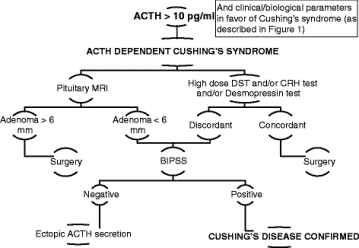
Although IPSS has been considered the standard test in patients with ACTH-dependent Cushing’s syndrome to differentiate between ectopic ACTH secretion and Cushing’s disease, there has been controversy about its value in localizing adenomas within the pituitary gland once a biochemical diagnosis of Cushing’s disease has been made. Various studies that used an intersinus ACTH ratio of 1.4 or greater before or after corticotropin-releasing hormone (CRH) stimulation have reported success rates as low as 50% and as high as 100% for tumor location.

A previous retrospective study of 28 patients with Cushing’s disease reported that adjusting the ACTH intersinus gradient by levels of prolactin before or after CRH stimulation, and combining the prolactin-adjusted ACTH intersinus ratio, improved pituitary adenoma localization. Magnetic resonance imaging (MRI) alone correctly localized the pituitary adenoma in 17 patients (61%), a prolactin-adjusted ACTH intersinus ratio of at least 1.4 improved the localization rate to 21 patients (75%), and combining MRI and the prolactin-adjusted ACTH intersinus ratio improved localization further to 23 patients, or 82% (Clin. Endocrinol. 2012;77:268-74).

The findings inspired the current retrospective study. The investigators looked at prolactin levels measured in stored petrosal and peripheral venous samples at baseline and at the time of peak ACTH levels after CRH stimulation for 28 patients with Cushing’s disease and ACTH-positive pituitary adenomas who underwent IPSS in 2007-2013. The investigators calculated prolactin-adjusted values by dividing each ACTH value by the concomitant ipsilateral prolactin value. They used an intersinus ACTH ratio of 1.4 or greater to predict tumor location.

At surgery, 26 patients had a single lateral tumor (meaning its epicenter was not in the midline), 1 patient had a central microadenoma, and 1 patient had a macroadenoma, reported Dr. Sharma of the National Institute of Child Health and Human Development, Bethesda, Md.

MRI findings accurately identified the location of 21 of the 26 lateral tumors (81%), compared with accurate localization in 18 patients using either the unadjusted ACTH intersinus ratio or the prolactin-adjusted ACTH intersinus ratio (69% for each), she said.

Incorrect tumor localization occurred with one patient using MRI alone and seven patients using either ratio. In four patients whose tumors could not be localized by MRI, the uncorrected and prolactin-adjusted ratios localized one tumor correctly and three tumors incorrectly. Only MRI correctly localized the one central microadenoma.

“We did not find any difference in localization rates by measurement of prolactin during IPSS,” she said. The small size of the study and its retrospective design invite further research in a more robust study.

Dr. Sharma reported having no financial disclosures.

From Clinical Endocrinology News

Cushing’s Disease – Rare Disease Quick Facts

cushings-diagnosis


Cushing’s disease is a rare condition due to excess cortisol levels that result from a pituitary tumor secreting adrenocorticotropic hormone (ACTH), which stimulates cortisol secretion.  Cushing’s disease should not be confused with Cushing’s syndrome which is increased cortisol levels but that increase can be due to any number of factors. However, Cushing’s disease is the most common form of Cushing’s syndrome.

Symptoms

The symptoms related to Cushing’s disease and Cushing’s syndrome are the same, since both are related to an excess of cortisol. Also, symptoms vary extensively among patients and that, with the inherent fluctuation in hormone levels make it difficult to diagnosis both conditions.

Changes in physical characteristics of the body

  • Fullness and rounding of the face
  • Added fat on back of neck (so-called “buffalo hump”)
  • Easy bruising
  • Purplish stretch marks on the abdomen (abdominal striae)
  • Excessive weight gain, especially in abdominal region
  • Red cheeks
  • Excess hair growth on the face, neck, chest, abdomen and thighs

Changes in physiology/psychology

  • Generalized weakness and fatigue
  • Menstrual disorder
  • Decreased fertility and/or sex drive
  • High blood pressure that is often difficult to treat
  • Diabetes mellitus
  • Mood and behavior disorders

Diagnosis

The early stages of Cushing’s disease may be difficult to recognize. However, if it is suspected, diagnosis is generally a 2 stage process. First to determine if cortisol levels are high, and if so, why they are high.

Tests to confirm high cortisol levels:

  • 24-hour urine cortisol
  • Dexamethasone suppression test (low dose)

Tests to determine cause:

  • Blood ACTH level
  • Brain MRI
  • Corticotropin-releasing hormone test
  • Dexamethasone suppression test (high dose)
  • Petrosal sinus sampling

Treatment

Surgery

  • Most patients with Cushing’s disease undergo surgery to remove the pituitary adenoma offers.
  • If the tumor is isolated to the pituitary, cure rates of 80-85% are common.
  • If the tumor has spread to nearby organs, cure rates of 50-55% are common.

Medicine (approved orphan drugs)

Signifor (pasireotide)

  • Approved for patients with Cushing’s disease for whom pituitary is not an option or surgery has been ineffective.
  • Signifor is a somatostatin receptor agonist that leads to inhibition of ACTY secretion (and subsequently decreased cortisol levels).

Korlym (mifepristone)

  • Approved for patients with Cushing’s syndrome who have type 2 diabetes or glucose intolerance and have failed surgery (or not candidates for surgery).
  • Korlym is a glucocorticoid receptor antagonist which in turn blocks the effects of the high levels of cortisol in the body. Korlym is used to treat high glucose levels due to elevated cortisol.

Medicines used but not indicated for Cushing’s disease include

Mitoden

ketoconazole

Metyrapone

Etomidate

Radiation

  • Radiation therapy may be used in some patients and can be very effective in controlling the growth of these tumors.

Prognosis

In most cases, treatment can cure Cushing’s disease. If not treated properly, the chronic hypercortisolism can lead to excess morbidity and mortality due to increased cardiovascular and other risk factors.

For more information

National Library of Medicine, National Institute of Health

Cushing’s Disease Information (provided by Novartis Pharmaceuticals)


Images courtesy of the open access journal Orhanet Journal for Rare Diseases.  Castinetti et al. Orphanet J Rare Dis. 2012 7:41   doi:10.1186/1750-1172-7-41

– See more at: http://www.raredr.com/front-page-medicine/articles/cushings-disease-rare-disease-quick-facts-0

Johns Hopkins Pituitary Patient Day 2013

Johns Hopkins Pituitary Patient Day

Join us on Saturday, September 28, 2013, for the 5th Annual Patient Education Day at the Johns Hopkins Pituitary Center.

When: Saturday, September 28, 2013
Time: 9:30 a.m.
Location:
Johns Hopkins Mt. Washington Conference Center
5801 Smith Avenue
Baltimore, MD 21209
map and directions

Location of the pituitary gland in the human brain

Location of the pituitary gland in the human brain (Photo credit: Wikipedia)

Patient Education Day Agenda:
9:30 – 10:00 AM REGISTRATION
10:00 – 10:25 AM What is the pituitary gland, where it is located, what it does, and what can go wrong Gary Wand, MD
10:30 – 10:50 AM How pituitary tumors can affect your vision Prem Subramanian, MD, PhD
Vivek Patel, MD, PhD
10:50 – 11:10 AM Cushing disease journey: a patient’s perspective Stacey Hardy
11:15 – 11:40 AM Surgery for Pituitary tumors: from very tiny to very large Alfredo Quinones-Hinojosa, MD
Gary Gallia, MD, PhD
Alessandro Olivi, MD
11:40 – 12:00 PM Radiation therapy: when, why, and how Lawrence Kleinberg, MD
Kristen Redmond, MD
12:05 – 12:25 PM The medications you may be taking (new and old ones): what you need to know Roberto Salvatori, MD
12:30 – 1:25 PM Lunch
1:30 – 3:00 PM PM Round table sessions:
1) Medical therapy (Wand/Salvatori)
2) Surgical therapy (Quinones/Gallia/Olivi)
3) Radiation therapy (Redmond/Kleinberg/Lim)
4) Vision issues (Subramanian/Patel)

*This schedule is subject to change

Please R.S.V.P. by September 13, 2013, vie email (preferred) to PituitaryDay@jhmi.edu  or to Alison Dimick at 410-955-3921.

Reservations will be taken on a first-come, first-serve basis.