Day 8, Cushing’s Awareness Challenge

It’s Here!

Dr. Cushing was born in Cleveland Ohio. The fourth generation in his family to become a physician, he showed great promise at Harvard Medical School and in his residency at Johns Hopkins Hospital (1896 to 1900), where he learned cerebral surgery under William S. Halsted.

After studying a year in Europe, he introduced the blood pressure sphygmomanometer to the U.S.A. He began a surgical practice in Baltimore while teaching at Johns Hopkins Hospital (1901 to 1911), and gained a national reputation for operations such as the removal of brain tumors. From 1912 until 1932 he was a professor of surgery at Harvard Medical School and surgeon in chief at Peter Bent Brigham Hospital in Boston, with time off during World War I to perform surgery for the U.S. forces in France; out of this experience came his major paper on wartime brain injuries (1918). In addition to his pioneering work in performing and teaching brain surgery, he was the reigning expert on the pituitary gland since his 1912 publication on the subject; later he discovered the condition of the pituitary now known as “Cushing’s disease“.

Read more about Dr. Cushing

Today, April 8th, is Cushing’s Awareness Day. Please wear your Cushing’s ribbons, t-shirts, awareness bracelets or Cushing’s colors (blue and yellow) and hand out Robin’s wonderful Awareness Cards to get a discussion going with anyone who will listen.

And don’t just raise awareness on April 8.  Any day is a good day to raise awareness.


harvey-book

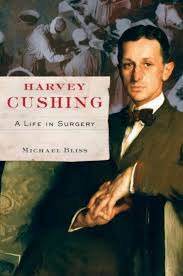
I found this biography fascinating!

I found Dr. Cushing’s life to be most interesting. I had previously known of him mainly because his name is associated with a disease I had – Cushing’s. This book doesn’t talk nearly enough about how he came to discover the causes of Cushing’s disease, but I found it to be a valuable resource, anyway.
I was so surprised to learn of all the “firsts” Dr. Cushing brought to medicine and the improvements that came about because of him. Dr. Cushing introduced the blood pressure sphygmomanometer to America, and was a pioneer in the use of X-rays.

He even won a Pulitzer Prize. Not for medicine, but for writing the biography of another Doctor (Sir William Osler).

Before his day, nearly all brain tumor patients died. He was able to get the number down to only 5%, unheard of in the early 1900s.

This is a very good book to read if you want to learn more about this most interesting, influential and innovative brain surgeon.


What Would Harvey Say?

harvey-book

(BPT) – More than 80 years ago renowned neurosurgeon, Dr. Harvey Cushing, discovered a tumor on the pituitary gland as the cause of a serious, hormone disorder that leads to dramatic physical changes in the body in addition to life-threatening health concerns. The discovery was so profound it came to be known as Cushing’s disease. While much has been learned about Cushing’s disease since the 1930s, awareness of this rare pituitary condition is still low and people often struggle for years before finding the right diagnosis.

Read on to meet the man behind the discovery and get his perspective on the present state of Cushing’s disease.

* What would Harvey Cushing say about the time it takes for people with Cushing’s disease to receive an accurate diagnosis?

Cushing’s disease still takes too long to diagnose!

Despite advances in modern technology, the time to diagnosis for a person with Cushing’s disease is on average six years. This is partly due to the fact that symptoms, which may include facial rounding, thin skin and easy bruising, excess body and facial hair and central obesity, can be easily mistaken for other conditions. Further awareness of the disease is needed as early diagnosis has the potential to lead to a more favorable outcome for people with the condition.

* What would Harvey Cushing say about the advances made in how the disease is diagnosed?

Significant progress has been made as several options are now available for physicians to use in diagnosing Cushing’s disease.

In addition to routine blood work and urine testing, health care professionals are now also able to test for biochemical markers – molecules that are found in certain parts of the body including blood and urine and can help to identify the presence of a disease or condition.

* What would Harvey Cushing say about disease management for those with Cushing’s disease today?

Patients now have choices but more research is still needed.

There are a variety of disease management options for those living with Cushing’s disease today. The first line and most common management approach for Cushing’s disease is the surgical removal of the tumor. However, there are other management options, such as medication and radiation that may be considered for patients when surgery is not appropriate or effective.

* What would Harvey Cushing say about the importance of ongoing monitoring in patients with Cushing’s disease?

Routine check-ups and ongoing monitoring are key to successfully managing Cushing’s disease.

The same tests used in diagnosing Cushing’s disease, along with imaging tests and clinical suspicion, are used to assess patients’ hormone levels and monitor for signs and symptoms of a relapse. Unfortunately, more than a third of patients experience a relapse in the condition so even patients who have been surgically treated require careful long-term follow up.

* What would Harvey Cushing say about Cushing’s disease patient care?

Cushing’s disease is complex and the best approach for patients is a multidisciplinary team of health care professionals working together guiding patient care.

Whereas years ago patients may have only worked with a neurosurgeon, today patients are typically treated by a variety of health care professionals including endocrinologists, neurologists, radiologists, mental health professionals and nurses. We are much more aware of the psychosocial impact of Cushing’s disease and patients now have access to mental health professionals, literature, patient advocacy groups and support groups to help them manage the emotional aspects of the disease.

Learn More

Novartis is committed to helping transform the care of rare pituitary conditions and bringing meaningful solutions to people living with Cushing’s disease. Recognizing the need for increased awareness, Novartis developed the “What Would Harvey Cushing Say?” educational initiative that provides hypothetical responses from Dr. Cushing about various aspects of Cushing’s disease management based on the Endocrine Society’s Clinical Guidelines.

For more information about Cushing’s disease, visit www.CushingsDisease.com or watch educational Cushing’s disease videos on the Novartis YouTube channel at www.youtube.com/Novartis.

From http://www.jsonline.com/sponsoredarticles/health-wellness/what-would-harvey-cushing-say-about-cushings-disease-today8087390508-253383751.html

Day 1: Cushing’s Awareness Challenge

April is always Cushing’s Awareness Challenge month because Dr. Harvey Cushing was born on April 8th, 1869.

30-posts

Thanks to Robin for this wonderful past logo!  I’ve participated in these 30 days for Cushing’s Awareness several times so I’m not quite sure what is left to say this year but I always want to get the word out when I can.

As I see it, there have been some strides the diagnosis or treatment of Cushing’s since last year.  More drug companies are getting involved, more doctors seem to be willing to test, a bit more awareness, maybe.


April Fool's Day

How fitting that this challenge should begin on April Fool’s Day.  So much of Cushing’s  Syndrome/Disease makes us Cushies seem like we’re the April Fool.  Maybe, just maybe, it’s the doctors who are the April Fools…

Doctors tell us Cushing’s is too rare – you couldn’t possibly have it.  April Fools!

All you have to do is exercise and diet.  You’ll feel better.  April Fools!

Those bruises on your legs?  You’re just clumsy. April Fools!

Sorry you’re growing all that hair on your chin.  That happens as you age, you know.  April Fools!

Did you say you sleep all day?  You’re just lazy.  If you exercised more, you’d have more energy. April Fools!

You don’t have stretch marks.  April Fools!

You have stretch marks but they are the wrong [color/length/direction] April Fools!

The hump on the back of your neck is from your poor posture. April Fools!

Your MRI didn’t show a tumor.  You couldn’t have Cushing’s. April Fools!

This is all in your mind.  Take this prescription for antidepressants and go home.  April Fools!

If you have this one surgery, your life will get back to normal within a few months. April Fools!

What?  You had transsphenoidal surgery for Cushing’s?  You wasted your time and money. April Fools!

I am the doctor.  I know everything.  Do not try to find out any information online. You could not have Cushing’s.  It’s too rare…  April FOOL!

All this reminds me of a wonderful video a message board member posted a while ago:

So now – who is the April Fool?  It wasn’t me.  Don’t let it be you, either!

New discoveries offer possible Cushing’s disease cure

LOS ANGELES — More than a century has passed since the neurosurgeon and pathologist Harvey Cushing first discovered the disease that would eventually bear his name, but only recently have several key discoveries offered patients with the condition real hope for a cure, according to a speaker here.

There are several challenges clinicians confront in the diagnosis and treatment of Cushing’s disease, Shlomo Melmed, MB, ChB, FRCP, MACP, dean, executive vice president and professor of medicine at Cedars-Sinai Medical Center in Los Angeles, said during a plenary presentation. Patients who present with Cushing’s disease typically have depression, impaired mental function and hypertension and are at high risk for stroke, myocardial infarction, thrombosis, dyslipidemia and other metabolic disorders, Melmed said. Available therapies, which range from surgery and radiation to the somatostatin analogue pasireotide (Signifor LAR, Novartis), are often followed by disease recurrence. Cushing’s disease is fatal without treatment; the median survival if uncontrolled is about 4.5 years, Melmed said.

“This truly is a metabolic, malignant disorder,” Melmed said. “The life expectancy today in patients who are not controlled is apparently no different from 1930.”

The outlook for Cushing’s disease is now beginning to change, Melmed said. New targets are emerging for treatment, and newly discovered molecules show promise in reducing the secretion of adrenocorticotropic hormone (ACTH) and pituitary tumor size.

“Now, we are seeing the glimmers of opportunity and optimism, that we can identify specific tumor drivers — SST5, [epidermal growth factor] receptor, cyclin inhibitors — and we can start thinking about personalized, precision treatment for these patients with a higher degree of efficacy and optimism than we could have even a year or 2 ago,” Melmed said. “This will be an opportunity for us to broaden the horizons of our investigations into this debilitating disorder.”

Challenges in diagnosis, treatment

Overall, about 10% of the U.S. population harbors a pituitary adenoma, the most common type of pituitary disorder, although the average size is only about 6 mm and 40% of them are not visible, Melmed said. In patients with Cushing’s disease, surgery is effective in only about 60% to 70% of patients for initial remission, and overall, there is about a 60% chance of recurrence depending on the surgery center, Melmed said. Radiation typically leads to hypopituitarism, whereas surgical or biochemical adrenalectomy is associated with adverse effects and morbidity. Additionally, the clinical features of hypercortisolemia overlap with many common illnesses, such as obesity, hypertension and type 2 diabetes.

“There are thousands of those patients for every patient with Cushing’s disease who we will encounter,” Melmed said.

The challenge for the treating clinician, Melmed said, is to normalize cortisol and ACTH with minimal morbidity, to resect the tumor mass or control tumor growth, preserve pituitary function, improve quality of life and achieve long-term control without recurrence.

“This is a difficult challenge to meet for all of us,” Melmed said.

Available options

Pituitary surgery is typically the first-line option offered to patients with Cushing’s disease, Melmed said, and there are several advantages, including rapid initial remission, a one-time cost and potentially curing the disease. However, there are several disadvantages with surgery; patients undergoing surgery are at risk for postoperative venous thromboembolism, persistent hypersecretion of ACTH, adenoma persistence or recurrence, and surgical complications.

Second-line options are repeat surgery, radiation, adrenalectomy or medical therapy, each with its own sets of pros and cons, Melmed said.

“The reality of Cushing’s disease — these patients undergo first surgery and then recur, second surgery and then recur, then maybe radiation and then recur, and then they develop a chronic illness, and this chronic illness is what leads to their demise,” Melmed said. “Medical therapy is appropriate at every step of the spectrum.”

Zebrafish clues

Searching for new options, Melmed and colleagues introduced a pituitary tumor transforming gene discovered in his lab into zebrafish, which caused the fish to develop the hallmark features of Cushing’s disease: high cortisol levels, diabetes and cardiovascular disease. In the fish models, researchers observed that cyclin E activity, which drives the production of ACTH, was high.

Melmed and colleagues then screened zebrafish larvae in a search for cyclin E inhibitors to derive a therapeutic molecule and discovered R-roscovitine, shown to repress the expression of proopiomelanocortin (POMC), the pituitary precursor of ACTH.

In fish, mouse and in vitro human cell models, treatment with R-roscovitine was associated with suppressed corticotroph tumor signaling and blocked ACTH production, Melmed said.

“Furthermore, we asked whether or not roscovitine would actually block transcription of the POMC gene,” Melmed said. “It does. We had this molecule (that) suppressed cyclin E and also blocks transcription of POMC leading to blocked production of ACTH.”

In a small, open-label, proof-of-principal study, four patients with Cushing’s disease who received roscovitine for 4 weeks developed normalized urinary free cortisol, Melmed said.

Currently, the FDA Office of Orphan Products Development is funding a multicenter, phase 2, open-label clinical trial that will evaluate the safety and efficacy of two of three potential doses of oral roscovitine (seliciclib) in patients with newly diagnosed, persistent or recurrent Cushing disease. Up to 29 participants will be treated with up to 800 mg per day of oral seliciclib for 4 days each week for 4 weeks and enrolled in sequential cohorts based on efficacy outcomes.

“Given the rarity of the disorder, it will probably take us 2 to 3 years to recruit patients to give us a robust answer,” Melmed said. “This zebrafish model was published in 2011, and we are now in 2019. It has taken us 8 years from publication of the data to, today, going into humans with Cushing’s. Hopefully, this will light the pathway for a phase 2 trial.”

 Offering optimism’

Practitioners face a unique paradigm when treating patients with Cushing’s disease, Melmed said. Available first- and second-line therapy options often are not a cure for many patients, who develop multimorbidity and report a low quality of life.

“Then, we are kept in this difficult cycle of what to do next and, eventually, running out of options,” Melmed said. “Now, we can look at novel, targeted molecules and add those to our armamentarium and at least offer our patients the opportunity to participate in trials, or at least offer the optimism that, over the coming years, there will be a light at the end of the tunnel for their disorder.”

Melmed compared the work to Lucas Cranach’s Fons Juventutis (The Fountain of Youth). The painting, completed in 1446, shows sick people brought by horse-drawn ambulance to a pool of water, only to emerge happy and healthy.

“He was imagining this ‘elixir of youth’ (that) we could offer patients who are very ill and, in fact, that is what we as endocrinologists do,” Melmed said. “We offer our patients these elixirs. These Cushing’s patients are extremely ill. We are trying with all of our molecular work and our understanding of pathogenesis and signaling to create this pool of water for them, where they can emerge with at least an improved quality of life and, hopefully, a normalized mortality. That is our challenge.” – by Regina Schaffer

Reference:

Melmed S. From zebrafish to humans: translating discoveries for the treatment of Cushing’s disease. Presented at: AACE Annual Scientific and Clinical Congress; April 24-28, 2019; Los Angeles.

Disclosure: Melmed reports no relevant financial disclosures.


From https://www.healio.com/endocrinology/neuroendocrinology/news/online/%7B585002ad-640f-49e5-8d62-d1853154d7e2%7D/new-discoveries-offer-possible-cushings-disease-cure

Mild Cases of Cushing’s Syndrome Present Diagnostic Challenges

By Tori Rodriguez, MA, LPC


In the early 20th century, the term “pluriglandular syndrome” was coined by Harvey Cushing to describe the disorder that results from chronic tissue exposure to excessive levels of glucocorticoids.1 Now called Cushing’s syndrome, the condition affects an estimated 10-15 million people annually, most often women and individuals between the ages of 20 and 50 years.2 Risk factors and common comorbidities include hypertension, obesity, osteoporosis, uncontrolled diabetes, depression, and anxiety.3

Presentation

The clinical presentation of the disorder is heterogenous and varies by sex, age, and disease severity. Common signs and symptoms include central adiposity, roundness of the face or extra fat around the neck, thin skin, impaired short-term memory and concentration, irritability, hirsutism in women, fatigue, and menstrual irregularity.4 Because each of these features may be observed in a wide range of other conditions, it may be difficult to diagnose cases that are not severe.

“It can be challenging to differentiate the milder forms from pseudo-Cushing’s states,” which are characterized by altered cortisol production and many of the same clinical features as Cushing’s syndrome, according to Roberto Salvatori, MD, the medical director of the Johns Hopkins Pituitary Center, Baltimore, Maryland. These may include alcoholism, obesity, eating disorders, and depression. “Because Cushing’s can cause depression, for example, it is sometimes difficult to determine which came first,” he says. In these states, however, hypercortisolism is believed to be driven by increased secretion of hypothalamic corticotropin-releasing hormone, which is suppressed in Cushing’s syndrome.5

Causes and Diagnosis

If Cushing’s syndrome is suspected on the basis of the patient’s physical appearance, the diagnostic workup should include a thorough medical history, physical exam, and 1 or more of the following tests to establish hypercortisolism: the 24-hour urinary cortisol test, the low-dose dexamethasone suppression test, or the late-night salivary cortisol test. “We sometimes use 2 or 3 of these tests since 1 may not accurately reflect cortisol production in a particular patient,” Dr Salvatori notes. The next step is to determine the source of the hypercortisolism, which may involve the high-dose dexamethasone suppression test, magnetic resonance imaging, or petrosal sinus sampling.2

Medication is the most common cause of Cushing’s syndrome. These iatrogenic or exogenous cases typically result from corticosteroids administered for conditions such as asthma, allergies, and autoimmune disorders.6 More rarely, the disorder can be caused by the use of medroxyprogesterone. In these cases, corticosteroids should be reduced or discontinued under medical care, if possible.

Endogenous Cushing’s syndrome results from the presence of benign or malignant tumors on the adrenal or pituitary glands or elsewhere in the body. These tumors can interfere with the adrenal glands’ production of cortisol that is usually prompted by the adrenocorticotropic hormone (ACTH) released by the pituitary gland.6 There are 3 different mechanisms by which the process can occur.

  • Pituitary adenomas, which account for approximately 70% of endogenous cases of Cushing’s syndrome, secrete ACTH and stimulate additional cortisol production. Because of the large proportion of cases this condition represents, it is specifically referred to as Cushing’s disease. It is more common in women than men (with a ratio of 3 to 4:1), although in pediatric patients, it occurs more frequently in boys vs girls.5
  • Adrenal tumors (adenomas, malignant tumors, or micronodular hyperplasia) produce cortisol in their own tissue in addition to the amount produced by the adrenal glands. These tumors, which cause approximately 15% of endogenous Cushing’s syndrome cases, are more common in children vs adults and in women vs men.
  • Benign or malignant tumors elsewhere in the body, most often the lungs, thyroid, thymus, and pancreas, secrete ACTH and trigger the excessive release of cortisol. An estimated 15% of endogenous cases are attributed to these types of tumors.

Treatment

Surgery is the first-line treatment for Cushing’s syndrome. “We first want to try to figure out the cause of the disorder,” Dr Salvatori says. “Ideally, treatment involves surgery to remove the tumor that is causing it.”

When surgery is unsuccessful, contraindicated, or delayed, other treatment options include radiation or medications that inhibit cortisol, modulate the release of ACTH, or inhibit steroidogenesis.5 Bilateral adrenalectomy may be indicated for patients who do not respond to medication or other surgery.

If surgical resection of the tumor is successful, then “all of the comorbidities reverse, but if it is unsuccessful or must be delayed, you would treat each comorbidity” with the appropriate medication; for example, antihypertensives for high blood pressure and antidiabetic medications for diabetes, Dr Salvatori advises. In severe cases, prophylactic antibiotics may be indicated for the prevention of severe infections such as pneumonia.

It is also important to inquire about and address psychiatric symptoms related to Cushing’s syndrome, even in patients who are in remission. It has been proposed that the chronic hypercortisolism and dysfunction of the HPA axis may “lead to structural and functional changes in the central nervous system, developing brain atrophy, particularly in the hippocampus, which may determine the high prevalence of psychiatric disorders, such as affective and anxiety disorders or cognitive dysfunctions,” according to a recently published paper on the topic.7 Patients should be screened with self-report questionnaires such as the Beck Depression Inventory and the Hospital Anxiety and Depression Scale, and management of psychiatric symptoms may include patient education, psychotropic medications, and referral to a mental health professional.

Future Directions

Several trials are currently planned or underway, including a phase 2 randomized, double-blind, placebo-controlled study of an oral medication called ATR-101 by Millendo Therapeutics, Inc. (ClinicalTrials.gov identifier: NCT03053271). In addition to the need for novel medical therapies, refined imaging techniques could improve surgical success rates in patients with Cushing’s disease in particular, according to Dr Salvatori. “A significant portion of these patients have tumors too small to be detected by MRI, and the development of more sensitive MRI could improve detection and provide a surgical target” for neurosurgeons treating the patients, he says.

Summary

Milder cases of Cushing’s syndrome present diagnostic challenges are a result overlapping features with various other conditions. Diagnosis may require careful observation as well as biochemical and imaging tests.

References

  1. Loriaux DL. Diagnosis and differential diagnosis of Cushing’s syndromeN Engl J Med. 2017;376:1451-1459. doi:10.1056/NEJMra1505550
  2. American Association of Neurological Surgeons. Cushing’s syndrome/disease. http://www.aans.org/Patients/Neurosurgical-Conditions-and-Treatments/Cushings-Disease. Accessed August 1, 2017.
  3. León-Justel A, Madrazo-Atutxa A, Alvarez-Rios AI, et al. A probabilistic model for cushing’s syndrome screening in at-risk populations: a prospective multicenter studyJ Clin Endocrinol Metab. 2016;101:3747-3754. doi:10.1210/jc.2016-1673
  4. The Pituitary Society. Cushing’s syndrome and disease–symptoms. https://pituitarysociety.org/patient-education/pituitary-disorders/cushings/symptoms-of-cushings-disease-and-cushings-syndrome. Accessed August 1, 2017.
  5. Sharma ST, Nieman LK, Feelders RA. Cushing’s syndrome: epidemiology and developments in disease managementClin Epidemiol. 2015;7:281-293. doi:10.2147/CLEP.S44336
  6. National Institutes of Health: Eunice Kennedy Shriver National Institute of Child Health and Human Development. What causes Cushing’s syndrome?https://www.nichd.nih.gov/health/topics/cushing/conditioninfo/pages/causes.aspx. Accessed August 1, 2017.
  7. Santos A, Resmini E, Pascual JC, Crespo I, Webb SM. Psychiatric symptoms in patients with Cushing’s syndrome: prevalence, diagnosis and management. Drugs. 2017;77:829-842. doi:10.1007/s40265-017-0735-z

From http://www.endocrinologyadvisor.com/adrenal/cushings-syndrome-diagnosis-treatment/article/682302/

Cataloging Cushing’s Patients

The Cushing/Whitney Medical Library is pleased to announce the completion of a grant funded to catalog 2,600 glass plate negatives from the Cushing Brain Tumor Registry.  The grant proposal, “Rethinking Early Neurosurgery: The Harvey Cushing Collection,” was funded through a National Network of Libraries of Medicine-New England Region Knowledge/Data Management Award.  From mid-February through April 30th 2017,  a team of graduate and undergraduate students carefully inputted information on over 3,000 glass plate negatives into the Cushing Center database, exceeding the estimated amount in the grant. The negatives depict Dr. Harvey Cushing’s patients, including histology.

Harvey Cushing, the pioneer and father of neurosurgery, was born on April 8, 1869 in Cleveland, Ohio. He graduated from Yale University in 1891, studied medicine at Harvard Medical School and received his medical degree in 1895. In 1896, he moved to Johns Hopkins Hospital where he trained to become a surgeon under the watchful eye of William S. Halstead, the father of American surgery. By 1899 Cushing became interested in surgery of the nervous system and began his career in neurosurgery. During his tenure at Johns Hopkins, there were countless discoveries in the field of neuroscience.

In 1913, Cushing relocated to Harvard as the surgeon-in-chief at the new Peter Bent Brigham Hospital. Cushing continued to operate on several hundred patients a year with remarkable results.  In addition he was relentless in his recording of patient histories and continued his careful attention to the details and documentation of each surgery.

In 1932 Harvey Cushing retired and in 1933 he agreed to join the staff at Yale University, his alma mater, as the Sterling Professor of Medicine in Neurology.  Cushing died in 1939.

The negatives are undergoing rehousing and digitization, and will be made available for research through the Cushing Center database, which brings multiple parts of Harvey Cushing’s work together in one place.  The database, still in development, will allow researchers to explore Cushing’s medical work and patients.  Please contact Terry Dagradi, Cushing Center Coordinator, for details.


From http://library.medicine.yale.edu/blog/cushing-center/cataloging-cushings-patients