Cushing’s Awareness Challenge, Day 4

Another idea I borrowed from Robin – using a Wordle as inspiration for today’s post.
Even though I’m “in remission” since 1987, I’m still way too fatigued, napping every afternoon for several hours.  People think I should be normal since my pituitary surgery was so long ago.  Well, no.
me-tired
Just a few days ago, I posted this abstract on Severe fatigue in patients with adrenal insufficiency.  I don’t think that they needed to do this study at all.  Just ask any Cushie!

Abstract

BACKGROUND:

Fatigue is a frequently experienced complaint in patients with adrenal insufficiency (AI) and may be influenced by cortisol levels.

AIM:

The objective of this study was to determine the prevalence of severe fatigue in adrenal insufficiency (AI) patients, to assess which dimensions contribute to fatigue severity and to determine the association between salivary cortisol levels and momentary fatigue.

SUBJECTS AND METHODS:

We performed a cross-sectional study in the outpatient department of a university hospital. Included were 27 patients with congenital adrenal hyperplasia (CAH), 26 patients with primary AI (PAI), 24 patients with secondary AI (SAI) and 31 patients with adrenal insufficiency after treatment for Cushing’s syndrome (Cush-AI). Measurements included computerised questionnaires to determine fatigue severity and physical and psychosocial contributors. Patients took four saliva samples at home, in which cortisol levels were measured.

RESULTS:

Severe fatigue was experienced by 41 % of the CAH patients, 42 % of the PAI patients, 50 % of the SAI patients and 42 % of the Cush-AI patients. Psychological distress, functional impairment, sleep disturbance, physical activity, concentration problems and social functioning contributed to the subjective experience of fatigue. Salivary cortisol levels were not correlated with momentary fatigue.

CONCLUSIONS:

A considerable proportion of AI patients experience severe fatigue. Salivary cortisol level is not a significant predictor for momentary fatigue in AI patients.

PMID:
24615365
[PubMed – in process]

From http://www.ncbi.nlm.nih.gov/pubmed/24615365


Back to my nap now…

maryo colorful zebra

Cushing’s Awareness Challenge, Day 3: Symptoms

robin-symptoms


Robin has made another excellent graphic of some of the symptoms of Cushing’s.  There are far too many to be listed in any image, as shown by the list at http://www.cushings-help.com/toc.htm#symptoms


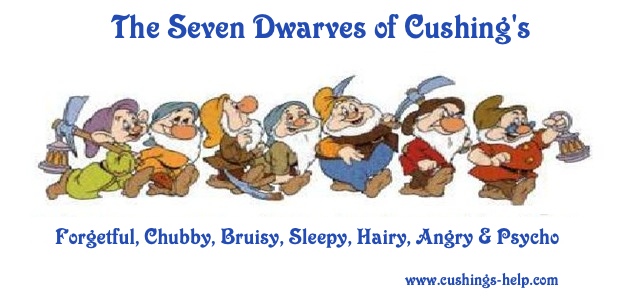
Just to be silly, a few years ago, I did my own version of Cushing’s symptoms:


The Seven Dwarves of Cushing's

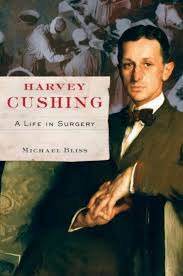
What would Harvey Cushing say about Cushing’s disease today?

harvey-book

(BPT) – More than 80 years ago renowned neurosurgeon, Dr. Harvey Cushing, discovered a tumor on the pituitary gland as the cause of a serious, hormone disorder that leads to dramatic physical changes in the body in addition to life-threatening health concerns. The discovery was so profound it came to be known as Cushing’s disease. While much has been learned about Cushing’s disease since the 1930s, awareness of this rare pituitary condition is still low and people often struggle for years before finding the right diagnosis.

Read on to meet the man behind the discovery and get his perspective on the present state of Cushing’s disease.

* What would Harvey Cushing say about the time it takes for people with Cushing’s disease to receive an accurate diagnosis?

Cushing’s disease still takes too long to diagnose!

Despite advances in modern technology, the time to diagnosis for a person with Cushing’s disease is on average six years. This is partly due to the fact that symptoms, which may include facial rounding, thin skin and easy bruising, excess body and facial hair and central obesity, can be easily mistaken for other conditions. Further awareness of the disease is needed as early diagnosis has the potential to lead to a more favorable outcome for people with the condition.

* What would Harvey Cushing say about the advances made in how the disease is diagnosed?

Significant progress has been made as several options are now available for physicians to use in diagnosing Cushing’s disease.

In addition to routine blood work and urine testing, health care professionals are now also able to test for biochemical markers – molecules that are found in certain parts of the body including blood and urine and can help to identify the presence of a disease or condition.

* What would Harvey Cushing say about disease management for those with Cushing’s disease today?

Patients now have choices but more research is still needed.

There are a variety of disease management options for those living with Cushing’s disease today. The first line and most common management approach for Cushing’s disease is the surgical removal of the tumor. However, there are other management options, such as medication and radiation that may be considered for patients when surgery is not appropriate or effective.

* What would Harvey Cushing say about the importance of ongoing monitoring in patients with Cushing’s disease?

Routine check-ups and ongoing monitoring are key to successfully managing Cushing’s disease.

The same tests used in diagnosing Cushing’s disease, along with imaging tests and clinical suspicion, are used to assess patients’ hormone levels and monitor for signs and symptoms of a relapse. Unfortunately, more than a third of patients experience a relapse in the condition so even patients who have been surgically treated require careful long-term follow up.

* What would Harvey Cushing say about Cushing’s disease patient care?

Cushing’s disease is complex and the best approach for patients is a multidisciplinary team of health care professionals working together guiding patient care.

Whereas years ago patients may have only worked with a neurosurgeon, today patients are typically treated by a variety of health care professionals including endocrinologists, neurologists, radiologists, mental health professionals and nurses. We are much more aware of the psychosocial impact of Cushing’s disease and patients now have access to mental health professionals, literature, patient advocacy groups and support groups to help them manage the emotional aspects of the disease.

Learn More

Novartis is committed to helping transform the care of rare pituitary conditions and bringing meaningful solutions to people living with Cushing’s disease. Recognizing the need for increased awareness, Novartis developed the “What Would Harvey Cushing Say?” educational initiative that provides hypothetical responses from Dr. Cushing about various aspects of Cushing’s disease management based on the Endocrine Society’s Clinical Guidelines.

For more information about Cushing’s disease, visit www.CushingsDisease.com or watch educational Cushing’s disease videos on the Novartis YouTube channel at www.youtube.com/Novartis.


From http://www.jsonline.com/sponsoredarticles/health-wellness/what-would-harvey-cushing-say-about-cushings-disease-today8087390508-253383751.html

Salivary cortisol performs better than urinary free cortisol to diagnose Cushing’s syndrome

Late-night salivary cortisol has a better performance than urinary free cortisol in the diagnosis of Cushing’s syndrome.

Salimetrics highlights a recent study:  Abstract

Context: The comparison of variability, reproducibility, and diagnostic performance of late-night salivary cortisol (LNSF) and urinary free cortisol (UFC) using concurrent and consecutive samples in Cushing’s syndrome (CS) is lacking.

Objectives, Patients and Methods: In a prospective study, we evaluate three simultaneous and consecutive samples of LNSF by RIA and UFC by LC-MS/MS in Cushing’s disease (CD; n=43), adrenal CS patients (n=9) and obese subjects (n=18) in order to compare their diagnostic performances. In CS patients we also performed a modified Cushing’s syndrome severity index (CSI).

Results: There was no difference in the coefficient of variation (%) between LNSF and UFC among the three samples obtained for each patient with CD (35±26vs31±24), adrenal CS (28±14vs22±14) and obesity (39±37vs48±20). LNSF confirmed the diagnosis of hypercortisolism even in the presence of normal UFC in 17.3% of CS, whereas the inverse situation was not observed for UFC. The area under the ROC curves for LNSF was 0.999 (95%CI 0.990-1.00) and for UFC was 0.928 (95%CI 0.809- 0.987). The ratio between AUCs was 0.928 (95%CI 0.810-0.988) indicating better performance of LNSF than UFC in diagnosing CS. There was no association between the severity of CSI and the degree of biochemical hypercortisolism.

Conclusion: Our data show that despite similar variability between both methods, LNSF has a superior diagnostic performance than UFC and should be used as the primary biochemical diagnostic test for Cushing’s syndrome diagnosis.

Authors Elias P, Martinez E, Barone B, Mermejo L, Castro M, Moreira A
Division of Endocrinology-Department of Medicine and Division of Statistics- Department of Social Medicine, Ribeirao Preto Medical School – University of Sao Paulo, Ribeirao Preto, SP- Brazil
LINK to Paper
Salimetrics guide to Cortisol
LINK to Salimetrics Diagnostic Salivary Cortisol Assay

Through The Art Of Makeup, People With Rare Pituitary Disorders Now Have Unique Resources To Help Address Common Physical And Emotional Changes

Did you know that applying contour powder on certain areas of your face, like the outer rim of the jaw, along the hairline or along the hollows of the cheek, can help make enlarged features less noticeable? Seems like a basic makeup tip, right? Well, to a person with a pituitary disorder that dramatically changes one’s facial features, this type of information may make a major difference – not only physically, but also psychologically.

This is why Novartis has teamed up with Kevyn Aucoin Beauty (KAB) to bring The Highlights Project to those living with acromegaly and Cushing’s disease. The program offers a variety of virtual tools such as makeup suggestions from professional artists and video demonstrations. These resources address common concerns expressed by patients while also educating about these rare, but serious pituitary disorders.

Kevyn Aucoin, founder of KAB and famed Hollywood makeup legend, was diagnosed with acromegaly in 2001 at the age of 40 and passed away less than 12 months later. Aucoin believed in the transformative nature of makeup and saw it as a reflection of both inner and outer beauty. In this spirit, The Highlights Project features a series of makeup tutorials, tips and inspirations designed to help enhance the self-image of pituitary patients. The program also includes the perspective of a psychotherapist who specializes in helping patients with acromegaly and Cushing’s disease.

Like so many other people with acromegaly and Cushing’s disease, Kevyn went undiagnosed for years and faced both emotional and physical challenges as a result of his condition. “Through Kevyn Aucoin Beauty’s partnership with Novartis on The Highlights Project, we hope that we can inspire others living with these pituitary disorders to see their own beauty and view makeup as Kevyn did, not as a mask, but as a tool for discovery,” said Desiree Tordecilla, Executive Vice President, Kevyn Aucoin Beauty.

Acromegaly and Cushing’s disease are pituitary disorders caused by the presence of a noncancerous tumor on the pituitary gland. The symptoms often include highly visual physical changes in the body. For people with acromegaly, enlarged facial features, jaw and brow protrusions, thickening of the skin and skin tags are common. People with Cushing’s disease frequently experience uncontrollable weight gain, facial fullness and redness, a buffalo hump, acne and oily skin. Beyond the external physical changes, these conditions often also cause serious health complications such as cardiovascular issues, fatigue, muscle weakness and cognitive changes. Those living with uncontrolled acromegaly and Cushing’s disease are also at an increased risk of death. Due to the rare nature of these diseases, receiving an accurate diagnosis can be difficult and may take several years – therefore, education and awareness is critical.

The Highlights Project aims to provide support and help those with acromegaly and Cushing’s disease manage the physical manifestations and psychosocial challenges often associated with these conditions.

“As someone who was self-conscious about how unfeminine my facial features appeared, I was amazed by the impact the simple makeup tricks I picked up from The Highlights Project had on my self-esteem,” said Shannon Goodson, who was diagnosed with acromegaly in 2008. “Staying positive, educating yourself about the condition and monitoring hormone levels to ensure the disease is under control are the first steps to empowering yourself and understanding that you are so much more than your diagnosis.”

The mission of The Highlights Project is to help put a face to the challenges those with acromegaly and Cushing’s disease may encounter and serve as a vessel for learning. Novartis is committed to helping to transform the care of rare pituitary conditions and bringing meaningful solutions to patients. To help support acromegaly and Cushing’s disease patients, and learn more about The Highlights Project, visit TheHighlightsProject.com. For more information about these diseases, visit AcromegalyInfo.com and CushingsDisease.com.
Read more from Journal Sentinel: http://www.jsonline.com/sponsoredarticles/health-wellness/through-the-art-of-makeup-people-with-rare-pituitary-disorders-now-have-unique-resources-to-help-address-common-physical-and-emotional-changes8087390808-251841151.html#ixzz2wtDUV9iF